“I was extorted, not a gang member”

How the United States Classification of MS-13 as a Terrorist Organization Complicates Immigration for Salvadorans

By Edwin Santos

El Salvador has long struggled with the legacy of organized violence, most notoriously through gangs like Mara Salvatrucha (MS-13) and Barrio 18. Until recently, these gangs wielded near-total control over neighborhoods, operating extortion rackets that shaped the daily lives of ordinary Salvadorans. While recent efforts by President Nayib Bukele’s administration have dramatically curtailed gang activity, the effects of past criminal governance continue to haunt Salvadorans, especially those navigating the United States immigration system. The 2025 executive order issued under the Trump administration, classifying MS-13 as a terrorist organization, may have aimed to combat transnational crime, but it also intensified the exclusion of Salvadorans in and from the United States. This designation renders many Salvadorans inadmissible to the United States and ineligible to receive immigration benefits—not because they pose a threat, but because they were once forced to “pay rent” to survive.

Photograph of Federal Court by Carol M. Highsmith. Retrieved from Raw Pixel.

Before El Salvador’s recent crackdown, gang extortion was a widespread and normalized form of criminal taxation. For years, MS-13 and Barrio 18 demanded weekly or monthly payments from residents, street vendors, and business owners. Refusal to pay often led to harassment, violent retaliation, or even death. This practice was not a matter of choice—it was a matter of survival. Victims lived in a state of constant psychological distress, stripped of agency and decreasing trust in institutions.

Extensive journalistic investigations documented this grim reality. The 2020 VICE documentary Pay Up or Die: The Gangs Extorting a Nation featured firsthand accounts from Salvadorans who, to stay alive, had to close businesses, relocate, or pay gangs what they could. Similarly, Killers on a Shoestring: Inside the Gangs of El Salvador, a 2016 report by The New York Times, illustrated the staggering scale of gang influence, which, according to this article, once spanned 94 percent of El Salvador’s municipalities. These criminal groups extracted payments from nearly 70 percent of small businesses at their peak. For many Salvadorans, paying rent to a gang was not collaboration—it was a survival mechanism.

In January 2025, the Trump administration issued an executive order that allowed criminal organizations to be designated as Foreign Terrorist Organizations (FTOs) or Specially Designated Global Terrorists (SDGTs). A month later, the U.S. Department of State officially designated MS-13 as such. While this classification may have served political objectives and enhanced the United States government’s ability to prosecute gang leaders, it also marginalizes Salvadoran nationals who were once coerced into coming into contact with the gang. This classification now has serious repercussions for Salvadorans navigating the United States immigration system.
Creative Commons Licenses.

Under Section 1182 of the Immigration and Nationality Act (INA), individuals who have provided “material support” to terrorist organizations are considered inadmissible to the United States. This includes anyone who has paid money, offered food, or given shelter to a designated group. Crucially, the Board of Immigration Appeals (BIA) case, Matter of M-H-Z, 26 I&N Dec. 757, established that even when providing material support to a terrorist organization is done under duress, it still constitutes a bar to admissibility under the INA. Thus, Salvadorans who previously paid extortion fees to MS-13 to protect themselves and their families could still be barred from entering the United States. As such, a Salvadoran street vendor who once paid $10 a week to avoid being killed by MS-13 may be barred from entering the United States to visit a loved one on a tourist visa or to come to our border and seek asylum the “legal way”—even if they are fleeing the very violence the United States condemns.

This legal rigidity is not only unjust—it is blind to the realities that Salvadorans have endured and the lives they now wish to lead. The landscape in El Salvador changed significantly in the last few years due to mass incarcerations under the Bukele government’s state of exception. Today, many Salvadorans are not fleeing imminent violence, but wish to reunite with their loved ones who once fled the Civil War or gang violence that once terrorized the country. Many may seek to travel to the United States to participate in their loved ones’ most important moments: meeting a newborn grandchild, attending a sibling’s wedding, or celebrating a child’s graduation.

For Salvadorans in the United States with deep transnational ties to El Salvador—especially in cities like Los Angeles, Washington, D.C., and Houston—these visits are acts of love and family unity, not security risks. Yet the application of terrorism-related inadmissibility rules still casts a wide and indiscriminate net, making it nearly impossible for some to obtain even a tourist visa if they had any past contact with MS-13, regardless of context. Not to mention those who have legitimate persecution claims and are fleeing from violence. This legal structure contradicts both humanitarian principles and the reality of criminal governance in El Salvador. The majority of those who interacted with MS-13 did so under threat, not allegiance.

There is no doubt that MS-13 committed acts of brutality. Their transnational reach and harm are undeniable. However, the blanket classification of the organization as a terrorist entity, combined with a rigid application of immigration law, fails to account for the nuance of civilian life under criminal regimes. Salvadorans who were extorted by gangs are not terrorist sympathizers or supporters; they are victims. Continuing to penalize them under blanket statutes undermines the humanitarian values the United States claims to uphold.  This United States policy punishes those who suffer, treating survivors of violence as security threats rather than individuals in need of protection.

United States policymakers must revise the implementation of immigration statutes, such as Section 1182, to recognize the lived experiences of those under criminal control. Anything less is a failure to distinguish oppressors from the oppressed. This includes incorporating mandatory exemptions for individuals who acted under duress and updating the waiver process to be transparent, accessible, and timely. Additionally, it means recognizing that people migrate not only to flee but to connect—to love, to celebrate, to live. Salvadorans deserve the chance to do so without being condemned for surviving a past they never chose.

Why MS-13, M-18, and Tren de Aragua Are Not Terrorist Groups

by Melissa Vasquez, Ernesto Castañeda, and Anthony Fontes

Image of President Trump of the United States and President Bukele of El Salvador meeting, White House, Sep 25 2019, Fliker

Are MS-13, M-18, and Tren de Aragua terrorist organizations? The short answer is no, they are not. They are transnational criminal organizations. El Salvador’s President Bukele and Donald Trump have officially labeled these groups as terrorist organizations, citing their extreme violence and control over some territories. However, these classifications have sparked debate, as their activities are more aligned with organized crime than political terrorism. Making this distinction is crucial given that mislabeling them can lead to misguided policies that fail at curbing their violence.

The 1980s civil wars in Central America forced nearly a million people to flee the U.S. Some immigrants are still forced to leave their countries because of organized crime and gang recruitment. Today most often, some displaced people are victims of gangs, not members or representatives abroad. However, upon originally arriving in Los Angeles, many Central American migrants faced marginalization and sought protection from the gangs present in the areas where they lived and worked. These challenges ultimately contributed to the formation of the present-day MS-13 and M-18 gangs. Many of the members of these new local gangs were incarcerated in Los Angeles prisons alongside members of other gangs, which allowed them to regroup and learn from their rivals. Shortly after the wars, mass deportations from prisons and streets sent MS-13 and M-18 members back to a weakened Central America, where they expanded their networks and influence. 

Similarly, El Tren de Aragua (TdR), which originated in the early 2000s in Venezuelan prisons—particularly the Tocorón prison—has expanded across South America. Originally, a prison gang, Tren de Aragua, expanded beyond prison walls to exploit weak governance, connecting criminal networks across South and North America. Furthermore, like MS-13 and M-18, Tren de Aragua is driven by criminal enterprising rather than political ideology. That is, neither group aims to take over state power or remake society in their own image. Rather, they are hyper-focused on generating maximum profits through illicit means while avoiding state interference. They are criminal syndicates with some capacity—though quite limited—to carry out their rackets across borders. They are certainly NOT terrorist entities. 

What separates a terrorist organization from a criminal syndicate? While both engage in illicit activities and use violence as a means to an end, it is crucial to distinguish their goals and methods to dismantle them effectively. The primary difference lies in their objectives: terrorist organizations seek political, religious, or ideological change by influencing government policies or societal structures, whereas transnational criminal organizations (TCOs) operate across borders solely for financial gain, without political or ideological motives beyond sowing conditions to maximize profit. 

For example, the U.S. government has classified groups like Revolutionary Armed Forces of Colombia (FARC) and ISIS as terrorist organizations due to their political objectives. FARCS’s history dates back to 1964 when it emerged as a communist insurgency that employed terrorist tactics. Initially formed as a guerilla movement from campesino self-defense groups, whose primary objective was to overthrow the Colombian government. Over the next five decades, FARC waged guerilla warfare by carrying out illicit activities—such as bombing, kidnappings, and assassinations–all in an effort to challenge state authority. Colombia, the U.S., and the European Union designated FARC as a terrorist organization due to their use of political violence.

However, the 2016 peace accords between FARC and the Colombian government led to the successful disarmament. This agreement allowed the group to transition into a political party known as Comunes. Even though some dissident factions still operate, FARC’s official transformation has been a key factor in maintaining long-term stability in Colombia. Recognizing this shift has been crucial in fostering peace and ensuring that former combatants can engage in democratic processes rather than armed conflict.

The contrast between ISIS and FARC highlights the importance of proper classification. FARC has abandoned the characteristics that once classified it as a terrorist organization and instead has evolved into a political entity. ISIS, on the other hand, remains committed to its extremist and political ideology, seeking to overthrow governments through guerrilla warfare and establish a global Islamic caliphate through territorial control and sectarian violence. Addressing the causes behind these organizations is equally crucial. FARC’s transition has allowed Colombia to tackle the drivers that led to its rise in the first place, providing the foundation for long-term stability. When governments misdiagnose the factors driving their emergence, violence continues.

Despite claims that Tren de Aragua serves the Maduro regime, evidence suggests otherwise. The group arose from Venezuela’s weak governance and not from direct state sponsorship. According to Insight Crime, in September 2023, Venezuelan law enforcement raided the Tocorón prison in Aragua state, aiming to “dismantle and put an end to organized crime gangs and other criminal networks operating from the Tocorón Penitentiary.” This operation demonstrates that Tren de Aragua is not a state-sponsored group, nor is it a tool being used by the Venezuelan state to destabilize the region. Its rise—like that of MS-13 and M-18—can be traced back to systemic failures, including poverty, corruption, and forced population displacement. These factors have allowed transnational criminal organizations to flourish across Latin America. 

MS-13 and M-18 expanded by exploiting political corruption and institutional weakness in their home countries. Similarly, Tren de Aragua has taken advantage of Venezuela’s economic crises and large emigration to expand into new territories, such as the Darién Gap. Unlike terrorist organizations, these gangs did not emerge to push a political ideology; rather, they have thrived by leveraging corruption and weak law enforcement. In many ways, they are products of the environments that fostered them, growing out of instability rather than ideological ambition.  These transnational criminal groups do not engage in violent attacks abroad, targeting governments or aiming to take political power in the United States. That is beyond their purview and capabilities. 

Why does the distinction between organized crime and terrorist organizations matter? Although all of these organizations engage in violence and illicit activities, their end goals set them apart: MS-13, M-18, and Tren de Aragua operate for profit, whereas ISIS and others seek to reshape the political landscape of their regions. Properly distinguishing between terrorist organizations and transnational criminal organizations like MS-13, M-18, and Tren de Aragua is crucial for drafting effective policies and responses to their violence. Mislabeling these groups can lead to inappropriate responses. Applying counterterrorism measures to profit-driven gangs fails to address the root causes for their expansion in the first place. Failing to properly distinguish organized crime from political terrorists leads to failed policies. The misclassification of these groups could destabilize the region by shifting U.S. foreign policy and resources away from where it is truly needed—addressing the drivers of gang-related violence, corruption, and weak governance—toward counterterrorism efforts. 

While transnational criminal organizations are heavily involved in drug trafficking, and their violence may create fear among civilians and impact governance, this does not qualify them as terrorist organizations. Their primary objective is financial gain, not advancing an ideological or political agenda. This distinction matters because government responses shape outcomes. If the goal is to curb migration, drug trafficking, or violence, then we need to stop treating criminal organizations like terrorist groups and start addressing the real issues driving their expansion. If the U.S. truly wants to curb migration and secure the southern border, then it must ensure that its classification of these organizations is accurate and aligned with its actual objectives.

Melissa Vasquez is a Graduate Student in the International Affairs and Policy Analysis program at American University and an Intern at the Immigrant Lab.

Ernesto Castañeda is the Director of the Immigration Lab and the Center for Latin American and Latino Studies and a Professor at American University

Anthony Fontes is an Associate Professor and ethnographer at American University’s School of International Service.

This piece can be reproduced completely or partially with proper attribution to its author.

No More Room in the Great White North?

Pablo Landsmanas*

September 25, 2024

Photo credit to Shutterstock

For those looking to immigrate to North America, Canada has long been seen as the easier, friendlier path to naturalization. But that perception may have changed this week as the Canadian government rolled out a series of restrictive anti-immigration policies.

Recent policies reduce and limit the arrival of temporary foreign workers into Canada. These measures include tightening the Temporary Foreign Worker Program (TFWP), which is similar to the US H-1B visa, allowing companies to hire non-Canadians for limited periods. A cap has also been placed on student visas, and the option to receive a Post-Graduation Work Permit (similar to the F-1 OPT in the US) has been revoked for those enrolled in a program using a curriculum licensing arrangement, which allow private institutions to use public colleges curricula but without the same quality controls. Concerns arose that some private institutions used these arrangements to attract international students without providing a quality education, later pushing them into the Canadian workforce.

Immigration has been a cornerstone of Canada’s economic growth. Foreign nationals contribute significantly to the labor market, especially in understaffed sectors such as healthcare, agriculture, and construction. In 2022, nearly 120,000 workers held a TFWP, filling essential roles that the domestic workforce could not. International students, who numbered over 800,000 in 2022, contribute billions of dollars to the education sector and the broader economy through tuition, living expenses, and occasional work.  

Canada has an aging population, and with declining birth rates and an increasing number of retirees, immigration has been crucial in addressing these challenges. The need for a young, skilled workforce is more critical than ever. Additionally, international students pay millions in tuition and taxes that fund programs that they may not legally access, such as Canada’s renowned free healthcare, which is exclusive to citizens and residents in provinces like Ontario.

Working off-campus as an international student in Canada has minimal requirements, making the country an appealing destination for foreign students. If there are opportunities to partially support themselves while studying, working also exposes foreign students to significant risks of exploitation. Many are underpaid and overworked, yet hesitate to voice their concerns due to fears of deportation or the bureaucratic hurdles involved in holding employers accountable. For students from economically disadvantaged countries like India or Bangladesh, the need to continue working, even under unfair conditions, is often a matter of survival, as they cannot afford to lose their income despite rights violations. The tuition at many schools can be four times more expensive for foreign students than for Canadians, making these schools partly reliant on them. This was evidenced in 2018, when a diplomatic conflict with Saudi Arabia led to the sudden departure of 6,000 students and the loss of $140 million in revenue.

Despite the economic benefits foreign nationals bring, among Canadians there is growing concern about the rapid increase in immigration and its social impacts. Policymakers are focusing more on societal rather than economic concerns. One of the most pressing issues is the housing crisis. Rent prices have soared, and buying a home is nearly impossible. Many blame foreign nationals for this situation. The reality is that temporary workers and international students increase housing demand, and without a corresponding increase in supply, this leads to higher rent prices. The Canadian government issued a new housing plan in April 2024, but it is yet to be realized. Meanwhile, major cities are under strain, with public services like transportation and healthcare struggling to keep up with population growth.

A balanced approach is needed—one that addresses the immediate challenges posed by high immigration, leverages the economic benefits foreign nationals provide, and sees the humanity in every newcomer. These newcomers have worked hard and invested significant resources to live, study, and work in Canada. The emotional and financial toll on these would-be immigrants is significant, as many have left behind families, jobs, and a sense of security in their home countries, betting on the promise of a better life in Canada. Yet, they face uncertainty navigating a system that seems to be shutting them out more than ever before.

Pablo Landsmanas is an international affairs student at American University’s School of International Service. He currently serves as executive aide at the Center for Latin American & Latino Studies and is a political affairs intern at the Embassy of Mexico in the United States.

This piece can be reproduced completely or partially with proper attribution to its author.

Un Motor Invisible: Cómo los Inmigrantes Propulsan la Economía Estadounidense, el Caso de los Salvadoreños

Ernesto Castañeda, Edgar Aguilar and Oscar Alberto Ibarra*

20 de Septiembre de 2024

Edificio nuevo en Rosslyn, Arlington, Virginia construido en gran medida por mano de obra Centro Americana. Foto tomada por Ernesto Castañeda.

Más allá de contribuir a la economía en su país de origen, los migrantes salvadoreños impulsan la economía estadounidense.

El Salvador es uno de los países más pequeños de América Latina, con una población de 6.3 millones de habitantes y en pocos años la población empezará a decrecer. En Estados Unidos viven más de 1.3 millones de personas nacidas en El Salvador y más de 1.2 millones de personas nacidas en EE. UU. de al menos un padre salvadoreño. Las más de 2.5 millones de personas de origen salvadoreño viviendo en EE. UU. equivalen al 40% de la población qué habita en El Salvador. De acuerdo con nuestros cálculos hay alrededor de 1.8 millones de salvadoreños qué trabajan en Estados Unidos que envían remesas. Estas personas son parte importante de ambas economías.

Solo en 2023, El Salvador recibió $8,181 millones de dólares en remesas. Esa cantidad representó el 24% del Producto Interno Bruto (PIB) del país. 

Algunos piensan que las remesas son una fuga de efectivo para la economía estadounidense. Sin embargo, un cálculo novedoso realizado por el Centro de Estudios de Latinoamérica y Latinos (CLALS) y el Laboratorio de Inmigración de la Universidad American en Washington, DC ha demostrado que las remesas son un indicador importante de las contribuciones que los migrantes hacen a la economía estadounidense. Siguiendo el mismo cálculo encontramos que los migrantes salvadoreños en Estados Unidos que enviaron remesas, solo en 2023 contribuyeron con $223,468 millones de dólares a la economía estadounidense. Los migrantes salvadoreños contribuyen significativamente en sectores como la construcción, restaurantes, jardinería, agricultura, servicios domésticos, y mecánica automotriz, salud, ciencia y educación, entre otros.

En este documento presentamos otro ejercicio novedoso para calcular el aporte económico de todos los inmigrantes salvadoreños en Estados Unidos, no solo los que mandan remesas. Para este análisis, también se partió del total de remesas enviadas a El Salvador en 2023, que fue de 8,181.8 millones de dólares, y en base en el promedio mensual de 330.3 dólares por remesa y la frecuencia estimada de 14 remesas anuales, una por mes más una adicional durante el día de la madre y navidad, se calculó el número de migrantes que remiten en aproximadamente 1,769,344 migrantes que envían dinero. 

 De acuerdo con un estudio del USAID, OIM y el Banco Central de Reserva de El Salvador alrededor del 79.7% de migrantes salvadoreños envía remesas, así que en total podemos estimar que hay más de 2.2 millones de salvadoreños que trabajan en EE. UU. Este estimado es mayor al de la oficina del censo americano, esto no es sorprendente ya que muchos migrantes no participan en el censo. Multiplicando la cantidad de migrantes (tanto los qué envían remesas como los qué no) por el salario promedio anual de $26,523 dólares, estimado por la oficina del censo, se calculó el ingreso agregado de estos migrantes como cerca de $59 mil millones de dólares. Finalmente, al considerar que los salarios recibidos por los migrantes después de impuestos y deducciones representan el 21% de su productividad, se estimó su contribución al PIB de Estados Unidos, de más $280 mil millones. Lo que revela el profundo impacto de los migrantes salvadoreños en la economía estadounidense. En la gráfica anterior se presentó únicamente el impacto de los migrantes que envían remesas. En la siguiente gráfica, se muestra la contribución económica de todos los migrantes salvadoreños en Estados Unidos que perciben un ingreso.

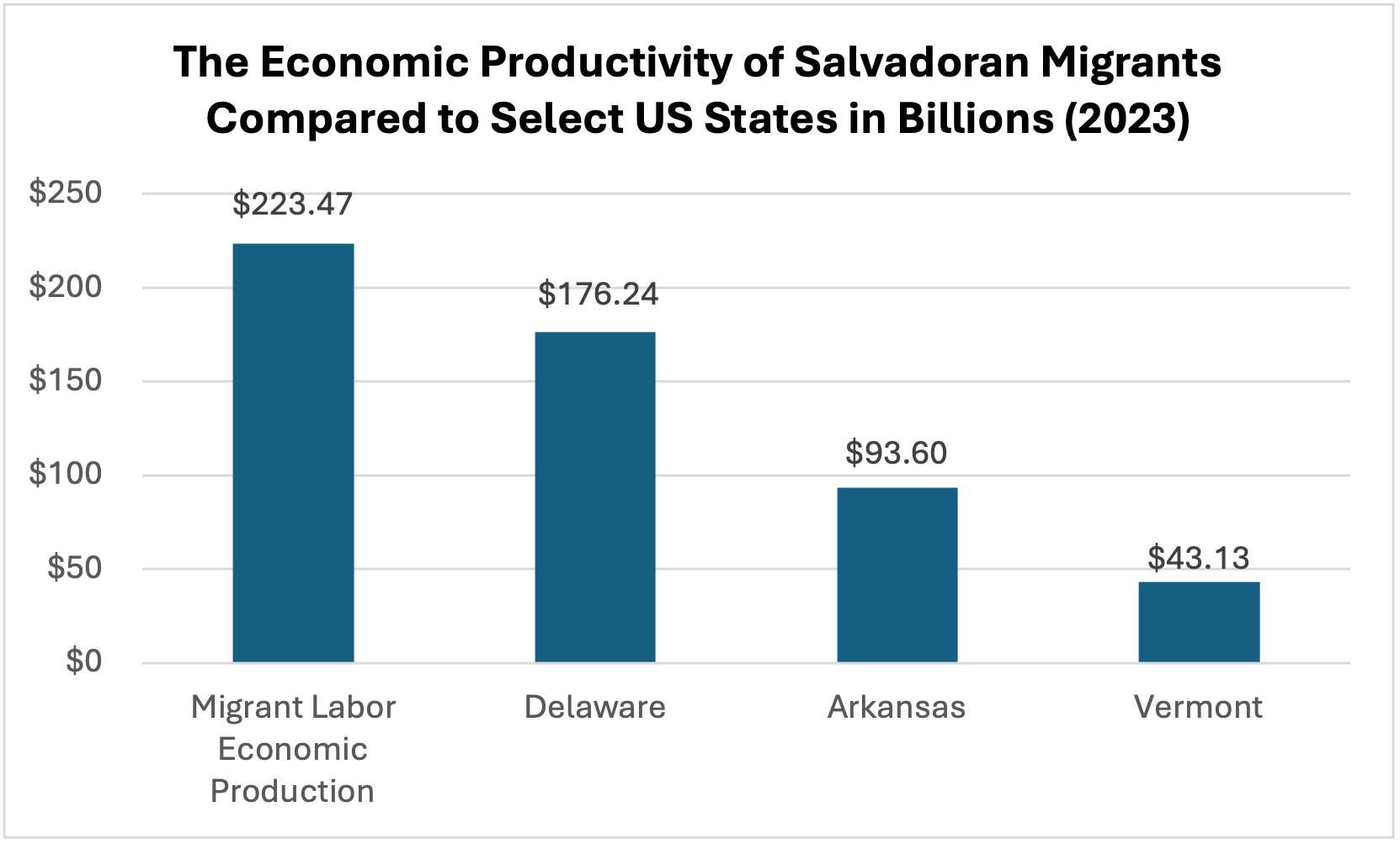
La contribución de los migrantes salvadoreños que remiten a la economía de Estados Unidos es superior a las contribuciones de estados enteros. Si todos los migrantes salvadoreños que mandan remesas fueran un estado, este tendría un PIB cinco veces más grande que el de Vermont y más de dos veces más alto que el de Delaware.

Conclusión

Los 1.8 millones de migrantes salvadoreños en Estados Unidos que enviaron remesas, solo en 2023 contribuyeron con $223,468 millones de dólares a la economía estadounidense. Los 2.2 millones de salvadoreños que trabajan en EE. UU. generaron más de $280 mil millones dólares, dado que el PIB de El Salvador es de US$34,015.62 millones. Este estimado muestra que los migrantes salvadoreños, mediante su mano de obra, generan 8 veces más valor económico en su país de residencia (EE. UU.) que todos los habitantes en su país de origen. Tambien encontramos que los migrantes salvadoreños y sus hijos generaron alreadedor del 1% del GDP de Estados Unidos en 2023.

Más allá del envío de remesas, los migrantes salvadoreños también desempeñan un papel crucial en el crecimiento económico de Estados Unidos a través de su participación en diversos sectores productivos. Además de su impacto en la producción, los migrantes salvadoreños contribuyen a la economía mediante el pago de impuestos y, sobre todo, al suplir la demanda laboral en áreas clave que el país requiere. En general, estudios demuestran que los inmigrantes no solo apoyan las economías de sus países de origen, sino que también son un motor en las economías de sus países de residencia. 

Fuentes

Pew Research Center – U.S. Hispanics: Facts on Salvadoran Origin Latinos. https://www.pewresearch.org/fact-sheet/us-hispanics-facts-on-salvadoran-origin-latinos/

Banco Central de Reserva de El Salvador – Las remesas familiares superaron los US$8,000 millones en 2023. https://www.bcr.gob.sv/2024/01/26/las-remesas-familiares-superaron-los-us8000-millones-en-2023/#:~:text=Las%20remesas%20familiares%20superaron%20los%20US%248%2C000%20millones%20en,respecto%20a%202022%2C%20equivalente%20a%20US%24362.2%20millones%20adicionales

World Bank – Personal remittances, received (% of GDP) – El Salvador. https://data.worldbank.org/indicator/BX.TRF.PWKR.DT.GD.ZS?locations=SV

Encuesta sobre salvadoreños en EE.UU. – Organización Internacional para las Migraciones (OIM). https://infounitnca.iom.int/wp-content/uploads/2022/12/encuestasalvadorenosenEEUU.pdf

SSRN – Economic Contribution of Salvadoran Immigrants (2023). https://papers.ssrn.com/sol3/papers.cfm?abstract_id=4740925

U.S. Bureau of Economic Analysis (BEA) – National GDP and Personal Income. https://www.bea.gov/itable/national-gdp-and-personal-income

Ernesto Castañeda PhD, Director del Laboratorio de Inmigración y el Centro de Estudios Latino Americanos y Latinos (CLALS), Profesor,American University en Washington DC.

Edgar Aguilar Estudiante de Maestría en Economía Internacional de American University y asistente de investigación en el Centro de Estudios Latinoamericanos y Latinos (CLALS) y consultor para el Banco Mundial. Se especializa en migración, seguridad humana, energía sostenible, finanzas y política ambiental.

Oscar Alberto Ibarra Coordinador del Observatorio de Migración y Transparencia del Centro de Investigación para la Democracia (CIDEMO) de la Universidad de Oriente (UNIVO), en el marco del Proyecto de Sociedad Civil y Democracia en la Región Oriental. 

Esta pieza puede reproducirse total o parcialmente con la debida atribución a su autor.

Version en ingles en:

An Invisible Engine: How Immigrants Drive the American Economy, the Case of Salvadorans

Ernesto Castañeda, Edgar Aguilar and Oscar Alberto Ibarra*

September 20, 2024

Photo of a new building built largely by Central American labor in Rosslyn, Arlington, Virginia by Ernesto Castañeda

In addition to contributing to the economy in their home country, Salvadoran migrants also boost the U.S. economy.

El Salvador is one of the smallest countries in Latin America, with a population of 6.3 million inhabitants, which is expected to decrease in the next few years. More than 1.3 million people born in El Salvador live in the United States, along with more than 1.2 million born to at least one Salvadoran parent. The more than 2.5 million people of Salvadoran origin living in the U.S. are equivalent to 40 percent of El Salvador’s total population. According to our calculations, there are around 1.8 million Salvadorans who work in the United States and send remittances. These people are an important part of both economies.

In 2023 alone, El Salvador received $8.18 billion dollars in remittances, which represented 24 percent of the country’s Gross Domestic Product (GDP). 

Some believe that remittances are a cash drain on the U.S. economy. However, a novel calculation by the Center for Latin American and Latino Studies (CLALS) and Immigration Laboratory at American University in Washington, DC, demonstrates that remittances are an important indicator of the contributions that migrants make to the US economy. Based on this calculation, we find that just in 2023, Salvadoran migrants in the United States who sent remittances contributed $223.47 billion dollars to the US economy, including significant contributions to such industries as construction, restaurants, gardening, agriculture, and domestic services, as well as automotive mechanics, health, science, and education, among others.

Here, we also offer an additional novel means of calculating the economic contribution of all Salvadoran immigrants in the United States, not just those who send remittances. For this analysis, we started again with the total remittances sent to El Salvador in 2023, which was $8.18 billion. Using a monthly average of $330.30 dollars per remittance and an estimated frequency of 14 annual remittances, one per month plus additional ones for both Mother’s Day and Christmas, we calculated the number of migrants who send money to be approximately 1,769,344.

According to a study by USAID, IOM, and the Central Reserve Bank of El Salvador, around 79.7 percent of Salvadoran migrants send remittances. Therefore, we can estimate that there are more than 2.2 million Salvadorans working in the United States. This estimate is higher than that of the American Census Bureau, which is not surprising since many migrants do not participate in the census. Multiplying the number of migrants (both those who send remittances and those who do not) by the average annual salary of $26,523.00 estimated by the Census Bureau, the aggregate income of these migrants was calculated to be about $59 billion. Finally, considering that the salaries received by migrants after taxes and deductions represent 21 percent of their productivity, we estimated their contribution to the GDP of the United States to be more than $280 billion. This reveals the profound impact Salvadoran migrants have on the U.S. economy. In the previous graph, only the impact of migrants who send remittances was presented. The following graph shows the economic contribution of all Salvadoran migrants in the United States who earn an income.

The contribution of Salvadoran migrants to the United States economy is greater than that of entire states. If all the Salvadoran migrants who send remittances were a state, it would have a GDP five times larger than that of Vermont and more than twice as big as that of Delaware.

Conclusion

The 1.8 million Salvadoran migrants in the United States who sent remittances in 2023 contributed $223.47 billion to the US economy. The 2.2 million Salvadorans working in the US generated more than $280 billion dollars. Given that El Salvador’s GDP is US $34.02 billion, our estimate demonstrates that Salvadoran migrants, through their economic activity, generate eight times more economic value in their country of residence (that is, the U.S.) than does the entire population in their country of origin. This also means that Salvadorean immigrants and their adult children contributed around 1% of the United States GDP in 2023.

Beyond sending remittances, Salvadoran migrants also play a crucial role in the economic growth of the United States through their participation in various productive sectors. In addition to their impact on production, Salvadoran migrants contribute to the economy by paying taxes and, above all, by meeting labor demand in key areas of need for the US. In general, studies show that immigrants not only support the economies of their countries of origin, but also function as economic engines for their countries of residence.

Sources

Pew Research Center – U.S. Hispanics: Facts on Salvadoran Origin Latinos. https://www.pewresearch.org/fact-sheet/us-hispanics-facts-on-salvadoran-origin-latinos/

Banco Central de Reserva de El Salvador – Las remesas familiares superaron los US$8,000 millones en 2023. https://www.bcr.gob.sv/2024/01/26/las-remesas-familiares-superaron-los-us8000-millones-en-2023/#:~:text=Las%20remesas%20familiares%20superaron%20los%20US%248%2C000%20millones%20en,respecto%20a%202022%2C%20equivalente%20a%20US%24362.2%20millones%20adicionales

World Bank – Personal remittances, received (% of GDP) – El Salvador. https://data.worldbank.org/indicator/BX.TRF.PWKR.DT.GD.ZS?locations=SV

Encuesta sobre salvadoreños en EE.UU. – Organización Internacional para las Migraciones (OIM). https://infounitnca.iom.int/wp-content/uploads/2022/12/encuestasalvadorenosenEEUU.pdf

SSRN – Economic Contribution of Salvadoran Immigrants (2023). https://papers.ssrn.com/sol3/papers.cfm?abstract_id=4740925

U.S. Bureau of Economic Analysis (BEA) – National GDP and Personal Income. https://www.bea.gov/itable/national-gdp-and-personal-income

Ernesto Castañeda PhD, Director of The Immigration Lab and Center for Latin American and Latino Studies (CLALS), Professor, American University in Washington DC.

Edgar Aguilar is an International Economics Master’s student at American University, a research assistant at the Center for Latin America and Latino Studies, and a consultant for the World Bank. He specializes in migration, human security, sustainable energy, finance, and environmental policy.

Oscar Alberto Ibarra Coordinator of the Migration and Transparency Observatory of the Research Center for Democracy (CIDEMO) of the University of Oriente (UNIVO), El Salvador.

This piece can be reproduced completely or partially with proper attribution to its authors.

Spanish version available at: https://aulablog.net/2024/09/18/un-motor-invisible-como-los-inmigrantes-propulsan-la-economia-estadounidense-el-caso-de-los-salvadorenos/

Argentina: Joining the BRICS?

By Andrés Serbin*

Japan’s Prime Minister Fumio Kishida, Canada’s Prime Minister Justin Trudeau, U.S. President Joe Biden, Germany’s Chancellor Olaf Scholz, former British Prime Minister Boris Johnson, France’s President Emmanuel Macron, and Italy’s Prime Minister Mario Draghi pose for a G7 leaders’ photograph during a NATO summit at the alliance’s headquarters in Brussels on March 24, 2022 / Michael Kappaler / Flickr / Creative Commons license

The BRICS countries’ efforts to expand the group’s influence in the Global South is giving momentum to Argentina’s bid for membership, but the timeline and outcome of the admission process is far from certain. During a virtual summit hosted by Beijing in June, the BRICS – Brazil, Russia, India, China, and South Africa – continued efforts to revitalize the group and follow up on expansion proposals initially agreed to in 2017.

  • Conceived as an alternative to the G7 when launched in 2009, the BRICS represent 42 percent of the planet’s population, 24 percent of world GDP, and more than 16 percent of global growth, according to 2019 World Bank estimates. Each member plays a significantly different role in international affairs, but the group is moving in a unified fashion to position themselves as a decisive factor in the global governance architecture and as a voice of the “Global South” that advocates an economic and political alternative for emerging economies. Brazilian analyst Oliver Stuenkel notes that the five “share a profound skepticism of the U.S. international liberal order and perceived danger that unipolarity represents to their interests.”
  • The June summit reviewed initiatives to increase economic cooperation and development, promote multilateralism and world peace, and create a vaccine research and development center. As a reaction to Western economic sanctions, Russia proposed the development of a “de-dollarized” financial space for trade between the group’s economies – a proposal already introduced in the discussions of the Shanghai Cooperation Organization, the main Eurasian cooperation institution. The group also took up China’s 2017 proposal for a “BRICS Plus” – expansion to incorporate new members of the Global South, including Argentina.

The Argentina proposal faces obstacles within the BRICS even though Russia, China, and India (whose foreign minister visited Buenos Aires last week) support it and Celso Amorim, former and likely future foreign minister if Brazilian President Lula da Silva is reelected, has said Brazil will support as well.

  • Political and geopolitical challenges within the group include differences in how members relate to the international liberal order. Ties to the West vary from Russia’s more belligerent position to China’s more cautious one and India’s ambiguity. There are marked differences in their foreign policies that potential new members could aggravate.
  • Members also have different viewpoints on whether to incorporate regional integration blocs such MERCOSUR, whose own heterogeneities, tensions, and conflicts can hinder the expansion process and bloc effectiveness. At a MERCOSUR Summit in July, key leaders’ absences and a divisive debate about the signing of an FTA between Uruguay and China revealed differences. While Paraguay keeps diplomatic relations with Taiwan, the other three full members of the group have close diplomatic and economic ties with the PRC.

Argentina’s application has also given rise to divided views and opinions in the country itself. Despite the fact that all sectors of the ruling coalition can be considered “Peronists,” the current government has pursued an erratic and at times contradictory foreign policy, including conflicting positions regarding international relations, alignments, and alliances. Argentine sinologists disagree on the feasibility of membership, and many more Argentines object because it would hurt relations with the United States, Europe, and the IMF, which has recently helped the country avoid defaulting on $44 billion the Fund previously loaned it. A simultaneous application by Iran – some of whose government officials Argentine justice blames for several terrorist acts in Argentina, including the bombing of Israel’s Embassy and the Jewish local organization AMIA – doesn’t help to build consensus on the issue.

Notwithstanding the divergent opinions in Argentina and among the BRICS, interest on both sides has been persistent and shows signs of growing – even if not necessarily resulting in admission in the near future. Argentina’s interest in pursuing a relationship with the BRICS has continued through governments of different political persuasions since 2014. The need to maintain good relations with traditional partners is key, and the agreement with the IMF presents another reason for caution. It is not clear if Argentina’s incorporation could complicate its geopolitical position without yielding tangible benefits.

  • For the BRICS, the shared interest – a desire to curtail U.S. and Western influence and create a counterweight to it – helps them overcome their differences and seems unlikely to change soon, but obstacles to the evolution of the global transition they seek will also remain in the short term. However, in the context of the current debate in Latin America, BRICS expansion fits the increasing regional aspiration to promote active non-alignment amid an increasingly turbulent international order.

September 7, 2022

*Andrés Serbin is an international analyst and president of the Regional Coordinator of Economic and Social Research (CRIES), a regional think tank and network focused on Latin America and the Caribbean. He is also co-chair of the Asia and the Americas section of the Latin American Studies Association (LASA) and author of Guerra y transición global (War and Global Transition), recently published.

El Salvador: Young Women and Mothers Lack Opportunities after Incarceration

By Carina Cione*

Volunteers from Glasswing International and the U.S. Embassy paint a local library / U.S. Embassy in El Salvador / Flickr / Creative Commons license

Incarcerated young women in El Salvador face immense obstacles to creating new lives for themselves after release from detention, but programs to empower them offer a glimmer of hope. Interviews conducted as part of the CLALS-FLACSO Vidas Sitiadas (Besieged Lives) project have documented the challenges facing young Salvadoran women and provide strong evidence that others throughout Latin America face similar situations.

  • The stigma of a criminal past compounds the systemic exclusion young Salvadoran women often face before arrest just for being from high-crime neighborhoods. Previous offenders who lack support face dismal job prospects. The Vidas Sitiadas reports, which also examined conditions in four other countries, indicate that access to the formal job market is extremely limited; employers turn down job applicants with criminal records. Becoming a student can be just as difficult since universities have the right to refuse admission based on criminal histories. The period of “re-entry” is stressful and lonely as women strive to re-build healthy relationships, establish and maintain financial independence, secure healthcare, and recover from their potentially traumatic incarceration experiences.
  • The problem has surged over the last two decades, as rates of imprisonment in Latin America have risen dramatically, with mass incarceration increasingly impacting women. In El Salvador, since President Nayib Bukele launched a crackdown on gangs in 2019, the number of inmates has since skyrocketed (50,000 just since late March), according to UN experts, human rights agencies, and press reports. The government provides free tattoo removal services for former gang members seeking to break ties with their past, but attention to reintegration programs and post-release services to equip previous offenders with coping skills has been negligible. 

Nonetheless, Vidas Sitiadas and other studies have identified programs for released prisoners that, while still in relatively early phases, appear promising. Two examples in El Salvador:

  • Glasswing International runs the Club de Niñas, in collaboration with prison authorities in San Salvador, for young women in detention facilities or those who are recently released who want to overcome sociocultural barriers to independence. The three-year-old program teaches strategies for surviving traditional gender roles and expectations, healing trauma in a safe space, and breaking out of the conditions and mindsets that led them to criminality. Researchers working with Glasswing found that all of the women serving criminal sentences had suffered repeated episodes of violence beginning in childhood – neglect, abuse, sexual violence, exposure to community violence, parental alcohol abuse, and parental fighting. Many had fled their dangerous home environments at a young age and joined gangs, which provided them with basic necessities, a steady income, and protection – but also subjected them to physical and psychological abuse. The Club encourages them to feel a frisson of optimism for the first time in their young adulthood.
  • Yo Cambio, a four-year-old program run at various Salvadoran prisons, teaches craftsmanship skills to hundreds of inmates that they can use to secure a job upon release. It builds “peaceful co-living” in prison and offers free tattoo removal services for former gang members seeking to break ties with their past. To join the initiative, the inmates have to demonstrate that they practice “positive mindsets” and exhibit wanting to change before joining. 

Programs like these can point to preliminary indicators of success in at least some facilities. Young women interviewed by Vidas Sitiadas valued the safe place that Club de Niñas gave them for honest conversation and building stronger senses of community and self-worth. They underwent skills training to strengthen their likelihood of securing employment post-release, which in turn also helps secure their safety from past abusers. The interviews also show that participants are embarking on a process of developing new prosocial identities, reflecting a desire to engage in positive relationships, and trying to break with past attitudes of rebellion. Mothers promised to try to be better for their children.

Adjustment back into society for previously imprisoned people is anything but simple. The UN General Assembly in 2010 approved a resolution on the treatment of women who are in prison and have been released – called “The Bangkok Rules” – that specifies that they must be provided comprehensive re-entry support by social welfare services, local organizations, and probation authorities. Adherence to such guidelines has not been the norm in El Salvador. The systemic barriers to former prisoners becoming successful members of society remain.

  • Efforts like those identified by Vidas Sitiadas are premised on the hope that progress is possible even if locally and incrementally, but society-level outcomes will change only after broader obstacles to successful reintegration, such as geographic exclusion, are resolved. Studies show that, when re-entering into unchanged social and economic conditions, most previous offenders resort to familiar criminal behavior and fall back into dangerous social circles to meet their basic needs. They also lack accessible mental healthcare to help them grapple with trauma experienced before and during incarceration. But, while programs like Club de Niñas and Yo Cambio alone can’t solve such deep-rooted problems for everyone, they improve individual lives and are proof of concept that, if embraced by political leaders, could have a broader impact. 

August 25, 2022

*Carina Cione is Program Coordinator at the Center for Latin American and Latino Studies. For additional information about the project undertaken by FLACSO-Costa Rica and its partners, please consult the Vidas Sitiadas website.

Latin America: Violence Against Young Women Worsened During COVID-19

By Carina Cione*

Young women gathering together in Cali, Colombia / Universidad del Valle / Creative Commons license

A research and practice-oriented initiative coordinated by la Facultad Latinoamericana de Ciencias Sociales (FLACSO) of Costa Rica has confirmed that the harmful impact of systemic violence and marginalization on the lives of vulnerable women in Latin American cities has worsened during the COVID-19 pandemic. The Vidas Sitiadas (Besieged Lives) project corroborated widespread anecdotes about the depth of the vulnerability of young women and mothers to gender-based violence, intimidation, and discrimination – in both public and private spaces – in the region. Women are targeted by gangs in their communities, and by masculine family members or partners behind closed doors in their homes. Often merely because of the neighborhoods in which they live, they suffer from systemic exclusion – shunned by society and excluded from much of their countries’ economic, social, and political lives.

  • The Vidas Sitiadas project found that the COVID-19 pandemic has exacerbated these problems. State-imposed quarantine measures confined families to close living quarters, and the burdens on mothers and sisters to keep the home running and to care for the ill multiplied. Loss of family income brought stress and conflict more deeply into homes, worsening already-unstable family dynamics.
  • The pandemic also reduced women’s economic independence. In 2020 and 2021, opportunities to earn money on the formal and informal market evaporated. Neighborhoods are less safe, and traveling through gang-controlled areas in Latin America poses increasing dangers for young women. Of 21 young mothers interviewed by FLACSO-Argentina, only 10 had remained employed during the first years of the pandemic. Most had low incomes and were unable to work remotely, which led them to financially depend upon others to make ends meet. That dependence on male family members, partners, and exes led to greater manipulation and exploitation than before 2020.

Through hundreds of interviews and survey responses, project researchers documented that violence, more than any other underlying factor, is what causes the sensation of living a vida sitiada – a life under siege. Across all five country reports, the majority of young women reported being witnesses or victims of abuse in the home as children, which they said had a “very radical impact” on their daily lives. Many were cared for by mothers or grandmothers who were abused and then, in turn, engaged in physical or psychological abuse of them. A large portion of participants’ fathers were absent. Sexual abuse was common, and some women had even witnessed gang-related homicides of family members.

  • Robbery and sexual violence, including harassment, aggressive touching, and rape, in public spaces are frequent phenomena for women. These crimes often force them to avoid certain parts of their own neighborhoods, to forgo essential travel outside the home, and to severely curtail social contact, thus hindering their ability to develop support networks. The Vidas Sitiadas studies reveal even tougher circumstances during COVID-19. In a survey by Universidad del Valle, half of low-income young women said that their communities in Cali, Colombia, have become more violent since 2020. They avoid spending time outside of their homes, especially in the early morning hours, but 15-20 percent still feel “very unsafe” on the street in the afternoons and early evenings. This limits their ability to cultivate personal connections and impedes their financial independence.
  • Traveling to work is also a risk. Espacio Público, a think tank, and Arbusta, an information technology company in Santiago, Chile, found that 30 percent of young women who commuted in the first years of the pandemic had experienced intimidation or abuse on their way to work. A third of these women face travel times of 60-90 minutes each way – a long time, especially in a vehicle in which passengers do not feel safe. Women who cannot reach their jobs safely either decide to quit or learn a trade they can master in the safety of their homes.

In addition to death, disease, and economic challenges, the COVID-19 pandemic has slowed and even reversed progress some Latin American societies had been making, if haltingly, toward updating gender roles and reducing stigmas pertaining to women’s place in society. In some sectors, it has contributed to the re-normalization of violence in the daily lives of women and girls by making many neighborhoods less safe and putting extraordinary stress on families. Women’s exclusion has deepened as COVID-19 has erased their access to jobs and the stigma of being from dangerous neighborhoods further reduces their prospects.

  • The Vidas Sitiadas project, coordinated by La Facultad Latinoamericana de Ciencias Sociales (FLACSO) in Costa Rica with funding from the International Development Research Centre (IDRC) of Canada, examines several efforts launched in recent years to begin addressing the underlying systemic causes of the challenges facing young women in these societies. They focus on giving them a chance to get a job, to learn work and personal skills, and to build the personal confidence to improve their lot. Advocates face the usual obstacles to calls for resources to address the big problems, including systemic economic inequity, the epidemic of social violence, and the residual culture of gender discrimination. But the Vidas Sitiadas initiatives have demonstrated that at least modest steps can be made to help women overcome the violent and manipulative environments in which they live.

August 4, 2022

*Carina Cione is Program Coordinator at the Center for Latin American & Latino Studies. For additional information about the project undertaken by FLACSO-Costa Rica and its partners, please consult the Vidas Sitiadas website.

El Salvador: Exploiting Superpower Competition

By Jeffrey Hallock and Christopher Kambhu*

Government of El Salvador / Creative Commons License

Salvadoran President Nayib Bukele is taking advantage of superpower competition between the United States and China to get vaccines for his country and boost his domestic image as a strong, independent national leader. Hours after the United States announced a donation of 1.5 million Moderna doses to El Salvador in early July, China announced its own 1.5 million dose donation – and Bukele touted his successes on Twitter. In securing and administering vaccines for millions of Salvadorans, Bukele has achieved a domestic political victory; 44 percent of adults have received one vaccine dose as of last month, well above the regional average.

  • China’s relations with El Salvador center on its longstanding policy goal to weaken international support for Taiwan. China has expanded its influence in El Salvador since the country switched diplomatic recognition from Taiwan in 2018. During the COVID-19 pandemic, moreover, Beijing has donated a wide variety of medical supplies to El Salvador, and sold it 2 million doses of Sinovac vaccine last spring. For Beijing, vaccine diplomacy is a short-term soft-power and public relations victory that lays the groundwork for future economic deals.
  • Policymakers in Washington primarily view El Salvador through the lens of domestic migration politics. Fleeing gang violence and seeking better economic opportunities, Salvadorans form part of successive waves of migration to the United States from the Northern Triangle (which also includes Guatemala and Honduras). President Joe Biden seeks to address the root causes of migration through anticorruption and good governance initiatives, including denying visas to several senior officials in the Bukele government accused of corruption. This focus has increased tensions with Bukele.

Bukele’s superpower manipulation coincides with increasingly authoritarian tendencies at home since his inauguration in June 2019. With an approval rating well over 80 percent, he is among the most popular leaders in the world. His Nuevas Ideas party and its allies secured a legislative supermajority in February’s elections. Recently, Bukele and his legislative allies have acted aggressively to consolidate power, replacing the Attorney General and all five Constitutional Chamber of the Supreme Court magistrates with loyalists and preventing oversight of pandemic spending. Bukele also shuttered the OAS-backed anticorruption commission CICIES, which his campaign had supported. Numerous observers believe Bukele’s iron grip on the three branches of government will undermine El Salvador’s democratic institutions.

When Biden first took office, Bukele appeared likely to mimic the delicate dance choreographed by other Northern Triangle presidents: pledge to reduce migration flows to the United States in exchange for leeway on domestic affairs. However, the Biden Administration has not looked the other way as Bukele has violated democratic norms and lashed out at critics, including a Twitter spat with U.S. Congresswoman Norma Torres of California. When the Biden Administration recently released a list of corrupt politicians that included several Bukele allies, he strongly criticized the list while publicly praising additional Chinese aid and vaccines.

  • The recent U.S. vaccine donation reflects Washington’s concern about China’s regional influence and acknowledges that the lofty goals of good governance can be overshadowed by other geopolitical considerations. The U.S. retains strong economic leverage over El Salvador through remittances from Salvadoran migrants (some 200,000 of whom are dependent on continued U.S. Temporary Protected Status), but the Biden administration is wary of pushing El Salvador too close to China.
  • While Bukele’s maneuvering has provided him a domestic political victory, diplomatic challenges remain. China’s foreign policy is transactional in nature, and Beijing will likely ask something of Bukele in exchange for its pandemic diplomacy. It is difficult to see what El Salvador can offer China since it already dropped recognition of Taiwan. Perhaps Bukele is betting he can avoid the difficult concessions which plague other nations’ Chinese relations. El Salvador’s strong economic and cultural ties with the U.S. will endure, but for the moment, Bukele is reaping the benefits of instigating great power rivalry.

*Jeffrey Hallock is a doctoral student at American University’s School of International Service. Christopher Kambhu is a Program Coordinator at CLALS.

August 5, 2021

El Salvador: Eastern Region’s Weak Democratic Political Culture

By Rodolfo Mejía-Dietrich and Adán Mendoza*

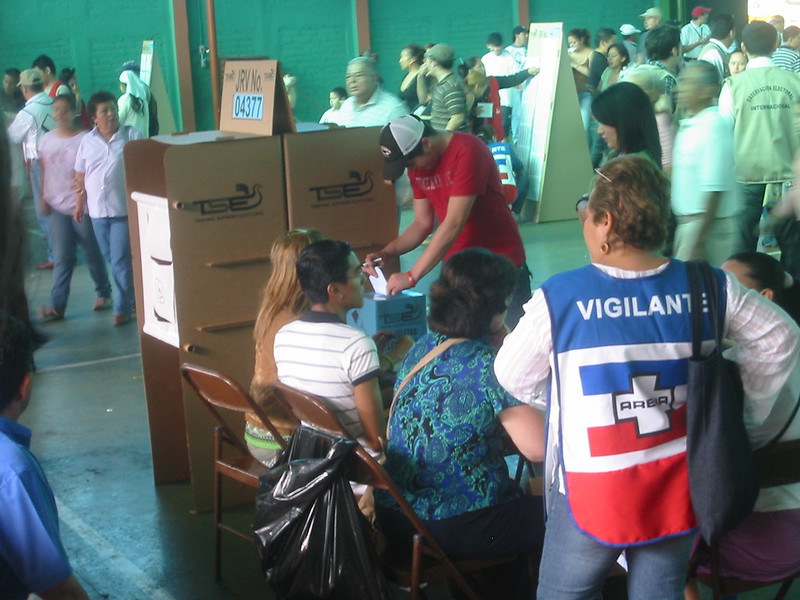
Polling place in El Salvador/ Amber/ Flickr/ Creative Commons License

El Salvador has made important democratic progress since the peace accord ending its bloody civil war in 1992, but the country still suffers from a profound deficit in citizens’ exercise of their rights and fulfillment of their democratic obligations – creating a serious risk of authoritarian practices and impunity by groups in power.

  • While President Nayib Bukele’s actions have catalyzed debate in the capital about democratic stability, surveys and research in the four departments of El Salvador’s eastern region show that low levels of interest in essential elements of democratic culture – community organizing; oversight of government operations; requests for public information; demands for public accountability; and efforts to root out corruption – are limiting direct and institutional democracy. This is among the key findings of surveys of 1,073 persons of diverse demographic groups by our center, the Centro de Investigación para la Democracia (CIDEMO) at the Universidad de Oriente.

Salvadorans have not lost faith in democracy as a system that, despite imperfections, would best serve their and the nation’s interests. But our surveys, conducted in September 2019, confirm that citizens are deeply frustrated with the country’s failure to achieve it. The country has at times shown the trimmings of democracy, but its political culture remains largely unchanged.

  • Confidence in democracy has been battered by citizens’ belief that the government is unable or unwilling to grapple with their daily challenges. Crime and personal insecurity, at 42.5 percent, are the problems at the top of citizens’ concerns. Poverty and unemployment are also major problems, respectively ranking 13.7 percent and 11.5 percent in the survey.
  • Despite the scourge of crime, the government institutions charged with combating criminal groups enjoy significant popular legitimacy; our polls show the military enjoys 81.2 percent popular confidence and the National Civilian Police, 72.2 percent. But those responsible for building and ensuring democratic practice do not. The Asamblea Legislativa polled at the time as the institution with the lowest level of confidence, and the Tribunal Supremo Electoral, upon which the credibility of elections depends, scored 56 percent.
  • At a little less than 5 percent, corruption ranked significantly lower as people’s greatest immediate concern, but other research indicates that it causes broad citizen apathy toward civic participation. There are widespread perceptions that opportunities to reduce corruption have been repeatedly blocked by those who most benefit from it. These conclusions coincide with those of Transparency International, which in 2019 ranked El Salvador 113 out of 180 countries (with 34 of 100 possible points). Among relatively stable countries, it is among the most corrupt in the world. Slightly more than 90.6 percent of citizens CIDEMO polled support the creation of an international commission against impunity (CICIES), which President Bukele promised during his campaign.

Nearly 30 years after the country started its juridical-institutional transformation, the same hindrances to effective democracy – high levels of poverty, precariousness (vulnerability), and inequality – remain colossal challenges to building a system of social participation, civic education, and inclusion. The country’s relative stability over the past two decades, certainly compared to the war years, disguise the underlying popular sense that the system has failed to serve them. The Oriente of El Salvador is far from the capital, San Salvador, and thus does not benefit from much of the country’s economic activity, and it has lost a great number of migrants seeking a dignified life elsewhere. But other research around the country shows its citizens’ frustration is not unique, as further documented by the World Bank and others that have found that about half of all households countrywide lack the conditions of dignified wellbeing.

  • The fundamental challenge for CIDEMO is to promote dialogue between citizens and emerging leaders to encourage citizen participation and to build capacities in civic education aimed at favoring the goal of expanding the exercise of citizens’ rights and duties. Our wager is that equality and freedom are critical wellsprings of advancing toward optimal levels of democratic governability.

* Rodolfo Mejía-Dietrich and Adán Mendoza are, respectively, the director and fulltime researcher at the Centro de Investigación para la Democracia at the Universidad de Oriente in San Miguel, El Salvador. This article is adapted from their recent study, Democracia, gobernabilidad y corrupción: Estudio de la cultura política en la región oriental de El Salvador. CLALS is providing technical assistance to CIDEMO under a USAID subaward that has made this UNIVO initiative possible.