South America: Low Expectations for U.S. Election

Photo is in the public domain

Media in Colombia, Chile, and Peru are paying close attention to the U.S. presidential election, but only in Colombia do commentators seem to sense that November’s vote could have a direct impact on their country.  Colombian opinion-makers have not articulated specific concerns; their attention appears premised merely on the immensity of the relationship.  In Peru, commentators have noted concern about the positions advocated in the Republican primaries on a host of issues, such as immigration and the Cold War optic the GOP candidates espoused.  Chileans are following the horse race with curiosity but little mention of its potential implications.  In these countries, which are generally open to working with Washington, there is dissatisfaction with Obama but greater trepidation about a return to the foreign policies that characterized the Bush-Cheney era.  “Obama losing would not matter much,” wrote Antonio Caballero in Colombia’s Semana.  “But what would matter, a lot, is his Republican rival Mitt Romney winning.”  The columnist said it would be like re-electing Hoover after four years of Roosevelt.

Commentators fret that Romney’s swing right during the primaries proves he is unable to stand up to what they describe as conservative, white Tea Partiers on issues including gun control and taxes, but especially on immigration.  In Diario Correo, Peruvian Isaac Bigio wrote that Romney and Ryan would “launch an offensive against immigrants.”  On foreign policy, commentators see Obama’s record as mediocre.  In Colombia, the president gains points for passing the free trade agreement, but loses them for an overall lack of focus on the hemisphere.  But Romney’s rhetoric, punctuated by swipes at Russia and what he labeled a Chávez-Castro axis in the hemisphere, has created uneasy feelings.  “Romney advocates an aggressive discourse and hard hand in international relations,”writes Sergio Muñoz Bata of Bogota’s El Tiempo.  “If this sounds like a repetition of Bush’s policies, that is because those who dictate the foreign policy of the Republican candidate today are the same people who dictated Bush’s policies yesterday.”  Peruvian Santiago Pérez writes in Los Andes that Romney might “harden the U.S. position against ALBA…and try to intimidate (probably unsuccessfully) his unthreatening Bolivarian enemies.”  A return of the GOP could pose problems for the ongoing talks with the FARC and ELN, moderate Colombians fear.  Writing in Portafolio, Ricardo Ávila Pinto noted that Bogotá should be wary of “the U.S. reaction to any eventual success in the peace process with the FARC.”  Likewise, Chile’s Ernesto Ottone writes that Romney’s “uncultured simple-mindedness in foreign affairs responds to identity-based fanaticism with a warlike tone.”

A consistent theme is that the 2012 election lacks the hope of four years prior – hope for more effective U.S. partnership with the region, which Obama promised at the Summit of the Americas soon after his inauguration but has failed to deliver.  Many outlets reported former President Jimmy Carter’s comment that neither candidate was likely to pay much attention to the region.   While Colombian and Peruvian media reflect public concerns about immigration, the most prevalent fear is that a return to strident rhetoric would only heighten tensions between the U.S. and ALBA-aligned countries.  Colombia, Peru, and Chile don’t want to be stuck in the middle. There are no great expectations for improvement, but there is considerable worry about further decline.

U.S.-Honduras Counternarcotics Cooperation Stumbles

DEA Helicopter | by Andrew W. Sieber (Drewski2112) | Flickr | Creative Commons

Four months after the launch of Operación Anvil, a joint U.S.-Honduran counternarcotics effort, cooperation has stumbled.  Early in September, the United States suspended the sharing of intelligence – publicly characterized as mostly based on radar tracks – after the Honduran Air Force in July shot down two civilian aircraft suspected of trafficking drugs.  Citing the incident as a breach of a bilateral agreement that prohibits firing on civilian aircraft, State Department officials said they are reviewing procedures regarding cooperation.

The shootdowns were not the first controversial incident to raise doubts about the cooperation.  In May, a U.S.-Honduras counternarcotics operation in northeastern Honduras, during which at least one small boat was strafed, left four people dead and at least five injured.  While the raid targeted suspected drug traffickers in the vicinity, various reports have suggested that the victims were innocent locals or, at most, were spotters for traffickers.  Rather than undertake its own investigation, the U.S. Embassy in Honduras reportedly has deferred to a preliminary investigation by the Honduran authorities that showed no wrongdoing in the incident.  American and Honduran officials insist no American fired a weapon during the raid, but details of how the Honduran forces they were advising carried out the operation remain elusive.

The U.S. approach to counternarcotics in Honduras – like that in Colombia and Mexico – emphasizes military-style operations driven by U.S. intelligence tips.  In addition to sharing intelligence, the U.S. Drug Enforcement Administration and other U.S. entities provide training, equipment and on-site operational guidance to Honduran security units.  While the jury is out on whether this strategy has been worth the cost in human lives (60,000 in Mexico) and dollars (more than $7 billion in U.S. aid alone in Colombia), the case has not been made that it will work in a country plagued by weak institutions and corruption like Honduras.  Holding Honduran officials accountable and creating the vetted units upon which these military-style operations depend will be difficult in a small, desperately poor country in which the narco-dollar buys much more than U.S. aid channeled through officials in whom few have any confidence.  Efforts to create vetted units capable of operating securely (and without abuses of authority) have failed in the past because of unseen and unsolved links between the state officials and the narcos.  The Honduran people – still suffering from political violence born of the coup of June 2009 – have legitimate fear of a massive surge in drug violence.   The U.S. government, ever optimistic about the renewal of cooperation, has asked that Honduras put in place remedial measures to prevent future incidents.  President Lobo of Honduras has since replaced his Air Force commander, but the question remains whether Tegucigalpa can – and should – become a cornerstone of U.S. antidrug strategies.

Brazil: A Curious, but Very Distant Observer

This is the second of a series of entries examining how the U.S. presidential campaign is being viewed in different Latin American countries.

Photo: São Paulo by Cleber Quadros | Flickr | Creative Commons

The twists, turns, and daily gaffes of the U.S. presidential campaign elicit muted interest from Brazil’s opinion makers and usually land near the back of the newspaper.  A review of the Brazilian media indicates curiosity about the race but little fretting about its consequences.  As Republican candidate Mitt Romney has struggled, Brazilian commentators have started handicapping the U.S. election in President Obama’s favor.  The magazine Veja said Romney had nearly issued himself a “political death certificate” via recent mistakes, while O Globo judged the Republican to be down, but not completely out.

Romney’s struggles have not generated great joy, even though a recent poll showed that nine of 10 Brazilians, given the chance, would vote for Obama. Many Brazilians are frustrated about the Obama administration’s attacks on Brazilian trade policy, which they attribute to the coming election.  Public exchanges between U.S. and Brazilian trade officials have grown terse. Personal relations between Dilma and Obama appear chilly, with no conference planned on the sidelines of the UN General Assembly this week.  Romney’s foreign policy positions, on the other hand, draw criticism.  Mocking Romney’s rightward drift, Professor Demetro Magnoli wrote in Estado do São Paulo that the former governor is “the most dangerous man in the world” for his threats to unleash a trade war with China and a real war with Iran.  Nonetheless, Magnoli and others in the Brazilian press seem skeptical that campaign rhetoric will be reflected in foreign policy.

While the U.S. campaign gives Brazilians little reason for either excitement or concern, one implication they may see is that Brazil’s regional stature will continue to ascend regardless of who wins.  Romney’s campaign platform for Latin America plays up threats from “Bolivarians,” criminals and drug cartels, and Hezbollah.  Moreover, his promised solution – a “Reagan Economic Zone” – seems incongruous with the late president’s image in Brazil and much of Latin America.  Obama, on the other hand, has a personal background and restrained tone in foreign affairs that makes him more popular with the Brazilian public, but he has not taken advantage of that to improve relations or to address irritants like trade or onerous visa requirements, nor to improve Washington’s image in Latin America.  Whichever administration begins in 2013 will find a Brazil that is curious, but hardly waiting on Washington for answers.

Uncertainty in Runup to Venezuela Elections

Photo: Venezuela elections 2012 | by World Development Movement | Flickr | Creative Commons

Polls in anticipation of Venezuela’s presidential election on October 7 yield, not surprisingly, wildly different results.  A survey by Datanálisis puts President Chávez ahead of opposition candidate Henrique Capriles by nearly 15 points, and Consultores 21 predicts a much tighter race and places Capriles on top with just a narrow margin.  Both Chávez and Capriles have declared that they have the support of the majority of Venezuelans.  Chávez insists that he needs to complete his “Bolivarian Revolution.”  Capriles has vowed to tackle everyday issues, such as rising crime and violence, and has pledged to liberalize currency controls and promote investment in agriculture.  Both predict dire consequences if they lose.  Chávez contends that “civil war” will break out, and Capriles insists that a Chávez victory would take Venezuela one step closer to becoming “another Cuba.”

Polling data are notoriously unreliable wherever elections are not strictly about choosing a government but, to some citizens, are perceived as involving a change in the underlying regime.  For many Venezuelans, both pro- and anti-Chavista, the balloting in October is precisely about regime continuity or change.  The surveys undoubtedly reflect that this may indeed be a transcendent election in Venezuela.  This unreliability further complicates analysis of what happens after the election: how both sides would respond to a razor-thin margin of victory or to a decisive verdict.  In the latter circumstance, the losing parties would seem to have no option but to relent, but the challenge would be no less daunting if Capriles wins and has to effect a smooth transition.

The Obama Administration, for its part, has tried to keep its distance from the Chávez government – except for the occasional counternarcotics cooperation – and overall has avoided interference in the electoral process.  But persistent tensions in the relationship make it hard for Washington to assert neutrality in the elections.  Capriles, in an interview with the Miami Herald, criticized the Obama administration for caring little about Latin America, saying “I think the bureaucracy ate him up.”  Capriles urged the U.S. to establish a “relationship of equals” with Latin American nations.  Such criticism most likely reflects a desire by Capriles to appear independent of Washington, but should he find himself in the Presidency, it may take on a life of its own – and he may join most of the region’s leaders in regretting U.S. aloofness toward the region. 


Mexico: Expecting More of the Same

This is the first of a series of entries examining how the U.S. presidential campaign is being viewed in different Latin American countries.

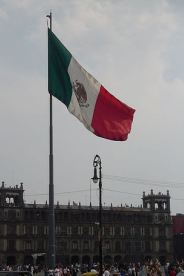
Photo: Zocalo, Mexico City | Luis Lobo Borobia (“Cromo”) | Flickr | Creative Commons

A survey of Mexican media indicates that, despite the considerable attention the U.S. presidential campaign is getting, few Mexicans expect the November election to result in significant shifts in bilateral relations.  Unlike in U.S. coverage of Mexico’s recent presidential contest, the Mexican press has not focused on bilateral drug cooperation.  Some commentators have stated general preferences.  “For the economy, demography, and proximity, a second term for Barack Obama would be good for Mexico,” wrote Enriqueta Cabrera in El Universal.  But most opinionmakers appear focused on particular issues.

There is a broad recognition in Mexico that the campaign is primarily about the U.S. economy, and the potential impact of continued stagnation has driven wide coverage.  The Mexican media are also tracking the candidates’ immigration policies.  President Obama’s executive order to halt deportation of young people who would be eligible for legal status under the long-stalled DREAM Act helped his image in the Mexican press.  The coverage of Republicans has been harsher, with El Universal saying that immigration has been “the taboo topic” for the GOP and that Governor Romney had “forgotten” about Hispanics.  The role of Latinos in the campaigns has drawn attention, mostly positively for the Democrats.

The Mexican media’s treatment of the campaign – and assumption that relations will not change much – reflects the fact that neither American candidate has brought new ideas to the table in one of the United States’ most important bilateral relationships.  On drug policy, bloody continuity seems far likelier than change, regardless of who wins in November.  Although Romney has tipped his hat – as Obama has – to the need to reduce U.S. consumption of narcotics, his main message is “to help Mexico as we did Colombia, with intelligence and surveillance.”  The greater variable is on the Mexican side, where new President Enrique Peña Nieto’s promise to refocus the drug fight on citizen security – instead of cartel interdiction – has drawn criticism from some in the United States.  Allegations that the “old PRI,” tolerant of the drug trade, is back are not far behind and could poison the relationship.

Peru: Humala’s Difficult Balancing Act

Photo: Peruvian mine | Mihai (clandestino_20) | Flickr | Creative Commons

Peru’s new cabinet installed in July – President Ollanta Humala’s third since his inauguration a year earlier – faces the daunting task of sustaining national development while increasing social enfranchisement.  The reshuffle came amid loud criticism of a crackdown, which killed five people, on protests against the proposed $5 billion Conga mining project in Cajamarca.  The incident underscored the difficulty for Humala as he endeavors to implement a dual strategy of capitalizing on the growth potential of Peru’s mining industry – primarily gold and copper (60 percent of exports) – while respecting community concerns about the environmental consequences of extraction.  Mining wealth is needed to improve the lives of ordinary people –28 percent of Peruvians live in poverty – but unlike preceding governments this administration has committed itself to consultation with residents of localities that will be affected directly.    The new prime minister has announced suspension of the Conga project until the U.S. mining company involved provides better environmental guarantees.

Humala’s popularity has plummeted.  Despite new laws increasing Peru’s mining revenue, the creation of a new Ministry of Social Inclusion, and a new Prior Consultation Law, indigenous protesters feel betrayed by Humala.  They accuse him of continuing the aggressive extractive policies of his predecessor, Alán García, and insist his administration has not given adequate attention to concerns of local communities on issues such as the integrity of the water supply in zones affected by the mining ventures.  Recent signs of a resurgence in violence by the Sendero Luminoso (Shining Path) guerrillas and of setbacks in efforts to curtail the influence of the narcotics trade are also eroding Humala’s support.

Humala narrowly won the presidency as a center-left candidate, committed to creating a framework for the more equitable distribution of the wealth generated by Peru’s natural resources.  Now, some of his political allies say he has courted foreign investment for the mining sector without adequate consultation, and further protests seem likely.  Humala’s challenge is not unlike that of other countries, including Bolivia and Ecuador, trying to balance between these competing interests.  His success or failure will have an impact beyond Peru’s borders, as South American countries dependent on commodity exports struggle to walk the tightrope between satisfying foreign investors and domestic electorates.

Ecuador’s Difficult Choice on Assange

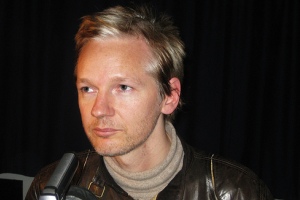
Photo: Julian Assange by Ben Bryan (bbwbryant) | Flickr | Creative Commons

Many observers have portrayed President Rafael Correa’s decision to grant asylum to Wikileaks founder Julian Assange as an act of defiance – a gratuitous slap at the United States – and, because of Correa’s mixed record of respect for a free press, as a sign of hypocrisy.  How can a President who has prosecuted newspapers for revealing damaging information about his government, according to Correa’s accusers, now stand up as the defender of Assange’s right to publish hundreds of thousands of sensitive U.S. Government documents?

The lack of clarity on British and Swedish intentions made the decision difficult.  American officials have minced no words about their hopes to prosecute Assange, although none has stated what the charges would be.  Even U.S. Vice President Joe Biden has referred to him as a “high-tech terrorist.”  Former Republican presidential nominees Sarah Palin and Mike Huckabee have called for his execution.  (A former senior Canadian official said, “I think Assange should be assassinated.”)  The Swedish government, which seeks only to question Assange about allegations of sexual abuses (important offenses in Swedish law), has refused to conduct the interrogations in London or by video, or  to provide reassurances that he will not be extradited to the United States.  British officials at one point even threatened to enter the Ecuadoran Embassy in London, a flagrant violation of well-established principles of international law.

Correa’s ancillary agendas notwithstanding, the asylum decision would have been difficult for almost any country.  There is no evidence that Assange would not get a fair trial in the United States or that he would face the sort of abuse and torture that Bradley Manning – the alleged American source of the Wikileaks documents – has faced.  But the American silence on the charges Assange might face, the rhetoric tarring him as a terrorist and the lack of U.S. accountability for past abuses – the Obama Administration last week announced yet another decision to forego prosecution of U.S. officials involved in alleged torture – makes the absence of a pledge regarding extradition to the United States politically sensitive.  Ironically, the U.S., British and Swedish position risks thrusting them into the same ironic contradiction as Correa finds himself:  claiming to protect human rights, they may open the door to prosecution of a man who published leaked information – and who by any reasonable standard is an indiscriminate whistle blower but hardly an agent of espionage.  If their pursuit of Assange were to result in his exposure to U.S. prosecution related to the Wikileaks matter, these democracies would potentially risk being parties to a serious violation of fundamental principles of free expression.

Colombia: Giving Peace Talks Another Try

Photo by: ideas4solutions | Flickr | Creative Commons

President Juan Manuel Santos and FARC Commander “Timochenko” announced this week that they have agreed to hold “direct and uninterrupted” negotiations beginning in Oslo as early as next month to “put an end to the conflict as an essential condition for the building of a stable and durable peace.”  Press reports suggest popular support for the talks, despite criticism from former President Álvaro Uribe and his allies in Bogotá and Washington.  U.S. Representative Ros-Lehtinen, chair of the House Foreign Affairs Committee, called the news “gravely disappointing.”  The role of Cuba and Venezuela in the preliminary talks and Havana’s future hosting of the post-Oslo phase of negotiations have particularly rankled Cuban-American legislators.  State Department spokeswoman Victoria Nuland said the United States “would, of course, welcome any efforts to end the hemisphere’s longest-running conflict and to bring about lasting peace in Colombia.”

Santos has stated that the time is right to start talks, although he has emphasized that the government “will not make any concessions on the military side” and that military operations “will continue with the same intensity.”  Observers note the conditions are indeed different from when previous efforts foundered.  The FARC leadership has been weakened considerably, and the group’s ideological grounding and foreign support have evaporated.  The FARC apparently feels that the security of demobilized combatants – a longtime concern – will not be compromised even though demobilized paramilitaries could very well try to hunt them down.  Timochenko said the FARC “come[s] to the table without grudges or arrogance,” and the group issued a “Video for Peace” with a rap song urging support for talks – signs of confidence in the process not seen previously.

The State Department’s statement welcoming the talks was positive but general.  Santos’s decision puts Washington on the spot – of which the sniping reflected in Chairwoman Ros-Lehtinen’s remarks is just one part.  Sitting on a massive U.S. investment in the military option and espousing similar programs against narcotics traffickers in Central America, the Obama Administration may be reluctant to go significantly beyond rhetorical support for the talks.  Cuba and Venezuela, whose influence over the independent-minded FARC has often been tenuous, are a moderating force, but Washington may be loath to acknowledge their value in a peace process.  Santos has little choice but to take the FARC’s sincerity at face value for now, but he surrenders little leverage in the current configuration.  The FARC may be cynically calculating that it can benefit from the sort of demobilization that the rightwing paramilitaries had – reaping benefits for commanders and troops, and then re-mobilizing as a newly configured force.  After all, the bandas criminales – BACRIMs – marauding through parts of rural Colombia today are essentially paramilitaries without the ideological and political overlay of the past.  Whereas the truce between former President Uribe and the paramilitaries had support from the Bush administration, it will be telling to see whether the Obama administration accepts what’s needed for a serious peace effort with the FARC, such as an expensive demobilization plan, launched by a Colombian president with stronger democratic credentials.

NOTE:  This is a corrected version of an article originally posted on September 7, which incorrectly characterized the State Department’s position on the talks.  We regret any confusion the inaccuracy may have caused.

Unanswered Questions about Cuban Dissident’s Activities and Death

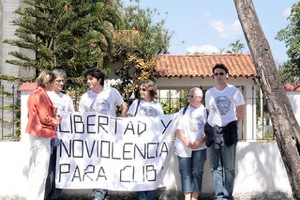
Libertad y noviolencia para Cuba

Photo by dumplife (Mihai Romanciuc) via Flickr, http://www.flickr.com/photos/62585343@N00/429146557/

Three weeks after the death of Cuban activist Osvaldo Payá, the questions that remain unanswered are not so much about the circumstances of the car accident that killed him – it appears to have been a tragic accident – but rather about the activities in which he and his European companions were engaged.  His family continues to claim that the vehicle was rammed off the road by state security agents.  According to Cuban authorities, the rental car veered off an unpaved stretch of road, and the driver, Angel Carromero, an activist from Spain’s conservative Partido Popular, has been charged with vehicular manslaughter.  At a Havana press conference, both Carromero and the other survivor, Jens Aron Modig of Sweden, confirmed the official version of the incident and asked the international community not to use the tragedy for political ends.  Since returning to Sweden, Modig, who admitted entering Cuba to deliver funds to Payá’s organization, has not disavowed the official account.  Nonetheless, the deluge of media coverage quick to frame the accident as a sinister government plot has not been corrected.

Though perhaps the most effective dissident to challenge the Cuban government, Payá was among the most tolerated.  His international celebrity – he won the EU Parliament’s Sakharov Prize for Freedom of Thought in 2002 – his opposition to the U.S. embargo and Helms-Burton regime-change programs, and his commitment to peaceful change on the island made him an unlikely target for a political assassination.

The project that put Payá on the road to Santiago has many of the markings of the secret operations carried out under “democracy promotion” programs run by the U.S. State Department and USAID.  These programs are shrouded in such secrecy that not even the Congressional oversight committees are briefed on them, so ascertaining the truth of who was directing the Carromero-Modig mission and the information campaign accusing the Cuban government of murder after the accident is practically impossible.  But strong circumstantial evidence has emerged.  In video testimony, Modig revealed that he met in Tbilisi with two major USAID grantees involved in such operations – the International Republican Institute (IRI) and the National Democratic Institute (NDI) – just before traveling to Cuba.  It is unclear whether Payá – known for eschewing foreign financial aid – was aware that Carromero and Modig’s primary objective on the trip was to hand out money to antigovernment activists.  It is conceivable that he chose not to know the details.  Regardless, his death represents a significant blow to Cuban activists seeking peaceful, democratic change without heavy foreign direction. 

Mercosur, Unasur Holding Firm on Democracy in Paraguay

Photo by Christian Van Der Henst S. via Flickr , http://www.flickr.com/photos/cvander/5215442086/

As Paraguay marked the one-month anniversary of the summary removal of President Lugo from office, the distance between South America and the rest of the hemisphere on how to deal with the “constitutional coup” remains great and is perhaps growing.  OAS Secretary General Insulza announced last week that the regional organization’s Permanent Council decided to take no further action, except to send a “support mission” to Asunción.  The Obama Administration’s inaction further indicates that the United States is prepared to allow things to stand unchallenged and even unexamined.

Mercosur, Unasur, Spain and, more predictably, ALBA have all been tougher.  Mercosur last week announced that the new Paraguayan government, led by President Federico Franco, is still barred from participating in the organization’s activities, although the government to be elected in April 2013 will be welcome.  Unasur made clear that Paraguay’s participation will be suspended “until democratic order is reestablished.”  ALBA countries have minced no words in condemning Lugo’s ouster.  Spanish Foreign Minister García-Margallo suggested publicly last week that Paraguay’s participation in the Ibero-American Summit in November may not be appropriate.

This division among hemispheric players is reminiscent of the tensions following the coup that removed democratically elected President Mel Zelaya in Honduras three years ago.  Whereas the United States quickly softened its stance on the value of isolating the golpista government of Roberto Micheletti in 2009 and later became Tegucigalpa’s most ardent advocate for speedy readmission to the OAS – while Brazil and most South Americans remained committed to seeking a more democratic outcome – Washington is now showing patience with the right-wing factions that ousted Lugo.  Mercosur’s formula for welcoming the government to be elected next year helps avoid the sort of crisis for the incoming leadership that hindered Honduran President Lobo’s efforts to push back against his country’s golpistas, who to this day are undermining his administration.