The U.S. Election: A Sigh of Relief, A Moment of Hope?

Photo by: Hanoian | Flickr | Creative Commons

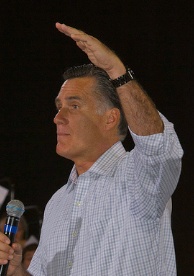
Latin American media see a glimmer of hope in President Obama’s reelection that was largely absent during the campaign.  The breadth and composition of the coalition that carried Obama to victory appears to have impressed commentators, and some believe that Obama might be freer of political constraints in a second term.  In Mexico, undergoing its own presidential transition, there is expectation that continuity in Washington will facilitate a smoother transition there.  The prospect that Obama will be willing, and perhaps more able, to press for additional stimulus measures to jumpstart the U.S. economy – with obvious benefit for interdependent Mexico – may also be a factor.  El Tiempo in Colombia noted that “with Obama, there won’t be surprises,” and that stability is welcome during the difficult peace talks.  The ALBA countries generally welcomed Obama’s reelection, and – probably reflecting a wider view – Cuban media proclaimed: “U.S. elections: the worst one did not win.”  Some media, such as Brazil’s O Globo, reminded readers that the U.S. House of Representatives remains under Republican control, and that the GOP “had been kidnapped” by the Tea Party.

A quick review of regional commentary reveals interest in the fact that Latino voters, more than 70 percent of whom opted for the President, were an important part of his coalition in Virginia, Colorado, and New Mexico.  Despite the Obama administration’s record number of deportations and its failure to introduce comprehensive immigration reform during its first term, there is little doubt that the President’s June 2012 decision to implement provisions of the Dream Act increased enthusiasm.  Challenger Mitt Romney’s tough talk on Cuba and Venezuela did not win over South Florida, suggesting that demographic change is undermining support there for hardline policies.  Bolivian President Evo Morales said, “Obama needs to recognize and pay that debt to the Latinos.”

No one so far has dared to expect a major shift in emphasis toward Latin America during Obama’s second term, but reelection gives the President another opportunity to make good on his vision for “partnership” in our hemispheric “neighborhood.”  Early analysis of the voting, particularly in Florida and in Latino communities, suggests that he will have the political space to live up to the expectations created by his soaring rhetoric during his first Summit of the Americas in 2009.  Not only can he explore reasonable approaches to longstanding issues such as Cuba, which will improve the U.S. image throughout the region; he can reengineer Washington’s relations with Central and South America in ways that reflect the region’s own evolution and ambitions – enhancing and facilitating them, rather than fearing or even resisting change.  If Latin America is ready to move into the future with a new, constructive interaction with the United States, now is the time to give it a try.
How Real is Anti-Americanism in Latin America?

Photo: WideAngleWandering | Flickr | Creative Commons

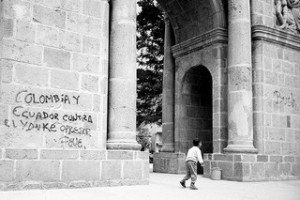
American University professor Max Friedman’s new book* offers a refreshingly original account of the sources of “anti-Americanism” in international affairs, with direct implications for U.S.-Latin America policy.  For Friedman, anti-Americanism is defined as a tendency – often ideological – to hate or resent the United States, driven primarily by cultural conflict or a rejection of democracy.  While not denying the existence of anti-Americanism, Friedman’s well-researched argument demonstrates that anti-Americanism is also a self-serving “myth” that U.S. policy makers repeat to each other, and to the U.S. public, in their unilateral pursuit of policy goals.  As the alter ego of American exceptionalism, it is too often a story we tell ourselves about the rest of the world, increasingly to our own detriment.

For Latin America, Friedman emphasizes the U.S. tendency during the Cold War to interpret regional governments as either “pro” or “anti-American,” maintaining a counterproductive “North-South perceptual divide.”  For example, Washington badly mischaracterized Guatemalan governments in 1954 and again in 1963 as communist puppets, despite significant support for the United States, which facilitated two U.S.-backed coups.  The installation of a dictatorship and subversion of democracy led to worldwide condemnation, the alienation of Latin American countries otherwise favorable toward the United States, and accusations of U.S. hypocrisy.  Even today, when the Obama Administration’s Latin America policy appears on auto-pilot, alarmists write about “the axis of anti-Americanism” in the region.  This theme is fueled by Washington’s isolation over its Cuba embargo and counternarcotics approach, its failure to deal effectively with the coup in Honduras in 2009, and its continued emphasis on free-trade zones with decidedly lukewarm governments pursuing other opportunities.

The United States has been slow to realize that its role in the region is diminishing, and Washington policy makers have not appreciated the varying economic, political, and security interests of the different countries in the region and the interplay among them.  These intraregional interests reflect motives or objectives not simply attributable to the U.S.-Latin American relationship.  But too often, as Friedman makes clear, the U.S. has dismissed Latin American concerns as latter day anti-Americanism, a manifestation of pathological hatred, irrationality, jealousy, resentment, illegitimate slander, pride, fear, inferiority, political immaturity, ideological intransigence, or an anti-modern hostility to free society.  And, as Friedman says, this “myth of anti-Americanism” promotes analytic failures and mistaken interpretations about regional conditions; it limits access to useful information from regional counterparts; equates criticism with hostility, and highlights an unwillingness to treat Latin American governments as independent actors; while it justifies faith in the superiority of U.S. thinking. As the U.S. seeks new footing in the region, none of this ultimately serves the national interest.

* Rethinking Anti-Americanism: The History of an Exceptional Concept in American Foreign Relations
by Max Paul Friedman
Cambridge University Press
ISBN-10: 0521683424
ISBN-13: 978-0521683425

Central America on U.S. Elections: A Shy Shadow

Photo by Norman B. Leventhal Map Center at the BPL’s | Flickr | Creative Commons

The U.S. election doesn’t seem to matter much for Central America.  Salvadoran President Mauricio Funes – speaking at an event with U.S. Ambassador Mari Carmen Aponte – publicly wished the “best of luck” to President Barack Obama, reflecting his close relationship with the American President.  At the Summit of the Americas in Cartagena last spring, Funes – along with Honduran President Porfirio Pepe Lobo – appeared to be Washington’s closest ally in the “war on drugs.”  This came after newly elected Guatemalan President Otto Pérez had raised the idea of legalizing marijuana, which Obama´s State Department has opposed fiercely.  Costa Rican President Laura Chinchilla slammed “the international community” – code for the United States – for pushing a policy in which only Central Americans died.  Nicaraguan President Daniel Ortega, while perhaps Washington’s most effective partner in counternarcotics, has resorted to old-school anti-U.S. rhetoric.  Panama is missing in action as a Central American voice.

The U.S. has two main interests in the subregion.  One is combating the drug trade, and the other, according to informed observers, is blocking the influence of Venezuelan President Hugo Chávez.  The U.S. Southern Command estimates that roughly 500 tons of cocaine enters the U.S. market through Central America, accounting for some 60 percent of U.S. consumption.  But there are very few clues in the American electoral narrative about either Obama´s or Republican contender Mitt Romney´s views on Latin America, not to mention Central America.  Romney´s Latin America advisors are perceived as the same hawks, with the same close ties to the Miami lobby, who dominated during the Bush administration.  Robert Zoellick, the fixer for the Central American Free Trade Agreement (CAFTA) in Washington some eight years ago, is also close to the GOP campaign and has been mentioned as a potential cabinet member, perhaps suggesting a push for some sort of second chapter of neoliberal reform.  To date there are no signs of fresh faces in the Obama camp, casting doubt as to whether a second-term State Department will be more open to out-of-the-box thinking.

This apparent estrangement comes at a time that the northern triangle of Central America – Guatemala, Honduras and El Salvador – is on a very dangerous path towards uncontrolled violence and even more weakened states. Neighboring countries are hardly in a position to help.  President Laura Chinchilla´s tenure in Costa Rica is fading rapidly toward lame-duck status, and Panamanian President Ricardo Martinelli is surrounded by corruption allegations.  For a second-term or incoming U.S. President, Nicaragua´s slippage on good-governance, despite the country’s economic tranquility, provides little political space for cooperation.  The next U.S. President will have no easy options in the most violent region of the world, which now faces, as Colombia did 20 years ago, a clear and present danger.  The absence of visible alternatives is probably a consequence of the fact that, since the Salvadoran Peace Accord ended the Cold War in Central America, Washington has not perceived much urgency to grapple with the fundamental political and economic challenges confronting the region.  Only by doing so will a new administration identify opportunities to move forward with a jointly articulated agenda.

FTA Dreaming: Promises to Expand Free Trade in the Hemisphere

Photo by: Starley Shelton | Flickr | Creative Commons

Although Latin America has not been an issue in the U.S. presidential campaign, Republican presidential contender Mitt Romney has stated multiple times that he would promote hemispheric trade agreements.  In the second debate, he said, “I’m also going to dramatically expand trade in Latin America. … I want to add more free trade agreements so we’ll have more trade.”  Romney did not specify, however, with which partners he would conclude trade agreements.  (A request to the Romney campaign for more information has not been answered.)  President Barack Obama did not comment on Romney’s promise, suggesting the president’s lack of focus on the region or calculus that voters simply don’t care.  Under Obama, the United States ratified pacts with Colombia and Panama, negotiated during the Bush administration.  The U.S. already had FTAs with Central America and the Dominican Republic, Chile, Mexico, and Peru.

While that would seem to leave a number of large economies, nearly all of them are unlikely partners. The most important remaining economies – Brazil, Argentina, Venezuela, Uruguay, and Paraguay – are part of the Mercosur trading bloc.  Washington has refused to negotiate with them as a group, and the group prohibits members from signing bilateral accords.  Meanwhile, Venezuela, Bolivia, Nicaragua, Ecuador, Cuba, and several Caribbean nations have joined together specifically to counter U.S. proposals for free trade in the hemisphere.  The few remaining countries have tiny trading relations with the United States.

The idea of adding FTAs in Latin America looks quixotic.  Nevertheless, that is hardly an excuse for failing to improve trade relations short of comprehensive agreements.  There are important opportunities to deepen the United States’ most important trade relations with Canada and Mexico, as AU Professor Robert A. Pastor has argued.  Moreover, if the United States is willing to use the Andean Trade Preferences Act as a tool for development instead of a cudgel against Latin Americans it considers wayward, it could expand trade in ways that benefit all parties.  Likewise, trade problems have become outsized irritants in U.S. relations with Brazil and Argentina – to say nothing of the broader implications of U.S. “trade policy” with Cuba.  These problems have largely festered under Obama, and Romney’s promises of free trade agreements do not seem a serious proposal to correct them.

Arms, Allies, and Ahmadinejad: Lessons from the Cuban Missile Crisis

By Robert A. Pastor and Tom Long

Photo by: Bruce Tuten | Creative Commons | Flickr

On its 50th anniversary, the Cuban missile crisis continues to attract attention as a landmark event in U.S. foreign policy.  Unfortunately, the lessons that are often drawn from the crisis are the wrong ones – and they are predicated on a version of the history that is built on more fabrications than facts.  The lesson most often drawn from the crisis is that President John F. Kennedy’s firmness and resolve compelled Soviet Premier Nikita Khrushchev  to withdraw the missiles.  As Secretary of State Dean Rusk put it:  “We’re eyeball to eyeball, and I think the other fellow just blinked.”  Unlike Chamberlain at Munich, Kennedy confronted Khrushchev and prevailed.

However, the more complete story that we now know – forcefully buttressed by a host of excellent books released to commemorate this anniversary – is very different, and one of the reasons is that we have learned much more about the complicated role of Cuban President Fidel Castro, who initially opposed the Soviet proposal to place Missiles in Cuba, but then felt betrayed when Khruschev decided to withdraw them without consulting.  We also learned that the nuclear warheads and a substantial number of tactical nuclear weapons were already stationed in Cuba when the missiles were detected.  If Khrushchev had not withdrawn the missiles, and the U.S. had invaded, which it was about to do, these weapons would have been used, triggering a nuclear holocaust.   More recently, we learned that Castro tried to convince the Soviets to leave the tactical missiles, which the U.S. did not know about, after the denouement of the crisis, but fortunately, Khruschev rejected that proposal.

We cannot be absolutely certain as to why Khrushchev decided to withdraw the missiles, but all the available evidence suggests several factors.   First, Robert F. Kennedy had conveyed a complex proposal to Soviet Ambassador Dobrynin:  the U.S. would  not  invade Cuba if the Soviet Union withdrew the missiles.  More important, he said that the U.S. would withdraw its missiles from Turkey but only on condition that this information would not be made public.  Because of this deal, Kennedy was able to “spin” the event so that it looked like we won without giving up anything.  Robert Kennedy also said that he feared that the U.S. military might take matters into its own hands if the crises were not resolved soon.  At the same time, Fidel Castro sent a long message to Khrushchev, saying he expected an imminent invasion by the U.S. and recommending that the Soviet Union launch a first strike against the United States.  Coupled with the shoot-down of a U-2 over the island and a straying of another U-2  in Soviet Asia, these various factors led the Soviet leader to fear that both he and Kennedy were losing control of events, and thus, an immediate resolution of the crisis was essential.   That is why he transmitted his decision on radio.

Today’s great U.S. foreign policy fear is that a nuclear Iran will destabilize the Middle East.  Once again, the drama plays out in the middle of a U.S. electoral campaign, as did the Cuban crisis.  Once again, there are calls for threats and “red lines.”  An honest look at the events of 1962 yields useful lessons for today.  First, we should expect our leaders to have the courage to negotiate with adversaries to avoid conflict – and to stand up to domestic voices, including generals and advisors, pressing for war.  The second, more challenging lesson requires a U.S. president to step inside Nikita Khrushchev’s shoes.  The Soviet premier was able to stand up to an ally to avoid being dragged into a war with nuclear ramifications.  If Israel insists on a pre-emptive attack on Iran, will a U.S. president have the courage to restrain his ally, as Khrushchev had in restraining Fidel Castro?

Robert A. Pastor is a professor of International Relations at American University’s School of International Service and a faculty affiliate at the Center for Latin American and Latinos Studies. He has served as National Security Advisor for Latin America under President Jimmy Carter, and he was a Senior Fellow and director of programs on democracy, Latin America, and China at the Carter Center. Most recently, he is the author of The North American Idea: A Vision of a Continental Future.

Tom Long is a doctoral research fellow at the Center for Latin American and Latino Studies.

Indigenous Prospects in Mexico

American University professor Todd Eisenstadt has turned the conventional story about indigenous peoples in Mexico upside-down.  In Politics, Identity and Mexico’s Indigenous Rights Movement,* Eisenstadt presents evidence that Mexico’s indigenous peoples are at present not best characterized exclusively by the pursuit of communitarian ethnic goals and the defense of their collective rights and autonomy.  Rather, he shows that indigenous people are often preoccupied with their socio-economic conditions and struggles over land tenure and ownership, more than with ethnicity, and in ways largely comparable to non-indigenous Mexicans.

For at least a decade after the Zapatista revolt exploded onto the world stage in 1994, indigenous concerns and critiques of the state helped shape national Mexican politics and public debate.  The 1996 San Andrés Accords underscored the Zapatistas’ analysis of the limits of liberal citizenship and of the negative consequences of neoliberal state policies.  Now, in late 2012, indigenous political possibilities in Mexico appear very different.  The government has still not ratified the Accords; Mexico’s center-left has failed to capture the presidency; and the neoliberal policies of the Calderón administration promise to continue with the PRI’s return to power.  Indigenous social mobilization has been fragmented since the early 2000s.  Localized conflicts have flared up over government efforts to privatize land for outside investment and development, but these have not led to larger-scale indigenous mobilization.  The Zapatistas’ “Other Campaign” has had little impact, and they did not participate in the recent presidential elections.  As regular teacher strikes and the attention generated by the spectacle of the “#YoSoy132” anti-electoral fraud student movement have made clear, the national center of gravity of social protest no longer turns on an indigenous axis.

Eisenstadt’s book sounds a skeptical note about the possibilities for ethnically-based indigenous mobilization in Mexico.  His research underscores that Mexico’s development model does not adequately address the needs of ordinary Mexicans – including of indigenous peoples – at a moment when we should expect more of the same from the Peña Nieto (PRI) administration that takes office on 1 December.  He documents the shift away from primordialist accounts of indigenous identity to friction over control of economic resources – a shift from ethnicity to class – that is seen in some other Latin American countries. While countries such as Bolivia have actively incorporated indigenous nationalisms into state policy and law, Mexico appears headed in the other direction.  This divergence illustrates the elusiveness of the ongoing search for the best balance between collective and individual rights in Latin American countries with large indigenous populations.

* Politics, Identity, and Mexico’s Indigenous Rights Movement
by Todd A. Eisenstadt
Cambridge University Press
ISBN-10: 110700120X
ISBN-13: 978-1107001206

Honduras: What is U.S. policy?

The sustained surge in crime and violence in Honduras – including more than 60 politically motivated murders in the past year – is raising doubts about the viability of the government and its institutions.  The term “failed state” is often abused, but there’s no doubt that Honduras falls short of the rhetoric about its stability and democracy that the Obama Administration recited when arguing for the country’s readmission to the OAS after the 2009 coup that removed President Mel Zelaya.  Indeed, the coup set the country on a downward spiral from being a weak democracy to one struggling for basic credibility.  The U.N. Office on Drugs and Crime says Honduras has the world’s highest murder rate – 91.6 murders per 100,000 inhabitants in 2011.

Undersecretary of State María Otero has spent time and energy trying to establish a policy toward Honduras.  During a visit to Tegucigalpa last month, she signed an agreement with Foreign Minister Corrales that “sets the stage for results-oriented action towards our shared objective of a safe Honduras that respects the rule of law and human rights,” and she announced that the United States would provide an additional $1.8 million in aid to help counter gang activity in Honduras.  Despite her efforts, the State Department and the U.S. Embassy in Tegucigalpa have failed to go beyond ready-made programs and put in place a framework for a comprehensive policy.  Programs are not policy.  The Administration appears reluctant to admit that its Honduras policy, which has failed, needs an overhaul.

Multimillion-dollar programs will not succeed until they take into account that the Honduran “partners” upon which they depend are themselves at the core of the problem.  Three years after the coup, the Obama Administration still fails to see that its allies in the struggle against transnational and local gangs, as well as its efforts to build judicial institutions, are the same people who mocked the rule of law, overthrew the previous president, and re-politicized the military and police to serve their own purposes.  (The reasons for Washington’s unwillingness to help fund a “Commission for Security Reform” approved by the Honduran Congress are unclear, but this may be a factor.)  There are strong suspicions in many sectors of Honduran society that members of the country’s political-economic elite are the sponsors of the sicarios (hired gunmen) who have killed dozens of citizens whose offense was to demand an end to government impunity.  Given the challenge that the growing popularity of the country’s new political party, LIBRE, poses to traditional powerbrokers, informed observers expect violence to increase in the run-up to elections next year.  Absent public explanation of U.S. policy, it is fair to ask why Washington hasn’t seen these patterns – obvious to Hondurans – and why it hasn’t offered sustained support from the FBI and other U.S. law enforcement to investigate the assassinations and trace them back to the power bosses.  It is also fair to ask Assistant Secretary of State Brownfield and others who espouse the militarized approach to dealing with organized crime how this strategy, which has failed elsewhere, will succeed in Honduras.  Why hasn’t the Obama Administration supported the sort of U.N.-sanctioned investigative capacity that has proven effective with the International Commission Against Impunity in Guatemala?  Why has Washington not even pushed for meaningful implementation of the recommendations of the Truth and Reconciliation Commission released last year?  If Washington wants to make its rhetoric about Honduras into reality, it needs to do more than just to funnel funds into programs run by questionable partners.

ALBA’s Low Expectations for U.S. Election

Discussion of the U.S. election in  the countries roughly aligned under the banner of the “Bolivarian Alliance” (ALBA) – Venezuela, Bolivia, Ecuador and Argentina – generally reflects their own polarized domestic politics.  In Venezuela, comparisons between the two countries electoral campaigns were common.  Washington-based commentator Moisés Naím suggested that Romney could learn from Venezuelan Presidential candidate Capriles’s empathy and inclusiveness in order to unseat Obama.  Andrés Correa ripped President Obama, saying he needs to take Chávez more seriously and needs “an atlas and a compass so he can figure out where he is and come to understand that the United States has more connections with Latin America than with any other part of the world.”  In a column that appeared in several countries, Argentine Ricardo Trotti praised the civic spirit of the first U.S. Presidential debate, and took Chávez, Bolivia’s Evo Morales, Nicaragua’s Daniel Ortega, Ecuador’s Rafael Correa, and Argentina’s Cristina Fernández to task for not engaging in debates.  “The fear of debating implies a fear of democracy,” he wrote.  In Nicaragua, former education minister Humberto Belli Pereira made a similar point in La Prensa, as did a commentator in Bolivia’s El Deber.

Mitt Romney’s criticism of Obama as being naïve about the pernicious influence of the “failed ideology” of Venezuelan President Hugo Chávez and Cuba’s Castro brothers attracted wide coverage throughout the region – with predictable reactions from each side.  In ALBA countries, opposition media evinced skepticism of Obama and appreciation for Romney’s promises to take a hard line against Chávez, and pro-government outlets portrayed the Republican as a loose cannon who trumpets Manifest Destiny and military options.  Chávez’s reference to Romney as “crazy” during the primaries set the tone for some media.  On Aporrea, a popular pro-Chávez online forum, one commentator said he preferred Clinton Eastwood’s empty chair to either Romney or Obama.  In Argentina, Martin Kanenguiser wrote in La Nación that his country could only “tie or lose” in the U.S. election, particularly in regard to the Argentine relationship with international financial institutions.  The 2011 elections in Argentina, followed by the U.S. 2012 contest, have contributed to a sour atmosphere for bilateral relations, noted Leandro Morgenfeld in Marcha.

That the U.S. election has become polarizing illustrates the challenges the new U.S. administration will face in 2013.  If Romney wins and follows through on his rhetoric, he might please hardliners in the U.S. and opposition groups in ALBA-aligned countries, but relations will become even more bitter.  If Obama is re-elected, those opposition groups will continue seeking support for their own agendas and pressure from Washington on ALBA governments. However, the dearth of high level attention would likely continue in a second Obama administration, leaving bilateral relationships to stagnate.  More likely, the real choice in U.S.-ALBA relations will be between empty rhetoric and deafening silence – while further exposing the limits of U.S. influence in the region.

Brazil’s Protest: If You Get QE3, We Get Tariffs

Photo by “SqueakyMarmot” | Flickr | Creative Commons

For two years Brazilian voices have complained that U.S. policies of near-zero interest rates and “quantitative easing” have been damaging its economy.  Lax monetary policies in the U.S. and Japan are blamed for the high valuation of the Brazilian real, which further suppresses Brazil’s  languishing manufacturing sector.  Tensions escalated following the September 2012 announcement of the U.S. Federal Reserve’s third round of quantitative easing.  Now the debate has spilled over into discussions about Brazilian restrictions on trade.  As Finance Minister Guido Mantega warns of a “currency exchange war,” Brazil is increasing tariffs on U.S. goods and foresees the imposition of taxes on inflows of foreign capital, which further inflate the Real.  Writing in Folha de São Paulo, Luiz Carlos Bresser-Pereira argues that Brazil is acting in self-defense.  The tariffs Brazil is contemplating are by his account not protectionist but simply an effort to compensate for the unfair advantage that the U.S. seeks to achieve through its monetary policy.

The tension is spreading beyond Brazil, as currency appreciation is portrayed as a drag on manufacturing in much of South America.   In an interview with CNN, Chilean President Sebastián Piñera criticized “QE3,” asserting that “printing money” would not solve U.S. economic woes.  So far, Andean countries are responding by purchasing dollars and cautiously reducing interest rates, but the Brazilians, in particular, present protectionist measures as counter-cyclical tools of their own, necessitated by American attempts to “drive down” the dollar.

The Brazilian and South American claims may be overdrawn somewhat; many experts believe that overvaluation is primarily a consequence of Chinese demand for South American commodities and the decision by most Latin American countries to maintain high interest rates in order to forestall inflation.  But U.S. policies meant to boost job growth are indeed having unintended consequences in the hemisphere.  There has been little thought in the United States of the external implications of Fed policy—beyond a belief that a reinvigorated U.S. economy would be good news for everyone.  Brazil has been the first, and most vocal, challenger of a stance that always frowns on tariffs while presenting monetary policy as a purely domestic matter.  It is a bit much for Brazilians to expect that U.S. monetary policy should be crafted with an eye to its impact on the region, particularly when conventional fiscal policy measures are thwarted by Congressional dysfunction, but Washington should not be surprised when efforts to tamp down its currency – not unlike Chinese policies that Washington condemns  – are seen abroad as aggressive threats to competition.

Venezuelan Elections: Chávez Wins, but Confirms Country’s Divide

Henrique Capriles Radonski and Hugo Chávez | Venezuela’s Globovision | Flickr | Creative Commons license

Following a tense day of voting on Sunday, incumbent Hugo Chávez has won the Venezuelan presidential elections.  With 90 percent of the ballots counted, Chávez had approximately 7.4 million votes (about 54.4%) while opposition candidate Henrique Capriles won 6.15 million votes (44.9%).  The president won every state in Venezuela except Táchira and Mérida, and secured a majority of votes in Zulia State, traditionally a bastion of support for the opposition.  Turnout was nearly 81 percent, a very high figure, and thousands of Venezuelans cast their ballots at consulates and voting centers abroad.  As of yet, there have been no allegations of voter fraud or post-electoral violence and both candidates appear to have accepted the result.  A delegation from UNASUR “accompanied” the vote and has affirmed that the electoral process was legitimate.

Chávez will embark on his third consecutive presidential term in January 2013 and, health permitting, will remain in power until at least 2019.  The ruling PSUV has a sufficient majority in parliament to ensure that Chávez will be able to legislate comfortably.  However, should Chávez’s health prevent his completing the term, the PSUV lacks an obvious successor who could carry forward with the Bolivarian Revolution.  Regardless, the Chávez agenda faces huge challenges, particularly with an economy rife with distortions and a security situation spiraling out of control.

While Capriles and the opposition were defeated at the polls, his candidacy galvanized an opposition that is far better organized and more united than at any point since Chávez’s  rise to the Presidency 14 years ago.  The 6.15 million votes Capriles received was the greatest number ever for a losing candidate in a presidential Venezuelan election, and kept Chávez’s margin of victory within single-digits.  Clearly, a large segment of the population opposes further expansion of the Bolivarian Revolution.  It remains to be seen whether a united opposition can complicate Chávez’s efforts to move Venezuela further down the road to his brand of socialism.