Narcoliteratura: Another Way to Look at the Problem

By Héctor Silva

Élmer Mendoza

Élmer Mendoza

Latin America has suffered through almost three decades of the so-called war on drugs.  U.S. President George H.W. Bush formally declared the war in the late 1980s, but from the Andes to the Rio Grande it started when the Colombian cartels and their Mexican partners (then exclusively involved in distribution) created a multi-billion-dollar business to satisfy the growing U.S. market.  The druglords’ strategy of “plata o plomo” brought Mesoamerica and Mexico to their knees through violence and institutional corruption.  Hundreds of thousands have died, but the “war” has failed to tackle the economic basis of the industry: markets shift and supplies remain steady.  The cartels are smaller and more ruthless, and nation states are weakened by corruption.  Reams of reports have been written by official agencies, international organizations and think tanks – the latest a creative study by the OAS – but solutions remain elusive.

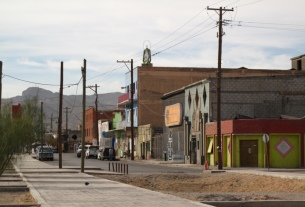
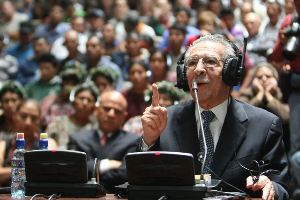
The drug trade has left an indelible mark on the very fabric of Latin American culture and society.  “Narcoliteratura,” one of whose main creators is Mexican writer Élmer Mendoza, is one of the most curious manifestations of this.  (Mendoza spoke at American University and was interviewed by this writer in February.)  His main character is Edgar “El Zurdo” Mendieta, a troubled police officer in Culiacán, Sinaloa, a city emblematic of the Mexican drug cartels.  El Zurdo’s stories capture the dual representation that Latin American culture has given to both the trade and its capos – romantic and profitable, yet evil.  Mendoza’s books give a naked and honest portrait of a society that has adapted, for its own survival, to most of the values associated with the narco business.  As Mendoza says, “El Zurdo” tries to keep a distance from the narco, but he can’t avoid him because the narco is there and is very strong and, almost without wanting to be, is always in contact.”

Compared to the many reports that fail to lead to policies that would help attack the core problems that give rise to the narco industry, Mendoza’s work provides a fresh and sincere portrait of the devastating impact the drug trade and the “drug war” have had on Latin America.  In books like El Amante de Janis Joplin and Nombre de Perro, his message is powerful, coming from a writer that has been there, in Culiacán, since it all started.  He writes with no restraints, through the voice of his characters, to tell some simple truths.  In an interview with this writer, he offered a sampling of his wisdom.  “If the US came up all of a sudden with a program to deal with its addicts, it would mean the end for the narco business,” later adding that “the war on drugs is useless and has only caused death.”  He poignantly stated:  “The war on drugs also allowed us to relax our emotions and lose the last chance for justice.”


Finding New Approaches to Media-Government Tensions in Latin America

By John Dinges

Press Conference in Lima, Peru Photo credit: World Economic Forum / Foter.com / CC BY-NC-SA

Press Conference in Lima, Peru Photo credit: World Economic Forum / Foter.com / CC BY-NC-SA

Establishment news media and government are on a collision course in a number of Latin American countries.  At the heart of the conflict is government rejection of the classic role of an ideologically diverse press as a check on government power and as a forum of citizen deliberation.  The media, in response, charge that government actions constitute violations of international free press guarantees.  But that defense has been ineffective and has not resonated at the popular level.  All of the governments involved are democratically elected, and most espouse left-of-center programs of progressive reform aimed to benefit the poorest sectors and address other forms of inequality.

The most severe conflicts are in Venezuela and Ecuador, where aggressive government use of laws and lawsuits has dramatically diminished the influence of independent television and newspaper organizations.  The once strident news media, not unfairly characterized as the de-facto opposition, have been cowed, and are cowering.  At the same time, governments are embarking on the redistribution of the broadcast spectrum to favor community and state-owned (“public”) channels.  The Morales government in Bolivia has achieved the upper hand over the media as it builds its own media network.  The Kirchner government of Argentina is fighting a legal battle –with mixed success – to cripple the media empire of Grupo Clarín, the owner of the largest newspaper in Latin America and the largest cable network.  The conservative governments of Honduras and Panama are also on the freedom of expression watch list, indicating that the phenomenon is not purely a matter of ideology.

The polarization and growing government dominance represents a serious problem for democracy in these countries.  For all the harsh rhetoric on both sides, however, the overall threat to freedom of expression (measured in censorship, direct control of media and imprisonment of journalists) is far less than was the case during the rightist military governments of previous decades.  Still, it would be a mistake to limit our promotion of healthy democracy to the defense of the traditional “legacy” media institutions in these countries.  Government leaders, especially Presidents Correa of Ecuador and Kirchner of Argentina, have used (some would say misused) democratic arguments in criticizing the traditional media.  They charge that the concentration of media in the hands of the private sector (with ownership participation of banks in the case of Ecuador) is itself a violation of democracy, and that they are trying to “democratize” the media by delivering increased access to citizens in the form of public and community media.  Not surprisingly, these new media creations are beholden to the government and lack political independence.  But they are not going away.  In an effort to defuse the tension, institutions such as the Carter Center and others have developed an alternative conflict resolution approach that is quietly garnering support.  The idea is to promote an honest dialogue between governments and wide sectors of the media.  It would create a process to explore the substance of government positions as well as investigate alleged abuses. To this end, the Carter Center organized meetings earlier this year in Ecuador and Bolivia, and a conference was held at Columbia University’s School of Journalism this month bringing together leaders of government, media institutions and international organizations to debate media regulation and press standards as a platform to reconstitute consensus about media in democratic societies.

Immigration Reform Legislation: Better than Nothing, But Still Flawed

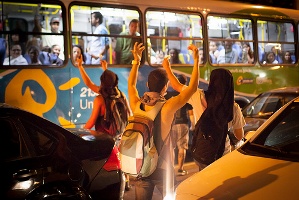
Immigration reform rally / Photo credit: quixoticlife / Foter.com / CC BY-NC-SA

Immigration reform rally / Photo credit: quixoticlife / Foter.com / CC BY-NC-SA

The comprehensive immigration reform proposal that the bipartisan group of U.S. Senators dubbed the “Gang of Eight” released on April 17 is an important step forward but probably dooms us to repeat history.  The plan includes mechanisms for documenting the roughly 11 million inhabitants of the U.S. who are now living in the shadows and opening a path to citizenship for undocumented immigrants who have been in the country since December 2011.  The process to gain citizenship would be long – taking typically 13 years – arduous, and expensive, requiring payment of substantial fees and fines.  The Senate Judiciary Committee began its review of the bill on May 9, covering 30 of 300 proposed amendments.  Prospects for the legislation remain uncertain, as the fragile alliance among these eight senators may not be sufficient to sway skeptics on both the left and right of the political spectrum.  If passed, the measures would take effect after the U.S. government certified that heightened border security measures have been implemented.

Supporters of comprehensive immigration reform from both sides of the aisle have long called for a “once-and-for-all” solution to the country’s broken immigration system.  Nevertheless, the original 867-page proposal – like the Immigration Reform and Control Act of 1986 that regulated the status of just under three million undocumented immigrants – is by no means a permanent fix.  In an important sense it cannot be: it reflects a static conception of immigration, whereas historical analysis of migration patterns shows that they are inevitably dynamic processes, responding to unpredictable fluctuations in labor supply and demand in sending and receiving economies alike.

However imperfect it may be, the Senate bill represents the most promising step yet to address this ongoing challenge.  Proposed amendments introduced thus far have not addressed the dynamic nature of the problem, focusing instead on the digression of border security, as if fences or bloodhounds were capable of controlling cross-border population flows.  Institutional frameworks that acknowledge the dynamic factors that shape human migration and offer avenues for managing the movement of peoples intelligently are on the back burner.  As AU history Professor Alan Kraut has suggested, one way that legislators could achieve this would be through establishment of a commission on foreign and domestic economies and labor markets that would conduct periodic reviews of the conditions associated with optimum migration flows.  Absent the deeper understanding of migration that such reviews would provide, the U.S. legislation – albeit better than nothing – will probably yet again repeat the error of proclaiming an unattainable once-and-for-all resolution of immigration policy.

Brazil: The STF, Congress, and Checks and Balances

By Matthew M. Taylor
Supreme Federal Tribunal (STF), Brasilia / Photo credit: R. Motti / Foter.com / CC BY-NC-SA

Supreme Federal Tribunal, Brasilia / Photo credit: R. Motti / Foter.com / CC BY-NC-SA

Brazil’s last resort for political minorities and opposition parties – the Supreme Federal Tribunal (STF) – is facing growing pressures on its independence.  In Brazil’s famously hyper-presidential system, the executive branch dominates Congress through an elaborate system of presidential decrees, budgetary pork, and cabinet appointments.  Since 1990, no president’s party has ever held more than one-fifth of the seats in Congress, yet presidents – using a diverse array of carrots and sticks – have routinely been able to rely on support from coalitions that surpass three-quarters of the Chamber and Senate.  As Brazil’s high court, the STF has been the only channel through which majoritarian decision-making has been contested.

In recent weeks, Congress has bluffed its way onto the scene: the constitutional committee in the lower house voted to curb the courts via a proposed – but ultimately shelved – constitutional amendment that would restrict the STF’s powers of constitutional review, subjecting decisions that Congress finds objectionable to public consultation.  The reaction has been deafening.  The press has drawn parallels to similar moves in neighboring Argentina and Venezuela.  Eminent political analyst Sérgio Abranches claimed that this was further evidence that an “oligarchic civil coup” was under way.

Some judicial actions have indeed been provocative, such as decisions on contentious issues such as political party formation and the distribution of oil royalties. But the Congress’ effort to curb the court has left a bitter taste – because it points both to the increasing politicization of judicial decision-making and its potentially destabilizing effects on the political system.  The fact that the amendment proposal had support even from some members of the opposition underscores the depth of congressional resentment of the STF’s proactive role.  The Court appears likely to face continued pushback from Congress, with overwhelmingly political objectives.  But some elements of the proposed reform may be worth thinking about, such as restrictions on the issuance of injunctions by single members of the Court.  Too often these injunctions have been seen as high-handed and lacking in the legitimacy that decisions by the full Court carry.

Venezuela Update: Confusion in Caracas…and Washington

Photo credit: INTERNATIONAL REALTOR / Foter.com / CC BY

Photo credit: INTERNATIONAL REALTOR | Foter.com | CC-BY

Three weeks after elections to choose Hugo Chávez’s successor, confusion still reigns in both Caracas and Washington.  The Venezuelan opposition has rejected the results of the election, which the electoral tribunal says Chávez’s handpicked man – Nicolás Maduro – won by only 1.8 percent.  Opposition candidate Henrique Capriles originally asked only for a vote recount – considered reasonable by many because of the narrow margin – but his lawyers upped the ante on 2 May when they officially demanded that the vote be invalidated and new elections be held.  Isolated incidents of political violence turned up the heat in Caracas, although the Götterdämmerung scenarios in the streets that some analysts predicted have not yet materialized.

Every major country of the hemisphere has recognized Maduro as President – except the United States.  (Canada wavered at first but seems to have moved on.)  Washington has invested millions of dollars in “democracy promotion” programs over the years and has provided Capriles and the opposition enduring political support in their efforts to beat Chávez at the polls and later to beat Maduro as his hand-picked successor.  Since the April election, the U.S. government has endorsed the opposition’s call for a vote recount.  So has the OAS, which offered experts to assist in the process.  But only Washington has said that while it is “working with” the Maduro Government, it doesn’t recognize its legitimacy.  The State Department spokesman dodged the issue repeatedly last week, and in an interview with Univisión broadcast at the conclusion of his visit to Mexico last Friday, President Obama himself refused to say whether his Administration officially recognized Maduro as President.  He left little doubt as to his real position, however, when he said that basic principles of human rights, democracy, press freedom and freedom of assembly were not observed in Venezuela following the election.

As AULABLOG pointed out on 23 April, the irony of the United States demanding a hand-count of the ballots is not lost on millions of Latin Americans who remember Washington’s performance in the 2000 Bush-Gore vote – and that it was a politically divided Supreme Court that made the final decision.  The tightness of the vote, Venezuelan electoral realities (past and present), and President Maduro’s over-the-top rhetoric – last week he again accused Washington of backing “neo-Nazis” allegedly trying to overthrow his government and accused a filmmaker of being a spy – make it hard for observers to argue that the elections are legitimate.  President Obama’s statements, including his remark that the spying charge was “ridiculous,” have been measured and continue a noteworthy shift since the near-hysteria about Venezuela during the Bush Administration.  But the fact remains that the U.S. Government’s posture on Venezuela – perhaps unique in its bilateral relations with Latin America since the Cold War – has made it once again the outrider and, among people who remember the Bush-Gore decision, the butt of many jokes.  Importantly, Capriles may be reading Washington’s stance as an endorsement of his own increasingly puzzling demands.  As our 23 April post suggested, Capriles ought to see himself as having a historic chance to lead, poised to challenge Chavismo easily at the polls the next time around.  Yet, like Mexico’s Andrés Manuel López Obrador in 2006, he may be squandering an opportunity to present himself to the Venezuelan electorate as the responsible grownup in the room.

Colombia’s Uribe Out of Office, But Not Out of Mind

By Tom Long

Alvaro Uribe receiving the Medal of Freedom | Photo credit: White House photo by Chris Greenberg / Foter.com / Public domain

Alvaro Uribe receiving the Medal of Freedom | Photo credit: White House photo by Chris Greenberg / Foter.com / Public domain

Former Presidents George W. Bush and Álvaro Uribe of Colombia were close allies in the “war on terror,” but they are taking very different approaches to their post-presidency.  While the former has taken up painting and appears at few public events, since leaving office in 2010 Uribe has consistently tried to upstage his hand-picked successor, Juan Manuel Santos.  He has frequently taken to Twitter with biting criticisms, and in recent months – as provincial and municipal elections near – Uribe’s public condemnations have grown both more vociferous and more damaging.  Even ardent supporters of Uribe’s presidency are questioning his post-presidential politicking, according to press reports.

In particular, the former president’s attacks on the ongoing peace talks with the FARC and Colombia’s more conciliatory approach to Venezuela have contributed to a drop in Santos’ support, according to polls, and made the two endeavors more difficult and politically costly.  On the former, Uribe has repeatedly accused Santos of offering “impunity” to FARC fighters.  He’s also accused Santos of “turning his back on democracy” for joining (albeit reluctantly) the UNASUR consensus to recognize Nicolás Maduro’s narrow victory in the Venezuelan presidential elections.  And Uribe has slammed Santos’s efforts to hold Uribe-era officials responsible for violence and corruption.  Though Uribe’s attacks have complicated Santos’ position with his own party on these issues, the reaction has been quite different in the United States.  Though Uribe’s criticism has found an audience with the far right in the United States, Santos retains considerable U.S. backing.  Uribe’s role as the main U.S. ally in South America in the past was warmly rewarded and he was held up as Colombia’s savior – President Bush gave him the Medal of Freedom – but his hectoring of Santos and his failure to atone for violations during his government appear to have undermined his credibility.

Uribe’s post-presidential antics should spark a re-evaluation of his presidency, even among those who downplayed human rights problems and suspected links to paramilitaries among Uribe’s party and family.  His accomplishments in rebuilding the Colombian military and imposing tactical defeats on the FARC cannot be denied, but in doing so, he ran roughshod over civilian institutions, used a secret intelligence unit to harass opponents in and out of government, and, with the deaths of potentially thousands of “false positives,” appears to have been complicit in serious violations of human rights. Out of office, he continues to show a similar lack of respect for democratic processes and decorum – even as he levels that same accusation against Venezuelan leaders – and he still seems profoundly resentful that he failed to amend the Constitution to allow himself a third term.  In a democracy, there can only be one president at a time.  Former presidents have the right to speak out, but it’s fair to ask if their goal is constructive and contributes to the integrity of democratic institutions.


Belize: An Outlier in the Middle of the Mess

Belize - Boy carrying water. Photo credit: Blue Skyz Media / Foter.com / CC BY-NC-ND

Belize – Boy carrying water. Photo credit: Blue Skyz Media / Foter.com / CC BY-NC-ND

Though off the radar of most analysts, Belize appears to be the latest casualty of the drug trade and criminal violence.  It debuted on the Obama Administration’s annual blacklist of major drug-transit and -producing countries back in September 2011, alongside El Salvador, filling out the roster of Central American countries.  That U.S. government spotlight, however, has done little to halt the Mexican drug cartels’ expansion into Belize.  The U.S. State Department now estimates that about 10 metric tons of cocaine are smuggled each year along Belize’s Caribbean coast – partly the work of local contacts established by the Zetas and the Sinaloa cartel.

Like its neighbors’ security challenges, Belize’s problems are not limited to drug trafficking.  Urban gangs and the rivalries among them are the main driver of the escalating violence, which is rooted in the same causes as in neighboring countries – institutional weakness, rampant corruption, impunity, and unemployment.  The government-sponsored gang truce negotiated in 2011, which featured “salary” payments to members who ceased violent activities, collapsed last December when funds dried up.  (Click here for details documented by our colleagues at InSight Crime.)  Belizean authorities tallied a record number of homicides last year, edging out neighboring Guatemala for the sixth place slot in global per capita homicide rankings.  Porous borders make Belize attractive to transnational gangs, particularly El Salvador’s MS-13 and Barrio 18, both of which have established a significant presence in the capital city, Belmopan, and elsewhere.  About one-fifth of the country’s 325,000 people are Salvadoran citizens, making it difficult to track criminal elements.

The deteriorating conditions in Belize raise questions about the effectiveness of U.S. counternarcotics and “citizen security” programs in the region.  The patchwork of U.S. initiatives under the umbrella of the Central American Regional Security Initiative (CARSI) has not reversed regional trends even in tiny Belize.  While the country’s law enforcement agencies welcomed the heavy equipment, training, and technical assistance that make up the bulk of CARSI funding, the tactical gains have been obscured by a worsening strategic outlook.  The U.S. Government Accountability Office has voiced its concern that the State Department is confusing efforts with results.  Moreover, neither the Belizean nor U.S. government has mapped out a preventative strategy.  The most recent data show that less than half of the funds allocated to Belize from CARSI’s Economic Support Fund, used for programs to help at-risk youth, has been spent, and after handing out 1 million Belizean taxpayer dollars to gang members during the truce, for example, there is little to show for it.  In the run-up to President Obama’s summit with Central American presidents next week, Belizean Prime Minister Dean Barrow’s statement that “Obama hasn’t done anything for Belize” was subsequently qualified, but the fact remains that U.S. partnership with Belize, like with its neighbors, has not begun to work yet.

**An earlier version of this post inadvertently omitted the word “Belizean” before “taxpayer dollars” in the concluding paragraph, giving the false impression that State Department funds had been used to subsidize Belize’s gang truce.

Chavismo Wins a Battle But the Tide May Have Turned

By Eric Hershberg

Inauguration of Nicolás Maduro | Photo credit: Presidencia de la República del Ecuador / Foter.com / CC BY-NC-SA

Inauguration of Nicolás Maduro | Photo credit: Presidencia de la República del Ecuador / Foter.com / CC BY-NC-SA

President Nicolás Maduro’s inauguration last Friday marked a new stage in the contest between chavistas and the Venezuelan opposition.  Maduro’s surprisingly weak showing at the polls – winning by a meager 1.8 percent margin despite the huge (and abused) advantages of incumbency – plus tensions within his party and his own rhetorical excesses, suggest that chavismo without Chávez confronts challenging odds.  Chávez attracted more votes alive than he could in death, as his hand-picked successor could not match his patron’s appeal at the ballot box.  Looking forward, Maduro and the Partido Unido Socialista de Venezuela (PSUV) will be judged on the basis of their performance.  The road ahead will not be easy for Maduro, as the government  confronts growing economic and security problems, and his ineffective campaign may energize potential competitors from within Chavismo.

Henrique Capriles’s strong showing in the election bodes well for the opposition.  However, athough Maduro’s blanket reference to them as “fascists” is absurd, their apparent eagerness to use the vote recount – reluctantly agreed to by the electoral council hours before Maduro’s inauguration – to remove him from office could breathe life into his allegation that the opposition consists of  golpistas obsessed with taking power.  Overreaching could be their undoing, as it has been in the past.

Latin American presidents, through a UNASUR statement of support and participation in the inauguration, have endorsed Maduro’s ascendance to the Presidency.  Their strong interest, for a variety of reasons, is in a balance between continuity and change in Venezuela. Although there are signs that both Chile and Colombia wavered momentarily, South American governments overall were united in their preference for a chavista government, as this would favor both  internal and regional stability.The United States, on the other hand, has appeared timid.  Maduro’s accusations of U.S. attacks on him and the presence of Iranian leader Ahmadinejad at the inauguration made it impossible for Washington to send a senior emissary to the swearing-in.  Yet the evident absence of the United States, even after the UNASUR endorsement, was petty.  Through statements calling for a recount of 100 percent of the votes both the State Department and the U.S. Ambassador to the United Nations came across as unable to outgrow a grudge match with Chávez or to grasp that the American position would isolate Washington once again from prevailing sentiment in South America.

There were two winners in the Venezuelan election:  Maduro, who is now the elected President, and Capriles, who managed to secure nearly half the votes in the face of overwhelming odds.  The latter comes out ahead in the long run, but only if he manages his cards wisely.  Washington, meanwhile, seems still not to understand two things:  First, after Bush v. Gore, it will be at least another generation until Americans can say anything about how to count votes.  It was legitimate and appropriate for the OAS to demand a recount, as its record in election monitoring is impeccable.  Secretary General Insulza achieved the core objective of the Organization and should be recognized for having done so.  For the American government to have taken the position that it did suggests an inability to understand the consequences of the 2000 election in Florida for its credibility in election-related issues in the region.  Second, democratic change in Latin America is typically an evolutionary process.  This may be less satisfying to some policymakers who would prefer to see a foe’s outright defeat, but it may be better, for Chavismo’s enemies in both Washington and Caracas, than having their favorite step in at this particular time of high tensions.  If Capriles and his coalition can brand themselves as democratic reformists rather than golpistas, they have a good chance of coming to power when Maduro’s six-year term is exhausted, or even before, and if they convey a message of responsible opposition, key South American governments might well approve of an alternation in power the next time around.

What Can Be Learned from the Humala Government?

By Rob Albro

President Humala inaugurating electric power in the rural district of Moro - Ancash Photo credit: Presidencia Perú / Foter.com / CC BY-NC-SA

President Humala inaugurating electric power in the rural district of Moro – Ancash Photo credit: Presidencia Perú / Foter.com / CC BY-NC-SA

As a candidate in Peru’s 2006 presidential election, one-time military coup plotter and current president Ollanta Humala presented himself as an anti-business socialist and nationalist happy to be a member of the “family” of left-leaning Latin American governments led by Venezuela’s Hugo Chávez.  In his second successful bid for office in 2011, Humala sharply changed direction and embraced a combination of pro-business and anti-poverty measures reminiscent of Brazil’s center-left Lula.  Humala’s shifts are a sign of the times in the Andean region:  a non-ideological search for how best to build democracies and grow national economies, while effectively redistributing wealth.

Driven by its mining sector and a commodity export boom, Peru’s economy has tripled in size over the past decade and is currently one of the best performing in the world.  Foreign investment is flooding in, particularly to mining, hydrocarbons, and big infrastructure projects – and Humala is now considered an “investor darling.”  While backing off electoral promises to nationalize water, electricity, mining and other sectors, Humala has created a new Ministry of Development and Social Inclusion and increased the budget for social redistribution and welfare measures to Peru’s poorest by 50 percent.  So far Humala has channeled the budget surplus of Peru’s export boom, including successful negotiation of a $1.1 billion increase in mining royalties in 2011, toward reducing the nation’s poverty rate by 29 percent.  And yet, at present there are more than 250 ongoing social conflicts in Peru, and Humala’s government has been accused of failures of “consultation,” often by grassroots and indigenous protestors opposed to Peru’s mining policies.  In response Humala has reshuffled his cabinet multiple times.  Skeptics suggest that his approval rating – currently 60% – will last only as long as the boom enables his top-down social spending.

Humala’s presidency suggests the limits of viewing current regional leaders through a comparative Chávez-or-Lula lens.  Arguments over the best conditions for “foreign direct investment” in the region often miss the different conditions under which it occurs or purposes to which it might be put.  Humala’s pragmatism demonstrates how distinct parts of government need not reflect a single unifying ideological or normative idée fixe.  Liberal democratic institutions and market freedoms increasingly coexist alongside alternative policies of social redistribution as a part of democratic enfranchisement in the Andes.  When conflict has broken out, however, Humala’s government has been willing to forego consultation with local communities to insure the economic resources it needs to continue its redistributive policies.  The challenge for him to achieve the best balance between competing democratic priorities will continue.  Humala’s government is an opportunity to explore new democratic institutions in Latin America, as with a recent CLALS research project on participatory democracy

Will Tensions Over Security Spoil the Obama-Peña Nieto Summit?

By Tom Long

Military in D.F. Photo credit: ·júbilo·haku· / Foter.com / CC BY-NC-ND

Military in D.F. Photo credit: ·júbilo·haku· / Foter.com / CC BY-NC-ND

The meeting in December between recently re-elected President Barack Obama and President-elect Enrique Peña Nieto was marked by cordiality and a desire to talk about anything but the often grisly drug-related violence in Mexico during the previous six years.  Since then, Peña Nieto has continued the changed emphasis, aided by headlines pivoting to positive stories.  Mexico has been recently hailed for its economic growth, particularly in export-oriented manufacturing, and for a series of political compromises that The Washington Post favorably compared with the U.S. Congressional stalemate.  Despite optimistic claims from the government, Mexican media reports indicate that drug-related violence continues at nearly the same pace as last year.  (Click here for a summary and analysis by our colleagues at InSight Crime.)  Moreover, pressure is growing on questions of human rights violations committed in the name of the war on drugs.  When Presidents Peña Nieto and Obama meet again in early May, holding back a renewed focus on security is likely to be a challenge.

Peña Nieto’s political incentives do not point to the same, high-profile cooperation with the United States that occurred under President Felipe Calderón, who had already begun shifting priorities last year.  Despite the major turnaround signified by the PRI’s signing NAFTA almost 20 years ago, Peña Nieto’s PRI still contains elements more skeptical of U.S. “intervention” than Calderón’s PAN.  Materially, moreover, most of the U.S. aid planned under the Mérida Initiative has been disbursed, and Congress exhibits little appetite for major new appropriations.  (Even at its height, U.S. spending was a fraction of Mexico’s contribution to the drug war.)  That reduction, coupled with growing awareness that the Calderón strategy actually fueled violence, diminishes the enthusiasm in and outside of government for continuing his policies.   Frustration from the left in both countries regarding persisting human rights violations and the slow pace of judicial reform could also grow more serious.

While these problems may be causing tensions between U.S. and Mexican police and military at the operational level, they seem to be manageable so far – and both Presidents are likely to emphasize intelligence-sharing and similar bilateral cooperation that does not require resources.  Upper echelons of the Obama administration seem to understand that Peña Nieto’s push to de-emphasize security and promise to focus on violence reduction over drug interdiction is politically necessary.  But the moral argument has not changed:  Mexicans suffer the violent consequences spawned by U.S. drug use and counterdrug policies.  Weapons sold on the U.S. side of the border continue to flow into Mexico, an issue now atop the U.S. political agenda for entirely domestic reasons.  If the two countries can manage to keep security problems at a lower decibel, they will better cooperate on issues that are just as vital but could pay larger dividends — immigration, transboundary energy, educational exchange, and infrastructure.