Private Security Filling a Void in the Dominican Republic

By Maribel Vásquez

Photo credit: Harry Pujols / Foter / Creative Commons Attribution 2.0 Generic (CC BY 2.0)

Photo credit: Harry Pujols / Foter / Creative Commons Attribution 2.0 Generic (CC BY 2.0)

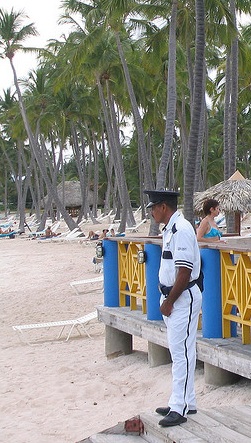
Criminality and violence often translate into fear and institutional distrust in Latin American contexts – and give rise to private security companies (PSCs) that play an increasingly important role in public security with little or no civilian oversight.  In the Dominican Republic, for example, PSCs are proliferating as surveys indicate a widespread perception that the Ministry of Interior and Police (MIP) is woefully inadequate in scale and capabilities.  According to a study by the Latin American Public Opinion Project (LAPOP) and the UNDP in 2012, over 50 percent of Dominicans said that they believed that the National Police was involved in criminal or illicit activity. More troublesome, of all countries surveyed*, the Dominican Republic, with 64.8 percent, reported the highest percentage of people who believe that security is deteriorating in the country.

With such levels of public disorder and perceived police ineffectiveness, the Dominican Republic has experienced a boom in PSCs.  The Geneva-based Small Arms Survey in 2011 reported that PSCs employed 30,000 people in the Dominican Republic – and the number has surely grown since then.  The country has 29,357 formally registered police officers, yielding a ratio of 1.02 private security agents for each police officer.  Often, PSCs are better equipped in the country than security forces.  In the Dominican Republic, PSCs are under the jurisdiction of the Superintendence of Private Security (SPS), a branch of the armed forces – a fact that causes tension with the civilian companies and the police in whose jurisdiction they operate.  This absence of the MIP – the state institution directly responsible for citizen security – from the oversight process has inhibited coordination between the PSCs and the police, and diminished the government’s ability to provide public security.

The traditional definition of national defense in the Dominican Republic and other Latin America countries has included citizen security and entailed deep military involvement – and often abuses – in matters now considered best handled by civilians.  The continuing shadow of the Dominican military in security affairs has weakened the National Police.  President Danilo Medina last year deployed soldiers to patrol the streets alongside the police to combat crime.  Such practices make the police less legitimate in the eyes of the public – and further drive popular demand for PSCs.  Reforming the public security landscape in the Dominican Republic will require great political will.  More effective civilian participation in security affairs, through oversight and professionalization of the National Police, must take place to ultimately strengthen democratic accountability.  The PSCs should be brought under civilian control.  

*LAPOP-PNUD (2012). Countries surveyed: Argentina, Bolivia, Brasil, Chile, Colombia, Costa Rica, Ecuador, El Salvador, Guatemala, Honduras, México, Nicaragua, Panamá, Paraguay, Perú, República Dominicana, Uruguay, Venezuela.

Colombia: Four More Years for Santos

By Eric Hershberg

Photo Credit: eltiempo.com / Foter / Creative Commons Attribution-NonCommercial-ShareAlike 2.0 Generic (CC BY-NC-SA 2.0)

Photo Credit: eltiempo.com / Foter / Creative Commons Attribution-NonCommercial-ShareAlike 2.0 Generic (CC BY-NC-SA 2.0)

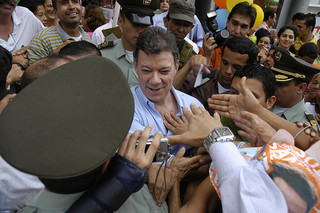
Incumbent center-right president Juan Manuel Santos emerged triumphant from yesterday’s second round of presidential balloting in Colombia – giving momentum to his peace talks with the FARC and his efforts to continue improving the country’s democracy.  He defeated challenger Oscar Iván Zuluaga, of the rightwing Union of the Democratic Center, which is led by former President Álvaro Uribe, a polarizing figure remembered in Washington as George W. Bush’s favorite Latin American leader.  Santos prevailed by a clear margin of five percentage points, and Colombia’s technically impeccable vote-counting process virtually ensures that the outcome will not be disputed.  The turnout of 2.4 million additional voters yesterday reduced voter abstention from 60 percent in the first round to a still-worrisome 52 percent.  Regional divisions among the electorate were striking: in some areas long plagued by Colombia’s civil conflict, the President won overwhelmingly, and he achieved substantial gains in Bogota, winning a strong majority, thanks in large measure to the endorsement of leading leftist politicians.  By contrast, in the central and southern parts of the country, particularly in Antioquia, the bastion of Uribismo, the opposition candidate garnered nearly two thirds of the vote.

The candidates’ campaigns focused on the polarizing issue of peace talks with the Revolutionary Armed Forces of Colombia (FARC), which Santos launched early in his administration and have proceeded slowly but steadily in Havana.  The President sought a second term in order to complete the negotiations and end a conflict that some estimate has taken more than 200,000 lives and caused devastating human and material damage over the past half century.  By contrast, Zuluaga, taking his cue from his mentor and chief advocate Uribe – who had spent Santos’ first term and virtually all of the campaign vilifying the President as a traitor for having launched the talks – changed approach in the second round and suggested that he, too, sought peace but would impose far more stringent preconditions before talks.  Most commentators viewed his shift as suggesting a return to the Uribe-era policy of crushing the insurgency before speaking with it.  Ironically, polls showed an electorate that was barely interested in the talks and far more concerned with other issues as elsewhere in Latin America: citizen security, unemployment and public services (such as health, education and transportation) were at the forefront of voters’ concerns.  On these fronts the two candidates offered little to distinguish themselves from one another.  Further assessments of the voting data will indicate whether this may account for low voter participation in an election that outsiders perceived as momentous.

While commentary in Washington and abroad has focused on the implications of the election for the peace process, the longer term consequences may lie elsewhere, particularly in the robustness of Colombia’s democratic institutions.  We will never know the extent to which Zuluaga would have been a pawn of Uribe, but suspicions were widespread that he was to the former President as Dmitry Medvedev was to Vladimir Putin.  Thus, beyond potential reversal of the negotiations for peace, a Zuluaga presidency might have entailed a return to authoritarian practices that had undermined Colombia’s democracy under Uribe and that Santos did much to rectify.  Although he is a staunchly establishment figure, Santos has advanced the spirit and letter of the 1991 Constitution, a progressive charter that emphasized separation of powers, rule of law, a strong and accountable judiciary, as well as minority representation and unwavering respect for human rights and accountability for abuses.  Santos also embodied a spirit of reasoned deliberation both at home and in matters abroad.  His pragmatic dealings with the often troublesome regime in neighboring Venezuela have been a far cry from the saber rattling that the rightwing authoritarian populist Uribe directed toward his similarly bombastic leftwing authoritarian counterpart Hugo Chávez.  Four more years of Santos may or may not produce tangible advances on the issues that seem to preoccupy the Colombian electorate – jobs, public safety and services – but they probably will ensure continued strengthening of democratic institutions and continued opportunities for Colombia to join with sensible governments elsewhere in the region to cooperate productively regarding Venezuela and other regional concerns. It may also pave the way towards a lasting peace and some degree of reconciliation for a country long plagued by civil war. 

Brazil: Evangelicals Gaining Influence

By Daniel Azevedo

Photo Credit: Igreja Adventista Central de Porto Alegre / Flickr / Creative Commons Attribution-NonCommercial 2.0 Generic (CC BY-NC 2.0)

Photo Credit: Igreja Adventista Central de Porto Alegre / Flickr / Creative Commons Attribution-NonCommercial 2.0 Generic (CC BY-NC 2.0)

Brazil still has the largest Catholic population in the world, but evangelical churches are gaining in size and political clout.  In the 1980s, persons identifying themselves as evangelicals made up 6.6 percent of the population; today they are 22.2 percent, according to the Brazilian Institute of Geography and Statistics.  Whereas Catholics have generally not organized politically, evangelicals from various parties have gradually been gathering under their religious banner.  They have been growing in numbers and influence since the 2010 elections that chose President Dilma Rousseff.  That year, fearing she would lose the second round of the election to opposition candidate José Serra, Rousseff signed a letter to deputies and senators of the “evangelical bench” promising that she would not sign any laws that went counter to their values, such as legalizing abortion or gay marriage.  The letter gave her the support of evangelical churches, and ensured Dilma’s victory.  Also in 2010, the evangelical bench in the legislature grew 50 percent compared to the 2006 election, reaching 60 deputies and 3 senators.

The evangelical bench anticipates even greater gains in the general elections this October, although polls substantiating its optimism are lacking.  The Folha de São Paulo reports that the Evangelical Parliamentary Front of the House of Representatives estimates it will grow 30 percent, reaching up to 95 representatives – 18 percent of the total House.  This could have legislative consequences.  As a congressman, for example, Pastor Marco Feliciano tried to win approval for a “gay cure” law, which would make it legal for psychologists to treat and “heal” homosexuals in search of heterosexuality.  (Feliciano may at times be an outlier.  Last year he said that “black people are cursed by God in the Bible and, for that reason, Africa is the worst continent in world.”)  Despite the evangelicals’ strong unifying platform, gaining support beyond their bases may be difficult.

The evangelicals seem to have electoral strategies in Rio de Janeiro in place.  Among the four pre-candidates for state governor, two of them are members of the evangelical bench.  Early polls suggest one or the other may become the executive of Brazil’s second most important state, although both face legal problems.  The first one, Anthony Garotinho, has been accused of money-laundering and illegal distribution of political propaganda; his Caravana da Palavra da Paz allegedly misused public money and broke election laws by distributing Bibles and other materials just to people over the minimum voting age.  The other, Marcelo Crivella, is suspected of misusing of public money with his NGO, Farm New Canaan.  (The Portal de Transparência Brasil, an NGO tracking Brazilian politicians, has found that all of the evangelical bench members face unspecified lawsuits, and 95 percent of them are on the list of House members missing the most sessions.)  They are leading the polls, albeit with only 19 percent and 18 percent of intended votes, because the two non-evangelical candidates have apparently more serious political problems.  One is connected to the current and discredited governor, and the other faces serious legal challenges.  Despite the low probability of a breakthrough at the presidential level in the near future, the evangelicals’ efforts in the legislature and states strongly suggest their conservative voice will be an increasingly powerful force to be reckoned with.

Child Migrants: Deepening Challenges

By CLALS Staff

A surge in the number of unaccompanied children fleeing criminality, family problems, and violence in Honduras, Guatemala, El Salvador and Mexico underscores the personal tragedy of undocumented immigrants – they escape old threats only to face new ones – but the issue so far has sparked only the usual partisan acrimony in Washington.  According to U.S. government sources, the number of child migrants reaching the United States has increased 92 percent over the past year.  Some 47,000 have arrived since last October, and a draft document by the Department of Homeland Security speculated the figure could reach 90,000 by the end of the fiscal year.  (Only 5,800 children arrived alone each year 10 years ago.)  Mexican children still outnumber others, but the current surge is coming from the northern-tier countries of Central America.  Polls conducted by the UN High Commission for Refugees indicate that about half of these children are driven by criminal insecurity; 21 percent by abuse and other problems in the home; and the rest by other forms of violence.  The influx of these refugee migrants is not a strictly U.S. phenomenon: Mexico, Nicaragua, Costa Rica and Panama have seen a 435 percent increase in child arrivals from the northern tier since 2012 as well.  The UNHCR has made an urgent plea for assistance.

President Obama last Monday declared the problem was an “urgent humanitarian crisis,” and he directed the delivery of aid to house and provide care to the children, who remain in government custody while relatives in the United States are located or other solutions are planned.  The White House also announced an initiative to assign legal advisors to those under 16 who are facing deportation but are not in government custody.  Republican critics reacted forcefully.  Texas Senator Ted Cruz said the crisis was a “direct consequence of the President’s illegal actions,” including allegedly lax enforcement of immigration law.  The Chairman of the Judiciary Committee in the House of Representatives called it an “administration-made disaster.”

Shifts in immigration numbers traditionally have been a function of “push” factors (poverty, violence and other problems) in sending countries and of “pull” factors in the United States – particularly the perception that safely entering the country and finding work is easy.  The Obama Administration’s aggressive deportation policies – physically removing about two million undocumented migrants – arguably have reduced the “pull” over the past six years, and it seems premature to conclude that the Administration’s recent rhetorical shift has shined a bright green light as far as Honduran hamlets.  That the influx is occurring in countries other than the U.S. provides further evidence that local push factors (as the UNHRC posits), and not Obama Administration policies, are the most credible cause of the surge, in spite of the fact that criminality and violence in Central America’s northern triangle have not shown a commensurate increase during this period.  Regardless, predictable demagoguery around this growing crisis probably will further complicate the Administration’s efforts to carry out those few progressive steps it has launched by Presidential order, including programs to normalize the status of “Dreamers” – undocumented migrants’ children eager to overcome the stigma and obstacles to citizenship.  The approach of mid-term elections in the United States promises that this humanitarian crisis will sustain more name-calling and political paralysis in Washington.

Brazil: Sustained Attention to Sustainable Development?

By Evan Berry*

Photo Credit: Rodrigo Soldon / Flickr / Creative Commons Attribution 2.0 Generic (CC BY 2.0)

Photo Credit: Rodrigo Soldon / Flickr / Creative Commons Attribution 2.0 Generic (CC BY 2.0)

Media coverage of the approaching World Cup in Brazil has touched on the country’s contemporary ecological challenges, but they have glossed over their underlying causes.  Because of Brazil’s association with international sustainability accords, large international events – such as the “Rio+20” sustainable development conference two years ago and the 2016 Olympics – provide vehicles for global news media to focus on Brazil’s performance on environmental issues.  Among this flurry of journalistic coverage, two distinct narratives emerge.  In one, journalists look at sustainability with reference to economic modernization, suggesting that environmental problems are the outcomes of policy failures and ineffective governance.  Commentary in this vein calls for greater technocratic competency and a commitment to the development pathways of the global north.  In the other narrative, sustainability is set in the context of social justice and economic inequality.

These views lead to different responses.  The international bodies overseeing the upcoming sporting events – such as FIFA and the International Olympic Committee – demand that the Brazilian government do more to clean up beaches, improve transportation infrastructures, and purchase carbon offsets to compensate for the impact of new construction.  These prescriptions ignore, however, that environmentalism in the developed northern economies emerged from a distinctly middle- and upper-class preoccupation with aesthetically pleasing environments, such as wilderness, scenic landscapes, and exotic game.  Frustration with the pollution in southeastern Brazil’s Guanabara Bay, for instance, echoes the North American desire for well-managed spaces for outdoor recreation.  So too does the narrow focus on the plight of Brazilian armadillos, the vulnerable species chosen as the World Cup mascot.  This emphasis corresponds with a narrative that many Brazilian leaders would want to put forward – that the natural splendor of Rio de Janeiro in particular, and Brazil in general, can be secured by the kind of straightforward cleanup efforts that attended economic prosperity.  However, Brazil’s ecological woes cannot be solved by garbage scows, and endangered armadillos and the lack of clean recreational spaces are hardly Brazil’s most pressing obstacles to environmental sustainability.  Guanabara Bay is fetid because so many Cariocas, or Rio residents, lack access to basic sanitation.  Armadillos are threatened by deforestation that is as much a byproduct of global economic demand.

As elsewhere, environmental problems in Brazil are caused by myriad social, economic, and political factors.  Ameliorating the most visible impacts of these factors – protecting a charming creature or purifying noxious waters – addresses only symptoms.  International attention to sustainability issues in Brazil should be more mindful of social justice.  Brazil’s current political unrest centers on deeply shared public concerns about injustice, and addressing the problems giving rise to contemporary social movements will offer an important corrective to mainstream public discourse about sustainability.  International attention to the negative environmental impact of international sporting events, and accompanying investments in infrastructure, risks overlooking the unjust structural processes that complicate solutions to environmental problems.  Rather, the global popularity of sport provides an opportunity to deepen and expand international discourse about the human dimensions of ecology.

 *Evan Berry is an Assistant Professor in American University’s Department of Philosophy and Religion.

El Salvador’s Former Guerrilla – and New Commander in Chief

By Héctor Silva Ávalos

14169581511_3b3b43cb13_z

Salvadoran President Salvador Sanchez Ceren with Secretary of State John Kerry during his visit to Washington, D.C. [State Department photo/ Public Domain]

Twenty-two years after participating in the signing ceremony of the UN-brokered peace accord that ended El Salvador’s civil war, Salvador Sánchez Cerén, one of the FMLN’s top guerrilla commanders, was sworn-in as president last Sunday.  The political reforms mandated by the Chapultapec agreement launched the country onto a sometimes tumultuous path toward a new democratic landscape that, at least on paper, included the alternation of power: for 20 years the ARENA party, representing the hard-right, ruled the country; in 2009, moderate Mauricio Funes, a popular TV journalist, and the FMLN established an alliance that took them to the Presidential Palace.  Through the prism of Sánchez Cerén’s recent victory, Funes’s was a transitional government.  El Salvador now begins its first period under the rule of the former guerrilla party that fought an insurrectional war against the allies of Ronald Reagan´s Washington during the last years of the Cold War.

Sánchez Cerén and the FMLN’s challenges are many – a stagnant economy; a private sector not used to a political system that doesn’t respond resolutely to its economic interests; a dysfunctional fiscal system; and one of the worst security situations in the world – with 14 homicides a day, growing gangs, and a reign of impunity inherited from the war years and perpetuated by organized crime’s success infiltrating state and political institutions.

The new leadership will also have to deal with the interests of El Salvador’s most powerful neighbor and ally, the United States.  The Obama administration sent a third-level delegation to Sánchez Cerén’s inauguration, and Secretary of State John Kerry did receive him in Washington before that.  Among the first items on the bilateral agenda is El Salvador’s access to funds in a second compact with the Millennium Challenge Corporation (MCC), a $400 million program aimed at bringing fresh money to the underdeveloped and poor coastal areas.  The program is on hold because MCC is not satisfied with the country’s Anti-Money Laundering and Asset Law and because San Salvador has not yet caved to pressure from the U.S. Trade Representative to buy agricultural products – mainly seeds – within the CAFTA region, which would favor U.S. producers.  Washington’s reluctance to work with FMLN officers in law enforcement and security issues is another obstacle.

So far, Sánchez Cerén and his cabinet have tried to play the U.S. relationship smart.  But managing ties is not going to be a walk in the park.  Despite public winks and carefully worded statements, neither side really trusts the other.  But the bilateral connection is important to both.  Roughly one third of all Salvadorans live in the United States, and, in the last several decades, Washington has appreciated El Salvador’s importance in a region where it is losing influence.  The new government has sent a number of signals to Washington by visiting the State Department, engaging in most of the Treasury’s and USTR’s conditions on the MCC compact and launching an early dialogue with the international financial institutions.  But Sánchez Cerén has made it clear that he will also heed El Salvador’s natural allies, albeit for practical rather than ideological reasons.  Just this week, El Salvador requested formal acceptance to Petrocaribe, the Venezuelan economic and financial aid program.  Dealing with violence, insecurity and financial problems will require fresh resources that the government will welcome wherever their origin.  But it also seems possible that the new commander in chief´s patience with Washington’s style of diplomacy – such as pressure tactics to buy American agricultural goods – could be much shorter than that of his predecessors.  

Prospects for Energy Integration in Latin America

By Thomas Andrew O’Keefe*
  Embed from Getty Images

South America’s presidents began discussing energy integration years before UNASUR made it one of its central initiatives, but these efforts have been hobbled by differences on what role the private and public sectors should play.  One tangible project that has emerged from UNASUR seeks to interconnect the electricity grids of Bolivia, Chile, Colombia, Ecuador, and Peru.  While the Colombian, Ecuadorian, and Peruvian grids (as well as that of Venezuela) are already linked, cross-border transmission of electric power is relatively insignificant.

Since the Sixth Summit of the Americas in Cartagena in April 2012, the UNASUR project has become part of a wider hemispheric agenda called “Connecting the Americas 2022,” which includes Panama and potentially – once the long-delayed Electrical Interconnection System for the Central American Countries (SIEPAC) becomes fully operational – all of North America.  The idea was promoted by the Colombians as hosts of the last Summit and emerged as one of the key mandates.  It seeks universal access to electricity through enhanced electrical interconnections, power sector investment, renewable energy development, and cooperation.  By focusing on electrical interconnections, the hope is to allow countries with excess power to export electricity to those facing deficits as well as permit greater integration of renewable energy resources and exchanges among countries with varying climate and seasonal needs.  Interconnection also expands the size of markets, creating economies of scale that can attract private sector investment, lower capital costs, and reduce electricity costs for consumers.  A separate initiative focuses on Brazil and the River Plate countries as well as the Caribbean.

A number of unanswered questions about “Connecting the Americas 2022” raise doubts about its viability.  For one thing, including Chile and Bolivia means that huge swaths of relatively empty territory will have to be traversed, which inevitably leads to losses of electrical power transmitted over long distances.  (The Chilean grid itself is not integrated, but divided into three separate systems.)  Furthermore, electricity generation in the Andean countries relies heavily on hydropower sourced from high mountain glaciers that are gradually disappearing as a result of climate change.  If “Connecting the Americas 2022” is to succeed, the regulatory frameworks of each participating nation must also be harmonized to facilitate long-term cooperation and network development.  Nationalistic concerns that have plagued the integrated Central American electricity network since it first came on line in the late 1990s must also be overcome.  The actual amount of electricity traded among the Central American countries has, to date, been minimal and is actually declining, as national governments have been reluctant to permit long-term contracts for the international sale of electricity that might put access to domestic electricity supplies at risk.  Such obstacles must be overcome to fulfill any vision for Latin American energy integration.

*Thomas Andrew O’Keefe is President of San Francisco-based Mercosur Consulting Group, Ltd. and teaches at Stanford University.

Venezuela: Vicious Cycle Continues

By CLALS Staff

Photo Credit: Cancillería Ecuador / Flickr / Creative Commons Attribution 2.0 Generic (CC BY 2.0)

Photo Credit: Cancillería Ecuador / Flickr / Creative Commons Attribution 2.0 Generic (CC BY 2.0)

UNASUR has shown energy and flexibility as a facilitator during the Venezuela crisis, but neither the government, nor its opponents, nor the opposition’s allies in Washington have matched it – prolonging the vicious cycle that’s been plaguing the country for years.  Speaking as UNASUR, the foreign ministers of Colombia, Brazil and Ecuador reflected the continent’s frustration when they threw up their hands this week and left Caracas after another failed attempt to get a national dialogue on track.  Their statements represented a balance between the UNASUR members that are generally perceived as tolerant of the Venezuelan government’s “Bolivarian” revolution and those perceived as opposing it.  They reiterated calls, issued officially in Suriname on 16 May, for both sides to “achieve a broad dialogue that permits Venezuelans, without interference, to reach an accord that guarantees peaceful coexistence and stability in the country.”

The government, opposition and Washington have not heeded the appeal by UNASUR and the Vatican’s nuncio to be constructive and patient.  The government’s attack on opposition and student camps in early May and subsequent arrest of more than 200 protestors highlighted the authoritarian tendencies that have given momentum to the demonstrations.  The Mesa de Unidad Democrática (MUD), representing important sectors of the opposition, gave the foreign ministers yet another list of demands – including a Truth Commission investigating rights violations (and not headed by the pro-government president of the National Assembly, Diosdado Cabello) and the selection of an entirely new National Elections Council.  The MUD’s executive secretary declared that he has no interest in participating in a peña or chit-chat session, and said, “The ball is in the government’s court.”  Although U.S. Assistant Secretary Roberta Jacobson said during a hearing that sanctions were premature (a statement that she attributed to “confusion”), the foreign affairs committees in both house of the U.S. Congress – without objection from the Obama Administration – have passed bills authorizing an array of punitive measures against Venezuelan officials.  The legislation also authorizes an additional $15 million dollars in aid to the government’s opponents.

The less overtly political agenda that first sparked the protests in February – soaring crime rates, rocketing inflation, and shortages of basic goods and services – has been overshadowed by the shouts of opposition leaders eager to force President Maduro from office and by Maduro’s defenses from the plotting against him.  Demands that Maduro negotiate with a foreign-funded opposition that has as its clear goal his removal as constitutionally legitimate president – something no head of state in the hemisphere would accept – naturally keep his bases on edge.  Political leaders on both sides manipulate popular opinion and claim el pueblo as supporting them.  Another of each side’s real strengths is its ability to portray itself as a victim of the unfairness of the other – because their victimhood rationalizes whatever actions they wish to take.  In that regard, the U.S. sanctions against the government and subsidies to the opposition play into Maduro’s hand.  Washington’s extra $15 million is a drop in the bucket for the well-funded opposition, but the U.S. support is as clear a signal as any of its desired outcome.  With both the United States and important segments of the opposition appearing to aim for nothing short of regime change, UNASUR is wise to step aside and see if anyone decides to get serious about ending the crisis.  Should the situation on the ground deteriorate further, however, UNASUR will probably ramp up its engagement and press both sides to make concessions in exchange for regional support.

Trans-Pacific Partnership: A Framework for U.S.-Latin America Relations?

By Eric Hershberg
Embed from Getty Images
President Obama’s desire to move forward with the Trans-Pacific Partnership (TPP) appears likely to founder amidst Congressional resistance to granting him “fast-track” authority, but it does signal a noteworthy initiative by an administration eager to grow trade relations with some Latin American countries.  Originally formed by Chile, New Zealand, Brunei and Singapore in 2006, TPP is currently negotiating the accession of five new members, including the United States and Peru.  Mexico, Colombia, Costa Rica, Panama, Canada, and Japan are also considering joining.  U.S. Undersecretary for International Trade Francisco Sanchez said last year that agreement on a framework for the United States to join TPP represents “a landmark accomplishment because it contains all of the elements of a modern trade accord.”  It eliminates all tariff and non-tariff trade barriers; takes a regional approach to promote development of production and supply chains; and eases regulatory red tape.  The White House’s senior official responsible for Latin America has also emphasized the importance of the Partnership.

The Administration for the most part has tried to sell the pact as a domestic economic issue – the argument being that more trade and harmonized regulations translate into more jobs – or as integral to a strategic focus on strengthening economic ties to the dynamic economies of Asia, rather than as a policy that has the potential to redefine economic relations with Latin America.  But lobbying on Capitol Hill has so far been ineffective, and Obama’s own Democratic Party has denied him the “fast-track authority” needed for an effective negotiation.  The Administration’s diplomatic strategy has not progressed smoothly either.  During Obama’s recent four-nation swing through Asia, he and Japanese Prime Minister Abe failed to sign an agreement widely seen as crucial for moving ahead with TPP.  Negotiators from all 12 TPP countries met in Vietnam last week, and – despite claims of progress – press reports generally suggest a gloomy prognosis for progress soon.

President Obama has made much of his “pivot” to Asia, and the push for TPP situates Latin America relations in Washington’s wider foreign policy agenda.  The emphasis on the TPP signals that liberalizing trade remains the core principle guiding U.S. thinking about economic relations in the hemisphere, in effect continuing a paradigm that has reigned for decades and that is embodied by proposals such as the now-abandoned Free Trade Area of the Americas.  Unable to secure broad South American buy-in for that U.S.-minted vision for economic cooperation, the administration seems to have settled on trying to work with a “coalition of the willing” comprised of Chile, Colombia, Mexico and Peru.  For governments elsewhere in the region, however, the not-so-particularly-new approach has elicited scant enthusiasm.  One could imagine ambitious proposals from Washington for hemispheric cooperation around energy, climate, infrastructure, technological innovation or even, eventually, labor market integration. But that would require visionary leadership, a commodity that is in strikingly short supply nowadays in the U.S. capital.  Rather than leading the articulation of a novel, shared agenda for a 21st century economic transformation of the Americas, Washington has chosen for now to repackage the last century’s prioritization of trade.

Mujica’s Liberal Experiment: Model for the Latin American Left?

By Robert Albro

President José Mujica on stage with SIS Dean James Goldgeier

President José Mujica on stage with SIS Dean James Goldgeier

Uruguayan President José “Pepe” Mujica, whose recent trip to Washington included a stop at American University, is doubtless Latin America’s most unconventional president.  A former leftist guerrilla who spent 14 years in prison, Mujica gives away 90 percent of his salary, refuses to live in the presidential mansion, grows chrysanthemums, and has twice been nominated for the Nobel Peace Prize.  He was elected in 2009 as candidate of the center-left Frente Amplio, and his accomplishments have transformed him into an international figure – and turned Uruguay into an intriguing experiment in social liberalism.  He has avoided the populist tendencies and overt anti-Americanism of other Latin American leftists, while promoting programs of social inclusion alongside a pro-business economic agenda.  Under Mujica, Uruguay has enacted an affirmative action law, legalized abortion in the first trimester, and legalized gay marriage. Most discussed has been his administration’s controversial launch this year of a legal government-licensed and -regulated marijuana market.

Mujica is notably less popular at home than abroad, however.  After plunging to 36 percent in late 2012, his approval rating has since hovered around 47 percent.  With national elections (in which he cannot run) looming in October, a poll last month showed the Frente Amplio losing significant ground to the opposition.  Mujica has consistently dismissed the polls.  He went ahead with legalizing pot, for example, despite a September 2013 poll indicating that 63 percent of Uruguayans still did not support the measure.  His asylum offer for up to six Guantanamo detainees, based on humanitarian concerns, has also not been popular, with only 23 percent of Uruguayans approving.  Uruguay ranks among the safest countries in the Americas, with 5.9 homicides per 100,000 people, and yet the perception of insecurity is widespread.  In a 2012 poll 56 percent of Uruguayans still reported crime and violence to be the country’s most pressing problem.  If celebrated by advocates of social liberalism, Mujica’s policy measures often appear out of kilter with popular perceptions and priorities.

Mujica is often cited as offering a potential alternative to the Bolivarian brand of “21st century socialism.”  But, in what is arguably Latin America’s most socially liberal country, the former Marxist has governed as a pragmatist.  Uruguay has a lot going for it, including: a stable banking system, free and secular education, low levels of corruption and social inequality, robust press freedoms, and stable governance with functional political parties.  It is second in South America behind Argentina on International Living’s quality of life index.  It has the third highest GDP per capita – triple that of Ecuador and Bolivia – and under Mujica has sustained stable economic and wage growth, and increased foreign investment in farming, forestry and pulp mills.  However, while he gets points for his international celebrity, austere lifestyle, and colorful persona, Mujica risks alienating the many citizens who care more about unemployment, inflation, crime and insecurity than about the environment, cannabis and gay marriage.  It is not clear whether over time Uruguayans will support Mujica’s particular left-liberal pragmatic brand of governance and whether his is a model embraced by other Latin American leaders.