Drug Dealing in Costa Rica: A Perverse Path toward Social Inclusion

By Rodolfo Calderón Umaña*

Antonio / Flickr / Creative Commons Attribution-NonCommercial-ShareAlike 2.0 Generic (CC BY-NC-SA 2.0)

Antonio / Flickr / Creative Commons Attribution-NonCommercial-ShareAlike 2.0 Generic (CC BY-NC-SA 2.0)

Central America’s emergence as a principal transit route for illicit drugs from South America to the U.S. has given rise to local retail markets supplying users within the region.  A study of three Costa Rican communities – one in greater San José and two along the Caribbean coast – highlights several factors that determine the scale and consequences of these local markets.  Among the most important are the high levels of social exclusion experienced by households in these localities and residents’ motivation to become involved in the business because it offers resources (money, power and prestige) that cannot be achieved through the legitimate channels of education or quality employment.  Other factors include the proximity of the communities to drug trafficking routes and the extent of previously existing demand from local consumers.

One of the most significant characteristics of local drug markets in these communities, as elsewhere, is that they are socially and territorially bounded because trust is the key factor shaping relationships between suppliers, sellers and consumers.  Some local suppliers maintain direct ties to cartels, but they operate their businesses independently.  Youth are assigned the most vulnerable tasks and are thus disproportionately represented among those arrested and convicted of crimes.  Violence serves as the principal instrument for controlling and regulating the drug trade, and the result is that for youth in these settings violence becomes normalized as a routine form of behavior.  This spawns a generalized climate of fear and insecurity, and the typical response of community residents is to retreat from public space and to isolate themselves inside their homes.

These findings support calls for new responses to the drug trade at the community level.  Central American governments, encouraged to a significant degree by U.S. programs, have tended to emphasize repressing and “combatting” the scourge of drug trafficking, yet where this approach has been implemented – particularly in Central America’s Northern Triangle — social problems have only gotten worse.  In Costa Rica, it’s not too late to undertake a comprehensive strategic review of policies in this domain and to bolster programs to stabilize affected areas.  Particularly if designed and implemented from the bottom up, programs can identify and reach out to vulnerable residents before they are drawn into drug micro-markets as vendors, consumers, or both.  Vocational training programs matched to real employment opportunities are absolutely fundamental – to reduce residents’ social exclusion.  Our research findings indicate that enhancement of public spaces where community residents can congregate and initiatives focused on building trust between communities at risk and representatives of the state can also be highly productive.  Costa Rica is at a critical juncture: it can either sustain and expand the participatory policy frameworks that buttress community cohesion and resilience or run the risk of falling into the devastating spiral of delinquency and violence that has plagued its neighbors in the Northern Triangle.

*Dr. Calderón Umaña is a researcher at FLACSO-Costa Rica.  The study is being conducted by FLACSO-Costa Rica with funding from the International Development Research Centre.

Sanctions on Venezuela: Why?

By Eric Hershberg and Fulton Armstrong

Photo credit: NCinDC / Flickr / Creative Commons Attribution-NonCommercial-ShareAlike 2.0 Generic (CC BY-NC-SA 2.0)

Photo credit: NCinDC / Flickr / Creative Commons Attribution-NonCommercial-ShareAlike 2.0 Generic (CC BY-NC-SA 2.0)


The sanctions against Venezuela that the Obama Administration announced last week respond to political pressure to punish alleged human rights violators in Caracas, but they have no immediately apparent policy objective.  The State Department announced that it has suspended the U.S. visas of “a number of Venezuelan government officials who have been responsible for or complicit in … human rights abuses” during protests earlier this year, which resulted in the deaths of at least 40 people, injury of hundreds more, and jailing of dozens of activists.  The Department did not release a list of sanctioned individuals nor divulge the information used to compile the list, but press reports indicate that 24 officials have been targeted and include cabinet members, presidential advisers, police, and military officials.  The sanctions do not affect bilateral trade or Venezuela’s place as the United States’ fourth biggest foreign supplier of oil.

U.S. condemnation of the Venezuelan government and the blacklisted officials has been strident, but there has been no public explanation of what Washington expects the sanctions to achieve.  The statements of U.S. Principal Deputy Assistant Secretary of State John Feeley, made to a Colombian radio station and reported by El Universal in Caracas, strongly suggest the sanctions are intended to show solidarity with the Venezuelan opposition and U.S. disapproval of the government of President Nicolás Maduro.  “Social protests have been a genuine war cry from people oppressed by the lack of democracy,” Feeley is reported as saying.  “The [sanctions] were intended to note that the U.S. cannot allow, for the sake of its values, that a supposedly democratic government represses the legitimate expression of the people’s voice.”  The State Department has not demanded, however, any particular action by Caracas to lift the sanctions, such as an investigation into the abuses, re-launching a national dialogue, or compensating victims.  Feeley suggested that the governments of Colombia and Brazil – with which he said the U.S. government had “meditated” about the issue – supported the sanctions, but regional support for them has been muted at best.  Indeed, the Administration had responded to last May’s House of Representatives vote in favor of sanctions by indicating that these would be counterproductive and could undermine efforts at mediation by these same countries.  The one dissenting voice in the House, Congressman Greg Meeks (D-NY), explained his vote as opposing unilateralism, adding that its passage was a message to Latin American governments that we don’t care what they think.

The Venezuelan government has repeatedly and credibly asserted that a significant portion of the violence has been perpetrated by protestors rather than the state or government supporters, and a number of officials have been charged.  Nonetheless, no U.S. sanctions have been brought against opposition members who planned or participated in violent actions.

Some observers have attributed the U.S. action to pique that Aruban and Dutch officials several days earlier rejected its request that they extradite to the U.S. Venezuela’s new consul in Aruba, a former chief of intelligence whom Washington suspects of trafficking in drugs with the Colombian FARC – despite Vienna Convention provisions regarding diplomatic immunity.  More likely, the sanctions are a reaction to a realization that the quixotic “salida” campaign, which many in Washington somehow imagined could bring down the Maduro government only months after it had won an election, had all but petered out, leaving the opposition in disarray and the government in a renewed position of strength.  Sanctions also are a bow to congressional pressure on the Obama Administration to act against Caracas, which has continued to grow even after the salida campaign has run out of gas.  Just hours after the sanctions were announced, Senator Marco Rubio issued a press release taking credit for them, and other conservatives – led by the Cuban-American congressional delegation – called for even tougher measures.  Without clear objectives, however, the sanctions seem to be mostly a moral and political statement – pushing relations into yet another dead end from which neither government is disposed to find a way out.  Indeed, Venezuelan officials, calling the sanctions “a desperate cry from a nation that realizes the world is changing,” are turning the diplomatic adversity to domestic political advantage, just as administration officials had wisely predicted in pushing back against the Congressional saber rattling last spring.

Mexico and NAFTA: Lessons Learned?

By Robert A. Blecker*

Photo credit: Alex Rubystone / Foter / Creative Commons Attribution-NonCommercial-ShareAlike 2.0 Generic (CC BY-NC-SA 2.0)

Photo credit: Alex Rubystone / Foter / Creative Commons Attribution-NonCommercial-ShareAlike 2.0 Generic (CC BY-NC-SA 2.0)

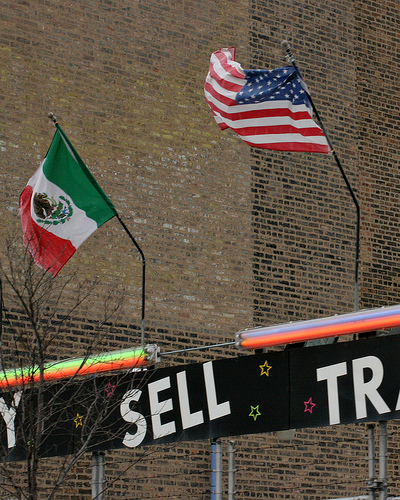
Twenty years after the North American Free Trade Agreement (NAFTA) went into effect, it is clear that the promises made by Mexican President Carlos Salinas and U.S. President Bill Clinton – that the accord would make Mexico “a first-world country” and halt the migration of Mexican workers to the United States – have not been fulfilled.  In Salinas’s famous words, Mexico would “export goods, not people.”  But the number of undocumented Mexican immigrants in the United States rose by a conservatively estimated 3 to 4 million during the first two decades of NAFTA, and millions more were apprehended at the border and deported.  The reasons why immigration flows accelerated post-NAFTA are not hard to discern.

  • NAFTA fostered integration of Mexican industries into global supply chains targeted at the U.S. market, accelerating Mexico’s transformation into a major exporter of manufactured goods.  Nearly one million manufacturing jobs were created there in the first seven years of NAFTA (1994-2000).  But this job growth was offset by similar job losses in agriculture, and manufacturing employment has fallen by about a half million since 2001.  The net increase in manufacturing employment from 1993 to 2013 was only about 400,000, less than half of the annual growth in the Mexican labor force.
  • Real hourly earnings in Mexican manufacturing were no higher in 2013 than in 1994, and Mexico’s per capita income has stagnated relative to that of the United States.  In 2012, typical Mexican manufacturing workers received only 16 percent as much per hour as their U.S. counterparts, down from 18 percent in 1994.  Even adjusted for the lower cost of living, workers without a college degree in Mexico still earn only about one-quarter to one-third of what they can earn by moving to the United States.

The benefits of NAFTA for Mexico have been attenuated by several factors.  First, Mexican export industries still largely follow the maquiladora model of doing assembly work using imported inputs, so their value-added is only a fraction of the gross value of their exports and they have few “backward linkages” to the domestic economy.  Second, the Mexican government has frequently allowed the peso to become overvalued, making Mexico less competitive and driving multinational firms to locate in other countries.  Third, the tremendous penetration of Chinese imports into all of North America (Canada, Mexico and U.S.), especially since China joined the World Trade Organization in 2001, has displaced significant amounts of actual or potential Mexican exports.  A revaluation of China’s currency, rising Chinese wages and increasing global transportation costs have recently led to some “reshoring” of manufacturing to Mexico, but employment in Mexican export industries has grown only modestly as a result.

The increased integration of North American industries through NAFTA has proved to be a mixed blessing for Mexico.  U.S. booms have helped Mexico grow, but only for temporary periods, and being dependent on the U.S. market has held Mexico back since the U.S. financial crisis of 2008-2009 and the ensuing “Great Recession” and sluggish recovery.  Of course, NAFTA is but one of Mexico’s constraints.  The country’s restrictive monetary and fiscal policies, frequent currency overvaluation, monopolization of key domestic markets and inadequate investments in physical and human capital have also held it back.  The Mexican economy still suffers from a profound dualism, in which only about one-fifth of all non-agricultural, private-sector workers are employed in large, highly productive firms, while the vast majority are employed in small- or medium-sized enterprises with low, stagnant or even falling productivity.  Mexico’s experience under NAFTA certainly argues against portrayals of international trade agreements, such as the proposed Trans-Pacific Partnership, as panaceas for the economic ills of Mexico or any other country.  Whatever one thinks of the “reform” agenda of President Enrique Peña Nieto – which is focused on areas such as energy, education, and telecommunications – these reforms are unlikely to help Mexico break out of its slow growth trap if the foundations of the country’s trade and macroeconomic policies remain untouched.

*Dr. Blecker is a professor of economics at American University.

July 19th Anniversary and the New Nicaragua

By Rose Spalding*

Photo credit: Globovisión / Foter / Creative Commons Attribution-NonCommercial 2.0 Generic (CC BY-NC 2.0)

Photo credit: Globovisión / Foter / Creative Commons Attribution-NonCommercial 2.0 Generic (CC BY-NC 2.0)

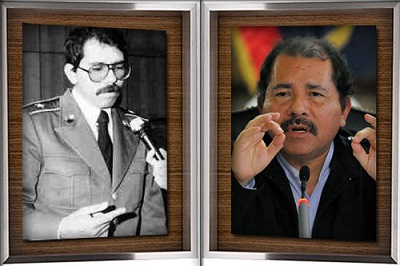
Daniel Ortega’s political rebirth has produced a remarkable partnership with the Nicaraguan business sector.  Thirty-five years ago, when he and the Nicaraguan revolutionaries ousted dictator Anastasio Somoza, a U.S. ally known for corruption and human rights abuses, they clashed with the business sector, the Catholic Church leadership, and a heterogeneous band of counterrevolutionaries armed and financed by the Reagan administration.  Ortega lost elections in 1990 but made a remarkable return to power in 2007, ushering in the “second phase of the Sandinista revolution.”  Unlike during his first term, he undertook to collaborate with COSEP, the Nicaraguan association of business chambers, and gave its members, perhaps more than any other group, regular access to high-level officials and a palpable voice in shaping legislation.  According to José Adán Aguerri, the current president of COSEP, 77 out of 81 of the Ortega government’s economic laws have been produced in dialogue with the business association.  These involve wide-ranging negotiations on minimum wage increases, tax reform, housing development, social security expansion, investment incentives, and other issues.

This partnership has contributed to economic growth and direct foreign investment.  The World Bank reports Nicaragua’s economic growth was 5 percent in 2012 and 4.6 percent in 2013, compared to 2.6 percent and 2.4 percent for the Latin American region as a whole.  According to CEPAL, foreign investment in Nicaragua reached $849 million in 2013, a level that was second only to the $968 million reported for 2011.  Nicaragua’s investment promotion agency, ProNicaragua, documents strong investment in tourism, agribusiness, textiles and outsourcing services.  The extractive sector is also growing rapidly.  Responding to strong commodity prices and a cordial reception in Nicaragua, Canadian gold mining company B2Gold recently announced a planned investment of $289 million to expand its operations in La Libertad.  Nicaraguan investors have developed new initiatives, including a major tourism project orchestrated by Carlos Pellas, the country’s richest man.  The relationship has benefited from the ALBA agreement Ortega signed with Venezuela President Hugo Chávez in 2007.  Venezuela assistance has totaled $3.4 billion in loans, donations and investments in the 2008-2013 period.  These funds regularized Nicaragua’s precarious energy supply and subsidized transportation, housing, microcredit and public sector wages, providing a general economic stimulus from which elites also benefitted.  Announcements of a projected $40 billion investment in an interoceanic canal reinforce the image of a new development era in Nicaragua.

The business-government relationship reflects mutual accommodation by Ortega and business leaders.  Nicaragua lost several decades of economic growth during the 1980s and the “contra” war, so upon his return to power Ortega put a premium on promoting growth, tread lightly on issues of tax reform, and eagerly pursued foreign investment.  He met repeatedly in closed sessions with business leaders and called for a “grand alliance” of government, business and workers to combat poverty, promote investment and create jobs.  A formal consultation mechanism brought together leaders from COSEP and the government, such as Bayardo Arce and Paul Oquist, for regular policy discussions.  Offering a stable economic environment and generous investment incentives, a non-conflictual labor force with the lowest wages in the region, a relatively low crime rate, and receptivity to business initiatives, Ortega won over business allies.  The business interests of current and former Sandinista leaders, some affiliated with COSEP, reinforced the collaboration and helped convince a new generation of business leaders to put aside traditional hostility and preoccupation with injuries of the revolutionary 80s.  They accepted the government’s legitimacy and bolstered its domestic and international credibility.  Enthusiastic about the growth of the Nicaraguan economy, economic elites also downplayed lingering questions about deficits in democratic institutionality and accountability.  But the heightened concentration of political power under Ortega and the weakness of other state institutions mean that economic rules are vulnerable to shifting political winds, and questions remain whether this development approach will resolve the problem of widespread poverty.  Even as the government-business relationship warms and the economy grows, these social and political concerns continue to bedevil the country.   

*Dr. Spalding is a professor of political science at DePaul University.

Bolivia: Lessons from the MAS

By Santiago Anria*

Joaquín Eguren / Flickr / Creative Commons Attribution-NonCommercial 2.0 Generic (CC BY-NC 2.0)

Joaquín Eguren / Flickr / Creative Commons Attribution-NonCommercial 2.0 Generic (CC BY-NC 2.0)

As Bolivian President Evo Morales’s Movimiento al Socialismo (MAS) prepares for the October 12 general election – which opinion polls indicate it will win by wide margins – the MAS appears to be a remarkably diverse organization capable of adapting operations to different regions of the country.  It fits neither the typical journalistic portrayal of Latin American social and political movements as clashing with political parties and elected governments, nor political scientists’ characterization of parties as unitary actors under the control of a unified leadership.  Founded by coca growers in the mid-1990s as their “political instrument” to contest power, the MAS has become the collective political expression of grassroots organizations now in power – to this day having diffuse boundaries and multiple faces, combining features of a grassroots movement and a party, and being a remarkably successful instrument for exercising rule.

The MAS’s regional diversity is one of its greatest strengths.  As an organizational actor, it looks and operates differently in different contexts depending on how the political space is structured.  In the Bolivian central region of the Chapare, where strong peasant unions are aligned with the MAS and control the territory, civil society and party are fused.  Grassroots organizations monopolize the political space, and local decision-making structures are embedded in the union structure.  Their success is rooted in “agrarian union democracy,” which emphasizes that “bases” exert control on the leadership – that the rank and file should lead and leaders should follow.  In the eastern city of Santa Cruz, on the other hand, the MAS has made inroads in traditionally hostile territory by developing an unusually strong local party organization with remarkable mobilization capacity, and that capacity gives it a central role in local governance.  As in other cities with large informal economies, the local structure draws support from two powerful urban sectors – transportation workers and street venders – and is organized territorially in districts that operate both during and between elections.  Rather than having the features of a movement, in Santa Cruz the MAS looks and works more like a conventional political party.  In the Chapare, Santa Cruz and elsewhere, the MAS organization has considerable latitude to operate locally within alliances and policies usually defined at the national level.  As a result, the MAS and its governmental counterparts are not often, or by necessity, in tension.

Latin American history offers many examples of political movements becoming personalistic vehicles for charismatic leaders.  More than 10 years since it became a credible electoral vehicle, the MAS may offer a more promising organizational alternative.  Morales is certainly a charismatic leader, with significant popular legitimacy and authority within the MAS.  His leadership cannot be overstated, and he is the dominant figure binding a wide array of grassroots movements and organizations.  Yet, the MAS has remained permeable to popular input in areas where civil society is strong and has mechanisms to arrive at collective decisions.  In the last general elections in 2009, grassroots influence was consequential: it led to the massive entrance of individuals and members of allied grassroots organizations into the highest level of political representation.  Their participation in Congress (the Plurinational Legislative Assembly) has pushed to diversify the legislative agenda still largely subordinated to the executive.  New MAS leaders willing or able to challenge Morales’s leadership have not emerged but, as the candidacies for the upcoming elections are defined, the strong regional dynamics could alter the composition of the new parliamentary group.  Whether the MAS will remain open, and whether it will manage to outgrow its dominant leader figure, will depend on the continuing strength of allied groups in civil society.

*Santiago Anria is a Ph.D candidate in political science at the University of North Carolina at Chapel Hill.

Nicaragua’s Canal: Great Leap (of Faith) Forward?

By CLALS Staff

Mike and Karen / Flickr / Creative Commons Attribution 2.0 Generic (CC BY 2.0)

Mike and Karen / Flickr / Creative Commons Attribution 2.0 Generic (CC BY 2.0)

The Nicaraguan government and a Chinese telecom tycoon took a big step on Monday toward the country’s long-held dream of having its own canal, but their prediction of supertanker traffic starting as soon as 2020 seems a bit far-fetched.  The project will cost $40 billion and, according to government officials, will create 50,000 jobs immediately, 1 million jobs over the life of the project, and will help lift another 400,000 people out of poverty.  President Daniel Ortega’s supporters claim the economy – currently projected to grow at 4.5 percent a year until 2020 without the project – will grow as much as 15 percent a year with it. The Chinese company, HKND, will enjoy a 100-year lease on the canal, with 1 percent of it reverting back to Nicaragua each year.  The proposed route for the canal is 278 kilometers long – about three times longer than the Panama Canal – and will be deep and wide enough to handle ships much larger than the “New Panamax” vessels.  Officials say the canal would “complement” the Panama waterway, which they say will be overcapacity even after its current expansion, and will save shippers some 800 miles on their way to the U.S. east coast.

Opposition from some politicians and environmentalists has been strong.  According to media reports, Nicaragua’s Supreme Council for Private Enterprise (COSEP) and other business organizations are generally positive but skeptical, with one leader calling Monday’s press conference “just an initial flow of information.”  Congressman Eliseo Núñez of the Independent Liberal Party (PLI), however, has been widely quoted as calling Monday’s announcement a “propaganda game” and blamed the media for generating “false hopes for the Nicaraguan people.”  Former Vice President Sergio Ramírez says that handing over national territory for development is a violation of the country’s sovereignty, and other critics claim the project violates 32 provisions of the Constitution.  Concerns about damage to Lake Nicaragua, an important source of fresh water that is already polluted, remain. Chinese investor Wang Jing told the press that avoiding environmentally sensitive areas was a major factor in determining the route, and he has promised that a full environmental impact study will be conducted before construction starts.  Opponents of the project doubt he will make the report public.

Ortega’s statement last year that a Nicaraguan canal “will bring wellbeing, prosperity, and happiness to the Nicaraguan people” may well be right – if the project gets off the ground and so many jobs are created.  However romantic that vision is, construction is still far from certain to begin this December, as claimed, or even within the next year or so.  Wang says that he has lined up “first-class investors,” but none has been identified yet.  In addition, criticism of his business record – opponents say his telecom company is poorly run – has hurt his credibility. And accusations that he’s a stalking horse for the Chinese government, which he says has had “no involvement,” will be difficult to dispel in view of Beijing’s other interests in the region and in shipping.  Equally troubling, as the ongoing expansion in Panama has shown, the shadow that corruption and inefficiency cast over any major project tempers optimism and argues against premature celebration.

Building State Capacity in Brazil

By Katherine Bersch, Sérgio Praça, and Matthew M. Taylor*

Photo Credit: Metrix X / Foter / Creative Commons Attribution-NonCommercial-NoDerivs 2.0 Generic (CC BY-NC-ND 2.0)

Photo Credit: Metrix X / Foter / Creative Commons Attribution-NonCommercial-NoDerivs 2.0 Generic (CC BY-NC-ND 2.0)

As the World Cup fades out and Brazilians turn their focus to the October elections, public debate will shift back to economic growth, social services, corruption, and – central to them all – the role of the state.  Is the federal government too big, inefficient and meddlesome, as the opposition argues, or does it need to be strengthened to play a leading role in Brazil’s state capitalist economy, as the incumbent Workers Party has sought?  In a recent paper (click here for draft), based on publicly available data of about 326,000 civil servants working within the 95 most important federal agencies in Brazil, we found a very diverse federal government, with agencies distributed widely on both capacity and autonomy.

Our findings empirically confirm a long literature that highlights the coexistence of so-called “islands of excellence,” with high capacity and high autonomy, alongside low-capacity, low-autonomy laggards.  “Islands of excellence” include Brazil’s Foreign Ministry (Itamaraty), the Central Bank, the Finance Ministry, the Justice Ministry, and the relatively young Comptroller General’s Office (CGU), created in 2001.  Laggards include almost all of the infrastructure agencies, as well as the Ministry of Sports, perhaps helping to explain the recent World Cup construction snafus.  Also interesting are the agencies with high capacity and low autonomy (such as the Federal Highway Police, which most state governors seek to empower and control within their own states), as well as agencies with low capacity and high autonomy, which few politicians seek to control (such as the Public Defenders Office).

We found solid evidence that agency corruption – one of the driving forces behind last year’s political angst and popular protests – is correlated with lower capacity and lower autonomy.  This finding could help frame debate in the upcoming campaigns and beyond: the keys to reducing corruption are to build agencies’ capacity and increase their autonomy from political partisans.  The debate over the role of the state has been ongoing since the return to democracy in the 1980s.  No matter who wins the October elections, the expansion of this data set and measurement effort will provide useful empirical data to more realistically evaluate the evolving performance of the Brazilian state, as well as to recognize the enormous differences and best practices within that state. 

*Katherine Bersch is a doctoral candidate at the University of Texas at Austin.  Sérgio Praça teaches Public Policy at the Federal University of the ABC in São Paulo.  Matthew Taylor, a regular contributor to AULABLOG, teaches at American University.

Middle Class Abandons Public Education

By Osvaldo Larrañaga*

Photo credit: NoticiasUFM / Foter / Creative Commons Attribution-NonCommercial 2.0 Generic (CC BY-NC 2.0)

Photo credit: NoticiasUFM / Foter / Creative Commons Attribution-NonCommercial 2.0 Generic (CC BY-NC 2.0)

Seven of the most developed countries of Latin America – Argentina, Brazil, Chile, Colombia, Costa Rica, Peru and Uruguay – are experiencing an exodus of the middle class from public schools to private schools.  In Clases Medias y Educación en América Latina, my colleague María Eugenia Rodríguez and I present evidence that in these countries private schools offer primary and secondary middle-class students better opportunities to learn, better resources, and in almost every country a more disciplined learning environment.  However, the shift may worsen the region’s already deep inequality because private education is likely to multiply inequality.  Private schools show signs of high levels of social segregation, with implications for countries’ social cohesion and development.  On average, 87 percent of the students in these schools belong to the same social class (be it middle- or upper-class), as compared to 42 percent in the public schools.  According to our research, the challenge for governments is to strike the balance between allowing families to give children the best education they can and ensuring social cohesion and equity.

Some countries outside Latin America have achieved this virtuous balance. In the Netherlands, Belgium and Ireland, governments finance private schools so that families’ financial resources are not a factor in school selection.  In those countries, 60-70 percent of students from different social classes attend private schools, with excellent academic results.  Dutch and Belgian students place at the top in the Program for International Student Assessment (PISA) test, while Irish students score at the average of the OECD nations.  Another model – in Finland, Canada and New Zealand – produced the highest PISA scores outside Asia.  In those countries, 93-97 percent of students attend public schools, proving that public management of education is not incompatible with excellence.

Another key development needing attention in the region is that the number of students in higher education has tripled in the past 15 years as the middle and emerging classes see education as the most effective means for social mobility.  Increased demand for tertiary education has been covered primarily by private rather than public institutions, yet governments have done little to ensure the quality of the education students receive or to assist them in financing it.  Failure to address these issues invites a scenario that could result in frustration and social tensions.  Our research indicates that the problem – and its solution – has three principal aspects: the need to create information systems that enable the evaluation of graduates; the need to introduce mechanisms for financial aid for students attending private institutions; and the need for an accreditation process that ensures that financial aid goes to students attending quality institutions of higher education.  With such reforms, Latin America stands a much better chance of advancing social equity even while relying increasingly on the private provision of education.

*Dr. Larrañaga coordinates the poverty and inequality reduction area at UNDP in Chile.

Argentina: Burying the hatchet?

By Arturo C. Porzecanski*

Photo credits: Finizio and Global Panorama / Foter / Creative Commons Attribution-NonCommercial-NoDerivs 2.0 Generic (CC BY-NC-ND 2.0)

Photo credits: Finizio and Global Panorama / Foter / Creative Commons Attribution-NonCommercial-NoDerivs 2.0 Generic (CC BY-NC-ND 2.0)

The administration of Cristina Fernández de Kirchner has shown a willingness to bury the proverbial hatchet and bring to a definitive end what was once the largest sovereign default in recorded history – nearly $100 billion in obligations to domestic and foreign bondholders and official foreign-aid and export-credit agencies, including the United States Export-Import Bank.  In late May, Argentina reached an agreement with its official creditors (gathered as the so-called Paris Club), committing to repay everything that had come due in full and in cash – nearly $10 billion in principal, past-due interest, and interest-on-interest – over the next five years, starting with a down-payment in July.  In recent days, President Kirchner has also signaled that she is ready to negotiate a payment plan with bondholders who are potentially owed even more than the Paris Club creditors.  The trigger for this conciliatory attitude is two U.S. Supreme Court decisions announced on June 16 which granted jilted creditors wide latitude in seeking redress from Argentina.  The first ordered the government in Buenos Aires to stop discriminating among its bondholders by paying most but not all of them; and the second mandated banks operating in the United States to disclose any and all assets owned by Argentina anywhere in the world, facilitating efforts to seize them by unpaid creditors.

Argentine governments since the closing and troubled days of 2001 have taken a notoriously hard line toward creditors ever since Acting President Adolfo Rodríguez Saá announced that he would be suspending payments on the public debt and dedicating all sums budgeted for that purpose to fund an emergency jobs program and increased social spending.  Cristina and her predecessor (and late husband), Néstor Kirchner, embraced a populist-cum-nationalist view of the world according to which the state must favor the interests of the majority of its population, particularly in terms of redistributing income from the “haves” to the “have nots.”  Pervasive state interventionism, confiscatory taxation, disrespect for private property rights, widespread controls (on prices, interest rates, foreign trade, and capital flows), and confrontational attitudes toward investors became the hallmark of economic policy in Argentina.  Despite a vigorous economic recovery starting in mid-2002, creditors never got a single payment from Argentina – and the government made only an arrogant take-it-or-leave-it proposition to private creditors by which they would turn in their bonds and receive new ones worth one third as much.  By late 2010, over 92 percent of the private creditors capitulated and went into the debt exchange.  According to a reputable comparative study of sovereign defaults in the Journal of International Money and Finance published in 2012, Argentina’s behavior towards its creditors displayed an exceptional degree of coerciveness.  While Argentine and European creditors had no luck pursuing their claims in their respective courts, most bondholders who had legal rights under New York State law succeeded in obtaining favorable judgments – and lately, in gaining enforcement rights as well.

Argentina has set such a bad example in terms of how to restructure the public debt that no other nation has dared to follow it since.  Given the recent advance in creditor rights courtesy of the U.S. Supreme Court, chances are that no other government will ever be motivated to copy Argentina’s rogue-debtor behavior – a very good outcome for the world at large.  Concerns that the decade-long judicial fight in the United States will slow down or impede future sovereign debt restructurings are greatly exaggerated.  Before reaching their decisions, the U.S. courts heard from many academic and non-academic experts, and from several governments (Brazil, France, Mexico and the United States), and the New York District Court of Appeals dismissed warnings of impending doom as “speculative, hyperbolic, and almost entirely of [Argentina’s] own making.”  Argentina engaged in uniquely egregious misconduct, violating the well-established norms of sovereign debt restructuring, refusing to negotiate with its creditors, ignoring court orders, and failing to honor its obligations subject to U.S. law despite the country’s unquestioned ability to pay.  The legal rights conferred to minority bondholders in the 1990s, which were actionable in this instance, have been superseded during the 2000s by the widespread inclusion of new “collective action” clauses, inspired by English law, preventing a small minority from blocking a debt restructuring supported by a large majority (at least 75 percent) of creditors.  These clauses have worked very well in recent years, including in the cases of Greece and Belize in 2012 and 2013, respectively.  Therefore, while the advancement of creditor rights brought about by the Argentina litigation will encourage governments to be more conciliatory towards their creditors, the evolution of market practices means that fewer than 8 percent of total creditors will never again be able to demand payment in full the next time that a government obtains the consent of everyone else.

*Dr. Porzecanski is Distinguished Economist in Residence at American University.

Climate Change: Creating Spaces for Action

Pacchanta women with Ausangate Glacier in the background.  Photo credit: Oxfam International / Foter / Creative Commons Attribution-NonCommercial-NoDerivs 2.0 Generic (CC BY-NC-ND 2.0)

Pacchanta women with Ausangate Glacier in the background. Photo credit: Oxfam International / Foter / Creative Commons Attribution-NonCommercial-NoDerivs 2.0 Generic (CC BY-NC-ND 2.0)


The Organization of American States (OAS) has resolved to strengthen its role in addressing climate change, but it has yet to demonstrate that it can convene Latin American countries around this urgent issue.  Participants at a recent OAS roundtable agreed that Latin American leaders have moved beyond debating the existence of climate change and are now focused on mitigating its immediate and future effects.  Of primary concern are the potentially devastating economic consequences of climate change for the region, which the Inter-American Development Bank estimates will reach $100 billion per year by 2050 – severely jeopardizing national economies that are currently growing at a healthy rate.  Based on recent climate change reports and initiatives, the potential of a looming transnational cataclysm is driving a sense of urgency for action within an effective regional framework.

Within the consensus for action, there will be competing priorities.  Climate change presents different challenges to different parts of Latin America and the Caribbean.  In Peru, for example, a major concern is glacier melt in the Andes, which affects fresh water resources, agricultural irrigation, and sustainable urban development.  This has created a need not only for new dams and reservoirs to redirect water, but also for managing internal social conflicts generated by an increasing scarcity of basic resources.  In the Caribbean, where tourism revenue represents the greatest proportion of the regional economy (14 percent of GDP), the top priority is managing the triple threat of rising sea levels, the loss of coastal livelihoods, and intensifying weather conditions.  And in Brazil, as Evan Berry highlighted here recently, deforestation, carbon markets and land use, among other concerns, need to be addressed.

The OAS would appear to be the logical forum to address these issues and provide a negotiating framework regarding climate change.  On recent non-environmental issues, however, the OAS has struggled to coordinate actions and lost prestige among many in Latin America.  The OAS response toward Honduras following the 2009 presidential coup was divisive and ultimately was end-run when the United States cut a deal with the coup regime.  The 2012 OAS assembly in Bolivia was plagued by persistent absenteeism of member states.  Washington has repeatedly pressed the OAS toward a more political agenda, especially pressing for condemnation of Venezuelan Presidents Chávez and Maduro, and has even threatened to suspend its contributions to the organization’s budget.  Insofar as the OAS is perceived as a U.S. proxy, its effectiveness on difficult issues with a north-south spin, like climate change, is undermined.  At the same time, the OAS is competing with other regional bodies, such as UNASUR and CELAC, and the region has raised its profile in international venues such as the 2010 alternative climate summit held in Bolivia after UN negotiations in Copenhagen failed.  With the UN’s 20th Conference of Parties (COP20) taking place in Lima in December 2014, Latin America will again be center stage during conversations on ways to strengthen and replace the 1997 Kyoto Protocol.  Should the OAS overcome its problems of effectiveness and image, and participate successfully in the current dialogue around climate change, this issue could redefine its existing agenda and give it relevance for years to come.