Executive Under-Reach: Migrants on the Margins of Reform

By Eric Hershberg and Dennis Stinchcomb

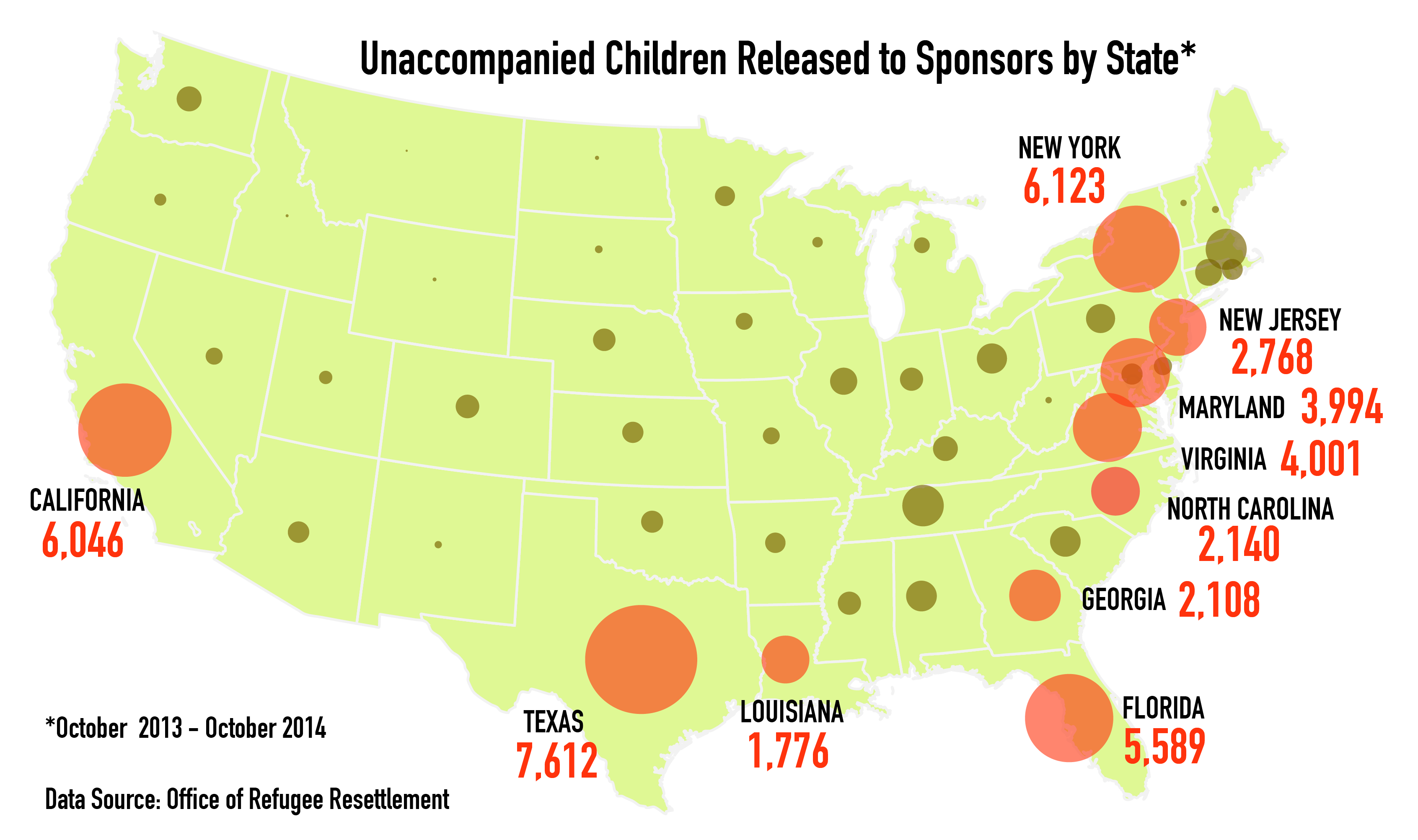
UAC SPONSOR PLACEMENT updated post-report-01

Graphic courtesy of the Center for Latin American & Latino Studies (CLALS)

President Obama’s long-awaited executive action on immigration has finally happened – with the anticipated political fireworks – and will benefit more than one third of the country’s undocumented persons. It is premature to offer predictions regarding how the dynamic will play out between a White House wounded by electoral losses last month and an emboldened Congressional opposition.  We can, however, take stock of who the administration’s measures have and have not affected.  Between 4 and 5 million people, a majority of them originally from Mexico, will be able to apply for work permits and secure protection from deportation for three years if they have been in the U.S. for five years or longer and have children who are either U.S. citizens or authorized residents.

The executive action is no modest change in policy, but it contains little good news for large numbers of undocumented persons and no good news for those his administration has already deported.  For the 250,000 U.S. citizen children whose parents have been deported over the past six years, it provides no comfort; there is no provision for the parents to return to raise their kids here.  Nor did the President’s measures offer more permanent relief to the roughly 280,000 Central Americans who have resided in the U.S. with Temporary Protected Status (TPS) following natural disasters in the region during the late 1990s and early 2000s.  Beneficiaries of those provisions will continue to pay roughly $500 every 12-18 months to renew their status. Other populations who have been here for well over a decade as stable members of the community also remain unaffected by the reforms.  No matter how long they have been here nor how good they have been – law-abiding, tax paying, churchgoing or generally nice – they will not be eligible for relief if they do not have children.  The administration’s action was strictly cast as a family-focused initiative, and family, in this instance, means children with authorization to be in the U.S.  Spouses do not count.  An important new population of migrants was also left out of the reform: the unaccompanied children, largely from violence-torn countries of Central America’s Northern Triangle, whose surge across the border received great media attention during the summer of 2014. Indeed, the president’s speech to the nation made no mention of that humanitarian crisis and made clear that those who come across now should expect to be deported.

The 68,000 children who trudged across the border during this fiscal year remain in limbo.  According to data from the Department of Health and Human Services’ Office of Refugee Resettlement, over 55,000 have been placed with immediate or extended-family sponsors in the U.S while their removal cases are pending in immigration court.  Metropolitan areas with long-established Central American communities have witnessed the largest influx of unaccompanied children.  The Baltimore-Washington metropolitan area alone, for example, received approximately 6,500 unaccompanied minors during the past fiscal year.  Once placed in sponsor care, these kids’ prospects for remaining in the U.S. – and their well-being while awaiting a court decision – are largely dependent upon local-level policies.  While the Obama administration has taken limited steps in recent months to provide legal counsel for these minors, funding for direct legal representation and a range of other educational, health, and social services is increasingly coming from those state and local governments that traditionally support immigrant-friendly humanitarian programs. This support is crucial, as demonstrated by a Syracuse University study that found that 85 percent of unaccompanied children appearing in court without an attorney are ordered to leave the U.S.; with an attorney, however, a child’s odds of remaining in the U.S. increase from 15 to 73 percent.   In cities such as New York, local funds are also being channeled through advocacy networks to support access to services beyond the courtroom, from mental health screenings, to vaccinations, to assistance with school enrollment.  Other local communities may not follow suit, particularly in the wake of the newly announced executive action, which in the short-term will strain the already taxed resources of local governments and advocacy groups.

December 11, 2014

Cuba: Can Official Labor Meet the Needs of Private Workers?

By Geoff Thale*

Alberto Yoan Arego Pulido / Flickr / CC BY-NC 2.0

Alberto Yoan Arego Pulido / Flickr / CC BY-NC 2.0

As Cuba embraces a new but still undefined economic model, it’s unclear whether or how the country’s old labor laws and regulatory systems will be adapted to accommodate the interests of employees in the growing private and cooperative sectors, or in the newly autonomous state enterprises.  The trade union structure cannot play the social role it played in the past with the emergence of businesses owned by both individuals and cooperatives, a growing role for foreign investment, and increasingly decentralized state enterprises.  During a recent trip to Cuba, our research team met with representatives and staff from a range of officially recognized trade unions.  We met with the national labor federation – the Central de Trabajadores de Cuba (CTC) – and with national and local officials from some member unions, including the national president of the health care workers’ union; local trade union officials in the hotel and restaurant workers union in the tourist sector in Old Havana; and local officials representing self-employed and small-business owners who have joined the union for retail and commercial workers.  A Labor Code approved by the National Assembly in December 2013 changed some aspects of the legal framework for labor relations.  It continued to privilege the CTC as the sole labor federation, while also taking some steps to recognize the new issues that confront workers in the emerging sectors of the economy.  It established a maximum number of hours of work (44) for private-sector employees, required the self-employed or small-business owners to pay into a social security fund and ensure social protections – health care, pensions, etc. – for employees.  And it guaranteed private-sector employees seven days paid vacation per year (though less than the one month given to state-sector workers).

Our interviews, however, turned up more questions than answers.  Newly autonomous state enterprises have greater latitude in setting wages, incentives and working conditions, but it remains unclear how these decentralized enterprises will handle labor relations issues, and what kind of negotiations might take place on compliance with regulations on workplace safety and protection, wage requirements and employment opportunities.  Indeed, it is unclear how the current worker organizations will represent workers in these decentralized enterprises.  The growth of the private sector presents another challenge.  The CTC has sought to organize the self-employed into the unions in the industries in which they are functioning – the food service and restaurant union, the retail and commercial sector union, and so on – but it is unclear how the union will represent the interests of both owners of independent small businesses – cuentapropistas – and the 15 percent of “self-employed” who are actually employees in those enterprises.  Similar queries are popping up in the cooperative sector and in enterprises run as joint ventures with foreign corporations or as wholly foreign-owned companies.

Cuba’s new labor policies are clearly a work in progress, but they signal recognition that there is an emerging stratum of non-state sector employees – and that they need social protections.  It also reflects a balancing act between ensuring stable employment and benefiting from the flexibility that private sector employment models provide.  The new Labor Code requires, for example, that employers sign year-long contracts with employees while guaranteeing them access to health care, parental leave and other benefits during that period.  New challenges will emerge, especially in terms of the structures that represent the interests of these groups and advocate for them.  But for now, there appears to be progress in establishing a system of social protections for the self-employed and for their employees under the new labor code.  Concerns about the burden of compliance appear likely to be muted for at least the near term because, as it was clear to us during our visit, the self-employed and their employees are earning substantially higher incomes than are workers in the state sector.

*Geoff Thale, program director at the Washington Office on Latin America (WOLA), in October led the research team’s fifth visit to Cuba examining the impact of economic change on workers.

December 9, 2014

Social Science that Matters: Pérez Sáinz on Latin America’s Inequalities

By Eric Hershberg

Image courtesy of FLACSO-Costa Rica

Latin America has made important advances dealing with income inequality over the past decade, but sustaining this modest progress requires a deeper grasp of its underlying causes.  Since Princeton sociologists Miguel Centeno and Kelly Hoffman in 2003 published their provocative article “The Lopsided Continent” probing Latin America’s infelicitous distinction as the region with the most unequal income distribution, the GINI coefficients – indicators of the gap between rich and poor – have declined in a number of Latin American countries.  Most of the advances, which admittedly appear tenuous and were slowed by the Great Recession of 2008-2009, can be traced to the expansion of secondary education and, particularly in countries governed by the left, unprecedented investments in social programs that have benefited the most disadvantaged sectors of the population.  Even now, however, income distribution in the region remains as unequal as anywhere on the planet – sapping productivity by depriving populations of opportunities to upgrade skills that could be deployed in knowledge-intensive economic activities.  Inequality also provokes social dislocations that undermine the welfare of the poor and non-poor alike, place burdens on over-extended state institutions and generate pathologies, such as crime, that undermine economic performance.  Moreover, the task of sustaining democratic political regimes is rendered much more difficult.

A new book by Juan Pablo Pérez Sáinz, a sociologist at the Latin American Faculty of Social Sciences (FLACSO) in Costa Rica, takes a fresh look at the dynamics of unequal power that influence how the fruits of economic activity become concentrated in some individuals and social groups – and remain beyond the reach of large swathes of a country’s inhabitants.  MERCADOS Y BÁRBAROS: La persistencia de las desigualdades de excedente en América Latina is in my view a landmark contribution to the sociological literature, and it identifies four intertwined processes that account for the disempowerment of important segments of the population, often characterized by subordinate status associated with gender, race, ethnicity or region.

  • The prevalence of precarious employment in labor markets, as a result of which people are condemned to toil endlessly but never enjoy the benefits of having a stable job.
  • The impossibility for most small-landholders or petty entrepreneurs to accumulate capital that might enable them to invest in the future of themselves, their families and their communities.
  • The weakness or absence of state institutions that might contribute to forging social citizenship encompassing all of a country’s inhabitants, the result of which is that vulnerable individuals and communities are left to fend entirely for themselves.
  • The overwhelming weight in Latin America of social categorizations – motivated by pervasive sexism, racism, ethnocentrism and xenophobia – that define excluded populations as less deserving of rights and opportunities than others.

If societies are to be expected to invest in social science, then it is reasonable to expect that social scientists strive to illuminate the underlying roots of their greatest challenges, such as the yawning inequalities in Latin America, and the sources of their persistence over time.  Through his historically informed and empirically rich analysis, drawing on theoretical insights from Marxian traditions and from the work of sociologists such as the late Charles Tilly, Pérez Sáinz has made an invaluable contribution to intellectual debates about inequality which should inform efforts to consolidate the modest gains we have seen in Latin America and thus help the region outgrow its enduring legacy of debilitating inequality.

December 4, 2014

The Open Veins of Latin America: Disowned?

By Núria Vilanova

tintincai / Flickr / CC BY-NC 2.0

tintincai / Flickr / CC BY-NC 2.0

Forty-three years after its publication, the emblematic and widely read Latin American anti-colonialist bestseller The Open Veins of Latin America has been disowned by its creator, 74-year-old Eduardo Galeano – but its literary message remains vital.  Interviewed last May about the book often called the “Bible of the Latin American Left,” Galeano said, “I don’t regret having written it, but it belongs to a time that to me has been overcome.”  His words left a sense of abandonment and deceit among many, who asked:  What had happened to the bleeding veins of Latin America drained by European and U.S. colonial powers?  Hadn’t the region been sacrificed since Columbus to profit diabolic foreign interests?  When Venezuelan President Hugo Chávez gave President Obama a copy of the book in 2009, was he clinging to an interpretation of Latin American history no longer embraced by the region’s leading thinkers?  Others asked, however well-deserved a denunciation of the exploitation and oppression laid out in the book was, were they to be blamed for all of the damage inflicted in the region?

Galeano’s interview signaled a refocussing of his analysis rather than wholesale rejection of it.  He said Open Veins was too boring and written in a tedious style and with the doctrinal tone of the traditional left.  He added that in those early days of his career he did not know enough politics and economics to write a book of such reach.  What Galeano has demonstrated by this unassuming recognition is that he has evolved through the years and, like many others, realizes that the dependentista paradigm, with its rejection of western capitalism, that fueled his book had important shortcomings, and overlooked other key problems.  He underestimated the impact of weak institutions – anticipated by Bolívar in the early 19th Century – and internal political and economic issues such as government corruption and the unwillingness of the ruling classes to contribute to the development of more democratic and egalitarian societies, as Marx himself would argue when writing about Southern countries.

The real – and not insignificant – value of Open Veins today lies in its literary character.  Its capacity to capture the spirit, the hope and the rage of those turbulent times in the region lives on.  Filled with metaphors and symbolism, it is an essay, whose literary dimension makes it current and ageless.  Stemming from a deep Latin American tradition, the book crosses the blurred borders between literature and history, sociology, politics and other disciplines alike.  Like José Martí, Ricardo Palma and Octavio Paz, Galeano attempted to transgress the boundaries between literature – subjectivity, imagination and hyperbole – and disciplines based on empiricism and factuality.  This practice can lead to challenges over facts, but the messages remain compelling.  Elizabeth Burgos’s testimonial account of Mayan activist Rigoberta Menchú in I Rigoberta Menchú (1984) was criticized for alleged inaccuracies, yet it is difficult for anyone to deny that the suffering of the Mayan Quiché community in the 70s and 80s was at least as cruel as Rigoberta depicted in the book.  Carlos Fuentes once said that reality will always overpower fiction, no matter how hard writers tried.  The intellectual evolution that Galeano has displayed is welcome, and it is also an inspiration to reread Open Veins and Latin America with much-needed fresh eyes.

December 2, 2014

Invisibility and Violence in Brazil

By Paula Orlando

Anistia Internacional Brasil / Flickr / CC BY-NC 2.0

Anistia Internacional Brasil / Flickr / CC BY-NC 2.0

Staggering statistics of violence in Brazil continue to make headlines in the country and abroad, but the invisibility of the victims and indifference toward them blunt the impact of the numbers.  According to the 2014 Map of Violence published by FLACSO-Brazil sociologist Julio Jacobo Waiselfisz, 30,000 people between the ages of 15 and 29 – 77 percent of whom are black – are murdered in Brazil every year.  Additionally, the annual report of the widely respected Brazilian Public Security Forum indicates that in 2008-2013 the police killed at a rate of six people per day, while a research group at the Federal University of Sao Carlos (UFSCAR) found recently that 61 percent of those killed by the police in Sao Paolo State are black.  The absence of popular outrage over these facts is being addressed by a range of initiatives, and social media – of which Brazilians are avid users – are an important tool to this end.

  • Amnesty International’s newly launched campaign, Jovem Negro Vivo, uses social media to raise consciousness about the rates of violence and societal responses to it. One of the main parts of the campaign is a video showing a black teen traveling through his neighborhood and city, successively encountering other invisible people.  At the end, the teen faces a similar fate – death and invisibility.  The campaign questions the trivialization of violent deaths and society’s silence about it.  The campaign asks: “84 homicides per day.  Do you care?” And adds: “More shocking than this reality, just indifference.”
  • Rede Jovem, an internationally acclaimed NGO created in 2000, is conducting Projeto Wikimapa with collaborative technologies to identify neighborhoods, streets and services in communities that are invisible – that is, not shown on official maps – even though many are heavily populated. A number of local projects are redrawing the maps of various cities, including Belo Horizonte, Rio de Janeiro, and Sao Paulo.  The resulting maps, which can be accessed on the Web and handheld devices, expose communities’ rich social structures to the world.  Some of this work is presented in a new released documentary, Todo mapa tem um discurso – “Every map has a discourse.”

In a society in which significant numbers of communities and individuals are still invisible to the state and fellow citizens, violence is not surprising.  During the recent and run-off campaigns Dilma Rousseff met with grassroots leaders who demanded urgent action to end systematic violence against poor youth and police abuse.  She promised them that she would push further implementation of specific youth programs such as Juventude Viva, while also recognizing the need to continue confronting racism and start taking serious measures against police abuse.  Human rights organizations and community activists have pledged to hold her to her word.  Communication and technology tools – which activists used during protests last year to gather evidence of police abuse through crowdsourcing – can provide a boost to citizens and activists in reclaiming public spaces and demanding better social services. Creating inclusive and participatory maps, for example, facilitates postal service, the allocation of resources, and the implementation of programs such as cultural and after-school activities that help protect vulnerable youth.  Further, the use of collaborative media technologies has the potential – over time – to reduce invisibility and bring society closer to dealing with the tragedy of the violent deaths of thousands of people every year.

November 25, 2014

Executive Action, Central American Presidents and the Fate of the Unaccompanied Minors

By Eric Hershberg

Image courtesy of Center for Latin American and Latino Studies

Image courtesy of Center for Latin American and Latino Studies

Speculation abounds in Washington as to the content of the long-awaited Executive Actions that the Obama administration has promised to decree amidst the failure of Congress to enact comprehensive immigration reform.  Having resisted pressure from Latino constituents and immigrant rights advocates to act before the mid-term election, in a vain effort to protect vulnerable Democratic incumbent Senators who lost their bids for re-election anyway, the administration now seems poised to announce new measures as early as the end of this week.  Press accounts based on leaks from within the Executive Branch speculate that as many as five or six million undocumented migrants may see their vulnerability to deportation diminish as a result of the impending policy changes.  Barack Obama’s Republican antagonists are fulminating about the consequences if he makes good on his promise, with some pondering ways to shut down the government or impeach the President, and others, fearful that a particularly intemperate response could damage the Republican brand, particularly given the need to attract at least a third of the Latino vote to the candidacy of whomever is chosen as the 2016 GOP presidential candidate, allude to the likelihood of court challenges to what they deem an extreme instance of Executive overreach.

One unanticipated but welcome measure that has been announced publically is that children deemed vulnerable to the violence in the three Northern Triangle countries of Central America will be able to apply to be reunited with parents residing legally in the U.S.  This policy shift, announced during the visit to Washington last week by Presidents Otto Pérez Molina, Salvador Sánchez Ceren and Juan Orlando Hernández, is among the administration’s responses to the surge of unaccompanied minors and families across the U.S.-Mexico border over the past year or so: 68,000 unaccompanied children were detained at the border during Fiscal Year 2014.  For their part, together with Vice President Joseph Biden at the Inter-American Development Bank, on November 14 the three Central American Presidents pledged to launch an Alliance for Prosperity in the Northern Triangle, with the objective of overcoming the conditions of economic misery, social vulnerability and institutional deficiencies that propelled the wave of migration of recent years and that have the potential to motivate a renewed flow of arrivals.  Biden offered an enthusiastic endorsement, but aside from reminding those in attendance that the administration had requested $3.7 billion from the Congress in response to last summer’s “crisis,” he did not offer specific commitments of resources, which of course are unlikely to be forthcoming from the strong Republican majorities in both chambers of Congress.  Nor did the Presidents make tangible commitments to build states capable of protecting the basic rights to life chances and security that are so remarkably absent for many of their countries’ inhabitants.

Assessing the likelihood of continued surges in migration requires understanding the factors that propelled the flow of people across the border in recent years.  A newly released study* by the Center for Latin American and Latino Studies, funded by the Ford Foundation, provides essential data and analysis on the drivers of migration from El Salvador, Guatemala and Honduras and on the fate of children and families who have arrived in the U.S. from those countries over the past year.  A core message of the report is that the absence of fundamental pre-conditions for living their lives with dignity – education, jobs, and most of all protection from violence – compels people to migrate rather than seek to better their lot in their communities of origin.  In the long run, only dramatic reforms undertaken by Central American states will build the institutions needed to address the basic needs of their populations and to provide the minimal levels of security needed for them to live their lives in dignity at home.  Perhaps little that was agreed upon during the Presidents’ visit to Washington gives cause for great optimism, but it is our hope that the CLALS study points the way toward solutions to the region’s crisis and toward ensuring the protection of those who endured the perilous journey to the U.S. border and now find themselves in limbo in the U.S.

 *To download a free copy of the full report, click here.

November 19, 2014

Argentina’s Stolen Children and National Narratives of Recovery

By Brenda Werth

Bruno Piatti / Flickr / CC BY-NC 2.0

Bruno Piatti / Flickr / CC BY-NC 2.0

Argentina’s National Day of the Right to Identity (October 22) had special meaning this year because of the recovery in August of Guido Montoya Carlotto, the 114th grandchild to be found, but hundreds of cases remain unsolved.  The day honors the tireless efforts of the Grandmothers of the Plaza de Mayo to recover the identity of the approximately 500 grandchildren who were stolen as babies during the dictatorship and raised in most cases by collaborators of the military regime.  Guido is the grandson of the group’s longstanding president, Estela de Carlotto.  In June, 36-year-old Guido, who grew up in the province of Buenos Aires as Ignacio Hurban, voluntarily submitted a blood sample for DNA testing that confirmed that he is the son of Laura Estela Carlotto and Walmir Oscar Montoya, Montonero militants who were kidnapped and disappeared during Argentina’s last military dictatorship (1976-1983).  Guido subsequently learned he had been born in captivity on June 26, 1978.  He was allowed to stay with his mother for only five hours before being handed over to the couple (whose involvement in his kidnapping is still unclear) who would raise him.  His mother was executed two months later.

The heavy media coverage of the recovery of Guido – who prefers to be called Ignacio Guido – has revived discussions in Argentina about identity narratives  surrounding the stolen children in the wake of dictatorship.  The most prominent human rights organizations to emerge since the mid-1970s are structured along familial lines:  the Mothers of Plaza de Mayo, the Grandmothers of Plaza de Mayo, and the H.I.J.O.S.  (Children for Identity and Justice, Against Forgetting and Silence).  As a result, the recovery of each and every grandchild is inextricably and symbolically linked to national recovery.  Moreover, due to a leak to the press, Ignacio Guido’s reunification with his biological family did not take place in an intimate, private setting but instead unfolded publicly in the national spotlight through a series of highly publicized press conferences and interviews, culminating in a meeting with President Cristina Fernández de Kirchner.  His recovery has generated an outpouring of support and an unprecedented sense of national unity among Argentines.  Politicians, celebrities, and sports figures alike have hailed his identity restitution as both a personal and national triumph.  Due to Estela de Carlotto’s stature as a world-renowned human rights activist and her close ties to the Kirchner government, this case, perhaps more than any other, illustrates how the personal, familial story of recovery can acquire a public dimension and give a push to the national commitment to resolve remaining cases of the stolen children.

Yet it is often during these moments of perceived national consensus when underlying tensions reassert themselves as well, and these tensions have manifested themselves institutionally, specifically in the areas of science, the law, and the Catholic Church.  At the height of the media storm surrounding Guido’s recovery, representatives of the National Genetic Data Bank held a press conference to restate their disapproval of the official decision to transfer the laboratory, including over 20,000 DNA samples, to the Ministry of Science and Technology.  Another tension emerged in the judicial sphere after the judge presiding over the case, María Servini de Cubría, was accused of leaking Ignacio Guido’s identity to the press before he could be reunited with his biological family – creating a rift with the Grandmothers.  In a meeting with Pope Francis on November 5, Carlotto and her grandson presented him with the iconic white handkerchief, which is a symbol of the Grandmothers’ mission, and a sculpture representing the fight for truth, justice, and memory.  Carlotto also took the opportunity to acknowledge that she had committed an error in linking him to the dictatorship in public statements soon after he became Pope in March 2013.  Their gifts were intended to enlist the Church’s support for full disclosure of evidence relating to the stolen children’s identity.  It was also a gesture of reconciliation between human rights organizations in Argentina and the Church, which failed to defend human rights during the dictatorship.  The meeting also strengthened the tight allegiances that President Kirchner has cultivated between her government, human rights organizations, and the charismatic figure of the Pope.  However halting, such moves could ultimately help resolve the cases of the hundreds of stolen children.

November 17, 2014

Colombia’s Peace Talks: One Step at a Time

By Aaron T. Bell

Number 10 / Flickr / CC BY-NC 2.0

Number 10 / Flickr / CC BY-NC 2.0

The peace talks in Havana between the Colombian government and the FARC guerrillas have continued to show slow but steady progress since President Juan Manuel Santos, who has staked considerable political capital on ending the 50-year conflict, began his second term three months ago.  Two years of negotiations have produced preliminary agreements on agricultural development, political participation, and resolving the illicit drug trade.  In August, negotiators turned their attention to compensating victims of the conflict, while a sub-commission staffed by top military figures from both sides has been developing recommendations for implementing a bilateral ceasefire and disarming combatants.  A recent ruling by the Constitutional Court has paved the way for the government to hold a public referendum on the peace accords once a final agreement between the two sides has been reached.

The challenges facing the successful negotiation and implementation of peace accords are significant.  At home, former president Álvaro Uribe and his allies continue to harangue President Santos, accusing the government of showing too much leniency in negotiations and most recently denouncing the participation in Havana of the FARC commanders accused of human rights abuses as an affront to their victims. Santos clashed publicly with the Inspector General (procurador general) as well after the President secretly approved trips to Cuba by the FARC’s leader, “Timochenko.”  For its part, the FARC has expressed reservations over immediate disarmament, still haunted by the deaths of thousands of members of its mid-1980s political party.  Also at issue is the fate of those guerrilla leaders who face active arrest warrants or have been tried in absentia for humans right abuses; the FARC has adamantly resisted the possibility of jail time for its members.  The government is also concerned that 10-20 percent of the FARC members will shift loyalties to organized criminal gangs after the war ends.  Severing ties between drug trafficking and the FARC supporters will require, among other things, a serious commitment to rural development to foster social inclusion for farmers who rely on coca plants for their livelihood.

In spite of these challenges, both sides have displayed a serious commitment to negotiating an end to decades of war.  The FARC has used past ceasefires to rebuild and organize its military strength, hence the government’s delay this time in negotiating an end to hostilities.  But attacks on infrastructure and security services are down from 2013, and members of the FARC have by and large respected several self-imposed ceasefires announced by the central command, most recently during this summer’s elections.  Santos has gone out on a limb by allowing wanted criminals to travel to the negotiations, but that decision is consistent with other policies.  When war crimes victims were invited to tell their stories to negotiators, Santos brushed outside critics and ensured that victims of the FARC, state, and paramilitaries were all equally represented.  Public support for the peace process looked shaky in September but has rebounded, as new polls from Gallup released last week shows over 60 percent of Colombians favor talks.  The government public release in early October of the preliminary agreements appears to have helped, silence critics who accused the government of selling out to guerrilla demands behind closed doors.  There is still considerable work to do in reaching an agreement, selling it to the public, then putting it into practice, and public support may waver if the process drags on into next year.  But, the environment has never looked as favorable for peace in Colombia as it does today.

November 13, 2014

El Salvador Security Challenges: Shaky Response So Far

By Héctor Silva Ávalos

Globovisión / Flickr / CC BY-NC 2.0

Globovisión / Flickr / CC BY-NC 2.0

After five and a half months in office, Salvadoran President Sánchez Cerén is still groping for ways to address the country’s pressing security concerns.  According to official figures, the homicide rate has rebounded to 11 per day – compared to five or six per day for four months last year during a gang truce sponsored by President Funes and his Security Minister, General  Munguía.  Highly unpopular among Salvadorans and despised by the United States – the key partner in security issues – the truce turned out to be the most effective homicide reduction policy since the end of the Civil War.  For Sánchez Cerén, however, the failure to renew the truce has proven to be politically toxic as violence has once again surged.  Inside sources say that the new government has engaged in a quiet dialogue with gang leaders but refuses to publicly embrace it as a mainstay of its approach to security.  Instead, Public Security Minister Benito Lara is pushing a model of community policing that has yet to prove effective and will be difficult to implement nationally.  Low morale within police ranks, the unwillingness of citizens to cooperate with police in gang-plagued territories and, as always, the lack of meaningful resources to address social investment in poor and violent communities are undermining the policy.

Two main elements of a successful approach – funding and political courage – are lacking.  Truce implementation was supposed to be followed by a comprehensive social investment program called Comunidades libres de violencia (Communities Free of Violence), but it never got funded.  Sánchez Cerén, moreover, has shown reluctance to take on the security issue.  The United States, for its part, has provided millions of dollars in assistance under its Central American Regional Security Initiative (CARSI) for vetted units of special investigators, transnational law enforcement initiatives to combat gangs, police equipment and training, and prison management, but institutional weaknesses remain acute and violence has continued to climb.  Moreover, many critics say the programs are flawed by a failure to condition aid on concrete government steps to end security forces’ impunity, corruption, and secret cooperation with organized crime.

The days in which iron-fist approaches and fanfare-hyping law enforcement activity represented a credible security strategy have passed.  Salvadoran politicians can no longer talk their way out of the security chaos by selling mano dura fantasies.  The truce under President Funes helped gang leaders consolidate their influence and hone their political skills to the point that a solution to reduce homicides without gang leaders’ imprimatur is plainly not possible.  As President, Sánchez Cerén has the opportunity to provide strong leadership, while addressing the public’s concerns, to pursue talks under clear conditions and with credible consequences for gang violations.  In return for a gang promise to reduce homicides, stop recruitment in vulnerable areas, and end gang rapes, the President could credibly offer to allow them greater sway in prisons and to support social programs in affected communities.  He can also commit to find the necessary resources.  The elites will resist paying, but a mini-summit of the three Presidents of Central America’s northern tier and U.S. Vice President Biden hosted by the Inter-American Development Bank this week affords Sánchez Cerén a chance to make a bilateral pitch for help to Biden and a multilateral pitch to the IDB.  He will have to steel himself for the political hits that will ensue, but without strong leadership, security in El Salvador will only continue to deteriorate.   The former guerrilla leader must know that there is no easy solution at hand, but as President – validated by a democratic election – he has the responsibility and holds the power to act.

November 11, 2014

U.S. Elections: Latino Vote Not Decisive

By Eric Hershberg and Fulton Armstrong

Rob Boudon / Flickr / CC BY-NC 2.0

Rob Boudon / Flickr / CC BY-NC 2.0

Preliminary estimates indicate that Latino voter participation and support for Democratic Party candidates on Tuesday were similar to the 2010 mid-terms – but not enough to overcome the Republicans’ gains across the broader population.  Before Tuesday, Latino observers were excited that 1.2 million Latinos had registered to vote since the last mid-term elections (2010) and, with an estimated 66,000 American Latinos turning 18 each day, they would have some new clout.  Latino Decisions, the leading polling organization focused on Latinos, found that two-thirds of Latino voters in Texas supported Democrats in House races on Tuesday, and 74 percent in Georgia supported Democrats.  Their broader impact as a bloc, moreover, is hard to assess because most of the competitive races for the U.S. Senate and House of Representatives were not in states with concentrated Hispanic populations.  Gerrymandering also blunted their impact on House races, and new voter identification laws appear to have discouraged participation as well.  The Dallas Morning News reported last weekend that Texas state officials estimated that the laws would render more than 600,000 registered black and Latino voters unable to cast ballots (without breaking out the size of each group).

Latino Decisions had warned before the elections that enthusiasm for Democratic candidates was 11 percent lower than it was during the general elections two years ago.  Many Latinos were angry that President Obama backed off his plan to use executive authority to begin immigration reform, while at the same time, ironically, they were frustrated that the Democrats saw them as a one-issue constituency and did not include them on other issues.  Indeed, Voto Latino, a voting rights organization, and others have been warning that Latinos care as much or more about the economy, health care, and women’s rights but feel ignored.  (The polls show that Latinos feel even more shut out by the Republicans.)  The great pool of young voting-age Latinos has been “hardest to reach,” according to Voto Latino, because they are busy and turned off by the stereotyping.  The Democrats also seem to have communicated priorities poorly.  Colorado Senator Mark Udall played up his support for comprehensive immigration reform, but Latino Decisions says only 46 percent of Latino voters there knew it.  On the other hand, Nevada Governor-elect Brian Sandoval – a Republican – attracted Latino voters with a platform emphasizing Medicaid expansion, English-learning education initiatives, while downplaying his party’s rhetoric on immigration.

The margin of Republican victory was wide enough that even high Latino turnout wouldn’t have flipped the outcome in places like Colorado, North Carolina, and Georgia.  Tuesday’s results notwithstanding, however, polls by Latino Decisions and other research indicate that the Latino voice at the polls will grow and, when mobilized, be potentially decisive.  Despite strains with the Democrats, it’s hard to see Latinos jumping to the Republican Party unless it significantly shifts policies on immigration, social programs, voter-ID laws, and the economy.  It would be unfair to blame President Obama alone for the lack of a Latino surge this year, but his decision to back off on immigration clearly hurt his party badly.  He wanted to take heat off vulnerable Democratic senators but helped neither the candidates nor his party’s ability to mobilize Latinos.  Latino Decision’s data on low enthusiasm and dismay about the delay of executive action mean that if the administration doesn’t take real action soon – and work to build Latinos’ enthusiasm over the course of the next two years – it will diminish prospects for the Democrats to have a big Latino edge in the presidential race in 2016.  With a Republican-controlled Senate, Obama faces the same dilemma as before – to risk the Senate’s wrath by taking executive action on immigration or continue to alienate a key constituency – but the answer should be clearer in view of Tuesday’s results. 

November 7, 2014