Journalism in Cuba: Unstoppable Change

By John Dinges*

Jaume Escofet / Flickr / Creative Commons

Photo Credit: Jaume Escofet / Flickr / Creative Commons (modified)

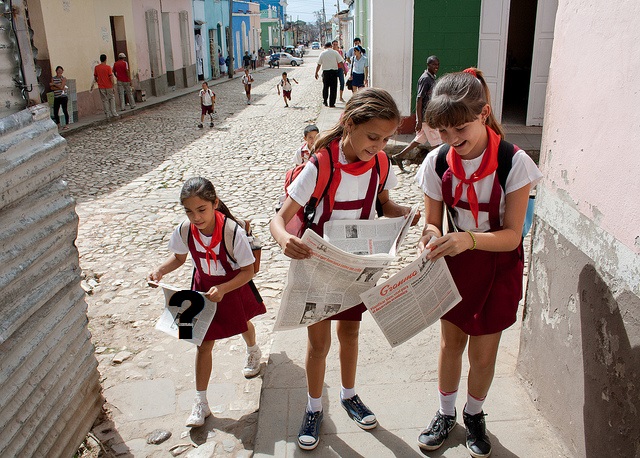
Cuban journalism is changing rapidly – both in and outside the official media.  Developments in media reflect the dynamic changes taking place in Cuba and are likely to drive even deeper change in the future.  Journalists outside the system have long been seen as eager to create alternatives to the centrally controlled media that have dominated for decades.  Now, although many inside the government-run media still generally seek continuity of the Cuban revolution, a timid but slowly growing number of them are showing signs of openness to shifting away from their traditional role as a propaganda machine for a one-party state.  Together, the non-official and official journalists are part of a process of change that is robust, unstoppable, and healthy from the perspective of journalistic values.  Among the indicators:

  • The official Communist Party daily, Granma, now dedicates a page each Friday to letters from readers with a host of complaints about daily life – inefficiency of government offices, long lines at stores, and delays in government benefits. In Cubadebate and other official blogs, there are been numerous analytical articles that could be called “loyal criticism.”
  • Yoani Sánchez – a star among the non-governmental bloggers – and others are sharp critics of the lack of political freedoms and proponents of radical but peaceful change. Their audience in Cuba is small, because of low connectivity on the island, but their voices occupy an important part of the spectrum of the country’s new journalism.
  • A new kind of media – individuals who identify as journalists and not as political dissidents – appears likely to have an even greater impact. The most successful of these, OnCuba, is a glossy bimonthly magazine distributed on the daily Miami-Havana charter flights.  It runs commercial covers – one recently featured a woman smoking a Cohiba – but also carries articles on sensitive political and economic issues.

OnCuba is an extraordinary experiment launched three years ago by Cuban-American businessman Hugo Cancio and employing 12 full-time Cuban journalists in a well-appointed Havana office – all with the necessary Cuban government approvals.  The editors say the publication’s only objective (other than paying its bills) is to serve as an intellectual bridge between Cubans in Cuba and Miami, casting a critical eye to both.

OnCuba and its nascent genre probably judge that walking the line between the two extremes – rejecting both “officialist” and “dissident” labels – increases their chances of landing on their feet if and when deeper change occurs in Cuba.  A recent episode involving leaked government documents, however, underscored the complexity of their balancing act.  An independent blog called La Chiringa de Cuba published a PDF of a sensitive Ministry of Communications plan to massively expand broadband access in Cuba by the year 2020, and OnCuba prepared a long article describing and analyzing its importance.  Despite the importance of broadband for the nation, the official media have so far neither reported on the leak nor – importantly – have they condemned it.  While the course of all these changes is uncertain, one thing beyond doubt is that, when it comes to journalism in Cuba, it’s now “Game on.”

June 19, 2015

*John Dinges teaches journalism at Columbia University and is the author, among other titles, of “The Condor Years: How Pinochet and his Allies Brought Terrorism to Three Continents” (The New Press 2004).

The Papal Encyclical: Driving Debate in Latin America

By Evan Berry*

Pope Francis

Photo Credit: Raffaele Esposito / Flickr / Creative Commons

Pope Francis’s encyclical on human ecology, due to be published this week, seems likely to contribute to a range of ongoing debates.  Entitled Laudato Sii, the document has already become a touchstone for debates about the moral dimension of climate politics and triggered heated debate within the global Catholic community about the pontiff’s authority on climate change.  It links care for the poor with environmental stewardship and makes a theological case against the “culture of consumerism.”  A vocal Catholic environmental movement has embraced it, while detractors are raising concerns about the fusion of theology and science, and some Church conservatives fear it will feed into arguments for “population control.”  Non-Catholics, including secular environmental organizations, the progressive media, and leaders from other religious traditions, are also studying it.

Champions of the document claim that it could have broad implications.  They expect it to legitimize civil society organizations committed to the climate and justice; affect the behavior of millions of individual Catholics; influence Catholic political leaders who are skeptical or obstructionist about climate change; and become a factor in ongoing international negotiations.  Perhaps zealously, these claims imply that tectonic changes are underway in the international political landscape, especially in the United States, where Hispanic Catholics are the demographic group most concerned about climate change, and in Latin America, a region both shaped heavily by Catholic tradition and uniquely imperiled by the threat of global warming.

For Latin America, which has been front and center in climate politics in recent years, the implications of the encyclical are potentially deep.  Peru and Brazil have hosted recent international conferences on climate change, and the Amazon, a key global carbon sink, ensures governments’ high interest in the international environmental dialogue.  The region’s vulnerability to glacial melt, storm intensification, drought, and rising sea levels also give the issue salience.  The challenges posed by climate change come at a time that many lower-income countries believe that Latin America can be a source of development models that address income gaps, raise literacy rates, and expand access to health care while protecting the environment.  Francis’s teachings on ecology and consumerism will resonate with and reinforce existing ecological movements – Buen Vivir and other groups link the issues – and his imprimatur could even facilitate rapprochement between leftists and centrists within the Church.  On a political level, the region’s reliance on energy exports, such as in the Pope’s native Argentina, may make it harder for public officials to advocate oil and gas development without seriously addressing the climatic impact.  The situation is similar in Brazil, where Pope Francis’ popularity and ecological orientation are starkly contrasted with the President Rousseff’s abysmal ratings and poor oversight of Petrobras.  But religion, environment, and politics are nowhere more likely to come into confluence than in Peru, where an upcoming election touches on several intensive socio-environmental conflicts, and where public awareness about climate change is well established.  Whether or not the Latin American leader of the region’s historically dominant religion has all the solutions, his encyclical seems likely to play into the moral and political debates the region needs and welcomes.

June 16, 2015

*Evan Berry is Associate Professor in the Department of Philosophy and Religion at American University.

Mexico Elections: Successful Balloting, Mixed Results

By Eric Hershberg and Fulton Armstrong

Preparing for elections in Chiapas, Mexico last week.  Photo Credit: Dimitri dF / Flickr / Creative Commons

Preparing for elections in Chiapas, Mexico last week. Photo Credit: Dimitri dF / Flickr / Creative Commons

Mexico’s mid-term elections last Sunday to select governors, mayors, and local and federal legislators confirmed popular engagement in the democratic process, but deep frustration with the country’s political parties.  Voter turnout – 47 percent of eligible voters cast ballots – was high  despite violence, isolated ballot-burnings, attacks on election board offices, and calls for boycotts.  The elections were carried out under highly adverse conditions. Some 1,400 murders were recorded nationwide in April – the highest rate in a year – and a clash between privately supported vigilantes and suspected cartel members left 13 dead in Guerrero state the day before voting.  Four assassinated candidates remained on Sunday’s ballots (and at least one won).  Pre-election polls showed that some 90 percent of citizens distrusted the political parties, and over half expressed disapproval for President Peña Nieto half-way into his six-year term.  According to press reports, voters were motivated by concern about the government’s inability to deal with the resurgence of violence or even satisfactorily explain massacres, such as the disappearance last September of 43 students who were last seen in police custody.  Mexico’s sluggish economy may have driven people to the polls as well; the government cut growth estimates in May because of lower than expected oil revenues and U.S. growth.

As predicted, the President’s Institutional Revolutionary Party (PRI) and its partners won a parliamentary majority – winning about 40 percent of the votes and, as a coalition, 260-plus seats in the 500-member Congress.  The PRI and the Party of Democratic Revolution (PRD) lost governorships in the country’s two most violent states – Guerrero and Michoacán – in what’s widely seen as a rebuke to both.  The opposition National Action Party (PAN) held largely steady, garnering about 20 percent of the votes.  By most accounts, the big winner on Sunday is Governor-elect Jaime Rodríguez of Mexico’s second-richest state, Nuevo León.  Running as an outsider, El Bronco took advantage of an electoral reform allowing independent candidacies and waltzed to victory with 48 percent of the vote despite a modest campaign and opposition from local media.  He has pledged that his election marks “the start of a second Mexican Revolution.”

El Bronco can legitimately claim to embody rejection of the traditional parties, and in that respect his rise to prominence is not unlike that of many charismatic politicians in Latin America’s recent and not-so-recent past.  Given his campaign’s lack of programmatic clarity, it is not clear that he or the votes cast in his favor represent anything more than that.  President Peña Nieto achieved important reforms during his first three years in office, particularly in energy and education, but these have neither generated enthusiastic support nor their anticipated benefits.  Whether the President has any new compelling ideas to offer for the remainder of his term remains to be seen.  The relatively high turnout last Sunday despite popular cynicism toward the parties and myriad security challenges does testify to Mexicans’ resilient democratic aspirations, but the election also reflects widespread public disillusion with the available options – incumbent as well as opposition.  The ruling PRI failed to offer (or even project) a credible agenda for Mexico during what are clearly times of trouble, and the country suffers from a lack of coherent alternative visions for either conservative modernization (the PAN) or progressive transformation (PRD or its former standard-bearer, Andrés Manuel López Obrador, with his newly established Morena party).  Across the ideological spectrum, Mexico’s politics are stuck, and it’s going to take more than one Bronco to drive out the dinosaurs.

June 11, 2015

U.S. Immigration Reform: Stuck Again

By Aaron T. Bell

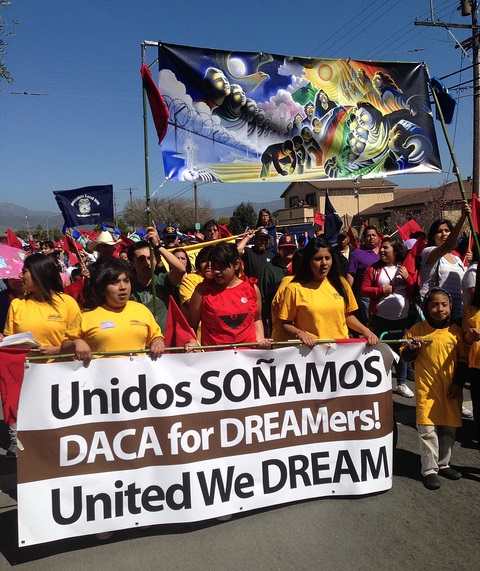
Steve Rhodes / Flickr / Creative Commons

Steve Rhodes / Flickr / Creative Commons

Opponents of the Obama administration’s executive actions on immigration – measures the President announced last November – have successfully blocked their implementation, setting the stage for a renewed political battle over the issue during next year’s U.S. elections.  Citing frustration with congressional inaction on immigration, Obama had announced that he would use his authority to expand the age limit of the Deferred Action for Childhood Arrivals (DACA) program, which temporarily defers deportation and allows undocumented immigrants to work, and to create a similar program for the undocumented parents of U.S. citizens and permanent residents.  Twenty-six states, led by Texas, filed a lawsuit in response, claiming that Obama violated a constitutional requirement to enforce the law and that he committed a technical violation of the Administrative Procedure Act (APA).  On February 16, the day before DACA was set to expand, a federal judge in Texas issued an injunction on the executive action programs.  The administration filed for a temporary stay of the injunction, which would allow it to begin implementing the programs while the court weighed their legality, but two weeks ago a Court of Appeals panel turned it down.  A long legal process in the 5th Circuit Appeals Court (based in Louisiana) will follow.

Despite this setback, recent precedents suggest that the Administration may yet win its case.  Arizona Sheriff Joe Arpaio, an outspoken opponent of reform, filed a lawsuit against the administration shortly after Obama announced his executive action, but a federal judge threw out the case in December on the grounds that Arpaio had not suffered direct injury from these actions and was thus ineligible to file suit.  Two months ago the 5th Circuit, which has a conservative reputation, unanimously dismissed a lawsuit filed by Mississippi and several Immigration and Customs Enforcement officers that challenged the original DACA program.  As in the Arpaio suit, the court reasoned that the plaintiffs lacked legal standing to bring the case, and – rejecting an argument also embraced by the Texas lawsuit that Obama’s executive action will cost taxpayers thousands of dollars in processing fees for driver’s licenses – the court recognized the economic benefits of the DACA program.  Fourteen states and the District of Columbia filed a brief in court in favor of the government’s case arguing that Texas and its co-plaintiffs have underestimated the fiscal benefits of the executive action programs.

Although the Courts may in the end reject the arguments of Obama’s opponents, they can claim at least short-term success.  Implementation has come to a complete halt, and immigration activists worry that the longer the legal process drags out, the less willing undocumented immigrants will be to apply to the programs and increase their risk of future deportation.  A subsequent appeal to the Supreme Court may push the executive actions back to mid-2016, reinvigorating immigration reform as a campaign issue just as election season is heating up.  Pew Research announced last week that its most recent polling data show that 72 percent of Americans support a path to legal citizenship for undocumented workers in the country, including 56 percent of Republicans.  Presumptive Democratic candidate Hillary Clinton has already pledged her support for reforms that go further than what Obama has tried to accomplish.  Republican candidates have slammed the President’s executive actions as “overreach” but are divided on where to go from there.  Former Florida governor Jeb Bush and Senator Marco Rubio have expressed support for a legislative replacement for DACA, while Senators Ted Cruz and Rand Paul have said they would make reversing Obama’s executive actions on immigration one of their first acts as president.  Wisconsin Governor Scott Walker recently expressed a desire to limit legal immigration as well in order to protect American jobs. Delaying immigration reform may ultimately put the Republican Party’s candidates in a difficult position next year.  If Obama’s executive action benefits family and friends of tens of thousands of Latino immigrants in the months preceding the November elections, the weak Hispanic voter turnout for Democratic candidates in the 2014 midterms is likely to be replaced by enthusiastic and potentially decisive support for a Democratic presidency, particularly if the Republican candidate focuses on appealing to the party’s nativist faction.

June 6, 2015

A New Line of Defense: Trends at Mexico’s Southern Border

By Dennis Stinchcomb

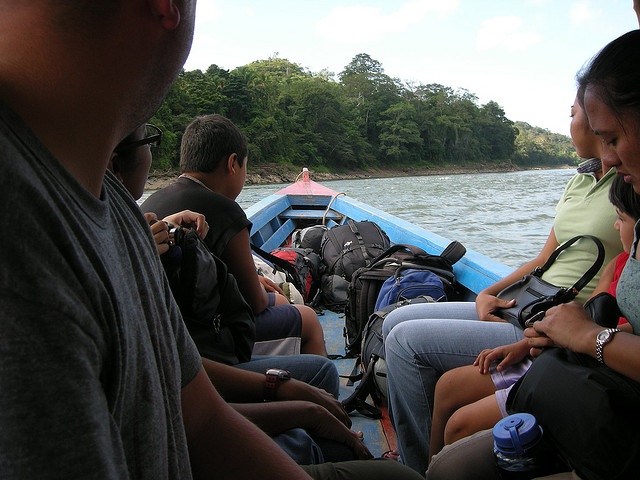
The boat to Mexico.  Photo Credit: einalem / Flickr / Creative Commons

The boat to Mexico. Photo Credit: einalem / Flickr / Creative Commons

Statistics show that the United States is relying on Mexico to do what U.S. immigration law and the Northern Triangle countries can’t: keep Central American children out of the U.S.  In 2014, the same year in which Mexico announced tightened security measures along its southern border with Guatemala and Belize, Mexican authorities deported over 18,000 children, up 117 percent from just over 8,000 the previous year, according to Mexican government figures.  A similar increase is already being registered in 2015.  During January and February of this year, deportations of minors from Mexican soil tallied over 3,200 – a 105 percent jump from the same period in 2014.  Since launching what U.S. officials have dubbed a “layered approach” to immigration enforcement, data reveal several noteworthy trends:

  • Mexico’s get-tough approach has prevented a significant number of migrants from reaching the U.S.-Mexico border. According to U.S. Customs and Border Patrol, the first seven months of Fiscal Year (FY) 2015 witnessed a 48-percent decrease in unaccompanied child apprehensions and a 35-percent decrease in family unit apprehensions along the U.S. border.  However, considered in light of the unprecedented number of deportations from Mexico, these figures suggest that child and family migration from Central America remain at historic highs. 
  • Central American children detained in Mexico are unlikely to be offered forms of humanitarian protection mandated by international law. Despite increases in child detention and deportation, a report by Georgetown University Law School’s Human Rights Institute points to inadequate screening and arbitrary detention as among the obstacles preventing tens of thousands of children from seeking and receiving relief from removal.
  • Both Mexican and U.S. data show that a growing share of child and family migrants are Guatemalan. According to analysis by the Pew Research Center, the number of Guatemalan children deported from Mexico during the first five months of FY15 doubled since the same period last year and now accounts for 60 percent of all child deportations from the country.  Meanwhile, the share of child deportees from Honduras dropped from roughly one-third to less than one-quarter, and those from El Salvador fell off slightly to just above 15 percent.  An analogous shift is also evident at the U.S.-Mexico border where Guatemalans now comprise 35 percent of unaccompanied child apprehensions compared to 25 percent during FY14.  Similarly, the proportion of Salvadoran and Honduran children has declined from roughly 25 percent each to 18 and 9 percent, respectively.
  • Smugglers and migrants are already adapting to heightened enforcement in Mexico and charting new, more dangerous routes north. Local media reports have covered migrants’ attempts to bypass border checkpoints by sea and traverse Mexico undetected on foot or in third-class buses.  Data show that successful migrants are crossing into the U.S. at less traditional and harder-to-access points.  At the height of last year’s crisis, the majority of migrants were surrendering themselves to border officials in the Rio Grande Valley along Texas’ southern-most border.  While apprehension in the Rio Grande control sector have decreased significantly this year, three sectors – Big Bend (Texas), El Paso (Texas and New Mexico), and Yuma (California) – have registered at least double-digit percent increases in both child and family apprehensions.

During Mexican President Peña Nieto’s recent visit to Washington, President Obama stated that he “very much appreciate[d] Mexico’s efforts in addressing the unaccompanied children [crisis].”  Despite applause from the White House, Mexico’s aggressive border enforcement – driven at least in part by U.S. encouragement and funding – has implications for Mexico’s already problematic human rights record.  While it is true that Mexico’s actions have largely staved off a repeat of last year’s crisis, it has yet to translate into the sort of political bargaining chip the Obama administration has hoped might sway the immigration policy debate in the U.S.  With comprehensive immigration reform legislation long dead and recent executive actions on indefinite hold, the administration apparently hopes that ramped-up enforcement will improve prospects for congressional approval of $1 billion in development assistance to the Northern Triangle.  But with Mexico’s clampdown blocking another surge of migrants into the U.S., many legislators are likely to question the prudence of pouring more money into corrupt, dysfunctional regional governments.  By backing the militarization of Mexico’s southern border, moreover, the administration is privileging political goals at the expense of humanitarian objectives and is indirectly complicit in blocking thousands of Central American children from accessing lawful forms of relief for which most are likely eligible.  Meanwhile, Mexico’s migrant extortion market continues to boom as vulnerable children and families seek new routes north at the mercy of increasingly brutal transnational networks.

June 4, 2015

Haiti: Yet More Lost Opportunity

By Emma Fawcett*

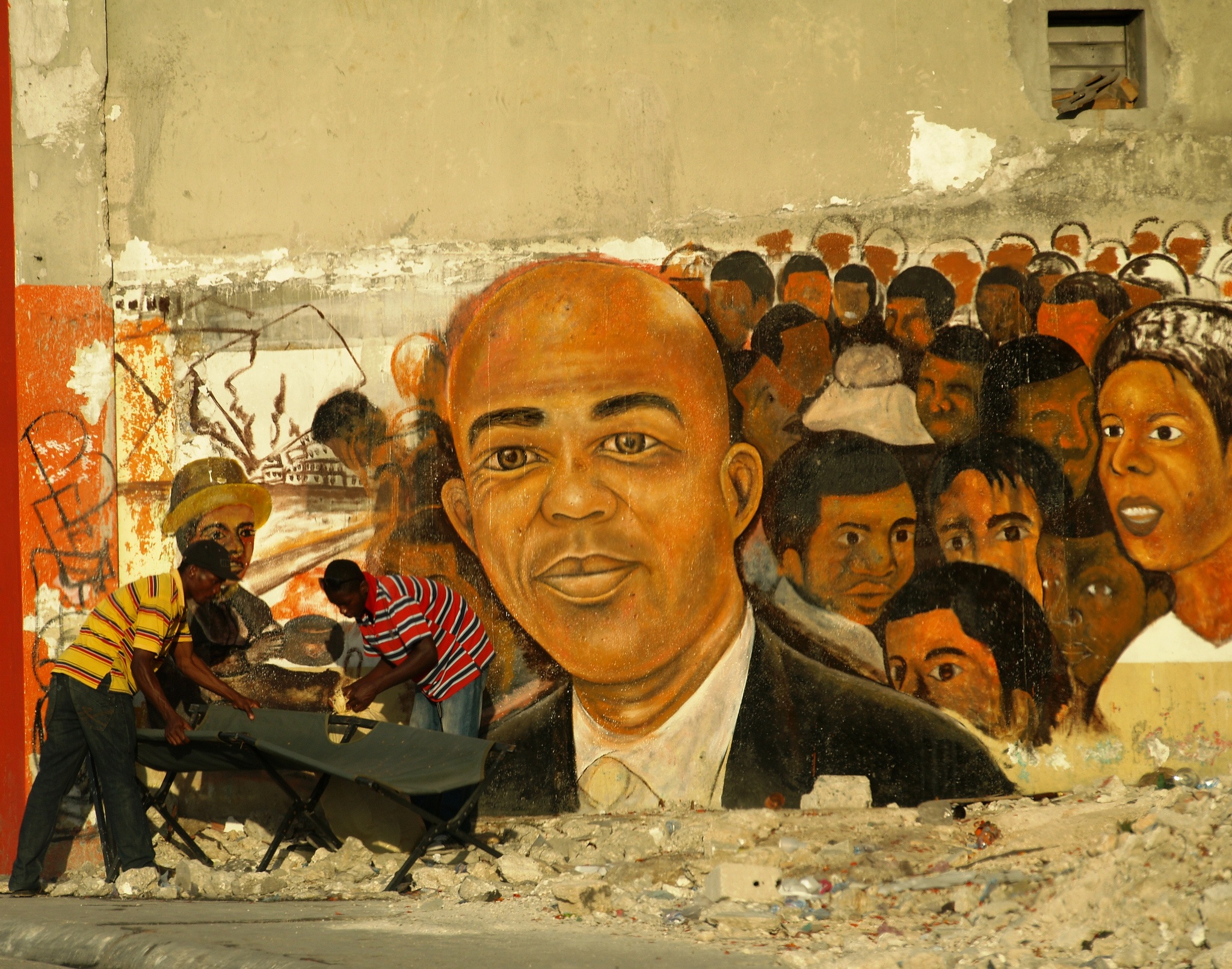
Photo Credit: Nacho Fradejas Garcia / Flickr / Creative Commons

Photo Credit: Nacho Fradejas Garcia / Flickr / Creative Commons

Six months into Haiti’s most recent political crisis, popular uncertainty and frustration are palpable – amid indications that even the Obama Administration may be tiring of corruption and mismanagement under President Martelly.  Officials in Washington in April expressed concerns over the abrupt release of gang leaders alleged to have ties to Martelly who had been held on kidnapping charges.  Recent U.S. Embassy tweets have focused on the importance of press freedom and free and fair elections.  Protests are a regular occurrence, and anti-government graffiti covers buildings throughout Port-au-Prince.  Martelly’s network of old friends – whom some long-time Haiti-watchers have called “nefarious characters” – has been politically useful to him, and various press reports indicate that criminal prosecutions against them for drug trafficking, kidnapping, and worse have mysteriously dropped off the books.  Criticism of his record on other issues is also strong.  A visit from Beyoncé on May 16 led the US Embassy to ask its Facebook followers: “Where should she go to see the progress in Haiti? Let us know!”  Social media users mocked, “What progress?” and derided the embassy for asking.  Washington politics, such as criticism of Bill and Hillary Clinton’s role in Haiti, is further casting a shadow on Martelly and his government.

The country has made partial progress towards holding its long overdue elections, but – if history and Martelly’s record are any guide – obstacles could easily arise.  A list of candidates has been approved, and dates have been set – August 9 for Parliamentary elections (all 118 seats in the Chamber of Deputies and 20 of the 30 seats in the Senate).   Presidential elections will take place on October 25, with a December 27 runoff if necessary.  But the process has not been without controversy: a quarter of the 2,039 who had registered to be candidates have been disqualified for various reasons.  (First Lady Sophia Martelly wanted to run for Senate but was not accepted because she is a U.S. citizen.)  As the government has not provided explanations in most instances, accusations that the exclusions were politically-motivated abound.

Martelly’s carefully calculated consolidation of power over the last four years has led many observers in Haiti to wonder whether he will actually make elections happen and leave office on schedule.  Many of them are perplexed by what they perceive as steadfast U.S. support for him.  Even in January, when an agreement on elections fell through once again and Martelly commenced to rule by decree, the State Department’s admonishment was widely seen as weak.  Rather than building bridges at home, Martelly has often appeared more externally focused – capitalizing on his ties to the Clintons, who along with the OAS helped him secure the contested presidency in the first place; declaring that Haiti is “open for business”; and holding his historic meeting earlier this month with French President Francois Hollande.  Indeed, the Hollande visit resulted in yet more protests in Port-au-Prince’s streets from those frustrated by France’s refusal to pay reparations for past abuses – such as the “independence debt” that France demanded, which consumed 80 percent of Haiti’s budget for 125 years (the equivalent of $17 billion dollars today).  Predictions about the elections and transition of power at the end of the year would be premature, but Martelly already seems to have squandered his chance to leave a legacy of progress, institution-building, and stability for the nascent Haitian democracy. 

June 1, 2015

*Emma Fawcett is a PhD candidate in International Relations at American University.  Her doctoral thesis focuses on the political economy of tourism and development in four Caribbean case studies: Haiti, Dominican Republic, Cuba, and the Mexican Caribbean.

The Venezuelan Opposition: Can the Center Hold?

By Michael M. McCarthy*

Leopoldo Lopez (R) being escorted by the National Guard after turning himself in on February 18, 2014.  Photo Credit: Juan Barreto via Globovisión / Flickr / Creative Commons

Leopoldo Lopez (R) being escorted by the National Guard after turning himself in on February 18, 2014. Photo Credit: Juan Barreto via Globovisión / Flickr / Creative Commons

The leaked video of jailed Venezuelan opposition leader Leopoldo López declaring a hunger strike and calling for a renewal of street demonstrations this Saturday threatens to reopen splits within the Venezuelan political opposition.  With Venezuela experiencing an economic crisis – the bolívar lost a quarter of its value on the black market last week and shortages of basic goods plague daily life – the opposition, a disparate group of 29 political parties organized under the Mesa de Unidad Democrática (MUD), seems poised to score a pivotal victory in this year’s legislative election.  But López’s call to protests could renew divisions between those supportive of last year’s La Salida street demonstrations and the moderate camp, led by Governor Henrique Capriles, eager to punish the government at the polls for its poor management of the economy.

  • On May 17 the MUD held open primaries for 37 candidacies, and turnout (8 percent of all registered voters) exceeded expectations, despite very little media attention being devoted to the races. Capriles’s First Justice (PJ) and López’s Popular Will (VP) parties won 13 and 10 candidacies with 19.7 percent and 18.2 percent of the votes, respectively.  Regionally-based parties Democratic Action, strong in rural areas, and A New Time, strong in western Zulia state, performed well, with other small parties winning the remaining candidacies. The results consolidated the negotiating leverage of the PJ and VP as the MUD began internal talks about selecting the remainder of its candidates by consensus and campaign tactics – whether to use a tarjeta única ticket or let individual parties be listed on the ballot on voting day.  (The National Election Council has yet to announce the date.)

The López video, first leaked on government media outlets before going viral on social media late last Saturday, was forceful.  It emerged after news broke that López’s cellmate, VP politician Daniel Ceballos – the former mayor of San Cristobal, an epicenter of the street demonstrations last year – would be transferred to a public jail for common criminals where security guarantees are considerably weaker.  In the video, López mentions the U.S. investigation into chavista National Assembly President Diosdado Cabello for alleged involvement in narco-trafficking; condemns the “permanent repression of our rights”; and demands “the liberation of all political prisoners,” the “halt to persecution, repression, and censorship,” and the setting of an official date for the legislative elections, with OAS and European Union observers.  On Monday, a leader of López’s party endorsed his call for a rally on Saturday, and Lopez’s wife and spokeswoman declared that Venezuela is entering “a new stage of struggle.”

The countrys situation is palpably worse than a year ago, when López went to jail, but opening a new front is not what most of the opposition had in mind.  Capriles and the MUD have issued statements of support since the video leaked, and the MUDs Executive Secretary Jesus Chuo” Torrealba posted a call for unity on Twitter.  Going to the elections divided is a loss, he said.  Going to the street divided is suicide.  Will we learn?  Unanswered, however, is the question of the oppositions ability to avoid becoming bogged down in a leadership struggle just as the campaign season kicks off.  Oppositionists had finally found a political middle ground based on prioritizing the elections and the narrative of ordinary Venezuelans facing daily hardships to find food and other basic necessities.  However legitimate the oppositions fury at the governments repression and mismanagement, the call to the streets risks changing that narrative and diminishing prospects of opposition unity going into the election season. 

May 27, 2015

* Michael McCarthy is a Research Fellow with the Center for Latin American and Latino Studies.

Civics Lessons from Guatemala

By Robert Brenneman*

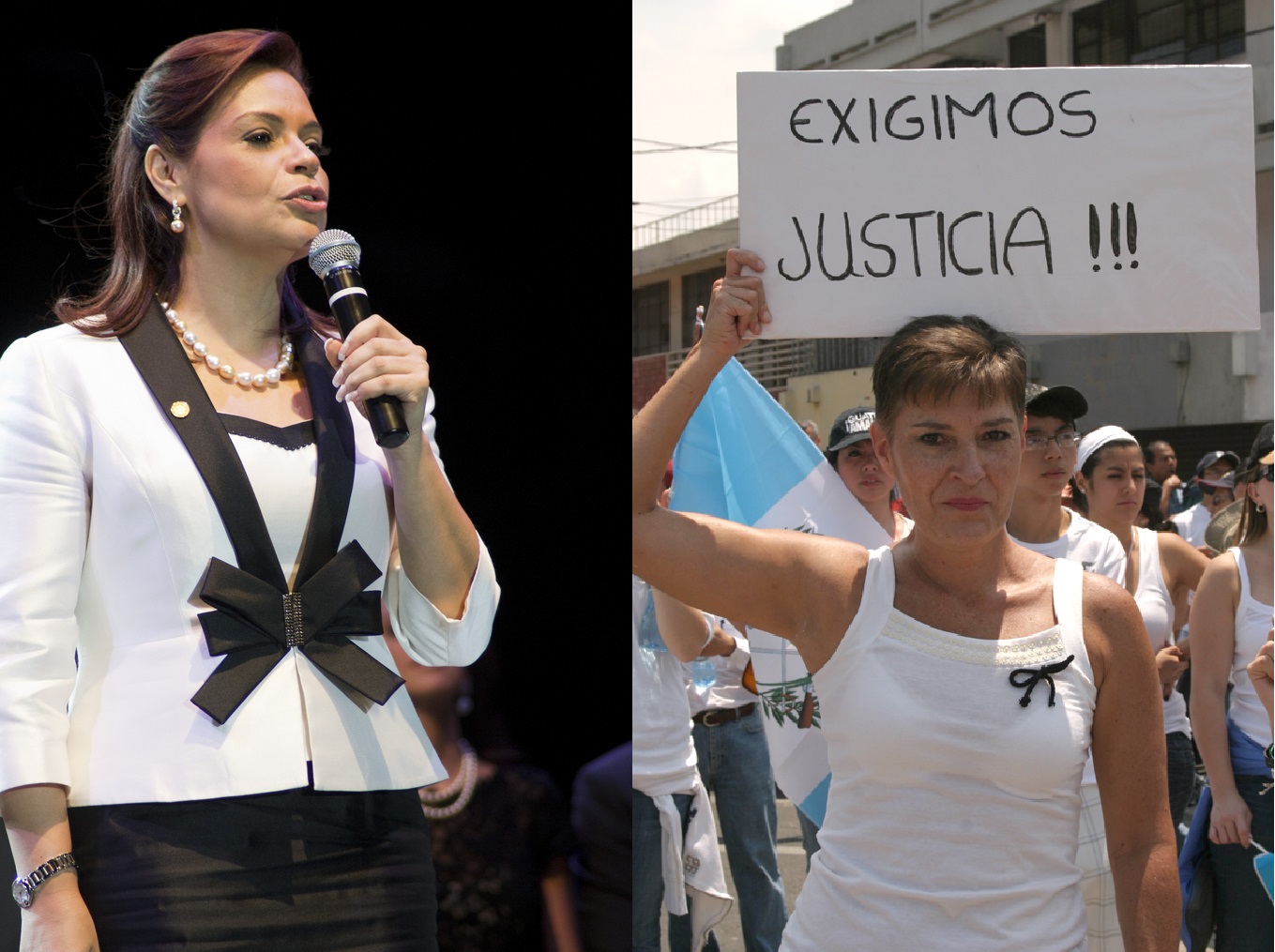
Former Vice President of Guatemala Roxana Baldetti (l) and a protestor with sign "We demand justice" Photo Credits: Surizar / Flickr / Creative Commons

Former Vice President of Guatemala Roxana Baldetti (l) and a protestor holding sign that proclaims “We demand justice.” Photo Credits: Surizar / Flickr / Creative Commons

Guatemala’s popular movement for justice and transparency is suddenly and happily discovering that nothing breeds success like success.  Many Guatemalans have grumbled for years about rampant corruption among the political class, but in recent weeks a surging popular movement has finally emerged giving voice and energy to years of that frustration with impunity and graft.  The movement picked up steam after a public exposé of a shadowy tax fraud and contraband network called “La Línea,” orchestrated out of Vice President Roxana Baldetti’s office by her private secretary.  The report was produced by the International Commission against Impunity in Guatemala (CICIG).  (Click here for analysis of the Commission’s renewal.)  President Pérez Molina not only renewed CICIG’s term until 2017; on May 7 he also accepted the resignation of Baldetti and her secretary, who had served as the key money-raising dealmakers for his administration.  The U.S. Embassy suspended the visas of many of the officials named in the report, including the luckless former vice president herself.

These actions have not been enough to appease the appetite for justice and transparency sought by the growing crowds of flag-waving nonviolent protestors converging each Sunday afternoon in front of the Guatemala City’s Municipal Palace.  An estimated 57,000 gathered under thunder and pouring rain on May 17.  Empowered by the relatively swift impact of their movement, and outraged by the mounting evidence pointing to the president’s personal connections to the corruption network, the crowds of protestors  led principally by students of the public university  have shifted to demanding that the president himself step down.  Pérez Molina, sensing that the wheels are coming off his administration, has requested the resignations of his closest advisors and top officials, including his Interior Minister and his Chief of Strategic Intelligence.  He has revoked or rescinded several of the most lucrative (and obviously corrupt) government contracts that he had vociferously defended only a few weeks ago.

President Pérez Molina’s political future remains up in the air.  Many Guatemalan political analysts believe he should step down.  José Rubén Zamora, founder of Guatemala’s influential daily El Periódico, argues that resigning is “the only way out of an impossible labyrinth” of the president’s own making.  But many others view the president’s fate as less important than whether the country takes advantage of the opportunity to use public pressure to pass sorely needed structural reforms.  For years Congress has ignored several bills that would tighten campaign finance rules and bring transparency to government contracting.  Since pay-to-play politics is not unique to this administration, fixing the problem will require legal and structural changes, not merely changing the nameplate on the presidential suite.  One hopeful sign is that Manuel Baldizón, leader of the opposition Renewed Democratic Liberty Party (LIDER), has not managed to coopt the popular outrage to kickstart his own election campaign.  A popular banner at the protests warns him “¡No te toca!” (“It’s not your turn!”).  The leaders of the movement recognize that Baldizón – who has many skeletons in his own closet and heads another investment-financed party – is hardly the answer.  The protesters’ focus on reform rather than politics suggests that the most certain – and long-lasting – outcome of all is the strengthened civic sphere that appears to have emerged as the protests grow and the newspapers report daily arrests and resignations.  In this civics lesson, the Guatemalan public is both pupil and teacher.

May 26, 2015

*Dr. Brenneman teaches sociology at St. Michael’s College and is author of Homies and Hermanos: God and Gangs in Central America (Oxford University Press 2012).

Brazil on the Global Stage: Power, Ideas, and the International Order

By Matthew Taylor and Oliver Stuenkel*

Now available via Palgrave Macmillan.

Now available via Palgrave Macmillan.

Brazil has risen to become the seventh largest economy and fourth largest democracy in the world – yet its rise challenges the conventional wisdom that capitalist democracies will necessarily converge to become faithful adherents of a U.S.-led global liberal order.  Indeed, Brazil demonstrates that middle powers, even those of a deeply democratic bent, may offer important challenges to prevailing conceptions of the world order, differing in their views of what democracy means on the global stage and how international relations should be conducted among sovereign nations.  For Brazil, successful diplomacy involves an increased voice for the developing world, greater accountability in multilateral institutions, and a desire to reduce emphasis on coercive instruments.

  • Because the role of middle powers such as Brazil is often less easily understood in the realist terms that dominate U.S. foreign policy circles, its foreign policy stances are often portrayed by frustrated Washington officials as quixotic and naïve, or ridiculed as puerile and petulant third-worldist jabs at a stereotypical Tío Sam, intended only to win popular approval from a nationalistic and anti-American electorate. In fact, Brazilian foreign policy positions usually have deeper and more enduring origins, embedded within a deeply held set of beliefs that together shape Brazil’s rational strategic perspective on the structure of power in the world today.
  • Brazil’s new role on the world stage has much to do with the country’s success in addressing its own domestic challenges under a succession of democratically elected presidents. Over the past three decades, Brazil has left behind its history of economic disarray, established a robust democracy, and begun to address its record-setting inequality.  It has found paths past the hyperinflation and financial crises of the 1980s and 1990s, undertaken substantial institutional reforms to overhaul the gargantuan and inefficient public sector, and implemented highly regarded social policies.  Even its recent stumbles can be seen in the positive light of democratic progress: the demonstrations that took hold in many Brazilian cities in 2013 and 2014 can largely be attributed to a growing middle class impatient with the pace of change and increasingly conscious of its political rights, a direct consequence of the important successes of the past generation.  Although the country continues to face a number of domestic challenges, the gains of the past generation appear to have fostered an enduring intent to play a role on the world stage.

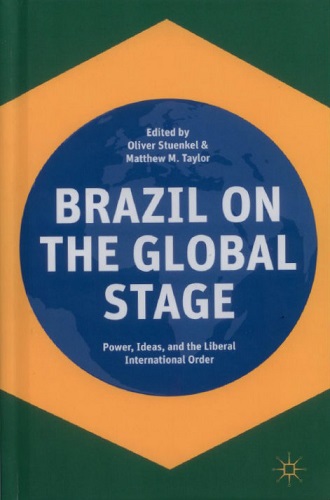
These conclusions and others are presented in a book entitled Brazil on the Global Stage: Power, Ideas, and the Liberal International Order (Palgrave Macmillan, 2015), co-edited by Professors Matthew Taylor and Oliver Stuenkel.  The book is based on a conference sponsored jointly by American University’s Center for Latin American & Latino Studies and School of International Service, and includes contributions by eight faculty members from AU and Fundação Getulio Vargas (FGV), as well as experts from the Washington community.  It offers a general evaluation of Brazil’s stance toward global order, while also addressing its postures on specific aspects of governance, including trade, foreign and environmental policy, humanitarian intervention, nuclear proliferation, and South-South relations, among other topics.

May 21, 2015

*Professors Matthew Taylor and Oliver Stuenkel teach at American University’s School of International Service and the Fundação Getulio Vargas in Brazil, respectively.

Venezuela: Globovisión Doesn’t Show Strong Pro-Government Bias

By Mike Danielson, Michael McCarthy, and Paula Orlando*

Photo Credit: CLALS and Rodrigo Suarez / Flickr / Creative Commons

Photo Credit: CLALS and Rodrigo Suarez / Flickr / Creative Commons

A study conducted by CLALS has revealed that, contrary to popular perception in Venezuela, Globovisión – standard bearer in news television for the opposition’s political agenda until a May 2013 ownership change – does not exhibit a strong pro-government bias.  Our report, Bias or Neutrality? An Assessment of Television News Coverage in Venezuela by Globovisión, concludes that Globovisión’s framing of the issues has tended to be neutral, and that there was no significant bias in favor of the government or the opposition.  To examine the station’s performance during the first 15 months of new ownership (May 2013-August 2014) – the previous owners felt compelled to sell after mounting fines caused them to operate at a loss – the study examined content during four critical junctures: the 2013 municipal elections, street demonstrations in 2014, the international attempts to mediate Venezuela’s internal political crisis, and shortages of basic goods.  Using content analysis to examine coverage of government and opposition representatives, the favorability of the presentation and portrayal of prominent individuals and organizations, and the choice of issues and perspectives receiving coverage, the review concluded:

  • Non-partisan actors received most coverage (45.3 percent), and pro-government and pro-opposition partisans were equally likely to receive attention (28.4 and 26.3 percent, respectively).  Even in the instances that a small pro-opposition bias was found, pro-opposition voices received only slightly more visibility in terms of total on-air minutes – receiving 37.5 percent, while 33.6 percent went to pro-government partisans, and 28.9 percent went to nonpartisan actors.
  • Pro-opposition perspectives were favored in the periods focused on the municipal elections and street demonstrations, and coverage was more neutral when focused on the international dimensions of the crisis and the shortages of basic goods.
  • There was, however, a pro-government slant regarding story placement, as stories that were more favorable to the Administration of President Nicolás Maduro tended to “lead” as the first stories in a news broadcast.

Privately owned news media in Venezuela face numerous challenges to providing visibility and fair depiction to sharply different perspectives on enormously controversial events.  Although this report calls attention to the need to reassess the perception that Globovisión is strongly biased in favor of the government, notable holes in the channels news coverage suggest international concerns about press freedom issues in Venezuela remain justified.  For example, the case of jailed opposition leader Leopoldo López received less attention from Globovisión than from international outlets such as CNN en español or NTN24.  Additionally, footage of former presidential candidate and Governor of Miranda state Henrique Capriles was shown 11 times in the studys sample, but Capriles was not an interview guest on any of the Globovisión programs.  President Maduro, on the other hand, appeared 42 times (beyond government-controlled network broadcasts called cadenas). In spite of Venezuela’s chronic political crisis and extremely difficult political circumstances and the related pressures on news media, Globovision coverage, on balance, was not significantly biased either in favor or against the government.

May 19, 2015

*Mike Danielson (Visiting Assistant Professor of International Affairs at George Washington University), Michael McCarthy, and Paula Orlando are CLALS fellows.  Click here to see their full report and here to see their interview with Voice of America.