Peru’s 2016 Elections: Will Old-timers Retain the Lead?

By Cynthia McClintock*
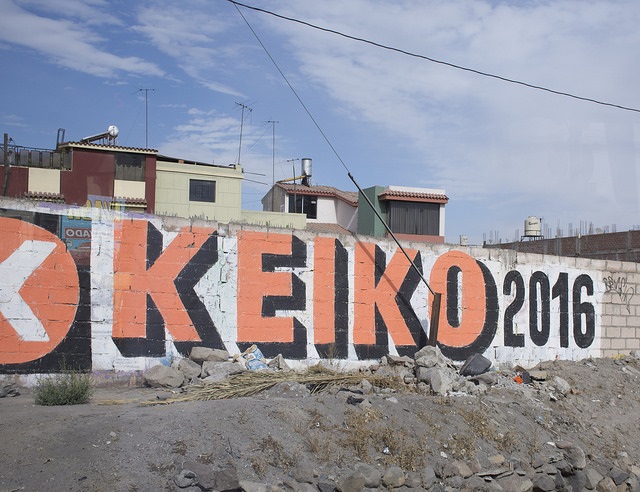
Photo Credit: A.Davey / Flickr / Creative Commons

Photo Credit: A.Davey / Flickr / Creative Commons

The big surprise of Peru’s presidential campaign – for elections about four months from now – is that there have been no surprises.  All three frontrunners in the April 10 first round are old-timers, not newcomers or outsiders.  Although Peru’s political parties are among the weakest in Latin America, two of the three lead institutionalized parties.  Further, in a country where the winners since 2001 have been roughly at the center-left of the ideological spectrum, all three of the current leaders are at the right or center-right.

Two main explanations for this emerge:

  • One is that Peruvian voters are reacting against the administration of incumbent Ollanta Humala. A former military officer, Humala burst into Peru’s electoral arena as a fiery leftist outsider in 2006 and won a plurality in the first round but lost the runoff.  For the 2011 election, he moderated his positions considerably and prevailed.  But his political party has remained inchoate and, in part as a result, Humala is now perceived as opportunistic and weak.  Humala has delivered on promises of social inclusion to a degree, but economic growth has stalled – so Peruvians may now be reasoning that it is time to prioritize growth.
  • Probably more likely, however, is that it is yet early in Peru’s presidential campaign. Even as late as three months before elections, Peru’s opinion polls are often very wrong, almost always exaggerating the support for rightist candidates.  In January 1990, Mario Vargas Llosa was leading with 53 percent, compared to 15 percent for his nearest rival, but lost the runoff in a landslide.  Lourdes Flores was leading in January 2006, and Alejandro Toledo in January 2011, but neither even reached the runoff.

The current three front-runners have strengths, but also liabilities.

  • The candidate who has topped the opinion polls for more than a year is Keiko Fujimori. She is the daughter of Alberto Fujimori who, despite conviction on charges of human rights violations and corruption, retains support as the president who presided over the decimation of the Shining Path insurgency.  Her “Fujimorista Party” has a fervent base in both urban and rural areas.  Keiko was the runner-up in Peru’s 2011 election, but she struggled to achieve a balance between respect for her father and distance from his abuses.  She is likely to have the same challenge in 2016.
  • Currently second in the polls with roughly 22 percent is Pedro Pablo Kucznyski. He can take credit for excellent economic growth during the Toledo administration (2001-2006), when he was economics minister and prime minister, and there are no corruption charges against him despite many years in government.  In 2011, he ran an excellent campaign and finished third.  But he will be 77 next year, and he has many U.S. business connections (and until now a U.S. passport), which could hurt him.
  • Running third with about 10 percent is Alan García, the long-standing leader of Peru’s most-institutionalized party, APRA (American Popular Revolutionary Alliance). García is a brilliant campaign strategist, and he can cite superb economic growth during his 2006-2011 presidential term.  However, he is also widely perceived as Peru’s most corrupt political leader.

Surprises are inherently impossible to predict – but not impossible to imagine.  Peru’s left is divided and poorly financed, and its heyday has probably passed, but the candidate nominated a few weeks ago by the Broad Front, Verónika Mendoza, a congresswoman from Cusco and psychologist who studied in France, has the potential to appeal to diverse sectors of Peruvians.  As in many Latin American countries, corruption scandals are at the forefront in Peru, and a candidate who has participated in successful anti-corruption efforts – but whose name doesn’t occupy headlines – could emerge and turn the race upside down.

November 5, 2015

* Cynthia McClintock is Professor of Political Science and International Affairs at George Washington University.
Haiti: Elections Better than Expected?

By Emma Fawcett*

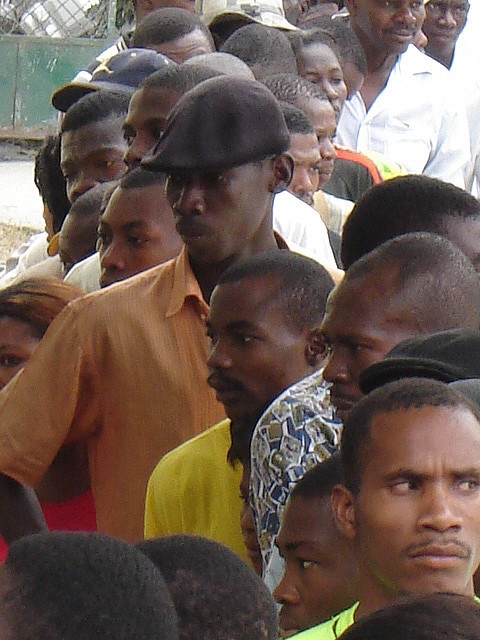
Photo Credit: Haiti Innovation / Flickr / Creative Commons

Photo Credit: Haiti Innovation / Flickr / Creative Commons

Security and logistics for Haiti’s October 25 elections went much better than expected, but the results – preliminarily announced this week but likely to face challenges – will probably leave many Haitians disappointed.  With 54 presidential candidates and 6,000 other candidates for legislative and local positions, party monitors outnumbered voters at some polling stations.  The Observatory for Institutionalizing Democracy estimates that turnout was about 30 percent.  Despite sporadic demonstrations leading to the arrests of 234 people, the process was fairly peaceful.  Allegations of ballot stuffing persist but remain unsubstantiated – perhaps because the fraud has been better organized this time, according to some observers.

  • These elections were in sharp contrast to the long-overdue August 9 elections – the first round for legislative seats – which were disastrous. In August, 13 percent of voting centers were forced to close because of shootings, vandalism, and voter intimidation, while the Haitian National Police stood by.  Dozens of police officers failed to report to work or guard candidates (for which they were later suspended).  Voter turnout was a dismal 18 percent, as the chaos discouraged Haitians from voting.  Twenty-five of 119 first-round deputy races had to be repeated on October 25 because too many votes were thrown out due to violence and fraud.  Only eight deputies (out of 119) and only two senators (of 20 open seats) won races outright.

Electoral results are released more slowly in Haiti than practically anywhere else in the world because the ballots must be trucked to Port-au-Prince to be counted, and then the Provisional Electoral Council must process requests for re-tallies from 166 political parties.  Preliminary results won’t be known for several more days, and final results, which will reveal the names of the two candidates in the December 27 runoff, are expected in late November.  But the international community wants to declare the October elections a success, apparently eager to end the country’s stagnation since the parliament was dissolved earlier this year.  The newly arrived U.S. Ambassador to Haiti, Peter Mulrean, said in an interview that Haiti “really can’t afford to have that kind of stalemate” and expressed approval for the electoral process within the first few hours of voting.

Polls going into the October election showed, however, support divided among many candidates, and the results are likely to upset many Haitians.  Tough talk by four main candidates suggests difficult scenarios ahead:

  • If President Michel Martelly’s chosen successor, banana exporter Jovenel Moïse, wins, widespread protests are possible from Haitians angered by the current administration’s corruption. They will continue to claim U.S. interference. 
  • Jude Célestin, former head of the government’s construction ministry who was bumped from the 2010 runoff by an OAS recount, has vowed to ensure he makes it to the final round this time. Mid-October polls showed him with a considerable lead, commanding at least 30% of the vote.
  • Another major contender, former Senator Moïse Jean-Charles, has alleged that ballots with his name on them have been destroyed, and called for “either elections or revolution” at a rally with his supporters.
  • Fanmi Lavalas candidate, Maryse Narcisse, received a boost from former President Aristide in the final days before the vote when he joined her to campaign in downtown Port-au-Prince. Although Narcisse has struggled in the polls, her party was barred from the ballot in the 2010 elections, and so it remains unclear how they will fare this time.

Even assuming the transfer of power is peaceful, Martelly’s successor will face a number of critical challenges in addition to Haiti’s perennial ills, including a deportation crisis with the Dominican Republic, a cholera outbreak, languishing earthquake recovery, and a drought which has increased hunger. 

November 2, 2015

*Emma Fawcett is a PhD candidate in International Relations at American University.   Her doctoral thesis focuses on the political economy of tourism and development in four Caribbean case studies: Haiti, Dominican Republic, Cuba, and the Mexican Caribbean.

Judicial Activism Prolongs Immigrants’ Angst

By Maya Barak*

Photo Credit: Justin Valas and David Schexnaydre / Flickr / Creative Commons

Photo Credit: Justin Valas and David Schexnaydre / Flickr / Creative Commons

Legal maneuvering to block President Obama’s executive actions on immigration is keeping up to 4 million undocumented immigrants in limbo and, with the U.S. election campaign gaining momentum, dims prospects for them to participate in society more fully and openly anytime soon.  Texas and 25 other states filed suit in February hoping to overturn Obama’s expansion of his 2012 Deferred Action for Childhood Arrivals (DACA) and creation of Deferred Action for Parents of Americans and Lawful Permanent Residents (DAPA).  A panel of three judges for the 5th Circuit Court of Appeals (New Orleans), one of the most conservative courts in the country, heard the case in July, but the case is still pending – and the court’s temporary injunction remains in place.  Observers call their behavior judicial activism because the panel has deliberately eschewed its normal practice of 60-day decisions in order to prevent a rapid appeal by the Obama administration from reaching the Supreme Court during the Court’s current term.  The deadline for appeals to the Supreme Court was October 23.

If the courts – the 5th Circuit Court of Appeals (unlikely) or the Supreme Court (unknown), ultimately decide in favor of the Obama orders, DACA and DAPA would permit undocumented immigrants who entered the U.S. prior to 16 years of age and have lived in the U.S. continuously since 2010, along with eligible parents of U.S. citizens and lawful permanent residents, to apply for temporary relief from removal (deportation) and a work permit for three years.  In any case, the next President, who takes office in January 2017, could terminate the actions, throwing applicants for DACA and DAPA protections back into a precarious legal state – with their identities and whereabouts registered with immigration authorities and lacking relief from deportability.  A Central American asylee told me his immigration process, if all goes well, will have taken him 21 years.  “That’s a lifetime,” he said.  “To really feel like a citizen, like this is my home, that they can’t kick me out … So that’s where the system is failing me, is failing us.”

The delay for President Obama’s executive actions to take effect is just one of many lengthy waits individuals, both with and without legal status, experience while caught up in the U.S. immigration system.  Wait times for visa applicants can extend into the double digits – more than 20 years for family-sponsored visas for Filipinos, for example.  Not only are the U.S. Customs and Immigration Services (USCIS) and the State Department, which are primarily responsible for visa processing, backed up; the Executive Office for Immigration Review (EOIR), the nation’s immigration court system, is experiencing multi-year delays as well.  Fifty-nine immigration courts handle an average of 300,000-400,000 cases per year.  Detained immigrants spend months in detention waiting for hearing continuances and final hearings, while non-detained immigrants spend years awaiting their final case outcomes.  These individuals are forced to put their lives on hold, not sure if they will be allowed to stay or forced to leave, many unable to obtain work permits or driver’s licenses.  The expansion of DACA and creation of DAPA would alleviate some of the tension on America’s overburdened immigration system while individuals around the country and the world await meaningful and comprehensive immigration reform.  In the meantime, agencies managing U.S. immigration have little incentive and too few resources to speed up processing.  Like millions of immigrants, they are simply biding time.

October 29, 2015

* Maya Barak is  PhD candidate at American University’s School of Public Affairs specializing in Justice, Law and Criminology.

Cuba’s Limited Absorptive Capacity Will Slow Normalization*

By Fulton Armstrong

Photo Credit: PBS NewsHour / Flickr / Creative Commons

Photo Credit: PBS NewsHour / Flickr / Creative Commons

As the U.S. embargo – the main obstacle to expanding U.S.-Cuban economic ties – is relaxed by presidential regulatory action and eventually lifted by Congress, limits on Cuba’s own willingness and ability to conduct trade, absorb investment, utilize information technology, and even accommodate tourists risk putting a brake on the normalization of economic relations.  Five decades of embargo and failed socialist models have rendered key sectors in Cuba ill-equipped to take advantage of the surge in U.S. business interest in the island.  In some areas, the political will to open up and reform is crucial.  These problems do not translate into a rejection of normalization but rather into a slower timeline than many on and off the island would hope for.

The advantages of economic engagement are well known.  Foreign investment will help provide the $8.7 billion Cuba wants for its “Portfolio of Foreign Investment Opportunities” – some 246 projects in energy, tourism, agriculture, and industry.  Havana also wants growth rates to rise to 4-5 percent per year (from an estimated 1.5 percent in 2014), fueled by at least $2 billion in annual foreign investment.  Trade, investment, and tourism are all potentially powerful engines for growth and employment in Cuba.  Private farmers have long out-produced their state competitors and many cooperatives, making them ideal for engagement under current U.S. regulations if the Cuban government facilitates it.  The small private sector, currently employing over a million people, could – with a more supportive infrastructure – provide many more vital goods, services, and employment that the Cuban government years ago admitted it could not provide.  Sectors utilizing Cuba’s specialized and skilled human capital, such as biotechnology, could also benefit quickly and generously from the new U.S. relationship.

Cuba has a lot going for it – such as its deep reserve of potential human capital – but it is also is held back by a variety of problems, many of which are prolonged by political caution.

  • Cuba is updating laws governing investments, property, and labor – a new foreign investment law in March 2014 and related regulations are steps in the new direction – but the multi-year, incremental process has been too slow to keep ahead of burgeoning opportunities. Regulations on how foreign firms select, pay and release Cuban employees are also antiquated.  Paperwork for approving foreign direct investment remains formidable and must pass through multiple levels.  The country lacks the basic institutions necessary to license import and export transactions for beneficiaries outside government ministries.  Much of the bureaucracy – chronically underpaid and, during periods of party dominance, neglected – has yet to grow into a new, more professional role.
  • Unifying Cuba’s two national currencies is absolutely essential but, despite the government’s repeated declarations of intent, it has still not been done. The existence of a different, lower exchange rate for state enterprises creates distortions that will worsen as demand for imports rises.  The financial system, moreover, is too over-burdened, secretive, and lacking in agility, and continued blocks to Cuba’s access to IMF, World Bank, and Inter-American Development Bank (IDB) funds deny it important breathing room to reform.
  • Cuba lacks an information and communications technology (ICT) framework capable of harnessing and nurturing its human capital and driving growth and efficiency – which will retard progress in a number of priority areas.
  • De-industrialization over the past 25 years has further reduced Cuba’s absorptive capacity. Many key sectors – including textiles, clothing, metals, machinery, transportation equipment, and more – have contracted between 50 and 100 percent.  Much of the infrastructure is dilapidated.  The transportation sector is in dire need of repair and modernization; and the construction industry is inefficient and poorly resourced.

Cuba’s challenges in taking advantage of new opportunities are not insurmountable – with political will and time.  The pace of reform and corresponding expansion of Cuba’s absorptive capacity may be maddeningly slow for many Cubans and Americans alike.  But insofar as the U.S.-Cuba normalization process is irreversible, so too is the conviction in Cuba on the need to “update” the system through reform in order to take advantage of the opportunities it brings.  Cuban national pride and the Communist Party’s fear of losing control could very well be assuaged as the island experiences the benefits of engagement.  Foreigners, especially the United States, who push too hard, too fast, and too haughtily could fail and even delay this aspect of normalization, just as Cubans who move too passively, too slowly, and too skeptically could stymie the process as well.

October 27, 2015

*This blog post is excerpted from the third in a series of policy briefs from the CLALS Cuba Initiative, supported by the Christopher Reynolds Foundation.  Read the full brief here.

A Major Gig for Buena Vista

By Ana Serra* 

Photo Credit: OtherDrK / Flickr / Creative Commons

Photo Credit: OtherDrK / Flickr / Creative Commons

The Buena Vista Social Club Orchestra’s performance at the White House last week was a celebration of the ongoing normalization process between the United States and Cuba and of the musical collaboration – considered illegal at the time – that made this group possible.  Playing in commemoration of Hispanic Heritage month and the Educational Excellence of Hispanics, it was the first visit to the executive mansion by a Cuban band in more than 50 years, and part of its Adiós World Farewell Tour including a number of U.S. states before traveling to Puerto Rico and Latin America.  Buena Vista Social Club (BVSC) is a brand, starting as a 1940s club in Havana and revived by a 1997 album produced by Ry Cooder with Cuban and US musicians, a 1999 documentary film directed by Wim Wenders (chronicling concerts in Amsterdam and New York), and decades of fame-garnering recognition of Grammies and film awards.  At a time that the U.S. administration is taking steps to relax the terms of the embargo, the invitation auspiciously recognized Ry Cooder’s inaugural ice-breaker, which was investigated as a violation of the Trading with the Enemy Act.  While tied to the commercial success of the band, the concert inadvertently has progressive implications in a racial context.

The invitation to play at the White House amounts to a diplomatic gesture, and as such it was both cautious and optimistic.  The event resonated with many other people-to-people exchanges that have made thaw a reality, and highlighted the prominence of Americans of Cuban descent among Hispanics in the U.S.  The band is tried and true – if fully predictable – in its powerful evocations of a memorable past.  Its traditional musicians evoke the Havana music scene of the 1940s, a time of intense exchange and collaboration between Cuban and U.S. musicians.  In addition, it may cause for some a nostalgia for a supposedly harmonic relationship between the two countries, despite decades of strong U.S. intervention in political and economic affairs during the two administrations of Fulgencio Batista.  The album’s son, bolero, guajira, and danzón rhythms do not challenge expectations and the lyrics talk about love, beautiful women, and tropical landscapes.  Ry Cooder’s role in forming the original band – he apparently brought piano virtuoso Rubén González away from a shoe-shining job – represents the current dream of many art representatives hoping to go down to Cuba and “discover” or “bring to light” hidden talent.

Fans of Cuban music may be disappointed that far more interesting Cuban musicians – in terms of novel song styles or political messages – were not invited.  BVSC’s tunes have become so familiar as to make the minds of listeners numb: they have been played to exhaustion in tourist sites in Havana, and added to the ambiance of many a foreign venue aiming to evoke the irresistible rhythms of Latin American music.  A silver lining, however, are the progressive implications of what the band represents in a racial context.  The original Buena Vista Social Club was a so-called “club de negros” in the 1940s, in which the 1997 BVSC performer Compay Segundo had played.  These clubs were closed down after the 1959 revolution, since their emphasis on black identity was deemed divisive.  At the time of #blacklivesmatter in the United States, it is fitting that the first African-American president hosted this historic band in the White House.  Beyond the problematic background of a beautiful diplomatic gesture the event establishes a bridge between some of the common struggles in the U.S. and Cuba.

October 22, 2015

* Ana Serra is an Associate Professor of Spanish and Latin American Studies in the Department of World Languages and Cultures at American University.

Mexico’s Petroleum Sector: Not Yet Out of the Woods

By Thomas Andrew O’Keefe*

Photo Credits: Ian Burt and Alex / Flickr / Creative Commons

Photo Credits: Ian Burt and Alex / Flickr / Creative Commons

The September 30 awarding of three contracts on five oil production blocks that the Mexican government opened for bidding has raised hopes that the Peña Nieto administration’s efforts to reform the country’s energy sector are back on track, but many challenges remain.  In contrast, an auction of leases on 14 blocks in July was a huge disappointment as contracts could only be issued for two of them.  The auctions are part of Mexico’s effort to reverse years of declining petroleum output by permitting private sector and foreign participation in an industry monopolized for decades by the state oil company, PEMEX.  Foreign and private sector firms are now allowed to enter into both profit- as well as production-sharing agreements with PEMEX and thereby retain a percentage of the gains on the oil they extract.  In some cases, outright concessions – termed “licenses” so as not to run afoul of the Mexican Constitution – are permitted.

A careful examination of the successful bids last month, however, leaves doubts as to whether the auction marks a change of fortune.  To entice a better response, the Mexican entity responsible for the auctions, the National Hydrocarbons Commission (CNH), relaxed many rules in a way that may be difficult to repeat and can be challenged politically.  Noticeably absent from the list of winning bidders are the major multinational oil giants.

  • The Italian state oil company, ENI International, won the block that attracted the most bids, while an Argentine-led consortium headed by Pan American Energy won a second block. They are well-known players in several South American countries – Argentina, Bolivia, Ecuador, and Venezuela – where the rules of the game are constantly changing and lack of transparency is a major issue.  The third block had only one bidder, a consortium made up of the U.S.-based Fieldwood Energy and Mexican Petrobal (whose director is PEMEX’s former director of exploration and production, Carlos Morales Gil).
  • The blocks awarded on September 30 are for already discovered shallow water fields, meaning lower geological risks for private operators. In order to make the auction attractive, the CNH lowered the fees required to bid and added the right to explore for new oil as well as pumping oil from existing reserves.

Mexican President Enrique Peña Nieto came to office in 2012 with an ambitious reform plan to revitalize the Mexican economy by focusing on structural reforms, including education, finance, telecommunication, transportation infrastructure, and energy.  While there have been noticeable changes in all five areas, the results have not yet led to significant improvements in Mexico’s economic performance.  The optimistic reform scenarios of three years ago are further clouded by corruption scandals – including one touching the President, his wife, and a finance minister who had houses built by prominent contractors who had won lucrative government contracts – the lack of progress investigating the Iguala Massacre (involving 43 students who disappeared), and high levels of citizen insecurity.  The real test for the Mexican energy reform – and the credibility of President Peña Nieto’s reform policies – will come next year when offshore deep water blocks in the Gulf of Mexico and extra-heavy oil fields are put up for auction.

October 19, 2015

* Thomas Andrew O’Keefe is President of San Francisco-based Mercosur Consulting Group, Ltd.

Honduras: No Solution in Sight

Photo Credit: OAS / Flickr / Creative Commons

Photo Credit: OAS / Flickr / Creative Commons

CLALS and the Inter-American Dialogue this week hosted a conversation on the crisis in Honduras with experts Hugo Noé Pino, of the Instituto Centroamericano de Estudios Fiscales, and Carlos Ponce, of Freedom House, and about a dozen of some 80 participants spoke up.  The following are key analytical points that were broadly accepted during the 90-minute session.

Honduras is experiencing a multi-faceted crisis – economic, political, judicial, and security– that has grown steadily worse since the 2009 coup and shows no sign of abating.

  • Economic growth (1.5 percent per capita) is too low to alleviate the country’s severe employment problem (affecting half of the working-age population) and poverty (62 percent). Recent polls indicate that some 63 percent of all Hondurans would leave the country if they could.

Violence, corruption scandals, and the steady weakening of institutions dim prospects for a turnaround.

  • The over-concentration of power in the Executive, the remilitarization of law-enforcement and other security services, and the politicization of the judiciary have undermined what democratic foundation Honduras had built since the last military government stepped down in 1980. The economic and political elites, as well as the media they control, have further stifled political discourse.
  • The Sala Constitucional of the Supreme Court and the National Electoral Tribunal have been stacked to tightly control preparations for elections scheduled for November 2017, apparently with the intention of ensuring the reelection of President Juan Orlando Hernández.

The Honduran political class lacks the will to root out corruption, and is united in resisting developing the capacity and programs to do so.

  • The embezzlement of more than $300 million from the Social Security Institute – funneling part of these funds to the ruling National Party and a variety of fronts – led to the flight of the investigating fiscal (who left the country because of death threats to himself and his family) but little else. Indeed, the most significant law-enforcement actions, such as the indictment of members of the Rosenthal family on money-laundering charges, have come from the United States. Some 80 percent of crimes in Honduras go uninvestigated and unpunished; some reports put the figure as high as 96-98 percent.
  • A Comisión Internacional Contra la Impunidad en Honduras (CICIH), adapted from the successful CICIG model in Guatemala, would be a healthy way of addressing ongoing impunity while building investigative and prosecutorial institutions. The economic and political elites solidly oppose it.  Even if Honduras accepted a CICIH, alone it probably would not be a silver bullet.
  • The OAS’s planned “Mission to Support the Fight Against Corruption and Impunity in Honduras” (MACCIH) – announced in late September jointly with Honduran President Juan Orlando Hernandez – shows little promise of success. Its mandate will be to diagnose problems and write reports, not take action or facilitate a serious, inclusive national dialogue.

Opposition to the current Honduran government is strong and growing, but it has not yet institutionalized.

  • Peaceful marches organized by the Indignados and other organizations have mobilized tens of thousands of citizens outraged by government corruption and its inability to provide even basic citizen security. Among the masses have been an unprecedented number of middle-class and upper-middle-class persons – not seen during previous crises.
  • Opposition groups are still struggling, however, to coalesce into a viable, institutionalized political force. Sustaining effective leadership and overcoming pressure from the government and Honduras’s two traditional parties are difficult challenges for them.

There are no magic or quick solutions to the crisis.

  • Any solution would have many moving parts, including recognition by elites that their own assets are threatened by the deepening chaos. The government will have to be held accountable for corruption.  The judiciary will have to be strengthened and made independent.  The military will have to return to the barracks.  The media will have to be professionalized.  Civil society will have to be empowered.
  • The U.S.-sponsored “Alliance for Prosperity” is unlikely to help Honduras – and could make things worse if it doesn’t challenge the status quo. Honduran observers believe that the $250-plus million dollars from the program should focus on deep change – the product of a broad national dialogue – and should be conditioned on deep reforms, rather than working with just the sitting government, which has shown no willingness to reform.
  • U.S. cooperation in counternarcotics and other security operations might in some cases expose partnered services to U.S. respect for human rights and democratic institutions, but the resources transferred in the process also serve to strengthen them and make them more independent of civilian authority.

October 15, 2015

* Correction: The first sentence of the article originally stated “CLALS and the Inter-American Dialogue this week hosted a conversation on the crisis in Honduras with experts Hugo Noé Pino, of the Instituto Centroamericano de Estudios Fiscales, and Carlos Ponce, of Freedom House, and a dozen speakers from among over 80 participants.” It was edited to clarify that “about a dozen of some 80 participants spoke up.”

The Trans-Pacific Partnership: Early Reactions Mixed

By Luciano Melo*

Photo Credit: Bob Nichols, U.S. Department of Agriculture / Flickr / Creative Commons

Photo Credit: Bob Nichols (U.S. Department of Agriculture) / Flickr / Creative Commons

The Trans-Pacific Partnership (TPP) agreed to on October 5 is drawing both praise and criticism, but approval by legislatures in some signatory nations – particularly the United States – is not a foregone conclusion.  Negotiators representing the 12 Pacific-rim countries involved – including Mexico, Chile, and Peru – hailed the agreement as historic.  It is a far-reaching agreement that will expand countries’ access to a combined market that represents about 40 percent of global GDP, with 800 million consumers.  It seeks to reduce tariffs – including 18,000 on U.S. goods alone – and lower non-tariff trade barriers as well.  The negotiators claim the accord also creates a fair compromise framework for protecting intellectual property rights; adopts the strongest-ever labor and environmental protections; and in a novel feature, establishes assistance for small- and medium-sized businesses to navigate the complex regulations and red tape involved in trade.  Communist Vietnam is a party to the agreement.

Reactions in Latin America have been mixed:

  • El Comercio (Peru) wrote that the TPP will help companies to establish better partnerships with the U.S. and Canada, and to create value chains in which Peru will buy commodities from one country, process them, and sell the resulting product to another. How that long-sought and developmentally imperative objective would be achieved through TPP remains vague, however.
  • El Financiero (Mexico) similarly portrayed the agreement as a means to increase production and foster the specialization of economies. Other Mexican commentators, however, reminded readers that NAFTA and other agreements have not brought the expected results; previous accords have undoubtedly boosted Mexican integration into global and regional manufacturing networks but have actually hurt the agricultural sector – accelerating decades-long migration from the countryside to cities and to the U.S.
  • Mexican and Chilean experts on the pharmaceutical industry, along with Australian and Asian counterparts, claim that TPP provisions on intellectual property will hinder the generic medications sector. They are concerned the accord will allow large U.S. multinationals to expand into markets with products that cannot be replicated for extended periods time.  Chile had negotiated aggressively against Washington’s efforts to transplant its laws providing 12-year monopolies to manufacturers of biologic drugs – compromising on a five‑year period extendable under some conditions to eight.  The Fundacion Equidad Chile warned that the agreement could cost its health sector about $540 million year more due to such provisions.

Details of the agreement will be made public in coming weeks.  While criticism of the secrecy surrounding the accord will naturally fade, substantive debate on its provisions will almost certainly increase amid expensive campaigns by policy advocates on both sides pointing out flaws both real and imagined.  But opposition seems relatively weak in the three signatory countries in Latin America, and ratification there appears likely.  Chile has long been the region’s champion of free trade, and Mexican technocrats appear convinced that trade is key to the country’s eventual graduation to high-income status.  With the commodity boom waning, Peru is counting on TPP to open avenues into a broader array of industries.  In the U.S., however, the path seems rockier.  Congress gave Obama “fast-track” authority, which will allow him to submit the agreement to an up or down vote without congressional amendments that would rip it apart, but criticism of TPP persists.  Some argue that it strengthens ties with Asian countries with bad records in environment, human rights, and labor laws.  An odd twist to the domestic landscape came from presidential aspirant Hillary Clinton, who added her voice to the opposition – putting her on the same side, albeit for different reasons, with Republican opponents who have called TPP a “bad deal.”  President Obama will have to work hard to sell this new trade agreement to Capitol Hill and the nation. 

October 14, 2015

* Luciano Melo is a PhD candidate at American University’s School of Public Affairs specializing in comparative politics.

Transparency in Brazil: More Progress than Meets the Eye

By Vanessa Rodrigues de Macedo*

Photo Credit: Antonio Thomás Koenigkam Oliveira / Flickr / Creative Commons

Photo Credit: Antonio Thomás Koenigkam Oliveira / Flickr / Creative Commons

Amid all the corruption scandals shaking Brazil in recent months, positive signs about future prospects for accountability – in a country where it has historically been lacking – are easy to overlook.

  • The judicial system is improving and – since the historic conviction of 25 of 37 defendants in the notorious mensalão bribery case in 2012 – has shown commitment to meaningful outcomes in corruption cases.  Prominent offenders who in the past would have been untouchable today face a significantly higher probability of conviction and imprisonment.  In March, the Supreme Court authorized investigations into more than 50 high-ranking officials, including the leaders of both legislative houses.  In July-August, prosecutors launched investigations into former President Lula da Silva (as an informant) and senior Petrobras officials.
  • Important transparency initiatives are also taking hold. On paper, these are some of the most demanding standards in the world.  The Freedom of Information Act (FOIA) enacted in 2011 ranks among the top 20 FOIA laws in the world, according to the Global Right to Information Rating.  Since 2012, more than 300,000 FOIA requests have been made through the online request system (e-sic) created by the law. No fewer than 98.34 percent of these requests have been replied to, with an average response time of 14 days.
  • Brazil has been at the forefront of promoting transparency globally.  Together with the United States, it was the founding co-chair of the Open Government Partnership (OGP), a multi-stakeholder partnership that now involves more than 60 countries.

The impact of such initiatives has been limited, however, because they were launched as a result of the mobilization of a handful of NGOs, journalists and international actors, rather than broad societal pressure.  Street protests against government policies have had massive turnouts over the past couple years, but mobilizations in favor of concrete transparency measures and similar reforms have not involved wide swaths of citizens.  Cultural change at the popular level has been slow, reflecting a lack of social maturity to accept responsibility to monitor public policy and demand transparency.  Nonetheless, some important initiatives, such as joint government-citizen policy conferences to discuss public policies, are attracting significant citizen participation. Between 2003 and 2010, 70 such conferences drew 6.5 percent of the Brazilian population, according to academic tallies, and from 2010 to 2014 there were 26 more conferences.

That these achievements haven’t ended corruption is not a sign that they’re useless. Rather, the consolidation of transparency norms and institutions; the continued assertiveness of Brazilian prosecutors and judges; and the expanding opportunities for citizen engagement suggest that the prospects for inculcating a culture of accountability in Brazil are not as bleak as might appear in the almost-daily headlines about endemic corruption in politics and big business. Having transparency initiatives in place has the potential over time to make corruption less frequent, and the more engaged that Brazilian society becomes in the implementation of transparency norms the more likely it is that massive scandals such as those around Petrobras and Lava Jato will become the exception rather than the rule.

*Vanessa Macedo is a CLALS research fellow and political science PhD candidate at the Instituto de Estudos Sociais e Políticos at the Universidade do Estado do Rio de Janeiro (IESP/Uerj).

Haiti and Dominican Republic: No Détente in Sight

By Emma Fawcett*

Resettlement camp at Corail Cesselesse, Haiti Photo Credit: Oxfam International / Flickr / Creative Commons

Resettlement camp at Corail Cesselesse, Haiti Photo Credit: Oxfam International / Flickr / Creative Commons

Tensions stemming from the Dominican Republic’s forced repatriation of Haitians are spilling over into other aspects of the traditionally problematic relations between the two countries, with little prospect of resolution.  Over the summer, the Dominican Republic began a forced repatriation process for Haitians who did not comply with its 2014 National Plan for the Regularization of Foreigners.  After a temporary suspension prompted by international outrage, deportations resumed on August 15 at a rate of 50 to 100 per day, and the International Organization for Migration reports that many more Haitians are “spontaneously returning.”  Of the half million previously found to be without residency permits, about 288,000 people registered for the regularization process –180,000 of whom were rejected and are likely to be repatriated.  According to Amnesty International, 27 percent of those who have left voluntarily say they were born in the Dominican Republic, but they fear arrest or harassment because they lack proper documentation.  At least four camps filled with recent deportees have sprung up on the Haitian side of the border, and the United Nations Human Rights Council has warned that conditions are abysmal and sanitation facilities inadequate.  The Haitian government has promised to assist in resettlement efforts, but there has been no coordinated response.  At the Tête à l’Eau camp, the government initially provided $30 in assistance to deportees, but ran out of funds.

In retaliation, Haiti on October 1 began enforcing a ban on the overland importation of 23 Dominican goods, including wheat flour, cooking oil, and soap.  These products must now enter by boat or plane to Port-au-Prince or Cap Haïtien.  Smugglers found in violation of the new regulation will have their goods confiscated.  Originally announced a year ago as a way of increasing customs revenue and reducing smuggling, the measure is expected to cause prices for staples to increase by up to 40 percent in Haiti and will cost the Dominican Republic $500 million in trade revenue.  A Dominican Chamber of Commerce official noted that the measure “violates norms of free bilateral commerce and international agreements.”  Market women who run much of Haiti’s informal economy by acquiring goods across the border and bringing them home to sell have already faced difficulties since the Dominican immigration crackdown began, and the trade ban poses a further threat to their livelihoods and those of their customers.  The Association of Haitian Industry (ADIH) hopes that the measure will improve demand for domestic products.  The Dominican government and businesses have argued that trade and migration issues should remain separate matters.

The new, slower pace of deportations has allowed the Dominican government to continue with their original strategy while avoiding further media attention and threats to their tourism industry.  Ongoing presidential campaigns in both countries – with Haiti’s elections on October 25 and Dominican President Medina seeking reelection next May – have made the antagonism politically useful for both.  However, the heaviest costs, including deportations, resettlement in makeshift camps, and potentially dramatic increases in food prices, are, as usual, borne by Haiti’s poorest.  A recent World Bank report on Haiti noted that “a social contract is missing between the State and its citizens,” and the Haitian government’s inability to provide for returnees and short-sighted trade policy is clear evidence of that.  The international community – the OAS in particular – has made serious missteps in its efforts to encourage bilateral talks, including a call for dialogue by OAS Secretary General Luis Almagro that was misinterpreted as a call for the unification of Hispaniola.  In response, the Dominican press has doubled down on its inflammatory rhetoric.  Neither side sees advantage to ending the stalemate, at least until after the Haitian electoral process has concluded. 

October 6, 2015

*Emma Fawcett is a PhD candidate in International Relations at American University.  Her doctoral thesis focuses on the political economy of tourism and development in four Caribbean case studies: Haiti, Dominican Republic, Cuba, and the Mexican Caribbean.