
Honduras: The Need to Differentiate among the Gangs

By Steven Dudley

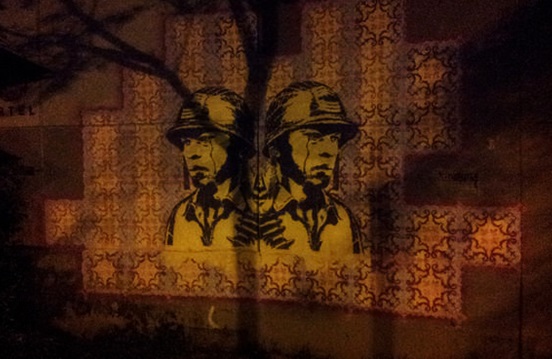
Photo Credit: InSight Crime

Photo Credit: InSight Crime

Honduras street gangs – often inaccurately lumped into a single category – are a complex, deep-rooted social and criminal phenomenon that is driving violence and migration in record numbers. InSight Crime, after investigating them for most of 2015, found that the catch-all term “maras” is at once ominous and ill-defined. The two largest gangs – the Mara Salvatrucha (MS13) and Barrio 18 – have similar criminal revenue streams, but different approaches to obtaining those proceeds. Recognizing these differences is an important part of undermining their power and influence.

  • Extortion is a critical source of funding for both groups. This includes the public transportation system and taxi cooperatives in the largest urban areas, which account for a huge percentage of the gangs’ earnings. InSight Crime talked to one member of a bus cooperative that was paying four gangs extortion fees and was being pestered by a fifth.
  • The groups’ approach to local extortion targets – small businesses, shops, or local delivery services – is different. The MS13 does not extort where they operate; the Barrio 18 does, with huge implications for the gangs’ relations with the neighborhood’s residents and local police. The Barrio 18 is seen as predatory; the MS13 is often seen as a protector.
  • The MS13 is more focused on local drug sales, which allows it to forgo the easy extortion proceeds. Because it meddles less with residents, the MS13 has better relations with the local police, who, in turn, target the Barrio 18 with more resources and vigor. This also positions MS13 for better relations with community leaders and politicians, and it reportedly can, in some cases, act as the unofficial social services operator in cases of child or spousal abuse. In one area InSight Crime visited, the MS13 gives accused abusers a warning after the first report, a beating after the second, and banishment (or worse) after the third.
  • While they may operate under a single umbrella, the MS13 and the Barrio 18 also vary widely in sophistication and reach, wherewithal, and infrastructure. They are semi-autonomous and prone to violent spasms that have wide-reaching implications for the communities in which they operate. The Barrio 18 appears to be less disciplined and less focused on bigger goals than the elements of the MS13 InSight Crime studied. Barrio 18 members give the impression that their struggle is more about human survival than expansion in the underworld. They live by “codes,” such as “respect the barrio,” that are evoked as a pretext for nearly any action, violent or otherwise, against outsiders and fellow gang members alike.
  • The violent ethos that guides the Barrio 18 and the MS13 is shared by their rivals, who include offshoots of the two main gangs, vigilantes, and soccer hooligans. Almost all live from the same income sources – extortion and local drug peddling. Some days they are allies; other days they are enemies.

The repercussions of oversimplifying the situation – treating all gangs as the same – are not trivial. Honduras continues to struggle with record levels of violence, and the United States is grappling with record levels of asylum applicants from gang-riddled countries like Honduras. There are times for a hammer, with criminal groups that only seem to understand force. But there are also moments when negotiation, accommodation, and social programs are more persuasive, and long-lasting, than simply sending in more troops and arresting more youths with tattoos. The trick is to know the difference, but we can only do that if we start to see these groups as complex and dynamic organizations with different criminal economies, social relations, and political ambitions.

December 14, 2015

*Steven Dudley is co-Director of InSightCrime, which is co-sponsored by CLALS. The full report “Gangs in Honduras” is available in English here and in Spanish here.

Venezuela: Implications of the Opposition’s Landslide Victory

By Michael McCarthy*

Venezuela Elections 2015

Photo Credits: Nicolas Raymond and 2 dvx ve (modified) / Flickr and Wikimedia Commons, respectively / Creative Commons

Venezuela is just beginning to feel the shock waves of the opposition’s landslide victory and humbling defeat of President Nicolás Maduro’s PSUV.  Riding a wave of discontent with the Maduro government’s management of the economy and political repression, the opposition Mesa de Unidad (MUD) coalition won at least 112 seats in the 167-seat parliament, giving it a commanding two-thirds majority.  The MUD won the popular vote 56-41.  The political scenarios are wide open.  Some preliminary analytical judgments follow:

  • Maduro has accepted the election results, but serious questions remain whether he and his advisors will engage in the give-and-take necessary to make divided government work. He is restructuring his cabinet and has called on supporters to “relaunch” the Bolivarian Revolution.  He says he will strenuously oppose any amnesty law for imprisoned opposition members – a top MUD priority – and that he will “go to combat” if the opposition tries to remove him from office.
  • Despite its historic achievement, the opposition will face challenges to build sustainable unity. The MUD is a heterogeneous electoral alliance, and the hardline and moderate factions are likely to disagree about strategy – whether the time is ripe for pressing for Maduro’s resignation or for cultivating support from disaffected chavistas.
    • The opposition faces the challenge of demonstrating a commitment to what they have criticized most about chavismo – democratic inclusion.  If they want to put Venezuela back together, for example, the MUD will have to decide how to provide PSUV officials guarantees of political inclusion.
    • Passing an amnesty law for political prisoners and addressing the dire economic situation are high on the MUD’s unified agenda – and probably will remain part of a consensus platform.
    • Less clear is how aggressively the opposition will push its agenda from the National Assembly.  Most in the MUD are more closely aligned with the moderate strategy of former presidential candidate Henrique Capriles, but others will want to push harder.  They may try to remove chavista-appointed Supreme Court judges likely to oppose Constitutional changes that would curtail Maduro’s powers.
    • The forced resignation of Guatemalan President Pérez Molina and the recent opening of an impeachment process against Brazilian President Dilma Rousseff may embolden similar initiatives in Venezuela.
  • The country’s tarnished election system functioned better than many critics had predicted. The 74 percent voter turnout was eight points higher than the last legislative elections.  Reports of violence and irregularities were few.  The Armed Forces provided effective security at the polls, and behaved in a manner that suggests an interest in defending their institutional reputation.  The National Electoral Council (CNE) disappointed many by issuing an unprecedented call for voting centers to remain open even if there were no voters in line, and for delaying reporting the final results, but the voting process was clean enough.
  • Outside Venezuela, chavismo’s loss may be a setback from some leftists – but a relief for most others. Maduro’s defeat is a potential liberation from the albatross that the disastrous Venezuelan regime has become.  For most left-leaning leaders, chavismo had become a deeply flawed project that has, for several years, been toxic.
  • For anti-chavistas outside Venezuela (including some in Washington), the election results indicate that the way to overcome the catastrophe over which Maduro presided was not to threaten the regime with sanctions and encourage extremists in the opposition, but instead to push for the election to take place, with the most safeguards possible. There is precedent for Latin American dictatorships falling in elections that they put on the agenda and then could not stop.
  • Although Maduro’s saber-rattling along the Colombian and Guyanese borders failed to divert attention from his internal mess, his rhetoric of resistance to yielding power suggests the international community should keep an eye on him in case he tries again.
  • The Venezuelan victors should also understand the anxiety of their neighbors over the future of Petrocaribe and other initiatives. Venezuela under Chavez did an enormous service to the region by subsidizing oil in ways that helping governments achieve important social advances.  Long before Chavez, Venezuela used its oil wealth to support allies.  Such assistance is as important now as it has been for decades.

December 9, 2015

* Michael McCarthy is a Research Fellow with the Center for Latin American and Latino Studies.

U.S.-Cuba Migration: The Powerful “Pull” Factors

By Fulton Armstrong

Cuban women

Photo Credit: Guillaume Baviere / Flickr / Creative Commons

The Obama Administration’s repeatedly stated commitment to continue implementing the Cuban Adjustment Act of 1966 is driving a surge in Cuban emigrants through dangerous human trafficking routes in Central America and causing tensions in a region already tied in knots over illegal migration.  The flow of Cubans up the isthmus has been increasing steadily – reaching some 45,000 over the past year – but seemed a manageable issue until Costa Rica broke up a smuggling ring last month.  The publicity prompted Nicaragua to close its borders to the underground railroad, which is carrying thousands each month northbound.  The migrants have been starting their journey by air from Havana to Ecuador (which until last month didn’t require a visa) and are escorted by coyotes as they bribe their way across borders headed north.  A summit of Central American foreign ministers two weeks ago failed to reach agreement on a Costa Rican proposal to create a “humanitarian corridor” for the Cubans by issuing them safe passage.  Relations between San José and Managua, already on edge as they await an ICJ decision this month on a territorial dispute, have turned bitter.

The special treatment that Cubans receive upon setting foot in the United States – including automatic access to permanent residency in one year – is the main stimulus of the flow.  The Clinton Administration adjusted how it handled those intercepted at sea, establishing a distinction between intending migrants with “wet feet” and “dry feet,” which reduced the seaborne flow somewhat.  But Cuba’s decision in 2013 (long urged by the U.S. and international community) to stop requiring citizens to get exit permits; the flow of a billion-plus dollars into Cuba through remittances and small businesses (with which to pay coyotes and corrupt officials along the way); and the growing sophistication of smuggling networks in Central America have fueled a shift in the flow overland.  Despite the Administration’s no-change pledge, some intending migrants say the current rush is being driven by fear that U.S.-Cuba normalization will end the preferences granted to Cubans who reach U.S. soil.

The Adjustment Act authorizes – but does not require – the President, through the  attorney general, to grant parole to Cubans arriving into the United States illegally and grant them permanent residency one year later.  In the absence of any change in Washington’s approach, Cubans will certainly try to avail themselves of its generous provisions.  To move the thousands stuck in Central America off the front page there, Washington may issue them expedited visas and help them with transportation to the United States.  Such gestures, however, will have a high political cost throughout Central America, where the U.S. has asked governments to stanch the movement of their own citizens fleeing violence and dire poverty, and where even well-off, law-abiding citizens have to jump through hoops and pay hundreds of dollars for tourist visas.  As the impasse in Central America grew intense last month, the State Department tweeted a reminder that “There exist legal and safe options for Cubans who want to migrate to the United States.”  Reversing policies that encourage illegal and unsafe migration – while proposing that Congress support a doubling or tripling of the current 20,000 Immigrant Visas the Embassy in Havana issues each year – would make a lot of sense.

December 7, 2015

AULABLOG will examine the powerful “push” factors driving migration from Cuba in a subsequent article.

What Does Macri’s Victory Mean for Latin America’s Left Turns?

By Eric Hershberg and Fulton Armstrong

South America right

Photo Credits: Douglas Fernandes and _Butte_ / Flickr / Creative Commons

Argentine President-elect Mauricio Macri’s actions since his historic victory last week indicate a rightward shift in domestic and foreign policy that some observers are tempted to proclaim as part of a broader Latin American trend.  He has reiterated promises of broad economic reforms and appointed a cabinet – including former JP Morgan executive and ex-Central Bank chief Alfonso Prat-Gay as his finance minister – to implement them.  He has further pledged to reverse outgoing President Fernández de Kirchner’s protectionist trade policies.  (During the campaign, advocates of unbound capitalism cheered when he named Ayn Rand’s “The Fountainhead” as one of his favorite books.)  Macri has named Susana Malcorra, a senior aide to UN Secretary General Ban Ki-moon with strong diplomatic credentials, to be his foreign minister and, for starters, directed her to reverse policies he judged to coddle Venezuela. The President-elect, who takes office on December 10, is speaking with the confidence of a President elected with more than a 3-point margin over Kirchnerista candidate Daniel Scioli and with control over more than the 91 seats (one third of the total 257 seats) that his Cambiemos coalition won in the lower house of Congress.  (His party is the first, however, to control simultaneously the Province of Buenos Aires, the City of Buenos Aires, and presidency.)

The temptation in some quarters to declare Macri’s victory as the beginning of the end for Latin America’s “Left Turns” is understandable but nonetheless premature.  To be sure, the Argentine electoral results coincide with other major setbacks for various currents of the Latin American left:  The Chavista project in Venezuela is crashing; Brazilian President Rousseff and her party are mired in a corruption morass and economic crisis whose combined effects may cut short her time in office; President Correa, facing a dire economic situation in Ecuador, is increasingly talking about abandoning efforts to run yet again in 2017.  Chilean President Bachelet’s low popularity and declining public support for the Vázquez government in Uruguay may be additional signs that the prospects for the “pink tide” are very much in doubt.

But in Argentina and beyond, the jury is still out.  Through no action of its own, the South American left enjoyed the multiple benefits of the decade-long commodity boom that began in 2003.  Just as its electoral successes did not indicate wholesale shifts to the left in the region – indeed political scientists have long questioned whether the evidence supports claims of a leftward shift in popular preferences – today’s parallel crises may reflect the end of of the boom rather than a rejection of left-leaning governments.  Many of the policies advanced by various currents of the “pink tide” may remain highly popular, even while they are no longer affordable.  Another tempting explanation is that Latin Americans are rejecting leaders who they perceive as corrupt, irrespective of their placement on the left-right spectrum.  In Argentina, notably, Macri hasn’t rejected the Kirchneristas’ redistributive agenda but has instead emphasized the confusing, corrupt way it has been pursued for the past 12 years.  (Never before has an Argentine rightist portrayed eliminating poverty as a core priority.)  It may well be that voters understand economic slowdowns and dysfunction as a product of corruption rather than the fallout from declines in historically high commodity prices.

Regardless of the underlying drivers of electoral change and public disillusion with incumbents, it’s fair to ask if the left’s current travails and the right’s resurgence will open the way toward more accountable political leadership, whatever its ideological proclivities, or just signal an alternation of power.  Like Macri in Argentina, a new cohort of Latin American leaders will have to prove that they are more than outsiders drawing on sentiment to throw out the incumbent rascals.  The question is whether they pursue policies that make democracy more transparent, expand meaningful political participation, and sustain the social gains that have been achieved by the pink tide governments that now appear to be on the ropes.

December 2, 2015

From Lima to Paris … and Beyond

By Evan Berry*

16451794648_f54e94c55a_b

Photo Credit: Ron Mader / Flickr / Creative Commons

The “COP 21” Climate Conference beginning in Paris this week appears likely to produce meaningful results yet fall short of policymakers and civil society leaders’ high hopes for an international accord.  Strong action on climate change is of particular significance in Latin America – because of its environmental vulnerability and the key role it plays in helping establish a post-carbon global economy.  The coastal communities of the greater Caribbean Basin, the intensely biodiverse forests of the Amazonian region, and the glaciated peaks of the Andes are acutely threatened by climate change.  Concern about climate change is higher in Latin America than in any other region of the world, according to the Pew Research Center.  Several nations from the region have played key roles in putting the international community on a path toward a substantive agreement at COP 21, especially Peru, host of last year’s UN climate talks.

The negotiations in Paris are designed to develop an architecture for international cooperation on carbon mitigation and climate adaption that, while essentially voluntary, will catalyze bolder action in the future.  In anticipation that COP 21 will conclude an agreement signed by all the negotiating parties, the international community finds itself again trying to strike the right balance between critical pressure for stronger action and acceptance of an imperfect, but necessary, policy apparatus.  Although observers expect that more mitigation will be necessary, Paris will provide several powerful tools for states afflicted by climate change.  Most especially, through the vehicle of the Green Climate Fund (GCF), financing for large-scale adaptation projects is now starting to flow.  Because the mandates of the GCF prioritize low-carbon agriculture, climate-compatible cities, resilience in Small Island Developing States (SIDS), and financing for forests, the fund will have a special impact in Latin America, one of the world’s most urbanized and forested regions and home to more than 20 SIDS.  Indeed, the first round of CGF projects, announced this month, includes two in Latin America – an energy efficiency bond in eastern Mexico and an indigenous people’s forest management project in Peru.

While there is room to be optimistic that these talks will make important progress, many probably will be dissatisfied with the outcome.  According to independent evaluations, several Latin American countries have put forward robust plans to limit carbon emissions, including Costa Rica, Mexico, and Brazil.  But many stakeholders, particularly environmental NGOs and leftist governments like Bolivia and Ecuador, are likely to be skeptical about the outcome of the negotiations.  They will be right to point out that the sum total of emissions reductions being discussed at COP 21 is insufficient to keep warming below the consensus 2°C limit, and that the anticipated deal is almost certain not to be legally binding and may also have weak measures for verification.  The “Road to Paris” may not take interested countries as far as they’d like to go, but in Latin America as elsewhere, critics might be well advised temper their skepticism, embrace the incremental progress, and begin preparing for the next round of climate change politics. 

November 30, 2015

* Evan Berry is Associate Professor of Philosophy and Religion and Co-Director of the Ethics, Peace, and Global Affairs master’s program at American University.

El Salvador: Just Saying No to Gold Mining

By Rachel Nadelman*

El Salvador mining

Photo Credit: laura / Flickr / Creative Commons

El Salvador’s refusal to allow gold mining within its borders sets it apart from most other Latin American countries, but the mining suspension is far from permanent.  Since 2007, three successive presidents, from both the right-wing ARENA and left-wing FMLN parties, have maintained an administrative metals mining “industry freeze.”  This executive action has created a de-facto moratorium that prevents all mining firms – international and Salvadoran, public and private – from accessing El Salvador’s estimated 1.4 million ounces of gold deposits.  Some in the Salvadoran media trumpet this policy.  When former U.S. President Bill Clinton made a philanthropic visit to El Salvador earlier this month, a number of news stories fixated on one of his travel companions: Canadian mining magnate Frank Guistra.  Some media slammed Guistra as “persona non grata in El Salvador.”  They showcased his billion-dollar global mining investments, labeling him (incorrectly) a major shareholder in Oceana Gold, the Australian company suing El Salvador for $284 million for having denied the firm a license to mine.

The mining freeze represents a drastic break from El Salvador’s past economic strategy.  In the 1990s, after the civil war, El Salvador, encouraged by international donors and creditors, embraced mining as an opportunity for economic growth.  Environmental activists challenged the policy, emphasizing the country’s ecological vulnerability and worsening threats of water scarcity and deforestation.  Consecutive ARENA governments ignored these arguments and implemented legal and regulatory reforms to attract foreign mining firms.  But a community-based social movement changed that.

  • Led by a decade-old Salvadoran coalition “roundtable” (with some international support) against mining, this movement strategically promoted a campaign that is pro-water rather than anti-industry, based on rigorously collected and analyzed scientific evidence.
  • The Salvadoran Catholic Church, citing doctrine as prioritizing water and land over economic gain, has provided the movement a level of non-partisan, moral legitimacy.
  • Individual government officials from across elected, appointed, and civil servant ranks have ensured that El Salvador’s weak but existent administrative mechanisms resist pressure from powerful multinational business to reverse policy.
  • A number of Salvadoran companies relying on water and land resources, such as agrobusiness, ranchers, and producers of juices and soft drinks, have largely stayed out of the debate, eliminating a potentially huge obstacle to the movement’s agenda.

The media’s zeal – strong enough for them to mistakenly connect Frank Guistra to Oceana Gold and the ongoing lawsuit – reflects strong popular support for the administrative freeze on mining.  My field research and earlier studies indicate that most Salvadorans do not see the environmental threat from mining as imagined.  Nonetheless, the suspension is precarious – based only on executive action and not legislation that would permanently prohibit mining.  Many in the anti-mining movement believe that a suspension is inadequate over the long term because a change in government could lead to its reversal.  New mining technology, which purportedly would ward against environmental damage, could give political leaders a pretext for lifting the moratorium.  Yet others who support the freeze under current environmental conditions want to have the option of opening the country to mining available in the future.  For those who advocate that total prohibition is the only solution, the fight to stop mining permanently for El Salvador will be a long one.

November 23, 2015

* Rachel Nadelman is a PhD candidate in International Relations at the School of International Service, whose dissertation research focuses on the unique aspects of El Salvador’s mining policies.

Correction: November 23, 2015

The original photo accompanying this blog was incorrectly labeled as being from a Salvadoran mining town.  The photo was actually taken in a town named El Salvador, Chile, and is unrelated to the content of this post.

Argentine-U.S. Relations: Things Can Only Get Better

By Federico Merke*

Argentina elections

Argentine presidential candidate Mauricio Macri. Photo Credit: Nico Bovio and Guillermo Viana GCBA / Flickr / Creative Commons

Foreign policy remains largely uncharted territory as Mauricio Macri (Cambiemos) and Daniel Scioli (incumbent Peronist Frente para la Victoria) head into the presidential runoff on November 22, but they both are likely eager to get over Argentina’s rough patch with the United States.  Foreign policy has rarely been a big campaign issue, and this time there are probably reasons behind the silence.  The mainstream Argentine media portray the candidates as representing two different political and economic stances on domestic policies, with only nuanced differences on foreign policy.  Macri is seen as more friendly to the outside world in general and to the U.S. in particular, but he has been reluctant to play up his “anti-Bolivarian” views.  Scioli has the same incentives as Macri to restart a dialogue with Washington, but he has not wanted to highlight this difference between himself and his party’s standard bearer, outgoing President Cristina Fernández de Kirchner (CFK).

Argentina’s relations with the U.S. are at a low point in which nothing really good or really bad takes place.

  • The impasse started early in CFK’s administration. Just two days after her inauguration on December 10, 2007, U.S. federal prosecutors claimed that five foreign nationals in the so-called “suitcase scandal” were attempting to deliver funds to CFK’s presidential campaign.  The President maintained that the United States manufactured the scandal to punish her for maintaining close relations with then-President Hugo Chávez of Venezuela.
  • Washington was clearly irritated again in 2011 when Argentine authorities seized the cargo of a U.S. Air Force plane that was delivering supplies for an authorized police training program. Argentina’s foreign minister accused the United States of smuggling weapons and “drugs” into the country.  In 2013, CFK reached an agreement with Iran to set up a truth commission (which was never established) to investigate the bombings of the AMIA Jewish community center in Buenos Aires in 1994 – alienating Jews in the U.S. and Argentina, but giving her a boost among her domestic constituency.
  • Terrorism, human rights, and nuclear proliferation have brought the two countries together, albeit with little publicity. But Venezuela, Cuba (the U.S. embargo), trade (tough license and import restrictions on both sides), and Iran have been divisive issues.

Because the twists and turns in the bilateral relationship have revolved around scandals, rhetoric, and domestic political maneuvering – not driven by either deep ideological differences or substantive material interests – CFK’s successor will be free to shift gears.  Thus, in a sense, it does not matter who wins on November 22; a new chapter will begin in Argentina-U.S. relations.  Macri no doubt will be more enthusiastic than Scioli in declaring a new beginning, but the latter exhibits a pragmatic tone and intention to attract investment and promote trade, including by resolving the confrontation over “holdout debt” plaguing ties with the U.S. financial community.  Both candidates are aware that the ongoing litigation in New York complicates access to international credit.  Both also understand that the memorandum with Iran represented a major step backwards and thus will probably change course on this matter.  Scioli and Macri exhibit contrasting styles and might look at the world through different lenses, but they both will have the opportunity – and probably the desire – to develop a more constructive relationship with the U.S. 

November 19, 2015

*Federico Merke directs the Political Science and International Relations Programs at the Universidad de San Andrés in Buenos Aires.

Belize: The UDP Wins Again

By Victor Bulmer-Thomas*

Dean Barrow, now elected for his third term as Prime Minister of Belize. Photo Credit: The Commonwealth / Flickr / Creative Commons

Dean Barrow, now elected for his third term as Prime Minister of Belize. Photo Credit: The Commonwealth / Flickr / Creative Commons

Belize’s national elections on November 4 gave the ruling United Democratic Party (UDP) an unprecedented third term in office.  The opposition People’s United Party (PUP) had expected to return to power, for the first time since 2008, in view of the country’s lackluster economic performance (except for a tourist boom), a wave of corruption scandals, and falling prices for Belize’s leading commodity exports.  A new third party, the Belize Progressive Party, also participated, representing a coalition of smaller parties.  The UDP won an increased majority (19 out of 31 seats, the rest going to the PUP).  Dean Barrow has therefore started his third, and last, term as Prime Minister.

Public spending on infrastructure, education, and health funded by borrowing from Petrocaribe was a key factor in the election.

  • The concessional loans from Venezuela had a major impact on the government’s popularity. The possibility that they may be cut in future was one reason why the Prime Minister called the elections 18 months earlier than necessary.  (This privilege, known as the “Westminster convention,” is no longer available in the United Kingdom, where elections are now subject to fixed terms.)
  • Many voters in Belize have also become accustomed to receiving party support in cash or kind in the last 20 years in return for their votes. The PUP, reliant in the past on cash from Michael Ashcroft (a British billionaire with Belizean citizenship), was strapped for cash this time because Ashcroft reached an agreement on most of his outstanding disputes with the government and no longer had much incentive to support the opposition.
  • The PUP also suffered from a weak – albeit honest – leader in Francis Fonseca, who had performed badly in municipal elections earlier in the year and who had failed to impose discipline on the party. He has now resigned, although he will stay as leader until a new one is elected.  The PUP, the dominant force in Belizean politics since its formation in 1950 and the party that took the country to independence in 1981, is now in danger of disintegrating.

The UDP government faces a number of challenges.  The sugar market in the European Union is being opened to unrestricted competition, which could lower prices further.  Concessional funding from Petrocaribe could be reduced or even ended as the economic situation in Venezuela deteriorates.  And Belize continues to face considerable pressure from the U.S. government both with regard to its offshore financial center and as a result of sanctions against various individuals under the “kingpin” anti-drug legislation.  Last but not least, Belize will have to pay compensation to Michael Ashcroft for nationalization of the telecommunications company at a rate to be determined by arbitration over which the government will have no control.  The biggest threat to Belize, however, comes from Guatemala.  The disputed western frontier is porous and Guatemalan poachers have become bolder in recent years, even panning for gold in the mountains.  Both governments had previously agreed to take their territorial dispute to the International Court of Justice, but they must first put it to voters in a referendum – a prospect in which Guatemalan President-elect Jimmy Morales has so far shown no interest.  With a population of only 350,000 (compared with 16 million in Guatemala), the new government of Belize may face an uphill struggle.

November 16, 2015

*Dr. Bulmer-Thomas is a professor at the University College London Institute of the Americas, fellow (and former director) at Chatham House, and author of numerous books, including The Economic History of the Caribbean Since the Napoleonic Wars (2012).

Tax Reform or Governance Revolution?

By Andrew Wainer*

Photo Credit: Reuniones Anuales GBM / Flickr / Creative Commons

Photo Credit: Reuniones Anuales GBM / Flickr / Creative Commons

Taxation to fund development is becoming central to U.S. foreign assistance policy, but it would be a mistake for USAID and other foreign assistance agencies to view tax reform solely through the technical lens of financing for development.  In September, USAID Assistant Administrator Alex Thier penned an article subtitled, “Why Taxes Are Better than Aid.”  This follows the announcement in July of the Addis Tax Initiative at the UN Financing for Development Conference, where the United States and other donors pledged to double the amount of technical assistance for taxation in developing nations.  By most accounts, the potential fiscal benefit of increasing taxation –“domestic resource mobilization” (DRM) in development parlance – is huge.  The World Bank and International Monetary Fund estimate that in 2012 DRM in emerging and developing nations generated a combined $7.7 trillion.  This dwarfs average annual foreign assistance outlays, which in recent years have averaged about $135 billion.  One of many examples cited by USAID is El Salvador, where a $660 million increase in annual tax revenues has been channeled to health, education, and social services, as well as other development programs.

The issues of fair and transparent taxation are often a secondary component in discussions of DRM but – as events in Guatemala and elsewhere demonstrate – can also generate revolutionary transformations in governance.   Even as U.S. agencies emphasize the technical side of DRM assistance, organizations that monitor taxation are sparking historic citizen revolutions through revelations of governmental tax corruption.

  • The UN-sponsored International Commission against Impunity in Guatemala (CICIG) was created in 2006 to strengthen the rule of law through “investigation of crimes committed by members of illegal security forces and clandestine security structures.” But it was CICIG’s revelations of a customs tax corruption network that brought 100,000 Guatemalans into the street in a single day.  The protests led to the forced resignation and jailing of President Pérez Molina as well as a surge in citizen engagement unseen in the country’s modern history.

The intimate link between taxation and governance should be a central factor in how the U.S. government and others think about DRM.  As the OECD states, “The payment of tax and the structure of the tax system can deeply influence the relationship between government and its citizens.”  DRM should place a high premium on the governance impact of tax reform, where appropriate.  Tax reform not only increases government revenues, but as the case of Guatemala demonstrates, it can also strike at the heart of ossified structures of governance and can spark revolutionary changes in the relationship between citizens and states.   

November 12, 2015

* Andrew Wainer is the Director of Policy Research in the Public Policy and Advocacy Department of Save the Children USA.

Venezuelan Elections: Economic Crisis Turns Up the Heat on Chavismo

By Michael M. McCarthy*

A faded legacy. Photo Credit: Julio César Mesa / Flickr / Creative Commons

A faded legacy for Chavismo? Photo Credit: Julio César Mesa / Flickr / Creative Commons

Twenty-four long months since their country’s last national election, Venezuelans head back to the polls to elect a new National Assembly on December 6 in a tense political climate – with no promise that the government will respect the opposition’s near-certain victory.  All 167 seats in the unicameral body will be up for grabs in a race polarized between Chavismo’s pro government coalition and the Mesa de Unidad Democrática opposition coalition.  Thanks largely to a rapidly deteriorating economy, the government’s approval rating decreased from 50 percent in 2013 to 20 percent in September, according to the national Venebarómetro poll.  A range of polls in September indicated the MUD is poised to win either a simple or “qualified” (60 percent) majority.  Observers generally agree that the main measure of success for Chavismo is preventing the MUD from obtaining a two-thirds majority, and that blocking a qualified majority would be a major triumph.

For ordinary Venezuelans the campaign is overshadowed by the massive economic crisis.  Skyrocketing inflation, severe shortages of basic goods and services, and reduced social assistance programs are contributing to tensions on the street, where the campaign is not as present as in years past.  Nevertheless, heavy turnout is still expected – 66 percent of eligible voters participated in the last National Assembly elections in 2010, and pollsters report a strong intention to vote.

  • The MUD has shaped its campaign around leveraging the vote as a mechanism for punishing economic mismanagement and restoring some institutional balance to a political system that barely reflects opposition voices at the national level. Skepticism of the National Electoral Board, which rejected the MUD’s request for international electoral observation by the OAS, EU or UN, has increased.  Slashes to budgetary support for opposition governors and mayors, while the government channels funds to unelected parallel state and municipal authorities, make supporters wonder whether a victory will be fully respected.
  • The government refreshed its slate of candidates by promoting generational and gender diversity, but stalwarts, including current National Assembly leader Diosdado Cabello, remain prominent. The party is distributing last-minute pork to mobilize voters, and it’s working the system’s rural bias – each department is automatically allocated three deputies – where strong government presence gives it a strategic advantage.  Strikingly, the Chávez legacy has become a liability for President Maduro because the former President was much more charismatic and economic conditions were considerably better during his tenure.

The Maduro administration seems to have run out of diversionary moves after exaggerated external threats from Colombia and Guyana faded.  It is also on the defensive after the Rousseff administration, Maduro’s most powerful diplomatic partner, expressed unhappiness about Caracas’s opposition to its choice of a Brazilian political heavyweight to lead UNASUR’s “electoral accompaniment mission.”  The President has also been set on back on his heels by intensified international criticism of the trial and conviction of opposition leader Leopoldo López, who, according to a state attorney who worked the case, was sent to jail for 14 years on fraudulent charges.  Regardless of the outcome on December 6, the direction of the country is highly uncertain.  Maduro has said he’ll accept the results “whatever they are,” but he has also said “we have to win, by whatever means possible” (como sea and cualquier manera), and that if the opposition wins “I will not hand over the revolution” but rather “proceed to govern with the people in a civic-military union.”  In the next couple weeks, the government may still try to throw the opposition off course, but the MUD does not seem interested in renewing street protests – more violence is unlikely to advance its objectives. Neither do its leaders seem confident that a renewal of talks on rebuilding democratic institutions will help.

November 9, 2015

* Michael McCarthy is a Research Fellow with the Center for Latin American and Latino Studies.