The Panama Papers: Damning Evidence Against Latin American Elites?

By Emma Fawcett* and Fulton Armstrong

Panama Papers

Photo Credit: Pixabay / CC0 Public Domain

The “Panama Papers” have revealed the reputed secret accounts and tax-evasion strategies of a number of Latin American leaders, but preexisting widespread perceptions that political and economic elites are corrupt may reduce the immediate shock value of the revelations.  More than 11 million documents leaked from the Panama-based law firm Mossack Fonseca – given an initial review by the Süddeutsche Zeitung and International Consortium of Investigative Journalists (ICIJ) – provide evidence of 215,000 arrangements by which 14,153 powerful and wealthy clients from around the world hid their money from the prying eyes of the media, tax collectors, and public-accountability experts.  Early reports already indicate Latin Americans – small-time players compared to the Russians and some Europeans – are among those mentioned.

  • The Petrobras scandal that has paralyzed Brazil will find further fuel in these files. Investigators in Operation Car Wash apparently had no knowledge of many accounts held by Petrobras officials.  A secret company linked to House Speaker Eduardo Cunha, who’s leading the charge to impeach President Rousseff, reportedly figures prominently.
  • Argentine President Macri, his father, and brother reportedly had an offshore company for 10 years. They closed it in 2009, two years into Macri’s term as Buenos Aires mayor, but he did not report it.  The government says he was only “circumstantially” the CEO.
  • The president of the Chilean branch of Transparency International, Gonzalo Delaveau, resigned because he was linked to at least five offshore companies.
  • Mexican President Peña Nieto’s association with tycoon-contractor Juan Armando Hinojosa, who reportedly had a massive array of shelters worth US$100 million, is once again a liability. The President was dragged through the mud – and eventually exonerated of personal involvement – over a mansion that Hinojosa allegedly gave to his wife.  The Mexican government is investigating several dozen others named in the documents.
  • Many other cases are in the wings. Pedro Delgado (former governor of Ecuadorian Central Bank and cousin of President Correa); financial backers of Peruvian Presidential candidate Keiko Fujimori; and an array of former central bank and intelligence officials – Peruvians, Venezuelans, Panamanians, and others – are all being looked at.  In El Salvador, the Attorney General, already criticized for his investigative zeal, has raided Mossack Fonseca’s offices, suggesting more revelations to come.

Allegations of tax evasion, hidden income, and other forms of corruption are a mainstay of Latin American political lifeand the Panama revelations will only aggravate the oft-held opinion that rich, powerful people play by their own rules to maintain wealth and power.  Ramón Fonseca, one of the founders of the law firm, claims that the publicity is part of “an international campaign against privacy,” which he called “a sacred human right [and] there are people in the world who do not understand that.”  The backlash against someone like Argentine President Macri may not be too great, especially because his family ended the tax haven years ago.  But what makes the allegations potentially disruptive is the number of people implicated – across public and private sectors – in so many countries, in an investigation that has only just begun.  Further revelations are sure to come and, although themselves a sign of transparency, challenge people’s faith that leaders will come clean.  The revelations will fuel popular cynicism and discontent in the short term, but renewed demands for transparency may eventually help rekindle popular confidence in government.

April 11, 2016

*Emma Fawcett is a PhD candidate in International Relations at American University.   Her doctoral thesis focuses on the political economy of tourism and development in four Caribbean case studies: Haiti, Dominican Republic, Cuba, and the Mexican Caribbean.
Peru Elections 2016: Back to the Future?

By Jo-Marie Burt*

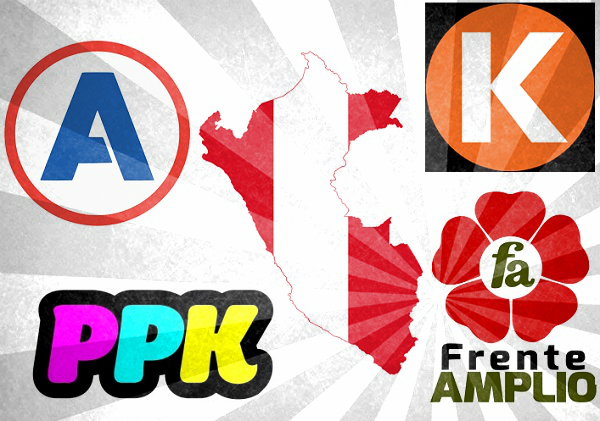
Peru Elections 2016

Photo Credits: Huhsunqu, Alex Albornoz, Alianza para el Progreso, Fuerza 2011, and Peruanos por el Kambio (modified) / Wikimedia / Creative Commons

Peruvian electoral authorities’ decision last month to disqualify two candidates in this weekend’s first-round presidential election has conjured up the ghosts of one of the most disputed elections in recent Latin American history: the “re-re-election” of Alberto Fujimori in 2000.  Large demonstrations this week against the candidacy of the strongman’s daughter, Keiko Fujimori, were a rejection of the corruption and authoritarianism of the past – as well as the electoral fraud that kept him in power.  The two candidates were disqualified for technical violations of campaign laws.  Newcomer Julio Guzmán, who polls indicated commanded around 20 percent of the vote, was punished because his party failed to follow certain registration norms, and the other, César Acuña, was accused of giving away gifts above newly set limits.  Local observers point out, however, that other leading parties are guilty of similar missteps but have faced no penalties.  Video and testimonials show, for example, Keiko Fujimori attended events where cash “prizes” were handed out.

The disqualifications have put the spotlight on the Inter-American Commission of Human Rights (IACHR), which disqualified candidate Julio Guzmán asked to investigate the decisions.  Postponing the election would be extremely disruptive, particularly because other political groups in Peru, which have benefited from Guzmán’s exclusion, have seized on the immediate political advantage.  The possibility that uneven application of the electoral rules might taint the credibility of the eventual winner is not their immediate concern.

  • The two immediate beneficiaries are Pedro Pablo Kuczynski (known by his initials PPK, which also identify his party, Peruanos por el Kambio), and Verónica Mendoza of the left-wing Frente Amplio. At 15-20 percent each, they are jockeying for second and third place behind Fujimori (30-35 percent), but the real race is in the runoff on June 5 that will take place in the likely event that no candidate wins 50 percent of the vote.  In the 2011 elections, Fujimori won the first round, but lost in the runoff vote to Ollanta Humala.  Fujimorismo has a hard-core following of 25-30 percent of the voting public, but a majority of the population also has a negative opinion of her.

Peruvian elections had come a long way since Alberto Fujimori fled office in 2000.  (In 2009, he was sentenced to prison for 25 years for human rights violations, corruption, and abuse of authority.)  Free and fair elections were held in 2001, 2006, and 2011 – marking the first time in Peruvian history that two democratically elected presidents consecutively handed the presidential sash over to successors.  Whether politically motivated or merely the result of incompetence, electoral authorities’ apparently one-sided handling of this year’s campaign has created an appearance of favoritism discrediting the electoral process itself.  The Secretary General of the Organization of American States, Luis Almagro, has already referred to these elections as “semi-democratic.”  Others speak openly of fraud.  The potential damage is compounded by popular concerns that Keiko Fujimori represents a return to the authoritarian and corrupt tactics that characterized her father’s decade in power.  Her detractors say that she is not simply her father’s daughter; she served as his First Lady and benefited from the corruption of his regime (for example, she testified before Congress that she accepted cash from intelligence chief Vladimiro Montesinos to pay for her college education).  Keiko has acknowledged “errors” (but not “crimes) were committed during her father’s government, and she continues to say her father’s regime was the “best” Peru has ever had.  These were bound to be contentious elections due to the divisive legacy Keiko Fujimori represents, as the massive nationwide demonstrations marking the April 5 “self-coup” on Tuesday made clear.  But the uneven application of the law by electoral authorities raises even more serious questions about Peru’s democratic institutions.

 April 7, 2016

*Jo-Marie Burt is Director of Latin American Studies and Associate Professor of Political Science at George Mason University and a Senior Fellow at the Washington Office on Latin America (WOLA).

Nicaragua: Where’s the Canal?

By Fulton Armstrong

Canal Nicaragua

Coming soon to Nicaragua? Photo Credit: tryangulation / Flickr / Creative Commons

The Nicaraguan government and Chinese investment group leading the Nicaragua Grand Canal project continue to claim enthusiasm for their dream, but enough fundamental problems remain unresolved to suggest that prospects for its eventual construction are dimming – and the principals are maneuvering to avoid picking up the tab for the expenditures made so far.  In a year-end statement last December, President Ortega’s office said the canal project would be one of his government’s top 25 priorities this year and emphasized its benefits to the Nicaraguan people.  Hong Kong-based HKND Group had announced in November that it was “fine-tuning” the canal design to address problems raised in an environmental impact study, which would delay the beginning of major excavations and lock-building until the end of 2016.  Company officials have since said, however, that construction of a fuel terminal and wharf on the Pacific coast –necessary to bring in the massive equipment the project requires – could start as early as this August.  The company still claims that it will complete the canal in 2020 – a prediction that few, if any, outside experts see as feasible.

The project faces massive obstacles, with no solutions in sight.

  • The estimated US$50 billion in financing is nowhere to be seen. Chinese investor Wang Jing, who has already spent US$500 million of his own money on the project, lost some 85 percent of his US$10 billion personal fortune in last year’s Chinese stock market correction.  (Bloomberg named him the worst performing billionaire of 2015.)  Observers believe his losses as well as the problematic environmental impact study have cooled his and other private investors’ support.  An initial public offering of shares has been postponed indefinitely.
  • Project managers have yet to demonstrate the need for the canal and propose solutions to significant engineering challenges, such the need for construction able to withstand earthquakes made likely because of seismic faults along the route. HKND says the canal will handle 3,500 cargo ships a year, including ones bigger than those transiting the Panama Canal, but industry experts say there’s no demand for more than will be accommodated by the expansion of the existing canal – and that the United States has no ports capable of receiving the larger vessels.  Global warming, moreover, could soon open a faster and cheaper route north of Canada.
  • Public protests have diminished during the hiatus in canal-related news and activities, but opponents remain strident and are gaining international support. Detractors’ resolve to fight has been strengthened by the environmental report, by a credible UK firm, determining that the project will “have significant environmental and social impacts,” including dislocation of at least 30,000 Nicaraguans.  Indigenous and Afro-Nicaraguan groups on the Atlantic Coast are upset about disruptions to traditional territories, including cemeteries and holy places.  Amnesty International has condemned the treatment of affected persons as “outrageous” and “reckless.”

The “biggest earth-moving project in history” is still looking like one of the biggest boondoggles in history – yet another in a long series of chimera canals in Nicaragua since early last century.  The government says that popular support for the project remains about 81 percent, but a survey by Cid Gallup, published in the Nicaraguan newspaper Confidencial in January, showed that 34 percent of 1,000-plus respondents consider the canal to be “pure propaganda.”  One quarter believe technical studies have been inadequate and that funding will not materialize.  Those sentiments could be reversed somewhat by the appearance of massive excavation equipment and creation of related construction jobs, but support will still be tempered by concerns about persons whose lives are disrupted by the project – and by perennial and profound suspicions that corruption will take the lion’s share of benefits.  Some opposition leaders believe HKND’s big push to appear optimistic is to build a case for collapse of the project to be Nicaragua’s fault, so that the company can demand that Managua repay the $500 million that Wang has reportedly spent.  The lack of transparency surrounding the project only fuels such speculation. 

April 4, 2016

Brazil: Daring to Look at Succession Scenarios

By Silvio Levcovitz*

Lava Jato

Photo Credits: Instituto Liberal (Brasil) and Brasil 247 / Google Images / Labeled for noncommercial reuse

Brazil’s snowballing scandals are generating a high level of uncertainty regarding the country’s political future.  “Operation Car Wash”—a two-year investigation by a task force of the Federal Police and the Federal Prosecutors—has already led to the conviction and 20-year imprisonment of several senior officials from Petrobras and prominent construction companies, and others are likely to follow.  In Brazil, congressmen, cabinet ministers, and the President can be criminally charged only by the Supreme Court, through a long, difficult process called “privileged forum.”  On March 17, former President Lula, under investigation for allegedly receiving two properties as a bribe from construction companies, was designated a Minister of State in President Dilma Rousseff’s administration, an appointment that would have afforded him that protection.  The judge pursuing him released a recording of a call from Dilma offering him immunity as well as Lula’s calls on family and other private matters.  Many in the Brazilian legal community have disapproved of the judge’s disclosure of the calls as disrespecting the rule of law and the right to privacy, but the damage to Dilma and Lula was done.

Calls for the President’s impeachment are surging—and she repeatedly rejects the pressure to resign.  On Sunday, March 13, a half-million people protested in São Paulo, and the press estimates that another 1-2 million demonstrated elsewhere around the country.  (Demonstrations supporting Dilma have attracted 100,000 citizens in São Paulo.)  The PMDB, party of Vice-President Michel Temer and President of the House Eduardo Cunha, is officially quitting the government this week, and other minor parties appear likely to do the same, definitely cracking the presidential support.  The impeachment process in Brazil has two steps.  In the House, two-thirds of its 513 members (342 votes) are required for “admission” or approval, in which case the Senate can decide by majority vote to take up the charges, resulting in the President being suspended for up to 180 days.  Conviction requires the votes of two thirds of the 81 senators.  Although press reports indicate the mood is for the impeachment, the government is offering positions and funds individually to Congressmen and in hopes of achieving a low turnout to stop the process in the House.

Predicting the outcome of such a volatile situation is inherently risky, but discussion of post-Dilma scenarios is growing increasingly common.  Should she step down or be removed from office, Vice-President Michel Temer would be her constitutional successor.  Like Dilma, however, Temer is being charged by the Superior Electoral Court on suspicion of illegal campaign financing and, if convicted, would not be allowed to take office.  The next two in line to succeed her—President of the House Eduardo Cunha and President of the Senate Renan Calheiros—have been snagged by Operation Car Wash and face charges by the Supreme Court, suggesting that they too could be disqualified.  (The Federal Attorney General has already asked the Supreme Court to issue a preventive order to remove Cunha because of evidence that he has received US$5 million in secret Swiss bank accounts, without any justification.)  That leaves Supreme Court President Ricardo Lewandowski as a possible successor for a maximum period of 90 days, at which point elections would be called.  As Brazil faces crisis after crisis, the press have taken to commenting that the country’s fast-paced, dramatic events make the American series House of Cards look slow and boring. 

March 30, 2016

* Silvio Levcovitz is a CLALS Fellow and political science PhD candidate at the Universidade Estadual de Campinas, São Paulo.  He has been a public lawyer in Brazil and is researching criminal cases of corruption and civil claims of administrative misconduct from 1991 to 2014.

El Niño Pummels Peru and Poses Challenges Elsewhere in Latin America

By Abby Lindsay*

Mangrove

Mangrove against waves, Estuary of Rio Tumbes, Peru. Photo Credit: Bruno Locatelli/CIFOR / Flickr / Creative Commons

Although advanced scientific models can better detect the severity of an upcoming El Niño, preparing for the impact of each episode remains a recurrent challenge for many Latin American countries.  El Niños change rainfall patterns in ways that result in extreme flooding in some regions and droughts in others, affecting food and energy production and other economic activities.  In July 2015, satellite and computer modeling predicted that an “extraordinary” El Niño would likely strike in six months – and although not record-breaking, this episode has wreaked havoc in parts of Latin America.  Citizens below the poverty line tend to be hit hardest, as many live on lands vulnerable to natural disasters, such as landslides and flooding, and rely on subsistence agriculture that cannot withstand weather shocks.  Studies by climate and atmospheric scientists argue that El Niños will become more frequent and severe in future years due to rising levels of greenhouse gas emissions, increasing the urgency that governments build resiliency against the associated flooding and droughts.

  • Peru has been particularly affected by this year’s ongoing El Niño, especially in the northern coastal zone. As warming in the middle of the Pacific Ocean causes less upwelling of nutrient-rich waters, fish stocks have declined, damaging an industry upon which Peru relies for 2 percent of its GDP.  Extensive agricultural losses also result from changes in ocean currents and wind patterns that cause droughts in the southern part of the country and a spike in rainfall in the north.  Severe flooding is already having a detrimental impact; local media report that in the Tumbes area, in northwest Peru, 3,000 people have lost their homes and 30,000 have been affected because overflowing rivers have washed out bridges and devastated houses along river valleys.  Landslides have devastated dwellings constructed on the steep, marginal land on the outskirts of cities or in river valleys.
  • Other parts of Latin America are also affected during El Niño. In Central America, the warm Pacific Ocean temperatures are exacerbating existing droughts, which have reduced agricultural yields, while excessive rainfall on the east coast wipes out bridges and houses.  The Andean and Amazonian regions have seen reduced rainfall, leading to worries about forest fires in the rainforest.  The La Plata River basin is getting abnormally high levels of run-off.

With proper warning, governments can take action to mitigate the damage of El Niños.  Receiving predictions last July, Peruvian President Humala declared 14 regions in a preemptive state of emergency and called for preparations.  It is still too early to tell how much these measures have helped, but there is little debate that some preparation is better than none.  Local officials held planning meetings, and the national government provided funding for citizen programs – such as warning the population to move away from flood and landslide zones, and building infrastructure’s ability to withstand flooding and landslides.  In Piura, for example, they dredged part of the river and built diversions to direct water away from populated areas.  Given the predictions that El Niños will continue and worsen in severity, governments need to start thinking about long-term solutions and preparations.  Rather than last-minute preparations, however, governments could consider proactive measures such as conserving or constructing mangroves, wetlands, and riparian buffers that can naturally mitigate flooding; promoting crop diversity with drought-resistant strains; or harnessing water surges for benefits such as aquifer recharging.  Better planning could help Peru and other countries weather future episodes with less emergency scrambling. 

March 28, 2016

*Abby Lindsay is a PhD candidate in International Relations at the School of International Service.  Her dissertation research focuses on global environmental policy, particularly water governance.

How are the Americas Faring in an Era of Lower Oil Prices?

By Thomas Andrew O’Keefe*

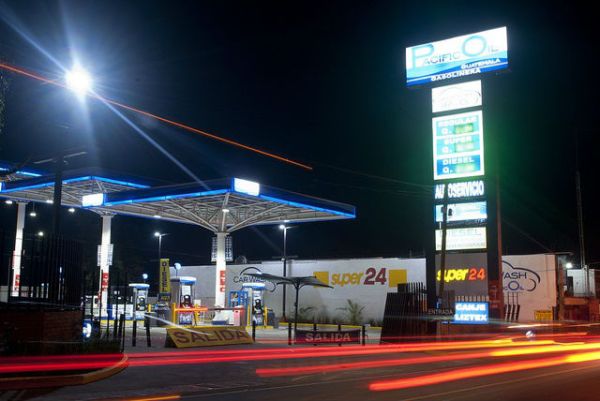
Gas Station Guatemala

Photo Credit: Josué Goge / Flickr / Creative Commons

The sharp drop in global oil prices – caused by a combination of a slowing Chinese economy hurting commodities sales and efforts by Saudi Arabia to retain market share – has both downsides and advantages for Latin America and the Caribbean.  By keeping production levels steady, despite decreased demand, so that a barrel of crude remains below US$40, the Saudis’ hope is to put U.S. shale oil producers and Canadian tar sands producers out of business.  The drop in oil prices has had a varied impact elsewhere in the Americas:

  • The effect in Venezuela, already reeling from over a decade of economic mismanagement, has been catastrophic. The ripple effect is being felt in those Caribbean and Central American countries that grew to depend on PetroCaribe’s generous repayment terms for oil imports that allowed savings to be used for other needs.  In 2015, for example, this alternative funding mechanism in Belize was slashed in half from the previous year.  The threat of interest rate hikes on money that must eventually be repaid for oil imports also pushed the Dominican Republic and Jamaica to use funds raised on international capital markets to reduce their debt overhang with Venezuela.  (For those weening themselves off PetroCaribe dependency, however, the lower prices are a silver lining.)
  • Low oil prices have also knocked the wind out of Mexico’s heady plans to overhaul its petroleum sector by encouraging more domestic and foreign private-sector investment.
  • In South America, the decline has undermined Rafael Correa’s popularity in Ecuador because the government has been forced to implement austerity measures. The Colombian state petroleum company, Ecopetrol, will likely have to declare a loss for 2015, the first time since the public trading of its shares began nine years ago.  In Brazil, heavily indebted Petrobras has seen share prices plummet 90 percent since 2008, although that is as much the result of the company being at the center of a massive corruption scandal that has discredited the country’s political class.
  • On the other hand, lower petroleum prices have benefitted net energy importers such as Chile, Costa Rica, Paraguay, and Uruguay.

The one major oil producer in the Americas that has not cut back on production and new investment is Argentina – in part because consumers are subsidizing production and investment by the state petroleum firm YPF, which was renationalized in 2012 and now dominates domestic end sales of petroleum products.  Prices at the pump remain well above real market values.  While successive Argentine governments froze energy prices following the 2001-02 implosion of the Argentine economy, this time policy is keeping some energy prices high.  This encourages conservation and efficiency and spurs greater use of renewable alternatives, but it becomes unsustainable during a prolonged dip because it will, among other things, make the country’s manufacturers uncompetitive.  The Argentine example underscores that predictions of a pendulum shift in Latin America in favor of private-sector investment in the hydrocarbons sector over state oil production are still premature.

The lower prices do not appear likely to harm the region’s continuing substitution of natural gas for coal and oil as a transitional fossil fuel to greener sources of energy.  Natural gas prices remain at their lowest levels in over a decade, and the expansion of liquefied natural gas plants allows for easier transport of natural gas to markets around the world.  They are also unlikely to dent the global shift to greater reliance on renewable energy resources driven by the international consensus that climate change can no longer be ignored and something must be done to address it.  At the UN climate change talks in Paris last December, for example, countries agreed to keep temperature increases “well below” 2 degrees centigrade above pre-industrial levels and made a specific commitment “to pursue efforts” to achieve the much more ambitious target of limiting warming to no more than 1.5 degrees centigrade.  The year 2015 was the second consecutive year in which energy-related carbon emissions remained flat in spite of 3 percent economic growth in both years. 

March 24, 2016

*The author is the President of San Francisco-based Mercosur Consulting Group, Ltd.  He chaired the Western Hemisphere Area Studies program at the U.S. State Department’s Foreign Service Institute between July 2011 and November 2015.

President Obama’s Visit to Buenos Aires: An Important Gesture

By Katherine Hite*

Parque de la memoria Argentina

Parque de la Memoria, Argentina. Photo Credit: Jennifer Yin / Flickr / Creative Commons

While most eyes are on U.S. President Obama’s historic visit to Cuba, the timing and agenda of his follow-on travel to Argentina – while controversial – also is a significant opportunity for the United States to burnish its image in Latin America.  Obama arrives in Buenos Aires on the 40th anniversary of Argentina’s military coup d’etat, marking a brutal period of systematic human rights violations in which the United States lent tacit support.  In an important attempt to ameliorate the controversy over his timing, Obama will be delivering a cache of declassified documents on both what the U.S. knew regarding the 1976-1983 repression and on the green light that Secretary of State Henry Kissinger gave the dictatorship’s dirty war against political opponents during the final year of the Ford presidency.  In addition, the President will visit the Parque de la Memoria, site of a memorial to the thousands of victims of the military regime.  He’d expressed interest in a visit to the ex-Navy Mechanics School (ESMA), notorious former clandestine detention site where an estimated 5,000 Argentines were imprisoned, 90 percent of whom were murdered, but political sensitivities in Buenos Aires precluded it.

Argentina has pioneered efforts to come to terms with the past, from prosecuting and jailing former military officers guilty of violations, to “recuperating” former clandestine detention centers, where citizens were tortured, executed, and made to “disappear.”  Human rights activists have converted several of these former centers, such as the ex-ESMA, into spaces to remember and to educate the public with a message of accountability and of “never again.”  Some memory sites also seek to connect human rights violations of the past to ongoing violations, including police brutality and the abuse of the incarcerated, as well as to present-day struggles for social justice.  Argentine school children learn about their past and study the Universal Declaration of Human Rights.

It is an important moment for the U.S. president publicly to recognize the U.S. historic role in Argentina’s tragic past – and for Argentines to show Washington, itself accused of torture and clandestine detention in recent years within its “War on Terror,” that such abuses can never be tolerated and that perpetrators must be brought to justice for a democracy to be healthy and stable.  Countries throughout the region, including Chile, Uruguay, Peru, Colombia, El Salvador, and Guatemala, have similarly created memorials and museums of memory.  Chile’s Museum of Memory and Human Rights gets over 10,000 visitors a month.  It houses a large permanent display documenting the 1973-1990 dictatorship, and like the ex-ESMA, opens its spaces to human rights organizations, artists, theater groups, and others for workshops, plays, movie series, and more.  In El Salvador, the Museum of the Word and the Image sponsors an exhibit on the roots of the country’s civil war as well as memories of the suffering and resistance.  It has also sponsored exhibits on Salvadoran migration to the United States during the war and connects past to current violence, both within El Salvador and in close relation to the United States.  Together these efforts invite acknowledgment, reflection, and dialogue.  President Obama’s activities in Argentina, like President Clinton’s apology in Guatemala for the U.S. role in past violations in that country, are an important gesture that, within a broader U.S. commitment, could help facilitate a less tarnished image for Washington in Latin America along with his historic shift in policy toward Cuba.

March 21, 2016

* Katherine Hite is professor of political science at Vassar, with special interest in Latin American politics, social movements, and the legacies of violence for governments and societies throughout the Americas.

What do Latin Americans Make of the U.S. Election Campaign?

By Fulton Armstrong

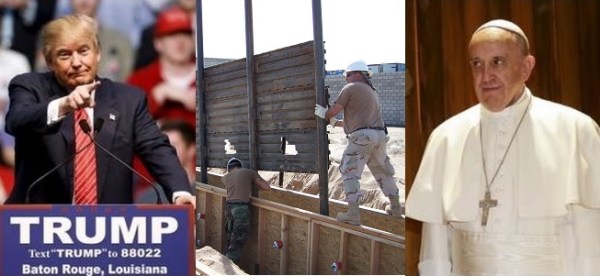
Trump Wall Pope

Photo Credit: Daryl Lawson and Pingnews (modified) / YouTube and Flickr / Creative Commons

Remarks about Mexico and immigration by Donald Trump – leader in the U.S. Republican Party’s presidential nomination contest – have drawn intense criticism from some Latin American leaders, but their underlying concern may be about the implications of the broad support for his populist rhetoric regardless of who wins the party’s nomination in July.  Media throughout the hemisphere are reporting highlights of the U.S. campaign, focusing mostly on immigration and its connotations for the region.  Some reports touch on the challenges to unity facing both major U.S. political parties, such as Democratic pre-candidate Bernie Sanders’s pressure on the previously unbeatable Hillary Clinton.

Most Latin American attention has gone to Trump and his statements.  His characterization of many Mexican immigrants as criminals, drug dealers, and rapists; his statement that Mexicans “bring tremendous infectious disease” into the United States; and his pledge to make Mexico pay billions of dollars for a new high wall on the border have drawn sharp rebukes from across Latin America.

  • Mexican President Peña Nieto, who initially remained on the sidelines when Trump brought the immigration issue to the table in a cynical fashion, recently compared Trump with Hitler and Mussolini. Former President Calderón called him a “racist” and lamented that he is “sowing anti-American hatred around the world.”  And his predecessor, Vicente Fox, said on U.S. television that Mexico wouldn’t pay for “that f**king wall.”
  • Argentina-born Pope Francis also criticized Trump. “A man who thinks only of walls is not a Christian,” he said.  Former Colombian President and OAS Secretary General Gaviria told Miami Herald columnist Andrés Oppenheimer that Trump “has the typical style of a Latin American caudillo,” scaring people and putting himself up as “the solution to all their problems.”
  • Ecuadoran President Correa said, “Trump’s rhetoric is so clumsy, so vulgar, that it will stir reaction in Latin America” – which would be “very bad for the United States” but positive for Latin American “progressive tendencies.”
  • In Venezuela, President Maduro has condemned Trump’s “threats” against Latin America as “brutal” and termed him a “thief full of hate.” On the street, however, comparisons between Chávez and Trump are part of daily conversation.

Racial slurs and rhetoric about walling out immigrants are, naturally, hair-trigger issues not just for Latin Americans.  If the Trump juggernaut rolls on, however, anxieties about its implications are likely to sweep across the hemisphere – not necessarily because he will win the general election in November, but because the broad support for his rhetoric about walls and deportations suggests a widening gap between the United States and the region.  Moreover, doubts about the credibility of the U.S. political model – already battered by the contested presidential election of 2000 and the decade-long gridlock in Washington between the executive and legislative branches of government – could multiply, especially if campaign violence spreads beyond Trump rallies.  Trump’s pledge to resume “enhanced interrogation” and “bring back a hell of a lot worse than waterboarding” of alleged Islamic extremists could further undercut U.S. moral authority.  Dismayed Republican leaders are privately floating the idea of rewriting the rules for their party convention this summer to overturn Trump’s primary victories and block his candidacy in the general election, but that too would be a spectacle that could undermine U.S. image in Latin America.  Moreover, other Republican candidates’ views may compound the problem.  Senator Ted Cruz is proud of having shut down the U.S. Government to make a political point during a skirmish with President Obama, and he and Senator Marco Rubio are fervent supporters of their party’s decision to refuse to meet with the President’s nominee to replace a recently deceased Supreme Court nominee, let alone give him or her a hearing and floor vote.  Ecuadoran President Correa’s remarks about the U.S. campaign empowering “progressive” forces is probably wishful thinking on his part, but Trump’s populism and his party’s questionable options could indeed appear contrary to some Latin American countries’ struggle to rid themselves of populist, authoritarian-style leaders.

March 14, 2016

Behind Argentina’s Making up with its Creditors

By Arturo C. Porzecanski*

Pensive Macri

Photo Credit: Mauricio Macri / Flickr / Creative Commons

A recently concluded agreement in principle between Argentina and most of its holdout creditors is part of a 180-degree turn in economic policy that the new administration of Mauricio Macri is attempting to make in order to end five years of economic stagnation, 10 years of double-digit inflation, and 15 years of isolation from the international capital markets.  President Macri has to navigate very carefully, however.  First, he does not have a majority in either congressional chamber, so he has to work hard to persuade legislators to support his policy initiatives.  Second, the judiciary and the Executive branch are packed with political appointees from the Néstor and Cristina Kirchner administrations, and while some of them have been fired, Macri and his economic team must still tread cautiously.  Third, all the key economic institutions, such as the government’s commercial and development bank (BNA), the central bank (BCRA), and the social security administration (ANSES) have been stuffed to the gills with either risky or unprofitable assets (from bad loans to government IOUs), thereby compromising their effectiveness.  Last but not least, Macri must be mindful of his very fickle electorate: over the past seven decades, Argentines have periodically voted non-Peronists into office to clean up the mess left behind by the Peronists, but then they have soured and yanked their support.  It is a sobering fact that not a single non-Peronist government has ever made it to the end of its constitutional term in office.

This is why the Macri administration is going for some “quick wins” rather than for major structural reforms or the necessary dose of fiscal austerity and monetary restraint.  And this is the context within which his willingness to “bury the hatchet” with private and official creditors must be understood.  As a former businessman, Macri realizes that if one takes over a money-losing enterprise – in this case the public sector, which is running a deficit equivalent to more than five percent of GDP – one needs to cultivate sources of interim financing until the enterprise can be turned around.  After all, the prior government had been living hand-to-mouth on loans from the BNA, the BCRA, and ANSES, with increasingly inflationary consequences.  Having lost official international reserves and seen the currency depreciate rapidly after abolishing capital controls, the authorities are now under great pressure to obtain interim financing from abroad to help stabilize international reserves and support the weak currency.

President Macri faces a very difficult governance challenge in the months and years ahead.  His ability to mend fences with private creditors – Argentina has been in arrears to all its bondholders since mid-2014 – as well as with the IMF, multilateral development banks, and official creditors such as the Ex-Im banks – is crucial to the restoration of financing to the private and public sectors and the fostering of an investment-friendly climate.  Macri’s agreement in principle with most holdout creditors is a big step in the right direction, but he must now secure the requisite congressional approvals to dismantle Kirchner-era legislation inimical to a settlement and obtain interim financing at reasonable interest rates to clear all overdue debts.  These are early and relatively easy tests for a government that is yet to adopt most of the divisive and unpopular austerity measures that circumstances warrant.

March 10, 2016

*Dr. Porzecanski is Distinguished Economist in Residence at American University and Director of the International Economic Relations Program at the School of International Service.

Brazil: Crises Hindering Foreign Policy

Dilma 2016

Photo Credit: Marcelo Camargo / Agência Brasil / Flickr / Creative Commons

by Tullo Vigevani*

The pace of Brazil’s rise in international affairs since 2000 is likely to be slowed by the multiple crises facing President Dilma Rousseff’s government and the private sector, but Brasilia will strive as best it can to maintain its global and regional priorities.  Political tensions are soaring amid corruption indictments and severe economic contraction – the nearly 4 percent decline in GDP in 2015 is expected to be repeated this year, with increasingly negative social consequences.  The government faces growing criticism that extends beyond the principal opposition parties: its own party base and supportive labor unions and social movements criticizing Rousseff’s administration.  The corruption investigations have spread far beyond the national oil company, Petrobras, and into corporate networks across economic sectors, exacerbating a climate of growing anxiety.  Major media are railing against the President and her predecessor, Luiz Inacio Lula da Silva, whose detention for questioning by a judge last week deepens the crisis and further dims the already faint prospects for a restoration of stability in 2016.

These developments have created an element of paralysis in foreign policy.  Foreign minister Mauro Vieira, like his two immediate predecessors – Luis Alberto Figueiredo (2013-2015) and Antonio Patriota (2011-2013) – has been unable to sustain the “active and proud” policy of Lula-era Foreign Minister Celso Amorim (2003-2010).  After basking not long ago in the fruits of its assertive foreign policies – including selection as host of the 2016 Olympics – Brazil’s government now is dealing with matters such as the Zika virus and microcephaly taking front stage.  Rousseff on one hand is barraged by criticism of a lack of macroeconomic rigor and the failure to better integrate Brazil’s economy into global production chains, and on the other she is criticized for slow investments and development policies.  Her ambition to promote South American trade and economic integration is being undermined by the recessionary pressures confronting Brazil and neighboring economies buffeted by the end of the commodities boom.

  • MERCOSUR remains a priority for the administration. Criticism by liberal economists will mount, however, that Mercosur, as a customs union, discourages potential agreements with developed economies, particularly the United States, thus exacerbating Brazil’s de-industrialization.  There is evidence that Mercosur helps companies that produce high value-added goods: whereas in 2014 manufacturing accounted for 77 percent of Brazilian exports within Mercosur, it accounted for only 4 percent of exports to China.  (The figures for the European Union and the U.S. were 37 and 55 percent, respectively).  Progress on trade agreements with the United States and other developed countries appears unlikely, but agreements on trade promotion seem likely.
  • Cooperation with UNASUR will remain a priority as well, but plans that rely on Brazil’s ability to provide resources face new political and economic restraints. The Ministries of Finance and Planning and the Central Bank reportedly are going to rein in contributions of the Brazilian Development Bank (BNDES), and funding for the South American Council of Infrastructure and Planning (COSIPLAN).  Initiatives such as the South American Defense Council will continue.  Clearly, state enterprises such as Petrobras and private-sector conglomerates will face limits on their foreign activities, reducing Brazil’s influence in the region.

The relationship between domestic and international affairs is inescapable, and Brazil is no exception.  But even as the domestic political and economic conditions deteriorate for a period, the country will not turn inward or abandon its interest in the international arena, particularly with China and the BRICS.  However rough the road ahead, President Rousseff’s government appears likely to remain steadfast in its approach to regional diplomatic and political organizations – including the Community of Latin American and Caribbean States (CELAC) and the OAS – even though resources will be tight.  It will remain active, within its diminished capacity, in an array of multilateral settings ranging from UN peacekeeping operations and the FAO, to the G-20, WTO and IMF.  Moreover, senior officials in Brasilia, including in the Foreign Ministry, appear committed to stronger bilateral ties with core partners, particularly the United States, and continued Brazilian support for democratic stability throughout Latin America, including in resolution of the Venezuelan crisis.  Even though resources and performance may suffer, a robust role in the hemisphere appears likely to remain a pillar of Brazil’s foreign policy.  The idea of Brazil’s autonomy in the international arena has deep roots, and whatever the domestic criticism leveled against the Rousseff administration, these will be matters of interpretation rather than a fundamental questioning of Brazil’s greater insertion into global processes and of political and economic interdependence.

March 7, 2016

*Tullo Vigevani is Professor of Political Science and International Relations at the State University of São Paulo (UNESP) and a researcher at the Center for Studies on Contemporary Culture (Cedec) and the Brazilian National Institute of Science and Technology for Studies on the United States (INCT-INEU), in São Paulo.