“New Transnationalisms” in Latin American Cinemas

By Dolores Tierney*

Guillermo del Toro speaks on a panel

Mexican director Guillermo del Toro, who won the Oscar for Best Director last month. / Gage Skidmore / Flickr / Creative Commons

When Mexican film director Guillermo del Toro won the Oscar for Best Director for The Shape of Water last month, it was another example of the “new transnationalism” of contemporary Latin American cinemas.  Working across cultures while preserving his Mexican creative identity, del Toro follows in the footsteps of his compatriots, Alejandro González Iñárritu (Best Director for Birdman in 2014 and The Revenant in 2015) and Alfonso Cuarón (Best Director for Gravity, 2013).  An examination in my recent book of these and three other Latin American directors – Brazilians Walter Salles and Fernando Meirelles, and Argentine Juan José Campanella – finds that their work is part of a broader shift toward transnational filmmaking: films made in one country produced with capital, creative input, or paradigms borrowed from another, and actors and directors making films in nations other than their own.

  • To a certain extent, Latin American filmmaking has always involved the use of personnel, equipment, and cinematographic styles from Europe and the United States. This comingling has become more radical, however, since the early 1990s, when neoliberal policies in the three major filmmaking nations – Mexico, Brazil, and Argentina – in particular led to a withdrawal of government financial support for the industry.  State-owned film infrastructures, including film institutes, distribution companies, and theater chains, were dismantled.  Production numbers fell from close to 100 annually in each country to less than ten, and Hollywood films increasingly dominated box offices.  In Mexico, government patronage still contributed to Cuarón and del Toro’s first features, respectively Sólo con tu pareja (1991) and Cronos (1993), but large numbers of directors, cinematographers, and actors left to look for work in the United States film industry.

At the turn of the century, however, production shifted toward a new model of transnational production.  Mexican cinema experienced a box office and critical renaissance because deregulation of movie ticket prices encouraged investment in new U.S.-style multiplex theatres situated in upscale shopping malls and neighborhoods.  Among the hits were Amores perros; Y tu mamá también; El crimen del padre Amaro; and Sexo, pudor y lágrimas.  The new multiplex-goers welcomed a range of Hollywood-derived genre films (romantic comedies, teen films), narratives, and practices (tie-in soundtracks) that reflected Mexicans’ own evolving tastes – finding common ground between Mexican and U.S. culture even if, quantitatively, “Hollywood” films still dominated.  In the same general time period, moreover, Mexican state support shifted toward a new model of privately and transnationally financed filmmaking that includes funds from European countries, other Latin American countries, and the United States.  Iñárritu, Cuarón and del Toro straddled two markets and two cultures, and excelled in both.

  • A similar evolution took place in Argentina and Brazil, with state withdrawal in the early 1990s and then a push to filmmaking in a reformed model of co-production in more recent years. Brazil and Argentina’s most successful domestic films are made with a combination of funds from the state (or state-owned businesses such as Petrobras) and private companies working with foreign partners, such as the Spanish Telefe and U.S.-based Disney affiliate Miravista (in Argentina), and a consortium of foreign firms partnered with Globo in Brazil.

Latin American film critics often lament that the region’s transnationalized cinemas borrow too much from the aesthetic models of the north – the genre templates of the crime film, melodrama, and romantic comedy among others.  But closer analysis shows that, while such artistic appropriation and the international co-producers’ distribution muscle are important, the films’ success also depends on their strong elements of “local exceptionality.”  Transnationally funded artists whose films circulate successfully in Europe and North America have leverage to tackle important sociopolitical aspects of their respective national histories.  Argentine director Lucrecia Martel (La ciénaga, La niña santa, La mujer sin cabeza, Zama) and Peruvian Claudia Llosa (Madeinusa, La teta asustada) are able to get around funding bodies’ prescriptive demands to make films that challenge stereotypes of developing nations.  In his recent Oscar-winning film, The Shape of Water, del Toro has made an English-language adult fairy tale with nods to science fiction, spy thrillers, and the musical, but it is much more than a product of U.S. industry.  It is a transnational film that reflects what del Toro refers to as the contradictions of his Mexican identity – a mixing of the “dark” and the “good” – and explores how Latin American and Latinness function in the U.S. political and racial imaginary.  His transnational film doesn’t diminish his Mexican voice; it enhances it.

 April 2, 2018

* Dolores Tierney is Senior Lecturer in Film Studies at the University of Sussex and former CLALS Fellow.  Her book, New Transnationalisms in Contemporary Latin American Cinemas, was published by Edinburgh University Press last month.

Peru: Challenges to the Summit of the Americas

By Fulton Armstrong

Men and women standing in Peruvian congressional chamber

Martín Vizarra’s inauguration as President of Peru on March 23, 2018. / Twitter: @prensapalacio / Creative Commons

The resignation of Peruvian President Pedro Pablo Kuczynski (PPK) last weekend marks not only a deepening of the crisis of governance in that country; it also signals the greatest threat yet to the credibility of the Summit of the Americas process begun in 1994.

  • The 2016 election of PPK, a technocrat with international experience, business acumen, and a stated commitment to attacking corruption, appeared at the time to reaffirm Peru’s preference for competent, if unglamorous, government. Allegations of inappropriate dealings with the Brazilian construction giant, Odebrecht, when he was a government minister in the 2000s and as a consultant prior to the last election – which he blamed on business partners – were his undoing.  He dodged charges, fought back, made deals (including releasing former President Fujimori from prison), and reportedly deployed his allies to buy votes to oppose his impeachment – all to no avail.  Vice President Martín Vizcarra, sworn in last Friday to succeed him, had been spirited off to Canada to be Peru’s ambassador last September when allegations of malfeasance as Transportation Minister led to calls for his impeachment.  But last week he pledged to make anticorruption and transparency top priorities.
  • PPK is not the only tainted politician, or even the worst, in this drama. Two of his predecessors – Alejandro Toledo (2001-06) and Ollanta Humala (2011-16) – have been indicted for offenses involving Odebrecht.  The Congress that hounded PPK out of office is itself reportedly riddled with corruption.  Odebrecht officials have testified that PPK’s congressional nemesis, Keiko Fujimori, took $1.2 million from them in the 2011 presidential race.  The respected GFK poll indicates that, at 82 percent, Congress has a worse disapproval rating (by 1 percent) than PPK did last week – with the body’s corruption being a major factor.

The crisis comes just weeks before the eighth Summit of the Americas scheduled to be held in Lima on April 13‑14, with the overarching theme of “Democratic Governance against Corruption.”  Vizcarra has directed the Peruvian foreign ministry to proceed with preparations.  The event’s anticorruption focus could produce deeply embarrassing moments for a number of hemispheric heads of state in addition to the Peruvian hosts.  Odebrecht and the Lava Jato investigations loom large over Brazilian President Michel Temer (who, despite support in the single digits, last week announced his intention to run for reelection in October).  U.S. President Trump is engaged in warfare against the Department of Justice, FBI, and special prosecutor looking into allegations that he or his campaign colluded with Russians suspected of intervening in U.S. elections.  Mexican President Enrique Peña Nieto has stumbled from scandal to scandal.  Honduran President Juan Orlando Hernández remains under a cloud because of persistent questions about the vote count in his reelection in November.  Venezuelan President Maduro would be an obvious outcast – for both his corruption and poor governance – but his peers’ own baggage would force some restraint on their condemnations.

Other than newly inaugurated President Vizcarra’s anticorruption pledge, the conditions for a successful summit around the theme of corruption and democratic governance are obviously absent, and going ahead with it risks rendering the event a laughing stock.  Changing the theme would undermine its credibility and raise the troubling questions of what meaningful topics – trade, democracy, inequality, infrastructure investment, or counternarcotics – could replace it.  There are also tempting reasons to postpone the event, including the fact that several countries – Mexico, Brazil, and Colombia among them – will be electing new presidents this year and could bring fresh, validated ideas to a meeting next year or beyond.  Postponing the event, however, would risk braking what little momentum the Summit process has and would leave open when, if ever, the perfect summit could be held.  Crises driven by corruption (and, in the case of Venezuela, the collapse of decency) have a tendency to go on for years.  Either way, Summit organizers are going to have to scale back their expectations – with a protocolary event that sacrifices substance in April, or create a pretext for postponement and hope for a more propitious moment in the future.  The Ibero-American Summit, which includes Spain but excludes the United States and Canada, is scheduled to meet in Guatemala in November under the theme of “A Prosperous, Inclusive, and Sustainable Ibero-America.”  Perhaps that event’s timing and theme will help get regional discussions back on track.

March 26, 2018

Presidential Elections in Mexico: Tough Campaign, Tougher Challenges Ahead

By Daniela Stevens*

Andrés Manuel López Obrador stands at a microphone

Frontrunner candidate in Mexico’s 2018 presidential elections, Andrés Manuel López Obrador, speaks to the press. / ANDES / Micaela Ayala V / Flickr / Creative Commons

Campaigning for Mexico’s July 1 presidential election officially begins next week, and no candidate appears to have an insurmountable advantage over the others.  Polls vary, but Andrés Manuel López Obrador (MORENA) appears to be the frontrunner, with 35 to 44 percent of support.  He is followed by PAN-PRD coalition candidate Ricardo Anaya, who has between 24 and 31 percent of the vote.  The PRI candidate, José Antonio Meade, seems a third option, at about 20 to 26 percent, and Margarita Zavala, the only independent candidate who officially obtained registry, lags far behind.  It is too early to see if voters will base their decisions on party loyalty or on perceptions of the candidates.

  • López Obrador (widely known by his initials, “AMLO”) has broad name recognition – 84 percent of Mexicans are familiar with him for better or for worse – but Anaya, Meade, and Zavala have an important opportunity to build new images and attract voters. Indeed, AMLO sometimes seems to be in a race against himself; his rhetoric is often harsh, and his disregard for international free trade alienates a large sector of the business world and the media.  His mixed signals regarding a “review” of the contracts made in conjunction with energy reforms have fostered distrust and uncertainty.
  • Ricardo Anaya’s strategy appears likely to be open confrontation with PRI candidate Meade, aiming to attract PRI voters who see him as the candidate best positioned to prevent an AMLO victory. Anaya’s focus has been on winning the endorsement of key figures in states that constitute large electoral strongholds, such as Jalisco.  However, Anaya’s alleged involvement in a money laundering scandal stands to undermine his support.   PRI Secretary General Claudia Ruiz Massieu tried to tar him in an international context last week by giving the OAS a file with evidence she claimed substantiates the charges against him.  Anaya has cried foul.
  • José Antonio Meade, a highly skilled and seasoned technocrat associated with both PRI and PAN presidencies, is being held back by his association with the very unpopular incumbent President Enrique Peña Nieto. He is trying to cast himself as a PRI “sympathizer,” rather than as a party “militant” responsible for recent years’ weak performance.  To distance himself from his party’s image of electoral fraud, corruption, and crony capitalism, he has emphasized his commitment to transform the PRI.  The party is cooperating, framing him as a “citizen candidate.”

While candidates are immersed in the customary personal attacks against each other, violence appears to be playing into electoral politics with renewed intensity.  The Second Report of Political Violence in Mexico, prepared by the risk assessment firm Etellekt, documents 141 attacks against politicians and public servants since the start of the pre-campaign period last September.  Over 50 of these attacks have been assassinations of officials, incumbents, and candidates at all levels of government.  Violence is worst in Guerrero, Veracruz, the State of México, and Puebla, all states with significant organized crime.

Public insecurity is certain to join organized crime, corruption, inequality, and redistribution of income as central in the Mexican landscape as elections approach, and each candidate will pledge to make those issues his or her top priority.  As in other Latin American countries, the election also appears likely to signal the deepening discredit and low representation of the traditional party system.  Voters could very well select a candidate who, while not an outsider, presents him- or herself as committed to attacking the corruption of the major parties.  While running on a law-and-order slate, the candidates will also likely promise new approaches on the “war on drugs” that, led by both PAN and PRI, has devastated the country – with little or no prospect of avoiding the same pitfalls as predecessors.  Winning the election on July 1 will not be easy for any of the declared candidates; governing once in office will be even harder.

March 23, 2018

* Daniela Stevens is a Ph.D. candidate in Political Science in the School of Public Affairs at American University.

Latin America: Evangelical Churches Gaining Influence

By Carlos Malamud*

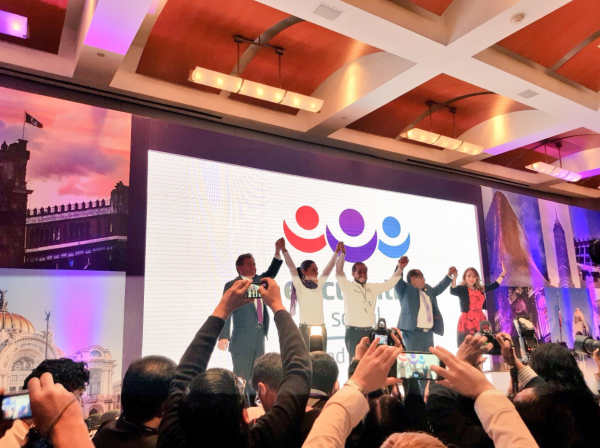
Five people stand up in front of a screen with their arms raised

The evangelical political party Partido Encuentro Social (PES) held a rally earlier this month in Mexico City. / Twitter: @PESoficialPPN / Creative Commons

The line between religion and politics is getting increasingly blurred in Latin America as evangelical churches grow in strength and candidates try to curry the support of – or at least avoid confrontation with – the faithful.  Tensions over mixing religion and politics have historic roots in Europe and Latin America and persisted throughout the 20th century, but we are witnessing a new phenomenon in Latin America now.  In much of the region, evangelical churches are showing an increased political presence and institutional representation in partisan politics.

  • In Mexico, the secular Movimiento de Regeneración Nacional (MORENA) and the Partido del Trabajo (PT) have struck an alliance with the evangelical Partido Encuentro Social (PES) to back presidential candidate Andrés Manuel López Obrador. Guatemalan President Jimmy Morales is an evangelical, and Costa Rica – if current polls prove correct – could soon have Fabricio Alvarado, an evangelical pastor, as President.  In Brazil, presidential aspirant Jair Bolsonaro has been building popular support by, among other things, appealing to the an evangelical base, even though most Brazilian evangelical churches aren’t reaching for executive power but rather support parties concentrated on building local, provincial, and congressional influence.
  • The evangelical churches’ membership has grown steadily but unevenly in recent decades. About 20 percent of all Latin Americans are evangelicals.  In Mexico, they account for more than 10 percent of the population.  In Peru, Ecuador, Colombia, Venezuela, Argentina, and Panama, observers estimate more than 15 percent.  In Brazil and Costa Rica, the number reaches 20 percent, while in Guatemala, Honduras, and Nicaragua it surpasses 40 percent.

The evangelical churches’ political agenda is centered on defense of family values – basically opposition to abortion, same-sex marriage, divorce, euthanasia, and what they erroneously call “gender ideology.”  On these topics on certain occasions, there’s a striking convergence with the Catholic hierarchy, Social-Christians, and conservative parties.  The evangelicals do not usually take positions, however, on other issues in which the government has a strong role, such as the economy or international relations.

The evangelical phenomenon reflects a double dynamic:  the unstoppable surge in non-Catholic faithful poses an enormous challenge for the region’s deeply rooted bishops conferences, and the growing distrust for political leaders and parties has facilitated the emergence of new options, including evangelicals, with barely articulated platforms.  The faithful who profess the tenets of evangelicalism are disciplined, and pastors’ positions have a lot of influence over them.  Even if not linked directly to candidates through the parties, voters’ evangelical affiliation and their churches’ recommendations have a strong influence over them.  The evangelical vote, moreover, is highly desired by all candidates and at least indirectly influences campaigns.  Candidates in Colombia, Brazil, or Mexico, as in other Latin American countries, are making that increasingly obvious as elections approach.

March 20, 2018

*Carlos Malamud is Senior Analyst for Latin America at the Elcano Royal Institute, and Professor of Latin American History at the Universidad Nacional de Educación a Distancia (UNED), Madrid.  A version of this article was originally published in El Heraldo de México.

U.S.-Latin America: Lack of Vision from Washington Didn’t Start with Trump

By Thomas Andrew O’Keefe*

A group of representatives from Latin America and China stand in a group

The Community of Latin American and Caribbean States (CELAC) hosted representatives from China in late January 2018. / Cancillería del Ecuador / Flickr / Creative Commons

U.S. leadership in the hemisphere has declined significantly over the past two decades – manifested in Washington’s inability to implement a comprehensive environmental and energy strategy for the Americas; conclude a hemispheric trade accord; revitalize the inter-American system; and stem the rising tide of Chinese influence.  In a recently published book, I argue that Washington under Presidents George W. Bush (2001-2009), Barack Obama (2009-2017), and now Donald Trump has lacked vision in Latin America and the Caribbean, and has allowed a narrow security agenda to dominate.  The most noteworthy accomplishment – the assertion of central government control in Colombia – was largely bankrolled by the Colombians themselves who also devised most of the strategy to achieve that goal.

  • President Obama’s rhetoric was the loftiest, and his opening to Cuba in 2014 changed regional perceptions of Washington. But he got off to a slow start, entering office when the United States was engulfed in the worst economic crisis since the Great Depression.  His ability to devise a bold new policy for the Western Hemisphere was further stymied by an intransigent Republican majority in both the Senate and House of Representatives after the 2010 mid-term legislative elections.

Washington’s inability or unwillingness to act is most obvious in four key areas.

  • The Energy and Climate Partnership of the Americas (ECPA) represented an opportunity for leadership on environmental issues. The United States proposed many ECPA initiatives but did not fund them, expecting the private sector or other governments to step up to the plate – which failed to happen in any significant manner.  Failure to ratify the Kyoto Protocol or enact meaningful national climate change legislation also undermined its moral authority on the issue.  Carbon offset programs would have provided an important boost to ECPA.
  • Although the United States played a predominant role in devising the parameters for a Free Trade Area of the Americas, its own positions caused it to fail. It refused to give up the options to re-impose tariffs in response to alleged dumping even if there were alternative means (such as competition policy) to redress the impact of unfair trade practices.  Washington kept discussion of the highly distortive impact of its agricultural subsidies out of the talks.  As a result, the United States was unable to offer meaningful concessions.
  • The Organization of American States (OAS) has also been a victim of U.S. neglect. Washington has pulled back from exerting leadership and, on occasion, has delayed payments of its dues.  The most effective component of the inter-American system relates to the promotion and protection of human rights, but the U.S. Senate has never ratified the American Convention on Human Rights.  The United States also rejects the binding character of decisions from the Inter-American Commission on Human Rights, opening the way for governments with deplorable human rights records to question its work.  Latin American and Caribbean governments have also shown enthusiasm for forming alternative institutions to the OAS, such as the Community of Latin American and Caribbean States (CELAC), which purposefully exclude the United States.
  • China is now the largest trading partner for many South American nations, and it could conceivably replace Washington’s influence and leadership in at least some areas, including models for economic and political reform. The boom in South American commodity exports to China allowed governments to build up their reserves, pay off debts, and liberate themselves from dependence on multilateral lending agencies centered on Washington.  Chinese banks now contribute more money, on an annual basis, to economic development projects in Latin America and the Caribbean than do traditional lenders such as the World Bank and the Inter-American Development Bank.  Moreover, this lending comes free of the conditionalities often attached to capital provided by Washington based multilateral institutions.  China’s role in building ports and telecommunication systems gives it an intelligence advantage, and arms sales have given China military influence as well.

While broad policies and political commitment behind them have been lacking, Washington has run a number of security programs in the region.  This focus, however, has often turned out to be problematic.  The Mérida Initiative, the Central American Regional Security Initiative (CARSI), and the Caribbean Basin Security Initiative (CBSI) did not resolve the myriad root causes of the drug trade and escalating violence in the beneficiary countries.  They were myopically fixated on a narrow, short-term security agenda with precarious and uncertain funding streams.  While Pathways to Prosperity and 100,000 Strong in the Americas exemplify American liberal idealism at its best, the lack of an overarching sense of purpose and political consensus behind them have led to both being woefully underfunded.  A vision for the Americas doesn’t guarantee Washington will have positive influence, but the lack of one will indeed prolong its decline.

March 16, 2018

*Thomas Andrew O’Keefe is the President of Mercosur Consulting Group, Ltd.  This article is based on his new book, Bush II, Obama, and the Decline of U.S. Hegemony in the Western Hemisphere (Routledge, 2018).

U.S.-Cuba: How to Stop the Backslide in Relations

By William M. LeoGrande*

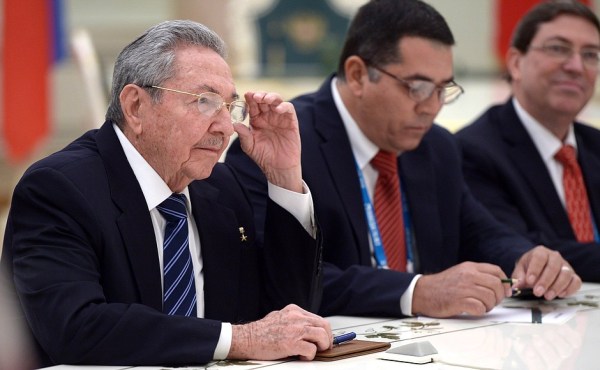
Raúl Castro sits at a table with two men.

Cuban President Raúl Castro. / Wikimedia / Creative Commons

Relations between the United States and Cuba are on a downward spiral due to the mysterious injuries suffered by staff at the U.S. embassy in Havana last year, and there is no clear escape path from the vicious circle of recriminations that have damaged the interests of both countries.  Washington’s initial response to the reported injuries a little over a year ago was to work quietly behind the scenes with Cuban authorities, even arranging visits by the FBI to Cuba.  However, once the story went public, calling the injuries “sonic attacks,” the Trump Administration bowed to pressure from Cuban-American legislators – Florida Republican Senator Marco Rubio foremost among them – to impose sanctions on Havana.  Secretary of State Rex Tillerson in late September issued an “ordered departure,” pulling most U.S. diplomats and family out of Havana and closing the consular section.  Days later, he expelled an equal number of Cubans, including their embassy’s consular staff and entire commercial section.  Soon after, Washington issued a travel warning that “we believe U.S. citizens may also be at risk and warn them not to travel to Cuba.”

  • The most recent blow to relations came on March 2, when the State Department announced that the staffing cutbacks would be permanent. Although it has been six months since the last recorded injury, Tillerson refuses to return U.S. diplomats to Havana until the mystery is solved or Cuba provides “credible assurances” that whatever happened will not happen again, but he has not said what assurances would count as credible.  Going forward, the U.S. diplomatic presence in Cuba will be weaker than at any time since former President Jimmy Carter opened the U.S. Interests Section in 1977.  With these actions, Cuban officials have begun to see the whole acoustic episode as an excuse manufactured by the Trump Administration to reverse President Obama’s normalization policy.

The absence of diplomatic boots on the ground means fewer cultural, educational, and business exchanges; slower progress on issues of mutual interest; less help for U.S. visitors who need consular services; and new hardships for Cubans seeking to emigrate to the United States, who now have to travel abroad to get a visa.  The travel warning has already reduced the number of U.S. visitors, hurting the owners of private rental homes (casas particulares) and restaurants (paladares).  U.S. study abroad programs have been hit hardest because many universities prohibit sending students to a country under a warning.  Neither government has suspended technical talks on issues of mutual interest like counter-narcotics and safe and orderly migration, but the State Department’s refusal to meet in Havana is certain to test Cubans’ patience.

As the last incident recedes in time, the chances of solving the mystery recede with it, which does not bode well for U.S.-Cuban relations.  Next month, Raúl Castro, the principal patron of normalization on the Cuban side, will retire from the presidency, raising the question whether his successor will persist in trying to improve relations when there appears to be so little interest in Washington.  Both U.S. and Cuban diplomats seem sincere about finding a way out of this impasse, get their embassies back up to full strength, and resume the dialogues that were underway, but this is a “permanent” reduction in staff without laying out the conditions – such as a particular period of time without new incidents or enhanced security measures – for restoring personnel.  The longer the two embassies operate with skeletal staff, the more damage will be done to the broad range of issues of mutual interest the two countries share.  Without an operating consulate, moreover, the United States will likely fail to meet its commitment – rooted in a 1994 agreement maintained by Presidents from both parties – to issue 20,000 immigrant visas to Cubans each year.  The United States and Cuba made surprisingly fast diplomatic progress in the last two years of the Obama Administration, signing two dozen bilateral agreements and dramatically expanding trade and travel.  Ending the Cold War in the Caribbean was overwhelmingly popular among ordinary citizens in both countries.  The current freeze in relations puts those gains at risk, giving both governments good reason to re-double their efforts to find a way out.

March 13, 2018

* William M. LeoGrande is Professor of Government at American University.  This article is an adaptation of his analysis that appeared in Americas Quarterly on March 6.

Brazil in 1999: The Impact of Rigid Labor Regulations

By Jennifer P. Poole and Rita Almeida*

The outside of a building in Brasilia, Brazil

Brazil’s Ministry of Labor and Employment in Brasília. / Grupo Vestcon / Creative Commons

During Brazil’s currency crisis and devaluation in 1999, stringent implementation of labor regulations hindered, rather than enhanced, manufacturing plants’ recovery and workers’ wellbeing – an important lesson to keep in mind in current debates in many countries.  In an article published in the May 2017 Journal of Development Economics (JDE), we examine the implications of global economic integration through international trade on local labor markets during that critical period in 1999.

  • Many economic policymakers agree that reforms in the latter half of the 20th century, such as liberalizing trade relations and encouraging foreign investment, have been powerful drivers of efficiency gains, income growth, and consumer choice around the globe. At the same time, however, there is agreement that – as firms adapt to a more competitive global environment – the gains are often accompanied by short-term costs for workers in terms of unemployment and income risk.  Policymakers have to weigh the broad economic benefits from globalization and technological change, on the one hand, against workers’ opportunities and security on the other.

A micro-econometric estimation analysis of detailed, confidential, and proprietary micro-data sets – collected in part while visiting the Brazilian Labor Ministry – reveals a causal impact of trade reform on employment.  Brazil’s policy environment of strict labor market regulations (e.g., hiring and firing costs), coupled with its dramatic trade liberalization and currency devaluation, make it a particularly appropriate setting to study the implications of globalization on employment opportunities in a middle-income country.  As in many countries, much of the de jure labor market framework was established on a national basis in Brazil (in the Brazilian Federal Constitution of 1988), but de facto labor regulations – the varying levels of implementation through labor inspections, fines, and other processes in different locales – are heterogeneous.

  • Administrative data on the enforcement of labor regulations during the 1999 currency crisis, a shock to trade openness, show that the way trade affects employment largely depends on the stringency of de facto labor regulations that companies face. The impact of the currency devaluation – widely predicted to expand employment by facilitating access to foreign markets and weakening import competition – was less significant in plants facing strong labor enforcement than in those facing more lax enforcement.  The findings suggest that stringent labor regulations limit job creation and lower productivity gains.
  • Not only was the efficient reallocation of labor in response to shocks inhibited by strict de facto labor market regulations; rigid enforcement also restricted the within-plant potential for productivity gains. The data reveal that regulations, for example, may limit plants’ ability to introduce new goods or investment in more complex production technologies that might have higher value-added.  The burden of having to retain unproductive workers, making plants less able to compete, is another possible explanation for weak productivity gains.

Previous research – arguing that weak enforcement leaves regulations ineffective – ruled out the possibility of labor regulations as an explanation for slow labor adjustment to trade reform.  But our research shows that flexible regulations maximize the gains of reforms such as trade liberalization.  As middle-income countries continue to face a globalizing and technologically advancing world economy, their strict labor market policies, limiting adjustment and reallocation, may have potentially distortive, unintended consequences.  The trade-off between job security, on the one hand, and productivity and growth is already one of the most prominent public policy debates worldwide.  Regulations designed to protect workers may actually further reduce employment as costs increase.  Countries must show flexibility, while enhancing education and training programs, to benefit fully from changes driven by the global economy.  As populist, protectionist policies gain influence in the world, policymakers should know that increasing the flexibility of de jure regulations will allow for increased job creation and thus offer broader access to productivity gains.

March 7, 2018

*Jennifer Poole is Assistant Professor of Economics, School of International Service, and Research Fellow at the IZA Institute of Labor Economics and the CESifo Research Network.  Rita Almeida is a Research Fellow at the World Bank and the IZA Institute of Labor Economics.  Their article is titled “Trade and Labor Reallocation with Heterogeneous Enforcement of Labor Regulations.”

Brazil: Growing Federal Role in Security

By Marcus Rocha*

A man in a military uniform and a man in civilian dress shake hands

Brazilian President Temer (right) and General Villas Bôas (left) shake hands. / Romério Cunha / Flickr / Creative Commons

Brazilian President Temer is increasing the armed forces’ role in security matters, especially in Rio de Janeiro, in what appears to be a populist measure to increase his odds in the October election should he decide to run.  Although General Villas Bôas, commanding general of Brazilian Army, has cautioned about the limitations on the military’s ability to carry out civilian security operations, the Army has generally accepted the mission and used it as pretext for more funding and more legal protection from prosecution.  Governments have increased the use of the Armed Forces for security in Rio on a number of occasions in the last 26 years, including during international conferences, a Papal visit, and surges in drug violence in the favelas.  Preparing for the 2014 World Cup and 2016 Olympics, then-President Dilma Rousseff also favored using the military over state police for many security functions.  Military units have usually operated under Decretos de Garantia de Lei e Ordem to circumvent Constitutional prohibitions on their role in civilian policing.

  • This approach has been criticized for both its fiscal and human costs. During a 15-month period beginning in 2014, when the Armed Forces occupied Favela da Maré (a group of 16 communities in Rio), the operation used 85 percent of both the military personnel and of the $200 million budget used during Brazil’s 11 years of involvement in Haiti peacekeeping under MINUSTAH.  Violations against slum residents were reported, and polls showed that most of the inhabitants of Maré did not feel safer with the Army in the streets.
  • Congress last year approved a law initially proposed in 2003 allowing cases of civilians killed by the military in such operations to be tried in special military courts – fueling popular concern that the extra protections for troops would give them a “license to kill.” Army commander Villas Bôas had lobbied for the law.  The internal security mission gives the military leverage for resources, but generals acknowledge that soldiers aren’t trained to deal with security in urban areas.  Villas Bôas has said publicly that his forces “don’t like this kind of deployment”; are concerned it hurts their image; and lament that affected areas return to status quo after they depart.  Villas Bôas has spoken also of “fears of the contamination” of troops by organized crime.

Temer’s moves go beyond his predecessors’ in that federal authority, rather than supplementing local officials, is subordinating them for the first time under the 1988 Constitution.  The interventor assumes the governor’s authority for the entire state’s security, with power to command both civilian and military units.

  • Temer has also announced the creation of a new Ministry of Public Security focused only on security – an issue normally under the states’ exclusive purview. While the ministry would provide more federal funds and coordination to anticrime initiatives, specialists note that the move also would give the President increased influence over the anti-corruption investigations that have rattled his Administration (among many others).  The Brazilian Federal Police, now under the Ministry of Justice and widely speculated to move to the newly created Ministry, is a key player in the years-long Lava Jato  Temer’s announcement has prompted fear – including among Lava Jato investigators, according to press – that changes in the chain of command could undermine efforts against corruption under the guise of focusing the resources in public security.

Temer’s actions suggest greater concern about polls than improved security.  With national elections just seven months away, he has single-digit approval ratings and has been unable to push through signature initiatives, such as pension reform.  Of the three top concerns in the polls – health care, corruption, and security – he has chosen the latter as the centerpiece of his agenda for the election, even though he has said he will not run.  Temer may find confirmation of his strategy in a drop in the crime rate during Carnival this month, but the use of the Armed Forces against drug-trafficking, organized crime, gangs, and other security challenges has proved dubious at best in Colombia, Mexico, and elsewhere.  In Rio de Janeiro, mafias made up of former Army, civilian police, and firemen dominate the drug trade and even services like gas, light and cable TV.  The increased use of the military also has potentially profound consequences for human rights, military professionalization, the development of civilian institutions, and the broader embrace of rule of law.  Increased federal intervention in Rio and elsewhere responds to short-term political interests with long-term outcomes that will only make things worse.

February 26, 2018

*Marcus Rocha is a CLALS Research Fellow.

U.S.-Latin America: Resuscitating the Monroe Doctrine

By Max Paul Friedman*

Two men stand at podiums

U.S. Secretary of State Rex Tillerson (right) participates in a joint press conference with Colombian President Juan Manuel Santos (left) in Bogotá, Colombia on February 6, 2018. / State Department / Public Domain

U.S. Secretary of State Rex Tillerson’s recent re-embrace of the Monroe Doctrine ignored the accumulated knowledge of the career diplomats in his Department and has reanimated this ghost of empire past.  In 2013, then-Secretary John F. Kerry launched an Obama Administration policy that helped bring the most improvement in U.S.-Latin American relations since Franklin Roosevelt, by announcing that “the era of the Monroe Doctrine is over.”  Speaking at the University of Texas before embarking on his six-day Latin America tour earlier this month, Tillerson proclaimed that the Monroe Doctrine is “as relevant today as it was the day it was written.”

  • Only Americans who are new to diplomacy and Latin America think the Monroe Doctrine was a selfless gesture by the United States to curl a protective arm around a defenseless Latin America. When President James Monroe announced in 1823 that the Western Hemisphere was closed to future European intervention, he had not consulted any Latin Americans.  If he had, they would have pointed out that he was quite deliberately not promising that there would be no U.S. intervention.  Indeed, the United States would go on to claim the right under the Monroe Doctrine to invade and occupy half a dozen countries in the Caribbean Basin in the century that followed.
  • In his remarks, Tillerson invoked President Theodore Roosevelt’s visit to Panama, which to many Latin Americans symbolizes the first covert operation for regime change of the 20th century, when TR conspired to tear the province of Panama away from Colombia. Tillerson echoed President John F. Kennedy’s promise to “eliminate tyranny” from the hemisphere, a pledge that has unfortunate resonance also.  Kennedy made use of economic warfare, assassination attempts, and invasion to try to “eliminate tyranny” from Cuba.  Tillerson also denounced China and Russia for their growing presence in the hemisphere, arguing explicitly that the United States is the only natural partner for Latin American countries.  Of the Monroe Doctrine, the Secretary said: “It clearly has been a success.”

The Monroe Doctrine has rankled in Latin America for two centuries.  Mexico refused to join the League of Nations because its charter incorporated the Monroe Doctrine.  Diplomats and jurists in Argentina, Brazil, Chile, and Uruguay tried unsuccessfully for decades to persuade the United States to convert it from a unilateral claim of hemispheric dominance into a multilateral, mutual security agreement among sovereign equals.  The dispute came to a head at an inter-American conference in Montevideo in 1933.  “This doctrine bothers, disunites and hurts us,” said Mexico’s Foreign Secretary José Manuel Puig Casauranc.  “As long as something is not the result of a reciprocal arrangement or obligation, even if it is a favor, it bothers and humiliates.”  In an effort to hem in U.S. unilateralism, the Montevideo conference passed a resolution declaring that “no state has the right to intervene in the internal or external affairs of another.”  That declaration became the core of Franklin Roosevelt’s Good Neighbor Policy, a rare period of inter-American respect made possible by Washington’s restraint.

Latin American reactions to Tillerson’s speech and visit were tepid, but his rhetoric could not have helped him win friends and influence people.  President Obama and Secretary Kerry’s efforts to follow FDR’s tradition brought accolades and cheering crowds from Havana to Buenos Aires.  Now, in the context of Trump’s boasting in his State of the Union speech of having increased pressure on Cuba and Venezuela for regime change, and his earlier remark that he was preparing a “military option” for Venezuela, Tillerson’s speech suggests that the President’s interventionist instincts will not be restrained by his chief diplomat.  Referring to China and Russia, Tillerson concluded that “Latin America does not need new imperial powers.”  But his resurrection of the specter of Monroe, wittingly or not, signals that he would prefer a return to the old one.

February 22, 2018

*Max Paul Friedman is Professor of History and Affiliate Professor of International Relations at American University.

Haiti: Increasingly Alone

By Fulton Armstrong

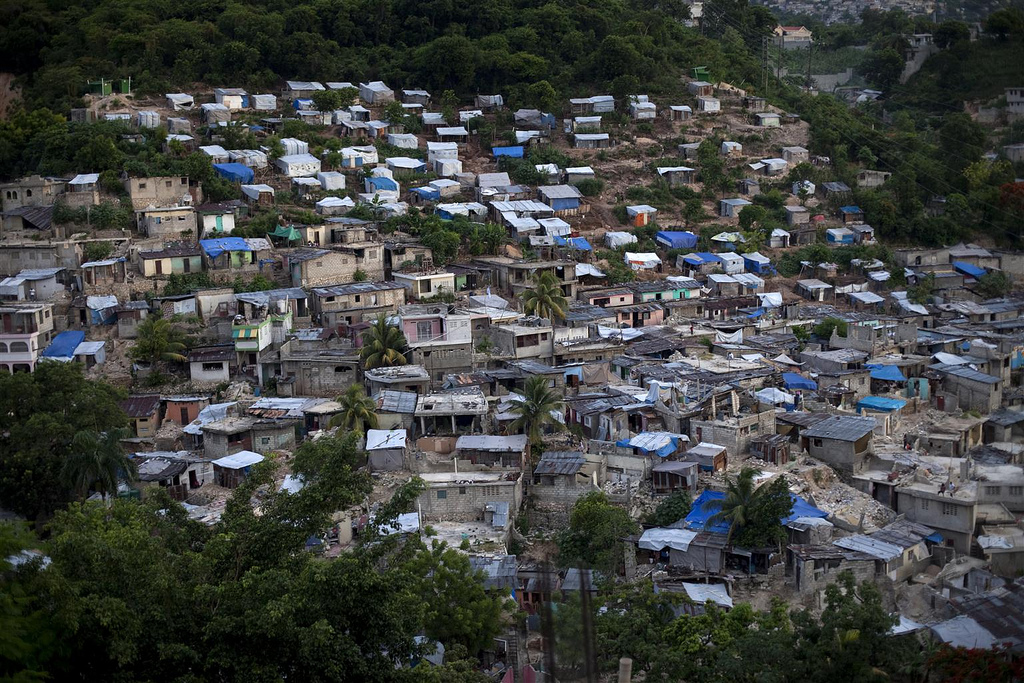
A bird's eye view of a residential neighborhood in Haiti

A residential neighborhood in Port-au-Prince, Haiti. / UNICEF Canada / Flickr / Creative Commons

Haiti’s international backers are increasingly leaving the impoverished Caribbean country to its own devices, but Port-au-Prince remains woefully ill-prepared to face its many challenges alone.  Competing priorities and distractions seem to be the main causes of the international retrenchment.  Perceptions that international aid, particularly the billions of dollars in assistance since the 2010 earthquake, has been squandered – as well as general “donor fatigue” worldwide – appear to be secondary factors.

  • The United Nations, two months after the inauguration of Haitian President Jovenel Moïse in February 2017, determined that Haitian institutions were sufficiently strong for the UN to withdraw last October the remaining 2,300 peacekeepers in the Stabilization Mission in Haiti (MINUSTAH) that had been deployed since the 2004 military coup. In its place, the UN is establishing this April a small “Mission for Justice Support” (MINUJUSTH), meant to strengthen the justice system, policing, and human rights protections – leaving all security responsibilities to Haiti’s 15,000-man police force.
  • International support for UN efforts to stem the cholera epidemic caused by UN peacekeepers after the devastating earthquake in 2010 has been lacking. About 10,000 Haitians (of an estimated 817,000 infected) have died, including 159 (of 14,000 new cases) reported in 2017.  The UN Office for the Coordination of Humanitarian Affairs (OCHA) reported last month that only $4.8 million out of the $34.5 million requested for cholera response has been funded.
  • The United States, Haiti’s biggest benefactor (having disbursed at least $3.9 billion in post-2010 earthquake aid), is pulling back in disruptive ways. The administration of President Donald Trump, who while campaigning in 2016 pledged to be Haiti’s “biggest champion,” in November announced suspension of Temporary Protected Status (TPS) for 59,000 Haitians living legally in the United States since the earthquake – giving them until March 19 to leave the country or face deportation.  Trump’s reported reference to Haiti and Africa as “shitholes” during a meeting with U.S. Congressmen last month also infuriated Haitians.
  • Food aid continues to flow, but donors have come through with less than half of the $56 million the UN urgently called for in the wake of Hurricane Matthew last October. The World Food Program reports that 50 percent of Haiti’s 10.7 million people are undernourished – including 1.3 million in “Phase 3 crisis” and 3 million in “Phase 2 stress.”
  • Even international partners have disappointed Haiti as well. Reports that Oxfam personnel held sex parties and paid for sex have prompted admissions that some staff’s behavior was “totally unacceptable.”  The group’s Haiti country director has conceded that he made “mistakes” by having a sexual relationship with a woman and was aware of the parties and prostitutes.  Other reports indicate that Medicins Sans Frontieres (MSF) repatriated 17 employees for “misconduct” that the organization is not willing to discuss.

President Moïse, who two weeks ago completed his first year in office, has had few options for dealing with these challenges.  His appeals for international support are falling on deaf or distracted ears.  It is by now well established that the international community’s “pledges of aid” invariably fall short of stated commitments, but defending his poor but proud nation from being called obscenities by the U.S. President is a task that his hapless predecessors did not have to deal with.  To prepare for the withdrawal of MINUSTAH, he has reconstituted a Haitian National Army – a force of 3,000-5,000 whom he promises will “help the people … not be an army of repression” – but the move has reopened fresh wounds from years of military abuses.  He has condemned the “sexual predator” international staff who exploit “needy people in their moment of greatest vulnerability,” but he needs to maintain good relations with NGOs in general, since they have often become the sole suppliers of public goods that ideally would be provided by the state.  Haitians’ frustration was palpable last week when a fire destroyed much of Port-au-Prince’s famous Marché en Fer (Iron Market), a historic symbol of popular commerce rebuilt after the earthquake which has become a profitable tourist destination – another sign that fate is simply not on their side.

February 20, 2018