Brazil: Presidential Lockdown?

By João Jarochinski Silva*

Bolsonaro Questioned

Bolsonaro addresses the press, May 2019/Palácio do Planalto/ Flickr/ Creative Commons License

Brazilian President Jair Bolsonaro faces mounting crises that could cut short his term in office and prolong Brazil’s multi-year political turmoil. The departure last month of two of his most widely respected cabinet members – Health Minister Luiz Henrique Mandetta and Justice Minister Sérgio Moro – came on the heels of other bad news as Bolsonaro completed his 16th month in office.

  • Brazil’s GDP grew only 1.1 percent in 2019 despite the government’s promise that pension reform and other measures would make it almost double that. Most of the growth, moreover, came from the informal sector, not the entrepreneurial class that was expected to back Bolsonaro. Moreover, all predictions are that economic performance will decline significantly because of COVID-19.
  • A number of disputes have significantly eroded his political base. In his first year as president, he left the Liberal Social Party (PSL), which gave him a home and crucial help in his campaign and early days of government. Since November, he has been trying to create a new party, Aliança pelo Brasil, but it is unlikely that he will have it ready to participate in this year’s municipal elections (Brazil has 5,000 municipalities) or able to attract politicians, mainly deputies and senators, to form a consistent base in Congress. These likely failings will affect the party budget and its TV time in the national elections of 2022. Social media was central to Bolsonaro’s successful formula last year, but observers wonder if the magic will remain.

In this context, his decision to fire Mandetta and Moro’s decision to resign are particularly severe blows.

  • Bolsonaro and Mandetta had clashed over how to deal with the COVID‑19 crisis. Bolsonaro wanted to reopen some sectors of the economy, but the minister – with apparently strong public support – sought to follow the international protocols established for “flattening the curve” to protect the health system from collapse.
  • Moro disagreed with the President’s decision to fire the commander of the Federal Police when investigations appeared to be closing in on some activities of his sons. As lead ex-judge of the Lava Jato investigations, when Moro joined the administration, he brought credibility among some sectors to the Bolsonaro government’s stated commitment to anti-corruption. Moro’s speech on leaving the ministry suggested that he felt betrayed.

Bolsonaro’s strategy at this point appears to focus on reaching out to two constituencies that he considers reliable: Evangelical Christians and the military.

  • Two of his sons, while managing to keep their government positions, shifted to the Partido Republicano, which has strong links with the Universal Church of the Kingdom of God and the second most-watched TV channel in Brazil, and other Evangelical groups. These groups are historically linked with the Centrão, a group of parties that do not have long-term political allegiances but support anyone who promotes their most immediate interests on issues such as federal administration and control over some areas with great budgetary power in the government.
  • Bolsonaro has also given the military a central political role in his government. Several government posts are held by retired and active-duty military officers, some of whom, like Moro, brought good levels of public approval to the administration. Some were seen as agents capable of taming Bolsonaro’s impulsiveness, even if evidence of success has been lacking. By lashing himself to military officers, however, Bolsonaro has tied the armed forces to his own fate and essentially coopted the officer corps into supporting him. In the event of an impeachment or other trauma, Vice President Hamilton Mourão, a retired general, and others would be held responsible for the government’s failure.

At this point, there is no good scenario for the Bolsonaro government – and COVID and other factors raise the specter of very bad scenarios in which courting the Centrão will be costly politically and financially. His alliances with the Centrão and the military also put at risk what little credibility he may have had remaining on anti-corruption after Moro’s defection. The military may not always want to be the guarantors of the government for public opinion.

  • The military will assume a technical role in dealing with the consequences of the coronavirus, including managing the impact of the economic decline such as a worsening of social tensions, but the results in terms of governance are unpredictable.
  • As Bolsonaro gropes for a way ahead, Vice President Mourão seems unlikely to willfully trip him up. Despite investing in a more thoughtful and responsible image than the president, he has not projected himself as an alternative. But the pressures for impeachment could mount steadily. Former Justice Minister Moro will be an important factor in any future scenario, but he will have to face angry supporters of Bolsonaro, mainly on social networks. A deep sense in the ranks of the other parties that he had a political agenda and lacked impartiality in the trials related to former President Lula by the Brazilian Supreme Court promises to continue the fireworks.

May 5, 2020

* João Jarochinski Silva is a CLALS fellow and professor at the Universidade Federal de Roraima (UFRR).

Regionalism in the Time of Coronavirus: The Only Way Forward?

By Leslie Elliott Armijo*

Coronavirus Latin America

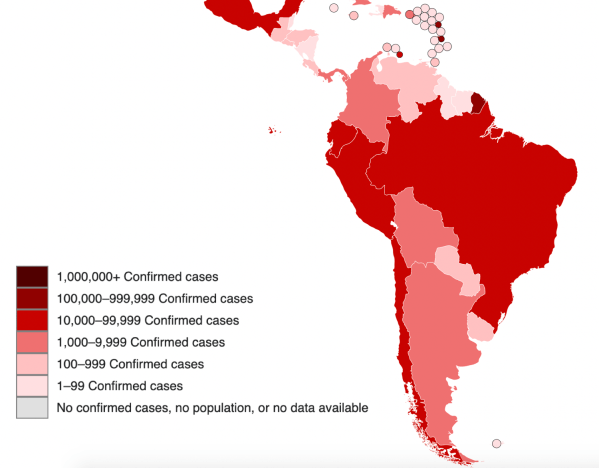
Map of the COVID-19 outbreak in Latin America as of 30 April 2020/ Pharexia/ Wikimedia Commons (modified)

To overcome the multiple challenges of the COVID‑19 crisis, Latin America’s leaders will need to build regional cooperation around pragmatic solutions – an elusive goal for countries with a legacy of disunity and weak collaboration. The coronavirus has hit at a moment of economic vulnerability. Regional growth averaged only 1.9 percent in 2010-19, worse than in the “lost decade” of the debt-crisis 1980s (2.2 percent). Labor productivity, which in 1960 was almost 250 percent of the world average, has fallen steadily in every subsequent decade, and in 2019 sat at a mere 90 percent of the global mean. Persistent squabbling among Latin countries has meant that major global trading states, including the United States and more recently China, could dictate the terms of bilateral trade and investment agreements in ways that favored these larger powers.

  • In negotiating global trade, Latin America and the Caribbean have shown little shared identity or cohesion, whether as a region or as sub-regions. As of late 2018, as global value chains coalesced around three regional hubs – China/East Asia, U.S./North America, and Germany/European Union – Mexico, Central America, and the Caribbean were linked to the U.S. but lacked bargaining power to seize more advantageous positions vis-à-vis the United States. South America has deindustrialized since the turn of the century, returning to its historic role of commodity exporter to all three hubs. Intra-regional trade as of 2017 was only 22 percent of all Latin American trade and had fallen since 2013.
  • This is a shaky foundation from which to face the health and economic challenges of COVID‑19. The IMF’s scenario, which assumes an optimistic return to business mostly-as-usual in the third quarter, predicts a contraction of GDP in 2020 of 5.2 percent in the region, driven by brutal collapses in the two largest economies, Brazil and Mexico, of -5.5 and -6.6 percent respectively. The extra-regional markets for Latin America’s exports certainly will shrink due to both short-term reasons of global depression and longer-term ones of enhanced economic nationalism abroad. Remittances and tourists from the U.S. and elsewhere will not return to their previous numbers for a long time.

A coronavirus-solidarity virtual summit last month showed that some regional leaders realize the need for joint action. Nine of 12 South American presidents participated, although Brazilian President Jair Bolsonaro – who has made intemperate and dismissive remarks about his fellow leaders – gave his seat at the video conference to his foreign minister, Ernesto Araújo.

  • Argentine President Alberto Fernández participated despite Bolsonaro’s snub (including on previous occasions) and his previously chilly relations with the sponsoring body, PROSUR, founded in 2019 by center-right Presidents Iván Duque of Colombia and Sebastián Piñera of Chile as an explicit counter to the pre-existing regional body, UNASUR, which leaned left during the presidency of Bolivia’s Evo Morales (now in exile in Argentina). In so doing, Fernández demonstrated the pragmatism and understanding that Latin American and Caribbean leaders often eschew: if you want to solve policy challenges, you must maintain dialogue with people with whom you disagree.

If there is any light at the end of this tunnel, it could be psychological, as crises tend to focus minds. The disruption in international relations beyond Latin America probably will accelerate the move away from the post-Cold War “unipolar moment” and fuel domestic economic nationalism that will shake up the three major global trading hubs – a reorganization in which the region could redefine its place. In this scenario the best defense for Latin America is a strong offense. As Alicia Bárcena, Executive Secretary of the UN’s Economic Commission on Latin America and the Caribbean (CEPAL), said recently, the region’s resilience likely depends on “investment in strengthening regional production chains” to create “complementarities in production structures and regional integration.”

  • Diplomacy enables states to share knowledge and engage in collective action to meet real cross-border challenges, including those of the current crisis. Regional solidarity does not require headquarters buildings, formal treaties, and summit pageantry, nor even similar domestic political systems. The considerable achievements of the loose, informal clubs known as the G7, the G20, and the BRICS prove the value of cooperative models that need not boast costly institutional scaffolding. The Association of Southeast Asian Nations (ASEAN), formed in 1967 by 10 countries that were at least as mutually suspicious of one another as they were of China, provides another lesson about somewhat effective regional cooperation that Latin America would do well to note.

April 30, 2020

* Leslie Elliott Armijo is an associate professor at the School for International Studies, Simon Fraser University, Vancouver. Her most recent book, coauthored with C. Roberts and S.A. Katada, is The BRICS and Collective Financial Statecraft (Oxford University Press, 2018).

Argentina: Yet Another Generalized Default?

By Arturo C. Porzecanski*

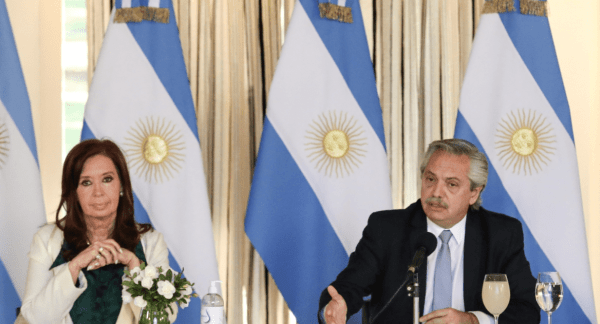
Argentine Vice President Cristina Fernández de Kirchner and Argentine President Alberto Fernández during a working meeting with governors last week/ Casa Rosada/ Creative Commons

The Argentine government’s current attempt to force investors to accept a punishing debt-restructuring plan puts the country at risk of yet another sovereign default on foreign-law, foreign-currency debt. The attempt validates the massive loss of confidence that took place last August, when local and foreign investors ran for the exits in the wake of the unexpectedly strong performance of the Alberto Fernández-Cristina Fernández de Kirchner ticket in the country’s presidential primaries.

  • Confidence had already been set back in early 2018, after a series of disappointments with how then-President Mauricio Macri was running overly loose fiscal and monetary policies that encouraged excess government borrowing and facilitated capital flight. Macri’s decision to turn to the IMF for a huge bail-out loan in exchange for a modest fiscal and monetary belt-tightening shored up confidence, but the prospect of Peronism’s return to high office undermined investor confidence anew, causing a steep plunge in Argentina’s stocks, bonds, and the currency from which it has not recovered.

Fernández had a window of opportunity to provide confidence to local and foreign investors – following the example set by Brazil’s Lula da Silva back in mid-2002, when his pulling ahead in presidential polls sparked the beginning of a market rout in that country. However, all that Fernández has done is blame Macri for all that was going wrong, denying that mistrust of Peronism was also a factor in deepening the financial and economic crisis.

  • Absent any reassurance, investors have been reluctant to show up at auctions of new peso- and dollar-denominated treasury bills, preferring to cash out of positions whenever those obligations matured. Therefore, even before Fernández took charge in December, Macri was forced on one occasion to unilaterally postpone repayments of treasury bills falling due.
  • Fernández has institutionalized the practice of deferring by decree the majority of payments coming due each month, thus defaulting time and again on most peso and dollar obligations subject to Argentine law and jurisdiction. Until very recently, however, he and the Governor of the Province of Buenos Aires, Axel Kicillof, were honoring their obligations contracted under New York law and jurisdiction.

The coronavirus disrupted a less investor-unfriendly alternative devised by Fernández to avoid a repeat of the massive default, financial isolation, and bruising legal defeats (in New York courts) that his predecessors had suffered during 2002-2015. The idea was for federal and provincial governments to develop debt-restructuring proposals and present them to bondholders by mid-March, in order to obtain by mid-April creditor approval of a deferral of payments coming due during 2020-23.

  • To cushion the blow of the pandemic, the debt-restructuring plan, delayed to mid-April, included terms and conditions that were substantially worse for bondholders. Investors holding $66 billion of bonds are being asked to write off some principal and most interest payments throughout the decades-long life of new bonds to be issued in exchange for existing ones, in a proposal that would impose (net present-value) losses on bondholders averaging at least 60 percent. The Province of Buenos Aires has presented a similarly aggressive debt-restructuring plan.

A critical mass of investors has spoken out against the government’s proposal, including outright rejections by three groups of bondholders who could block any deals. To ratchet up the pressure, the federal government skipped a $503 million payment due on April 22, setting the clock running on what could easily turn into Argentina’s ninth sovereign default on foreign-law, foreign-currency debt.

  • One constructive way for Argentina to break the impasse with its private creditors would be to ask fewer concessions from them by deciding to seek new financing from, or else a rescheduling of debt service due to, the IMF. This would be achieved by requesting support under a longer-term Extended Fund Facility. Because Argentina’s program with the Fund was a short-term standby facility, under which $44 billion were disbursed, the whole amount plus interest is to be paid back in full between now and 2024. These scheduled payments to the IMF amount to more than 40 percent of total foreign-currency payments the government of Argentina is supposed to make during 2020-24.
  • If the Fernández administration were willing to work with the IMF on an economic program that would impose fiscal and monetary discipline to kick in once the coronavirus pandemic is over, the government would not need such large concessions from its private investors. In fact, such a partnership with the Fund would pave the way for a gradual return of investor confidence and the reopening of its domestic bond market for renewed financing on a voluntary basis.

April 28, 2020

*Dr. Arturo C. Porzecanski is a Distinguished Economist in Residence at American University and a member of the faculty of the International Economic Relations Program at its School of International Service.

COVID-19 in the Caribbean: So Open, so Vulnerable

By Bert Hoffmann*

rows of empty beach chairs in Jamaica

Beach in Jamaica/ Marc Veraart/ Flickr/ Creative Commons License (not modified)

In the Caribbean, the COVID-19 crisis hits some of the world’s most open, specialized economies, forcing the region to rethink its development model. Eleven of the world’s 20 most tourism-dependent nations are in the Caribbean. The collapse of this sector leaves the import-dependent island states extremely vulnerable beyond the immediate health crisis and beyond the social and economic fallout from the current “shelter in place” rules and lock-down measures.

  • For most Caribbean nations, tourism is by far the most important economic activity. In small states like Barbados, St. Lucia, Antigua and Barbuda, and the Bahamas, tourism makes up more than 40 percent of GDP. In bigger countries like Jamaica, it accounts for more than half of exports and employs almost a third of the workforce. Many in the tourism industry cling to hopes of a speedy recovery, but this is not likely. Travelers’ confidence in cruise ships and exotic flight destinations will not fully rebound before vaccinations against the virus become readily available. Not only the low season this summer is lost, but also much of the crucial winter season.
  • The pandemic is also going to slash remittances from Caribbean emigrants. Most states have sizeable diaspora communities, and money transfers from abroad are a vital part of their economies. Unlike in the aftermath of hurricanes, migrants in the United States, Europe, or neighboring islands are affected by the same crisis. Many will also cancel visits “home.”

Current social policy measures may be able to mitigate some of the hardship, but foreign exchange buffers are hardly sufficient to maintain these on such a scale over a long time. Largely agricultural countries decades ago, most of the region today imports more than half the food they consume – seven CARICOM countries even more than 80 percent. With global supply chains and food production in the United States disrupted, imported food prices will rise. Reviving local farm tradition passes from a “romantic” niche concern to being a key issue of social policy.

  • In the Caribbean’s non-sovereign territories, the crisis underscores their population’s dependence on the welfare systems of the United States, France, the UK, and the Netherlands. At the same time, it casts a spotlight on persisting inequalities. Puerto Rico, for instance, has only one-fourth of intensive care unit beds per capita than the U.S. mainland, despite its much higher share of elderly residents.

The coronavirus crisis is bringing to the fore a number of long-term challenges for the Caribbean. If left solely to the logic of comparative advantages, the region’s world market integration tends to be one of specialization, not diversification. The downside is a high vulnerability to external shocks. In recent years, “resilience” became part of the vocabulary of Caribbean policymakers in the context of climate change, not to face global economic or health shocks. The current crisis demands thinking of “resilience” as a development goal in an even broader sense.

  • The pandemic also highlights the extent to which the Trump Administration takes the United States out of the game of soft policy approaches, and China finds a field left wide open. Beijing’s shipments of medical supplies and protective wear are a small investment, but they have a big impact in countries of some 100,000 inhabitants. Taiwan is also providing face masks and soft loans to those that still recognize it diplomatically. In contrast, what Washington seems to care about more than anything else is that the Caribbean nations should not accept Cuban doctors in to fight the disease.

April 20, 2020

* Bert Hoffmann is a Lead Researcher at the German Institute for Global and Area Studies (GIGA) and professor of political science at the Free University of Berlin’s Latin American Institute.

Cuba: Dealing with the Global Pandemic

By Ricardo Torres*

Cuban nurses carrying the Cuban flag

COVID-19 Response: Over 100 Cuban Nurses Arrive Barbados / Flickr / Public Domain

Cuba faces a “perfect storm” – a global health crisis – that poses the latest in a long list of challenges to its government, but a systematic destabilization of the country is highly unlikely, if not remote, for now. The COVID‑19 pandemic has caused an unprecedented disruption to the world economy, the devastating effects of which no country has escaped. The Cuban economy is critically dependent on tourism and remittances, two areas that have been deeply affected. Those countries from which visitors and cash flow to Cuba are greatest – the United States, Canada, Western Europe, and China – have been hit hard.

  • The shock is compounded by a drop in Cuba’s average annual growth from 2.7 percent in 2010‑15 to 1.4 percent in 2016‑19. The causes of that decline include the economic crisis in Venezuela; the cancellation of medical services agreements in Bolivia, Brazil, and Ecuador; the end of the international tourism bonanza; and the effect of new U.S. sanctions. Washington’s actions have complicated trade, foreign investment, and travel. The measures have limited remittances, reduced Cuba’s ability to import fuel, and clamped down on foreign firms operating in Cuba, such as through the first application of Title III of the “Helms-Burton Act.”
  • Another factor has been the disappointing results of Cuba’s internal economic reform, which has been wrapped up in political contradictions and a lack of clarity of its objectives. One costly flaw in these circumstances has been the government’s inability to stimulate industries that provide essential products, particularly food. Combined with the international challenges, including fresh, tough sanctions by the United States, this problem has contributed to a situation in which the Cuban people face growing shortages of all kinds of products, including food, medicines, and fuel.

The government’s response to COVID‑19 has evolved from caution to the gradual imposition of increasingly radical measures.

  • In mounting a medical response, the centralization and verticality of the Cuban model allows authorities to adapt plans and resources in the face of new priorities. The Cuban health system, for example, is known for its national coverage and access to resources (including 848 doctors and 5.5 beds per 100,000 inhabitants), and it has experience dealing with epidemics. Decisions have been taken around the concept of epidemiological vigilance, including closing the borders on April 2 and bolstering research, although the inability to carry out massive testing has been a weakness. The government has also guaranteed workers’ income and employment, except for parts of the private sector and informal economy, and expanded food-rationing to a broader list of products.

The economic impact in the medium term should not be underestimated. GDP growth will enter negative territory. Financial problems will surely deepen. Shortages of an array of basic necessities are going to worsen. Restructuring of foreign debt is necessary.

  • Internally, Cuban policymakers are going to have to take into consideration the new socioeconomic structure of the country and the need to focus support where it’s needed most. The crisis provides a good opportunity to give substance to longstanding rhetoric about improving agricultural production. Greater flexibility in regulating private businesses is also an obvious policy option. Accelerating and broadening digital access throughout society should also be a priority under the wisdom of “not putting off till tomorrow what can be done today.”

The Cuban Government is not presiding over a terminal crisis, however. Even considering the system’s weaknesses before the pandemic, this perfect storm is not its responsibility. For the medical challenge, Cuba is prepared and probably will overcome some of the criticisms made abroad about its medical missions, as brigades of Cuban doctors deploy to 19 countries. The country’s biotechnology industry also stands to make advances. It’s too early to say whether Cuba will be able to profit from these opportunities, but Havana may benefit from its willingness and ability to be a responsible international partner.

  • Washington’s policies also put it in sharp contrast with China, which continues to provide help during these difficult times. If the pandemic has made anything clear in Cubans’ minds, it’s that the United States is disqualifying itself as a positive force for change on the island.

April 17, 2020

*Ricardo Torres is a professor at the Centro de Estudios de la Economía Cubana at the University of Havana and a former CLALS Research Fellow.


Lessons Learned from Last Century’s Climate Change Migration

By Elizabeth Keyes*

Then and Now

Left: Migrant Workers in California, 1935/ Dorothea Lange/ U.S. Library of Congress/ Wikimedia Commons (modified)// Right: Central American migrants find quarter in southern Mexico/ Peter Haden/ Wikimedia Commons (modified)

Central Americans seeking asylum in the United States are not the first victims of government policies that discourage migration, send law enforcement to turn them away at a border, ban them from receiving public benefits, and pass laws seeking their immediate repatriation: the Dust Bowl migrants, almost 100 years ago, faced the same fate. Their story is more complex than that of John Steinbeck’s Joad family turning to labor in California’s “factories in the field.”

  • Drought came to Oklahoma and other Dust Bowl states after decades of agricultural practices that prioritized heavy production at the expense of land management and conservation. Corporate farmers favored practices maximizing short-term yield over long-term sustainability. The New Deal bought up farmland, displacing tenant farmers. Relief at the peak of the Dust Bowl in 1934 was mismanaged, and it did not help people stay.
  • Affected residents headed to California, which during a previous economic boom had sought out “migrant” labor from elsewhere in the United States. Many had a relative or friend already in California who could provide a migration pathway, just as happens with migration in 2020. Those with friends or family in the cities fared relatively well, but those who ended up in the labor camps of California’s valleys fared extremely poorly.

As the state’s boom ended in the Great Depression, California made efforts to discourage the migrants, erecting billboards along Route 66 warning would-be migrants that California was no longer an ideal destination. The state criminalized the act of helping indigents migrate, and the Los Angeles Police Department set up “bum blockades” to refuse them entry.

  • California’s responses looked a lot like current efforts to stop migrants seeking to enter along the U.S. border with Mexico: criminalization and walls. Internally displaced persons in the 1930s faced the same kinds of xenophobia that the migrants from outside the United States do today, defining “Okies” as a problematic “other” as if from a foreign country. Although they were, indeed, “fellow Americans” and driven from the land by environmental disaster, it took almost a decade for the U.S. Supreme Court – in Edwards v. California – to clarify that states could not bar migration from other states, and to affirm an ethic of sharing hardships across state lines.
  • The Dust Bowl migrants entered a labor market with strong racial and class inequities. As the United States deported roughly a million Mexican and Mexican-American farmworkers between 1929 and 1936 (with an estimated 60 percent of those being U.S. citizens wrongfully deported), the new migrants took over those jobs.

State and international borders differ legally, of course, in critical ways, but the experience of Dust Bowl migrants nonetheless sheds light on the possibilities for Central American and Mexican migrants today. Climate change is again increasing the drivers of environmental displacement, both internal and international, both slow-onset and acute. Just as a focus on environmental justice and sustainable agriculture would have reduced the need for migration out of the Plains in the 1930s, work done now to mitigate and adapt to climate change would help Central American and Mexican farmers stay in place. And in the communities receiving migrants, we see that California adapted and accommodated them once the Supreme Court refused to endorse California’s deterrent strategies. The Court recognized in the strongest terms that California was enduring great upheaval but determined that it could not use its state border to limit that upheaval.

The same Court also routinely upheld the federal government’s right to use the national border to inoculate the country “from difficulties common to all.” International immigration is legally, if not dynamically, morally or philosophically, different from internal migration.

  • Nonetheless, the Edwards decision provides a wonderful exercise in “what if” thinking. Because of the decision, those suffering in Oklahoma and Kansas had a place to go and could build new lives in California, changing the state but not ending it. Indeed, the state has the largest economy of all 50 states and by one measure is the “14th happiest” in the nation. California is an example of state resilience to migration, even dramatic levels of migration.
  • Perhaps the pain of the Dust Bowl – the forces that sent people migrating and the realities they faced in their new homes – offer us important lessons for international migrations caused by climate. There is no international-style Edwards approach, and refugee law offers no good answers. But the full, complicated Dust Bowl history encourages us to move beyond fear and xenophobia to face the challenges forthrightly, knowing that we do have a remarkable capacity for adaptation.

April 15, 2020

* Elizabeth Keyes teaches law and directs the Immigrant Rights Clinic at the University of Baltimore School of Law.

Nicaragua in the Time of COVID-19

By Kenneth M. Coleman*

Presidente de El Salvador participa en Cumbre SICA-Nicaragua.

President of Nicaragua Daniel Ortega /Flickr / Creative Commons

Nicaraguan President Daniel Ortega and his wife, Vice President Rosario Murillo, have not appeared in public for 28 days, but their response to the threat of COVID‑19 has consistently been the equivalent of “Don’t worry, no problem, we got this!” Government policies suggest it is going out of its way to pretend the virus poses no threat to Nicaraguans.

  • On April 4, the pro-Ortega city council of Altagracia on the tourist island of Omotepe promoted a motorcyclist gathering by offering free fuel and free transport on very crowded ferries. Press photos of the event show no masks and no social distancing.
  • Several days earlier, the government orchestrated the arrival of hundreds of supporters to celebrate the opening of a bridge in Granada, with a similar absence of anti-viral measures.
  • In late March, “health brigades” were mobilized to visit households and provide information on how to avoid COVID‑19, but some citizens refused the visitors because of the lack of social distancing.
  • Private schools have closed, but public schools and universities have not. Media reports are that primary and secondary teachers are being pressured to schedule exams to compel attendance. Some parents are keeping their children at home anyway.
  • On March 13, Murillo convoked a march (but did not personally participate) entitled “Love in the Time of COVID-19,” with thousands of party supporters and public employees and their children marching in close contact.

Citizens say the government’s posture has not been reassuring and are taking action themselves. The government has not revealed the number of tests conducted, but has reported only six cases of coronavirus, all people who had been abroad, with one confirmed death. It reports no community transmission inside Nicaragua, although three Cuban women have tested positive for the virus after visiting Nicaragua. Dora María Téllez, who was a Health Minister in the 1980s, says the government is not seriously pursuing contact tracing. Costa Rica’s admission of 502 confirmed cases makes people doubt Managua’s figures. Local leaders, most affiliated with the government, have shown little willingness to taking independent action on the virus.

  • In a mid-March survey, CID-Gallup found that 65 percent of Nicaraguans were “not at all satisfied” with the government’s handling of the virus, while 11 percent were “dissatisfied.” In the same survey, 57 percent said they felt there was “much risk of contagion” in their neighborhood, and another 25 percent felt there was “some risk.”
  • Taking matters into their own hands, family-owned market stalls in public markets started closing weeks ago. Two major companies in maquila zones last week furloughed 19,000 workers to protect their health. Citizens have created an Observatorio Ciudadano COVID‑19 to collect data on cases and exposures to the virus. The Superior Council of Private Enterprise (COSEP) has pleaded with the government to close schools and allow private hospitals to test for the virus, and it joined the Central American Institute for Business Administration (INCAE) and other private-sector organizations to encourage social distancing, urge debt relief for the poor, and create a Humanitarian Assistance Fund. The government has not responded to their offers to cooperate.

Nicaraguan experts, such as epidemiologist Leonel Argüello, fear the country could eventually have as many as 500,000 COVID‑19 infections, implying thousands of deaths. The consequences for Nicaragua’s years-long political standoff are unclear. While the business community is extending an open hand to deal with the crisis, the government seems disinclined to cooperate. The one situation that would alter this dynamic is if Daniel Ortega himself – who has not appeared in public for four weeks now – were to be incapacitated. On COVID‑19, Rosario appears to be calling the shots, but if Daniel is seriously ill, internal dynamics, over time, might prove unpredictable. Were he to die, it would put in jeopardy the dynastic succession that he and Murillo (and her two sons) have worked hard to put in place. Rosario and the sons are already under sanctions by the U.S. Department of the Treasury. Even members of their party might see some disadvantages to having a president unable to conduct most international banking transactions.

April 9, 2020

* Kenneth M. Coleman is Director for Partner Programs at the Association of American Universities. The views expressed herein are his own.


United States: Putting the Hammer to Venezuela

By Fulton Armstrong and Eric Hershberg

Trump press conference

Trump at a briefing on April 4th, 2020/ The White House/ Flickr/ Public Domain

The Trump administration’s increasingly aggressive actions to drive regime change in Venezuela – at a time that the already-desperate country, weakened by its incompetent government and U.S. sanctions, faces a potentially massive COVID-19 crisis – reflect Washington’s favoring of ends over means, with little concern for corollary damage. Regardless of whether President Nicolás Maduro survives the challenge, the country’s massive humanitarian and social disaster is likely to grow worse during the weeks and months ahead. At this point, there is no plausible scenario in which Washington can achieve what it claims is its desired outcome – a stable, democratic government – without a negotiated settlement.

  • The March 26 indictment of Maduro and other senior Venezuelan officials on charges of narcotics-trafficking and support for terrorism against the United States underscored the administration’s commitment to removing a government it calls a “threat to the hemisphere.” The U.S. Department of Justice asserted that Maduro “expressly intended to flood the United States with cocaine in order to undermine the health and wellbeing of our nation.” The indictment forced an end to preliminary talks between Maduro and his opponents over a partial truce that would allow them to make a joint appeal for international aid to deal with COVID‑19.
  • On March 31, the administration announced a “Democratic Transition Framework” for Venezuela. The plan called for Maduro to step down immediately and yield to a “Council of State” to govern until new elections. National Assembly President Juan Guaidó, whom the United States and more than 50 other countries recognize as Acting President, would surrender his claim as well, but American officials made clear he had their full support in any upcoming campaign. Coming on the heels of the indictments, the framework was quickly rejected by the government.
  • The announcement on April 1 that the United States and 22 allies were launching “enhanced counternarcotics operations” in the Caribbean near Venezuela – with large-scale military assets rarely seen in such missions – was another prong of what U.S. National Security Advisor Robert O’Brien called “our maximum pressure policy to counter the Maduro regime’s malign activities.” Maduro cited these threats and indications of mysterious arms movements in Colombia – reported by a former Venezuelan general who some observers say turned collaborator with the U.S. DEA – as reasons for putting the country on military alert last weekend.

The U.S. actions appear to reflect a calculation that the Venezuelan government is so vulnerable that Maduro’s “former regime” will collapse and, somehow, a more sympathetic successor will emerge. U.S. sanctions over the past year-plus have effectively starved the economy, and the recent crash in oil prices has reduced revenues to a trickle. Observers in Caracas report that fear of COVID-19, in a country without medical supplies or even clean water in many parts, is intense.

  • The administration insists it desires a negotiated settlement, but these enhanced pressures, particularly the indictments, greatly complicate any effort to revive talks as Norway had configured them. Similar to last year’s efforts to provoke a coup against Maduro, this year’s “maximum pressure” seems premised on creating a collapse on a scale that forces the military’s hand. But the task of overthrowing Maduro would fall to an exhausted citizenry and field-grade officers not indicted or otherwise targeted by the United States government.

Whether Washington has a comprehensive strategy, is just taking ad hoc steps to force regime change, or is merely looking to wreak havoc at a time that its handling of the COVID‑19 crisis at home is falling under intense criticism, there is precious little historical evidence that its tactics will work in Venezuela. The movement of warships to the Venezuelan coast may only be a publicity stunt, with the support of some countries in the region, but it entails diplomatic and operational risks. It also is not beyond the pale to suppose that the administration, long frustrated in its regime-change efforts, will begin to believe its hyperbole about Maduro as a narco-terrorist poisoning drug-consuming U.S. youth, and be tempted to deploy measures even more drastic than those taken to date.

  • Negotiations, although difficult, are not impossible. When U.S. opposition to diplomatic efforts to resolve the wars in Central America reached a certain point, regional governments met behind Washington’s back and produced a historic plan – the “Esquipulas Accord” – that led to peace processes in each affected country. This situation is, of course, different, but Esquipulas showed that moving the U.S. to the side can work.
  • The indictments are reminiscent of U.S. tactics to overthrow General Manuel Noriega in Panama in 1988-89 – resulting in a massive invasion to arrest that one man. Venezuela is different in many ways, and all parties should heed the adage of former U.S. military commander and Secretary of State Colin Powell, who said, “You break it, you own it.”

April 7, 2020

Latin America: The Massive Challenge of COVID-19

By Carlos Malamud and Rogelio Núñez*

Bolsonaro & AMLO

Presidents Bolsonaro of Brazil and López Obrador of Mexico have been criticized for downplaying coronavirus concerns// Left: Palacio del Planalto/ Flickr/ Creative Commons (modified)// Right: PresidenciaMX/ Wikimedia Commons (modified)

Latin America has had several advantages as the COVID-19 virus has moved in – including the chance to learn the lessons of Asia and Europe – but it faces it with fundamentally weaker tools: under-resourced health infrastructures, slowing economies dependent on declining commodity prices, comparatively little ability to increase public spending, and politically weakened governments. The WHO numbers are rising and will grow steadily owing both to accelerating infection rates and more widespread testing.

Most governments have taken strong actions, including closing borders, imposing quarantines, and closing schools, but leaders face huge challenges. In many countries, their inability for years to respond to the growing social demands of the emerging middle classes, especially regarding health care, education, and other social services, have already led to major social unrest and incumbent weakness.

  • They’re going to confront the virus with grave institutional problems, including corruption and lack of financing, and a lack of popular goodwill. The worst are Venezuela, Nicaragua, and Haiti (a failed state), but Brazil and Mexico will be most deeply affected. Brazil already has a high infection rate, and Mexico’s will grow as well.
  • In Latin America’s presidential systems, most presidents have put their personal imprint on national policies. Their measures to slow the spread of the virus have faced little backlash. Brazilian President Jair Bolsonaro and Mexican President Andrés Manuel López Obrador have gone out of their way to appear oblivious to the scientific indicators that their countries could face catastrophe. Especially for politically vulnerable presidents – Chilean President Sebastian Piñera has a 10 percent approval rating – the virus entails great personal political risk.
  • Making things worse, regional organizations such as the South America Defense Council (part of UNASUR), the Pan-American Health Organization (PAHO), and the OAS have not yet provided effective international coordination. PAHO is sending “support teams” with unspecified mandates and no new resources. The Central American presidents have met digitally to coordinate strategies.

Failure of the early control measures could have dire health consequences. Health services are vulnerable and easily overwhelmed. The delayed arrival of the virus has given health officials time to prepare, and the best hospitals are in urban centers with greatest need. But the region has several Achilles’ heels, especially the shortage of facilities and resources.

  • “Universal coverage” is actually only “partial” in all but Costa Rica and Uruguay, according to a London School of Economics study. Some countries improved their preparedness in the wake of outbreaks of chikungunya, zika, dengue, and other contagious diseases, but most still lack the laboratories and field facilities to slow a virus of COVID-19’s scope.
  • Most seriously, many of the health systems lack the infrastructure to identify, treat, and isolate patients enough to slow the spread of such a highly contagious disease. The lack of efficient isolation facilities, coupled with shortages of trained personnel and essential supplies and equipment, leave the region – despite its short-term preparations – vulnerable to an outbreak much larger than in Asia, Europe and the United States.

Market crashes and likely recession in Asia, Europe, and the United States are causing collapse of the prices of Latin American exports and a series of profound pressures on economic growth in the region. Our colleague Federico Steinberg notes that the difference between a “soft-impact” scenario and a catastrophic one will depend on whether the virus is brought under control in the second quarter of the year.

  • Many observers believe the impact will be less severe in Latin America than Asia, but that assumes reasonable success keeping the crisis relatively short. Some decline is inevitable, however, because China, Europe, and the United States’ recovery will take time. Among the sobering predictions is that of the EU’s Director for Economic and Financial Affairs, who on March 13 said the EU and Eurozone will enter a recession this year with growth “considerably below zero,” but his reference to a good chance of a “normal” bounce back next year may be optimistic.
  • Experts expect food exports to suffer more and longer than energy and mineral exports, although the drop in oil prices to 1980s levels will squeeze Venezuela, Ecuador, Mexico, Colombia, Brazil and Argentina hard. New oil exploration in Brazil and fracking in Argentina has halted.

Most Latin American leaders are not oblivious to the trials ahead. On March 15, Colombian President Iván Duque said the virus will be “especially difficult for the Latin American countries” and “can overwhelm us.” The crisis requires the region to bring its principal comparative advantages – time and the ability to analyze the successful (and failed) tactics in Asia, Europe, and the U.S. – to bear to compensate for its structural weaknesses.

  • Latin America does not have the resources or mobilizational capacity that South Korea does to carry out a massive campaign to test and treat the population, but the region can avoid total catastrophe if it expands and maintains its drastic measures, adheres to the scientific evidence, and learns from other countries’ efforts to manage the outbreak.

March 26, 2020

* Carlos Malamud is a Senior Analyst for Latin America at the Elcano Royal Institute and Professor of Latin American History at the Universidad Nacional de Educación a Distancia (UNED), Madrid. Rogelio Núñez is a Senior Fellow at the Elcano Royal Institute and Professor at El Instituto Universitario de Investigación en Estudios Latinoamericanos (IELAT), Universidad de Alcalá de Henares. This article is adapted from their recent analysis published here on the Elcano Institute website.

This post has been updated to correctly identify the President of Chile.

Brazil: Politicizing Refugee Policy

By João Jarochinski Silva*

Venezuelan refugees in Boa Vista, Brazil

Venezuelan refugees in Boa Vista, Brazil/ Wikimedia Commons/ Creative Commons License

Brazil’s decision to welcome Venezuelan refugees is based on political calculations — part of President Jair Bolsonaro’s domestic agenda, anti-Maduro policies, and efforts to polish his international image — while asylum-seekers of other nationalities are getting a distinctly colder shoulder. The country’s National Committee for Refugees (CONARE), which includes representatives of the Executive Branch and civil society, granted refugee status to approximately 37,000 Venezuelans between December and January. As permitted by Brazilian law, CONARE granted them prima facie refugee status — by virtue of the serious and widespread human rights violations in their home country — without requiring individual interviews. It was an unprecedented number, with strong support from the government, and responded to appeals from civil society and academic experts.

  • While the number of Venezuelans in other South American countries is greater, Brazil now has the most officially designated refugees. It previously had only a little more than an estimated 5,000 refugees of all nationalities — one-eighth its current total.
  • A generous refugee policy has been a key element of Brazilian foreign policy since the 1990s, often the subject of officials’ speeches in UN contexts. The current Administration’s rhetoric, however, has been different. While visiting India in 2019, Bolsonaro criticized a Brazilian law passed in 2017 (when, he claimed, he was the only deputy to cast a dissenting vote) that liberalized the country’s policies toward migrants — constituting a law in which foreigners would not be seen as threats to Brazilian society and also impacted the reality of refugees.

The recent decision to accept tens of thousands of Venezuelans appears motivated by the Bolsonaro Administration’s opposition to Venezuelan President Maduro — as well as Brazil’s left-leaning parties — more than by the humanitarian ideal of helping people fleeing crisis.

  • The Ministry of Justice has argued that non-Venezuelan arrivals are a security threat and need greater control. It introduced a legal regulation that increased control and facilitated the expulsion and deportation of foreigners, with some provisions that specialists claimed to be contrary to Brazilian laws. The regulation was revoked but made clear that the agency will continue to emphasize the security dynamic created by the entry of foreigners.
  • Minister of Justice Sergio Moro recently sent a message on social media stating that “Brazil will no longer be a refuge for foreigners accused or convicted of common crimes” [emphasis added]. With prior approval of CONARE, he rejected an appeal by three Paraguayans, who received refuge in Brazil in 2003 but were recently facing removal, and maintained the revocation of their refugee status.
  • Critics cite Moro’s use of social media to announce a technical decision as confirmation that his intention was primarily political. They note the ideological affinity between the current Brazilian and Paraguayan governments as being more important than the asylees’ previously determined well-founded fear of persecution — a violation of international law regarding non-refoulement. Critics also point out that the three Paraguayans were politically active with left-leaning groups opposed to Bolsonaro.

The contrast between the government’s and Moro’s attitudes toward asylum-seekers from Venezuela and elsewhere is striking. When confronted with evidence of rising crime by Venezuelan arrivals along the Brazilian border, the Minister said local authorities’ evidence was inconclusive. Bolsonaro’s supporters in the border state of Roraima protested Moro’s statement, but a subsequent decision to close the border for 15 days to foreigners without a permanent residence permit — allegedly in response to the threat of coronavirus — has calmed their concerns.

The CONARE decision on Venezuelans may have been intended in part to remove a glut that had slowed the entire refugee system, but the disparity in the treatment of asylum-seekers primarily reflects Brazil’s deep political polarization. Government discourse portrays its domestic opponents as being irresponsible leftists akin to Venezuelan President Maduro, who is so bad that starving refugees show up on Brazil’s doorstep, while praising rightist governments, to which even 17-year asylees can be repatriated without concern for their treatment. The Brazilian military’s deep involvement in operations regarding Venezuela also incentivizes civilians to help keep the status of refugees from becoming a political embarrassment.

  • Politicization of refugee policies and implementation is not unprecedented in Brazil. CONARE, the Brazilian government, and, indirectly, the UNHCR will determine how long this trend will continue. Altering Brazilian action to meet current political interests weakens the rights of refugees and related protective principles embodied in the Constitution and legislation.

March 23, 2020

* João Jarochinski Silva is a CLALS fellow and professor at the Universidade Federal de Roraima (UFRR).