La Moneda (Presidential Palace), Constitution Plaza in Santiago, Chile / Dennis Jarvis / Flickr / Creative Commons License
Chilean voters on May 7 handed right-wing parties a massive victory in the elections for the second Constitutional Convention– reaffirming popular rejection of the first draft and showing frustration with the sagging economy and soaring crime rates – but the extreme-right Republicans will have to deliver a balanced Constitution that reflects the country’s democratic values or get the boot in the referendum on it in December.
The Republicans and several more moderate right-wing parties won three-fifths of the seats in the country’s second Constitutional Convention – in stark contrast with the previous convention’s wide range of socialists, leftists, indigenous leaders, environmentalists, and former social activists. The election outcome was in tune with last year’s referendum, when 62 percent of the electorate rejected the previous convention’s draft Constitution.
The electorate’s sharp U-turn suggests a rejection of the former convention and current administration of President Gabriel Boric more than an embrace of the Republicans, some of whom are conspiracy theorists, far right extremists, and loners. Conservative Luis Silva, the most-voted candidate in the country, has caused outrage by stating his “admiration” for dictator Augusto Pinochet (whom he called “a statesman”), and he has adamantly proclaimed that issues like abortion, gay marriage, and migration are simply off the table and should be expressly banned in the draft Constitutional. Mr. Silva is a numerary of the Opus Dei. Press reports also allege that many candidates were nominated to fill vacated lists with no hope of winning. Some newly elected Republicans are unfit for office; one resigned his seat due to an indictment (still in trial) for domestic violence.
Most voters who cast their ballot for the Republicans, however, are not extremists. Indeed, party leader José Antonio Kast – who placed second in the 2021 presidential election (with 44 percent of the second-round vote) – is not an extreme right-wing supremacist or anything closely related as some of his opponents have alleged. Indeed, polls show a correlation of voters’ discontent with the Boric administration and support for Kast. According to Decide Chile pollster Cristóbal Huneeus, 16 out of the 35 percent of the votes the Republicans received were “circumstantial” and from persons who usually vote for the left.
The outcome has created the appearance that voters have swung to the other extreme of the political spectrum, but people are not against liberal values like marriage equality, women’s rights, or LGBTQIA+ rights. According to Bicentennial Polls by the Pontifical Catholic University, less than half of Chileans regard themselves as Catholics.
The main lesson of the election is that voters are annoyed with the patronizing attitudes from some quarters of the liberal elites, who went too far and too quickly to the left in the first draft of the new Constitution while the economy could not recover its pre-2019 levels. Most of the population is still trying to fulfill basic needs like housing, jobs, lowering crime rates, and dealing with an impoverished economy after the pandemic and uncontrolled immigration.
On the new Constitution, the message of the population is a wish for one that stands on the idea of order and economic freedom as the most precious assets without rejecting individual freedoms – a position that some Republicans are unable to accept, as they want to go all the way to extreme conservative positions. Kast gained enormous credit from this election, and he’s hoping to take power in two years in the general election. As poised as the Republicans appear, however, reality can change anytime. A lack of moderation, including expressions of admiration for Pinochet, can lead to their defeat when the new draft is put to a referendum in December.
The defeat of the leftist coalition is a major setback for President Boric. His coalition, in power for over a year, had hoped to use the previous draft Constitution to enact several progressive reforms. Now they are stuck in a process that does not belong to them anymore. Even if the new draft is more conservative than middle Chile wants and is rejected December – near the halfway mark of term – Boric will have difficulty regaining the momentum to get his presidency off the launchpad.
* Jaime Baeza Freer is a Research Fellow at the Center for Latin American and Latino Studies at American University and Assistant Professor of Political Science at the University of Chile.
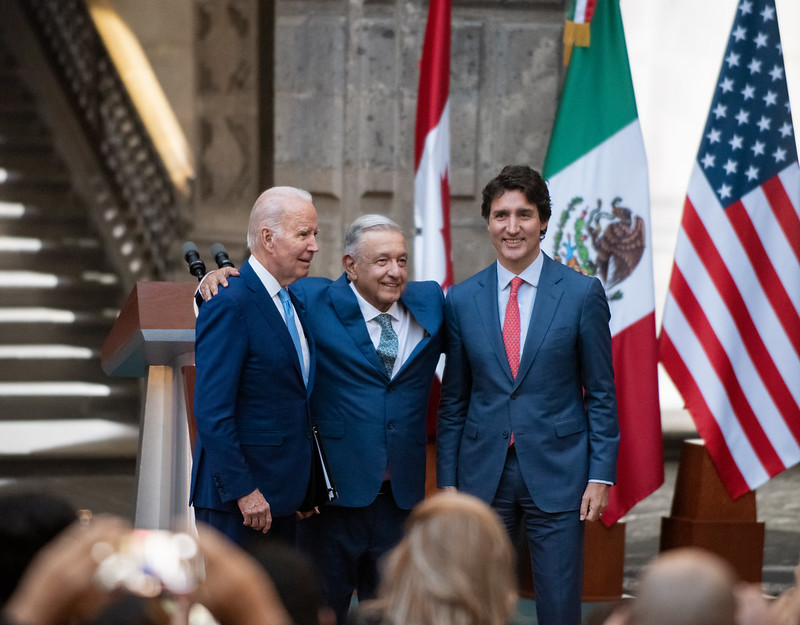
North American leaders, Andrés Manuel López Obrador, Justin Trudeau and Joe Biden, met in Mexico for the 10th North American Leaders’ Summit /Eneas De Troya /Flickr/ Creative Commons License
President Joe Biden conducted his first trip to Mexico in the context of the North American Leaders’ Summit on January 10, 2023. These summits started with George W. Bush in 2005 and did not take place at all while Trump was President. The 2021 and 2023 meetings signal a return to thinking of and valuing the North American region as such. The discussions were best when they decoupled local political considerations, common challenges, and regional opportunities. Three points toward integration are described here.
President Joe Biden, Canadian Prime Minister Justin Trudeau, and Mexican President Andrés Manuel López Obrador (AMLO) discussed the advantages of further integrating supply chains within the region. Labor costs in China have gone up, and the pandemic showed that relying on long-distance shipping can delay things during crises, epidemics, and international disputes. There was a push for nearshoring, meaning having an increasing proportion of essential and high-value products manufactured in Canada, Mexico, and Central America rather than Asia. Concrete efforts were mentioned to increase manufacturing in the region within the context of the regional trade agreement USMCA, which includes regulations, respects local preferences, and supports specific sectors and products. Thus, during the summit, Biden and Trudeau were able to look past Mexican President Andrés Manuel López Obrador’s protection of PEMEX, Mexico’s oil company, and specific controversies about car manufacturing. Furthermore, Biden, Trudeau, and López Obrador discussed the desire for further integration beyond trade. The Mexican President mentioned in his closing speech that Mexico will be represented in planned regional integration meetings by Foreign Minister Marcelo Ebrard, Finance Minister of Mexico Rogelio Ramírez de la O, Secretary of Economy Raquel Buenrostro Sánchez, and independent businessman who represents the business community, Alfonso Romo Garza. During the meetings, Prime Minister Trudeau was accompanied by his wife, Sophie Gregoire Trudeau, Minister of Foreign Affairs Melanie Joly, Minister of International Trade Mary Ng, and the Minister of Public Safety Marco Mendicino. President Biden was accompanied by the First Lady Dr. Jill Biden, Secretary of State Anthony Blinken, National Security Advisor Jake Sullivan, U.S. Ambassador to Mexico Ken Salazar, U.S. Ambassador to Canada David Cohen, Secretary of Homeland Security Alejandro Mayorkas, Special Presidential Advisor for the Americas Chris Dodd, Secretary of Commerce Gina Raimondo, and National Security Council Senior Director for the Western Hemisphere Juan Gonzalez. The size and high profile of the entourage show the seriousness of these talks and the intentions to communicate further and coordinate around shared challenges and regional integration.
The three leaders emphasized that migration is a regional process requiring a regional approach. Biden and Trudeau recognized their history and reality as countries of immigration. Canada emphasized its desire to welcome new people to keep growing its population and economy. Biden recognized the history of the United States as a country built largely by immigrants. The Mexican President missed an opportunity to acknowledge that in the last hundred years, a substantial number of people moved to Mexico from places like Spain, Chile, Argentina, Cuba, Lebanon, Guatemala, and the United States. There were mentions about the need for Mexico to become the place where some of the people from the hemisphere should receive asylum and be allowed to settle legally long-term. The three heads of government also stressed a safe, humane, and legal entry for migrants through more legal pathways and shared responsibility as advocated for in the Los Angeles Declaration. Additionally, Biden announced the monthly legal entry of 30,000 migrants from Cuba, Nicaragua, Haiti, and Venezuela with appropriate sponsors, background checks, and airplane flights. Generally, they recognized that the people who emigrate do it as an option of last resort. They expressed the humanitarian need to help create ways to migrate more safely than is currently possible for many.
Prime Minister Trudeau and Presidents López Obrador and Biden committed to collaborating on climate change and promoting racial equity, diversity, and inclusion, including collaborating with marginalized populations to fight violence against Native women and girls and expand the protection of LGBTQI+ people. Regarding climate change, the three nations promised to reduce methane emissions by 15% by the end of 2030, develop a plan to cut food loss and waste in half by 2030, and create trilateral infrastructure for EV chargers. The three leaders also spoke about their support for democratic practice and condemned the events on January 8 in Brazil. Biden and Trudeau spoke about how a feature and strength of their democracies is their diversity. Overall, most of the meetings were about strengthening ties and facing shared challenges pragmatically and collectively. The demeanor was friendly, forward-looking, and about partnership. As Justin Trudeau said, “We are stronger together.”
Where are we two and a half months later, when Biden visited Canada?
Biden spoke about the interconnectedness of the U.S. and Canadian economies, sports leagues, and people. Saying that “the U.S. and Canada share one heart.” Both spoke about green jobs and more regional manufacturing with unionized jobs.
Nevertheless, the attention was focused on asylum seekers. President Biden referred to the Los Angeles Declaration and the importance of helping migrants as a region. Canada announced the orderly welcoming of 15,000 immigrants from the Western Hemisphere. However, the discussion about the official announcement underlines “irregular migration” while mainly talking about people seeking prompt and secure asylum. Cable media commentary often referred to an agreement to address “illegal arrivals” to Canada by people asking for asylum. Nonetheless, asking for asylum is a right that people have under U.S., Canadian, and international law. The issue is that some have arrived away from official ports of entry and then approached authorities to announce themselves and exercise their right to ask for asylum proactively. Under the new agreement, Canada can send migrants back to the United States if they have not applied for asylum in-country first and vice versa. This agreement further weakens the right to asylum in North America and criminalizes those seeking it. The often-mentioned record numbers are probably inaccurate regarding legal and undocumented migrants as a proportion of the population. Still, an increasing number of asylum seekers from Ukraine, Afghanistan, Haiti, Cuba, and the Americas are arriving at land borders. The announcement of this agreement with so much fanfare constitutes a narrowing of asylum avenues and conceding to the Canadian opposition’s framing of immigrants and asylum seekers as “burdens.” It contradicts the speeches of Biden and Trudeau at the North American Leaders Summit in Mexico City on January 10 and Biden’s speech at the Canadian parliament, which recognized the many contributions immigrants make and have made to both countries.
President Biden noted the continued interest of the U.S. and Canada in supporting democracy in the Western Hemisphere.
In the meantime, the Mexican President did not appreciate messages of alarm from the north about the proposed changes to the independent Mexican electoral agency (INE) and other signs of de-democratization. In turn, AMLO spoke about the possible criminal charges against Trump being politically motivated. He also wrongly stated that Mexico is safer than the U.S. after the killing and disappearances of U.S. citizens and legal permanent residents in Mexico.
Therefore, a few months after the North American Leaders Summit, we see how some leaders are more concerned with national politics, popularity polls, and elections than working with other countries to face common problems. At the same time, working meetings about regional cooperation also serve as a reminder that despite nationalistic and isolationist presidents (like Trump was), civil servants continue working with their counterparts to make sure that regional trade, tourism, migration, consular relations, and educational and cultural exchanges continue.
March 28, 2023
*Ernesto Castañeda is the Director of the Center for Latin American and Latino Studies, Immigration Lab, and the MA in Sociology Research & Practice.
Fact-checking and editing by Karen Perez-Torres. Copy-editing by Mackenzie Cox.
CC BY-ND: This license allows reusers to copy and distribute the material in any medium or format in unadapted form only, and only so long as attribution is given to the creator. The license allows for commercial use by news sites.
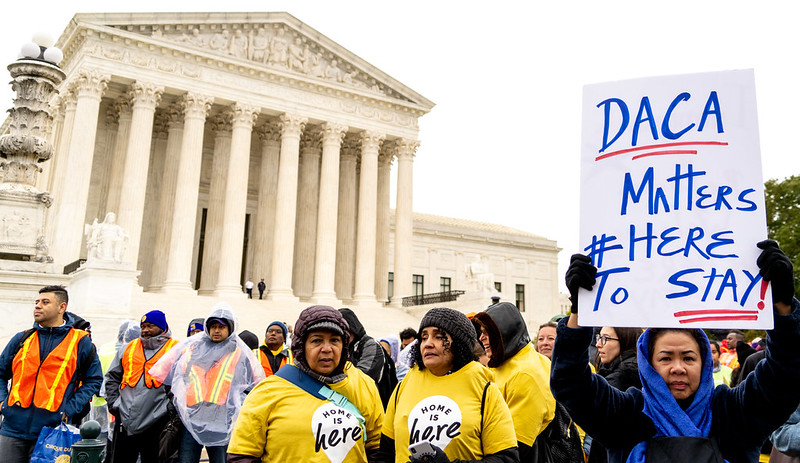
Rally by the Supreme Court as the DACA cases are heard inside on November 12, 2019 / Victoria Pickering / Flickr / Creative Commons License
A looming U.S. Supreme Court decision on the Deferred Action for Childhood Arrivals (DACA) program threatens to strip over 830,000 undocumented migrants of protection from arrest and deportation as well as any sense of belonging in the country where they have lived for most of their lives. The court is poised to throw these individuals, who have long lived in legal limbo, into the excruciating dilemma of whether to be forcibly or voluntarily “returned” to countries where they were born but have no roots, few job prospects, and often limited ability to speak the language.
The Obama Administration’s executive order establishing DACA in 2012 made undocumented non-citizens who entered the United States as children and met certain criteria eligible for a liminal (or temporary) legalization of their status. The benefits included being able to have a social security number, a work permit, and, depending on the state, even a driver’s license and pay in-state tuition.
DACA enabled these youths to come out of the shadows and pursue some of the activities of adult life. It also defined the terms of their social belonging, as access to public education cannot be denied based on immigration status since Plyler v. Doe (1982). As a place of socialization, school is usually where children start understanding the terms of their participation in society, at an age that they do not need documents for many of their pursuits.
The Obama Administration did not intend DACA to be a permanent solution for undocumented youths, but several challenges – including one led by Texas with the support of eight other states – have sought to declare Obama’s action a violation of U.S. law. In response to State of Texas v. United States (2015), the Biden Administration last August issued a final rule that used rulemaking procedures that, in its view, protected DACA from further legal challenges. But Texas objected, and the U.S. Court of Appeals agreed – leaving the Administration no recourse but to ask the Supreme Court to reverse the decision. The legal maneuvering highlights the temporary aspect of DACA for its beneficiaries.
DACA was an administration’s effort to compensate for the lack of congressional action. A decade later, this fix – a resource of paramount importance to many of the undocumented population – remains fragile and limited. DACA opponents’ legal challenges have been relentless, underscoring how easily DACA can be taken away.
The unraveling of DACA in the absence of legislation would be devastating for its over 830,000 beneficiaries. The status of liminal legality under DACA provides access to benefits rather than rights; legal presence rather than membership. While they were children, very few know that they do not have documents; they hardly need them for everyday activities, and some parents try to hide their status from them. As they get older and need documents for daily living, such as having a driver’s license, they face a potential shock of having no ties to the only country they have known. They discover that they can’t have the same life as their peers. The feeling of belonging shrinks and disappears.
Many DACA recipients would face even greater stress than the other 10 million undocumented migrants in the United States. The federal government has complete data on their identities, whereabouts, schools, and employers, making targeting them for potential detention and deportation easy. Many of their friends and family are likely to be targeted too.
The Supreme Court in 2020 blocked an effort by the Trump Administration to cancel DACA in September 2017, but the legal decision was based on procedural rather than substantive arguments – i.e., that the Trump action was “arbitrary and capricious,” not on determination that the policy behind it was unconstitutional.
The current U.S. Congress appears loath to institutionalize DACA. Moreover, the Administration appears reluctant to try again to use executive authority to ensure both the potential and limitations of the policy – much less a solution for membership of a population that has been present and socially and culturally belongs in the United States. If nothing is done, we could see mass detentions, family separation, and deportations – as well as resistance and protests from people who no longer want to live in the shadows and have claims to belonging.
March 9, 2023
* Andréia Fressatti Cardoso is a research fellow at the Center for Latin American and Latino Studies and Ph.D. student in Political Science at the University of São Paulo.
Property damage in the National Congress Building in Brasilia caused by pro-Bolsonaro insurrectionists on January 8, 2023 / Agência Senado / Wikimedia Commons / Creative Commons License
The attack on the Three Powers Plaza in Brasilia on January 8 exposed a civil-military crisis that threatens to hinder President “Lula” da Silva’s efforts to put Brazilian democracy back on track and pursue the agenda for which he was elected. The direct participation of current and former members of the military, the military police, and their family members in the invasion of the country’s Congress, Presidential Palace, and Supreme Court is evidence that the relationship of the new government with the security forces is at the center of its struggle to protect Latin America’s largest democracy.
The security forces not only failed to block a coup attempt about which threats were made repeatedly; they protected pro-coup demonstrators for weeks in front of military installations in different states. They also chose not to publicly condemn the unprecedented anti-democratic riots, nor to dismiss baseless claims of electoral fraud. Videos show military police dismantling a barrier in Congress, facilitating the invasion. Evidence suggests that some had been collaborating with the attackers. A recent survey shows that four in 10 public security agents see the January 8 rioters’ demands as “legitimate.”
The politicization of the security forces deepened under former President Jair Bolsonaro, when the number of military personnel in civilian leadership positions in the Federal Administration more than doubled – reaching the highest figure since re-democratization in the late 1980s. A retired captain himself, Bolsonaro had a general as his vice president and had 10 state ministers from the uniformed armed forces. His reelection bid in October mobilized support in the defense sector.
Before the second round of elections, retired General Maynard Santa Rosa, Bolsonaro’s Secretary for Strategic Affairs for nine months, told the press that police forces may be insufficient to contain possible conflicts in the event of a Bolsonaro defeat. Rather than discourage protests, he suggested that the armed forces could establish order through a Law and Order Guarantee (GLO) decree.
Security threats and signs of security forces’ dissatisfaction with the election results mounted during the transition period to the point that Lula moved to change the military command even before his inauguration. Radical Bolsonaro supporters burned eight vehicles in the capital one day after Lula’s victory was confirmed by the Electoral Court in mid-December. One week before his swearing-in on New Year’s Day, police arrested a suspect in a failed bomb attack – a man who had camped out with other radicals in front of the Brazilian Army’s general headquarters and planned to force a declaration of “state of siege” that would pave the way for a coup.
The need to reduce the number of non-civilians in the government was recognized by the new administration before January 8, but the coup attempt made it urgent to move quickly. In the aftermath of the attacks, Lula sacked the country’s Army chief, Júlio Cesar de Arruda (in the position for less than one month); changed the command of Federal Police in 18 states; and dismissed 26 commanders of the Federal Highway Police. The latter was involved in widespread allegations of illegal roadblocks on election day, raising fears of voter suppression in pro-Lula regions.
The day after the January 8 attack, the Federal District governor was suspended for 90 days. One week after, Brazilian police searched the residence of Anderson Torres, Bolsonaro’s Justice Minister and in charge of Brasilia’s public security at the time, and found a draft decree to overturn the election results. Torres was arrested on suspicion of “omission” and “connivance.” In all, Lula so far has removed more than 140 troops assigned to different bodies linked to the Presidency, including some in charge of his security, for which the Federal Police is now responsible.
The political capital garnered by the new government after January 8 opens a window of opportunity for long-needed reform to address the military’s institutional hold on power.Less than two months into his presidency, Lula has announced changes in the Brazilian public security structure, including the restructuring of the Institutional Security Office (GSI) to remove the Brazilian Intelligence Agency (BIN) from military control. At the same time, the new administration is defending the creation of a permanent National Guard to replace the federal district military police in the protection of federal institutions in the capital. The new force would also act in indigenous lands and border areas and support state security, as the National Force currently does.
The security forces grew once again into a non-legitimate political actor, reversing progress made over the past 37 years. Brazil now has a fragile combination of political will and conditions to press for accountability and civilian control over the armed services.
*Luiza Duarte is a Research Fellow at the Center for Latin American and Latino Studies (CLALS) and at the Wilson Center, Brazil Institute. Duarte holds a PhD in Political Science from Sorbonne Nouvelle University’s Institute of Latin American Studies.
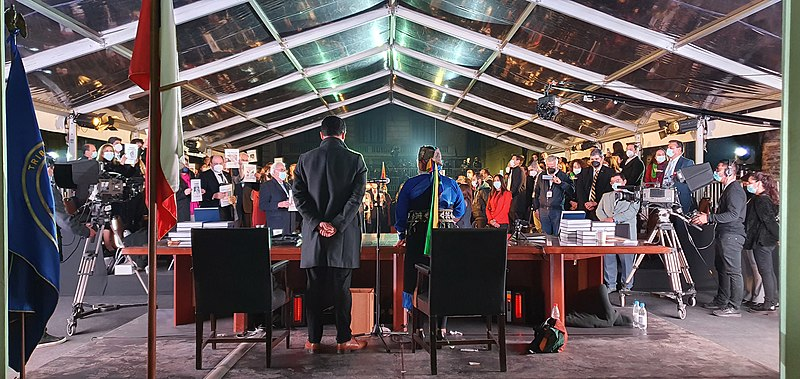
The Constitutional Convention, shown here during a moment of silence at its inauguration, started amid optimism that a new Constitution would help heal the country’s deep splits / Wikimedia Commons / Creative Commons License
Chile does not appear likely to restart efforts to write a new Constitution soon. The failure of the first draft – rejected by 62 percent of Chilean voters – has significantly weakened political leaders’ ability and resolve to try a second draft. Pollsters predicted that Rechazo (rejection) would win on September 4, and the result would fit within the left-right pendular swings of Chilean votes, but the devastating 16‑point advantage surprised all major observers.
Popular support for Constitutional reform has dissipated, even though many of the underlying issues that sparked the upheavals in 2019 and drove 78 percent of Chileans to vote for the Constituyente process remain formidable. Popular frustration with the political class and unhappiness with the first draft has bred apathy and probably disgust.
The warning signs were clear before the referendum on September 4 rejected the draft. Its architects squandered their opportunity to craft a magna carta that transcended political agendas and instead they loaded the draft up with agenda items that would have best been resolved through normal political processes. Constituyente leaders’ efforts to expand people’s rights without a broader national debate turned out to be counterproductive – alienating even some crucial center-left players – and the lack of fiscal responsibility for some proposals gave right-leaning forces an issue with which to rally opposition. On top of that, investors feared that several regulatory changes would impact economic growth and unemployment.
Since the rejection, the nation’s political leaders have remained too wrapped up in their political agendas to develop a vision that could unify them and win popular support.
The center-left argues that a second (and successful attempt) is necessary to institutionalize Chile’s legacy since the end of the dictatorship in the 1990. Its narrative, however, is plagued with unrealistic expectations for them to provide leadership because they missed important opportunities to do so in the early 2000s.
President Gabriel Boric’s Frente Amplio and the left-leaning factions aligned with his government have so far failed to develop a political project. They admitted that a new Constitution is essential to their planned policies but did not inspire support. Boric has reached out to the center-left and, after the referendum failure, made a leader of the Partido por la Democracia (PPD), Carolina Tohá Morales, Minister of the Interior. But polls, including Plaza Pública by Cadem and Activa Research, indicate that Boric’s approval rating is steadily diminishing, and his disapproval is rising. Critics say that he has been overly focused on Chile’s international image, not the political crisis caused by the Constituyente’s failure, but his recent moves on pension reform may help on that.
The center-right, which led the Rechazo efforts against the draft, has not yet shown a compelling need for a new Constitution and simply does not see the citizens’ urgency to push for one. Indeed, center-right leaders are enjoying the failures of the left and center-left during and since the Constituyente. The hard right has never wanted to abandon the Pinochet-era Constitution that was to be replaced.
A centrist coalition comprising some elements of the center-left and center-right has expressed conditional interest in getting a second try off the ground, but fear of “convention disaster 2.0” has stymied any progress. The centrists have separately indicated that they would support another convention if the two hard factions (left and right) accepted conditions that, they say, would pave the way forward. Regarding the substance of a new assembly, they want it built on social issues that already enjoy support – not a long wish list of one political sector or other. They also want constitutional and policy experts to be incorporated into the process as referees and observers empowered to rein in ideologues and partisans on both sides. Neither the left nor right has so far accepted the conditions.
No clear way to get the constitutional redraft back on track has emerged yet, but the problems that led to popular demands for one have not gone away and could put a fire under the political class. The Amarillos por Chile, a broad-based group of moderates with experience and expertise (at first non-partisan but now its own party), have offered ideas for breaking the impasse – even though, like the political centrists, they so far have not figured out how to hold a successful second convention will help. Moreover, they do not have any elected congress member for political influence. They are former politicians and current business leaders who first emerged during the Constituyente, calling for moderation and rejection of sweeping changes that they called “refoundational.” Their backgrounds and relative lack of political agendas may give them the steady hand Chile needs to launch a second try. Until popular demands for change force the political parties to get serious, however, the Amarillos and other supporters of a new, better modulated Constituyente are in a waiting game.
*Carlos Cruz Infanteis a sociologist and has served in several senior strategic planning positions in the Chilean government. Miguel Zlosilois a sociologist and former chief of research of the Secretary of Communications in the second Sebastián Piñera government (2018-21).
Immigration figures have long driven heated political debate in U.S. politics – even worse in recent years – but the data often exaggerate the problem because the responsible government agencies are double-counting and media reports are analyzing the numbers incorrectly. Opponents of President Joe Biden claim that over 2 million undocumented immigrants have entered the United States each year since he became President. The numbers reported by relevant agencies should not drive headlines or be interpreted as stock tickers about whether immigration is up and down, but the data become political footballs serving generally anti-immigration political interests.
Border encounters involving people without immigration papers are just a small subset of all immigrants, emigrants, visitors, and border crossing commercial and tourist activity – almost 300 million over the past 12 months. Analysis of the numbers about border crossers reported by the U.S. Department of Homeland Security requires clarification of what it considers “encounters.”
Because many people enter multiple times, the figures also reflect double-counting of many of the same individuals – sometimes more than five times each. Those of certain nationalities can be quickly removed and returned to Mexico for various reasons without adequate recording of their names and other details, making it impossible to know how many people are counted multiple times. Even those repatriated after a judge determines they do not qualify for asylum, humanitarian parole, or other special visa often try again and count as another “encounter.”
“Encounters” do not equal unique individuals but rather interactions between asylum-seekers or migrants and DHS personnel anywhere along the border. The U.S. Government reports, for example, that 1 million-1.3 million migrants were removed from the United States under Title 42 provisions intended to protect U.S. health in the context of the COVID pandemic – almost half of the total reported “encounters.” So “encounters” do not equal individuals entering the U.S. either.
The numbers include individuals whom the United States normally welcomes, including 140,000 unaccompanied minors looking to reunite with family members in the country, and over 20,000 Ukrainians. Russians and Afghans are in a similar situation. Cubans no longer are fast-tracked for permanent residency under the Cuban Adjustment Act, but the U.S. government cannot deport them because neither Mexico nor Cuba will take them back. Hundreds of thousands of Venezuelans, Haitians, and others are fleeing situations that most U.S. observers consider intolerable.
Comparing year-on-year figures is also deceptive. During 2020, the acceptance of asylum-seekers came almost to a halt. The pandemic, Title 42, and the “Remain in Mexico” program (under which individuals who pass a “credible fear” screening are forced to stay in Mexico while awaiting a hearing) created a backlog and bottleneck for the normal mobility that had occurred in previous years. Shifts in DHS accounting between years have also exaggerated the impression of a surge.
Other observers have confirmed migration specialists’ concerns about the over-counting. Syracuse University’s Transactional Records Access Clearinghouse (TRAC), which monitors the staffing, spending, and enforcement activities of the federal government, reported in September that detention data released by Immigration and Customs Enforcement (ICE) “is, once again, riddled with errors.” TRAC found “egregious” mistakes in several data categories that led the agency to seriously misrepresent conditions in its public statements.
While the U.S. government’s bad information makes precise calculations of migrant flows impossible, what is sure is that the total number of distinct individuals entering the United States without documentation is much less than 2 million a year. More credible estimates are that –after accounting for thousands of deportations – probably less than half a million people have been allowed in.
Among them, some were granted asylum – a right under U.S. and international law. Many others are welcome refugees and asylum-seekers like those from Ukraine and Afghanistan. Many others are waiting their turn in immigration court. Therefore, most of those included in this estimated half-million are in the United States legally, and the government knows who they are and where they live. By definition, they are not “illegal” or hiding. Allegations by a Texas senator and others that “4.2 million illegal immigrants have streamed across the border” since Biden took office are simply not true.
* Ernesto Castañeda teaches in the Department of Sociology in the College of Arts and Sciences.
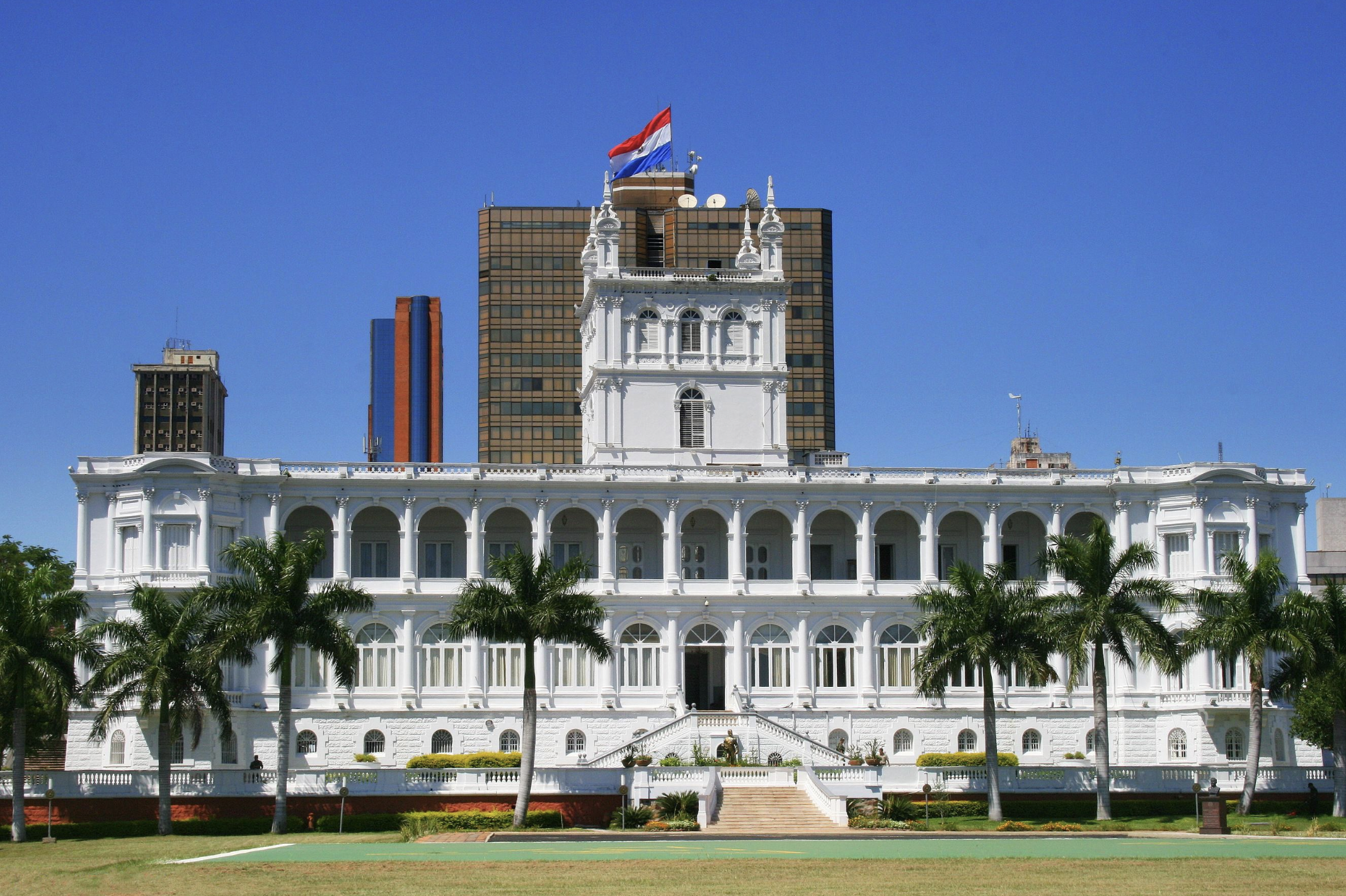
As Paraguay prepares for general elections next year, the opposition is running on a platform condemning the corruption of the incumbent Colorado Party, but candidates so far have not articulated credible policies to weed out what is a deeply systemic problem.
President Mario Abdo Benítez, whose five-year mandate (with no possibility of reelection per the Constitution of 1992) ends next August, has faced several challenges. His Colorado Party has had to manage the COVID pandemic and a series of climatic and economic headwinds that impeded the performance of the agro-exporting sector, the backbone of Paraguay’s economy. Although the country’s fiscal health is better than others in the region, public debt has risen, and pension subsidies have taken resources away from meaningful public investment projects.
In July and August, the United States designated former President Horacio Cartes and Vice President Hugo Velázquez – also from the Colorado Party – as “significantly corrupt.” The news sent shockwaves through the body politic and fueled nationwide angst about corruption and, more seriously, the ability of organized crime to permeate government institutions.
Combatting corruption and organized crime has become the central theme of the opposition’s efforts to contest the governing party’s hold on power in the April 2023 elections for president and vice president, deputies, senators, and departmental governors and councilors. Preparing for primaries on December 18, a group of opposition leaders has created a coalition called Concertación Nacional 2023. Early polls indicate that Efraín Alegre from the Liberal Radical Authentic Party will win the primary. He shares the ticket with Soledad Núñez, an independent candidate for vice president.
The opposition says that giving the boot to the Colorado Party and rebuilding government institutions will solve the problem. Still, analysis of the more prominent opposition leaders’ discourse signals the need to generate more substantive, programmatic proposals to counter corruption and narco threats. Whether this weakness is because they have no policy think tanks or an indicator of disregard for the policy debate in Paraguayan politics remains to be seen. In any case, the opposition appears poorly prepared to deal with the problems.
The challenge is that the country faces two intertwined phenomena – the more traditional corruption linked to government procurement and personnel recruitment and the growing threat of sliding toward being a “narco-state.” Washington’s allegation against former President Cartes is that he “obstructed a major international investigation into transnational crime to protect himself and his criminal associate.” Narcos have killed several well-known local politicians. When model and influencer Cristina Aranda died in an accident in a shoot-out, it shocked public opinion. Nonetheless, the opposition is having difficulty harnessing that revulsion and delineating policies to stop Paraguay’s various forms of corruption.
The opposition’s promise to strengthen government institutions, preserve the rule of law, increase the proper functioning of the police, and reform the Public Prosecutor’s Office and the Judiciary are laudable goals that will win support among its base and some fence-sitters. Undoubtedly, the Colorado Party is the party most at fault when it comes to condoning corruption and opening the gates to organized crime’s influence. Nevertheless, the opposition cannot only run on a negative campaign, and should ask itself how credible its discourse can be without specifics, especially if it comes from professional politicians who belong to parties, such as the Liberal Radical Authentic Party, that have also had corrupt elements among them when in office.
Polls and media reports show that a significant contingent of the electorate continues to support the Colorado Party even if they agree on the need to stop corruption and organized crime. The opposition’s messaging in that context has to draw a fine line between holding the Colorado Party accountable and avoiding broad sweeps that may alienate many of those potential voters and that risks pushing them to consider change as a menace more than a form of deliverance.
* Esteban Caballerois a columnist and political analyst. He is the academic coordinator of the FLACSO Program in Paraguay and former regional director for Latin America and the Caribbean of the UN Fund for Population.
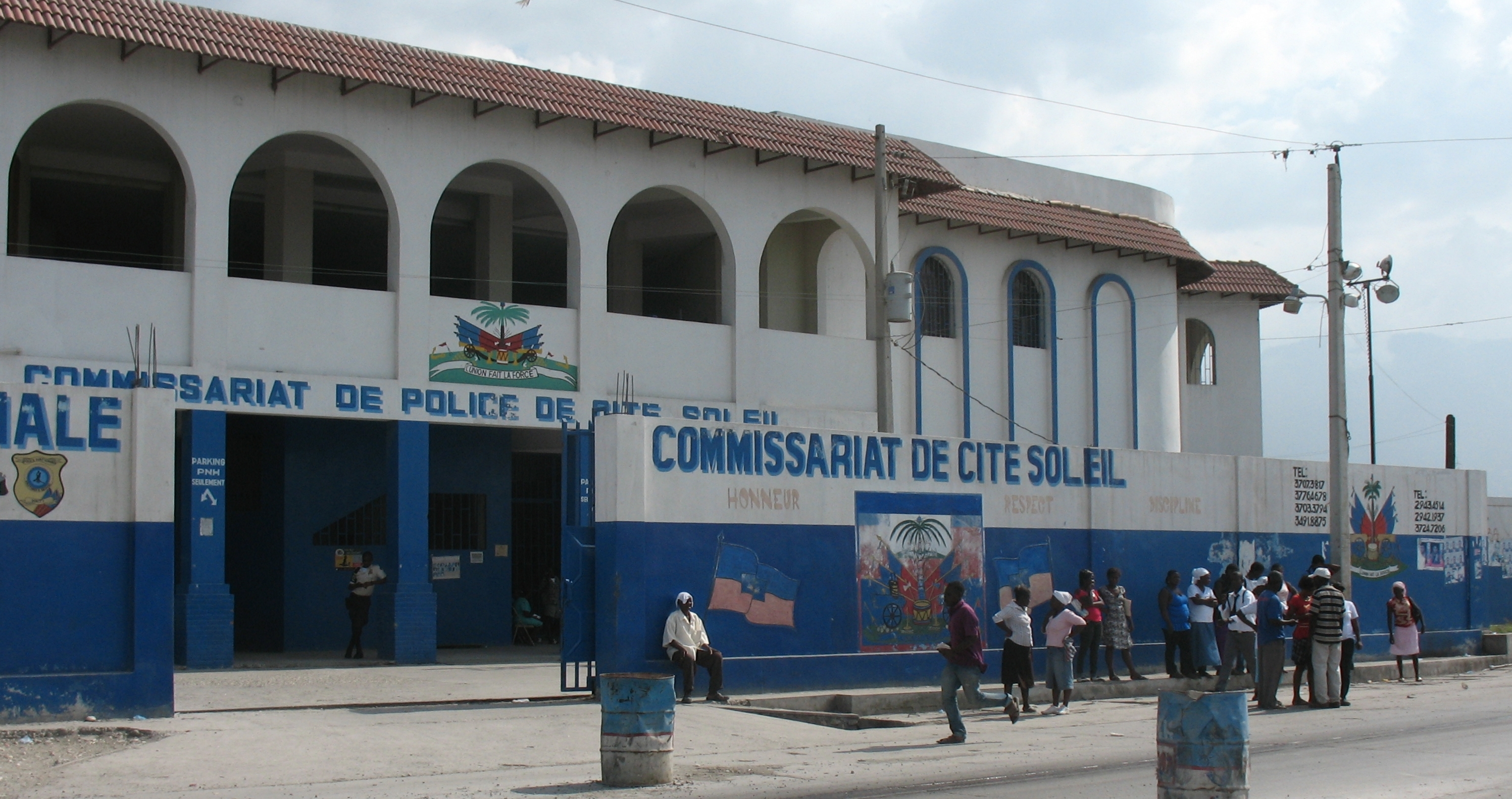
A police precinct in Cite Soleil, where gang violence and protests have surged in recent months / James Emery / Flickr / Creative Commons License
Though Haiti’s security, economic, and political crises have thrust the country into the most dire situation in recent memory, the Prime Minister’s call for foreign military intervention, if the UN complies, will continue a cycle of failed international meddling. The UN is discussing proposals backed by the United States and Mexico that would impose financial sanctions and an arms embargo on criminal actors in Haiti and authorize “a non-UN international security assistance mission to help improve the security situation and enable the flow of desperately needed humanitarian aid.” The mission would be led by an unspecified “partner country” with experience in Haiti.
Prime Minister Ariel Henry, serving as head of government with international support since the assassination of President Jovenel Moïse in July 2021, pleaded for assistance amid a precipitous rise in gang power in Haiti and unwavering calls for his resignation.
Gangs control much of the country, in particular Port-au-Prince, and affect everything from the safety of children attending school to the movement of food. Several weeks ago, they seized the terminal where fuel enters the country, paralyzing transportation, the functioning of hospitals, and other essential services. Working towards both political and criminal ends, gangs came to power as political tools, used notably by the ruling PHTK party to squash opposition. Now they operate throughout the country. Human rights groups estimate that 90 gangs operate in the capital and have killed hundreds of citizens and terrified tens of thousands of others. UN specialized agencies reported last week that 4.7 million Haitians (about 40 percent of the national population) face acute hunger, including 19,000 who are in “Phase Five” famine conditions for the first time.
However, Henry’s call for an international security presence is deeply problematic.
Named Prime Minister two days before Moïse’s assassination, Henry lacks a popular and constitutional mandate. Moïse blocked elections for mayors and national legislators and gutted the judiciary, consolidating power in his own hands. Henry is now the de facto leader of a country void of democratic checks and balances. During his year in power, Henry has done almost nothing to address the issue of gang violence. Protests have been occurring in the street regularly calling for his departure. The peyi lok (country lockdown) protests that started in late September ramped up in response to Henry’s removal of fuel subsidies – levying essentially a regressive tax perceived by Haitians across the country as a direct assault on the poor.
Despite consistent and popular calls for his removal, the United States, Canada, and other countries’ support for Henry and the PHTK has endured, choosing “stability” over calls for a transitional government and democratic elections. Washington has largely ignored the Montana Accord, the product of a broad coalition of some 70 civil society actors across religious and political divides who proposed two years of coalition government followed by free and fair elections. In Washington, support for Henry has been challenged by 13 members of the Democratic Party in the Senate and House who wrote a letter to President Biden that points out Henry’s disinterest in democracy and stability, and urged the Administration to change its strategy, heed the Montana Accord, and move away from support for Henry.
Protesters have forcefully rejected Henry’s call – bolstered by UN Secretary-General Guterres – for a foreign security force “to stand with us and help us fight this humanitarian crisis.” The request has met stiff resistance in Haiti by groups that portray it as a blatant effort to keep himself and the PHTK in power. Others call the invitation to foreign troops treason and argue a foreign force would repeat the mistakes of the previous UN Stabilization Mission (MINUSTAH, 2004‑17), which introduced cholera into the country, committed widespread acts of sexual assault and violence, and was widely seen as an occupier. A statue in southwest Haiti, for example, was erected to depict Haiti’s triumph over both cholera and the UN force.
The strong rejection of this option from civil society groups like the Montana Accord and advocacy groups like Nou Pap Domi (We Won’t Sleep) bodes poorly for international actors that might think that yet another military deployment in Haiti would lead to a different result than the past catastrophic operations. As long as the “core group” of the international community keeps its thumb on the scale and gives free reign to leaders like Henry and predecessors who lack democratic legitimacy, democratic change will not occur. Truly breaking the cycle of interventions and the longstanding support of kleptocratic regimes would mean supporting the work of groups like the Montana Accord – which the United States and others have rejected. Henry’s request for a foreign military presence is therefore not a solution, but instead sows the seeds of another set of problems.
* Scott Freeman is an anthropologist and professor in the School of International Service.
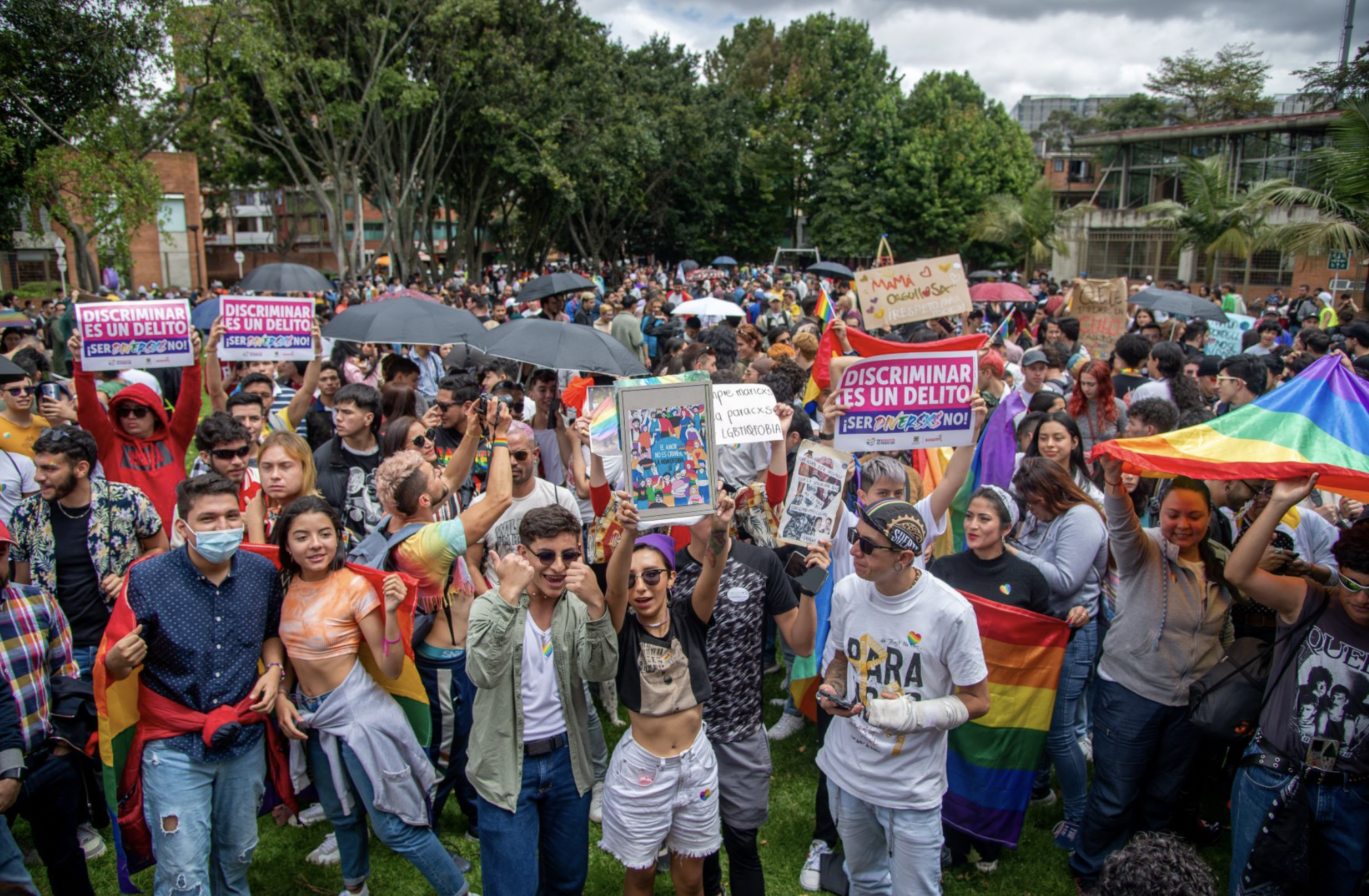
Despite significant progress in laws advancing their rights, Colombia’s LGBTQ+ youths face systemic hostility and receive little support from the institutions that are supposed to help them, leading to higher mental health issues and reduced academic achievement. Surveys by the Colombian Sentiido Foundation – receiving 1,555 and 3,246 responses from LGBTQ+ youth in August-September 2021 – provide a comprehensive picture of their lives, experiences, needs, and support networks.
Despite the most progressive legal protections in Latin America, the public record and various comprehensive studies show that LGBTQ+ people in Colombia continue to experience widespread discrimination and violence – including bullying, verbal harassment, mean rumors, and physical assault – that make them feel unsafe. Ninety-eight LGBTQ+ people were murdered in Colombia in 202021.
Colombia’s highest judicial body, the Constitutional Court, has established strong precedents that explicitly protect sexual orientation and gender identity from discrimination. Gay couples can get married and enjoy the rights of straight couples. While the country does not have a comprehensive gender identity law, trans people can change their name and sex marker on all official documents freely. The Court has shown a strong anti-discrimination stance with a series of rulings protecting students as well.
Despite this, LGBTQ+ youth suffers on many levels. Sentiido’s surveys confirmed that young LGBTQ+ Colombians experience harassment, bias, and discrimination in school and other aspects of their lives. Ironically, the Sentiido study found that, rather than being the solution, adults are often part of the problem – failing LGBTQ+ youths in school, home, and even churches. Teachers, parents, and other adults in positions of responsibility often press youths into therapies and treatments to make them conform to traditional models rather than prosper as they are. Eighty-seven percent of LGBTQ+ youths have heard homophobic or transphobic comments from family members, and almost one in five reports having been physically punished by parents for their sexual orientation or gender identity.
Regarding school climate, more than half report they feel unsafe in school and were cyber-bullied at home, causing more than a third of them to miss at least one day of class a month. More than 90 percent hear homophobic remarks at school, and 75 percent report being verbally harassed based on sexual orientation, gender, gender expression, and race or ethnicity. Thirty percent have been physically harassed (e.g., shoved or pushed). Some 87 percent feel deliberately excluded by other students.
Most students (65.5 percent) reported hearing homophobic remarks from school staff. Teachers’ and administrators’ unwillingness to create a safe environment, such as by discouraging peer meanness, create an impression of condoning the abuse. Almost 15 percent of youths taking the survey reported facing disciplinary processes for being LGBTQ+ despite laws explicitly prohibiting it.
When students reported incidents, moreover, staff usually did not help. Less than a fifth reported that school personnel intervened most of the time or always. (Peers were much more reliable in assisting.) As a result, almost seven in 10 students never reported incidents to staff.
Youths facing such challenges without reliable support networks, affirming resources, and safe spaces endure stresses that negatively impact their mental health and academic achievement – consequences that are visible in rates of attempted suicide and school absences. These data, however, can help responsible people make institutions more responsive. Almost 70 percent of LGBTQ+ youth think things will be better in the future, apparently because they see the obvious solutions that adults can adopt.
The same questionnaires that paint vivid pictures of the problem also show the way ahead to improvements, starting with adherence to the law. The surveys show that youths who receive positive info about LGBTQ+ people, history, and events – although a minority – have the best outcomes in terms of mental health, a feeling of belonging, and school attendance. Schools with explicitly inclusive policies have more successful staff intervention when problems arise.
Online materials and activities can help as sources of information, but they’re not a substitute for person-to-person interaction. The unsupervised way in which youths navigate online spaces can put them at risk or confuse them. The Sentiido surveys show that inclusion, acceptance, and personal contact are the elements, denied to most LGBTQ+ youths today, that will most help all Colombian youth, including LGBTQ+ youth, thrive.
*Juliana Martínez is the Research Director of Sentiido and an Associate Professor at the Department of World Languages and Literatures at American University. Her recent book, Haunting Without Ghosts, Spectral Realism in Colombian Film, Literature and Art, is the winner of the William M. LeoGrande Award for the best scholarly book or article on Latin American or Latino Studies published by a member of the American University community in 2020–2021.
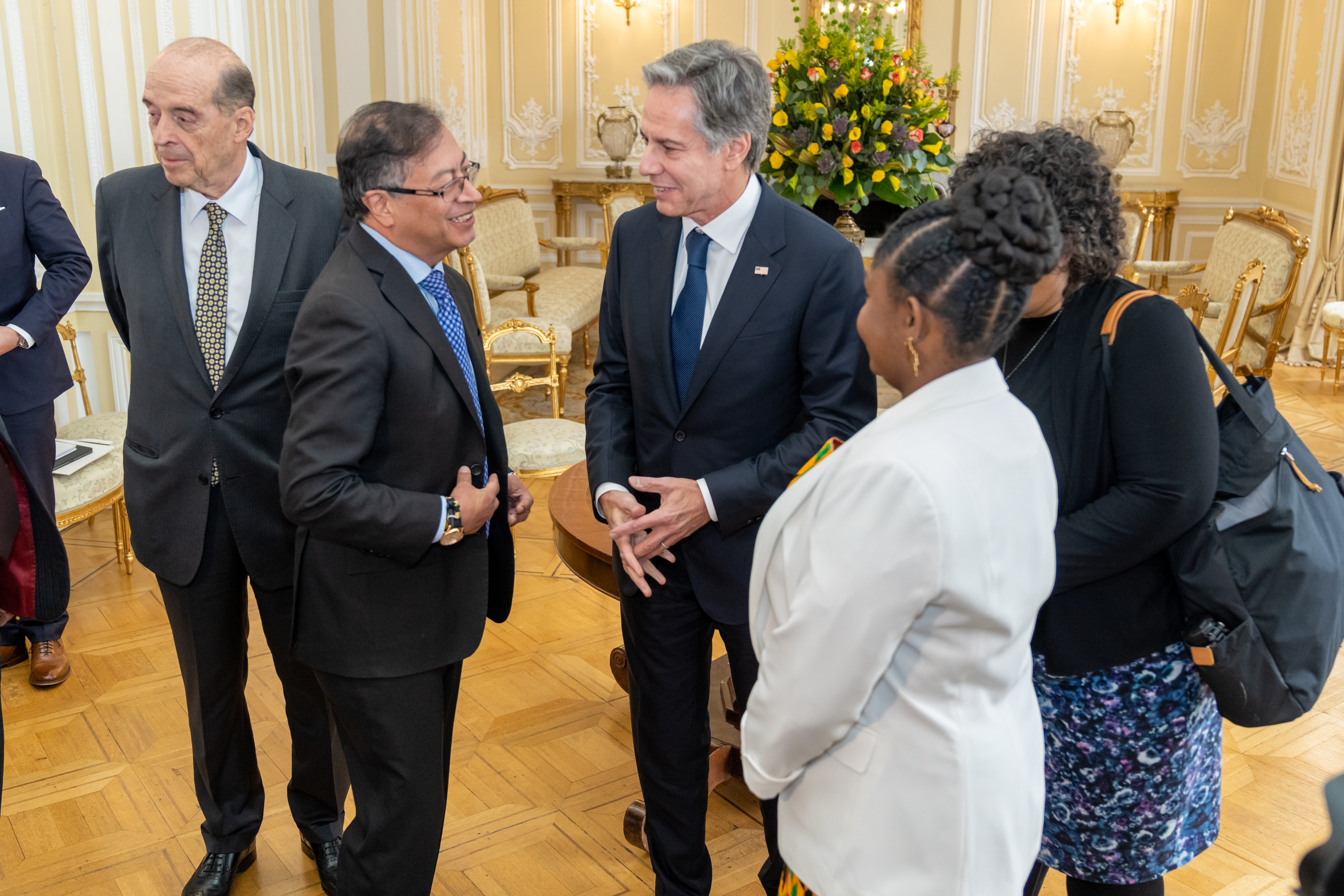
Colombian President Gustavo Petro and Vice President Francia Márquez meeting with United States Secretary of State Antony Blinken / U.S. Department of State / Flickr / Creative Commons License
Colombian President Gustavo Petro’s push for a major overhaul of the “war on drugs” is likely to cause tensions with Washington, but both sides appear to be proceeding with caution. Like its predecessors, the Biden Administration is reluctant to acknowledge the failure of the old tactics, but the burden will be on Petro to make the case that new approaches will work better.
Colombia has agreed with the United States on drug policies since the 1970s, with a focus on the Colombian Police and, later, the National Army. In 1996, the U.S. State Department said that the Fuerzas Armadas Revolucionarias de Colombia (FARC) were directly engaged in narco-trafficking, which opened the door for deeper cooperation. With “Plan Colombia” in the 2000s, Bogotá made the war on drugs a central element of its counterinsurgency – and Washington became deeply involved despite the implications for human rights in affected regions.
The two countries put aerial eradication of coca crops and extradition of traffickers at the center of the relationship, even though the initiatives did not significantly reduce the production or flows of the narcotic into the United States. The cartels fragmented and grew more violent as they fought for control of the trade.
President Petro’s proposed reform is not the first challenge to the decades-old approach. A peace agreement between President Juan Manuel Santos and the FARC in 2016 challenged the nature and depth of cooperation. The accord included commitments in four areas: incentivizing coca growers to change crops (through agrarian reform and secure access to markets); stopping the traffic (through interdiction); eliminating money-laundering; and getting transit and consumer countries to do more to reduce demand. The goal was to reduce the trade and demand more than to criminalize the production of raw material.
Little progress was made before President Iván Duque (2018-2022) put the emphasis back onto classic supply reduction. (The Constitutional Court would not allow the resumption of aerial spraying for environmental and health reasons, but ground-based operations increased.) The United States continued to demand increased eradication of coca, while continuing to reinforce police and military bases and cooperating in narco arrests.
Petro argues that peace in Colombia should start with the reform of these policies. (Colombia has suffered a conflict with 9 million victims.) He has proposed a permanent end to aerial spraying and an emphasis on crop substitution in coca-producing communities; expanded interdiction in the air, at sea, and on rivers; and greater efforts to bring all illegal armed groups, including narco-traffickers, into the national judicial system with assurances that they will not be extradited if they cooperate, compensate victims, and do not repeat their crimes.
Six Colombian think tanks (including the one I cofounded) have given the President recommendations on how to implement his priorities. The recommendations stress the need for internal Colombian reforms, most of which can be made without the permission of the United States. Important ones include ending the excessive use of criminal law in non-violent drug cases; suspending the use of force against communities in coca-producing areas; implementing the Peace Accord (including promised investments to fund alternative crops); permitting a regulated cannabis market; and opening markets of food products, with appropriate protection for users, derived from coca leaf.
Despite his progressive international discourse on the need to end the war on drugs, Petro’s opponentssay that his proposals would make Colombia a narco-state, and peasant organizations are concerned that land eradication by the military and police forces will continue. The State Department’s top drug official initially said publicly that he saw “a problem” in Petro’s proposals, but Secretary of State Blinken at a press conference with Petro on Monday said he “strongly supports the holistic approach that President Petro’s administration is taking,” and that the two administrations are “largely in sync” on drugs policy. They did not publicly address the thorny issue of extradition.
Washington will probably have difficulty making deep changes to policy, particularly as U.S. mid-term elections approach. In addition to competing perspectives on how to deal with crime, there are political sectors, bureaucracies, and powerful business interests that have benefited greatly from the past policy emphasis on criminalizing peasant production of coca leaf – even if the results have been questionable. Their justification is that the drug problem “would be worse if we didn’t do it.”
Petro surely knows he will have to be creative and patient with Washington. For instance, recently the Colombian Police chief received two U.S. helicopters, the first of 12, for protecting the forests in Colombia, suggesting the new President will seek common ground with the United States. He wants to avoid provoking Washington to use its anachronistic “decertification” process to punish him for showing insufficient commitment.
The six think tanks believe that Petro can thread the needle in the U.S. relationship and that, if implemented correctly, the reforms of drug policies will bring Colombia in line with international norms, including the protection of human rights, and win broad international support. A frank conversation among Latin America, Africa, Oceania, and Europe within the OAS or UN would benefit all.
* Pedro Arenas is cofounder of Corporación Viso Mutop, a Bogotá-based organization that facilities dialogue on sensitive issues among diverse social, political, and institutional actors.






 AULA Blog


