By Danjha Leon Martinez
Peru has become one of the top destinations for Venezuelan migrants, second only to Colombia, with close to a million Venezuelans now calling it home. The Venezuelan diaspora started their mobilization journey after being forcibly displaced due to the socio-political situation in their home country.
Most migrants are young adults aged 18 to 34. About half hold technical or university degrees. Despite this, they had been encountering difficulties finding enough opportunities suitable for their professional or occupational credentials. In terms of resettlement, Peru still faces challenges in delivering the social services needed for effective migrants’ social integration. Specifically, the Peruvian system does not expedite their access to primary services such as documentation, healthcare, housing, and education during the early stages of their integration into the country. Thus, Venezuelans find themselves working in the informal economy as street vendors, construction workers, or housekeepers, taking any opportunities that they can find.
For many migrants, the choice to settle in Peru isn’t random. They are drawn by the country’s steady economic growth and its notable progress in reducing poverty. Others come to reunite with family or because Peru’s legal migration procedures are comparatively easier than those of other nations.
Diego: When I arrived in Peru, I said ‘Vaya! Hay Audis, Mercedes Benz, Starbucks…’ In Peru, I found opportunities… I was able to open a barbershop and take a loan to buy a car.
Venezuelan arrivals have put a slight increase in demand on Peru’s public services, with hospitals, schools, and social programs. But a growing population will grow the economy and produce more opportunities for all in Peru. Locals have noticed more competition for low-wage jobs, fueling worries about unemployment and sparking some anti-immigrant attitudes that are tied to xenophobic sentiment.
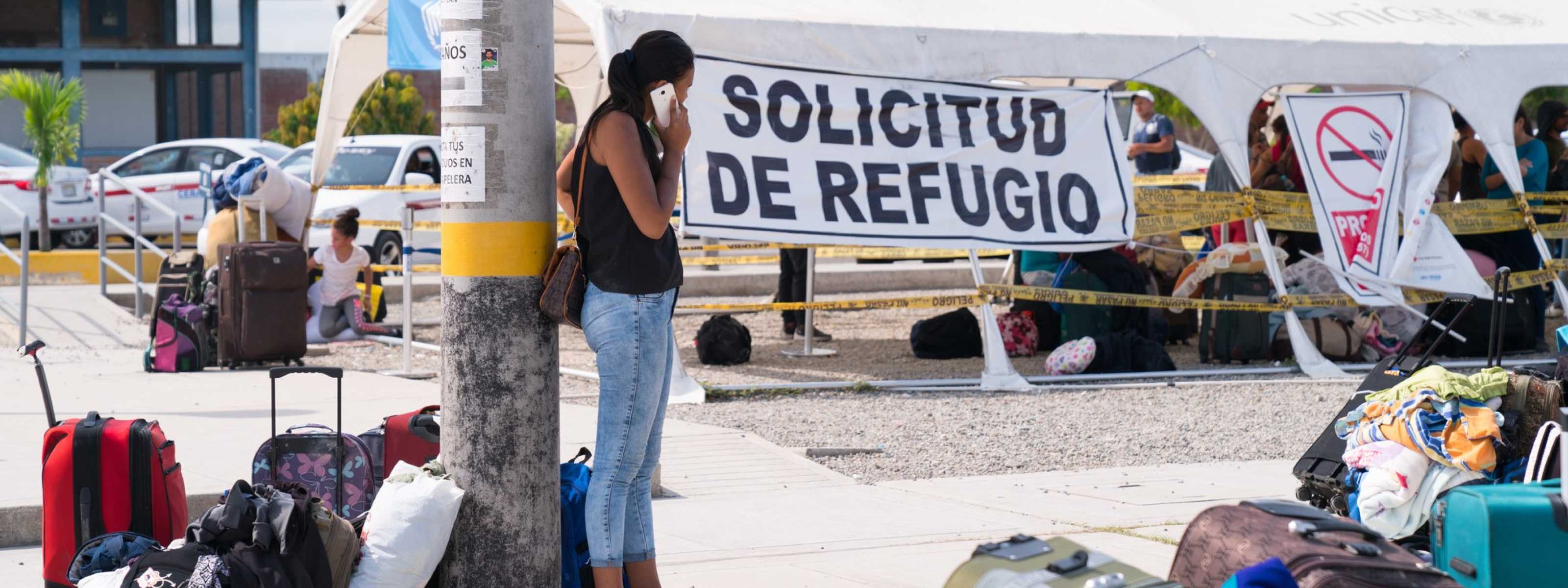
Given the high degree of informality in Peru’s economy, migrants can find work quickly, and open migration policies have made it easier for them to get temporary permits. Still, Venezuelans in Lima, the capital of Peru, face hurdles in getting formal jobs, leaving many with higher education degrees to work as street vendors, housekeepers, and in small trades just to get by.
For this reason, Venezuelans heavily rely on transnational and local social networks, which provide crucial support, including information about job opportunities, housing, and other resources that aid economic survival.
Pedro: (former employee at PDVSA, Petróleos de Venezuela): During the first three months that I was here in Peru, I could not find a job. I survived only with the support of my countrymen.
Despite issues such as job precariousness and limited rights, Lima offers better economic opportunities than other potential destinations in Peru’s main cities.
Saul: I feel like I really prospered. When I arrived, the challenges were overwhelming, but the benefits I gained from it are invaluable. Now I can give stability to my family, and I own a business which I’m proud of.
Jose (Venezuelan mechanic who moved to Lima in 2018): “The minimum wage here in Peru… it’s not feasible for a Venezuelan to live with dignity because the rent prices and groceries cost basically the whole salary.”
Despite the funding and technical support from several international NGOs to implement humanitarian assistance, there has been a disconnect between the results of these initiatives and the intended outcomes. Almost 70% of the Venezuelan community still need to accelerate their migration process and acquire a formal status, requiring international protection. Coping strategies for financial survival include juggling multiple informal jobs, entrepreneurial activities, and sharing housing to reduce living costs, often under precarious conditions. Venezuelan migrants who plan for a future in Peru balance hopes for stability with the need to adapt to informal economic contexts and local cultural idiosyncrasies.
Peru’s political will towards the integration of the Venezuelan diaspora could be reflected by future policy frameworks that help secure legal immigration statuses and access to social programs with fewer bureaucratic hurdles. Even after facing a difficult journey, Venezuelan migrants have significantly contributed to Peru’s economy and society. They have filled critical labor gaps in sectors such as construction, food services, and informal vending, thereby driving economic growth, particularly in low-wage jobs. Many have also opened small businesses, diversifying local economies and creating jobs.
Overall, migration brings development opportunities to a country. As of now, the Venezuelan diaspora is still in the process of integration and organizing mutual support. Given the diaspora’s positive impact on the country’s development and Peru’s long-standing history of economic growth driven by the arrival of diverse migrant clusters, it would be beneficial for both the vulnerable community and the host country to advocate for the protection and effective integration of the Venezuelan diaspora.
Danjha Leon Martinez is a Research Assistant for the Immigration Lab at the Center for Latin American & Latino Studies. She is a Development Management graduate student at American University with a focus on humanitarian aid and global migration.
Edited by Ernesto Castañeda, Director of the Center for Latin American and Latino Studies (CLALS) and the Immigration Lab, Katheryn Olmos, Research & Data Coordinator, and Vincent Iannuzzi-Sucich, Research Intern at the Immigration Lab.


 AULA Blog