More Cracks in the EU’s “Common Position” on Cuba

By William M. LeoGrande*

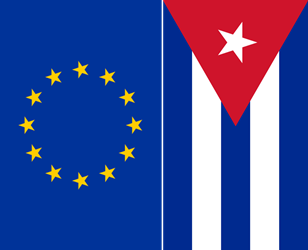
eu cubaThe visit of Dutch Foreign Minister Timmermans to Cuba earlier this month marks yet another crack in the European Union’s 1996 Common Position on Cuba, which conditions normal relations with the island on democratic reforms. Days later, EU Commission President Barroso acknowledged that a number of member states were pressing for a reevaluation of the Common Position, and Spanish Foreign Minister García Margallo announced that the issue would be taken up at the EU foreign ministers meeting on 10 February – adding, however, that any new policy “would have, as a determining factor, respect for human rights.” Amending the Common Position will require unanimity among the EU’s member states, something conservative governments – especially in the former socialist countries – have thus far blocked.

The Common Position has severely constrained the ability of Brussels to respond creatively to rapidly changing conditions in Cuba today, but various European governments have expanded their bilateral economic and political ties with Cuba despite its strictures. Trade between Cuba and Europe, at 2.5 billion euros annually, has roughly tripled since 1996, and official development assistance to Cuba has quadrupled to nearly 60 million euros annually. Policies of engagement have proven more successful than policies of hostility and confrontation.  In 2010, quiet diplomacy by José Luis Rodríguez Zapatero’s government enabled Spain to play a crucial mediating role between the Cuban government and the Catholic Church, leading to the release of more than a hundred political prisoners – the largest such release since the 1970s.

Cuba today is moving in directions that the EU has long favored.  The “updating” of the Cuban economic model, begun in 2011, entails greater economic openness, reduced government regulation of private markets, and a larger role for private sector businesses. At the same time, although challenging Cuba’s one-party system or its socialist society is still out of bounds, there has been a very gradual opening of political space to debate the shape of Cuba’s future.  Replacing the Common Position does not mean that European states, individually or collectively, would abandon their commitment to encouraging greater human rights and democracy in Cuba.  But a warmer political climate would enable them to express their concerns more effectively through quiet diplomacy. What offends Cuba’s leaders is not that other states have different views on these issues; it is that the Common Position makes normal relations contingent on Cuba conforming to European norms, a litmus test that no other Latin American country is required to pass.

*Dr. LeoGrande is Professor of Government in the School of Public Affairs at American University.  This article is excerpted from an essay (click here) he wrote for the London School of Economics and Political Science blog.

Mexico: Reform Promises Boost in Energy

By Amy Ruddle

Photo credit: Wonderlane / Foter / CC BY

Photo credit: Wonderlane / Foter / CC BY

Landmark reforms passed by the Mexican Congress last month – amendments to three articles of the Constitution – allow private investment in the country’s energy industry for the first time in 75 years. They open the door for international companies to enter into joint ventures with Petróleos Mexicanos (PEMEX), with the first round of contract bidding slated for 2016 – and increased oil and gas production as soon as 2018. PEMEX will remain state-owned and all hydrocarbons in the ground will continue to belong to Mexico, but private companies will gain rights to oil at the wellhead and be permitted to participate in site exploration, gas and oil production, seismic analyses, and the transportation, marketing and refining of these resources. They will also be allowed to bid for rights to conduct offshore and shale exploration.

Although the oil industry is expected to attract billions of investment dollars – PEMEX signed a cooperation contract with Russia’s Lukoil last week for an undisclosed amount – Mexican officials say they’re not rushing into deals. Undersecretary of Hydrocarbons Enrique Ochoa Reza recently said that the government is proceeding carefully, taking cues from Brazil and Norway as examples of how energy reform can be executed successfully. “In order to do it right – and we are committed to doing this – we need to do it one step at a time,” he said. The Mexican government’s hope is to return oil production (roughly 3 million barrels per day in 2012) to its 2000 levels (3.5 million) by 2025, and possibly 4 million barrels in the distant future.  In addition to creating jobs, the government projects the reforms will increase GDP by 1 percent by 2018, and by 2 percent by 2025. Increased revenues should stabilize budgets, fund a long-term savings mechanism, and eventually support long-term projects including the universal pensions system, scholarships, and science and technology research.

The next hurdle in energy reform will be passage of secondary legislation over the next five months — and faithful implementation. The transparency mechanisms written into the constitutional reforms, including public bidding rounds, transparency clauses in energy contracts, external industry audits, and the full disclosure of all payments related to oil and gas contracts are essential to success, but overcoming the corruption and inefficiency that have plagued PEMEX will require sustained effort. In addition, President Peña Nieto still has to sell these changes to the Mexican people. Tens of thousands of citizens took to the streets to protest the changes in early December, and opinion polls show that many, if not most, Mexicans are not in favor of them. Polls conducted by Vianovo in September (still deemed to be among the most accurate) show that only 33 percent of respondents favor profit-sharing contracts between the government and private companies to explore and produce hydrocarbons, although 53 percent were at least somewhat in favor of the energy reforms overall. Unions are upset too, as the union representing PEMEX’s 140,000 employees has now been eliminated from the company’s board, and private firms benefiting from the reforms may create labor contracts without union involvement.

Violence in Central American Urban Communities: Challenging Common Perceptions

By Juan Pablo Pérez Sáinz*

Urban storefront within a community of Sonsonate, El Salvador / Photo credit: Lon&Queta / Foter.com / CC BY-NC-SA

Urban storefront in a community of Sonsonate, El Salvador / Photo credit: Lon&Queta / Foter.com / CC BY-NC-SA

A recent survey on urban violence revealed that several kinds of violence are more serious in Costa Rica than in El Salvador.  Common wisdom, buttressed by homicide rates and other traditional “hard” indicators, is that El Salvador suffers from violence similar to Guatemala and Honduras, while Costa Rica does not. Historical factors stand out as possible explanations. Conflict among Salvadoran elites in the 1930s left the country deeply polarized and politically closed, laying the groundwork for war in the latter half of the century – with violence continuing, albeit in new forms, after the war ended. Costa Rica, on the other hand, emerged democratic, and the Second Republic created a welfare state committed to development. The structural economic adjustments of the 1980s challenged that order, and the growing inequality resulting from “neo-liberalism” has been accompanied by a rise in violence, but violence in Costa Rica did not reach the levels of its Central American neighbors.

A survey conducted by FLACSO specialists in El Salvador and Costa Rica challenges those theses. Polls of families in nine urban communities cast new light on the problem of violence, revealing important differences in the occurrence of three main categories of violence.

  • Members of 15.1 and 18.4 percent of the families in two Costa Rican communities reported suffering from criminal violence against persons, while the highest figure registered in El Salvador – in a community in Sonsonate – was only 11.5 percent.
  • The three Costa Rican communities also reported a higher incidence of violence against personal property (household wealth), with 26 percent of families in Cariari (in Limón Province, on the Caribbean coast) reporting such violations, and only 12.8 percent reporting this kind of violence in El Salvador’s hardest-hit community.
  • Only in the case of domestic violence did Salvadoran respondents report a higher incidence than did their Costa Rican counterparts.

Several hypotheses may explain these findings. Costa Rica’s higher level of socioeconomic development may be a factor in its higher rate of crimes against property even in less-affluent communities. Another possible explanation is that violence is a relatively recent phenomenon there and has not yet induced attitudes of resignation and acceptance of crime as something natural, leading to more accurate reporting.  In the case of Cariari, where the highest levels of violence in Costa Rica are reported, the existence of a local awareness program may be prompting residents to be more forthcoming in expressing concerns about violence. In El Salvador, on the other hand, the existence of youth gangs – maras – and the government’s abandonment of these communities have given rise to an institutionalization of their role in violence. The maras don’t permit the presence of other actors, and some of their actions may be perceived by communities as legitimate (for example, extortion could be interpreted as an act of protection). In addition, it’s noteworthy that the poll was conducted during the truce among the gangs, which at least until recently appears to have reduced violence. FLACSO will explore these explanations more deeply in the next phase of our research, which is being supported by the International Development Research Centre of Canada (IDRC).

*  Juan Pablo Pérez Sáinz is a senior researcher for the Latin American Social Science Faculty in San José (FLACSO-Costa Rica) and lead researcher in this project supported by the IDRC. For a description of the project please click here.

Little Promise of Progress on LA Issues in the U.S. Congress

U.S. Capitol Building / Photo credit: Architect of the Capitol / public domain

U.S. Capitol Building / Photo credit: Architect of the Capitol / public domain

Members of the U.S. House of Representatives and Senate appear likely to continue having diverse positions on elements of Latin America policy, but the parties are divided and the proposals – as has been said of the Obama Administration’s – appear piecemeal.  Neither the Democratic nor Republican Party is monolithic; both have diverse voices on the region – with strident internal differences registered on Cuba, Venezuela, the alleged role of Iran, and other contentious issues.  Congressional interest in Latin America tends to swirl around three interwoven areas:

  • On human rights, both parties have expressed concerns, but in very different contexts.  Conservatives continue to press the Administration to be tougher on Cuba, Venezuela, Ecuador and others.  Centrist and liberal-leaning members have urged reassessment of Washington’s position on human rights-related developments in Honduras and Mexico.
  • On security issues, there appears to be vague agreement to give priority to stemming transnational crime and promoting “citizen security” – and to programs that are spinoffs of Plan Colombia and the Iniciativa Mérida – but the Administration’s penchant for militaristic approaches and the concomitant need to cooperate with existing (and often corrupt) forces also draw considerable criticism.  Some members of Congress continue to insist that Iran is laying the groundwork for radical Islam and terrorism in Latin America, but the Administration, while remaining vigilant, has been reluctant to make that concern central to its programs.  Predictably, Congressmen close to former Colombian President Uribe oppose President Santos’s peace talks with the FARC.
  • The trade agenda is also contentious.  Both parties have advocates obsessed with securing trade accords as well as others who are skeptical or even hostile toward them.  With the “Free Trade Area of the Americas” vision of Presidents Bush (father) and Clinton long gone, some members continue to push for bilateral deals, but a three-region approach – linking Latin America, Asia, and the United States – seems to be gaining momentum.  Special deals under the Generalized System of Preferences (GSP) and the Andean Trade Promotion and Drug Enforcement Act (ATPDEA) – already battered by ups and downs in U.S. bilateral relationships – have faded.

Issues like relations with Cuba and Venezuela perennially threaten the broader agenda on Latin America, and the intensity of rightwingers on those issues – including Cuban-American Senators Menendez (D‑NJ) and Rubio (R‑FL) and Representatives Ros-Lehtinen (R‑FL) and Albio Sires (D‑NJ) – tends to intimidate other members of the House and Senate.  Sen. Jeff Flake (R‑AZ) and Reps. Farr (D‑CA) and McGovern (D‑MA) have denounced the embargo, but the Committee chairs in both houses of Congress can block their legislation.  But other aspects of Latin America policy, especially on trade, may advance if the Administration pushes hard – or will wither if it does not.  The result will be a continued reliance on diverse security programs without a broader vision for Washington’s supposed partnership with the region.


Guatemalan President’s Mid-term Exam: A Failing Grade?

By Ricardo Barrientos*

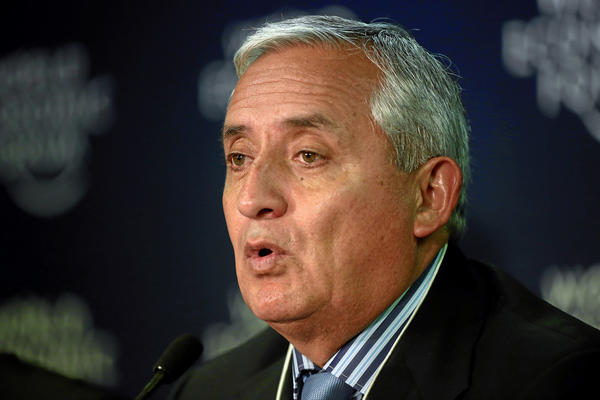
Guatemala Otto Pérez Molina President / Photo credit: World Economic Forum / Foter.com / CC BY-NC-SA

Guatemalan President Otto Pérez Molina / Photo credit: World Economic Forum / Foter.com / CC BY-NC-SA

President Pérez Molina’s second annual report to the nation last week at Guatemala’s National Theater featured statistics on the government’s progress, but it may be better remembered for an incident in which a protester threw white powder in the face of Vice President Roxana Baldetti.  A number of opposition deputies boycotted the session, and protestors outside drew headlines.  The President touted specific accomplishments, but his overarching plans –structured in three “pacts” welcomed even by the opposition – have fallen short of expectations.

  • The President in his speech said malnutrition has declined, but critics say that the Zero Hunger Pact is mostly unimplemented and chronic malnutrition persists. National surveys and several studies report that half of all Guatemalan children face a life with deficits in their abilities to learn and be competitive.
  • The Security, Justice and Peace Pact – expected to be a strong point for a former Guatemalan army general with a reputation as an “iron fist guy” – has fallen short.  Pérez Molina said the national homicide rate has dropped from 39 to 34 per hundred thousand inhabitants, but the National Institute of Forensic Sciences has reported a slight increase in murders in the capital and surrounding area.  Crime and insecurity remain a daily reality for Guatemalans, fueling popular frustration that Pérez Molina is not meeting one of his top campaign promises.
  • The Fiscal Pact for Change is also not delivering desired results.  According to Icefi, public finances are in crisis, not because of an external economic shock (2009-2010) or because tax reforms failed to increase revenues (corporate taxes rose 35 percent in 2013).  Rather, corruption is fueling fiscal shortfalls. According to President Pérez Molina and in Vice-President Baldetti’s own words, the influence of organized crime over the Customs System, whose duties and VAT on imports account for one third of Guatemalan tax revenues, is hampering collection.

For a student, a bad grade on a mid-term exam is an alert that things are not going well – but that a serious effort in the second half can save the course and achieve success.  For Pérez Molina, serious effort from now on is going to require more than a speech and applause at the National Theater.  The final exam for him and his government looms large on the horizon: elections will take place in September 2015, and campaigning will be well advanced in 2014. Voters are influenced by their daily reality, not an official report of success and accomplishments more reminiscent of Alice in Wonderland than real life Guatemala.  The President knows the clock is ticking.

Ricardo Barrientos is a senior economist at the Central American Institute for Fiscal Studies (Icefi).

Turning the Tide on Deportations?

By Dennis Stinchcomb

Photo courtesy of ICE

Photo courtesy of ICE

U.S. Customs and Immigration Enforcement (ICE) recently released statistics showing that deportations in fiscal year 2013 hit an all-time low since Obama took office in 2009, but the drop is apparently not yet a harbinger of a policy shift.  Removals fell slightly from a record high of 410,000 in 2012 to just under 370,000.  News of the first decline during Obama’s tenure comes as he has been under growing pressure from immigration advocates and some members of Congress to use his executive powers to bring removals to a halt.  But the slight decline can be attributed to several factors:

  • First, the administration has encouraged the use of “prosecutorial discretion,” which is the agency’s authority to enforce the law against a particular individual as it wishes, and has prioritized the deportation of violent criminal offenders and others deemed to be “national security threats.”  The removal of convicted criminals – a category that conflates those convicted of aggravated felonies and misdemeanor crimes – is more time- and resource-intensive, thus reducing the overall total of deportees.
  • A demographic shift in recent border crossers has contributed to the decline.  In fiscal year 2012, 71,527 of the recent border crossers removed by ICE were from countries other than Mexico (i.e., Central America).  In fiscal year 2013, this number rose by 27 percent to 90,461.  According to ICE, this triggered an increase in the use of ICE’s detention and removal resources because the U.S. Customs and Border Patrol, responsible for many deportations, is only able to return individuals to Mexico.  (In 2010, Guatemalans represented 9 percent (or 29,378) of deportees; in 2013, they made up 13 percent (or 47,769) of all removals. Much the same can be said for Honduras and El Salvador.)
  • The president’s Deferred Action for Childhood Arrivals (DACA) policy has also reduced deportation figures by granting reprieves to more than 450,000 of the “Dreamers.”

Though positive, the relatively small decrease does little to offset the Obama administration’s staggering deportation totals – 1.8 million since February 2009.  Nor does it signal an attempt to reverse course in light of the rapidly approaching 2 million mark.  The Obama administration is undoubtedly walking a political tightrope on the issue.  It is pressured by the right not to appear lax on enforcement, while many on the left want the president to sidestep a deadlocked Congress and loosen up on removals – a move Obama himself has characterized as executive overreach.  As the deportation rate remains steady, Obama risks eroding the support of Latinos, an increasingly powerful segment of the electorate.  So pervasive is the fear of deportation that, in a recent survey conducted by the Pew Research Center, a majority of Latinos said protection from deportation was more important than a pathway to citizenship.  This would suggest that lawmakers might eventually be open to allowing undocumented immigrants to attain legal status even without a chance to naturalize.  Some 205,000 U.S. citizen children lost a parent because of deportations between July 2010 and September 2012 alone, and a growing number of them face the prospect of having to accompany a deported parent back to Central America, potentially increasing the political urgency for a fix to the country’s broken immigration system.

Brazilian Presidential Election: Challenging a Divided Society

By Luciano Melo

Dilma Rousseff | Photo credit: Office of Governor Patrick / Foter.com / CC BY-NC-SA Aécio Neves | Photo credit: Agência Senado / Foter.com / CC BY-NC Marina Silva | Photo credit: BrasilemRede / Foter.com / CC BY-SA

Dilma Rousseff | Photo credit: Office of Governor Patrick / Foter.com / CC BY-NC-SA
Aécio Neves | Photo credit: Agência Senado / Foter.com / CC BY-NC
Marina Silva | Photo credit: BrasilemRede / Foter.com / CC BY-SA

The Brazilian presidential elections are nine months off, but President Dilma’s adversaries are starting to present more clear and consistent visions of their values and positions.

  • Aécio Neves, from the main opposition PSDB, was a successful governor of the state of Minas Gerais and is currently a well-respected senator in Brasilia.  But his party has long suffered from “oppositional apathy” – the inability to position themselves as a real alternative.  This weakness appeared when former Ministry of Health José Serra was the party’s candidate in 2010.  Now, in opposition to the highly criticized welfare state represented by Dilmas’s Workers Party (PT), Neves has been defending a liberal (or more libertarian) state that will not stand in the way of people’s initiatives.
  • On the other side of the spectrum is the unlikely coalition represented by a former senator and minister in the Lula administration, Marina Silva.  She is a leader of the PSB party, and she earned a strong reputation for fighting for environmental protection alongside assassinated Brazilian hero Chico Mendes and for resigning as Minister of Environment over disagreements with the PT policies.  Marina Silva brings a certain gravitas and edge to the alliance, which, as a former ally of PT, has never differentiated itself well as a real competitor.

Neves and Silva are seen as possible game changers, but no one is under the illusion that it will be easy to surpass Dilma.  Her popularity has been steadily increasing since she stood up against the NSA’s spying activities, and she still benefits from the PT’s popular welfare policies.  The latest polls show that 67 percent of Brazilian Facebook users disapprove of the current government, but Dilma’s primary support remains from the poorer states located in the Northern and Northeastern regions, where the main beneficiaries of PT social programs live.  Neves is the clear representative of the frustrated middle class that was behind large protests in July, and it is behind the current social media campaigns attacking Dilma and the corruption perpetrated by PT’s leaders.  Marina Silva and coalition leaders, also representing those regions, would have to strategically target swing voters in order to obtain a larger margin in the next elections.  At this early moment, Dilma seems to have a good chance of obtaining a second term – but leading a highly divided society, with a middle class unwilling to accept excuses for poor results in the economy, education and security.

What does the New Year hold for Latin America?

We’ve invited AULABLOG’s contributors to share with us a prediction or two for the new year in their areas of expertise.  Here are their predictions.

Photo credit: titoalfredo / Foter.com / CC BY-NC-SA

Photo credit: titoalfredo / Foter.com / CC BY-NC-SA

U.S.-Latin America relations will deteriorate further as there will be little movement in Washington on immigration reform, the pace of deportations, narcotics policy, weapons flows, or relations with Cuba.  Steady progress toward consolidating the Trans-Pacific Partnership (TPP), however, will catalyze a shared economic agenda with market-oriented governments in Chile, Mexico, Peru and possibly Colombia, depending on how election-year politics affects that country’s trade stance.

– Eric Hershberg

The energy sector will be at the core of the economic and political crises many countries in the Americas will confront in 2014.  Argentina kicked off the New Year with massive blackouts and riots.  Bolivia, the PetroCaribe nations, and potentially even poster child Chile are next.

– Thomas Andrew O’Keefe

Unprecedented success of Mexico’s Peña Nieto passing structural reforms requiring constitutional amendments that eluded three previous administrations spanning 18 years, are encouraging for the country’s prospects of faster growth.  Key for 2014: quality and expediency of secondary implementing legislation and effectiveness in execution of the reforms.

– Manuel Suarez-Mier

Mexico may be leading the way, at least in the short term, with exciting energy sector reforms, which if fully executed, could help bring Mexico’s oil industry into the 21st Century, even if this means discarding, at least partly, some of the rhetorical nationalism which made Mexico’s inefficient and romanticized parastatal oil company – Petróleos Mexicanos (PEMEX) – a symbol of Mexican national pride.  Let’s see if some of the proceeds from the reforms and resulting production boosts can fortify ideals of the Mexican Revolution by generating more social programs to diminish inequality, and getting rid of the bloat and corruption at PEMEX.

– Todd Eisenstadt

Brazil is without a doubt “the country of soccer,” as Brazilians like to say.  If Brazil wins the world cup in June, Dilma will also have an easy win in the presidential elections.  But if it loses, Dilma will have to deal with new protests and accusations of big spending to build soccer fields rather than improving education and health.

– Luciano Melo

Brazilian foreign policy is unlikely to undergo deep changes, although emphasis could shift in some areas.  Brazil will insist on multilateral solutions – accepting, for example, the invitation to participate at a “five-plus-one” meeting on Syria.  The WTO Doha Round will remain a priority.  Foreign policy does not appear likely to be a core issue in the October general elections.  If economic difficulties do not grow, Brazil will continue to upgrade its international role.

– Tullo Vigevani

In U.S.-Cuba relations, expect agreements on Coast Guard search and rescue, direct postal service, oil spill prevention, and – maybe – counternarcotics.  Warming relations could set the stage for releasing Alan Gross (and others?) in exchange for the remaining Cuban Five (soon to be three).  But normalizing relations is not in the cards until Washington exchanges its regime change policy for one of real coexistence.  A handshake does not make for a détente.

– William M. LeoGrande

A decline in the flow of Venezuelan resources to Cuba will impact the island’s economy, but the blow will be cushioned by continued expansion of Brazilian investment and trade and deepened economic ties with countries outside the Americas.

– Eric Hershberg

In a non-election year in Venezuela, President Maduro will begin to incrementally increase the cost of gasoline at the pump, currently the world’s lowest, and devalue the currency – but neither will solve deep economic troubles.  Dialogue with the opposition, a new trend, will endure but experience fits and starts.  The country will not experience a social explosion, and new faces will join Capriles to round out a more diverse opposition leadership.  Barring a crisis requiring cooperation, tensions with the United States will remain high but commerce will be unaffected.

– Michael McCarthy

Colombia’s negotiations with the FARC won’t be resolved by the May 2014 elections, which President Santos will win easily – most likely in the first round.  There will be more interesting things going on in the legislative races.  Former President Uribe will win a seat in the Senate.  Other candidates in his party will win as well – probably not as many as he would like but enough for him to continue being a big headache for the Santos administration.  Colombia’s economy will continue to improve, and the national football team will put up a good fight in the World Cup.

– Elyssa Pachico

Awareness of violence against women will keep increasing.  Unfortunately, the criminalization of abortion or, in other words, forcing pregnancy on women, will still be treated by many policy makers and judges as an issue unrelated to gender violence.

– Macarena Saez

In the North American partnership, NAFTA’s anniversary offers a chance to reflect on the trilateral relationship – leaving behind the campaign rhetoric and looking forward. The leaders will hold a long-delayed summit and offer some small, but positive, measures on education and infrastructure. North America will be at the center of global trade negotiations.

– Tom Long

The debate over immigration reform in Washington will take on the component parts of the Senate’s comprehensive bill. Both parties could pat themselves on the back heading into the mid-term elections by working out a deal, most likely trading enhanced security measures for a more reasonable but still-imposing pathway to citizenship.

– Aaron Bell

The new government in Honduras will try to deepen neoliberal policies, but new political parties, such as LIBRE and PAC, will make the new Congress more deliberative. Low economic growth and deterioration in social conditions will present challenges to governability.

– Hugo Noé Pino

In the northern tier of Central America, despite new incoming presidents in El Salvador and Honduras, impunity and corruption will remain unaddressed.  Guatemala’s timid reform will be the tiny window of hope in the region.  The United States will still appear clueless about the region’s growing governance crisis.

– Héctor Silva

Increased tension will continue in the Dominican Republic in the aftermath of the Constitutional Tribunal’s decision to retroactively strip Dominicans of Haitian descent of citizenship.  The implementation of the ruling in 2014 through repatriation will be met with international pressure for the Dominican government to reverse the ruling.

— Maribel Vásquez

In counternarcotics policy, eyes will turn to Uruguay to see how the experiment with marijuana plays out. Unfortunately, it is too small an experiment to tell us anything. Instead, the focus will become the growing problem of drug consumption in the region.

– Steven Dudley

Eyeing a late-year general election and possible third term, Bolivian President Evo Morales will be in campaign mode throughout 2014.  With no real challengers, Morales will win, but not in a landslide, as he fights with dissenting indigenous groups and trade unionists, a more divisive congress, the U.S., and Brazil.

– Robert Albro

In Ecuador, with stable economic numbers throughout 2014, President Rafael Correa will be on the offensive with his “citizen revolution,” looking to solidify his political movement in local elections, continuing his war on the press, while promoting big new investments in hydroelectric power.

– Robert Albro

Determined to expand Peru’s investment in extractive industries and maintain strong economic growth, President Ollanta Humalla will apply new pressure on opponents of proposed concessions, leading to fits and starts of violent conflict throughout 2014, with the president mostly getting his way.

– Robert Albro