ALBA’s Future: Continuity or Break Down?

By Marcela Torres

ALBA Emblem | public domain

ALBA Emblem | public domain

The death of Hugo Chávez last March and the increasingly severe economic dislocations inside Venezuela have raised serious questions about the sustainability of the Bolivarian Alliance for the Peoples of the Americas (or ALBA).  Born out of an agreement between the Venezuelan and Cuban governments in 2004, the alliance was intended as a response to the U.S. goal of a Free Trade Area of the Americas (FTAA), as well as a vehicle for Chávez to project his Bolivarian vision for Latin American solidarity around a socialist project.  The regional bloc won its first symbolic battle at the Fourth Summit of the Americas in 2005, where Argentina, Brazil, Uruguay, and Paraguay definitively halted negotiations led by U.S. allies to create a single hemispheric free trade area (excluding Cuba, of course).  Over time, ALBA and its oil-based extension, Petrocaribe, have had a significant impact on economies in the region, providing crucial underpinning for presidents who signed on to Chávez’s vision for ideological or pragmatic reasons.  Among the greatest beneficiaries have been the Castro government in Cuba and the Ortega government in Nicaragua, which have received petroleum in exchange for food, in the case of Nicaragua, and doctors and teachers, in the case of Cuba. Ecuador and Bolivia, along with several states in the greater Caribbean, have also become key players in the ALBA network.

Venezuela’s leadership of ALBA, frequently described as “petro diplomacy,” has repeatedly come under fire from the country’s political opposition and from government critics in other ALBA-friendly nations.  The critiques in Venezuela rarely acknowledge the degree to which petro diplomacy has been a recurring feature of that country’s foreign policy, most notably during the governments of Carlos Andrés Pérez in the 1970s and 1980s.  Critics inside Venezuela and beyond frequently accused Chávez of building dependent clientelistic networks with countries desperate for energy resources. However, ALBA activities have transcended ideological divides, a fact demonstrated by Misión Milagro in Colombia, where Cuban doctors indirectly supported by Venezuela provide medical services in conflict zones.  If Chavez’s oil and charisma initially defined ALBA’s possibilities, the alliance has also fostered economic ties and investments among member countries, independent from Venezuela.

Though the election of Nicolás Maduro as Chávez’s successor might appear to guarantee political continuity, lacking Chávez’s charisma, Maduro might not be able to continue Chávez’s level of oil-fueled investment in ALBA.  Public spending in Venezuela continues to increase dramatically, with the fiscal deficit at 9-12 percent, inflation exceeding 40 percent, and the scarcity of dollars contributing to shortages of basic consumer goods.  To sustain its financial backing for ALBA, Maduro will have to stabilize the economy at home lest he lose the  popular legitimacy — no simple challenge.  Following the Twelfth Presidential Summit of ALBA in July, the presidents of Ecuador, Bolivia and Nicaragua joined Maduro in reaffirming their shared commitment to a socialist project in the region and a desire to maintain the international exchanges initiated by Chávez, suggesting that the alliance will not disappear at least in rhetoric in the medium term.  It is possible, however, that Maduro’s leadership will be challenged.  After the airplane in which Bolivian President Evo Morales was traveling was not allowed to land in France and Portugal this summer,  he proposed creating an ALBA army and convening another anti-imperialist summit.  Recently re-elected Rafael Correa of Ecuador has also hinted he might want to lead ALBA.  Without Venezuelan oil and sweeteners like Petrocaribe, it’s hard to see how ALBA will amount to more than a platform for personalistic agendas.


September 11 Coup in Chile: Global Ramifications

By Eric Hershberg

Chilean Grape export photo by Dick Howe Jr CC-BY-NC Flickr / Indictment of Pinochet, Photo by a-birdie CC-BY-NC Flickr

Chilean Grape export photo by Dick Howe Jr CC-BY-NC Flickr / Indictment of Pinochet, Photo by a-birdie CC-BY-NC Flickr

In Washington last week many events recalled the bloody coup of September 11, 1973, which overthrew the Popular Unity government of Chilean Socialist President Salvador Allende and ushered in a dictatorship that, even by South American standards of the time, stood out for its brutality.  Discussion about “the other September 11” highlighted the human cost of the coup, the role of U.S. government agencies in undermining Chilean democracy and encouraging the military’s actions, and the memories of the coup and dictatorship that remain deeply embedded in Chile today.  These and similar gatherings around the world and in Chile featured demands for the full truth about the dictatorship’s crimes – the fate of some thousand of the disappeared remains unknown today, according to the Human Rights Observatory of the Diego Portales University – and to hold those who committed them fully accountable.

The coup led by General Augusto Pinochet destroyed Latin America’s longest standing democratic regime and ended a unique experiment testing the proposition that electoral democracy could catalyze a transition to socialism.  In Chile, the coup initiated 17 years of military rule grounded in state-sponsored violence, but it also resonated far beyond that country’s borders, marking a watershed in global affairs.  To this day how people around the world conceive fundamental issues of political change, economic development and human rights is affected by September 11, 1973.  These broader legacies were the focus of a panel discussion at American University, co-sponsored by the Center for Latin American Studies and the Washington College of Law, this week.  (Click here for details.)

We can now see three large sets of consequences that the Chilean coup had far beyond its borders. 

Political:  Across Southern Europe, it reverberated powerfully, undermining the confidence of sectors of the Left that believed fervently a socialist transition could be effected through victory at the ballot box.  After the coup, Eurocommunists in Italy and Spain came to believe that victory would require an alliance with Christian Democrats or other centrists, lest a coup coalition akin to that in Chile bring down democracy altogether. For much of the Latin American left, the Chilean experience would over time prove a wake-up call, alerting those aspiring to turn the world upside down that democracy was not a mere bourgeois luxury and suggesting that “second-best” options – more gradual change –were preferable to maximalist goals that would likely jeopardize democracy.

Economic: The coup paved the way for “neoliberal” policies that would shake the foundations of conventional thinking about development for nearly three decades.  They were prescribed across Latin America.  It would not be until the emergence of ALBA in the mid-2000’s that the region would again witness a faith (however misguided), in the capacity of import-substitution and inward-oriented redistribution to achieve lasting economic advance in the region. 

U.S. policy:  Finally, the coup set in train levels of violence and human rights abuses so abhorrent that they drove major changes in U.S. human rights policy and international jurisprudence.  In the United States, advocacy organizations, progressive majorities in Congress, and the Carter Administration introduced unprecedented legislation aimed at preserving democracy and curbing human rights abuses.  Well beyond Washington, numerous international regimes put in place to combat impunity were motivated and influenced by what had taken place in Chile and the imperative of ensuring that it not happen again.  

Just as the cataclysmic event that took place in the U.S. on 9/11/01 opened the door to extreme and ongoing changes felt around the world, so too did the Chilean tragedy that began on 9/11/73.

The Danger of Dependence: Cuba’s Foreign Policy After Chávez

By William M. LeoGrande, World Politics Review

Photo credit: ¡Que comunismo! / Foter.com / CC BY-NC-SA

Photo credit: ¡Que comunismo! / Foter.com / CC BY-NC-SA

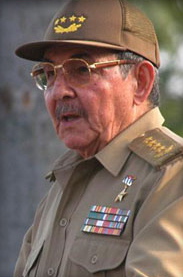
On March 8 in Caracas, Raúl Castro, looking somber, stood in a place of honor beside Hugo Chávez’s casket during the late Venezuelan president’s state funeral. Castro was no doubt pondering what Chávez’s death means for Cuba’s ambitious economic reform program — or “updating” of the economic model, as Cubans prefer to call it. Not long after Chávez’s first election victory in 1998, he and Fidel Castro signed the first of what would become more than 100 bilateral cooperation agreements. By the time Chávez died, Venezuela was providing Cuba with some 110,000 barrels of oil daily at subsidized prices, worth $4 billion annually and representing two-thirds of Cuba’s domestic oil consumption. In exchange, Cuba provided some 40,000 skilled professionals, working mostly in health, enabling Chávez to extend health care into the poor barrios of Venezuela, thereby solidifying his political base.

With the Venezuelan economy foundering under a huge fiscal deficit, will Chávez’s successor continue this barter arrangement on the same preferential terms? If not, will the resulting oil shock derail Raúl Castro’s plan to move Cuba from a hyper-centralized planned economy, which even its architect Fidel Castro admitted no longer works, to a socialist market economy modeled on Vietnam and China?

Full article available on the World Politics Review site.

Chávez’s Passing: In the Hemisphere’s Words

"Chavez" | by Donmatas1 | Flickr | Creative Commons

Chavez | by Donmatas1 | Flickr | Creative Commons

Below are excerpts from statements made by leaders of the Western Hemisphere upon learning of the passing of Venezuelan President Hugo Chávez.  The tone of the U.S. President and Canadian Prime Minister’s remarks is different from the Latin Americans’.

Barack Obama (U.S.A.)
“As Venezuela begins a new chapter in its history, the United States remains committed to policies that promote democratic principles, the rule of law, and respect for human rights.”

Stephen Harper (Canada)
” I would like to offer my condolences to the people of Venezuela on the passing of President Chávez.

“Canada looks forward to working with his successor and other leaders in the region to build a hemisphere that is more prosperous, secure and democratic.

“At this key juncture, I hope the people of Venezuela can now build for themselves a better, brighter future based on the principles of freedom, democracy, the rule of law and respect for human rights.”

Enrique Peña (México)
“Lamento el fallecimiento del Presidente Hugo Chávez. Mis más sentidas condolencias a su familia y al pueblo venezolano”.

Ollanta Humala (Perú)
“Adiós Comandante y amigo Hugo Chávez. Mis sentidas condolencias a su familia y a todo el pueblo venezolano”.

Ricardo Martinelli (Panamá)
“Deseamos expresarle nuestro pésame al Pueblo Venezolano y a la Familia Chávez por el sensible fallecimiento del Presidente Hugo Chávez”.

Evo Morales (Bolivia)
“Duele, pero también queremos decir a los pueblos, fuerza y unidad ahora más que nunca. Estamos destrozados”.

Juan Manuel Santos (Colombia)
“Lamento profundamente la muerte del presidente de Venezuela Hugo Chávez Frías. Nuestras sinceras condolencias”

Dilma Rousseff (Brasil)
“Estamos de luto por la pérdida de un gran amigo. Va a dejar un hueco en ‘la historia y en las luchas’ de América Latina”.

Sebastián Piñera (Chile)
“Fue un hombre profundamente comprometido con la integración de América Latina. …  Sin duda teníamos diferencias, pero siempre supe apreciar la fuerza, el compromiso y la voluntad con la cual el Presidente Chávez luchaba por sus ideas”.


Venezuela: A New Start?

By Fulton Armstrong and Eric Hershberg

Memorial for Hugo Chavez | by Steve Rhodes | Flickr | Creative Commons

Memorial for Hugo Chavez | by Steve Rhodes | Flickr | Creative Commons

The death of President Hugo Chávez yesterday, as has been duly noted, marks the beginning of a new era – new opportunities and new challenges – for Venezuela.  In view of the country’s history and institutional weaknesses through the 1990s, some of the convulsions of his 13 years in power may have been inevitable, but the need is now compelling, across the political spectrum, to take a sober look at the future, set aside some of the stalemated grudge matches, and get serious about becoming something better.

It’s easy to predict at least some short-term instability, bombastic rhetoric, and jejune nationalism, such as some fringe Chavistas’ allegation that the United States was responsible for Chávez’s death.  It’s harder for Venezuelans and outsiders alike to figure out how this country, hindered by the original sins that plague all rentier economies, learns how to do politics in a transparent, inclusive manner.  For analysts like us, the key thing is to set aside wishful thinking and keep our eye on the fundamental drivers of change.  Some thoughts:

  • For better or worse, Chávez had an impact that – if not as transcendental as he wished – dismantled the key institutional pillars of the sclerotic Venezuelan political system.  Beyond that, his legacy includes the profound and intentional division of Venezuelan society and politics into two camps – a tense split that did not exist (or was sublimated) 20 years ago and will take a long time to heal, as has the cleavage around Peronism in Argentina.  Like Peronism, over time chavismo need not necessarily have a standard left-right quality, and it is likely to retain a cult around Chávez’s persona, larger in death than in life.  Evita a la venezolana.
  • Chávez wasn’t the regional or global threat that the Bush Administration made him out to be, but he did open space for a particular species of Latin American populism – call it radical, “socialist,” or clientelist – that coincided with a broader U.S. withdrawal from Latin America.  Few observers could have imagined that this former military colonel – a failed putschist – could capitalize on the region’s crisis of representation and development to bring about the emergence and prosperity of the ALBA coalition and the identities it fostered.  The lifeline of petro-dollars that Chavez opened, a tool that, it is often forgotten, had been deployed by previous Venezuelan governments to gain outsize presence on the international stage, explains some of his influence, but his forceful personality and the siren song of his peculiar Bolivarian ideology multiplied his impact.  His model was not replicated elsewhere, but his fervent regional pride was.
  • Chavez’s successors, of any political stripe, will test Washington’s capacity to keep its hands off.  Venezuela – even the opposition – has changed, and United States policymakers will hear rhetoric and see things, such as a relationship with Cuba that’s likely both to shape and to survive both countries’ transitions, that will test their self-discipline.  Chávez is gone, and chavismo, though certain to endure, will inevitably change.  But Venezuela’s need for space – space granted by its neighbors and the United States – to grow and even make mistakes remains a constant.  Over the 15 years in which Chávez dominated the scene, from his first election in 1998, Washington sometimes resisted the temptation to play into the game, but more than occasionally took the bait.  Washington has often misread Latin America and, by endorsing the 2002 coup against Chávez and other actions, actually strengthened the Venezuelan president domestically and regionally.  Chávez’s passing presents an opportunity for a fresh start for the United States, too.

High Time for a U.S.-Bolivia Reset

By Rob Albro, CLALS Faculty Affiliate

President Evo Morales in a climate meeting at the University of Oslo | by Utenriksdept | Flickr | Creative Commons

President Evo Morales in a climate meeting at the University of Oslo | by Utenriksdept | Flickr | Creative Commons

Little has changed in the U.S-Bolivia relationship since each expelled the other’s ambassador and suspended full diplomatic ties in 2008.  Last month a Bolivian official accused the United States of trying to sabotage the administration of President Evo Morales, and Morales has not dropped his pugnacious anti-U.S. rhetoric.  Washington, for its part, has persistently criticized Bolivian anti-drug policies, while not acknowledging the failures of its own decades-long “war on drugs.”  As discussions surrounding Secretary of State Kerry’s January 24 confirmation hearing suggested, U.S. policy toward several Latin American countries – including Bolivia – is still on Cold War autopilot, continuing to use code-words like “socialism,” implicitly and incorrectly viewing the recent and historic changes in that country largely through the prisms of Venezuela and Cuba.

Along with many observers outside of Washington, the Bolivian government understands itself to be addressing long-standing demands to correct a historical lack of social inclusion, to institute a more participatory (and “plurinational”) democratic process, and to pursue economic sovereignty.  In notable contrast to Venezuela, with which Bolivia is often lumped together, the country’s long-marginalized indigenous majority is in the national political driver’s seat for the first time.  Despite Morales’s rhetoric to the contrary, Bolivia is far from rejecting the free market. It recently applied for full participation in MERCOSUR, and has welcomed foreign investment in its sizable petroleum and lithium deposits. Along with Peru and Ecuador, Bolivia has also sought ways to maintain economic growth while protecting the environment and avoiding unsustainable extractivist policies.  Bolivia’s is a hybrid approach: mixing an alternative democratic tradition domestically with the promotion of Bolivia Inc. globally.

It is past time for Washington to move on from its one-size-fits-all approach toward Andean countries, and to take more seriously the perspectives and priorities of their peoples and governments.  And Bolivia’s recent history provides ample opportunity for the U.S. to identify common – if not identical – ground.  Morales’s frequent statement that Bolivia is looking for “partners, not bosses” echoes President Obama’s own 2009 speech about “partnership” in our hemispheric “neighborhood.” Obama’s recent inaugural call for more effective “collective action” resonates with the spirit of Bolivia’s ongoing plurinational democratic experiment.  And if climate change is back on the U.S. political agenda, Bolivia continues to be a global catalyst for this important multilateral discussion. Emphasizing these shared problems, experiences, and aspirations, can provide a foundation for closer relations.

Cuba: Change in the Wind

Three American University professors recently traveled to Cuba for research and discussions on Cuba’s reform process – called “Updating Socialism” – and the island’s relations with the United States.  Today’s entry looks at the economic changes.

Photo by: Globovisión | Flickr | Creative Commons

Photo by: Globovisión | Flickr | Creative Commons

In offices, shops and on the street in Havana, “change” seems to be one of the most commonly used words.  Billboards proclaim “The changes in Cuba are for more socialism” and “Updating socialism is the answer.”  But the words “reform” and – in some conversations – “privatization” pop up with significant frequency.  Party members previously reluctant to talk about change now speak of introducing “elements of capitalism” to make Cuba a “mixed economy” patterned closely after the “Vietnam model,” with its economic loosening but one-party rule.  Previous reforms have brought better, if sometimes expensive, food to many Cuban dinner tables, but the strong consensus in and outside the party is that a lot more needs to be done.

  • The law-decree on “non-agricultural cooperatives” provides a politically correct way ahead for the formation of small and medium private enterprises.  Cuentapropistas were given a prominent place in the May Day parade, and some are being nominated for office on the Communist Party slate.
  • The government is making another run at tearing down the barriers between hard-currency and peso purchases, with an eye to unifying the currency in the future.  Price tags at at least one major Havana store list prices in both convertible and national currency, at a 23-to-one conversion rate.
  • The law already allows Cubans to hire workers – a right previously given only to the state – and a draft labor law will further legalize private workers’ activities and integrate them into the economy.
  • Some 200-plus state enterprises are being put on a sink-or-swim program in which new management selected by the workers will be given a year to transform the firms into businesses closely resembling private cooperatives.
  • In January, the National Assembly will take up amendments to foreign investment laws.  Under consideration are direct foreign sales to non-state cooperatives and the direct hiring, firing, and paying of Cuban workers by foreign companies.
  • The travel reform law that goes into effect on January 14, ending the necessity for an exit visa and removing restraints on most Cubans from obtaining a passport, will also stimulate interaction with foreign countries.

The macro situation is still a mess, and the reforms have a long way to go to attain even the level of Vietnam’s prosperity.  Cuban stores sell Vietnamese cookies, not vice versa.  As the rhetoric indicates, the government – long expert at managing popular expectations – continues to emphasize continuity as the changes proceed.  But while no one is expecting a fast shift to capitalism, many middle-aged and elderly Cubans have a renewed sense of hope that life ahead will be better, which has political benefits and risks for the government.  One thing for sure is that the socialism that is being “updated” is a far cry from the communism that Cuba attempted in the 60s, 70s and 80s.

ALBA’s Low Expectations for U.S. Election

Discussion of the U.S. election in  the countries roughly aligned under the banner of the “Bolivarian Alliance” (ALBA) – Venezuela, Bolivia, Ecuador and Argentina – generally reflects their own polarized domestic politics.  In Venezuela, comparisons between the two countries electoral campaigns were common.  Washington-based commentator Moisés Naím suggested that Romney could learn from Venezuelan Presidential candidate Capriles’s empathy and inclusiveness in order to unseat Obama.  Andrés Correa ripped President Obama, saying he needs to take Chávez more seriously and needs “an atlas and a compass so he can figure out where he is and come to understand that the United States has more connections with Latin America than with any other part of the world.”  In a column that appeared in several countries, Argentine Ricardo Trotti praised the civic spirit of the first U.S. Presidential debate, and took Chávez, Bolivia’s Evo Morales, Nicaragua’s Daniel Ortega, Ecuador’s Rafael Correa, and Argentina’s Cristina Fernández to task for not engaging in debates.  “The fear of debating implies a fear of democracy,” he wrote.  In Nicaragua, former education minister Humberto Belli Pereira made a similar point in La Prensa, as did a commentator in Bolivia’s El Deber.

Mitt Romney’s criticism of Obama as being naïve about the pernicious influence of the “failed ideology” of Venezuelan President Hugo Chávez and Cuba’s Castro brothers attracted wide coverage throughout the region – with predictable reactions from each side.  In ALBA countries, opposition media evinced skepticism of Obama and appreciation for Romney’s promises to take a hard line against Chávez, and pro-government outlets portrayed the Republican as a loose cannon who trumpets Manifest Destiny and military options.  Chávez’s reference to Romney as “crazy” during the primaries set the tone for some media.  On Aporrea, a popular pro-Chávez online forum, one commentator said he preferred Clinton Eastwood’s empty chair to either Romney or Obama.  In Argentina, Martin Kanenguiser wrote in La Nación that his country could only “tie or lose” in the U.S. election, particularly in regard to the Argentine relationship with international financial institutions.  The 2011 elections in Argentina, followed by the U.S. 2012 contest, have contributed to a sour atmosphere for bilateral relations, noted Leandro Morgenfeld in Marcha.

That the U.S. election has become polarizing illustrates the challenges the new U.S. administration will face in 2013.  If Romney wins and follows through on his rhetoric, he might please hardliners in the U.S. and opposition groups in ALBA-aligned countries, but relations will become even more bitter.  If Obama is re-elected, those opposition groups will continue seeking support for their own agendas and pressure from Washington on ALBA governments. However, the dearth of high level attention would likely continue in a second Obama administration, leaving bilateral relationships to stagnate.  More likely, the real choice in U.S.-ALBA relations will be between empty rhetoric and deafening silence – while further exposing the limits of U.S. influence in the region.

Cuban National Assembly Takes Modest Steps on Reforms

Photo by Nathan Laurell via Flickr http://www.flickr.com/photos/nglklm/7146331353

Speaking to the two-day semi-annual session, President Raúl Castro reiterated the leadership’s commitment to undertaking the reforms outlined in the Sixth Party Congress last year.  He didn’t explicitly address concerns reported in international media that implementation of the reforms has been halting, but he announced several concrete steps to be undertaken this year.  Among them is the creation of non-agricultural cooperatives – allowing a new form of private enterprise in 222 business areas and announcing government loans for them – and greater decision-making autonomy for state enterprises.  The Assembly passed a new tax law, details of which have not yet been published.

Castro was a little defensive about the lack of an “updating of migration policy” – widely understood to include lifting the requirement for exit visas – while “ratifying the will of the Party and State leadership to carry out the reformulation.”

From the beginning of the current round of reforms, Raúl Castro and the Communist Party have cautioned that the changes will be introduced gradually and adjusted during implementation.  The credible reports of frustration with the pace of change notwithstanding, the National Assembly appears to have validated that getting the reforms “right” is more important than doing them fast.  The government probably calculates that the new cooperatives and tax law are important elements of an infrastructure for change, but slow or partial implementation will undermine them.  The perennial question remains whether the government’s concern with control discourages important energy among the individuals it is counting on building the new limited private sector.