Snowden’s Revelations Rile Latin America

"Snowden Day in Brasilia, Brazil" Photo credit: midianinja / Foter / CC BY-NC-SA

“Snowden Day in Brasilia, Brazil” Photo credit: midianinja / Foter / CC BY-NC-SA

Allegations by former U.S. intelligence officer Edward Snowden about U.S. operations in Latin America have stirred further recriminations toward Washington.  According to press reports, Snowden revealed that U.S. agencies monitored internet traffic, especially in Colombia (with a special focus on the FARC guerrillas), Venezuela, Brazil and Mexico.  The National Security Agency (NSA) allegedly spied on military procurement and the oil industry in Venezuela, as well as the energy sector and political affairs in Mexico.  The Huffington Post reported that almost every Latin American country was targeted to one degree or other.

Regional reaction has been strong:

  • O Globo (Brazil) columnists, claiming that Brazil was the most spied upon country in Latin America, called the surveillance a genuine invasion of privacy that undermines both Brazilian authorities and citizens.  Former President Cardoso said, “If such activities existed, if they were done, as with all espionage, it was outside the law.”  The Senate has already “invited” Cabinet ministers to testify – and they have pledged to investigate.  (It also invited U.S. Ambassador Tom Shannon, but he is under no obligation to appear before the Brazilian Congress.)
  • El Espectador (Colombia) said the U.S. spying was an attack on Colombian sovereignty.  It quoted various senators as saying that “one does not spy on one’s friends and even less when they’ve been political allies in big decisions between states” and demanding that the government limit such activities.  Foreign Minister Holguín sent a delegation to Washington to seek explanations.
  • Mexican President Peña Nieto called the U.S. spying “totally unacceptable,” and the opposition PRD has accused the government of being “too soft” in its response to the alleged espionage.
  • The ALBA countries have been strident.  Venezuelan President Maduro has demanded “answers and explanations, [and] more than explanations, apologies.”  Ecuadoran President Correa said “we will put up with no more abuses, arbitrariness, disrespect for human rights.”

The extent of U.S. intelligence operations will not be known for decades.  It took experts 30 years, for example, to pry loose information about the CIA’s role in the coup that brought Chilean strongman Pinochet to power.  But the tensions such allegations create do not fade rapidly.  Even accounting for hyperbole in political rhetoric, these protestations cannot be helpful to U.S. short-term efforts to win Latin American help in capturing Snowden, nor in long-term efforts to revive the Obama Administration’s stated goal of building “partnership” in the region.  Continued threats – thinly veiled – from unnamed senior U.S. officials also run counter to that goal of building partnership and the related objective of minimizing fallout from accusations of spying.
The Snowden Case: Provocations and Intimidation

By Fulton T. Armstrong

Edward Snowden / Photo credit: zennie62 / Foter / CC BY-ND

Edward Snowden / Photo credit: zennie62 / Foter / CC BY-ND

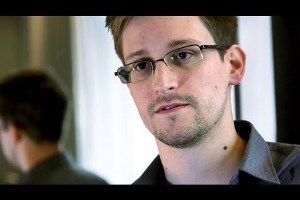
The rhetoric and diplomatic jostling surrounding the flight of American whistleblower (or, depending on perspective, criminal leaker) Edward Snowden have once again thrust to the fore Latin America and U.S. policy toward the region.  Some Latin American presidents have seemed to go out of their way to prick U.S. sensitivities, and Washington seems to have gone out of its way to stomp on Latin American sensitivities.  Both sides have been happy to live up to the caricatures of themselves held by the other, but both sides’ interests have been harmed in the process.

The drama started, of course, while Snowden was in hiding in Hong Kong, and it has dragged on as he’s resided in a transit lounge of the Moscow airport.  U.S. media, which in the past have published stories casting Cuba, Venezuela, Ecuador, and others as eager to poke the U.S. in the eye, ran pieces – shifting attention to Latin America – and away from China and Russia’s even bigger slap in Washington’s face in refusing to hand the leaker over.  Reporters believed their own rumors and piled into an Aeroflot plane bound for Cuba.  Washington rolled out the big guns, including Vice President Biden, to discourage the Latin Americans from offering Snowden any help – and seemed to have success.  Ecuador, which has protected Wikileaks boss Julian Assange from British, Swedish and U.S. pursuit, initially welcomed Snowden but, after a phone call from Washington, pointed out that an asylum petition could not be considered until he arrived in country.  The crisis between the U.S. and Latin America deepened, however, when several European countries – presumably responding to U.S. pressure and bad U.S. intelligence – closed their airspace to Bolivian President Morales, who someone, somewhere, suspected of flying Snowden out of Moscow on the president’s return home.  Latin American condemnation exploded.

Venezuelan President Maduro, stating that that he wanted “to protect this young man from the persecution unleashed by the world’s most powerful empire,” publicly offered Snowden asylum on Friday.  That move ended the slight progress Caracas and Washington had made toward rapprochement– evident since the OAS General Assembly in June – and bilateral relations will surely worsen.  But the Obama Administration’s relations with Latin America writ large don’t appear likely to fare much better.  Some leaders’ rhetoric may be over the top, but Washington’s language has been threatening, and its actions speak louder than its words.  An unidentified senior U.S. official told the New York Times that “there is not a country in the hemisphere whose government does not understand our position at this point,” adding that any aid for Mr. Snowden “would put relations in a very bad place for a long time to come.” Such statements leave one wondering whether we are approaching the point where this administration will cease proclaiming its commitment to a new era of US-Latin America relations characterized by partnership and respect among equals.  Transcripts of Mr. Biden’s calls will not be released, but rarely do countries reverse their positions publicly in the absence of either serious threats or generous inducements – and few clear-thinking Ecuadorans, tracking the Administration’s attitudes toward President Correa, see the latter as in the cards.  In pressuring its European allies to establish a no-fly zone to keep a head of state from returning home, Washington took an action that many Latin Americans – not without a grain of truth – believe it would never take against a region that it respected.  Repairing the damage of el asunto Snowden will be hard for both sides, but Washington has the bigger task ahead.


U.S. Credibility Takes Another Hit

By Fulton T. Armstrong

Photo credit: Chairman of the Joint Chiefs of Staff / Foter.com / CC BY

Photo credit: Chairman of the Joint Chiefs of Staff / Foter.com / CC BY

The domestic spying programs under the Bush and Obama Administrations further erode U.S. moral leadership in the hemisphere and probably beyond.  At crucial junctures since President Jimmy Carter made human rights a pillar of policy in Latin America, U.S. moral authority has been decisive in persuading regimes on the right and the left to open the way for pluralism and democracy.  Lecturing governments and militaries on the need to eschew torture, domestic spying, and other abuses, U.S. diplomats and politicians could have been charged with arrogance, but on these specific aspects of the U.S. government’s treatment of its own people, not serious hypocrisy. The U. S. had its racial and economic injustices, but trends were positive, and the country stood for the rule of law, skepticism of State Security officials’ penchant to use information for power, and a pretty solid respect for due process. Even before Carter, the Watergate scandal – and resulting resignation of the President and overhaul of the intelligence agencies – was a clarion signal that agencies created to monitor foreign affairs must keep their focus far off U.S. shores.

Latin American media have carried primarily factual stories revealing the “PRISM” program, which collects data from hundreds of millions of e-mails and other electronic communications each day and stores it for exploitation by targeters (now called “analysts”) on the lookout for alleged potential terrorists, based on secret profiling.  Some papers have reported that Director for National Intelligence Clapper lied to the U.S. Congress without batting an eyelash when asked directly if such activities were ongoing.  Coming after reports in recent years of the use of torture (and the impunity granted to the perpetrators), the so-called “extraordinary renditions” (and the cases in which kidnap victims were innocent), the use of “black prisons” (in which security services in new democracies were encouraged to circumvent their elected officials),drone attacks (even against U.S. citizens), and the continued detention of prisoners without trial at Guantanamo (giving human rights violations in Cuba a new meaning) have all been noted throughout Latin America.  PRISM may no longer be considered newsworthy.

The fact that British and American newspapers eventually brought the domestic spying programs to light may hearten some in Latin America, as evidence that an essential element of democracy – a probing press –shows signs of life despite reports of Justice Department harassment of the Associated Press and other media.  But sentient Latin Americans know the implications of PRISM – and what enterprising State Security “analysts” can do with years of data about even the most mundane aspects of potential targets’ lives.  The Obama Administration’s defense of PRISM as necessary to defend against supposed terrorists doesn’t sell well in a region that knows how information never sits unused.  The Bush Administration gave the Medal of Freedom to Colombian President Uribe, who deployed his secret intelligence agency to harass opponents and allowed his military to disappear thousands of youths.  The Obama Administration’s lectures to Venezuela, Nicaragua, Bolivia and Ecuador on the need to give more space to opponents – however warranted – ring sort of hollow when, in Latin Americans’ minds, it has nurtured its own Frankenstein state-security apparatus that lacks credible checks and balances.  Washington can argue that U.S. moral authority doesn’t matter, and that the “terrorist threat” it faces calls for extraordinary measures, but it will be a long time before an American statesman can wag his finger at a Latin American counterpart for doing the same thing.

U.S.-China: Competing over Central America and the Caribbean?

President Obama and President Chinchilla in Costa Rica | Photo by: The White House | Public domain

President Obama and President Chinchilla in Costa Rica | Photo by: The White House | Public domain

The recent visits to Central America, Mexico, and the Caribbean by Chinese President Xi Jinping and U.S. President Obama (and Vice President Biden to Trinidad and Tobago) suggest a handoff from Washington to Beijing of the role as the region’s sugar-daddy, but not a strategic shift in influence.  The presidents’ visits were similar in their innocuous itineraries.  Both got pompous welcomes; met with “real” citizens (Xi ate empanaditas de chiverre with a coffee farmer); and praised the bilateral relationships.  Both held sub-regional summits – Obama in San José and Xi in Port of Spain.  Both repackaged ongoing or recently negotiated projects as new “accords.”  Obama pledged another $150 million a year for funding the Central America Regional Security Initiative (CARSI), part of the strategy started under President Bush to counter the drug trade and related threats.  Xi got headlines in Costa Rica for providing more than $1.5 billion for refinery and road projects and to purchase replacement taxis and buses from Chinese manufacturers.  Significantly, China is also building Costa Rica’s new National Police Academy – the sort of project Washington used to thrive on.

President Chinchilla and President Xi Jinping | Photo credit: Presidencia de la República de Costa Rica / Foter.com / CC BY-NC-SA

President Chinchilla and President Xi Jinping | Photo credit: Presidencia de la República de Costa Rica / Foter.com / CC BY-NC-SA

Despite the similarities, the visits had different orientations and feel.  Xi’s principal task appeared to be to open his checkbook, while Obama’s main deliverable was a policy shift – the welcome word that Washington was pulling back from making its top regional priority the interdiction of narcotics produced in South America and transiting the isthmus on their way to consumers in the United States.  According to press reports, despite the continued CARSI funding, Obama had absorbed Costa Rican President Chinchilla’s complaint last year at a summit with Biden that it was unfair that Central Americans were dying in efforts to stop narcotics that Americans use.  The media tried to give the two presidents equal coverage, but the disparity became obvious.  The Chinese distributed copies of the China Daily (in English) even into the San José suburbs, whereas Obama didn’t need to do his own publicity.  Despite whiffs of resentment about airport and street closures, the papers covered all of Obama’s events with affectionate quotes from government and common folk alike – and showed people, including a kid dressed as Spider-Man, waving to his motorcade.  La Nación, on the other hand, reported that school children cheering a Chinese speaker couldn’t understand a word he was saying.

The goodies each president brought created little excitement – and no small amount of skepticism.  Important details about China’s offer to help repair the Costa Rican gasoline refinery remain unknown, and Chinese cars already have a bad reputation.  China’s handouts aren’t going to be turned down, of course, and Xi’s pledge to buy more Costa Rican coffee (now about 5 percent of what Japan buys) and to encourage Chinese tourists to travel to the country (now a micro-percentage of visitors) are welcome.  Obama’s CARSI funding looks like bureaucracy on autopilot.  Few Central Americans can cite concrete benefits from the seven-year-old Central American Free Trade Agreement (CAFTA) with the United States either, and the general impression – reinforced by Secretary Kerry’s recent reference to the region as the U.S. “backyard” – is that Washington is yielding the playing field to China.  But the natural ties and strategic mutual interests between Central America and the United States remain strong and give the United States, should it wish to fill it, ample space to play a positive role in the region’s future beyond programs on autopilot.

OAS Drug Report: Let’s Get Serious

The OAS Preparing their Report on the Drug Problem in the Americas | Photo credit: OEA - OAS | Foter.com | CC BY-NC-ND

The OAS Preparing their Report on the Drug Problem in the Americas | Photo credit: OEA – OAS | Foter.com | CC BY-NC-ND

The Organization of American States’ most recent report on the drug problem in the Americas – released last week in Bogotá – takes a fresh, analytical look at the issue and, by advocating discussion of new approaches, subtly signals the “war on drugs” so far has failed.  The report was mandated by hemispheric leaders last year at the Summit of the Americas in Cartagena, who “agreed on the need to analyze the results of the current policy in the Americas and to explore new approaches to strengthen this struggle and to become more effective.”  It takes an analytical approach toward drug-related problems in the hemisphere and includes a discussion of both the supply and demand factors of the drug trade.  (Click here to view the OAS documents.)

The report does not make bold policy recommendations.  It calls for greater attention to the public-health implications of the drug problem, but generally avoids advocating particular strategic solutions to the production, transportation and consumption of illegal narcotics, instead providing different scenarios for the evolution of the drug problem in the Americas.  It envisions the legalization of certain drugs, such as marijuana, in various countries, but makes clear that the OAS is not advocating legalization or decriminalization.  Instead, the report emphasizes the need for countries in the Western Hemisphere to work together to combat the drug problem and discuss new approaches.

The OAS’s unique status in the hemisphere – demands on its performance are high but support for its efforts  from key governments in the region is inconsistent – may not make it the best organization to take the lead on an issue as thorny as the “war on drugs.”  The increasingly clear consensus south of the Rio Grande is that the past couple decades of effort have been not been worth the cost in dollars and lost lives, and many Central Americans, in particular, believe the militarized approach has been disastrous.  Often criticized by U.S. politicians and bureaucrats, Secretary General Insulza was probably wise not to use the report to formalize the hemisphere’s rejection of Washington’s policies.  But moving the discussion to the analytical level – rather than parroting support for another Plan Colombia or Mérida Initiative – is a significant accomplishment in itself.  Rolling out the report in Bogotá, where talk of “new approaches” is also growing, probably helped strike the right balance between old and new.  In addition to platitudinous calls for regional cooperation, the OAS can demonstrate its leadership and relevance by channeling the criticism, the lessons learned, frustration with U.S. consumption, and regional governments’ prescriptions on the way ahead into a serious, constructive strategy for the hemisphere.  With this report, the OAS has indicated that it’s time to get serious about viable alternative solutions to this multi-faceted issue – and that clinging to old models and rejecting new ideas is no longer an acceptable response to calls for rethinking the “war on drugs.”

Chavismo Wins a Battle But the Tide May Have Turned

By Eric Hershberg

Inauguration of Nicolás Maduro | Photo credit: Presidencia de la República del Ecuador / Foter.com / CC BY-NC-SA

Inauguration of Nicolás Maduro | Photo credit: Presidencia de la República del Ecuador / Foter.com / CC BY-NC-SA

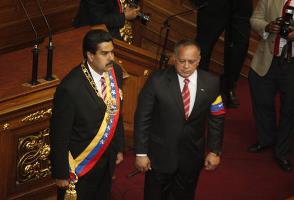
President Nicolás Maduro’s inauguration last Friday marked a new stage in the contest between chavistas and the Venezuelan opposition.  Maduro’s surprisingly weak showing at the polls – winning by a meager 1.8 percent margin despite the huge (and abused) advantages of incumbency – plus tensions within his party and his own rhetorical excesses, suggest that chavismo without Chávez confronts challenging odds.  Chávez attracted more votes alive than he could in death, as his hand-picked successor could not match his patron’s appeal at the ballot box.  Looking forward, Maduro and the Partido Unido Socialista de Venezuela (PSUV) will be judged on the basis of their performance.  The road ahead will not be easy for Maduro, as the government  confronts growing economic and security problems, and his ineffective campaign may energize potential competitors from within Chavismo.

Henrique Capriles’s strong showing in the election bodes well for the opposition.  However, athough Maduro’s blanket reference to them as “fascists” is absurd, their apparent eagerness to use the vote recount – reluctantly agreed to by the electoral council hours before Maduro’s inauguration – to remove him from office could breathe life into his allegation that the opposition consists of  golpistas obsessed with taking power.  Overreaching could be their undoing, as it has been in the past.

Latin American presidents, through a UNASUR statement of support and participation in the inauguration, have endorsed Maduro’s ascendance to the Presidency.  Their strong interest, for a variety of reasons, is in a balance between continuity and change in Venezuela. Although there are signs that both Chile and Colombia wavered momentarily, South American governments overall were united in their preference for a chavista government, as this would favor both  internal and regional stability.The United States, on the other hand, has appeared timid.  Maduro’s accusations of U.S. attacks on him and the presence of Iranian leader Ahmadinejad at the inauguration made it impossible for Washington to send a senior emissary to the swearing-in.  Yet the evident absence of the United States, even after the UNASUR endorsement, was petty.  Through statements calling for a recount of 100 percent of the votes both the State Department and the U.S. Ambassador to the United Nations came across as unable to outgrow a grudge match with Chávez or to grasp that the American position would isolate Washington once again from prevailing sentiment in South America.

There were two winners in the Venezuelan election:  Maduro, who is now the elected President, and Capriles, who managed to secure nearly half the votes in the face of overwhelming odds.  The latter comes out ahead in the long run, but only if he manages his cards wisely.  Washington, meanwhile, seems still not to understand two things:  First, after Bush v. Gore, it will be at least another generation until Americans can say anything about how to count votes.  It was legitimate and appropriate for the OAS to demand a recount, as its record in election monitoring is impeccable.  Secretary General Insulza achieved the core objective of the Organization and should be recognized for having done so.  For the American government to have taken the position that it did suggests an inability to understand the consequences of the 2000 election in Florida for its credibility in election-related issues in the region.  Second, democratic change in Latin America is typically an evolutionary process.  This may be less satisfying to some policymakers who would prefer to see a foe’s outright defeat, but it may be better, for Chavismo’s enemies in both Washington and Caracas, than having their favorite step in at this particular time of high tensions.  If Capriles and his coalition can brand themselves as democratic reformists rather than golpistas, they have a good chance of coming to power when Maduro’s six-year term is exhausted, or even before, and if they convey a message of responsible opposition, key South American governments might well approve of an alternation in power the next time around.

Obama’s Second Trip to Central America

SICA logo | Wikimedia Commons | GNU Free Documentation License

SICA logo | Wikimedia Commons | GNU Free Documentation License

The White House has cast President Obama’s trip to Mexico and Central America on May 2-4 as “an opportunity for the President to demonstrate his leadership in the international community in a really important way.”  The spokesman emphasized the “important people-to-people ties” between the United States and Central America because “there are a lot of immigrants” from the region.  The Administration’s press releases stress that the summit in San José, with the presidents of the Central American countries and the Dominican Republic under the rubric of the Central American Integration System (SICA), will focus on collective efforts to promote economic growth and development in the region and on “our ongoing collaboration on citizen security.”

Regional reaction to the visit and summit has been positive – Obama’s interest is clearly welcome – but leaders are already managing expectations.  Costa Rican Foreign Minister Castillo last weekend cautioned that the United States is not able to provide significant new assistance for either economic or security programs.  Commentators note that the visit has not been preceded by the sort of diplomatic activity that would indicate the rollout of significant new policies or programs.

At a summit in Guatemala with Vice President Biden one year ago, Costa Rican President Chinchilla crystalized regional criticism of the U.S. counternarcotics strategy when she said that Central America “is sacrificing the lives, making its enormous sacrifice” and, in a clear reference to Washington, called on the “international community [to] take greater co-responsibility in this struggle.”  Hosting the SICA summit with Obama suggests she is prepared to put such criticism aside, perhaps in hopes that talks focus on the economic and immigration issues.  The White House spokesman’s reference to immigrants – at a time that Obama is pushing ahead with related legislation – may indicate that immigration will be a primary concern for him also.  The last time Obama went to Latin America, for the Summit of the Americas in Cartagena in April 2012, he seemed ill-prepared for criticism of U.S. policies, including its counternarcotics strategy, even from Washington’s closest friends.  With perhaps the exception of Nicaraguan President Ortega, the participants in this Central American get-together seem less likely to deliver a similar grilling, making what diplomats call a “successful meeting” very likely.

South America and the United States after Chávez

By Tom Long

Banco del Sur | Photo by: Presidencia de la N. Argentina | Foter.com | CC BY

Banco del Sur | Photo by: Presidencia de la N. Argentina | Foter.com | CC BY

In many depictions, South America’s relations with the United States have been structured around Hugo Chávez for much of the last decade.  So it is natural for the region to wonder where U.S. policy will head now that he is gone.  In the Bush Administration’s framework – which the Obama Administration has largely continued – Chávez and his closest allies in Ecuador, Bolivia, and Argentina were an emerging anti-American axis.  Colombia and Chile were considered Washington’s last bastions of support, and Brazil under Presidents Lula and Dilma variously positioned itself as a quiet moderator or, on occasion, private fan of the estrangement between the unruly ALBA countries and the United States.  With Chávez’s passing, the narrative will change.

Although Chávez’s charisma, boundless energy, seductive regional pride, and resumption of Venezuela’s traditional oil subsidies made him larger than life, the depth and endurance of his influence was exaggerated by friends and foes alike.  Elements of his vision of a “Bolivarian” Latin America united in resisting U.S. influence have always been present and always will be, but the dynamic Chávez sought, with himself at its center, seems likely to fade fast.  Bolivia’s President Morales was the closest to being a protégé, but even he has been compelled by domestic politics to give priority to relations with Washington. Ecuador’s President Correa was never as close to Chávez and largely steered his own independent course. Chavez’s detractors had tired of using him as a foil as well.  For years no Latin American leader had found tangling with Caracas – thereby giving Chávez the attention he craved – to be worthwhile.  Since Álvaro Uribe’s departure, even Colombia, apparently taking a cue from the oil-hungry United States, has made trade a bigger priority than criticizing its erratic neighbor.  Many high-profile Venezuelan initiatives for the continent, such as the Banco del Sur, fizzled.  Despite Chávez’s role in their founding, even UNASUR and CELAC had grown away from his personal leadership.

Concerns in Washington that someone will take Chávez’s place as counterweight to U.S. influence seem at least five years out of date.  There is no candidate with both the desire and ability to assume Chávez’s mantle.  Just as the benefits of close cooperation with the United States have declined, most leaders have little to gain from overt conflict.  South American international relations have already grown considerably more complex, as countries developed their own responses to Chávez without taking orders from either Washington or Caracas.  The trend of increasing autonomy is natural and, in ways, inevitable – even though it may be irksome to some in Washington, who are skeptical of Latin Americans’ commitment to what Washington thinks should be a shared interpretation of democracy, trade and counternarcotics policy.

Chávez’s Passing: In the Hemisphere’s Words

"Chavez" | by Donmatas1 | Flickr | Creative Commons

Chavez | by Donmatas1 | Flickr | Creative Commons

Below are excerpts from statements made by leaders of the Western Hemisphere upon learning of the passing of Venezuelan President Hugo Chávez.  The tone of the U.S. President and Canadian Prime Minister’s remarks is different from the Latin Americans’.

Barack Obama (U.S.A.)
“As Venezuela begins a new chapter in its history, the United States remains committed to policies that promote democratic principles, the rule of law, and respect for human rights.”

Stephen Harper (Canada)
” I would like to offer my condolences to the people of Venezuela on the passing of President Chávez.

“Canada looks forward to working with his successor and other leaders in the region to build a hemisphere that is more prosperous, secure and democratic.

“At this key juncture, I hope the people of Venezuela can now build for themselves a better, brighter future based on the principles of freedom, democracy, the rule of law and respect for human rights.”

Enrique Peña (México)
“Lamento el fallecimiento del Presidente Hugo Chávez. Mis más sentidas condolencias a su familia y al pueblo venezolano”.

Ollanta Humala (Perú)
“Adiós Comandante y amigo Hugo Chávez. Mis sentidas condolencias a su familia y a todo el pueblo venezolano”.

Ricardo Martinelli (Panamá)
“Deseamos expresarle nuestro pésame al Pueblo Venezolano y a la Familia Chávez por el sensible fallecimiento del Presidente Hugo Chávez”.

Evo Morales (Bolivia)
“Duele, pero también queremos decir a los pueblos, fuerza y unidad ahora más que nunca. Estamos destrozados”.

Juan Manuel Santos (Colombia)
“Lamento profundamente la muerte del presidente de Venezuela Hugo Chávez Frías. Nuestras sinceras condolencias”

Dilma Rousseff (Brasil)
“Estamos de luto por la pérdida de un gran amigo. Va a dejar un hueco en ‘la historia y en las luchas’ de América Latina”.

Sebastián Piñera (Chile)
“Fue un hombre profundamente comprometido con la integración de América Latina. …  Sin duda teníamos diferencias, pero siempre supe apreciar la fuerza, el compromiso y la voluntad con la cual el Presidente Chávez luchaba por sus ideas”.


Is Chairman Menendez the Right U.S. Signal for Latin America?

By Eric Hershberg and William M. LeoGrande, Professors of Government, American University School of Public Affairs

U.S. Senator Bob Menendez | by Talk Radio News Service | Flickr | Creative Commons

U.S. Senator Bob Menendez | by Talk Radio News Service | Flickr | Creative Commons

Fresh and credible allegations about U.S. Senator Bob Menendez’s bullying of Latin American governments and influence-peddling for political cronies raise further doubts about what Washington is signaling to the region – and the implications for U.S. relevance in the second Obama Administration.  Secretary of State Kerry’s successor as chairman of the Senate Foreign Relations Committee, Menendez is now a major architect of U.S. policy, and his activities and policies are an indication of U.S. intentions around the world, especially in Latin America, which has been the focus of much of the Senator’s attention.

Media reports have documented well how Menendez persistently intervened on behalf of a wealthy campaign donor to pressure the government of the Dominican Republic to institute port security programs over legitimate objections of local authorities.  When Dominican officials appropriately exercised their duties and pointed out that the donor lacked expertise for the exorbitantly priced contract, Menendez only turned up the heat.  This was consistent with an ongoing pattern of behavior.  In 2011, according to reliable sources, Menendez demanded a U.S. policy of forcing the government of El Salvador to fire a cabinet minister he did not like, clearing the way for the military to capture the position.  Earlier, when the OAS opened discussions on whether to lay out conditions for Cuba’s readmission to the hemispheric body, he threatened to cut all of its U.S. funding.  A self-proclaimed champion of “democracy promotion” and “accountability” in Latin America, the New Jersey Democrat never missed a chance to criticize centrist or left-leaning governments.  Governments in the region are not the sole targets of his interventions:  Menendez has used his influence to intimidate bureaucrats throughout the U.S. foreign policy community into either supporting his initiatives or, at least, turning a blind eye to them.

Latin American opinion-makers grew accustomed to Menendez’s ways during his tenure (2010‑12) as Chairman of the Senate’s subcommittee on the western hemisphere, but his ascension to the chair of the full committee from within Obama’s own party makes his voice – and style – much more important.  His influence-peddling for his buddies’ business interests – at the expense of other U.S. government and foreign partners’ priorities – can only fuel greater cynicism about U.S. preachiness on anticorruption and “democracy promotion.”  It also further risks U.S. relevance at a time that many in the region remain hopeful of a revival of President Obama’s short-lived emphasis on “partnership” in the “neighborhood.”  The investigations into Menendez’s activities may run into serious obstacles – many bureaucrats fear his ire, and will be reluctant to talk – but it’s already clear that his bullying and influence-peddling make him the wrong person for a leadership role in U.S. policy toward Latin America.