Guatemala: The War of Paz y Paz

By Steven Dudley*

CLALS Paz y Paz

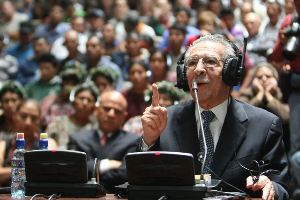
Law professor and human rights attorney Claudia Paz y Paz’s selection as Guatemala’s first woman attorney general was a surprise, but strident opposition to her reappointment from the dark interstices of the political spectrum is not.  More hippy professor than government bureaucrat, she’s a woman who defied the odds when she took office in 2010.  Paz y Paz speaks with a soft, gentle tone to the point where she almost needs a microphone to run a staff meeting.  Yet, from nearly the moment she walked into the attorney general’s office, she made a difference.  She and her team arrested previously untouchable figures such Juan López Ortiz, alias Chamale, and dozens of members of the feared Mexican criminal group, the Zetas.  The country’s murder and impunity rates fell.  Paz y Paz also prosecuted former military officers, including former military dictator Ríos Montt and others allegedly involved in atrocities in the 1980s, and helped set up special offices to deal with violence against women.

Paz y Paz also demonstrated how, employing best practices, Guatemalan judicial institutions can excel.  Her office’s reliance on forensic evidence, telephone intercepts and video analysis made for stronger cases.  This took the onus off of eyewitness testimony, a notoriously unreliable means of fighting powerful criminal groups, especially those who have deeply penetrated the state.  Paz y Paz also widened the investigative net, looking at entire criminal structures, rather than focusing on single criminal acts.  She won praise from a broad array of international partners and pro-democracy forces inside Guatemala.  She was a 2013 Nobel Peace Prize nominee.

In spite of – or because of – these accomplishments, Paz y Paz is struggling to keep her job for another four-year term.  She has to be approved by a “postulation commission” made up of 14 lawyers who select the final six candidates, from which the president picks one.  Special interest groups, using shady brokers (some with ties to organized crime), are maneuvering to make sure that her attempt to reform Guatemala’s Attorney General’s Office ends sooner rather than later.  She has opened up many wounds and frightened Guatemala’s traditional elite, some of whose members worked with the Army during the civil war and believe they could be next on Paz y Paz’s list.  Efforts to block Paz y Paz’s second term underscore that Guatemala is a country that is still struggling to deal with its past civil war and its forever lopsided power structure.  Despite ending a nearly four-decade-old conflict in 1996, Guatemala is still at war –though the battles now take place in the courts – and the elites don’t want a formidable player like Paz y Paz to be in the game.

*Steven Dudley is co-Director of InSightCrime, which is co-sponsored by CLALS.  Click here for the full investigation of “The War of Paz y Paz.”

Dominicans of Haitian Origin: Foreigners in Their Native Land

By Maribel Vásquez

Haitian sugar cane workers in the Dominican Republic / Photo credit: ElMarto / Foter.com / CC BY-NC-ND

Haitian sugar cane workers in the Dominican Republic / Photo credit: ElMarto / Foter.com / CC BY-NC-ND

Nearly three months after the Dominican Republic stripped residents born to unauthorized migrants of their Dominican citizenship, the Constitutional Tribunal’s controversial decision remains the source of high tensions in the country. The ruling expanded on a 2010 amendment to the Constitution stating that children born in the Dominican Republic must have at least one parent with legal residency to be eligible for Dominican citizenship. The court has now determined that the ruling can be applied retroactively to 1929 – in effect leaving three generations of immigrants’ children in legal limbo. At an estimated 200,000, Dominicans of Haitian descent are the largest affected group. In recent years, they have already been denied identity documents, and officials have refused to return copies of their birth certificates, arguing that such births occurred while their parents were “in transit” and therefore did not meet the criteria for Dominican nationality.

International criticism of the ruling was immediate. Many critics have called it racist. After visiting the Dominican Republic earlier this month, the Inter-American Commission on Human Rights (IACHR) released a highly critical report. The United Nations Higher Commission for Refugees (UNHCR) has also expressed concern that the court’s decision threatens to leave hundreds of thousands stateless. CARICOM has called on the Dominican Republic to “right this terrible wrong” and suspended its membership application. Caribbean leaders have expressed outrage.  Trinidad and Tobago’s Prime Minister, Kamla Persad-Bissessar, said the ruling created a “grave humanitarian situation,” and the former prime minister of Antigua and Barbuda, Lester Bird, said the ruling was “so absolutely racist that it’s almost pathetic.” The United States has kept an extremely low profile on the issue.

The tribulations of Haitians in the Dominican Republic date back to the country’s independence in 1844, after 22 years of Haitian occupation, during which tensions between Dominicans and Haitians were high. Since then, relations between the two peoples of Hispañiola have often been in turmoil, most notably when Dominican dictator Rafael Trujillo in 1937 issued orders that led to el corte – “the cutting” – that massacred over 30,000 Haitians along the border. The Constitutional Tribunal’s decision appears to reflect the tradition of anti-haitianismo that underlines Dominican national identity. It raises questions about the legal status of past political figures and surely excludes the living from political processes. Applied retroactively, for example, the ruling leaves former Santo Domingo mayor and three-time presidential candidate, José Francisco Peña Gómez stateless in death. While the prospect of another el corte is inconceivable for many of the now-stateless Dominicans of Haitian descent, incidents of violence against them have risen since the ruling – and activists have called the disenfranchisement of Haitian-Dominicans a “civil genocide.”

Mexican Judicial Reform: Example of the Need for a Closer Look

By Todd A. Eisenstadt

Foro: el Nuevo Sistema de Justicia Penal, a un Año de su Implementación en Baja California, con la ponencia: “Hacia una Justicia más Transparente” /Photo credit: Gobierno de Baja California  / Flickr / CC

Foro: el Nuevo Sistema de Justicia Penal en Baja California / Photo credit: Gobierno de Baja California / Flickr / CC

Mexico’s judicial reforms have proceeded at an uneven pace in each of the country’s 32 states since they were approved as a constitutional amendment in 2008.  The new and spacious “tower of justice” in Baja California shimmers in the desert sun, an outward sign of the $100 million-plus program that is the centerpiece of the state’s “law and order” administration.  However, halfway across Mexico, in the state of Puebla, litigators, police, and judges – untrained in the new judicial system they are implementing – watch their first important case, a manslaughter conviction, give way to a plea bargain after a series of errors.  Morelos, Oaxaca and other states do not have inter-connected computer systems for prosecutors and defenders, and Nayarit has not even passed a state-level criminal justice code to bring that state up to compliance with the 2008 reforms.  And Chihuahua, where Ciudad Juárez in 2011 held the distinction of being the most violent city in the world, a punitive “counter-reform” reducing the rights of the accused has set back that state’s reform efforts.

Progress on the reforms has been stymied by lack of a litigation tradition, a failure in interagency cooperation, a shortage of technology and resources, a lack of political will, and a lack of public support.  Mexico’s drug-related violence has put it at the center of hemispheric debate on judicial reform, but even heralded reforms of the 1990s, such as in Argentina, Bolivia, Panama, and Peru, have been unevenly implemented.  Chile’s reforms, widely seen as successful, were made possible by overcoming inertias, including judicial resistance to the creation of an adversarial relationship between defense and prosecution that moved judges into an institutionalized neutral position.  Legal scholar Mauricio Duce also argues that the retooling of Chile’s Ministerio Público – an autonomous body that functions as a fiscalía or justice ministry – was crucial because the institution became the “engine” of the reforms.

Each country brings its own history, culture and institutional strengths and weaknesses to the challenge of judicial reform. With the results of the first generation of reforms so mixed, a rigorous review of  what has worked – and not – in Latin America, Africa, or Eurasia and elsewhere can help overcome these dramatic shortcomings in the implementation of  reforms. The political commitment to reform is important, but understanding the political contexts and legal/administrative components in each case is also essential for improving the rule of law and accountability, deterring violent crimes, improving human rights recognition, economic development, and establishing security and law and order. When academics, program managers, and political leaders understand why a country like Mexico can have such vastly varying results from the same reforms, they can all take a giant step toward achieving more lasting and positive change.

Todd A. Eisenstadt is a professor of government at American University.

Guatemala: One Step Forward, Two Steps Backward?

Efrain Rios Montt testifying at his genocide trial | Photo by the Guatemalan government | public domain

Efraín Ríos Montt testifying at his genocide trial | Photo by the Guatemalan government | public domain

The decision of Guatemala’s highest court to overturn the guilty verdict in the trial of former dictator Efraín Ríos Montt – found guilty of genocide and crimes against humanity – has raised serious questions about whether, as many had hoped, the country’s elites will ever allow justice, national reconciliation, and democracy to move forward.  What was a clear victory for many in and outside of Guatemala has evolved into a massive setback, at least for now.  For the victims and survivors of the atrocities, the trial was the first time that their tragic stories got an open and respectful hearing.  For the noble prosecutors and judges who pursued the case despite personal risk and beat back repeated maneuvers by Ríos Montt’s defense team to derail proceedings, it was a solid validation of their commitment to build rule of law.  For Guatemalan society, it meant unprecedented public discussion of the past – and the symbolism of the condemned dictator being taken away by bailiffs promoted closure.  For the international community, it proved that persistence could help a country with chronically weak and politicized institutions become the first in the world to put a former head of state on trial for genocide.  But now the outcome is cloudy.

From the beginning, the long-term impact of the trial would depend on the followup.  Immediately after the verdict was issued, President Pérez Molina, a former military commander, set aside his vehement denials that genocide occurred and said he respected the court’s verdict.  But he conditioned issuance of an official government apology, as ordered by the court, on the exhaustion of all defense appeals – which could take years – and was noncommittal in responding to the court’s call for more investigations of people involved in the atrocities.  While he personally has immunity from prosecution, allegations of his own activities during the Ríos Montt period would obviously be problematic for him.  The powerful business organization CACIF, long aligned with the military, rejected the verdict and began mobilizing resistance to further investigations.  Even moderate politicians, such as former Vice President Eduardo Stein, criticized the genocide ruling and calls for more investigations, apparently fearing that more ethnic groups will stake claims.  Like other dictators facing justice, Ríos Montt has already suffered a supposed health problem requiring that he be moved out of prison and into a military hospital – leaving observers wondering how much of his 80-year sentence he would serve.

The U.S. Government supported the trial process and proclaimed it a victory for Guatemalan judicial institutions.  But it appeared cautious on next steps even before the upper court overturned the verdict (on which U.S. comment is lacking).  Ambassador at Large for War Crimes Issues Stephen J. Rapp who visited Guatemala last month and gave the trial a push, and U.S. Ambassador to Guatemala, Arnold Chacon, attended some proceedings.  The U.S. Embassy pledged its continued support to “credible, independent, transparent, and impartial judicial processes,” but its statement also suggested a lack of enthusiasm for more.  “In these moments it is significant to remember that Guatemala, as a country, was not on trial, but rather two individuals, one of whom was absolved and the other convicted,” it said.  It added that “now is the opportunity to advance to real reconciliation” – a prospect that appeared premature even before the upper court action.  Neither the prosecution nor defense spoke much during the trial of Washington’s direct or indirect role in the 1980s violence – a situation that U.S. policymakers may prefer to continue.  If so, it’s a far cry from the position taken by President Bill Clinton, who during a visit to Guatemala in 1999 apologized for American support for security forces that committed “violent and widespread repression.

Brazil: The STF, Congress, and Checks and Balances

By Matthew M. Taylor

Supreme Federal Tribunal (STF), Brasilia / Photo credit: R. Motti / Foter.com / CC BY-NC-SA

Supreme Federal Tribunal, Brasilia / Photo credit: R. Motti / Foter.com / CC BY-NC-SA

Brazil’s last resort for political minorities and opposition parties – the Supreme Federal Tribunal (STF) – is facing growing pressures on its independence.  In Brazil’s famously hyper-presidential system, the executive branch dominates Congress through an elaborate system of presidential decrees, budgetary pork, and cabinet appointments.  Since 1990, no president’s party has ever held more than one-fifth of the seats in Congress, yet presidents – using a diverse array of carrots and sticks – have routinely been able to rely on support from coalitions that surpass three-quarters of the Chamber and Senate.  As Brazil’s high court, the STF has been the only channel through which majoritarian decision-making has been contested.

In recent weeks, Congress has bluffed its way onto the scene: the constitutional committee in the lower house voted to curb the courts via a proposed – but ultimately shelved – constitutional amendment that would restrict the STF’s powers of constitutional review, subjecting decisions that Congress finds objectionable to public consultation.  The reaction has been deafening.  The press has drawn parallels to similar moves in neighboring Argentina and Venezuela.  Eminent political analyst Sérgio Abranches claimed that this was further evidence that an “oligarchic civil coup” was under way.

Some judicial actions have indeed been provocative, such as decisions on contentious issues such as political party formation and the distribution of oil royalties. But the Congress’ effort to curb the court has left a bitter taste – because it points both to the increasing politicization of judicial decision-making and its potentially destabilizing effects on the political system.  The fact that the amendment proposal had support even from some members of the opposition underscores the depth of congressional resentment of the STF’s proactive role.  The Court appears likely to face continued pushback from Congress, with overwhelmingly political objectives.  But some elements of the proposed reform may be worth thinking about, such as restrictions on the issuance of injunctions by single members of the Court.  Too often these injunctions have been seen as high-handed and lacking in the legitimacy that decisions by the full Court carry.

ICJ Decision on Colombia-Nicaragua Dispute Settles Little

Photo: Patricia Iriarte Diaz Granados "orianauta" | Flickr | Creative Commons

Photo: Patricia Iriarte Diaz Granados “orianauta” | Flickr | Creative Commons

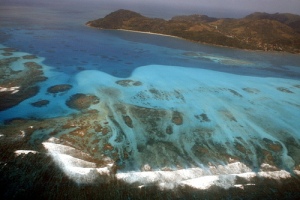
The decision announced last month by the International Court of Justice on a three-decade maritime dispute between Nicaragua and Colombia has pleased Managua and angered Colombia.  The court confirmed Colombia’s sovereignty over seven islets known as San Andrés and Providencia, but it extended Nicaragua’s sovereignty over 200 nautical miles.  The ruling means that, although Colombian jurisdiction includes a 12-mile radius around the islands, Nicaragua will control a much bigger area of the Caribbean – and greater access to fishing grounds and potential underwater oil deposits.

Colombia has rejected the ICJ verdict; refused to withdraw its navy from the contested waters; and withdrawn from the Pact of Bogotá, which recognizes ICJ jurisdiction.  Foreign Minister Holguín said Colombia wants to protect itself from future challenges to Colombian territory.  This position has implications for its neighbors.  Colombia’s withdrawal leaves a pending case brought against it by Ecuador regarding harm caused by herbicides from aerial fumigation near its border.  It also shifts back into bilateral renegotiations Colombia’s dispute with Venezuela over the Gulf of Venezuela, which Colombia had often proposed taking to the ICJ.  According to press reports, Panama, Costa Rica, and Honduras did not see themselves affected by the ICJ decision.

While ICJ decisions are final and cannot be appealed, the Court lacks the means to enforce them.  Colombia’s rejection of the ruling suggests it will take advantage of that, setting itself and Nicaragua on a collision course that will undoubtedly raise tensions in the region.  (Non-enforcement is an old problem.  The United States got the UN Security Council to support it in rejecting an ICJ decision in the 1980s that Nicaragua was entitled to reparations for U.S. support of the Contras.)  Even if the countries don’t come to blows, the dispute puts regional cooperation in crucial areas, such as counternarcotics, at risk.  It also raises questions about the willingness of countries to work with multilateral institutions.  The ALBA countries support ICJ jurisdiction now, but Colombia’s position probably will embolden them to reject it if inconvenient in the future.  Maritime disputes appear to be increasing worldwide, and Central America promises to be no different.

El Salvador’s “Constitutional Crisis”

Photo by: rosaamarilla via Flickr http://www.flickr.com/photos/amccy/3395160591/

A months-long political feud over the Supreme Court in El Salvador has blossomed into what observers are calling a constitutional crisis.  The first shot was fired in April when legislators from the FMLN engineered a “legislative decree” to replace five court Magistrates, the outgoing Assembly’s second shot at choosing justices during its three-year term.  The court’s Constitutional Chamber in June declared the decree unconstitutional – because each Legislature gets to vote only once for Magistrates.  At the same time, the Chamber invalidated a similar move by the opposition ARENA party affecting Magistrates chosen in 2006.

The theater came to a head this month when two feuding Supreme Courts met in different wings of the same building and claimed legitimacy – one with five members elected in 2009 and the other with the 10 invalidated members.  The rightwing ARENA party and its allies in Washington are claiming the crisis represents a shift against democracy by the FMLN.  Two Cuban-American members of the U.S. Senate have called on the Obama Administration to impose sanctions – principally suspending negotiations on a second Millennium Challenge Corporation compact potentially worth hundreds of millions of dollars – if the crisis is not ended quickly and in the manner they wish.  The Inter-American Commission on Human Rights (IACHR) has called for prompt resolution, and the U.S. Ambassador in San Salvador and the State Department have expressed “concern.”  A Washington Post editorial this week lambasted the FMLN for shifting toward Chávez-style authoritarianism and President Funes for failing to stop it.

This episode reflects maneuvering within the FMLN – fueled by frustration that President Funes’s soft line toward ARENA has only weakened the party’s influence – and poor judgment among activists on where and how to pick the fight.  The legislators rushed the decree because they anticipated correctly that they were about to lose control of the Assembly in elections several weeks later.  The crisis falls into a much more ominous pattern, however, in that – like the coups in Honduras (2009) and Paraguay (2012) – the right wing and its coreligionists in Washington exploit events to challenge the democratic credentials of a democratically elected reformist government to rationalize weakening it, while the Obama Administration responds timidly.  ARENA is again demonstrating its superior lobbying skills in Washington, which have already severely disadvantaged President Funes on issues such as relations between his security cabinet and its U.S. counterparts – resulting in a serious erosion of his own influence over security issues.  If the current political impasse is not resolved to the satisfaction of U.S. conservatives, Washington’s threats – ironically directed against the Administration’s “best friend” in Central America – will likely continue and relations will be strained, further persuading hardliners around Funes that moderation pays no dividends.