A New Line of Defense: Trends at Mexico’s Southern Border

By Dennis Stinchcomb

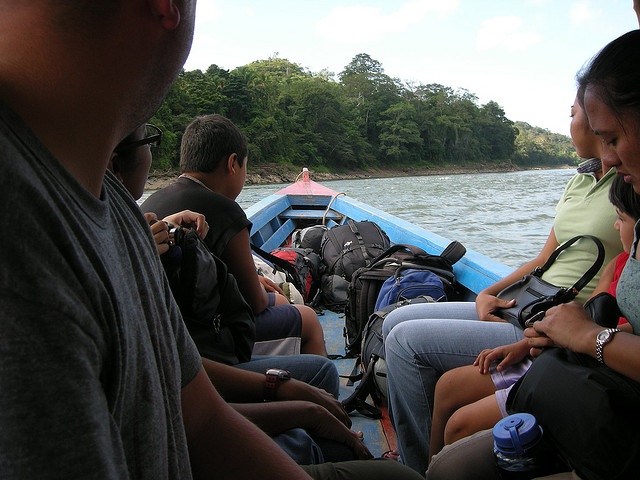
The boat to Mexico.  Photo Credit: einalem / Flickr / Creative Commons

The boat to Mexico. Photo Credit: einalem / Flickr / Creative Commons

Statistics show that the United States is relying on Mexico to do what U.S. immigration law and the Northern Triangle countries can’t: keep Central American children out of the U.S.  In 2014, the same year in which Mexico announced tightened security measures along its southern border with Guatemala and Belize, Mexican authorities deported over 18,000 children, up 117 percent from just over 8,000 the previous year, according to Mexican government figures.  A similar increase is already being registered in 2015.  During January and February of this year, deportations of minors from Mexican soil tallied over 3,200 – a 105 percent jump from the same period in 2014.  Since launching what U.S. officials have dubbed a “layered approach” to immigration enforcement, data reveal several noteworthy trends:

  • Mexico’s get-tough approach has prevented a significant number of migrants from reaching the U.S.-Mexico border. According to U.S. Customs and Border Patrol, the first seven months of Fiscal Year (FY) 2015 witnessed a 48-percent decrease in unaccompanied child apprehensions and a 35-percent decrease in family unit apprehensions along the U.S. border.  However, considered in light of the unprecedented number of deportations from Mexico, these figures suggest that child and family migration from Central America remain at historic highs. 
  • Central American children detained in Mexico are unlikely to be offered forms of humanitarian protection mandated by international law. Despite increases in child detention and deportation, a report by Georgetown University Law School’s Human Rights Institute points to inadequate screening and arbitrary detention as among the obstacles preventing tens of thousands of children from seeking and receiving relief from removal.
  • Both Mexican and U.S. data show that a growing share of child and family migrants are Guatemalan. According to analysis by the Pew Research Center, the number of Guatemalan children deported from Mexico during the first five months of FY15 doubled since the same period last year and now accounts for 60 percent of all child deportations from the country.  Meanwhile, the share of child deportees from Honduras dropped from roughly one-third to less than one-quarter, and those from El Salvador fell off slightly to just above 15 percent.  An analogous shift is also evident at the U.S.-Mexico border where Guatemalans now comprise 35 percent of unaccompanied child apprehensions compared to 25 percent during FY14.  Similarly, the proportion of Salvadoran and Honduran children has declined from roughly 25 percent each to 18 and 9 percent, respectively.
  • Smugglers and migrants are already adapting to heightened enforcement in Mexico and charting new, more dangerous routes north. Local media reports have covered migrants’ attempts to bypass border checkpoints by sea and traverse Mexico undetected on foot or in third-class buses.  Data show that successful migrants are crossing into the U.S. at less traditional and harder-to-access points.  At the height of last year’s crisis, the majority of migrants were surrendering themselves to border officials in the Rio Grande Valley along Texas’ southern-most border.  While apprehension in the Rio Grande control sector have decreased significantly this year, three sectors – Big Bend (Texas), El Paso (Texas and New Mexico), and Yuma (California) – have registered at least double-digit percent increases in both child and family apprehensions.

During Mexican President Peña Nieto’s recent visit to Washington, President Obama stated that he “very much appreciate[d] Mexico’s efforts in addressing the unaccompanied children [crisis].”  Despite applause from the White House, Mexico’s aggressive border enforcement – driven at least in part by U.S. encouragement and funding – has implications for Mexico’s already problematic human rights record.  While it is true that Mexico’s actions have largely staved off a repeat of last year’s crisis, it has yet to translate into the sort of political bargaining chip the Obama administration has hoped might sway the immigration policy debate in the U.S.  With comprehensive immigration reform legislation long dead and recent executive actions on indefinite hold, the administration apparently hopes that ramped-up enforcement will improve prospects for congressional approval of $1 billion in development assistance to the Northern Triangle.  But with Mexico’s clampdown blocking another surge of migrants into the U.S., many legislators are likely to question the prudence of pouring more money into corrupt, dysfunctional regional governments.  By backing the militarization of Mexico’s southern border, moreover, the administration is privileging political goals at the expense of humanitarian objectives and is indirectly complicit in blocking thousands of Central American children from accessing lawful forms of relief for which most are likely eligible.  Meanwhile, Mexico’s migrant extortion market continues to boom as vulnerable children and families seek new routes north at the mercy of increasingly brutal transnational networks.

June 4, 2015

Central American Minors: Headed Home?

By Dennis Stinchcomb and Eric Hershberg

Two young girls at the U.S. Customs and Border Protection Nogales Placement Center. Photo Credit: coolload / Flickr / Creative Commons

Last year, two young girls at the U.S. Customs and Border Protection Nogales Placement Center during the height of its operation. Photo Credit: coolload / Flickr / Creative Commons

Legislative safeguards have protected from deportation most of the 68,000 unaccompanied children (UACs), almost all of them from the Northern Triangle of Central America, who were apprehended at the southern border of the U.S. last year – but the challenges are far from over.  This temporary reprieve comes despite warnings by the Obama administration at the height of the crisis – and U.S. embassy-supported education campaigns in El Salvador, Guatemala, and Honduras since then – that youth considering flight to the U.S. will be returned home.  Provisions of the Trafficking Victims Protection Reauthorization Act (TVPRA) of 2008 have aided these Central America kids to legally remain in the U.S. by making them ineligible for expedited removal or voluntary departure until their cases are decided by an immigration court judge.  Attempts by the Department of Justice to fast track initial hearings have yet to result in expedited case closures, as judges typically issue continuances to children securing legal counsel and soliciting forms of deportation relief.  While it is still too early to predict case outcomes, several trends are evident:

  • Available data suggest that large numbers of UACs are benefiting from relief codified in U.S. immigration law, including asylum, Special Immigrant Juvenile Status (SIJS), and non-immigrant visas for victims of trafficking and other qualifying crimes. According to data from U.S. Citizenship and Immigration Services, approval rates for asylum applications submitted by minors have hovered around 80-90 percent for the past year.  (The bulk of applications of the most recent wave of arrivals have not yet been decided.)
  • More than 7,000 child migrants have been ordered deported between October 2013 and January 2015 for failing to appear in court, but their attorneys and advocacy groups have blamed an overburdened and resource-starved court system, pointing to documented instances in which clients were never notified of their hearing date or notices arrived late or were sent to the wrong address. In other cases children have been ordered to appear in court hundreds or thousands of miles away from where they have been placed in sponsor care.  With sufficient evidence, children who have received deportation orders in absentia may file motions to reopen their cases.
  • Access to legal representation continues to impact case outcomes. In fiscal years 2012-14, 73 percent of UACs with attorneys were permitted to remain in the country, compared to just 15 percent of children without representation.  According to federal data obtained by Syracuse University, as of October 31, 2014, less than one-third of UACs in pending cases had secured an attorney.

While the fate of these Central American kids hangs in the balance, so too do the legal protections that guarantee their day in court and their access to deportation relief.  An emboldened Republican-controlled Congress has resuscitated efforts to amend the TVPRA provisions protecting these children from expeditious return to their home countries.  Similar bills still under debate by the House Judiciary Committee propose tighter restrictions on the most commonly solicited forms of relief – asylum and Special Immigrant Juvenile Status.  Asylum seekers, for example, would face shorter filling deadlines and be required to wait for hearings in a “safe” third country.  A proposed revision to the hotly contested SIJS statute allowing abused, neglected, or abandoned children to reunite with a second parent in the U.S. would have serious repercussions for Central American UACs, many of whom are in the care of parent sponsors.  Meanwhile, a steady flow of new arrivals – 12,500 UACs and 11,000 family units since last October – are added to backlogged court dockets and increase the likelihood of a due process crisis.  Observers in the region and in Washington are acknowledging gingerly the possibility of a new wave of youth migration during the coming months, as conditions fueling the exodus from Central America remain acute.  The politics of such a renewed surge are complex, and may shape both the immigration policy debate in the U.S. and the prospects for Congressional approval of the administration’s request for $1 billion in development assistance for the Alliance for Prosperity in the Northern Triangle.

March 26, 2015

Executive Under-Reach: Migrants on the Margins of Reform

By Eric Hershberg and Dennis Stinchcomb

UAC SPONSOR PLACEMENT updated post-report-01

Graphic courtesy of the Center for Latin American & Latino Studies (CLALS)

President Obama’s long-awaited executive action on immigration has finally happened – with the anticipated political fireworks – and will benefit more than one third of the country’s undocumented persons. It is premature to offer predictions regarding how the dynamic will play out between a White House wounded by electoral losses last month and an emboldened Congressional opposition.  We can, however, take stock of who the administration’s measures have and have not affected.  Between 4 and 5 million people, a majority of them originally from Mexico, will be able to apply for work permits and secure protection from deportation for three years if they have been in the U.S. for five years or longer and have children who are either U.S. citizens or authorized residents.

The executive action is no modest change in policy, but it contains little good news for large numbers of undocumented persons and no good news for those his administration has already deported.  For the 250,000 U.S. citizen children whose parents have been deported over the past six years, it provides no comfort; there is no provision for the parents to return to raise their kids here.  Nor did the President’s measures offer more permanent relief to the roughly 280,000 Central Americans who have resided in the U.S. with Temporary Protected Status (TPS) following natural disasters in the region during the late 1990s and early 2000s.  Beneficiaries of those provisions will continue to pay roughly $500 every 12-18 months to renew their status. Other populations who have been here for well over a decade as stable members of the community also remain unaffected by the reforms.  No matter how long they have been here nor how good they have been – law-abiding, tax paying, churchgoing or generally nice – they will not be eligible for relief if they do not have children.  The administration’s action was strictly cast as a family-focused initiative, and family, in this instance, means children with authorization to be in the U.S.  Spouses do not count.  An important new population of migrants was also left out of the reform: the unaccompanied children, largely from violence-torn countries of Central America’s Northern Triangle, whose surge across the border received great media attention during the summer of 2014. Indeed, the president’s speech to the nation made no mention of that humanitarian crisis and made clear that those who come across now should expect to be deported.

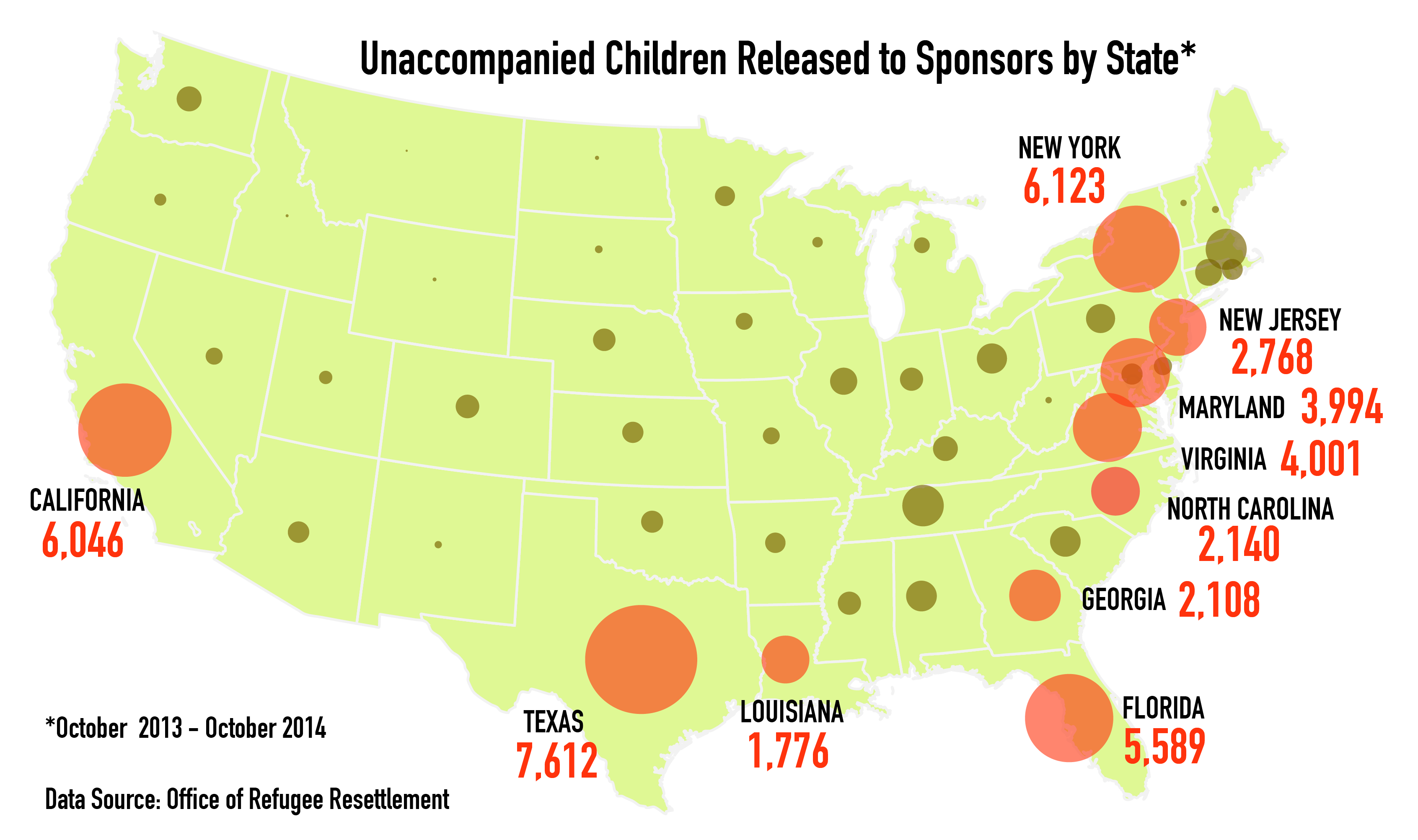
The 68,000 children who trudged across the border during this fiscal year remain in limbo.  According to data from the Department of Health and Human Services’ Office of Refugee Resettlement, over 55,000 have been placed with immediate or extended-family sponsors in the U.S while their removal cases are pending in immigration court.  Metropolitan areas with long-established Central American communities have witnessed the largest influx of unaccompanied children.  The Baltimore-Washington metropolitan area alone, for example, received approximately 6,500 unaccompanied minors during the past fiscal year.  Once placed in sponsor care, these kids’ prospects for remaining in the U.S. – and their well-being while awaiting a court decision – are largely dependent upon local-level policies.  While the Obama administration has taken limited steps in recent months to provide legal counsel for these minors, funding for direct legal representation and a range of other educational, health, and social services is increasingly coming from those state and local governments that traditionally support immigrant-friendly humanitarian programs. This support is crucial, as demonstrated by a Syracuse University study that found that 85 percent of unaccompanied children appearing in court without an attorney are ordered to leave the U.S.; with an attorney, however, a child’s odds of remaining in the U.S. increase from 15 to 73 percent.   In cities such as New York, local funds are also being channeled through advocacy networks to support access to services beyond the courtroom, from mental health screenings, to vaccinations, to assistance with school enrollment.  Other local communities may not follow suit, particularly in the wake of the newly announced executive action, which in the short-term will strain the already taxed resources of local governments and advocacy groups.

December 11, 2014

Executive Action, Central American Presidents and the Fate of the Unaccompanied Minors

By Eric Hershberg

Image courtesy of Center for Latin American and Latino Studies

Image courtesy of Center for Latin American and Latino Studies

Speculation abounds in Washington as to the content of the long-awaited Executive Actions that the Obama administration has promised to decree amidst the failure of Congress to enact comprehensive immigration reform.  Having resisted pressure from Latino constituents and immigrant rights advocates to act before the mid-term election, in a vain effort to protect vulnerable Democratic incumbent Senators who lost their bids for re-election anyway, the administration now seems poised to announce new measures as early as the end of this week.  Press accounts based on leaks from within the Executive Branch speculate that as many as five or six million undocumented migrants may see their vulnerability to deportation diminish as a result of the impending policy changes.  Barack Obama’s Republican antagonists are fulminating about the consequences if he makes good on his promise, with some pondering ways to shut down the government or impeach the President, and others, fearful that a particularly intemperate response could damage the Republican brand, particularly given the need to attract at least a third of the Latino vote to the candidacy of whomever is chosen as the 2016 GOP presidential candidate, allude to the likelihood of court challenges to what they deem an extreme instance of Executive overreach.

One unanticipated but welcome measure that has been announced publically is that children deemed vulnerable to the violence in the three Northern Triangle countries of Central America will be able to apply to be reunited with parents residing legally in the U.S.  This policy shift, announced during the visit to Washington last week by Presidents Otto Pérez Molina, Salvador Sánchez Ceren and Juan Orlando Hernández, is among the administration’s responses to the surge of unaccompanied minors and families across the U.S.-Mexico border over the past year or so: 68,000 unaccompanied children were detained at the border during Fiscal Year 2014.  For their part, together with Vice President Joseph Biden at the Inter-American Development Bank, on November 14 the three Central American Presidents pledged to launch an Alliance for Prosperity in the Northern Triangle, with the objective of overcoming the conditions of economic misery, social vulnerability and institutional deficiencies that propelled the wave of migration of recent years and that have the potential to motivate a renewed flow of arrivals.  Biden offered an enthusiastic endorsement, but aside from reminding those in attendance that the administration had requested $3.7 billion from the Congress in response to last summer’s “crisis,” he did not offer specific commitments of resources, which of course are unlikely to be forthcoming from the strong Republican majorities in both chambers of Congress.  Nor did the Presidents make tangible commitments to build states capable of protecting the basic rights to life chances and security that are so remarkably absent for many of their countries’ inhabitants.

Assessing the likelihood of continued surges in migration requires understanding the factors that propelled the flow of people across the border in recent years.  A newly released study* by the Center for Latin American and Latino Studies, funded by the Ford Foundation, provides essential data and analysis on the drivers of migration from El Salvador, Guatemala and Honduras and on the fate of children and families who have arrived in the U.S. from those countries over the past year.  A core message of the report is that the absence of fundamental pre-conditions for living their lives with dignity – education, jobs, and most of all protection from violence – compels people to migrate rather than seek to better their lot in their communities of origin.  In the long run, only dramatic reforms undertaken by Central American states will build the institutions needed to address the basic needs of their populations and to provide the minimal levels of security needed for them to live their lives in dignity at home.  Perhaps little that was agreed upon during the Presidents’ visit to Washington gives cause for great optimism, but it is our hope that the CLALS study points the way toward solutions to the region’s crisis and toward ensuring the protection of those who endured the perilous journey to the U.S. border and now find themselves in limbo in the U.S.

 *To download a free copy of the full report, click here.

November 19, 2014

Children and Migrant Teens: Trapped with No Way Out

By Ursula Roldán Andrade*

Alaks / Flickr / Creative Commons Attribution-NonCommercial-ShareAlike 2.0 Generic (CC BY-NC-SA 2.0)

Alaks / Flickr / Creative Commons Attribution-NonCommercial-ShareAlike 2.0 Generic (CC BY-NC-SA 2.0)

The 56,000 Central American children involved in the humanitarian crisis along the Mexico-United States border are trying to reach the United States not only to reunite with their families.  They are also driven by poverty, social exclusion and violence in their home countries of northern Central America.  The response of U.S. and Central American authorities, however, seems to be only to strengthen the barriers to migration – not only along the Mexico-United States border but also between Mexico, Guatemala, El Salvador, and Honduras.  The United States has emphasized immediate deportation, and its request for funding includes an increase in the number of courts to expedite deportations and in enhanced border security with military and police forces.  The Obama Administration also seeks resources to address the consequences of emigration in Central America, where the governments have done little more than begin criminal prosecutions against the “coyote” network.  In Guatemala there are rumors that parents responsible for migrating children could face criminal charges.  Caring for would-be migrants is a much lower priority; there are only two shelters, of a capacity of less than 80 children, in charge of the Social Work Program of the Office of the First Lady of Guatemala (SOSEP), which has also proposed the improvement of child reception conditions.

A mass media campaign in Guatemala promotes the idea of children staying to fulfill the “Guatemalan Dream” rather than risk their lives attempting to live the “American Dream.”  Yet, the “Guatemalan Dream” that authorities are referring to is lacking.  The Human Rights Office of the Archbishop of the Catholic Church of Guatemala (ODHAG), which has tracked human rights for children in the nation for the past 15 years, reported in 2011 that simply being alive in Guatemala means surviving health risks, food insecurity, and violence.  The report’s most revealing data show that over 48 percent of Guatemalan children suffer from chronic malnutrition.  According to ODHAG, 51 percent of the deaths of minors in 2011 were teenagers between the ages of 13 and 17.  The report called on the state to take preemptive measures to protect children and adolescents from malnutrition, hunger, violence, abuse, and human trafficking networks, but the government still spends only 3.1 percent of GDP on this population, whereas other Central American countries invest 6 percent.

Central American children are caught in the crossfire of political discourse in the United States – a migrant population that either gains protection or is cast aside, sometimes with xenophobic or even racist overtones.  Partisan politics, interest in cheap labor, and other factors short-circuit debate, creating conditions for exploitation of migrants without recognition of their citizenship, families, or rights.  The Guatemalan government neglects its vulnerable population, is rife with political corruption, and is cursed with the narrow-mindedness of its economic elite, which does not, in the least, attempt to change the structural conditions that exclude and eventually expel their countrymen.  Solutions to the resulting humanitarian crisis will remain elusive as long as Central American governments do not guarantee fundamental rights and undertake policies aimed at the defending the higher interests of children and adolescents. 

* Dr. Roldán Andrade specializes on migration issues at the Center for Research and Policy Management (INGEP) at the Universidad Rafael Landívar in Guatemala.

Child Migrants: Deepening Challenges

By CLALS Staff

A surge in the number of unaccompanied children fleeing criminality, family problems, and violence in Honduras, Guatemala, El Salvador and Mexico underscores the personal tragedy of undocumented immigrants – they escape old threats only to face new ones – but the issue so far has sparked only the usual partisan acrimony in Washington.  According to U.S. government sources, the number of child migrants reaching the United States has increased 92 percent over the past year.  Some 47,000 have arrived since last October, and a draft document by the Department of Homeland Security speculated the figure could reach 90,000 by the end of the fiscal year.  (Only 5,800 children arrived alone each year 10 years ago.)  Mexican children still outnumber others, but the current surge is coming from the northern-tier countries of Central America.  Polls conducted by the UN High Commission for Refugees indicate that about half of these children are driven by criminal insecurity; 21 percent by abuse and other problems in the home; and the rest by other forms of violence.  The influx of these refugee migrants is not a strictly U.S. phenomenon: Mexico, Nicaragua, Costa Rica and Panama have seen a 435 percent increase in child arrivals from the northern tier since 2012 as well.  The UNHCR has made an urgent plea for assistance.

President Obama last Monday declared the problem was an “urgent humanitarian crisis,” and he directed the delivery of aid to house and provide care to the children, who remain in government custody while relatives in the United States are located or other solutions are planned.  The White House also announced an initiative to assign legal advisors to those under 16 who are facing deportation but are not in government custody.  Republican critics reacted forcefully.  Texas Senator Ted Cruz said the crisis was a “direct consequence of the President’s illegal actions,” including allegedly lax enforcement of immigration law.  The Chairman of the Judiciary Committee in the House of Representatives called it an “administration-made disaster.”

Shifts in immigration numbers traditionally have been a function of “push” factors (poverty, violence and other problems) in sending countries and of “pull” factors in the United States – particularly the perception that safely entering the country and finding work is easy.  The Obama Administration’s aggressive deportation policies – physically removing about two million undocumented migrants – arguably have reduced the “pull” over the past six years, and it seems premature to conclude that the Administration’s recent rhetorical shift has shined a bright green light as far as Honduran hamlets.  That the influx is occurring in countries other than the U.S. provides further evidence that local push factors (as the UNHRC posits), and not Obama Administration policies, are the most credible cause of the surge, in spite of the fact that criminality and violence in Central America’s northern triangle have not shown a commensurate increase during this period.  Regardless, predictable demagoguery around this growing crisis probably will further complicate the Administration’s efforts to carry out those few progressive steps it has launched by Presidential order, including programs to normalize the status of “Dreamers” – undocumented migrants’ children eager to overcome the stigma and obstacles to citizenship.  The approach of mid-term elections in the United States promises that this humanitarian crisis will sustain more name-calling and political paralysis in Washington.

Obama’s Deportation Debacle: Time for Executive Action?

By Eric Hershberg and Dennis Stinchcomb

Embed from Getty Images

Amid fierce debate over the Obama administration’s record on the deportation of undocumented immigrants residing in the U.S. without serious criminal records, insiders confirmed to the Associated Press on Monday that the White House is seriously considering unilateral action to reduce deportations.  Preliminary reports suggest that a review of the policy by Homeland Security Secretary Jeh Johnson may result in executive action curbing deportations.  Rumors of White House movement on the issue surfaced last week, when members of the Congressional Hispanic Caucus presented Johnson with a memo outlining their demands.  Most notably, they recommended an expansion of the president’s Deferred Action for Childhood Arrivals (DACA) program and the elimination of “Secure Communities,” a program initiated during the Bush era that mandates that local law enforcement agencies enforce federal immigration laws and which has led to reported abuses.

The increased pressure on the president to further limit forced removals comes at a moment when deportations are on the decline and interior enforcement is at a five-year low.  New statistics released by the Department of Homeland Security (via FOIA requests from The New York Times) and the Department of Justice provide the most comprehensive view to date of an enforcement policy fraught with political miscalculations.  DOJ reports, for example, a 43 percent drop in the number of new deportation cases filed in federal immigration courts in the last five years.  In hopes of gaining credibility and leverage for Democrats in a potential immigration deal, the administration in 2011 reallocated massive enforcement resources to the U.S.-Mexico border.  The plan was to ease interior enforcement that disrupted established families and communities – and ran up deportation numbers in the past – while deporting higher numbers of recent border crossers, who under previous administrations would have been sent home without formal charges.  In the interior, workplace raids all but disappeared, but state and local police, under the Secure Communities program, continued to identify “high-priority offenders.”

The Obama administration’s five-year attempt to placate Republican lawmakers through record-setting deportations has backfired politically, and the collateral damage is high, with nearly 2 million deportations to date and an outraged electoral base.  Though current and former administration officials argue that concerns over public safety and border security have guided immigration enforcement since day one, the evidence suggests that political expedience has driven Obama’s deportation policy and – with midterm elections just around the corner and maneuvering toward the 2016 presidential elections already underway – is likely to continue to do so.  Obama’s eagerness to impress Republicans with his toughness, without any guarantee the maneuver would work, has alienated Hispanic and Asian communities who feel betrayed and whose turnout at the polls is crucial for a Democratic victory.  The leaks of executive action indicate a White House focused on damage control with those important constituencies, while essentially signaling the definitive end of any chance of bipartisan Congressional immigration reform.  Despite some handwringing among American conservatives that the Republicans’ position will lock out Hispanic voters for years to come, most of the party’s leaders appear to give priority to their nativist base.  Obama ultimately may be calculating that, with chances of passage of immigration reform nil anyway, his energy is best spent on rebuilding ties with constituents whose communities have been torn apart by policies pursued during his first five years in office.

The U.S. Immigration Debate: Legalization or Citizenship?

By Dennis Stinchcomb

U.S. House of Representatives Speaker Boehner has again hit the brakes on immigration reform, claiming widespread doubt among House Republicans that President Obama “can be trusted to enforce our laws.”  The dramatic about-face came only a week after Boehner and other House leaders released a one-page declaration of “Standards for Immigration Reform,” renewing hope that a legislative compromise could be reached this year.  According to press reports, reasons for the reversal included fear among a majority of House Republicans that party infighting over the legalization of the country’s 11 million unauthorized immigrants would disrupt the Republican base and imperil their perceived advantage in the upcoming midterm elections.  Despite rhetoric that places the blame on the president’s alleged unwillingness to implement certain unspecified laws, the immediate concern for House Republicans is not one of substance but of timing, according to Republican members.

The Republicans’ “Standards” document endorsed a vaguely defined program that would grant legal status to certain categories of unauthorized immigrants, but stopped short of a special pathway to citizenship like the one outlined in the Senate bill currently at the center of discussion.  What they mean by “legal status” remains uncertain.  Some Republicans have suggested that newly legalized immigrants would be permanently barred from naturalization; others insist that undocumented immigrants, once legalized, would be able to access normal avenues to citizenship (i.e., work visas, marriage to a citizen spouse, etc.) if available to them.  The White House and House Democrats have expressed willingness to listen to any emerging proposal that would offer limited legal status.  Many Senate Democrats and immigration advocates argue, however, that legalization without eligibility for naturalization is too great a concession and would create a permanent underclass of millions of legalized immigrants unable to access the rights and privileges of citizenship.

House Republican leaders appear to judge that – at least for now – they cannot sell legalization to their own caucus and seal the deal for immigration reform.  Even if they were to reach a consensus that some form of legalization is good, a majority of House Republicans either openly reject any sort of “amnesty” or consider addressing such a controversial issue too risky in an election year, especially before Congressional primaries.  If and when the Republican Party is ready to deal, willingness on the part of Democrats to reach a compromise will depend largely on the type of legalization Republicans are prepared to support.  If legalization without an explicit pathway to citizenship is the only way to halt record deportations, most Democrats appear willing to make the concession.  One thing is clear: clogged immigration courts, nearly 2 million deportations, and $17.9 billion spent annually on immigration enforcement have not translated into the bargaining chip the Obama administration had hoped for – nor have such actions given the lie to Republican accusations that he cannot be trusted to enforce the law.  And with no specific proposals on the table, Democrats, the American people, and millions of undocumented immigrants are left guessing what House Republicans mean by legalization. 

Latin America Skeptical of U.S. Immigration Debate

By Aaron Bell

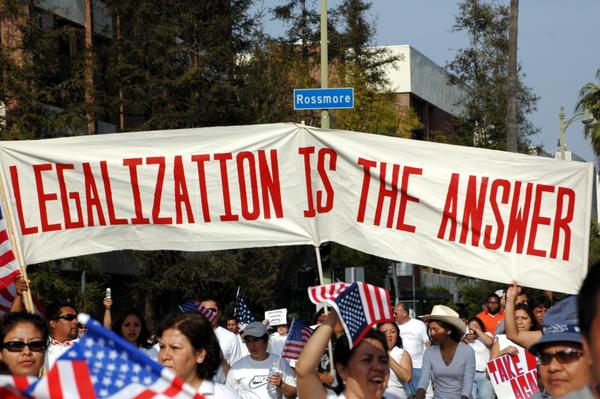
Photo Courtesy of Larry Engel

Photo Courtesy of Larry Engel

Latin America’s subdued response to the immigration reform debate in the United States reflects a region-wide skepticism buttressed by the recent history of unfulfilled expectations.  Mexican media and a handful of Central American counterparts across the board have identified the Republican Party as the primary impediment to progress.  Conservative editorialists in the region, many of whom denounce President Obama and the Democrats as political opportunists rather than legitimate advocates for immigration reform, have also expressed frustration with the Republicans for not coming up with a better approach.  In particular, they think the party’s digging its own political grave by failing to rein in members and supporters who smear Hispanic immigrants as a threat to the ethnic identity of the United States.  Some have fond memories of Ronald Reagan’s 1986 Immigration Reform and Control Act, which balanced security and enforcement with compassion and amnesty for undocumented migrants.

Mexico’s El Universal has been one of the most frequent contributors to the discussion of immigration reform, particularly with editorials giving greater attention to the human rights aspect of the debate.  They’ve called for reforms so that undocumented workers can “come out of the shadows,” so that families can stay together without fear of deportation, and so that harsh punishment meted out to undocumented workers caught crossing the border can come to an end.  The Mexican government has been relatively quiet on the issue of immigration reform in the previous decade, with the exception of a complaint lodged against Alabama’s HB 56, which requires police to take certain actions if they have “reasonable suspicion” that an immigrant is in the United States unlawfully.  But last summer Foreign Minister José Antonio Meade took to the pages of El Universal to complain that proposed enhanced border security measures were a detriment to regional development – and not a solution to immigration problems.

Public opinion data on Latin American views of the reform debate is limited, though circumstantial evidence suggests a connection between reforms and overall views of the United States.  Pew Research found that public opinion of the United States among Mexicans dipped sharply following the passage of Arizona SB 1070 in 2010, which laid the groundwork for HB 56.  Those numbers have since rebounded, with 66 percent of those polled holding favorable views of the United States in 2013, when many perceived that the Obama administration would achieve a positive outcome in the reform debate.  Although critical of Republican approaches, commentators who support reforms are not inherently in favor of the Democratic Party.  Only half of those Mexicans polled held a favorable view of the Obama administration, and some commentators have noted the high number of deportations on Obama’s watch.  For Latin American observers, humane and fair treatment for migrant workers and immigrants is the primary concern – and neither party appears poised to deliver.  The region’s skepticism that this round of debate over immigration reform will produce anything new appears at the moment to be warranted. 

Turning the Tide on Deportations?

By Dennis Stinchcomb

Photo courtesy of ICE

Photo courtesy of ICE

U.S. Customs and Immigration Enforcement (ICE) recently released statistics showing that deportations in fiscal year 2013 hit an all-time low since Obama took office in 2009, but the drop is apparently not yet a harbinger of a policy shift.  Removals fell slightly from a record high of 410,000 in 2012 to just under 370,000.  News of the first decline during Obama’s tenure comes as he has been under growing pressure from immigration advocates and some members of Congress to use his executive powers to bring removals to a halt.  But the slight decline can be attributed to several factors:

  • First, the administration has encouraged the use of “prosecutorial discretion,” which is the agency’s authority to enforce the law against a particular individual as it wishes, and has prioritized the deportation of violent criminal offenders and others deemed to be “national security threats.”  The removal of convicted criminals – a category that conflates those convicted of aggravated felonies and misdemeanor crimes – is more time- and resource-intensive, thus reducing the overall total of deportees.
  • A demographic shift in recent border crossers has contributed to the decline.  In fiscal year 2012, 71,527 of the recent border crossers removed by ICE were from countries other than Mexico (i.e., Central America).  In fiscal year 2013, this number rose by 27 percent to 90,461.  According to ICE, this triggered an increase in the use of ICE’s detention and removal resources because the U.S. Customs and Border Patrol, responsible for many deportations, is only able to return individuals to Mexico.  (In 2010, Guatemalans represented 9 percent (or 29,378) of deportees; in 2013, they made up 13 percent (or 47,769) of all removals. Much the same can be said for Honduras and El Salvador.)
  • The president’s Deferred Action for Childhood Arrivals (DACA) policy has also reduced deportation figures by granting reprieves to more than 450,000 of the “Dreamers.”

Though positive, the relatively small decrease does little to offset the Obama administration’s staggering deportation totals – 1.8 million since February 2009.  Nor does it signal an attempt to reverse course in light of the rapidly approaching 2 million mark.  The Obama administration is undoubtedly walking a political tightrope on the issue.  It is pressured by the right not to appear lax on enforcement, while many on the left want the president to sidestep a deadlocked Congress and loosen up on removals – a move Obama himself has characterized as executive overreach.  As the deportation rate remains steady, Obama risks eroding the support of Latinos, an increasingly powerful segment of the electorate.  So pervasive is the fear of deportation that, in a recent survey conducted by the Pew Research Center, a majority of Latinos said protection from deportation was more important than a pathway to citizenship.  This would suggest that lawmakers might eventually be open to allowing undocumented immigrants to attain legal status even without a chance to naturalize.  Some 205,000 U.S. citizen children lost a parent because of deportations between July 2010 and September 2012 alone, and a growing number of them face the prospect of having to accompany a deported parent back to Central America, potentially increasing the political urgency for a fix to the country’s broken immigration system.