What do Latin Americans Make of the U.S. Election Campaign?

By Fulton Armstrong

Trump Wall Pope

Photo Credit: Daryl Lawson and Pingnews (modified) / YouTube and Flickr / Creative Commons

Remarks about Mexico and immigration by Donald Trump – leader in the U.S. Republican Party’s presidential nomination contest – have drawn intense criticism from some Latin American leaders, but their underlying concern may be about the implications of the broad support for his populist rhetoric regardless of who wins the party’s nomination in July.  Media throughout the hemisphere are reporting highlights of the U.S. campaign, focusing mostly on immigration and its connotations for the region.  Some reports touch on the challenges to unity facing both major U.S. political parties, such as Democratic pre-candidate Bernie Sanders’s pressure on the previously unbeatable Hillary Clinton.

Most Latin American attention has gone to Trump and his statements.  His characterization of many Mexican immigrants as criminals, drug dealers, and rapists; his statement that Mexicans “bring tremendous infectious disease” into the United States; and his pledge to make Mexico pay billions of dollars for a new high wall on the border have drawn sharp rebukes from across Latin America.

  • Mexican President Peña Nieto, who initially remained on the sidelines when Trump brought the immigration issue to the table in a cynical fashion, recently compared Trump with Hitler and Mussolini. Former President Calderón called him a “racist” and lamented that he is “sowing anti-American hatred around the world.”  And his predecessor, Vicente Fox, said on U.S. television that Mexico wouldn’t pay for “that f**king wall.”
  • Argentina-born Pope Francis also criticized Trump. “A man who thinks only of walls is not a Christian,” he said.  Former Colombian President and OAS Secretary General Gaviria told Miami Herald columnist Andrés Oppenheimer that Trump “has the typical style of a Latin American caudillo,” scaring people and putting himself up as “the solution to all their problems.”
  • Ecuadoran President Correa said, “Trump’s rhetoric is so clumsy, so vulgar, that it will stir reaction in Latin America” – which would be “very bad for the United States” but positive for Latin American “progressive tendencies.”
  • In Venezuela, President Maduro has condemned Trump’s “threats” against Latin America as “brutal” and termed him a “thief full of hate.” On the street, however, comparisons between Chávez and Trump are part of daily conversation.

Racial slurs and rhetoric about walling out immigrants are, naturally, hair-trigger issues not just for Latin Americans.  If the Trump juggernaut rolls on, however, anxieties about its implications are likely to sweep across the hemisphere – not necessarily because he will win the general election in November, but because the broad support for his rhetoric about walls and deportations suggests a widening gap between the United States and the region.  Moreover, doubts about the credibility of the U.S. political model – already battered by the contested presidential election of 2000 and the decade-long gridlock in Washington between the executive and legislative branches of government – could multiply, especially if campaign violence spreads beyond Trump rallies.  Trump’s pledge to resume “enhanced interrogation” and “bring back a hell of a lot worse than waterboarding” of alleged Islamic extremists could further undercut U.S. moral authority.  Dismayed Republican leaders are privately floating the idea of rewriting the rules for their party convention this summer to overturn Trump’s primary victories and block his candidacy in the general election, but that too would be a spectacle that could undermine U.S. image in Latin America.  Moreover, other Republican candidates’ views may compound the problem.  Senator Ted Cruz is proud of having shut down the U.S. Government to make a political point during a skirmish with President Obama, and he and Senator Marco Rubio are fervent supporters of their party’s decision to refuse to meet with the President’s nominee to replace a recently deceased Supreme Court nominee, let alone give him or her a hearing and floor vote.  Ecuadoran President Correa’s remarks about the U.S. campaign empowering “progressive” forces is probably wishful thinking on his part, but Trump’s populism and his party’s questionable options could indeed appear contrary to some Latin American countries’ struggle to rid themselves of populist, authoritarian-style leaders.

March 14, 2016

A Divided Court on U.S. v. Texas: A Safety Net for the Administration?

By Dennis Stinchcomb

Supreme court Scalia

Photo Credit: Ted Eytan / Flickr / Creative Commons

The passing of Supreme Court Justice Antonin Scalia reshuffles the deck of possible outcomes in the highly politicized case involving President Obama’s executive actions on immigration.  When the White House petitioned the Court to review its dispute with Texas and 25 other states, it could not have imagined a result that now appears to be possible: a tie.  An evenly split decision would mean that the injunction against the measures issued by the lower court – the Fifth Circuit – would stand, an outcome that critics of Obama’s executive actions would herald as a triumph.  It may, however, also prove to be a safety net for the Administration and the over five million undocumented immigrants whose status is at stake because the law stipulates that a tie vote is not precedent-setting.  That means that the underlying case would proceed to trial in Texas district court – and could then potentially find its way back onto the Supreme Court’s docket, perhaps under more favorable conditions for a future Democratic administration.

This is, of course, purely speculative as a complex web of scenarios remain in play, including:

  • A 5-3 Decision in Favor of the Administration: If the Court finds that the states do not have the right (or standing) to sue the President, the case will be immediately dismissed.  A decision recognizing the states’ right to sue would force the Court to address the other two matters at stake – whether the President’s actions are consistent with existing immigration law, and whether he met the requirements for public notice and comment.  Some experts believe that members of the Court’s conservative wing may side with the Administration on these questions, striking down the injunction and allowing the deferred action programs to proceed.
  • A 3-5 Decision in Favor of Texas: A majority ruling against the Administration seems most plausible on the constitutional issue of whether the President abdicated his responsibility to “take care that the laws be faithfully executed.”  Though the Court had appended the separation-of-powers question to the roster of issues under consideration, it is under no obligation to hand down such a wide-reaching decision.  But should the case become a constitutional showdown, it is not inconceivable that a member of the Court’s liberal bloc might side with conservatives to prevent what would amount to be a significant expansion of executive authority – and an undermining of the judiciary’s ability to curb excesses.  Observers say it is less likely that a liberal would find the Administration in violation of immigration law or public notification procedures.

Beyond the struggle between the President and his opponents in the U.S. Senate over whether a successor to Scalia should be confirmed this year, the prospect of a tie in U.S. v. Texas and the potential for a rematch down the road has raised the stakes in this U.S. election year.  Candidates from both parties have been calling on voters to transform the November election into a referendum on the Supreme Court.  At least on the immigration front, the presidential nominees and voters alike will have to wait until the Court announces its decision in mid-summer to find out what exactly has been won or lost, and what more can be done or undone.  Though a tie would leave open the door for the legal merits of the case to be revisited by a full complement of justices under a new president during a non-election year, such a scenario is hardly ideal for the outgoing Administration.  The possibility that victory in the short-term for immigration conservatives could translate into a permanent victory should the Republican nominee win the presidency is a gamble the Administration would rather not face. 

 February 29, 2016


U.S.-Cuba: Migration Policy Growing Tortuous, Dangerous

By Fulton Armstrong

Cuban migrants

Photo Credit: Coast Guard News / Flickr / Creative Commons

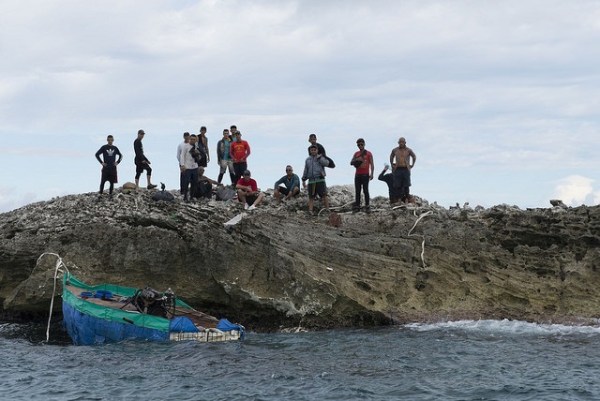
The surge in Cuban migration – prolonged at this point by U.S. policy paralysis – may show a dip soon but is growing tortuous and dangerous.  Since January 12, chartered aircraft and buses have been carrying about 360 Cubans a week from Costa Rica to El Salvador, and then through Guatemala and Mexico to the United States, where they are admitted with special status.  The US$550 cost of the trip is being paid by the migrants or unidentified “donors.”  The air bridge has begun relieving pressure on Costa Rica, which has been caring for 8,000 Cubans since Nicaragua in October halted the underground railway transporting them up the Central American isthmus.  (Three thousand more are reportedly stuck in Panama.)  Despite the progress, an estimated 1,500 migrants have left holding facilities and turned to alien-smugglers to take them to Mexico (for $800) or to the United States ($1,500), according to press reports.

  • Cubans’ fear of a change in U.S. migration policy since reestablishment of U.S.-Cuba diplomatic relations is most often cited as causing the surge, estimated at some 40,000 in 2015. It does not explain the estimated 20,000 who crossed into Texas in 2014 and before, when alien-smuggling networks were less developed.
  • Ecuador’s agreement to establish visa requirements for Cubans promises to slow the immediate flow, but the crisis has revealed corruption among migration authorities throughout the region, which will make stopping it difficult.
  • Central American resentment of the welcome Washington gives illegal migrants from Cuba is growing – aggravated in part by the arrival of airplanes from the United States full of deported citizens in the same timeframe. Senior officials from Costa Rica, El Salvador, and Guatemala have blamed the surge in trafficked Cubans on the preferences the United States gives them.

The U.S. Coast Guard reports an increase in the volume and violence of seaborne migration.  Migrants interdicted in Fiscal Year 2015 (ending September 30) grew to almost 3,000 – 900 more than the previous year – and, according to press reports, surged to 1,500 in the last quarter of 2015.  The Coast Guard says the migrants have concluded that Cuba’s economy will not improve even after U.S.-Cuba normalization, and they want to go before U.S. migration policy changes.  The service has reported a spike in violent confrontations with Coast Guard officers, violence against fellow migrants, and even suicide threats..

The U.S. government’s mantra that it will not change policy toward either overland or seaborne migrants is not working – and could even be backfiring by reminding Cubans of the special treatment they receive upon arrival.  The airlift and bussing of thousands of migrants from Costa Rica to the United States helps Costa Rica deal with its crisis, but also signals yet again to Cubans remaining on the island how far the United States will go to bring them in.  Violence among seaborne migrants has traditionally been rare, but the increased aggressiveness suggests that migrants have the impression that they can act with impunity and still be welcomed into the country.  Overland migrants’ preference to use coyotes, known for violence, is another red flag.  The United States has expended political capital by washing its hands of the Cuban migrant mess in Central America, and grumbling among the region’s leaders suggests that options like airlifts will disappear soon.  U.S. law, including the Cuban Adjustment Act, fully empowers the President to turn off the green light to undocumented Cuban migration – and reality could very well nudge him in that direction soon.

February 4, 2016

U.S. Immigration: In Need of Procedural Reform Too

By Maya Barak*

Photo Credit: Victoria Pickering / Flickr / Creative Commons

Photo Credit: Victoria Pickering / Flickr / Creative Commons

Migrants appear unlikely to get relief soon from President Obama’s appeal to the Supreme Court to overturn the November decision of the 5th Circuit Court of Appeals in New Orleans to continue blocking his 2014 executive actions on immigration.  With the injunction still in place, the President cannot go ahead with expansion of the President’s programs for Deferred Action for Childhood Arrivals (DACA) and the creation of Deferred Action for Parents of Americans and Lawful Permanent Residents (DAPA).  Assuming that the court will grant the case a writ of certiorari (which is not certain), it is unlikely to hear it before June 2016 – at the height of the U.S. presidential campaign.  Furthermore, as AULABLOG has reported, even if the Supreme Court upholds the President’s authorities on DACA and DAPA, it would also be confirming his successor’s power to reverse them.  The next President could easily terminate these actions, leaving many DACA and DAPA recipients in a precarious legal state.  Immigrants, activists, and scholars alike are following the Democratic and Republican primaries with baited breath.

While the uncertainty demoralizes immigrants and their attorneys, so too do the many procedural problems they face.  In 45 in-depth interviews I have conducted over the past two years with Central American immigrants and their lawyers, the need for procedural reform ranked high among the concerns of attorneys.

  • The processes of the Executive Office for Immigration Review, or “immigration court,” are the subject of strident complaints. Good and affordable legal representation and guidance are lacking.  Cultural and linguistic barriers preclude adequate communication between immigrants and judges in the courtroom, as well as between immigrants and asylum officers.  Videoteleconferences during removal (deportation) hearings, wherein the immigrant – and in some cases the judge – appear in a “virtual” courtroom via a two-way video, are often characterized by poor sound quality and shoddy images.
  • Detention during removal proceedings pose particularly serious difficulties for migrants and their attorneys. Accessing legal representation, case information, and necessary documents such as passports or birth certificates is extremely difficult.  Detention centers are often in distant rural areas, far from attorneys.
  • Immigration court backlogs have skyrocketed in recent years, with many courts scheduling hearings as far out as 2020 – forcing immigrants to put their lives “on hold,” unable to obtain a driver’s license or permission to work.

Despite these problems, immigrants say they feel listened to and respected by interpreters, judges, and government attorneys, which increases their belief in the legitimacy of the immigration system.  As problematic as the procedural issues are, immigrants’ greatest concern is that U.S. law as it currently stands does not afford the vast majority pathways to legalization.  Immigrants who truly want to be law-abiding – attracted to the U.S. because it is a country where the “rule of law” exists – regret that they must violate the law to escape the violent and unstable countries from which they come.  Immigration reform and procedural reform are complementary objectives and should go hand-in-hand.  While attorneys’ fixation with due process is understandable, so are immigrants’ desires for a chance to fully (and legally) participate in American society.  Just as U.S. political infighting has prevented comprehensive immigration reform and delayed – and could kill – implementation of DAPA and DACA, so too do the prospects for procedural reforms look bleak as the country enters an extremely political year.

January 14, 2016

* Maya Barak is a PhD candidate at American University’s School of Public Affairs specializing in Justice, Law and Criminology.

Cuba: Limited Opportunity Drives Migration

By Ricardo Torres*

Embed from Getty Images


A generation of young Cubans is eager to leave the island because they feel that recent reforms have opened scant opportunities for them, and they see a much brighter economic future for themselves in the United States or Latin America. Cuba has made vast investments over the years in education, generating a population with high levels of human capital and technological potential, but job opportunities – in the declining state sector, in the 200 or so occupations now authorized for cuentapropismo, and in the slowly opening cooperative sector – hold little promise for Cubans under 30. Although statistics on the socioeconomic background of migrants are lacking, a strong body of anecdotal information indicates that this generation, with aspirations of a career that matches their intellectual and technical capabilities, is concluding that there is little for them in Cuba. For a number of reasons, the conditions necessary to start a new business – such as financing and markets – are simply not there.

Mainstream technologies that are now common in modern societies are lacking in Cuba, hindering it from unleashing the potential of its human capital. Inconsistent and excessively controlled access to computer technology and the internet is also discouraging youths to have hope. Free education, healthcare, and a low crime rate set Cuba apart from most other countries in the region producing large numbers of migrants, but those same factors have created expectations among youths that they should have fulfilling, better-paying jobs – which simply are not abundant. Moreover, people under 35 have fewer emotional or historical attachments to the Revolution. They did not experience the purported “Golden Age” of the 1980s, and the “revolutionary and socialist” Cuba they know is one of only economic hardship.

For migrants elsewhere in the region – driven by endemic poverty, violence, and weak, corrupt institutions – young Cubans’ reasons for leaving the island may appear exaggerated. Cubans’ education, health, and relative security, however, do not discount their profound desire, engendered in part by the Communist Party’s own unfulfilled rhetoric about a better life, to seek better fortunes outside their country. They have been trained for knowledge-based economy, but Cuba’s current development model relegates them to low value-added occupations that cannot generate the rewards to which they aspire (or the prosperity that the society needs and in principle could achieve). U.S.-Cuba normalization, particularly if the two governments allow capital and goods to flow freely, and accelerated reforms in Cuba hold some promise of reducing migration pressures from the island in the future, but persuading Cubans that building a better life on the island rather than emigrating elsewhere will take time and vision.

December 17, 2015

*Ricardo Torres, a CLALS Research Fellow, is Professor of Economics and Cuban economy at the University of Havana, and is affiliated with the UH’s Center for the Study of the Cuban Economy.

U.S.-Cuba Migration: The Powerful “Pull” Factors

By Fulton Armstrong

Cuban women

Photo Credit: Guillaume Baviere / Flickr / Creative Commons

The Obama Administration’s repeatedly stated commitment to continue implementing the Cuban Adjustment Act of 1966 is driving a surge in Cuban emigrants through dangerous human trafficking routes in Central America and causing tensions in a region already tied in knots over illegal migration.  The flow of Cubans up the isthmus has been increasing steadily – reaching some 45,000 over the past year – but seemed a manageable issue until Costa Rica broke up a smuggling ring last month.  The publicity prompted Nicaragua to close its borders to the underground railroad, which is carrying thousands each month northbound.  The migrants have been starting their journey by air from Havana to Ecuador (which until last month didn’t require a visa) and are escorted by coyotes as they bribe their way across borders headed north.  A summit of Central American foreign ministers two weeks ago failed to reach agreement on a Costa Rican proposal to create a “humanitarian corridor” for the Cubans by issuing them safe passage.  Relations between San José and Managua, already on edge as they await an ICJ decision this month on a territorial dispute, have turned bitter.

The special treatment that Cubans receive upon setting foot in the United States – including automatic access to permanent residency in one year – is the main stimulus of the flow.  The Clinton Administration adjusted how it handled those intercepted at sea, establishing a distinction between intending migrants with “wet feet” and “dry feet,” which reduced the seaborne flow somewhat.  But Cuba’s decision in 2013 (long urged by the U.S. and international community) to stop requiring citizens to get exit permits; the flow of a billion-plus dollars into Cuba through remittances and small businesses (with which to pay coyotes and corrupt officials along the way); and the growing sophistication of smuggling networks in Central America have fueled a shift in the flow overland.  Despite the Administration’s no-change pledge, some intending migrants say the current rush is being driven by fear that U.S.-Cuba normalization will end the preferences granted to Cubans who reach U.S. soil.

The Adjustment Act authorizes – but does not require – the President, through the  attorney general, to grant parole to Cubans arriving into the United States illegally and grant them permanent residency one year later.  In the absence of any change in Washington’s approach, Cubans will certainly try to avail themselves of its generous provisions.  To move the thousands stuck in Central America off the front page there, Washington may issue them expedited visas and help them with transportation to the United States.  Such gestures, however, will have a high political cost throughout Central America, where the U.S. has asked governments to stanch the movement of their own citizens fleeing violence and dire poverty, and where even well-off, law-abiding citizens have to jump through hoops and pay hundreds of dollars for tourist visas.  As the impasse in Central America grew intense last month, the State Department tweeted a reminder that “There exist legal and safe options for Cubans who want to migrate to the United States.”  Reversing policies that encourage illegal and unsafe migration – while proposing that Congress support a doubling or tripling of the current 20,000 Immigrant Visas the Embassy in Havana issues each year – would make a lot of sense.

December 7, 2015

AULABLOG will examine the powerful “push” factors driving migration from Cuba in a subsequent article.

Judicial Activism Prolongs Immigrants’ Angst

By Maya Barak*

Photo Credit: Justin Valas and David Schexnaydre / Flickr / Creative Commons

Photo Credit: Justin Valas and David Schexnaydre / Flickr / Creative Commons

Legal maneuvering to block President Obama’s executive actions on immigration is keeping up to 4 million undocumented immigrants in limbo and, with the U.S. election campaign gaining momentum, dims prospects for them to participate in society more fully and openly anytime soon.  Texas and 25 other states filed suit in February hoping to overturn Obama’s expansion of his 2012 Deferred Action for Childhood Arrivals (DACA) and creation of Deferred Action for Parents of Americans and Lawful Permanent Residents (DAPA).  A panel of three judges for the 5th Circuit Court of Appeals (New Orleans), one of the most conservative courts in the country, heard the case in July, but the case is still pending – and the court’s temporary injunction remains in place.  Observers call their behavior judicial activism because the panel has deliberately eschewed its normal practice of 60-day decisions in order to prevent a rapid appeal by the Obama administration from reaching the Supreme Court during the Court’s current term.  The deadline for appeals to the Supreme Court was October 23.

If the courts – the 5th Circuit Court of Appeals (unlikely) or the Supreme Court (unknown), ultimately decide in favor of the Obama orders, DACA and DAPA would permit undocumented immigrants who entered the U.S. prior to 16 years of age and have lived in the U.S. continuously since 2010, along with eligible parents of U.S. citizens and lawful permanent residents, to apply for temporary relief from removal (deportation) and a work permit for three years.  In any case, the next President, who takes office in January 2017, could terminate the actions, throwing applicants for DACA and DAPA protections back into a precarious legal state – with their identities and whereabouts registered with immigration authorities and lacking relief from deportability.  A Central American asylee told me his immigration process, if all goes well, will have taken him 21 years.  “That’s a lifetime,” he said.  “To really feel like a citizen, like this is my home, that they can’t kick me out … So that’s where the system is failing me, is failing us.”

The delay for President Obama’s executive actions to take effect is just one of many lengthy waits individuals, both with and without legal status, experience while caught up in the U.S. immigration system.  Wait times for visa applicants can extend into the double digits – more than 20 years for family-sponsored visas for Filipinos, for example.  Not only are the U.S. Customs and Immigration Services (USCIS) and the State Department, which are primarily responsible for visa processing, backed up; the Executive Office for Immigration Review (EOIR), the nation’s immigration court system, is experiencing multi-year delays as well.  Fifty-nine immigration courts handle an average of 300,000-400,000 cases per year.  Detained immigrants spend months in detention waiting for hearing continuances and final hearings, while non-detained immigrants spend years awaiting their final case outcomes.  These individuals are forced to put their lives on hold, not sure if they will be allowed to stay or forced to leave, many unable to obtain work permits or driver’s licenses.  The expansion of DACA and creation of DAPA would alleviate some of the tension on America’s overburdened immigration system while individuals around the country and the world await meaningful and comprehensive immigration reform.  In the meantime, agencies managing U.S. immigration have little incentive and too few resources to speed up processing.  Like millions of immigrants, they are simply biding time.

October 29, 2015

* Maya Barak is  PhD candidate at American University’s School of Public Affairs specializing in Justice, Law and Criminology.

U.S. Government Abuse of Apprehended Migrants

By Michael S. Danielson*

Photo Credits: Larry Hanelin, Kino  Border Initiative, 2015.  All Rights Reserved.

Photo Credits: Larry Hanelin, Kino Border Initiative, 2015. All Rights Reserved.

The U.S. Customs and Border Protection (CBP) is not fulfilling its obligation to protect the civil and human rights of migrants apprehended, detained and deported back to Mexico.  A study released this week entitled “Our Values on the Line: Migrant Abuse and Family Separation at the Border” (full text) found that more than one-third of deported migrants experienced some type of abuse or mistreatment at the hands of U.S. immigration authorities.  The abuses included theft, physical abuse, verbal abuse, and inhumane detention conditions.  In violation of U.S. Department of Homeland Security (DHS) policy, these conditions include but are not limited to being held for over 12 hours in facilities without beds, overcrowding, excessively low temperatures, lack of adequate food, and denial of medical treatment.  Commissioned by the Jesuit Conference of Canada and the United States and the Kino Border Initiative (KBI), the report details the results of an in-depth survey of 358 Mexican migrants deported from the United States to the border city of Nogales, Mexico, from July 2014 to March 2015 – and corroborated by short-form surveys of 7,507 other migrants in the same area.

  • Since 2005 CBP has sought to deter Mexican migrants from attempting to enter the U.S. through a policy of “enforcement with consequences.” Formally launched in 2011 as the “Consequence Delivery System,” this package consists of measures against individual migrants that are so harsh as to be obviously intended to cause hardship and suffering.  In so doing, Border Patrol has abrogated its previous commitment, undertaken in 2004, to use its authorities to preserve family unity and ensure humane treatment of apprehended migrants.  Making things worse, Border Patrol agents often incorrectly enter names into computer databases, deny access to phone calls, and deny access to the individual’s consulate.
  • Two out of three migrants surveyed who crossed into the U.S. with immediate family members and apprehended together by the Border Patrol were separated from each other and deported to different ports of entry days, weeks, or months apart.
  • Twenty-eight percent of migrants surveyed were deported at night – to Nogales and other destinations with high levels of violence – making them particularly vulnerable to abuse by criminals and corrupt police and other public officials. One of every seven women was placed in this vulnerable position.
  • Migrants alleging abuse were unlikely to file a formal complaint. Less than one out of every 12 deported migrants in the survey claiming some type of abuse filed a complaint with U.S. immigration authorities.  Reasons for not filing a complaint include being unaware of the right to do so, fear of retaliation, and a belief that it would not make any difference.
  • The abuses were not carried out by “a few bad apples,” but rather reflected policies across Border Patrol and poor oversight of their implementation. The patterns of abuses are too extensive to argue otherwise.

Punitive border enforcement punishes people whose suffering in their home countries had already grown unbearable, and there is no evidence that these policies deter unauthorized immigration.  In fact, a recent report of the DHS Inspector General found that the CBP has failed to accurately measure the deterrent effect and the cost-effectiveness of the core policies of the Consequence Delivery System.  Evidence is much stronger of the negative and unintended consequences of these policies, both for migrants and border security.  In personal communication presented in the report, CBP’s former Assistant Commissioner of Internal Affairs James Tomsheck attests that an attempt to enhance the enforcement capacity of the agency through a hiring surge of some 12,000 new agents in just over two years was marred by a predictable deterioration of the vetting process and a sharp and consistent decline in “the quality and suitability of the Border Patrol applicant pool.”  This new report points to several key areas for reform to help limit abuse by Border Patrol agents, including stronger independent and internal oversight mechanisms to tackle misconduct and abuse; an accessible and accountable complaint process; an overhaul of CBP training; equipping CBP agents with body-worn cameras; and improving CBP short-term detention conditions.  The study also recommends that deportations to Mexican border towns occur only during daylight hours and that DHS, responsible for CBP, put in place a process to identify family relationships and preserve family unity upon deportation.  Such measures would begin to address the most pressing problems faced by migrants and their families – without triggering a spike in migrant traffic.

September 17, 2015

*Michael S. Danielson, a CLALS Research Fellow, was the principal researcher and drafter of the report.

Can the Republicans Close Their Gap with Latinos?

By Eric Hershberg and Robert Albro

Photo credits: Iprimages, Michael Vadon, Gage Skidmore / Flickr / Creative Commons

Photo credits: Iprimages, Michael Vadon, Gage Skidmore / Flickr / Creative Commons

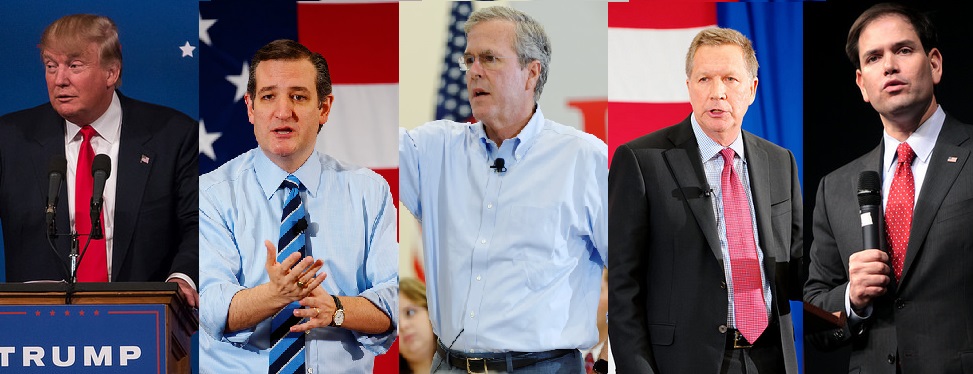
Remarks about immigration made by flamboyant New York billionaire and aspiring presidential candidate Donald Trump have embarrassed many Republicans – and angered many Latinos – but also opened the way for several of his competitors to appear more moderate on the issue.  Echoing comments he made in a televised debate on 6 August, Trump on Sunday issued a policy paper claiming, “For many years, Mexico’s leaders have been … using illegal immigration to export the crime and poverty in their own country (as well as in other Latin American countries).”  He demands that Mexico pay for an impenetrable wall along the border and that Washington deport many migrants, beef up border patrols and narrow opportunities for legal immigration.  Although Trump has often claimed he could win the Latino vote, a poll by Huffington Post/YouGov in June found that 82 percent of Latinos don’t take Trump seriously as a candidate, and subsequent surveys indicate that his rhetoric has damaged the Republicans’ image among them.  (Other polls indicate that Democrats’ immigration proposals, in contrast, have the support of some 60 percent of Latinos.)  The views of the country’s fastest-growing demographic group are significant when considering their prominence in “swing” states such as Florida (24 percent of the population and 14.6 of registered voters), Colorado (21 and 14.2), Nevada (27 and 16) and Virginia (8 and 5).

Most of the 15 other major Republican candidates have tried to ignore Trump’s remarks and the immigration issue overall.  Texas Senator Ted Cruz said he “salutes” Trump and, eschewing “Republican-on-Republican violence,” refused to criticize his views.  But two others – former Florida governor Jeb Bush and Ohio governor John Kasich – have staked out somewhat more moderate positions.

  • Bush stresses the need for more aggressive border enforcement and a crackdown on undocumented residents of “sanctuary cities,” but he also called for an immigration policy that included “documented status” – but not citizenship – for an unspecified number of them. Having a Mexican-born wife and mixed-race children also sets him apart.
  • Kasich last week noted that undocumented migrants are “people who are contributing significantly” to the United States. He said, “A lot of these people who are here are some of the hardest-working, God-fearing, family-oriented people you can ever meet,” and he said he favors a pathway to legal status for people already in the country, adding that such provisions could be part of an immigration reform package.
  • Florida Senator Marco Rubio, who was ostracized by his Republican colleagues in 2013 for proposing reforms along the same lines, has appeared reluctant to criticize Trump, Bush or Kasich – making him possibly the biggest loser on the issue for now.

The elections are still 14 months off, and electoral dynamics change.  Latinos don’t figure in the Republican primaries, and it’s too early to speculate how their voices will play until next year – at which point Donald Trump probably will be seeking celebrity through other endeavors.  Republican strategists have already said that their candidates won’t try hard to court Latinos – and risk alienating the roughly 20 percent of their base in swing states who hold hard-core anti-immigration positions.  Nonetheless, Bush and Kasich’s rhetoric, while still vague on actual policies, may give the party a chance to claim to Latinos that not all Republicans are out to get them.  No Republican on the front line today appears likely to attract majority support among Latinos, but a moderate-sounding approach to immigration could take the rough edges off the party’s image, reduce Latino opposition to it and diminish the issue as a Democratic Party advantage.

August 18, 2015

U.S. Immigration Reform: Stuck Again

By Aaron T. Bell

Steve Rhodes / Flickr / Creative Commons

Steve Rhodes / Flickr / Creative Commons

Opponents of the Obama administration’s executive actions on immigration – measures the President announced last November – have successfully blocked their implementation, setting the stage for a renewed political battle over the issue during next year’s U.S. elections.  Citing frustration with congressional inaction on immigration, Obama had announced that he would use his authority to expand the age limit of the Deferred Action for Childhood Arrivals (DACA) program, which temporarily defers deportation and allows undocumented immigrants to work, and to create a similar program for the undocumented parents of U.S. citizens and permanent residents.  Twenty-six states, led by Texas, filed a lawsuit in response, claiming that Obama violated a constitutional requirement to enforce the law and that he committed a technical violation of the Administrative Procedure Act (APA).  On February 16, the day before DACA was set to expand, a federal judge in Texas issued an injunction on the executive action programs.  The administration filed for a temporary stay of the injunction, which would allow it to begin implementing the programs while the court weighed their legality, but two weeks ago a Court of Appeals panel turned it down.  A long legal process in the 5th Circuit Appeals Court (based in Louisiana) will follow.

Despite this setback, recent precedents suggest that the Administration may yet win its case.  Arizona Sheriff Joe Arpaio, an outspoken opponent of reform, filed a lawsuit against the administration shortly after Obama announced his executive action, but a federal judge threw out the case in December on the grounds that Arpaio had not suffered direct injury from these actions and was thus ineligible to file suit.  Two months ago the 5th Circuit, which has a conservative reputation, unanimously dismissed a lawsuit filed by Mississippi and several Immigration and Customs Enforcement officers that challenged the original DACA program.  As in the Arpaio suit, the court reasoned that the plaintiffs lacked legal standing to bring the case, and – rejecting an argument also embraced by the Texas lawsuit that Obama’s executive action will cost taxpayers thousands of dollars in processing fees for driver’s licenses – the court recognized the economic benefits of the DACA program.  Fourteen states and the District of Columbia filed a brief in court in favor of the government’s case arguing that Texas and its co-plaintiffs have underestimated the fiscal benefits of the executive action programs.

Although the Courts may in the end reject the arguments of Obama’s opponents, they can claim at least short-term success.  Implementation has come to a complete halt, and immigration activists worry that the longer the legal process drags out, the less willing undocumented immigrants will be to apply to the programs and increase their risk of future deportation.  A subsequent appeal to the Supreme Court may push the executive actions back to mid-2016, reinvigorating immigration reform as a campaign issue just as election season is heating up.  Pew Research announced last week that its most recent polling data show that 72 percent of Americans support a path to legal citizenship for undocumented workers in the country, including 56 percent of Republicans.  Presumptive Democratic candidate Hillary Clinton has already pledged her support for reforms that go further than what Obama has tried to accomplish.  Republican candidates have slammed the President’s executive actions as “overreach” but are divided on where to go from there.  Former Florida governor Jeb Bush and Senator Marco Rubio have expressed support for a legislative replacement for DACA, while Senators Ted Cruz and Rand Paul have said they would make reversing Obama’s executive actions on immigration one of their first acts as president.  Wisconsin Governor Scott Walker recently expressed a desire to limit legal immigration as well in order to protect American jobs. Delaying immigration reform may ultimately put the Republican Party’s candidates in a difficult position next year.  If Obama’s executive action benefits family and friends of tens of thousands of Latino immigrants in the months preceding the November elections, the weak Hispanic voter turnout for Democratic candidates in the 2014 midterms is likely to be replaced by enthusiastic and potentially decisive support for a Democratic presidency, particularly if the Republican candidate focuses on appealing to the party’s nativist faction.

June 6, 2015