U.S. Fails to Consider “Best Interests” of Child Migrants

By Eric Hershberg*

Child sitting down on a grass field

The lack of a “best interests” standard in the U.S. Government’s handling of child migrants subjects the children to enduring harm and skews their chances of fair adjudication of their immigration cases. Its absence is aggravated by recent U.S. policies under which a majority of children and families are unable to present protection claims which they are legally entitled to make.

  • The best interests principle is nearly universally accepted. It is enshrined in a vast body of domestic law, such as when determining the home in which to place a child, and in various international human rights instruments. The UN Convention on the Rights of the Child (CRC), which has the force of law in the 196 countries that have ratified it, states that “in all actions concerning children … the best interests of the child shall be a primary consideration.”

The United States is the sole country not to ratify the CRC, but – as a signatory – it pledged not to act in a manner that undermines the best interests principle. Since the late 1990s, the U.S. Government has, on the whole, allowed practices incorporating best interests principles to gain considerable momentum – until the Administration of President Donald Trump brought such efforts to an abrupt halt. Soon after taking office in 2017, the Administration began stripping away the limited safeguards that leaders of both political parties had, albeit sometimes reluctantly, allowed to emerge over the previous two decades.

  • Trump Administration policies have aimed to deter child and family migrants by forcing them either to suffer confinement in increasingly inhumane conditions in detention facilities or await their case outcomes in Mexico. The Administration has steadily sought to erode the baseline protections in the 1997 “Flores Settlement,” which set standards for the detention, release, and treatment of minors. It has ignored the Flores provisions that detained children be held only in “safe and sanitary” facilities and within strict time limits. (U.S. courts having stymied the Administration’s efforts to detain children and families indefinitely.) Other policies have limited the number of migrants allowed to enter the United States each day and have forced families to wait out the immigration process in Mexico rather than be released into local communities.
  • For those children and families undeterred by these obstacles, another set of policies has stacked on requirements that effectively zero out their ability to prevail on their claims for protection. The effort began as a narrowing of the substantive criteria for asylum but, over the last year, has become a de facto ban on asylum for Central American children. Though courts again have played a critical role in thwarting many Administration’s efforts, one failed policy is quickly replaced with another even more drastic attempt to shut off all avenues for relief.

While the Trump Administration has taken rejection of the best interests principle to an extreme, no U.S. President has been willing or able to provide strong leadership in guaranteeing the protections to migrant children that U.S. domestic law affords citizens and residents. Widespread perceptions fed by the Administration that migrants are gaming the system make serious discussion of solutions extremely difficult. Policymakers and immigration officials often claim that embracing the best interests principle would create an open border. But respect for children’s best interests can co-exist with a full and fair adjudicative process. It simply guarantees children’s protection, family integrity, and wellbeing during and after a just determination process – even in the face of rejection of their petitions. Rather than updating the U.S. immigration infrastructure and building regional cooperation ensuring children’s well-being, the Trump Administration has further widened the divide between international and domestic child protection laws and U.S. immigration policy.

  • With the underlying drivers of migration remaining strong and likely to spike as the economic impact of the COVID-19 pandemic hits Central America, the gap between principle and policy will have ever greater consequences for children, whose best interests are increasingly trampled. The repercussions are enormous, according to numerous studies. For children who are already vulnerable, ongoing family separations are traumatic experiences with potentially long-term implications for their physical and mental health. Unsanitary conditions in detention centers were dangerous even before the pandemic. Inadequate access to food, drinking water, clean clothing, and daily necessities – soap, toothbrushes, and towels – has been well documented. Psychologists fear that these children will struggle throughout their lives, be it in the United States or in their native countries.

July 6, 2020

* Eric Hershberg is the Director of CLALS. The report In Children’s Best Interests: Charting a Child-Sensitive Approach to U.S. Immigration Policy (click here for the full report), based on a joint symposium held in February with over 300 participants. The full program and video recordings are here.

The Other Pandemic

By Alan M. Kraut*

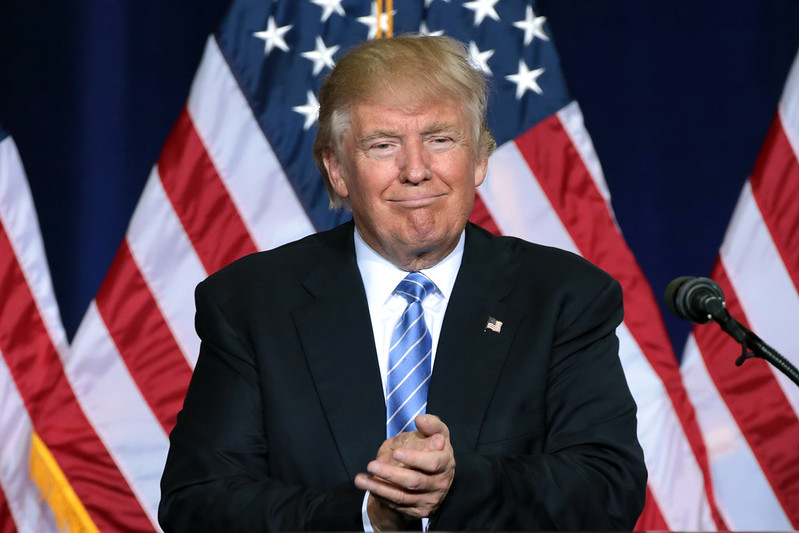
Donald Trump speaking to supporters

Donald Trump speaking to supporters at an immigration policy speech at the Phoenix Convention Center in Phoenix, Arizona. / Flickr / Creative Commons License

The coronavirus has sparked a virulent wave of racism and intolerance in the United States – as seen in past pandemics – but strong leadership can blunt or even stop it. The current wave echoes a contemporary ethnocentric nationalism that has infected many societies and political leaders around the world.

  • U.S. President Donald Trump denounced the anti-Asian prejudices – including epithets and, at times, spit and punishing blows against Chinese-Americans – that were stirred by his own use of the terms “foreign virus” and “Chinese virus,” but the damage was done. A community was put on notice, “You are the ‘other’ and you endanger us all by your presence.”

Throughout human history, groups defined by race or religion have been persecuted because of their association with disease. The Black Death of the Middle Ages was blamed on Jews, triggering ferocious physical persecution that resulted in tens of thousands of deaths, often by torture. Sociologist Erving Goffman observed that the most essential version of stigma was the abomination of the body – because the disease-causing contagion cannot be detected with the naked eye or easily avoided.

  • Throughout American history, epidemics have often been blamed on a specific immigrant or ethnic group and triggered anti-migrant policies. A cholera epidemic in 1832 was blamed on Irish Catholic newcomers who were poor and lived in congested conditions. The anti-Catholic passions of Protestant evangelicals were a factor.
  • Before the Quarantine Act of 1878 quarantine powers shifted from the states to the federal government. Each state had its own laws and immigration depots, such as Castle Garden in New York, which opened in 1855. Later, at federal depots, physicians used increasingly sophisticated medical instrumentation and diagnostic techniques to admit the healthy and those sufficiently robust to support themselves, but their expertise did not curb xenophobic hysteria or the association of immigrant groups and their behaviors with specific diseases. Chinese laborers were blamed for bubonic plague in the San Francisco area in the 1880s, and Italians were blamed for a polio epidemic that swept through the east coast of the United States in 1916. Anti-Semitic xenophobes dubbed tuberculosis the “Tailor’s Disease” or the “Jewish Disease” despite the lower rates of the disease in Jewish communities than in many non-Jewish communities in the United States.

Xenophobia and racism have not always surged in the United States during pandemics – thanks to greater public awareness of immigrants’ contributions and to strong political leadership.

  • There were fewer incidents of xenophobia during the 1918 influenza pandemic because immigration declined dramatically (from 1,218,480 a year in 1914 to 110,618 in 1918), and critics found it awkward to blame newcomers because over half a million foreign-born soldiers of 46 different nationalities were serving in the U.S. military.
  • Many Presidents of both parties since then have not hesitated to encourage Americans to call upon the better angels of their nature with respect to the foreign-born. Sitting in the shadow of the Statue of Liberty, Democratic President Lyndon Johnson signed an immigration act in 1965 that abandoned the most restrictive immigration policy in American history and replaced it with a more welcoming policy. Years later, former Republican President George W. Bush echoed those sentiments, noting that “America’s immigrant history made us who we are.”
  • Xenophobia during an epidemic may be a “social ritual” that reaffirms a hypernationalism in the native-born, but when the drama concludes and the curtain descends, the prejudice and acts of discrimination can either transfer to a different stage or leaders can lead us away from them.

Little such leadership has come from the current occupants of the White House. Presidential advisor Stephen Miller and his allies claim that stopping new arrivals crossing the country’s southern border is necessary to preserve public health from illnesses borne by migrants. In 2018, the surge of migrants toward the border led to inquiries that Miller hoped would reveal – but did not – the spread of highly contagious diseases that endangered residents of states where they settled. More recently, Miller has encouraged the President to use his public health powers to seal the borders. One such federal law, the Public Health Service Act of 1944, allows the Surgeon General and the President to exclude from the U.S. individuals who might pose a danger because they could bring in “communicable diseases.” Ironically, while it has been Miller’s intention to target Latinos, many of them are doing the “essential work” that has kept the nation going during the crisis – in meat processing plants, grocery stores, and hospitals, where they are involved directly in the care of Covid-19 patients. Many thousands of those providing patient care are Latino “Dreamers” protected by the Deferred Action for Childhood Arrivals (DACA) program that the White House wants to end.

May 12, 2020

* Alan M. Kraut teaches history at American University.

Lessons Learned from Last Century’s Climate Change Migration

By Elizabeth Keyes*

Then and Now

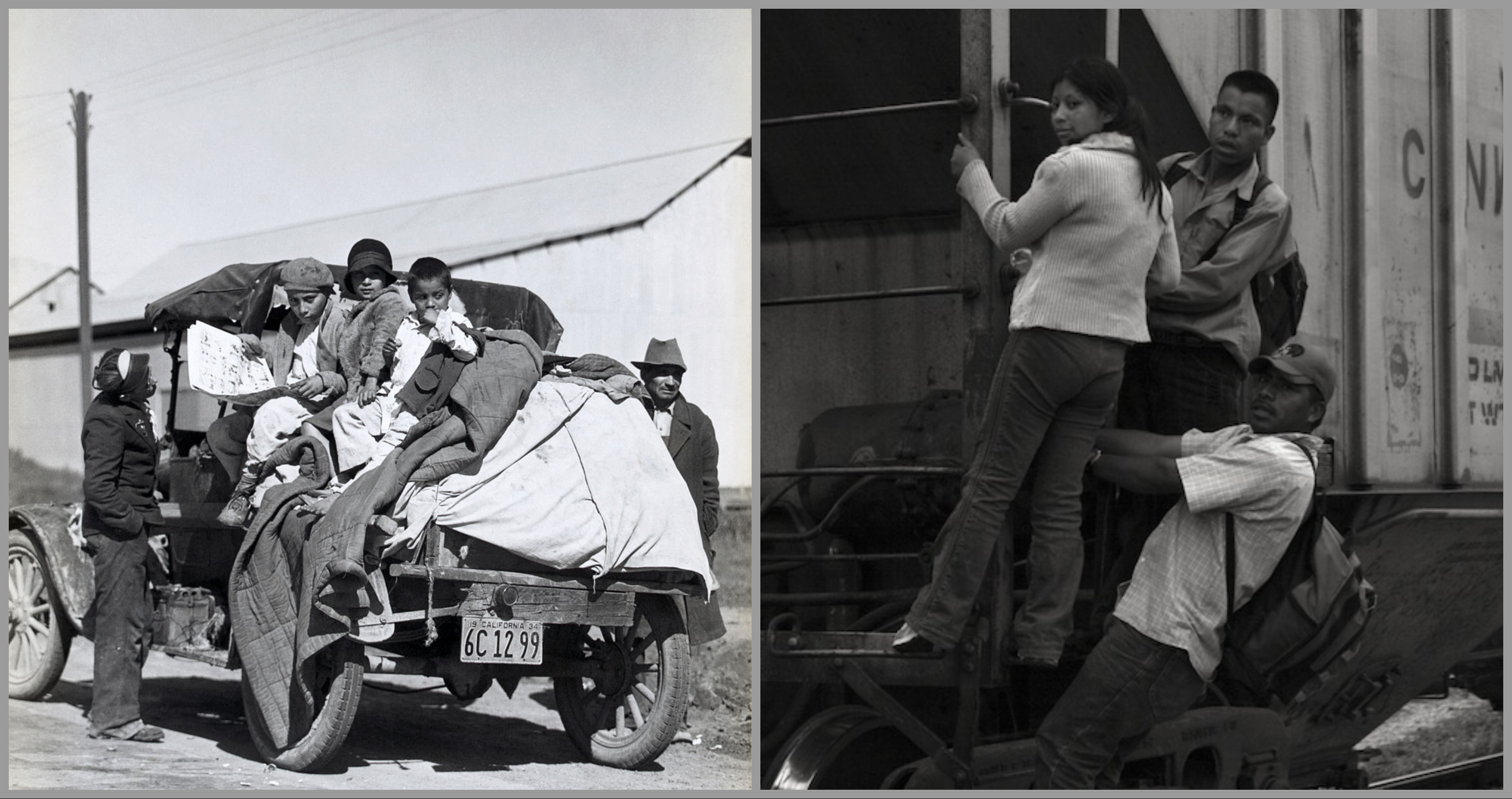
Left: Migrant Workers in California, 1935/ Dorothea Lange/ U.S. Library of Congress/ Wikimedia Commons (modified)// Right: Central American migrants find quarter in southern Mexico/ Peter Haden/ Wikimedia Commons (modified)

Central Americans seeking asylum in the United States are not the first victims of government policies that discourage migration, send law enforcement to turn them away at a border, ban them from receiving public benefits, and pass laws seeking their immediate repatriation: the Dust Bowl migrants, almost 100 years ago, faced the same fate. Their story is more complex than that of John Steinbeck’s Joad family turning to labor in California’s “factories in the field.”

  • Drought came to Oklahoma and other Dust Bowl states after decades of agricultural practices that prioritized heavy production at the expense of land management and conservation. Corporate farmers favored practices maximizing short-term yield over long-term sustainability. The New Deal bought up farmland, displacing tenant farmers. Relief at the peak of the Dust Bowl in 1934 was mismanaged, and it did not help people stay.
  • Affected residents headed to California, which during a previous economic boom had sought out “migrant” labor from elsewhere in the United States. Many had a relative or friend already in California who could provide a migration pathway, just as happens with migration in 2020. Those with friends or family in the cities fared relatively well, but those who ended up in the labor camps of California’s valleys fared extremely poorly.

As the state’s boom ended in the Great Depression, California made efforts to discourage the migrants, erecting billboards along Route 66 warning would-be migrants that California was no longer an ideal destination. The state criminalized the act of helping indigents migrate, and the Los Angeles Police Department set up “bum blockades” to refuse them entry.

  • California’s responses looked a lot like current efforts to stop migrants seeking to enter along the U.S. border with Mexico: criminalization and walls. Internally displaced persons in the 1930s faced the same kinds of xenophobia that the migrants from outside the United States do today, defining “Okies” as a problematic “other” as if from a foreign country. Although they were, indeed, “fellow Americans” and driven from the land by environmental disaster, it took almost a decade for the U.S. Supreme Court – in Edwards v. California – to clarify that states could not bar migration from other states, and to affirm an ethic of sharing hardships across state lines.
  • The Dust Bowl migrants entered a labor market with strong racial and class inequities. As the United States deported roughly a million Mexican and Mexican-American farmworkers between 1929 and 1936 (with an estimated 60 percent of those being U.S. citizens wrongfully deported), the new migrants took over those jobs.

State and international borders differ legally, of course, in critical ways, but the experience of Dust Bowl migrants nonetheless sheds light on the possibilities for Central American and Mexican migrants today. Climate change is again increasing the drivers of environmental displacement, both internal and international, both slow-onset and acute. Just as a focus on environmental justice and sustainable agriculture would have reduced the need for migration out of the Plains in the 1930s, work done now to mitigate and adapt to climate change would help Central American and Mexican farmers stay in place. And in the communities receiving migrants, we see that California adapted and accommodated them once the Supreme Court refused to endorse California’s deterrent strategies. The Court recognized in the strongest terms that California was enduring great upheaval but determined that it could not use its state border to limit that upheaval.

The same Court also routinely upheld the federal government’s right to use the national border to inoculate the country “from difficulties common to all.” International immigration is legally, if not dynamically, morally or philosophically, different from internal migration.

  • Nonetheless, the Edwards decision provides a wonderful exercise in “what if” thinking. Because of the decision, those suffering in Oklahoma and Kansas had a place to go and could build new lives in California, changing the state but not ending it. Indeed, the state has the largest economy of all 50 states and by one measure is the “14th happiest” in the nation. California is an example of state resilience to migration, even dramatic levels of migration.
  • Perhaps the pain of the Dust Bowl – the forces that sent people migrating and the realities they faced in their new homes – offer us important lessons for international migrations caused by climate. There is no international-style Edwards approach, and refugee law offers no good answers. But the full, complicated Dust Bowl history encourages us to move beyond fear and xenophobia to face the challenges forthrightly, knowing that we do have a remarkable capacity for adaptation.

April 15, 2020

* Elizabeth Keyes teaches law and directs the Immigrant Rights Clinic at the University of Baltimore School of Law.

Challenges to “Safe Country” Strategy in Central America Mounting

By Fulton Armstrong

San Ysidro

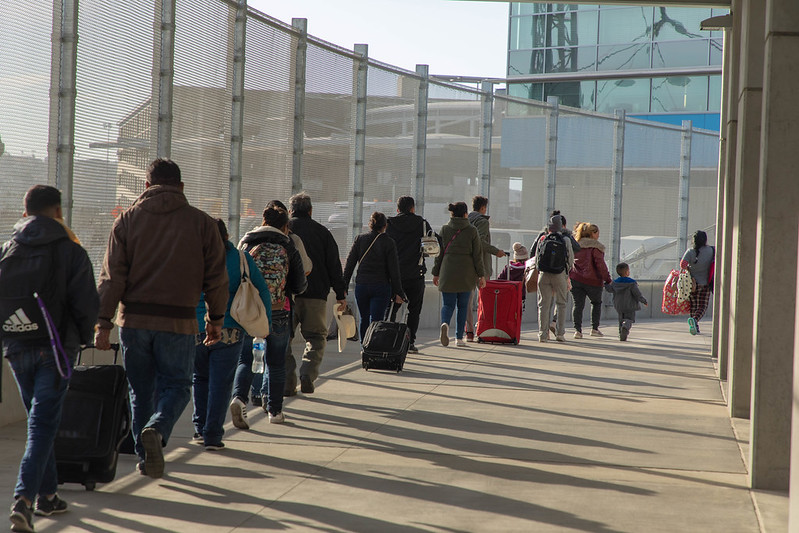
Processing at the San Ysidro Port of Entry/ U.S. Customs and Border Protection/ Flickr/ U.S. Government Works

Challenges to the U.S. government’s “Asylum Cooperation Agreements” (ACAs) with Central American countries – under which asylum seekers approaching the U.S. border are sent to camps in the Northern Triangle – are mounting fast, but the administration of President Donald Trump does not appear likely to budge significantly from its current approach. Under the threat of loss of $143 million in aid to the three Central American countries, Guatemala signed its agreement under former President Jimmy Morales last August; a similar accord with Honduras is to “come online any day,” according to U.S. officials; and El Salvador is also deep in negotiations. (Aid has been restored.) The ACAs stipulate that asylum seekers apply for asylum in the “first safe country” they enter after fleeing their own. As a result, the United States has sent about 800 persons of various nationalities to Guatemala.

  • Immigration and human rights advocates have condemned the agreements. They report that Guatemala – where most asylum seekers have been sent so far – lacks the ability to process them. Human Rights Watch recently reported, moreover, that individuals repatriated to El Salvador since 2013 – as envisioned by the ACAs – have been assassinated at an alarming rate. The group has confirmed 138 cases of individuals killed after deportation and another 70 beaten, sexually assaulted, extorted, or tortured.
  • The chairs of the U.S. House Committee on Foreign Affairs and relevant subcommittees (all Democrats) have called the ACAs “illegal, dangerous, and antithetical to U.S. values.” In a letter to Secretary of State Pompeo, they said that U.S. law requires that asylum seekers have “access to a full and fair procedure for determining a claim to asylum” – which the Guatemalan facilities lack. The Congressmen assert, moreover, that U.S. law requires adherence to international law on non-refoulement, which mandates that asylum seekers cannot be sent to a country in which they will face further persecution.
  • The workers’ union representing 700 U.S. asylum and refugee officers has declared that the agreements and the administration’s implementation of them are a “violation” of international treaty obligations. These are the career specialists on the front line charged with carrying out the policies. The Guatemalan government has raised its own concerns, citing its “very limited capacity” to process asylum-seekers sent there. Newly inaugurated President Alejandro Giammattei has never appeared comfortable with the ACA and has asked Washington for “clarifications” of his country’s obligations under it.

U.S. reaction so far has been to deny anything is wrong. Senior officials say that very few asylum seekers deported to Guatemala are applying for asylum there, with the vast majority instead choosing to return to their home countries. Citing experts, the U.S. congressmen say that less than 4 percent have “been able to seek protection through Guatemala’s overburdened system.” Others report that victims of violence in their home countries face similar prejudices in Guatemala.

  • Apparently to encourage potential asylum seekers to apply for U.S. visas, the administration on March 5 announced it is increasing H2‑B visas for non-agricultural workers this year, with 10,000 reserved for applicants from the Northern Triangle. But if H2‑B visas are issued along the same guidelines as other visas, U.S. consular officers will be required to deny them to applicants they have reason to suspect will try to remain in the United States – as all ACA cases have tried.

The ACAs are a key element of the Trump administration’s efforts to move the “wall” blocking asylum seekers as far off the U.S. border as possible, shifting the burden to the same Central American countries whose poverty, violence, and corruption are driving citizens to flee. However compelling the Foreign Affairs Committee’s arguments that the administration is violating U.S. law and values, the letter’s impact has been blunted by widespread perceptions that the novel coronavirus (COVID-19) is further proof that the United States needs to keep outsiders from entering the country. The Administration is also not swayed by the fact that the U.S. State Department’s own repeated warnings that U.S. citizens limit travel to Northern Triangle countries – because of widespread “violent crime … rape, and narcotics and human trafficking – contradict the assertion that the ACA partners are “safe countries.”

  • Guatemala’s call for “clarification” of implementation guidelines and talks on the final details of Honduras and El Salvador’s arrangements give the administration a chance to make cosmetic adjustments and, perhaps, promise more resources to the designated “safe countries.” But it has given no sign of reconsidering its overall approach. The Trump administration remains as committed as ever to addressing the migration problem by closing the U.S.’ door rather than addressing the underlying conditions in the region driving people to risk their lives to get to the United States. Central American analysts are already deeply concerned that the economic impact of the COVID‑19 pandemic (including 1 percent growth or less), coupled with USAID’s own budget cuts, spell reduced aid and a worsening of the vicious cycle of poverty that drives emigration and empowers illicit actors.

March 17, 2020

Mexican Migration Crackdown Creates a “Wall” Before the Wall

By Maureen Meyer and Adam Isacson*

A truckload of military police, wearing National Guard armbands, passes through central Ciudad Hidalgo

A truckload of military police, wearing National Guard armbands, passes through central Ciudad Hidalgo/ Adam Isacson, WOLA

Facing U.S. threats to impose potentially steep tariffs on Mexican goods last June, Mexico has adopted a series of measures along its southern border with Guatemala that, while somewhat effective at stopping the flow, seems a partial solution with high financial and political costs.

  • Mexican authorities’ apprehensions of migrants in June, after U.S. President Donald Trump tweeted his threats, reached 31,416. Captures that month and in July were three times greater than the same period in 2018. (The total of migrants and asylum-seekers apprehended by the United States and Mexico last year is estimated to be more than a million.)
  • Mexico deployed nearly 12,000 of its newly minted National Guard troops to the southern border states with Guatemala. Many identify themselves to visitors as “soldiers”; appear to have little (or no) specialized training for migrant interdiction; and wear military uniforms with black armbands that read “GN.” The Guard, however, has not reduced criminal activities against migrants. Local and international experts report that criminal elements assault, rob, rape and kidnap people transiting the area and prosecutors’ offices take little action to investigate these criminal attacks. Observers report that coyotes, working with corrupt officials, arrange safe passage for many migrants on designated “safe buses” for up to US$2,600 per person.
  • Local observers say the enhanced operations have largely shut down what was the most transited of the four main routes through which migrants have traveled in recent times, but some people are learning to take alternate routes through puntos ciegos (blind spots) where government patrols don’t often go and where risks for migrants can be greater. One such corridor, in central Chiapas, seems to continue to be exploited robustly.

The Mexican government has been reluctant to deal with the consequences of its acquiescence to Washington’s demands, according to numerous border-area observers. At its peak, the aggressive patrolling filled detention centers to far over capacity (some at 300 percent capacity) with poor health conditions and alleged mistreatment. Apart from the members of the National Migration Institute’s Citizen Council, officials have restricted independent monitoring of detention facilities by human rights groups and migration specialists. The country’s refugee agency is on the verge of collapse, yet the Mexican government has yet to allocate sufficient resources to it. Over the course of 2019, the Mexican Commission for Refugee Assistance (COMAR) received over 70,000 asylum requests – more than double in 2018 – but its 2020 budget is a mere US$2.35 million (4 percent of UNHCR’s budget for Mexico operations).

  • The U.S. push has put the administration of President Andrés Manuel López Obrador (AMLO) in a bind. On his first day in office, he signed a decree with Guatemala, Honduras, and El Salvador – from which the vast majority of migrants come – to address the underlying causes of the migration. Another agreement was reached with El Salvador, to fund programs to preserve and create jobs in agriculture. While the Mexican government has not left behind the focus on reducing the “push” factors of migration, it has been largely put on the back burner.

The Mexican government has put managing U.S. relations ahead of addressing the strategic migration problems it faces. It did not push back when the Trump administration announced it would be returning U.S.-bound asylum seekers to Mexico to wait for their hearings through the “Remain in Mexico” program, and under the threat of steadily rising tariffs up to 25 percent on Mexican goods, it has largely complied with nearly all U.S. demands. The results have been mixed, and the costs have been high.

  • Sources in the southern border region report that the National Guard deployment and other Mexican actions over the past seven months have reduced – although estimates range from “not very significantly” to “probably just around 30 percent” – the number of Central American migrants arriving in Mexico. Shelters are not as full as they were in mid-2019, but several remain very full. Data on other nationalities is sketchy, but anecdotal information indicates that Cubans, Haitians, and even Africans continue to find their way to shelters in the area.
  • In complying with U.S. demands, AMLO and his government have risked violating some of their fundamental stated values. AMLO had campaigned on independence, transparency and improved human rights, but the border deployments of the National Guard represent a further militarization of Mexico’s border security strategy – with a significant risk of human rights violations – and the detention of fearful Central Americans and extra-continental migrants in substandard conditions.

January 17, 2020

* Maureen Meyer is Director for Mexico and Migrant Rights at the Washington Office on Latin America (WOLA), and Adam Isacson is WOLA’s Director for Defense Oversight. The full text of their report is at The “Wall” Before the Wall: Mexico’s Crackdown on Migration at its Southern Border.”

Does Mexico’s “3×1 Program for Migrants” Encourage Autodefensas?

By Clarisa Pérez-Armendáriz and Lauren Duquette-Rury*

Autodefensas

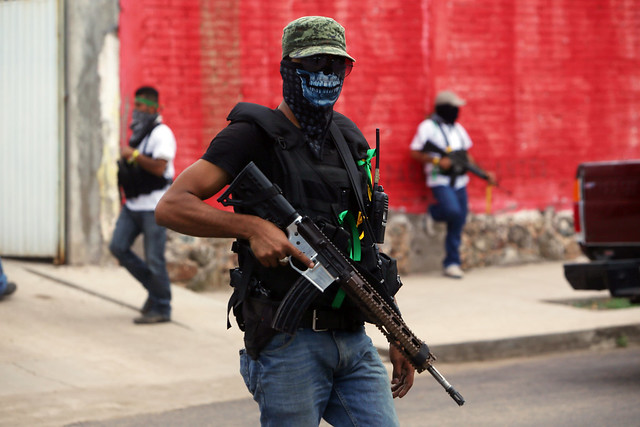
Autodefensa in Michoacan / Esther Vargas / Creative Commons

Mexico’s armed vigilante groups, or autodefensas, are more likely to exist in those municipalities where migrant organizations – called hometown associations (HTAs) – help fund projects back home in collaboration with local authorities. HTAs are voluntary civic associations or clubs located in migrants’ destination countries – the United States for Mexicans – comprised of individuals with a shared attachment to a common place of origin. HTAs raise funds that they send home to fund public goods such as roads, health clinics, potable water, electricity, drainage and sanitation, and schools, often in partnership with government authorities. Since 2002, the Mexican government has run a “3×1 Program for Migrants” that matches the remittances that HTAs send back to their origin community at the local, state, and federal levels of government

  • In a recent article, we analyze data from 2,352 Mexican municipalities in 2002-13 that show that vigilante groups were more likely to emerge in 2013 in municipalities where HTAs participated frequently (six or more times during a 10-year period). The vigilante groups are parochial organizations comprised of private citizens who, acting outside of the formal mechanisms or institutions sanctioned by the state, take up arms to provide security for their communities.

The repeated cooperation between migrants and state and local actors appears to enable community members to act collectively in security and justice matters as well as public good projects. Notably, the depth and frequency of contact are more important factors than the amount of investment and the presence of drug-related violence or activities. Mexico’s vigilante groups apparently are not merely a response to contemporary security crisis, state incapacity, or unequal access to security. Rather, they are a function of citizen capacity enhanced by transnational linkages, strengthened by 3×1, to mobilize collectively to provide security for their communities.

  • In contrast to research indicating that migrant-state transnational co-production partnerships contribute to strengthening democracy by enhancing collective organizational capacity through preexisting levels of social capital, resources, and knowledge, we find that HTAs and their communities can marshal their new capacity to form organizations that carry out informal, non-state, extra-legal armed actions. Autodefensas can threaten state capacity and the rule of law. While they tend to be community-based organizations and have contributed to reducing violent crime, the mechanisms for citizens to hold these groups accountable are limited and human rights violations and extrajudicial killings are common.

The 3×1 Program rules prohibit the funding of private security in municipalities. Program funds could conceivably be misallocated strategically, but doing so to fund nonstate armed groups would entail significant risks and costs. It would be easier for HTAs to simply reallocate their collective remittances toward projects – including public security –  outside of the 3×1 program.

  • The HTA’s motives merit further inquiry. While evidence is lacking to demonstrate that HTAs’ desire to protect their investments is a key factor in encouraging vigilante group formation, they and their local co-sponsors are indeed targets of extortion by criminal gangs. They may be seeking to protect their current and future public goods investments by adapting the successful transnational coproduction model for public good provision to specifically enable vigilante group formation in Mexico. The emergence of return migrants from the United States as key leaders of vigilante groups in 2013 –  including José Manuel Mireles and Luis Antonio Torres (“El Americano”) – makes the question of social and political remittances all the more compelling.

July 23, 2019

* Clarisa Pérez-Armendáriz  teaches Politics and Latin American Studies at Bates College and is guest editor with Ana Isabel López García (GIGA-Hamburg) of a Special Issue in the Journal of Ethnic and Migration Studies on how Mexican emigrants respond to and influence political violence in Mexico.  Lauren Duquette-Rury teaches sociology at Wayne State University and is the author of Exit and Voice: The Paradox of Cross-Border Politics in Mexico (University of California Press, 2019).

Building Walls, Closing the Border: Not the Answer

By Ernesto Castañeda with Maura Fennelly*

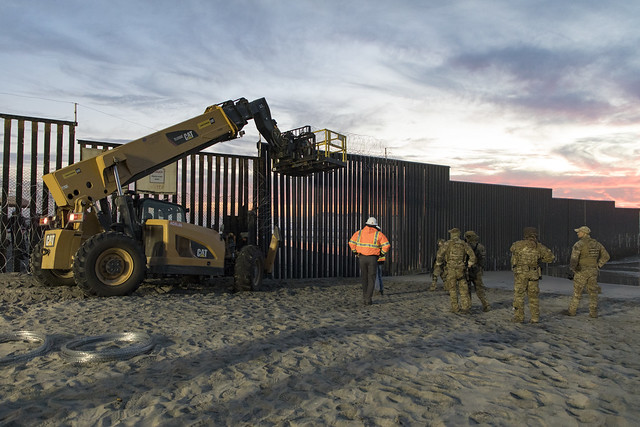
U.S. Border Patrol stands watch during border fence reinforcement / U.S. Customs and Border Protection / https://www.flickr.com/photos/cbpphotos/44997385775/in/photostream/

U.S. Border Patrol stands watch during border fence reinforcement / U.S. Customs and Border Protection / https://www.flickr.com/photos/cbpphotos/44997385775/in/photostream/

Trump is widely thought to have originated the call for a wall to keep out migrants, but animosity toward Latin Americans has deep roots in U.S. history and political discourse – and the tough task of reversing it is long overdue. Presidents Bill Clinton and George W. Bush criminalized migration and secured funds to build fences and militarize the border. President Obama also oversaw the deportation of over 2 million migrants, some of whom ended up in camps on military bases.

Immigration remains one of the most debated issues, and immigration policies have a profound impact on families and communities with foreign-born members. Many long-time residents and some politicians see immigration as a cultural threat and are opposed to it. In Building Walls: Excluding Latin People in the United States, we trace the building of symbolic and physical walls between white Americans and Latin people. Boundary formation occurs at three levels:

  • Categorical thinking. The modern nation-state rests on the assumption that exclusion is necessary to protect the welfare of citizens. Migrants can be viewed as a threat to the autonomy of the nation. Immigrants can be “naturalized” and offered full citizen rights, but this assumes that they must change to fit in. One of the main narratives driving strict border surveillance is that migrants will negatively affect the economy, despite research continuing to show that long-term employment rates of American citizens’ are not harmed by immigration. Low-skilled wages are barely affected by immigrants entering the American workforce.
  • Anti-immigrant speech. Minority populations, including immigrants, have been subject to an increase in hate crimes since the 2016 election. White Nationalist groups use social media and the public sphere to disseminate anti-immigrant views. Members of a splinter militia group – the Minutemen American Defense – killed nine-year-old Brisenia Flores and her father in 2009 (and were convicted in 2011). The Minutemen, while declining in membership, have inspired the creation of smaller border patrol groups.
  • Immigration as an experience. Despite some political leaders’ claims of insecurity at the border, U.S. cities right next to Mexico are safe. Research shows that most border-area residents enjoy being next to Mexico. Across the nation, moreover, a vast majority – about 75 percent – believe that immigration is good for the United States. Nonetheless, Latin American migrants still struggle to find a home and a sense of belonging. In interviews, we find that many experience “social invisibility” – a feeling of existing in significant numbers while being unrecognized as full members. Interviews with undocumented migrants we conducted in El Paso reveal that over 75 percent reported that employers, landlords, and neighbors threatened to use their undocumented status against them. These experiences affect migrants’ well-being and mental health.

While the United States maintains durable inequalities between white Americans, Latin people, and other marginalized groups, the historical and social forces shaping our immigration narrative can be changed so that we empathize with, and no longer demonize, people who are looking for a home. Trump’s efforts to expand existing walls and build new ones are central to his strategy. He led the longest government shutdown in U.S. history and declared a national emergency because Congress would not fund it as he wished. However, his threats to close the border, impose tariffs, and other drastic actions show ignorance of the major impact these actions would have on the United States’ access to inexpensive agricultural, industrial, and technological products from Mexico. A border closure would not be sustainable beyond a few days. While polls show that 41 percent of people in the United States support the construction of Trump’s border wall, a majority of Americans know that more walls would not work.

  • The United States does not need a border wall with Mexico. The misleading and inaccurate claims made by politicians about Latin immigrants only further divide the nation – and obscure the positive contribution of Latin Americans, their experiences, identities, and cultures.

July 2, 2019

Ernesto Castañeda teaches sociology at American University and is the author of Building Walls: Excluding Latin People in the United States. Maura Fennelly is a graduate from American University and works with a housing assistance organization in Chicago.

Mexico: Has AMLO Compromised on Human Dignity?

By Alexandra Délano*

Mexican Foreign Secretary Marcelo Ebrard speaks during a meeting in 2018, during which U.S. Secretary Mike Pompeo was present

Mexican Foreign Secretary- designate Marcelo Ebrard participates in a bilateral meeting with U.S. Secretary of State Michael R. Pompeo in Mexico City on October 19, 2018. State Department photo/ Wikimedia Commons

Mexico has always negotiated with the United States from a position of weakness – it depends on its northern neighbor economically and politically more than the other way around – but the recent negotiations, compromising its commitment to human dignity in exchange for avoiding tariffs, may be among the worst outcomes. Tariffs on Mexican products would surely be costly for Washington, as business leaders and Republican legislators have stated recently, but the much greater economic threat is to Mexico. As a result, Mexico has consistently sought to keep the issue of migration separate from trade and other priorities – a delinking that both countries have accepted for the sake of advancing economic integration.

  • Trump has destabilized that tacit agreement by asserting that maintaining the status quo in commercial relations will depend on new steps by Mexico to support expansion of barriers on its northern border, to better control its southern border, and to stop the flow of migrants from Central America. In addition to imposing the tariffs, Trump threatened to abandon the newly negotiated North American Trade Agreement (“USMCA”) and even to close the U.S.-Mexico border.
  • President Andrés Manuel López Obrador (AMLO) has opted for a strategy of minimizing confrontation with Trump. This has implied concessions such as accepting the return of persons awaiting asylum hearings in U.S. courts. Even though this policy, called the Migrant Protection Protocols (or Quédate en México), is not in an official agreement, and even though it does not go to the extreme of establishing Mexico as a “safe third country” – which would obligate migrants to claim asylum in Mexico instead of having the option of continuing their journey to the United States – it is an attempt to appease Trump and maintain the fragile balance in the relationship.
  • AMLO has taken other steps to placate Trump. For example, Mexico and the UN’s Economic Commission for Latin America and the Caribbean (ECLAC or CEPAL) recently announced a development plan for Central America that, although limited in scope and without apparent funding, is an important step towards addressing root causes of migration in the region.

AMLO’s government negotiated to increase its control of the southern border and to continue to host asylum-seekers awaiting a court hearing in the United States. It did so in the absence of an integrated migration strategy, and without a commitment to invest resources, at a time when the budget of the Mexican Commission for Refugee Assistance (COMAR) was just cut 20 percent. The Instituto Nacional de Migración (INM) is also ill-positioned to assume a greater role without addressing its need for the resources and measures necessary to root out corruption and reduce its over-reliance on detention and deportation. Officials from these organizations were not even included in the negotiations – further reflecting the lack of vision and interagency coordination on the migration challenges. Not surprisingly, the INM Commissioner resigned days after the agreement was announced.

  • Mexico’s policies also appear to neglect the need to strengthen multilateral mechanisms to compensate for its weakness in the face of U.S. pressure. Mexico has traditionally been one of the most active promoters of multilateral agreements on cooperation on migration issues, including the Global Compact on Migration approved last year, but it appears unable to build on these accomplishments to either counterbalance Trump’s pressures or guide an internal policy on what to do. It has also failed to build support among G20 allies, including Canada – its second most important trading partner and a player in the extractive activities implicated in driving emigration and internal displacement in Central America and Mexico.

Mexico’s migration policy at this point is very far from the ideals laid out by López Obrador. His primary concern has been to pursue the impossible goal of containing Trump without harming other interests. Above nationalist posturing – claims that Mexico will never negotiate away its dignity – is the need to protect the dignity of persons. A migration policy that prioritizes migration control and that is based on the mood swings of the United States’ government does not meet this basic criterion. It leaves Mexico in the same weak, isolated position from which it cannot negotiate agreements on labor mobility, humanitarian protection, and economic development. Mexico seems to have made a strategic error in response to Trump’s most recent tantrum – one likely to reoccur under even more challenging conditions as the 2020 election nears.

June 25, 2019

* Alexandra Délano is chair of the Global Studies Department at the New School in New York City. This article is adapted from her essay in El País on June 5, Lo que está en juego en las negociaciones con Estados Unidos: la dignidad humana.

U.S.-Mexico: Tariffs, Threats, and Trade Agreements

By Ken Shadlen*

Cargo ships

Cargo ships off shore of Galveston Island, TX / Jocelyn Augustino / Creative Commons / https://commons.wikimedia.org/wiki/File:FEMA_-_38860_-_Cargo_ships_off_shore_of_Galveston_Island,_TX.jpg

The United States’ threat last week to apply tariffs on imports from Mexico, unless Mexico revamped its approach to Central American migrants passing through the country, underscores the power asymmetries in the global economy – and undermines the credibility of U.S. trade agreements elsewhere. President Trump threatened to abrogate U.S. commitments under NAFTA (and the WTO) unless Mexico introduced measures in an area that is not addressed by NAFTA. While the tariffs won’t be applied, at least not now, and there is debate about just how much Mexico changed its migration policies as a result of Washington’s maneuver, the linkage between trade and “non-trade” issues such as immigration, especially within preferential trade agreements such as NAFTA, have deep implications for the political economy of international trade.

  • Many critics of Trump’s threats claim that immigration policy and trade policy are distinct, and that it makes no sense for the administration to link the two. But this misses the point: what is and is not “trade” is determined politically. Since the 1980s, the United States has conditioned market access on the introduction and enforcement of a wide range of “trade-related” policies, including investment, intellectual property, government procurement practices, and so on. Market size confers to the importing country the power to define what constitutes “trade,” and the definition of “trade” thus has changed according to Washington’s preferences. In that sense, Trump’s linkage maneuver is not at all new.
  • On the one hand, NAFTA is the outcome of massive linkage of this sort, as Mexico was required to introduce extensive changes to policies and practices in a range of trade-related policy areas in order to qualify for the agreement. On the other hand, NAFTA was meant to protect against further “ad hoc linkage,” with new conditions attached at the whim of the United States.
  • Prior to NAFTA, Mexico’s exports largely entered the U.S. market under the Generalized System of Preferences (GSP), which offers preferential market access to exports from developing countries under a wide range of conditions. But GSP preferences can be withdrawn unilaterally, and, as the importing country, the United States changed GSP preferences in response to its changing sentiments. Beneficiary countries always ran the risk of having the U.S. Congress and Executive attach additional conditions to the program, like ornaments on a Christmas tree.
  • NAFTA and other NAFTA-like trade agreements that have followed promised to deliver substantially more predictability and stability than the GSP.

Recent events question these premises. In 2017-18, Trump warned that Washington would withdraw entirely from NAFTA unless it was renegotiated on terms more to his liking. Last week’s threat to remove preferential market access unless Mexico changed its immigration policies and practices is precisely the sort of behavior that NAFTA was meant to protect against. The agreement supposedly replaced the unstable preferences of GSP, which were always vulnerable to the whims of U.S. politicians, with a new set of preferences that were clearly defined, had fixed conditions, and were less prone to being unilaterally withdrawn. But evidently it didn’t.

Washington’s actions are similar to if the Mexican government announced it would stop enforcing copyrights and patents of U.S. firms, unless the United States were to substantially increase science and technology assistance to help upgrade the stock of biologists, chemists, and engineers in Mexico. The reaction to such an announcement would be ridicule, and Washington would claim NAFTA (and the WTO) binds Mexico to protect intellectual property. The United States would assert, moreover, that its science and technology assistance is not covered by NAFTA; Mexico’s threat would elicit no change of behavior on the part of the US. 

  • Beyond NAFTA per se, these events make one wonder why any country would sign a trade agreement with the United States. After all, if countries already have preferential market access under the GSP, then one of the main benefits of reciprocal trade agreements is to lock-in and stabilize those preferences – even with the need to make substantial concessions on “trade-related” policy areas. If, in reality, only half of the bargain is locked in, if the benefits can be made to disappear at the whim of the U.S. President, then for many trading partners the benefits of such agreements will be unlikely to compensate for the costs.

June 11, 2019

*Ken Shadlen is Professor of Development Studies and Head of Department in the Department of International Development at the London School of Economics and Political Science.

U.S.-Central America: Suspending Aid Won’t Help

By Joseph Wiltberger*

Honduran President Juan Orlando Hernández, U.S. Vice President Joe Biden, Guatemalan President Jimmy Morales, and El Salvador President Salvador Sánchez Cerén during a Northern Triangle meeting on January 14, 2016

Honduran President Juan Orlando Hernández, U.S. Vice President Joe Biden, Guatemalan President Jimmy Morales, and El Salvador President Salvador Sánchez Cerén during a Northern Triangle meeting on January 14, 2016 / https://commons.wikimedia.org/wiki/File:Reuni%C3%B3n_Tri%C3%A1ngulo_Norte_con_Vicepresidente_Biden2.jpg / Creative Commons

President Trump’s recent announcement to cut off U.S. aid to Guatemala, Honduras, and El Salvador – intended to pressure those governments to stop migrant caravans headed for the U.S.-Mexico border – would suspend and divert an estimated $700 million dollars in funds directed mainly to regional security and economic programs with mixed impacts on migration. A comprehensive impact evaluation of recent U.S. aid to the region has not yet been conducted, so the consequences of this move are open to debate. While some of the aid may help those vulnerable to migration, other allocations to the three countries may be counterproductive to slowing migration.

The three countries have received around $2 billion in aid since 2015, when former U.S. Vice President Joe Biden initially committed Washington’s contribution to the Alliance for Prosperity Plan (A4P) in response to a surge in the migration of Central American families and unaccompanied minors. The A4P, a document drawn up by the Inter-American Development Bank and the three nations’ governments, has guided most of the U.S.’s strategic aid allocations to the region. The U.S. Congress allocated about $750 million in assistance in fiscal year 2016, $655 million in 2017, and $450 million in 2018. About a third of those funds have been aimed at improving citizen security through support for police, the judicial sector, and violence prevention programs. Roughly another third has been geared toward promoting economic development, and the remainder has been split mainly between anti-corruption efforts and support for military personnel through training and arms to fight drug trafficking and human smuggling.

  • NGOs working with communities susceptible to migration complain that the A4P was drafted by Central American leaders without their input, and that its framework – also reflected in U.S. aid priorities – favors elite business and political interests. It gives tax incentives to foreign investors and, opponents say, makes way for resource extraction, maquilas, and other transnational industries dependent on cheap labor and known to contribute to displacement. It directs hundreds of millions of dollars in aid to military and police forces notorious for human rights violations that are rarely prosecuted, a problem that human rights advocates warn endangers citizens and can force more migration.
  • Some of the programs aligned with the A4P, however, grasp the underlying causes of migration from these nations and show how aid can help if properly channeled. They aim to combat corruption and reduce violent crime by improving judicial systems and government transparency, and with community-based violence prevention programs. Many projects – such as initiatives to create economic, extracurricular, and educational opportunities for at-risk youth, and grassroots endeavors such as cooperatives of women and small farmers – are led by local organizations with a long-standing track record of effective local work on the ground in marginalized areas. One of the more rigorous impact evaluations to date found that USAID-funded community-based gang violence prevention programs were effective.

President Trump’s announcement to cut aid did not reflect an assessment of its effectiveness but instead appears to be a political maneuver to counter domestic political opponents who support aid and to punish the governments he believes have “set up” migrant caravans and should do more to stop them. Ending assistance doesn’t help. U.S. aid to Central America should be focused on proven ways to improve security and economic conditions and to combat corruption and guard against human rights violations – problems that drive the region’s emigration today. Cutting off aid will not stop caravans and runs contradictory to the A4P’s stated goal of addressing the root causes of migration. It is counterproductive to the current administration’s interests. Aid strategies would benefit from setting U.S. political and business interests aside to instead focus more on measures that effectively fight corruption, protect human rights, and provide support for trusted organizations proven to be effectively creating opportunities and safer communities for those most vulnerable to migration.

April 29, 2019

* Joseph Wiltberger is a cultural anthropologist. He holds appointments as Assistant Professor of Central American Studies at California State University, Northridge and as Visiting Scholar at the Center for Comparative Immigration Studies at the University of California, San Diego.