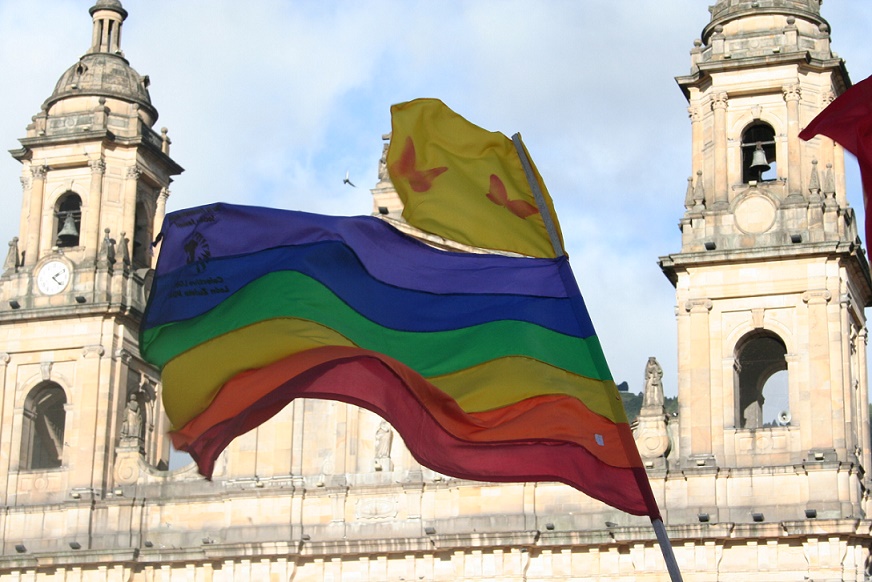
Historic August for LGBT Rights in Colombia

By Juliana Martínez

Colombia Diversa / Flickr / Creative Commons Attribution-NonCommercial-ShareAlike 2.0 Generic (CC BY-NC-SA 2.0)

Colombia has again shown itself to be a country of contrasts – a society ostensibly ruled by Catholic and conservative morals with one of the hemisphere’s most progressive Constitutional Courts – with two important legal decisions on LGBT rights.  The Court has defended the democratic, pluralistic, and inclusive spirit of the Colombian Constitution against powerful authoritarian and conservative forces for years.  In 2007 and 2008, it granted pension, social security, and property rights to registered same-sex couples, and it ruled that same-sex couples “constitute a family” in 2011.  In spite of some recent rulings tarnishing its liberal record, last month the Court made two decisions that, though limited, have historic implications.

  • It ruled in favor of step-child adoptions by gay couples.  After much political, legal, and even religious debate, the Court broke a four-year silence on the highly contested issue, ruling 6 to 3 that Verónica Botero could legally adopt the biological children of her wife, Anna Leiderman.  The ruling does not explicitly allow joint adoption by gay couples, but the decision cites ample scientific evidence and declares that parental homosexuality cannot be considered a risk factor for children, thus leaving the door open for further LGBT-friendly jurisprudence in the matter.
  • The court recognized the gender identity of trans women by declaring that they do not have to comply with the compulsory military service required of all Colombian males.  The case centered on Gracy Kelly Bermúdez, a transgender woman who filed a lawsuit against the mayor’s office in Bogotá when she was denied a job for failing to provide proof of her military service.  Bermudez had not entered the military because she identifies as a woman, and therefore did not have the Military Service Registration Certificate (libreta militar) required when applying for jobs, studying at the university level or accessing health care services.  She would have been exempted if she had undergone an official sex change – the right to change one’s sex has been protected in Colombia since 1993 – but this can only be legally done after undergoing sex realignment surgery, a procedure that most trans women do not have access to, cannot afford, or do not want.  Therefore, despite their gender identity and expression, the legal sex of the majority of trans women continues to be “male.”  The Court decided in favor of Bermúdez and ordered the mayor’s office to hire her immediately.

These decisions are far-reaching.  In the Bermúdez case, the Court was essentially prioritizing gender identity over assigned sex at birth.  It declared that asking trans women for the Military Service Registration Certificate when hiring them is unconstitutional because it violates their right to define their own gender.  Furthermore, the Court told Congress to draft a bill that regulates the rights of transgender people in Colombia, paving the way for a much-needed Gender Identity Law.  The ruling also has deep regional implications.  Since Argentina passed a groundbreaking Gender Identity Law in 2012, many countries have been struggling to achieve similar results – and the Colombian legal precedent can become a viable alternative for impact litigation.  Currently, at least ten countries in Latin America have compulsory military service with different levels of enforcement attached to non-compliance.  But as the Bermúdez case illustrates, military conscription mandates can turn into strange, yet effective platforms to denounce how the state routinely imposes gender identity on its citizens, often against their own will, and to catalyze legal reform that advances LGBT rights in the Americas.

* Dr. Juliana Martínez teaches gender and sexuality and Latin American Literature in the Department of World Languages and Cultures at American University.

September 25, 2014

Children and Migrant Teens: Trapped with No Way Out

By Ursula Roldán Andrade*

Alaks / Flickr / Creative Commons Attribution-NonCommercial-ShareAlike 2.0 Generic (CC BY-NC-SA 2.0)

Alaks / Flickr / Creative Commons Attribution-NonCommercial-ShareAlike 2.0 Generic (CC BY-NC-SA 2.0)

The 56,000 Central American children involved in the humanitarian crisis along the Mexico-United States border are trying to reach the United States not only to reunite with their families.  They are also driven by poverty, social exclusion and violence in their home countries of northern Central America.  The response of U.S. and Central American authorities, however, seems to be only to strengthen the barriers to migration – not only along the Mexico-United States border but also between Mexico, Guatemala, El Salvador, and Honduras.  The United States has emphasized immediate deportation, and its request for funding includes an increase in the number of courts to expedite deportations and in enhanced border security with military and police forces.  The Obama Administration also seeks resources to address the consequences of emigration in Central America, where the governments have done little more than begin criminal prosecutions against the “coyote” network.  In Guatemala there are rumors that parents responsible for migrating children could face criminal charges.  Caring for would-be migrants is a much lower priority; there are only two shelters, of a capacity of less than 80 children, in charge of the Social Work Program of the Office of the First Lady of Guatemala (SOSEP), which has also proposed the improvement of child reception conditions.

A mass media campaign in Guatemala promotes the idea of children staying to fulfill the “Guatemalan Dream” rather than risk their lives attempting to live the “American Dream.”  Yet, the “Guatemalan Dream” that authorities are referring to is lacking.  The Human Rights Office of the Archbishop of the Catholic Church of Guatemala (ODHAG), which has tracked human rights for children in the nation for the past 15 years, reported in 2011 that simply being alive in Guatemala means surviving health risks, food insecurity, and violence.  The report’s most revealing data show that over 48 percent of Guatemalan children suffer from chronic malnutrition.  According to ODHAG, 51 percent of the deaths of minors in 2011 were teenagers between the ages of 13 and 17.  The report called on the state to take preemptive measures to protect children and adolescents from malnutrition, hunger, violence, abuse, and human trafficking networks, but the government still spends only 3.1 percent of GDP on this population, whereas other Central American countries invest 6 percent.

Central American children are caught in the crossfire of political discourse in the United States – a migrant population that either gains protection or is cast aside, sometimes with xenophobic or even racist overtones.  Partisan politics, interest in cheap labor, and other factors short-circuit debate, creating conditions for exploitation of migrants without recognition of their citizenship, families, or rights.  The Guatemalan government neglects its vulnerable population, is rife with political corruption, and is cursed with the narrow-mindedness of its economic elite, which does not, in the least, attempt to change the structural conditions that exclude and eventually expel their countrymen.  Solutions to the resulting humanitarian crisis will remain elusive as long as Central American governments do not guarantee fundamental rights and undertake policies aimed at the defending the higher interests of children and adolescents. 

* Dr. Roldán Andrade specializes on migration issues at the Center for Research and Policy Management (INGEP) at the Universidad Rafael Landívar in Guatemala.

Prison Reform in Latin America: Lessons from Costa Rica

By Geoff Thale and Adriana Beltran*

Steven and Darusha / Flickr / Creative Commons Attribution-NonCommercial-ShareAlike 2.0 Generic (CC BY-NC-SA 2.0)

Steven and Darusha / Flickr / Creative Commons Attribution-NonCommercial-ShareAlike 2.0 Generic (CC BY-NC-SA 2.0)

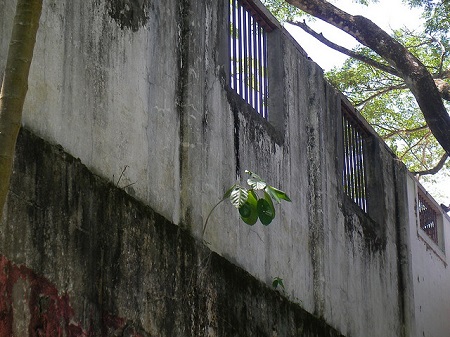
Prison overcrowding is a widespread problem in Latin America, primarily because of harsh drug-sentencing laws and inadequate budgets, but Costa Rica may be setting a useful example for dealing with it.  In most countries, guards control the perimeter, but groups of prisoners or criminal gangs organize and control life inside the prison compound.  Rehabilitation and re-integration programs are limited.  Not surprisingly, there is little political leadership for prison reform; the issue wins few points with the general public.  Even dramatic events – like prison riots in Venezuela or prison fires in which hundreds of young men die as in Honduras – don’t generate interest in prison reform.  A key component of the criminal justice system – as a deterrent, a punishment, and as a provider of rehabilitation and reintegration services that will reduce recidivism – the prisons are often neglected.

While Costa Rica faces growing drug-related problems, a multi-country analysis by the Washington Office on Latin America of persistent criminal justice and prison problems in Latin America – aimed at identifying strategic solutions – indicates that the country stands out as having undertaken at least modest reforms of its prisons to prevent them from becoming the breeding grounds for increasingly hardened criminals and gangs.  Prison conditions in Costa Rica have not been among the worst in Latin America, although the U.S. State Department said in its Human Rights Report for 2013 report that they were “harsh” and that “overcrowding, inadequate sanitation, difficulties obtaining medical care, and violence among prisoners remained serious problems.”  Until very recently, when new drug sentencing laws and tough anti-crime measures pushed the prison population up, the system generally did not exceed capacity.  Even today, the system is at 140 percent of capacity – far less than the 200-300 percent seen in other countries.  Prison conditions also seem less abusive than those seen in other countries.  An external oversight body was created to protect the rights of prisoners.  Moreover, the government, with support from the Inter-American Development Bank (IDB), is reaching out to local businesses to support vocational training programs for inmates.

This process has been driven by reformers inside the government and prison system, in contrast to most reforms elsewhere in the hemisphere driven by international donors.  This is a rare example of how reformers inside and outside the system worked to achieve institutional changes that increase citizen security while respecting human rights.  In this case, long-standing mid-level and senior staff of the penitentiary system, with the support of successive Ministers of Justice appointed by President Laura Chinchilla, played a key role in resisting pressures from legislators who want to toughen sentencing, which would increase prison populations.  They have advocated measures to ease overcrowding and ensure proportionality in sentencing.  At the same time, they have also used the IDB loan to both defend and expand the rehabilitation and re-insertion programs in the prison system.  Every country’s situation is unique, and Costa Rica has advantages — a relatively low crime rate, a relatively strong state structure, a relatively well-established respect for the rule of law – that others lack, but San José has shown that reform in this difficult, politically sensitive area is possible.

*Geoff Thale and Adriana Beltran, of the Washington Office on Latin America (WOLA), recently led a small delegation to visit Costa Rican prisons.

U.S.-Guatemala Relations: What Is Going On?

By Ricardo Barrientos*

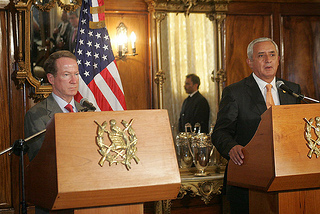
U.S. Assistant Secretary Brownfield and Guatemalan President Pérez Molina Photo credit: US Embassy Guatemala / Flickr / CC BY-NC-ND

U.S. Assistant Secretary Brownfield and Guatemalan President Pérez Molina
Photo credit: US Embassy Guatemala / Flickr / CC BY-NC-ND

Actions by the U.S. Congress, the U.S. Embassy in Guatemala, and the State Department have fueled speculation that something is askew in relations between Washington and Guatemala.  In January, the U.S. Congress passed the Consolidated Appropriations Act for 2014, with unusually severe measures for Guatemala.  Congress ordered the Treasury Department to direct its executive directors at the World Bank and the Inter-American Development Bank (Guatemala’s two main multilateral lenders), to support the reparations plan for damages suffered by communities during construction of the Chixoy Hydroelectric Dam in 1976-1983.  The project, funded by the two banks, resulted in numerous human rights violations, including the displacement of local communities, mostly of Maya Achi ethnicity, and the death of thousands in the Río Negro massacres perpetrated by the Guatemalan armed forces.  Additionally, the U.S. law conditioned U.S. assistance for the Guatemalan armed forces on credible advances in the Chixoy issue as well as the resolution of adoption cases involving Guatemalan children and U.S. adoptive parents since the end of 2007.

President Pérez Molina, a former army general, and his vice-president reacted with inflamed nationalistic rhetoric – just to be eclipsed by more U.S. actions.  After the Guatemalan Constitutional Court ruled that internationally acclaimed Attorney General Claudia Paz y Paz – a key actor in bringing to trial former Guatemalan Army General Ríos Montt on genocide charges – must step down in May (and not in December, as Paz y Paz supporters claim is the correct interpretation of the law), the U.S. Ambassador made a public statement supporting her.  A few days later, the U.S. Assistant Secretary for International Narcotics and Law Enforcement William Brownfield visited Guatemala, reiterating U.S. support to Paz y Paz and formalizing a $4.8 million donation supporting the UN International Commission Against Impunity in Guatemala (CICIG).  This further angered rightwing and pro-army sectors, dedicated detractors of both Paz y Paz and CICIG.  Brownfield tempered his message with praise for the “sensational” U.S.-Guatemala collaboration in counternarcotics.

These recent actions come from a combination of U.S. policy “hawks” and “doves” operating simultaneously.  U.S. Senator Patrick Leahy and his staff have the reputation in Guatemala as Capitol Hill hawks on human rights throughout Latin America, and acted accordingly by fostering the harsh legislative provisions for Guatemala.  U.S. Ambassador Chacón acted like a resident hawk, directly supporting Paz y Paz and praising her as a proven ally on the drugs issue.  Then, Mr. Brownfield, playing the role of the visiting dove balancing the harshness of the previous two actions, gave the badly needed financial aid to CICIG and supported Paz y Paz, consistent with his drug cooperation portfolio.  Guatemala’s role as a transit point for drug traffickers gives it leverage in the bilateral relationship, but that’s not enough.  Regional or global perspectives are important too: Guatemala recently completed its rotation on the UN Security Council, and the preliminary results of the elections in El Salvador and Costa Rica show that the region will continue under the influence of leftwing or left-leaning governments.  After Mr. Brownfield’s public statements, tension has eased and the angry rhetoric calmed down, but the chapter has not ended.  The bottom line is that Guatemala received an emphatic message: it must keep aligned with what the U.S. wants.  The problem for decisionmakers in the region is that it is not always clear what the U.S. wants.

*Ricardo Barrientos is a senior economist at the Central American Institute for Fiscal Studies (Icefi).

Little Promise of Progress on LA Issues in the U.S. Congress

U.S. Capitol Building / Photo credit: Architect of the Capitol / public domain

U.S. Capitol Building / Photo credit: Architect of the Capitol / public domain

Members of the U.S. House of Representatives and Senate appear likely to continue having diverse positions on elements of Latin America policy, but the parties are divided and the proposals – as has been said of the Obama Administration’s – appear piecemeal.  Neither the Democratic nor Republican Party is monolithic; both have diverse voices on the region – with strident internal differences registered on Cuba, Venezuela, the alleged role of Iran, and other contentious issues.  Congressional interest in Latin America tends to swirl around three interwoven areas:

  • On human rights, both parties have expressed concerns, but in very different contexts.  Conservatives continue to press the Administration to be tougher on Cuba, Venezuela, Ecuador and others.  Centrist and liberal-leaning members have urged reassessment of Washington’s position on human rights-related developments in Honduras and Mexico.
  • On security issues, there appears to be vague agreement to give priority to stemming transnational crime and promoting “citizen security” – and to programs that are spinoffs of Plan Colombia and the Iniciativa Mérida – but the Administration’s penchant for militaristic approaches and the concomitant need to cooperate with existing (and often corrupt) forces also draw considerable criticism.  Some members of Congress continue to insist that Iran is laying the groundwork for radical Islam and terrorism in Latin America, but the Administration, while remaining vigilant, has been reluctant to make that concern central to its programs.  Predictably, Congressmen close to former Colombian President Uribe oppose President Santos’s peace talks with the FARC.
  • The trade agenda is also contentious.  Both parties have advocates obsessed with securing trade accords as well as others who are skeptical or even hostile toward them.  With the “Free Trade Area of the Americas” vision of Presidents Bush (father) and Clinton long gone, some members continue to push for bilateral deals, but a three-region approach – linking Latin America, Asia, and the United States – seems to be gaining momentum.  Special deals under the Generalized System of Preferences (GSP) and the Andean Trade Promotion and Drug Enforcement Act (ATPDEA) – already battered by ups and downs in U.S. bilateral relationships – have faded.

Issues like relations with Cuba and Venezuela perennially threaten the broader agenda on Latin America, and the intensity of rightwingers on those issues – including Cuban-American Senators Menendez (D‑NJ) and Rubio (R‑FL) and Representatives Ros-Lehtinen (R‑FL) and Albio Sires (D‑NJ) – tends to intimidate other members of the House and Senate.  Sen. Jeff Flake (R‑AZ) and Reps. Farr (D‑CA) and McGovern (D‑MA) have denounced the embargo, but the Committee chairs in both houses of Congress can block their legislation.  But other aspects of Latin America policy, especially on trade, may advance if the Administration pushes hard – or will wither if it does not.  The result will be a continued reliance on diverse security programs without a broader vision for Washington’s supposed partnership with the region.


Dominicans of Haitian Origin: Foreigners in Their Native Land

By Maribel Vásquez

Haitian sugar cane workers in the Dominican Republic / Photo credit: ElMarto / Foter.com / CC BY-NC-ND

Haitian sugar cane workers in the Dominican Republic / Photo credit: ElMarto / Foter.com / CC BY-NC-ND

Nearly three months after the Dominican Republic stripped residents born to unauthorized migrants of their Dominican citizenship, the Constitutional Tribunal’s controversial decision remains the source of high tensions in the country. The ruling expanded on a 2010 amendment to the Constitution stating that children born in the Dominican Republic must have at least one parent with legal residency to be eligible for Dominican citizenship. The court has now determined that the ruling can be applied retroactively to 1929 – in effect leaving three generations of immigrants’ children in legal limbo. At an estimated 200,000, Dominicans of Haitian descent are the largest affected group. In recent years, they have already been denied identity documents, and officials have refused to return copies of their birth certificates, arguing that such births occurred while their parents were “in transit” and therefore did not meet the criteria for Dominican nationality.

International criticism of the ruling was immediate. Many critics have called it racist. After visiting the Dominican Republic earlier this month, the Inter-American Commission on Human Rights (IACHR) released a highly critical report. The United Nations Higher Commission for Refugees (UNHCR) has also expressed concern that the court’s decision threatens to leave hundreds of thousands stateless. CARICOM has called on the Dominican Republic to “right this terrible wrong” and suspended its membership application. Caribbean leaders have expressed outrage.  Trinidad and Tobago’s Prime Minister, Kamla Persad-Bissessar, said the ruling created a “grave humanitarian situation,” and the former prime minister of Antigua and Barbuda, Lester Bird, said the ruling was “so absolutely racist that it’s almost pathetic.” The United States has kept an extremely low profile on the issue.

The tribulations of Haitians in the Dominican Republic date back to the country’s independence in 1844, after 22 years of Haitian occupation, during which tensions between Dominicans and Haitians were high. Since then, relations between the two peoples of Hispañiola have often been in turmoil, most notably when Dominican dictator Rafael Trujillo in 1937 issued orders that led to el corte – “the cutting” – that massacred over 30,000 Haitians along the border. The Constitutional Tribunal’s decision appears to reflect the tradition of anti-haitianismo that underlines Dominican national identity. It raises questions about the legal status of past political figures and surely excludes the living from political processes. Applied retroactively, for example, the ruling leaves former Santo Domingo mayor and three-time presidential candidate, José Francisco Peña Gómez stateless in death. While the prospect of another el corte is inconceivable for many of the now-stateless Dominicans of Haitian descent, incidents of violence against them have risen since the ruling – and activists have called the disenfranchisement of Haitian-Dominicans a “civil genocide.”

El Salvador: Memory, the Persistent Discomfort

By Héctor Silva Ávalos

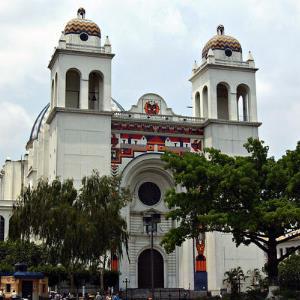
Mural that was removed from the Metropolitan Cathedral under Archbishop Escobar Alas / Photo credit: J. Stephen Conn / Foter / CC BY-NC

Mural that was removed from the Metropolitan Cathedral under Archbishop Escobar Alas / Photo credit: J. Stephen Conn / Foter / CC BY-NC

The sudden closure of the Legal Aid Service – Tutela Legal – of the Archbishop of San Salvador appears to be a massive blow to efforts to hold human rights violators and war criminals from the civil war accountable for their deeds.  Without previous notice or warrant, workers arrived at their offices on September 30 to find new locks on the doors and private guards blocking the entrance.  That same day some of the workers claimed to have discovered evidence indicating that Monsignor José Luis Escobar Alas, the Archbishop, had long before decided to close Tutela.  The office was opened in 1982 by Mons. Arturo Rivera Damas to fulfill a project designed by his predecessor, Mons. Óscar Arnulfo Romero, the Archbishop killed two years earlier during mass by a death squad and who is now under consideration for sainthood by the Vatican.  It holds one of the most detailed archives on the repression, crimes and human rights violations committed during the Salvadoran war, mainly by state-sponsored agents.

Mons. Escobar Alas has surprised observers in the past.  In late 2011, he ordered the removal of a mural by a popular Salvadoran artist from the Metropolitan Cathedral without any explanation to the artist or to the church’s large congregation.  The mural commemorated the earliest attempts at a negotiated settlement to the war.  Facing an outcry, Escobar Alas claimed the mural was Church property and that the Church was entitled to do with it as it pleased.  The same tone was evident after the Tutela closing as protests came not just from a good number of Catholics but from the Ombudsman’s office, the President of the Republic and 258 US and Salvadoran scholars who ran an ad in a major newspaper.  The Archbishop and his spokesmen provided at least three different versions of the event, saying alternately that Tutela was closed because it had already served the purpose for which it was created in the war years; it was closed to give its spaces to an ad hoc commission (with an unclear mandate and authorities); and that the Church had encountered financial wrongdoings in Tutela so grave that it had to close.

The closure happened at a time of important progress in human rights accountability.  At the center of it all was access to Tutela’s archives, some 50,000 files about the infamous 1980s – potentially crucial evidence in ongoing or upcoming judicial processes that Salvadoran elites have long tried to keep under wraps.  For the first time in a decade, last month the Attorney General’s office made public its intention to open a special unit committed to review war massacres such as the one in El Mozote, where some 1,000 peasants were killed by a U.S.-trained elite battalion.  Also, for the first time since the early post-war period, an independent Constitutional Chamber of the Supreme Court of Justice agreed to hold a hearing on the admissibility of a case under the Amnesty Law, the legal provision that has prevented many cases from being brought to justice.  And for the first time, there is a real chance for a Spanish court to address the murder of six Jesuit priests and their two aides after one of the accused in that massacre, a colonel, was convicted and imprisoned in a U.S. jail pending extradition to Madrid.  In all of these legal cases, the files held by Tutela Legal would provide crucial documentation to prosecutors.  The only credible explanation for the closing of the service is that pressure was brought to bear on the Archbishop by interests that wish to block access to this important body of evidence in the event that they are unable to prevent trials from opening. 

The ad hoc commission that the Archbishop said will be formed will include members with credibility – including Father José María Tojeira, former Jesuit envoy for Central America, and Mons. Jesús Delgado, Archbishop Romero´s biographer – and may hold some promise.  But the vagueness about its authority and technical questions, including the legal admissibility of Tutela files as the chain of custody is broken, raise serious doubts.  Whatever happens, the many Salvadorans who believe in the healing power of memory – and accountability – will need to remain constantly vigilant.  The same memory has been a persistent discomfort to some Salvadoran elites, who have long thwarted such efforts.


September 11 Coup in Chile: Global Ramifications

By Eric Hershberg

Chilean Grape export photo by Dick Howe Jr CC-BY-NC Flickr / Indictment of Pinochet, Photo by a-birdie CC-BY-NC Flickr

Chilean Grape export photo by Dick Howe Jr CC-BY-NC Flickr / Indictment of Pinochet, Photo by a-birdie CC-BY-NC Flickr

In Washington last week many events recalled the bloody coup of September 11, 1973, which overthrew the Popular Unity government of Chilean Socialist President Salvador Allende and ushered in a dictatorship that, even by South American standards of the time, stood out for its brutality.  Discussion about “the other September 11” highlighted the human cost of the coup, the role of U.S. government agencies in undermining Chilean democracy and encouraging the military’s actions, and the memories of the coup and dictatorship that remain deeply embedded in Chile today.  These and similar gatherings around the world and in Chile featured demands for the full truth about the dictatorship’s crimes – the fate of some thousand of the disappeared remains unknown today, according to the Human Rights Observatory of the Diego Portales University – and to hold those who committed them fully accountable.

The coup led by General Augusto Pinochet destroyed Latin America’s longest standing democratic regime and ended a unique experiment testing the proposition that electoral democracy could catalyze a transition to socialism.  In Chile, the coup initiated 17 years of military rule grounded in state-sponsored violence, but it also resonated far beyond that country’s borders, marking a watershed in global affairs.  To this day how people around the world conceive fundamental issues of political change, economic development and human rights is affected by September 11, 1973.  These broader legacies were the focus of a panel discussion at American University, co-sponsored by the Center for Latin American Studies and the Washington College of Law, this week.  (Click here for details.)

We can now see three large sets of consequences that the Chilean coup had far beyond its borders. 

Political:  Across Southern Europe, it reverberated powerfully, undermining the confidence of sectors of the Left that believed fervently a socialist transition could be effected through victory at the ballot box.  After the coup, Eurocommunists in Italy and Spain came to believe that victory would require an alliance with Christian Democrats or other centrists, lest a coup coalition akin to that in Chile bring down democracy altogether. For much of the Latin American left, the Chilean experience would over time prove a wake-up call, alerting those aspiring to turn the world upside down that democracy was not a mere bourgeois luxury and suggesting that “second-best” options – more gradual change –were preferable to maximalist goals that would likely jeopardize democracy.

Economic: The coup paved the way for “neoliberal” policies that would shake the foundations of conventional thinking about development for nearly three decades.  They were prescribed across Latin America.  It would not be until the emergence of ALBA in the mid-2000’s that the region would again witness a faith (however misguided), in the capacity of import-substitution and inward-oriented redistribution to achieve lasting economic advance in the region. 

U.S. policy:  Finally, the coup set in train levels of violence and human rights abuses so abhorrent that they drove major changes in U.S. human rights policy and international jurisprudence.  In the United States, advocacy organizations, progressive majorities in Congress, and the Carter Administration introduced unprecedented legislation aimed at preserving democracy and curbing human rights abuses.  Well beyond Washington, numerous international regimes put in place to combat impunity were motivated and influenced by what had taken place in Chile and the imperative of ensuring that it not happen again.  

Just as the cataclysmic event that took place in the U.S. on 9/11/01 opened the door to extreme and ongoing changes felt around the world, so too did the Chilean tragedy that began on 9/11/73.

Will the U.S. Support Controls on Security Contractors in Latin America?

Photo by: Charles Atkeison / flickr / Creative Commons

Photo by: Charles Atkeison / flickr / Creative Commons

An upcoming conference in Switzerland will test U.S. willingness to make good on its rhetorical support for greater control over private contractors involved in wars or similar circumstances.  The “Montreux plus five” conference in December will discuss implementation of the Montreux Document, which lays out legal obligations and “best practices” for countries that hire “Private Military and Security Companies” (PMSCs) during armed conflict.  The process emerged in 2008 to reiterate state responsibilities after contractors were found to be deeply involved in incidents in Iraq – including the torture of detainees at Abu Ghraib prison and a confrontation at Nissour Square in which 17 civilians were killed.  The United States, which participated in discussions of the Document and endorsed it, has been developing its own “standards” based on it.

Although the PMSCs in Iraq and Afghanistan – and their alleged involvement in human rights abuses – are most widely known, security contractors are deeply engaged in U.S. efforts in Latin America related to the “war on drugs.”  In the 2005-2009 period, DynCorp, Lockheed Martin, Raytheon, ITT, and ARINC collectively received counternarcotics contracts in Latin America worth a total of $1.8 billion.  The contracts include provision of intelligence, surveillance, reconnaissance, information technology, and communications equipment.  Lockheed Martin received contracts for training, equipment, and other services in Colombia and Mexico. Yet the majority (Democratic) staff of the subcommittee on contracting oversight of the U.S. Senate Committee on Homeland Security and Governmental Affairs concluded in 2010 that neither the State Department nor the Department of Defense had adequate systems to track the implementation of counternarcotics contracts.  Referring to contract and accounting errors, the Bureau of International Narcotics and Law Enforcement Affairs told the subcommittee chairman that it “does not … maintain discrete records of such occurrences since these challenges routinely occur at the embassies.”

The subcommittee’s focus was on contracting anomalies, but publicly acknowledged incidents – such as DynCorp’s violation of guidelines governing coca eradication in Colombia – suggest oversight over operations is also lacking.  In Colombia, for example, two cases of rape of a minor involving U.S. contractors were reported yet remain uninvestigated, and in Mexico a contractor appears to have been involved in torture training.

PMSCs often carry out their work within the dark interstices of sensitive operations – beyond the government’s immediate operational control but functioning with its imprimatur and expecting its protection when things go wrong.  The U.S. Senate’s acknowledgement of the need for better management and oversight over them has not driven significant reforms yet.  If the Iraq and Afghanistan experiences are any guide, problems with the monitoring of expenditures are the tip of the iceberg.  Security contractors tend to run rough over human rights, and they are often a source of tensions with both governments and the population in host countries.  The use of security contractors without effective monitoring is a source of diplomatic tension within the region as well.  DynCorp’s aerial eradication operations, for example, provoked Ecuador to file suit against Colombia in the International Court of Justice, arguing that Colombia dispersed toxic herbicides into Ecuadoran territory, damaging human health, property and the environment.  The two countries recently resolved the dispute, but the case illustrates the risk of outsourcing sensitive operations to contractors without careful monitoring.

Transgender Rights: Signs of Progress in Latin America

By Emily McGranachan

Marcha de Orgullo, Buenos Aires, Argentina / Photo credit: blmurch / Foter.com / CC BY

Marcha de Orgullo, Buenos Aires, Argentina / Photo credit: blmurch / Foter.com / CC BY

Social and structural discrimination limit the economic, health, and social prospects of transgender individuals, often leading to precarious lives fraught with human rights violations.  According to Argentine psychologist Graciela Balestra, transgender people around the world have an average life expectancy of only 30 years.  In Latin America, they have the highest rate of HIV infection (35 percent) and frequently face violence and insecurity.  According to the 2012 Trans Murder Monitoring Project report, of the total reported murders of transgender people in the world between 2008 and 2011, 79 percent took place in Latin America.  International HIV/AIDS Alliance and Red Latinoamericano y del Caribe de Personas Trans (REDLACTRANS) published similarly startling statistics in a 2012 report titled “The Night is Another Country.”  While the report focused on the experiences of transgender women, it also reveals that transgender men also experience high rates of discrimination and violence throughout Latin America.  Of the transgender women interviewed in the study, about 80 percent reported experiencing violence or threats by police and other officials.  Throughout Latin America the prevalence of transphobia – defined as the fear or hatred of transgender people – has led to impunity for violence and discrimination against transgender people, and these crimes, including murder, are seldom prosecuted.  The transgender community also faces challenges of social discrimination and the lack of access to health care and jobs, marginalizing transgendered people in society.

While the current situation is stark, some societies have shown greater openness to transgender people.  Whereas Brazil and Colombia allow identity card changes only after surgery and board evaluation, Argentina in 2012 became the first country in Latin America to pass a progressive law easing the rules with regard to gender identity and identification.  Now a person in Argentina can change the name and sex on their identity card without having to go through the long and discriminatory process of sex reassignment surgery or going before a judicial review board.  In 2009, Uruguay slightly loosened its controls when it began requiring only board approval for identity card changes.  Government initiatives, like that of Argentina, have direct impacts on the lives of transgender people, who are able to access jobs and other securities, according to Balestra.  Greater inclusion in society and stronger legal protections by the government can signify or signal a change in social values within the broader society.

The Obama Administration has been a vocal supporter of LGBT (Lesbian, Gay, Bisexual and Transgender) rights as part of a broader human rights agenda in international diplomacy.  Among its initiatives are the Global Equality Fund to support local LGBT organizations and advocates, a greater recognition of refugee rights for LGBT people, and a general promotion of rights abroad through working with NGOs and states.  Recognizing the situation in Latin America, the State Department highlights its work trying to establish a special rapporteur for LGBT human rights within the Inter-American Commission for Human Rights.  As some aspects of LGBT rights progress in the United States (the U.S. still has a high rate of violence against transgender people as well), it is expanding its understanding and definition of human rights.  While the right to security, health care, employment and dignity have long been international human rights, only recently has the discrimination and violence transgender people face become an important part of the human rights platform.  The incorporation of LGBT human rights into U.S. foreign policy, backed by a strong U.S. example of justice and security for transgender citizens, will encourage other countries to follow suit.