New Western Hemisphere Trade Pacts Push Back Against Big Pharma

By Thomas Andrew O’Keefe*

Money_and_pills_in_three_colors

Attempts to limit competition from generics by pharmaceutical giants were called “TRIPS-plus” provisions in USMCA drafts/ Ragesoss/ Wikimedia Commons

Two major trade agreements affecting the Western Hemisphere have recently struck blows against the pharmaceutical industry’s efforts to keep drug prices high by limiting competition from generic medications. Big Pharma tried, but failed, to include provisions in the United States-Mexico-Canada Agreement (USMCA) and the EU-MERCOSUR Association Agreement that would go beyond those expressly permitted by the World Trade Organization’s Agreement on Trade-Related Aspects of Intellectual Property Rights (TRIPS).

  • Those provisions would have made it extremely difficult for generic manufacturers to enter the market and contain costs. Unaffordable medicines are a large and growing global problem. Many people die of diseases today not because there is no cure, but because they cannot afford the medications.

In the version of USMCA approved by the U.S. Congress and to be signed by U.S. President Trump this week, the Democratic majority in the House of Representatives removed “TRIPS-plus” provisions that would have given “data exclusivity” for new uses of existing pharmaceutical products for up to three years and for so-called “biologics” for ten years. (Biologic drugs are produced from a living organism or contain components of a living organism, including a wide variety of products derived from humans, animals, or microorganisms by using biotechnology.)

  • Data exclusivity would have prevented generic manufacturers from utilizing the original trial results and other test data filed with regulatory health agencies concurrently with the patent application, demonstrating the medication’s safety, quality, and efficacy. Also removed from the USMCA was a provision that would have restricted competition from generic pharmaceutical manufacturers by delaying patent expirations to compensate for “unreasonable” bureaucratic delays in approving the patent. Furthermore, the USMCA now expressly allows generic manufacturers, as per Article 30 of the TRIPS Agreement, to utilize compounds used to make a patented drug in order to develop a generic version in anticipation of that drug’s patent expiration.

Similarly, the IPR chapter in last year’s EU-MERCOSUR agreement does not include TRIPS-plus provisions thanks, in part, to resistance from South American governments concerned about bankrupting their national health care systems because of increasing costs for new medications. The IPR chapter specifically supports World Health Assembly Resolutions on pandemic influenza preparedness and on a global strategy and plan of action on public health, innovation and intellectual property – both of which recognize that “intellectual property rights do not and should not prevent Member States from taking measures to protect public health.”

  • The IPR chapter is consistent with the Doha Declaration on the TRIPS Agreement and Public Health of November 2001. Furthermore, all the signatory states are required to implement articles of the TRIPS Agreement providing the legal basis for WTO members to grant compulsory licenses exclusively for the production and export of affordable generic medicines to other members that cannot domestically produce the needed medicines in sufficient quantities. (The only obligation is for the signatory states to make “best efforts” to adhere to the Patent Cooperation Treaty.)
  • The MERCOSUR countries resisted intense lobbying pressure from European pharmaceutical companies to accept provisions on data exclusivity and to compensate for bureaucratic delays by extending the monopoly on a patented medication beyond the 20-year maximum permitted by TRIPS. The fact that the United Kingdom, home to global pharmaceutical giants such as GlaxoSmithKline and AstraZeneca, was distracted by Brexit undoubtedly contributed to this outcome.

The successful pushback against attempts by the major pharmaceutical multinationals to extend their state-sanctioned monopolies to guarantee a steady flow of profits reflects public outrage over multiple scandals that have ensnared the industry in recent years. This includes not only the massive opioid addiction crisis in the U.S., but firms buying up patents that are about to expire and jacking up their prices in excess of 1000 percent. It makes the traditional industry argument of needing extended monopolies to incentivize innovation and the development of new drugs ring hollow as these speculators incur no research and development costs. As a result of the efforts of MERCOSUR and Democrats in the U.S. House of Representatives, the pharmaceutical industry may be facing a paradigm shift in which it will be forced to develop a new business model for pricing new treatments.

January 28, 2020

Thomas Andrew O’Keefe is the president of Mercosur Consulting Group, Ltd. and a lecturer at Stanford University. He is the author of Bush II, Obama and the Decline of U.S. Hegemony in the Western Hemisphere (Routledge, 2018).

Honduras: Facing the Budget Challenges?

By ICEFI and CLALS*

Honduran Lempiras

Honduran Lempiras/ Alex Steffler/ Flickr/ Creative Commons

Honduras’ proposed budget for 2020 reduces support to the country’s most needy – while protecting the military and security agencies – and, particularly if the debate on priorities is not made more inclusive, risks exacerbating already high political tensions and chronic economic mismanagement. On the revenue side, the draft budget shows a drop in tax revenues from 18 percent of GDP in 2019 to 16.5 percent – which, ICEFI has found, is not justified by technical analysis of the circumstances. Government spending – excluding payment on the national debt but including transfers to funds and trusts – equaled 19.7 percent of GDP, compared to 21.5 percent in 2019. (ICEFI estimates that the average government spending in Central America in 2019 will be 18.5 percent.) This drop will affect most public entities, particularly in social spending.

  • Education faces deep cuts. The budget of the Secretariat of Education, for example, will drop from 4.85 percent of GDP in 2019 to 4.49 in 2020. Transfers to public universities are slated to be reduced 23.1 percent from 2019 levels, and scholarships are also on the chopping block – cut 27.5 percent for national and 37.5 percent for international scholarships.
  • Health spending in Honduras – the country with the highest poverty rates in Central America – will decline from 2.39 percent to 2.37 percent at a time that inflation is more than 4 percent. The budget for Infrastructure and Public Services will be hit hardest – cut from 0.82 percent of GDP to 0.40 percent. Capital expenditures or investment will decline 33.5 percent year on year, including 38.5 percent from machinery and equipment and 34.6 percent for construction.
  • One of the only government sectors seeing increases is in the military and security, according to ICEFI. The 2020 budget proposes a 39.6 percent increase from 2019 on military and security equipment.

At first glance, the budget would appear to produce a surplus in 2020 of about 0.4 percent of GDP, which is double that ICEFI estimates for 2019. But factoring in the transfer of resources to the funds and trusts – a more reliable way of tracking fiscal behavior – the deficit will actually be 1.5 percent of GDP. That’s lower than ICEFI’s estimate of the deficit this year (1.9 percent), but it is achieved at the expense of the wellbeing of a majority of the Honduran population.

If approved and implemented as proposed, the budget will set back several strategic goals that the Honduran government itself has set. The budget confirms the government’s desire to reduce the public deficit principally through cuts to social spending and some capital expenditures – even though the approach contravenes commitments made under the UN Convention of the Rights of the Child and General Comment No. 19 (2016) on public budgeting for the promotion of children’s rights, which establishes that states should not deliberately adopt regressive measures that undermine child’s rights.

  • Although some provisions of the budget in principle could expand production of goods and services, they do not clearly point to either social inclusion, especially in terms of gender, age, and ethnicity. Budget allocations dedicated to attention to women are very low, equaling barely 0.19 percent of all spending. Neither does the budget focus on achieving any particular Sustainable Development Goals (SDGs).

The transparency and inclusiveness of the budget debate in the Honduran Congress will be crucial to determining the longer-term impact of this budget on human rights and the provision of public goods and services to the most vulnerable Hondurans, including children, adolescents, and women. Executive and Congressional decisions on the budget will shift the country’s path toward prosperity and governance – or continue down a path of instability and tension. More breaks for those capable of paying taxes, while cutting essential services to those who cannot, will be a step in the wrong direction. At a minimum, Honduran leaders should demonstrate the benefits of such moves will outweigh the costs. The legitimacy and effectiveness of the Honduran budget will depend on a broad, inclusive, and honest debate.

November 26, 2019

* The Instituto Centroamericano de Estudios Fiscales conducts in-depth research and analysis on the region’s economies. This is the second in a series of summaries of its analyses on Central American countries.

Latin America Takes on Big Pharma

By Thomas Andrew O’Keefe*

Colorful pills in capsule form and tablet form

Generic pills / Shutterstock / Creative Commons

For the past decade, Latin America has attempted to reduce the prices of high-cost medications through either joint negotiations, pooled procurement, or both, but so far with limited success.  The incentive for reducing prices is that all Latin American countries have national health care systems, and in some cases (such as Colombia and Uruguay) are legally obligated to provide their citizens with any required medication free of charge and regardless of cost.

  • In the bigger countries, such as Brazil and Mexico, the prices for certain pharmaceutical products and medical devices for public-sector purchase at the federal, state, and even municipal level are negotiated by a single governmental entity. Argentina, Chile, and Mexico also have mechanisms for pooled procurement of public-sector health-related purchases at all levels of government.  Given its huge internal market, Brazil also unilaterally caps prices on medications and threatens to issue compulsory licenses to extract concessions from pharmaceutical multinationals.

Latin American countries have also tried turning to sub-regional mechanisms to protect themselves from excessively high prices, albeit with meager results.

  • The Central American Integration System (SICA) has the most active regional mechanism to negotiate the prices of high-cost drugs and medical devices. The governments of Belize, Costa Rica, the Dominican Republic, El Salvador, Guatemala, Honduras, Nicaragua, and Panama have authorized the Council of Central American Ministers of Health (COMISCA) to negotiate lower prices on their behalf.  Those medications and devices that obtain a reduction are then acquired by the public sector utilizing each government’s procurement procedures.  By negotiating as a bloc, the SICA countries report total savings of about US$60 million on dozens of products since the initiative began in 2010.
  • In late 2015, MERCOSUR launched a mechanism to negotiate prices for both the full and associate member states. Since those 12 countries coincided with UNASUR’s membership, that entity was given a supporting role to create a continental data bank of pharmaceutical prices paid by each member government that would be used to support the MERCOSUR negotiations.  That data bank proved to be ineffective, however, as not all countries submitted the required information and the methodologies for determining prices was inconsistent.  To date, MERCOSUR has only obtained price reductions for one HIV medication, manufactured by an Indian firm eager to establish a market presence in South America, and reportedly for an immunosuppressive drug used after organ transplants to lower the risk of rejection.  Reduction offers by Gilead for its Hepatitis C cure have, so far, been rejected by the MERCOSUR governments as inadequate.

MERCOSUR’s limited achievements appear to have encouraged individual countries to press on alone.  Colombia, while initially supporting the MERCOSUR initiative as an associate member, eventually established its own national mechanism to negotiate prices, and in July 2017 announced that it had obtained cost savings of up to 90 percent for three Hepatitis C treatments.  MERCOSUR’s sparse track record also helps to explain why Chile’s Minister of Health announced in October 2018 that his country, Argentina, Colombia, and Peru would utilize the Strategic Fund of the Pan American Health Organization (PAHO) to purchase 10 state-of-the art cancer treatments.  Because of PAHO’s annual bulk purchases, it is often able to obtain significant price reductions from pre-qualified manufacturers and suppliers that are then passed on to member governments.  Member states facing a public health emergency can also make purchases without cash in hand, as the Strategic Fund will extend a short-term loan at no interest.  In the future, the Latin American countries are likely to pragmatically utilize a range of options in trying to contain the rising costs of new medications that include both national and regional mechanisms as well as PAHO’s Strategic Fund.  The challenge will be to avoid Big Pharma “red lining” the region and excluding it from accessing the most innovative medical cures such as gene therapies that can fetch a million-dollar price tag per treatment.

February 19, 2019

* Thomas Andrew O’Keefe is president of New York City-based Mercosur Consulting Group, Ltd. and a lecturer at Stanford University.  He is the author of Bush II, Obama, and the Decline of U.S. Hegemony in the Western Hemisphere (New York: Routledge, 2018).

Latin America: Research Can Drive Inclusion

By Judith Sutz and Rodrigo Arocena*

A woman points to a microscope while a man looks on.

Researchers from Uruguay’s Universidad de la República worked with partners from the World Health Organization on a project to prevent dengue fever in Salto, Uruguay. / PAHO / Flickr / Creative Commons

Research programs that address “invisible problems” in society – challenges that are generally overlooked – increase marginalized people’s inclusion far beyond solution of their immediate problems.  Problems lacking “agency” get little or no attention as competing demands for public funding crowd out resources for studying problems suffered by marginalized groups.  The solutions that arise from most research, moreover, are often too expensive and too elaborate for the less fortunate.

  • Many health problems denominated “neglected diseases” fall within what the World Health Organization calls “the 90/10 gap.” Some 90 percent of all the health research done around the world is devoted to the kind of health issues suffered by 10 percent of the world population, while the 90 percent get scant attention.

Money and political will are only part of the problem.  Research to identify a problem is in itself a challenge.  Our research indicates that some initial research is often all that is necessary to make an “invisible problem” explicit enough for policymakers to be forced to pay attention.

  • In Uruguay, a university research program in 2010 uncovered the link between rice workers’ health problems, including early death, and agrochemicals seeping into the water spread at plantations. The link was difficult to detect because their symptoms were all “normal” and had other common explanations, but an interdisciplinary team analyzed epidemiological data to confirm it, which prompted the Ministry of Public Health to take action.

A second challenge is developing new approaches to adapt existing solutions that work for the well off to sectors without resources.  Many times in the past, research stopped when a solution, albeit a costly one, was found – which has the consequence of excluding sectors of modest means.  But we know that new intellectual directions can break through even those technological barriers.

  • Once a vaccine was found for the bacterium Haemophilus influenzae type b (Hib), a dangerous pathogen that causes meningitis and other life-threatening diseases in children under five, the threat disappeared from developed countries. But it remained dangerous elsewhere in the world due to the high cost of the vaccine.  Researchers at the University of Havana explored a new approach and designed a synthetic vaccine with a very low cost of production – which many scientists have hailed as an important success.  Argentinean scientists’ development of a probiotic yogurt – called Yogurito – has provided an affordable solution to provide lactobacilli that children need for digestive health.  These “frugal innovations” yield huge benefits.

An inclusive research agenda – promoted by universities and other thought leaders throughout Latin America – can transform knowledge into a tool for social inclusion if the knowledge produced and diffused in the innovation system is focused on the broadest possible segment of society.  A Copernican shift of research agendas worldwide is unlikely in the short term, but a commitment to human sustainable development will necessarily open spaces for broader agendas over time.  Democratization of access to higher education is one important driver in building “inclusive innovation systems.”  In both developed and underdeveloped societies, “developmental universities” can play a big role in solving problems and, importantly, enfranchising broader segments of the population.  Inequality in knowledge – forgetting people with forgotten problems – is a source of broader inequality the reversal of which will be of benefit to all.  Seeing victims of illness who lack the cures that wealthier citizens have as agents, rather than just as patients, is an important first step.

September 20, 2018

* Judith Sutz is Professor and Academic Coordinator of the University Research Council of the Universidad de la República, Uruguay, and Rodrigo Arocena was the University’s rector.  Their recent book is Developmental Universities in Inclusive Innovation Systems: Alternatives for Knowledge Democratization in the Global South (Palgrave Macmillan, 2018).

Prospects for Reproductive Rights Dim with End of “Left-Turn”

By Merike Blofield and Christina Ewig*

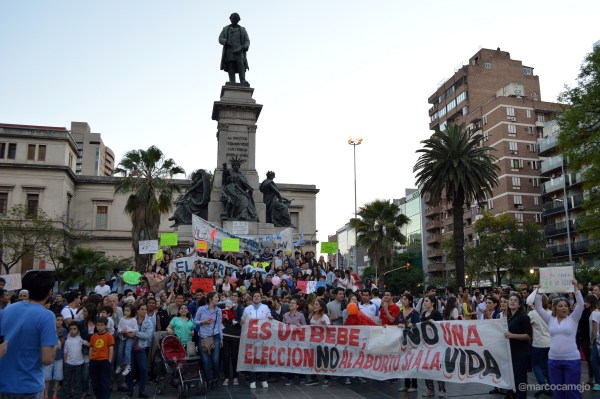
A large group of women and men gather in front of statue in a plaza.

A demonstration against abortion in Córdoba, Argentina, shortly after President Mauricio Macri’s election. / Marco Camejo / Flickr / Creative Commons

The end of Latin America’s “pink tide” suggests the region will make little progress in protecting reproductive rights in coming years and may even face some policy reversals.  With five Latin American governments slated to elect new leaders in 2018, and with recent elections of right-leaning governments in Chile and Argentina, Latin America may well be concluding the left-turn that has characterized the region’s politics since the early 2000s.

  • The past two decades of pink tide governments coincided with a flurry of legislative activity on abortion policy – in sharp contrast to previous decades of policy stasis, when high rates of clandestine abortions coexisted with restrictive laws. Since the turn of the millennium, abortion laws have been revised by Latin American legislatures and courts on 11 separate occasions in eight different countries.  Even in countries where legal reforms did not go through, legislatures debated bills at a prevalence not seen before.
  • Several left governments have carried through liberalization in response to public opinion and social mobilization. Last August, for example, the Chilean Supreme Court upheld its Congress’ liberalization of abortion law – to allow for abortion under three circumstances (threat to life; fatal fetal defect; rape) – overturning the absolute prohibition that had been in effect since the last days of the Pinochet military regime in 1989.  Some left governments went even further:  Uruguay legalized abortion in 2012, and Mexico City did so even earlier, in 2007.

Yet left governments have not been unequivocally liberal; some have actively upheld or enacted conservative laws, even absolute prohibitions.  In 2006, the Sandinista Party in Nicaragua reversed course from allowing therapeutic abortion to supporting absolute prohibition, while Ecuadoran President Rafael Correa in 2013 rejected a provision allowing abortion in the case of rape.  The FMLN in El Salvador has doggedly, even brutally, enforced a total prohibition, to the detriment of many (primarily poor) women’s lives.  In a recent study (published in Social Politics), we show this split in policy roughly follows the “institutionalized” vs. “populist” typology of lefts.

  • Institutionalized parties – like those in Chile and Uruguay – have channels in place for civil society organizations, including feminist ones, to have bottom-up influence. Given their respect for the rules of the game, however, the institutionalized lefts are also likely to face well-organized conservative opposition, which slow down reform, shape final legislation, or even veto it altogether.  In Uruguay and Chile, feminists had a voice, but conservatives were also are able to block, slow down, and water down liberalization.  This is why the Uruguayan reform took so long and why in both cases the final legislation is less liberal than the original proposals.
  • By contrast, populist governments, like those of Nicaragua under Daniel Ortega and Ecuador under Rafael Correa, often see advocates for liberalization as political threats – particularly feminists who also represent more general claims for individual autonomy and pluralism. Moreover, an issue like abortion, where the practical costs of a restrictive stance are born almost exclusively by low-income women, is likely to be used by populist leaders as a pawn in a power struggle with well-organized, influential religious forces.

Although we systematically analyzed only abortion politics, we found that sex education, contraceptive access, and other reproductive health policies more broadly have followed similar dynamics in Ecuador, Nicaragua, Chile, and Uruguay.  For example, the Uruguayan left government expanded sex education after assuming power in 2006, while in Ecuador, leaders appointed in health bureaucracies sought to reduce access to publically provided reproductive health services.  Nicaragua, on the other hand, has the highest rate of teenage pregnancies outside sub-Saharan Africa.

As Latin America’s left shift appears to be coming to a close, reproductive health policies promise to remain contentions – and abortion continues to be a public health crisis across most of Latin America even with the limited liberalizations of the past decade.  The Alan Guttmacher Institute recently estimated that 6.5 million abortions are annually performed in the region.  The vast majority are still done in clandestinity, resulting in high maternal mortality and tens of thousands of annual hospitalizations, which affect low-income women the most.  While it is unlikely that recent changes will be reversed in the more institutionalized settings, the rightward shift that is occurring among especially these countries does not bode well for further liberalization and resolution to the abortion crisis.

 January 18, 2018

 * Merike Blofield is Associate Professor of Political Science at the University of Miami.  Christina Ewig is Professor of Public Affairs and Director of the Center on Women, Gender and Public Policy at the Humphrey School of Public Affairs, University of Minnesota.

Haiti: Hurricane Matthew’s Devastating Impact

By Emma Fawcett*

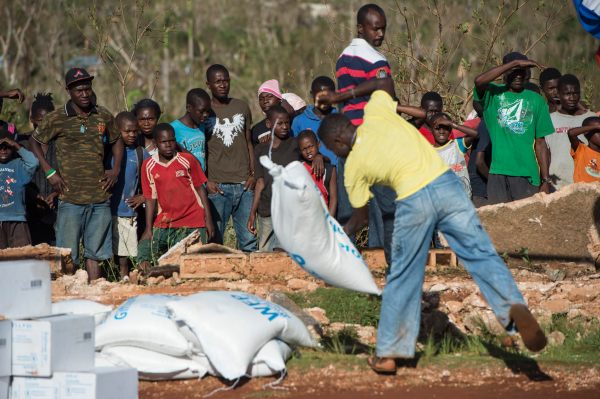
Group of Haitians unpacking supplies

A citizen of Beaumont, Haiti unloads hurricane relief supplies from USAID on October 13, 2016. / U.S. Air Force / Photo by Tech. Sgt. Russ Scalf / Flickr / Creative Commons

Hurricane Matthew, which made landfall on Haiti’s southwestern claw on October 4, devastated citizens’ lives, homes, and businesses – and set back much more across the country.  Some 546 are reported dead, and 128 are still listed as missing.  According to World Bank estimates, the Category 4 hurricane caused nearly $2 billion in damages, including $600 million in the agricultural sector.  The hard-hit southern peninsula provides about one-third of Port-au-Prince’s food supply, and the losses of crops and fishing equipment have long-term implications for food security.  Ninety percent of the homes in the South and Grand’Anse regions were damaged or destroyed, and according to the Environment Ministry, the storm sped up deforestation and has destroyed more recently planted trees.  The relief efforts have been poorly coordinated by Haiti’s interim government, resulting in press reports of looted aid convoys and sporadic protests.

The storm has also set back almost every key initiative underway in Haiti.

  • Just two months after the United Nations finally acknowledged its role in bringing cholera to the country in 2010 (for which it subsequently proposed an aid package that includes restitution to victims), flooding and contaminated water have led to a dramatic increase in the number of cholera cases. An estimated 3,400 new cases have been reported in just the last four weeks.  With help from the World Health Organization, the Haitian Ministry of Health will begin administering 1 million doses of the oral cholera vaccine, but addressing cholera also necessitates serious improvements in access to safe water and sanitation.
  • Haiti’s elections, scheduled for October 9 and already a year overdue, were rescheduled once more due to the hurricane. They are now set for November 20, but foreign observers and candidates alike indicate that major obstacles remain.  More than 770 schools, which are typically used as polling stations, were destroyed by the storm, and roads throughout the south remain impassable.

Once again, it falls to the international community to lend Haiti a hand, but donors have been sluggish.  During a visit in mid-October, UN Secretary General Ban Ki-moon said that he was “disappointed by the response of the international community.”  Less than a third of the UN’s $120 million appeal for immediate hurricane relief has been raised – and the UN was already struggling to raise funds for its separate cholera fund.  Donor fatigue in the United States, where the government contributed several billion in tax dollars and more than half of citizens made private donations following the 2010 earthquake, has been deepened by widespread perceptions that money was wasted.  Poor coordination, wasteful spending by aid agencies, and political stagnation have meant that Haiti has little to show for the $9 billion in earthquake relief.  (The Red Cross, for example, spent $500 million on various projects, but, despite its stated focus on housing, famously built just six permanent homes.)  Canada’s anticipated assumption of leadership of MINUSTAH, the UN peacekeeping mission, from Brazil by the end of the year may help energize aid efforts.  Canada has a large Haitian diaspora population and Prime Minister Trudeau has signaled interest in taking a larger role in Haiti’s recovery, but Canada’s contributions to hurricane relief are still dwarfed by those of the United States.  Once again, Haiti lurches from one crisis to another – and it will continue to until aid and development efforts are better coordinated and the country achieves some measure of political stability.

October 31, 2016

Emma Fawcett recently completed a Ph.D. in International Relations at American University.  Her doctoral thesis focused on the political economy of tourism and development in four Caribbean countries: Haiti, Dominican Republic, Cuba, and the Mexican Caribbean.

Zika Overshadows Haiti’s Continuing Cholera Epidemic

By Emma Fawcett *

Haiti Cholera Treatment Center

Inside a cholera treatment center in Haiti. Photo Credit: CDC Global / Flickr / Creative Commons

As the number of Zika victims rises into the tens of thousands and dominates the media, Haiti’s cholera outbreak rages on reaching 785,530 cases and 9,361 deaths since 2010.  According to the Haitian Ministry of Public Health and Population, more than 3,500 people were infected and 26 died in June alone.  Ten communes in Haiti’s Center and West departments are on “red alert,” indicating a surge of cholera cases.  This surge is expected to continue throughout hurricane season, as the increased rainfall leads to further contamination of open water sources.  Recent research by Doctors Without Borders has indicated that, if anything, the Ministry’s death tolls have understated the severity of the epidemic, as several of the hardest hit communities experienced death counts three times higher than officially recorded.

  • Unlike Zika, cholera can be prevented through hand-washing and water purification, but campaigns to distribute soap and chlorine tablets and increase public education have met with limited success. Moreover, those infected require immediate treatment with intravenous fluids and oral rehydration therapy, and there are too few cholera treatment centers to handle the number of patients.

The crisis is all the more dismaying because cholera is not endemic to Haiti.  The disease was brought to the country in the wake of the 2010 earthquake by Nepalese United Nations peacekeepers with poor sanitation controls.  The UN delayed by more than a year the release of its own audit report, which found that wastewater was not properly managed or treated and was released directly into a tributary of the Artibonite River.  The UN has been sued in New York federal court by a group of 5,000 cholera victims, who have demanded that the UN provide a national water and sanitation system, pay reparations to victims, and issue a public apology.  The UN claims that international treaties give it immunity.  The case is currently before the U.S. Court of Appeals.  Some 130 members of the U.S. Congress, in a rare bipartisan effort, sent a letter to Secretary of State John Kerry accusing the UN of failing to “comply with its legal and moral obligations” to assist cholera victims and noting that “the State Department’s failure to take more leadership in the diplomatic realm might be perceived … as a limited commitment to an accountable and credible UN.”

Public awareness of Haiti’s ongoing cholera epidemic – one of many tragedies in the hemisphere’s poorest country – has been eclipsed by fears about the Zika virus.  While the more than one thousand reported cases of microcephaly are devastating and frightening, Zika is very rarely fatal.  Unlike Zika, cholera has not spread throughout the hemisphere or grabbed headlines at the Olympics, and so the disease rages on in a country plagued by political dysfunction and grinding poverty.  Virtually every institution has abdicated responsibility.  The United Nations has been accused of actively covering up its own role, and its attempts at combating the epidemic have been slow and poorly executed.  Haiti’s medical residents and interns have been on strike for the last four months, protesting low pay and poor conditions, resulting in the closure of many public hospitals.  The Haitian government has been more focused on political infighting and securing international funding for its next round of elections than for additional cholera support, and even nongovernmental organizations render most healthcare services in haphazard fashion.  While bureaucrats point fingers, politicians dawdle, and global attention turns elsewhere, Haiti’s poorest continue to suffer through the worst cholera outbreak in recent history largely in silence. 

August 15, 2016

*Emma Fawcett recently completed a PhD in International Relations at American University.  Her doctoral thesis focused on the political economy of tourism and development in four Caribbean case studies: Haiti, Dominican Republic, Cuba, and the Mexican Caribbean.

Haiti: Crisis Upon Crisis

By Fulton Armstrong

Haiti OAS

OAS Secretary General Almagro visits Haiti. Photo Credit: OAS / Flickr / Creative Commons

Haiti is stumbling, again, from one crisis into another, but the timing of this ongoing mess puts the United States and other international partners in a particularly bad position.  The country’s political institutions are dysfunctional, without an elected executive nor fully legitimate legislature, and efforts to rebuild them continue to be haphazard.  Under Interim President Jocelerme Privert (formerly leader of the Senate), the government has missed another deadline for resolving disputes over the first round of presidential elections held last October and re-running them or scheduling the second round.  Instead, Privert, who assumed the Presidency in February, on 28 April formed a five-member “verification panel” to take yet another look at allegations of first-round fraud and determine which candidates should participate in the runoff, with a 30-day deadline.  The deadline for Privert to step down passed on 14 May.

  • The move coincides with growing perceptions that Privert is enjoying the perquisites of the job and may be dragging things out on purpose. Both sides to the contested elections – supporters of Jovenel Moïse, former President Martelly’s hand-picked successor, and the opposition party’s Jude Célestin – are mobilizing crowds, some numbering thousands, for almost-daily protests.  Calls for Privert to resign are growing intense as suspicions of his own ambitions and imputed bias for or against one of the candidates surge.  Several dozen gunmen, allegedly directed by an enemy of Privert, shot up a police station in the southern city of Les Cayes earlier this week, resulting in six dead.
  • International reactions to Privert’s delays have been mixed but predictably of frustration.  The former leader of an official OAS mission to Haiti in early April supported the verification process, and OAS Secretary General Almagro said recently that elections “shouldn’t be rushed.”  But U.S. Secretary of State John Kerry last month condemned “this process of delay” and urged Haiti’s “so-called leaders” to act.  His Special Coordinator for Haiti Affairs, veteran diplomat Kenneth Merten, called the new verification process a “black box” and said it was “opaque and non-democratic.”

The political mess coincides with other serious challenges.

  • The World Food Program (WFP) is increasingly concerned about hunger caused by a three-year drought, aggravated by El Niño, and the country’s economic situation. Some 3.6 million Haitians (one third of the population) face “food insecurity,” including 1.5 million who are “severely food insecure.”  A U.S. program to send Haiti surplus peanuts, which is one of Haitian farmers’ most successful crops, has deflated prices and further hurt local food production.
  • Shortages of medical supplies, worsened by corruption, have prompted doctors to conduct strikes. High-profile cases, including the death of a bleeding pregnant woman at the entrance of the Port-au-Prince General Hospital, have led to dramatic demonstrations, on at least one occasion parading around a victim’s corpse.
  • Fear of spread of the Zika virus is rampant. The University of Florida recently confirmed that Zika was present in Haiti before the outbreak in Brazil last year.  (Carried by the same mosquito, Aedes aegypti, it was mistakenly identified as chikungunya, which has almost identical symptoms except microencephaly.)  Haiti’s cholera epidemic, which has killed 9,200 people since 2010, continues to claim about 50 lives a month, according to some estimates.

The usual threats by the United States and Haiti’s other international partners to suspend aid if the government doesn’t resolve the political impasse have been muted presumably because they’re unlikely to be credible while such major threats to Haitian citizens’ wellbeing loom large.  Haiti’s political and economic elites assume that the outsiders will care for the Haitian people and continue bailing the country out while they pursue their internecine struggles.  Former President Martelly, who is not free from blame for the elections impasse, has been in Miami these days to promote his autobiography ($50 a copy) and reestablish himself as a naughty boy Kompa musician.  The international community is, once again, in a lose-lose situation.  A previous caretaker government, headed by Gérard Latortue, lasted two years (2004-2006).  The United States and others can ill afford a deeper humanitarian disaster, so while Haitian elites fiddle, outsiders will try to put out the fires.

May 19, 2016

Zika Challenges Mount

By Rachel Nadelman* and Fulton Armstrong

Scientists and Zika

Photo Credit: Pan American Health Organization / Creative Commons / Flickr

While scientists struggle to confirm their theories over the link between the Zika virus and the dread health conditions it apparently causes, national and regional leaders face the monumental task of addressing popular anxiety that’s spreading faster than the virus itself.  The Health Minister in Brazil – site of the largest outbreak of microcephaly – has said he is “absolutely sure” that the virus is causing women to give birth to babies with the condition, characterized by abnormally small heads and serious developmental deficits.  The head of the World Health Organization’s emergency response team said last week (2/19) that the “virus is considered guilty until proven innocent,” but that it will take four to six months to even potentially be sure.  In the meantime, other questions are emerging:

  • Argentine scientists calling themselves “Physicians in the Crop-Sprayed Villages” suspect that the outbreak has been caused by pesticides. They note that thousands of Zika-infected pregnant women in Colombia – where the larvicide pyriproxyfen has not been added to drinking water as in Brazil – have delivered normal babies.  El Salvador, also hard hit by Zika, has not reported Zika-related microcephaly cases.  Other scientific authorities, including the U.S. National Academy of Sciences, question the evidence for this theory, and the later arrival of the disease in these countries means the consequences for infected expectant mothers cannot be fully determined.  Research is ongoing.
  • In lowland Colombia, along the Caribbean Coast, the virus is being blamed for an outbreak of Guillain-Barre syndrome, when victims’ immune systems damage nerve cells and cause pain, weakness, sometimes paralysis, and even death. Scientists are investigating.
  • Mental health experts say the Zika virus closely resembles some infectious agents that have been linked to autism, bipolar disorder, and schizophrenia. They can’t confirm their suspicions.
  • Entomologists and climatologists are warning that global warming will accelerate the spread of Zika and other diseases transmitted by the mosquito Aedes aegypti, which thrives in warmer, more humid environments. They caution that the number of people currently exposed to the mosquito, roughly 4 billion, will grow steadily.  Evidence is inconclusive.
  • Other theories include that the birth defects are caused by genetically modified mosquitoes released by a British company in Brazil to combat dengue; and by vaccinations given to pregnant women to prevent rubella and pertussis. But doctors and scientists have so far rejected each one.

Regional organizations and governments are taking whatever actions they can while awaiting more conclusive science.  Briefing the OAS, the Assistant Director of the Pan American Health Organization called on countries to “to mobilize to eliminate mosquito breeding sites in every corner where they may be” and pledged PAHO’s support to do so.  Brazil has formed special teams to travel around the country to rigorously quantify cases of Zika and possible links with microcephaly.  U.S. President Obama has asked Congress for US$1.9 billion and approval to reprogram funds left over from Ebola eradication efforts to deal with Zika in Latin America and the United States.  Cuban President Raúl Castro has mobilized 9,000 troops and police to spray neighborhoods and eliminate standing water in which the mosquitoes breed.

The “epidemic,” as some leaders are calling it, will be difficult to respond to even after scientists certify the mosquito-virus link.  Solving the mystery of the higher concentration of microcephaly cases in Brazil, or linked to Brazil, will also be essential to developing an effective public health response.  Eradicating all mosquitos would be a monumental undertaking – further complicated by the fact that the history of pesticides shows equal or even greater risks to citizen health when used widely.  The Aedes mosquito sucks the blood of both rich and poor, but population density and weak infrastructure — allowing for stagnant water – makes lower-income communities much more vulnerable.  Focusing on the mosquito may not be enough, moreover, because there are early indications that Zika can be sexually transmitted.  Traces of Zika have been found in breast milk, but the implications remain unclear.  Such questions fuel popular panic, increasing the risk that governments will make rash decisions that could have  profound costs.

February 26, 2016

* Rachel Nadelman is a PhD candidate in International Relations at the School of International Service.  Her dissertation research focuses on El Salvador’s decision to leave its gold resources unmined.

Ignoring MERCOSUR and UNASUR at Your Peril

By Thomas Andrew O’Keefe*

Mercosur map

Participating countries in MERCOSUR. Image Credit: Immanuel Giel (modified) / Wikimedia / Creative Commons

Pundits who dismiss MERCOSUR and the Union of South American Nations (UNASUR) as failed attempts at Latin American economic integration should look again.  MERCOSUR has presided over an explosion in intra-regional trade among its four original member states (Argentina, Brazil, Paraguay, and Uruguay) from just over US$ 5 billion at its launch in 1991 to US$ 43 billion by 2014.  UNASUR, for its part, is credited with thwarting a coup attempt against Evo Morales in 2008 and putting a damper on continental arms races.

  • MERCOSUR and UNASUR member countries have taken additional important steps toward convergence since 2014, when MERCOSUR’s highest governing body adopted “CMC Decision 32,” which allows initiatives pursued by either collective to be binding on both if they arise from a set of goals and objectives common to both. The document reaffirms the UNASUR founding treaty stipulation that “South American integration shall be achieved through an innovative process that includes all of the achievements and advances by the processes of MERCOSUR and CAN [Andean Community].”  Chile has spearheaded this effort as a means of reducing duplication of efforts, and is also attempting to bridge ideological differences between the Pacific Alliance (Chile, Colombia, Mexico, and Peru) and MERCOSUR to further build Latin American unity.

Given the relentless negative assessment of both integration projects, multinational pharmaceutical companies were caught off guard when MERCOSUR and UNASUR forced them late last year to make substantial price cuts for public-sector purchases of Darunavir, an antiretroviral to combat HIV-AIDS, as well as Sofosbuvir, used with other medications to treat Hepatitis C.  Both drugs are on the World Health Organization’s List of Essential Medicines.  As a result of CMC Decision 32/14, the Ministers of Health of all the South American nations met in Montevideo on September 11, 2015, and launched a joint MERCOSUR/UNASUR committee to negotiate with multinational pharmaceutical companies on the prices for bulk purchases of certain high-priced drugs.  The committee, made up of representatives from each government’s agency responsible for purchasing medicines, won major price cuts last November – a steep reduction for Darunavir from Hetero Labs as well as lower prices with Gilead for Sofosbuvir.  The new costs were premised on the lowest amount charged to any one of the member governments, and enabled Chile’s Ministry of Health to pay 90 percent less than what it previously paid for Darunavir.  The South American governments as a whole are expected to save US$ 20 million in 2016 on purchases of this anti-retroviral.  A proposed 14 percent reduction in the cost of the combination Sofosbuvir-Ledispaver drug for Hepatitis C – if accepted by the MERCOSUR/UNASUR committee – would enable further savings.

The South American governments have their eyes set on several additional high-priced medications, with a particular focus on drugs used to treat cancer.  In order to aid the committee’s work, UNASUR is creating a data bank of the prices charged by the multinationals for specified medicines purchased by the public health sector in each member state.  The fact that the purchases are made jointly through the Pan American Health Organization’s already existing Strategic Fund opens the possibility that countries in Central America and the Caribbean can benefit as well.  It also means that all these countries can access the Fund’s capital account and do not need to have the cash in hand to acquire medications required to address public health emergencies.  MERCOSUR and UNASUR – often dismissed as ineffective – are demonstrating that integration produces tangible results.

February 11, 2016

* Thomas Andrew O’Keefe is President of San Francisco-based Mercosur Consulting Group, Ltd. and is former chair of Western Hemisphere Area Studies at the U.S. State Department’s Foreign Service Institute (2011-15).

Correction: Due to an editing error, an earlier version of this post mistakenly stated that “a 14 percent reduction in the cost of its combination Sofosbuvir-Ledispaver drug for Hepatitis C will enable Chile’s Ministry of Health to pay 90 percent less than what it previously paid for Darunavir.”  The outcomes of the cost negotiations for the two medications are unconnected.