Venezuela: Maduro versus Capriles, again

By Michael McCarthy*

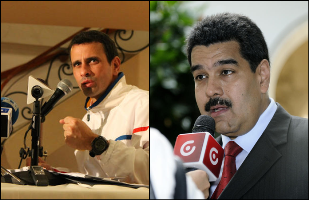
Henrique Caprile / Photo Credit: ICP Colombia / Foter.com / CC BY-SA and  Nicolas Maduro / Photo credit: OEA - OAS / Foter.com / CC BY-NC-ND

Henrique Capriles / Photo Credit: ICP Colombia / Foter.com / CC BY-SA and
Nicolás Maduro / Photo credit: OEA – OAS / Foter.com / CC BY-NC-ND

Venezuela’s municipal elections on December 8 didn’t conclusively answer the single question on people’s minds:  Would the parties aligned under the leadership of President Nicolás Maduro or those under opposition leader Henrique Capriles win a commanding victory?  Attention centered on this question because Capriles had rejected the results of the April 14 balloting as fraudulent and this time called on voters to give a clear majority to his opposition “electoral bloc.”  Maduro came out ahead in last Sunday’s contest, with its complex ballot asking voters to choose mayors and councilpersons in 335 districts.  His alliance, the United Socialist Party of Venezuela (PSUV) plus left-wing parties, totaled 49 percent of the vote, and parties aligned with the opposition received 42 percent.

But Maduro’s crowing about a “great victory” that propels the Bolivarian Revolution forward with “greater force” and legitimates a “deepening of the economic offensive” rings hollow.  Some of the 9 percent of the vote that went to candidates identified as independents may lean toward him, but the PSUV aspires to be a hegemonic party, claiming a much stronger base, and some hardcore chavistas are complaining about the opposition’s resilience in major urban centers and victories in the capitals of three interior states, all chavista strongholds, including former President Chávez’s home state of Barinas.  In broad strokes, Maduro’s economic populism – attacks last month on so-called economic criminals and measures forcing stores to lower prices – gave him a late boost.  Polls indicate that, with annual inflation running at 54 percent, the move paid off.  Maduro’s blitzkrieg gave urban working-class voters a means to afford items ahead of Christmas and showed the radical base of chavismo his commitment to challenge crony capitalism.  The opposition failed to mount an effective counterattack.  Preparations next year for 2015 National Assembly elections will tell the staying power of this victory for Maduro and the effectiveness of his “economic offensive.”   Capriles, who offered a calm post-election speech, sounded confident of his strategic game, but some in the opposition are probably disappointed that they did not take more Chavista strongholds.

Even though the opposition didn’t win the global numbers game, its significant presence in city halls around the country gives it a position from which to build the outline of a governance model.  One important winner appears to be the electoral process itself, in which the technical machinery ran smoothly and no sustained allegations of fraud were made.  A second winner was governability.  Notwithstanding some bullying of Capriles campaign workers, no violence transpired during the campaign or on voting day, and both sides can claim victories.  Maduro’s triumphalist rhetoric confirms that Venezuelan politics is going to remain far from harmonious, but even a modicum of governability could go a long way as the country faces many tough, if not intractable, questions in the coming year and beyond.

*Michael McCarthy is Lecturer, Latin American Politics, at Johns Hopkins University, School for Advanced International Studies.

Haiti: Crisis as Usual

By CLALS Staff

World Bank Group President Jim Yong Kim and Haitian President Michel Martelly / Photo credit: World Bank Photo Collection / Foter / CC-BY-NC-ND

World Bank Group President Jim Yong Kim and Haitian President Michel Martelly / Photo credit: World Bank Photo Collection / Foter / CC-BY-NC-ND

Half way through his term, President Martelly and his opponents have shown the same weak leadership and shallow commitment to democracy and transparency that has long plagued Haitian politics.  The IMF recently reported preliminary data indicating that Haiti’s GDP grew around 4 percent in FY2013; that inflation dropped from almost 8 percent to 4.5 percent; and that, although the fiscal deficit was larger than planned, domestic revenues were in line with projections.  On the streets, however, popular suffering shows no sign of abating.  Some 170,000 remain homeless since the earthquake almost four years ago; hundreds of thousands still have no prospect of employment, and poverty rates remain sky-high.  Suspicions about the whereabouts of more than a billion dollars in foreign aid are growing.  The World Bank last week criticized the lack of government transparency regarding funds from Venezuela’s “Petrocaribe” program, worth about $300 million a year to Haiti, and repeated its call for an end to the government’s use of “non-compete” contracts.  Corruption, a perennial concern, was a main theme of several large protests last month, involving thousands of citizens demanding Martelly’s resignation.

United Nations officials have repeatedly called on Haiti to hold parliamentary elections originally scheduled for two years ago.  The lower house of parliament in November passed a bill protecting the tenure of certain members of the senate – which the UN Secretary General’s senior representative in Haiti praised as “an important step for the organization of inclusive, transparent, and democratic elections” – but myriad other preparations remain undone.  The UN last August found that failure to hold elections by next month “runs the risk of [the Parliament] becoming inoperative,” but the Security Council went ahead and renewed the MINUSTAH mission for yet another year, albeit with fewer troops and police.

Donor fatigue – when the international community tires of lending a hand – seems to have been overtaken by donor disinterest, and the Haitian political elite appears much obliged.  Martelly, whose stage name was Sweet Micky during his singing career, has failed to use his fame and charm to promote serious reform among Haitians, as he promised, nor has he weaned his government and its supporters off the lucre of corruption.  His detractors, like those organized against Presidents Préval and Aristide before him, are better at mobilizing opposition than they are at mustering support for any political alternatives.  The Obama Administration’s commitment after the earthquake to help Haiti “build back better” has faded.  A central element of its vision was construction of an industrial park in northern Haiti, which more than a year after its inauguration has created fewer than 2,000 of the 65,000 jobs it promised.  As long as Haitians and their international supporters are satisfied with bandaid solutions to systemic problems, the country will wallow in its misery until the next crisis makes things yet worse again.

Subnational Regimes Reveal Uneven Nature of Democracy

By Agustina Giraudy

Peruvian mayoral campaign poster / Photo credit: Pedro Rivas Ugaz / Flickr / CC-BY

Peruvian mayoral campaign poster / Photo credit: Pedro Rivas Ugaz / Flickr / CC-BY

Most Latin American countries have transitioned away from autocracy and authoritarianism over the past three decades, but much of their democratic advancement has been territorially uneven and mostly limited to the national level.  In Argentina, Peru, Brazil, Bolivia, Mexico and other countries, democracy has not trickled down to subnational levels of government.  Many provinces, states, and municipalities in these (and other) countries continue to be governed in ways that resemble the period of undemocratic rule.  In these subnational undemocratic regimes (SURs), the political and civic rights of regular citizens and the political opposition are severely curtailed.

In SURs such as Formosa, San Luis or La Rioja in Argentina; Oaxaca (pre 2010), Puebla (pre 2010), or Tabasco in Mexico; and Goiás in Brazil, provincial autocrats use a variety of undemocratic, illegal, and informal actions – such as electoral fraud, electoral violence, and changes in electoral rules and political institutions – to prevent the opposition from gaining access to state positions.  My research and others’ indicates that, to further protect their own power, these subnational rulers frequently and arbitrarily reshuffle provincial- and state-level supreme courts, capriciously remove opposition mayors from office, deny funding to municipalities controlled by the opposition, and arbitrarily commission provincial- and state-level audits to investigate contrived financial misdeeds of opposition mayors.  They also co-opt or divide local organized groups, such as small unions, social movements, and street vendors, to undermine potential opposition.

The existence of SURs within national democracies underscores the difficulty of assessing the quality of a democracy from a purely national perspective.  As recent research has shown, the continuation of SURs in national democracies requires that we take a different approach and, importantly, grasp how seemingly democratic national-level leaders benefit from and, in some circumstances, encourage the SURs as a reliable base outside the capital.  Subnational undemocratic rulers, who typically control voters and legislators in the national congress, are seen by national officials as key partners for crafting winning electoral and legislative coalitions.  To the extent that national democratic incumbents succeed at inducing and securing autocrats’ cooperation, the former have strong incentives to help the latter stay in power.  Ironically, the accepted practice of democratic coalition-building contributes to the obstruction of democratization at the subnational level.  In the second decade of the 21st century, the quality of Latin American democracies depends at least as much on subnational democracy – and reducing the influence of SURs – as on the quality of national-level institutions.

Honduran Election Crisis Marks New Phase in Country’s Agony

By CLALS Staff

Juan Orlando Hernández Photo credit: Tercera Informacion / wikimedia commons / and Xiomara Castro / Photo credit: hablaguate / Flickr / Creative Commons

Juan Orlando Hernández Photo credit: Tercera Informacion / wikimedia commons / and Xiomara Castro / Photo credit: hablaguate / Flickr / Creative Commons

Yesterday’s election in Honduras was peaceful and orderly – the 61 percent voter turnout forced polls to remain open an extra hour – but anomalies in the vote count have cast a dark shadow over the legitimacy of the results. Although most polls for months indicated that Libre candidate Xiomara Castro had a several-point lead over National Party candidate Juan Orlando Hernández (and a few polls showed they were in a dead heat), the Superior Electoral Tribunal (TSE) said the Nationalist beat Castro by more than a five percentage point  margin – 34.2 percent to 28.6 percent. Castro and other candidates had repeatedly claimed the National Party activist who heads the TSE (which has no representative from the nontraditional parties or Libre) would skew the results and, citing exit polls, she has alleged that fraud tainted up to 20 percent of yesterday’s votes. The TSE’s claim that, of more than 1.6 million ballots cast, there were no null or blank votes – when party poll watchers reported many – has also drawn attacks on its credibility. Nonetheless, the U.S. Ambassador and the European Union observer team hastily declared the process transparent and clean.

Hernández and Castro have both declared victory – promising high tensions in at least the short term. Castro is the wife of former President Mel Zelaya, who was ousted in a coup in 2009, and has assembled a broad and deep popular base in Libre outside of Honduras’s two traditional parties. The government, military, economy and, importantly, news media are all dominated by elites that have long resisted the sort of popular movement she has built.  Few observers believe that, particularly with U.S. endorsement of the election results, Castro’s demands for a recount or other review of the results will be heeded.

If the results had been seen as accurate and fair, the election could have helped Honduras close the dark chapter of tensions and violence that started when the military forced President Zelaya into exile three and a half years ago. If Hernández is allowed to take office, his low vote – barely a third of all votes cast – alone promises a prolonged crisis like that which has plagued current President Lobo since his inauguration, a period during which both criminal and political violence has skyrocketed, public finances have deteriorated alarmingly, and political polarization has reached unprecedented heights. Under a Hernández presidency, the crisis may become even worse. Castro ran a campaign explicitly committed to peace and reconciliation and consistently urged her supporters to give democratic process a chance. She has never shown even the slightest inclination to call her supporters to violence, but popular anger has festered since the 2009 coup and there’s no guarantee that some frustration will not spill into the streets.  The surge in right-wing violence in Honduras since the coup – reminiscent of death squad activities in other Central American countries in the 1980s – has persuaded many protesters to keep their heads down, but this election may lead to desperate acts which the death squads will be eager to respond to, threatening a spiral of violence the hemisphere’s second-poorest country can ill-afford.

Chile Elections: Bachelet’s Partial Victory

By Maribel Vasquez and Eric Hershberg

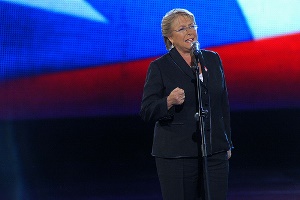
President Michelle Bachelet / Photo credit: Chile Ayuda a Chile / Flickr / CC-BY-NC-ND

President Michelle Bachelet / Photo credit: Chile Ayuda a Chile / Flickr / CC-BY-NC-ND

Elections last Sunday didn’t give former President Michelle Bachelet the strong mandate that she wanted but she appears well positioned to win the second round and the honor of serving a tough second four-year term. An underwhelming number of Chileans headed to the polls to cast their votes for the president of the republic, parliamentarians, and for the regional councilors. Polls had indicated that Bachelet would win convincingly in the first round but, with 46.7 percent of the ballots cast, she fell just short of the 50 percent needed to avoid a run-off election on December 15. Conservative Evelyn Matthei, from the governing right wing Alliance Party, received 25 percent of the vote in the first round and has little chance of winning the run-off: another 17 percent of Chileans voting in the first round opted for candidates running to the left of Bachelet, and observers predict they will either stay home in December or select the former president as a second best option.

A 2012 change in voting law appears to have hurt Bachelet’s percentages. Under the new norm, Chileans for the first time were automatically registered to vote in presidential and congressional elections upon reaching 18 years of age, instantly expanding the electorate from eight to 13 million potential voters. But also for the first time, voting was not compulsory, and that proved consequential. In a country where public opinion polls have long shown high levels of alienation from the political system, particularly among younger segments of the population, abstention reached unprecedented heights. Fewer than seven million Chileans turned out to vote on Sunday, representing only around half of those eligible to do so. Turnout was undoubtedly suppressed by the stubborn persistence of Chile’s binomial electoral system, a holdover from the Pinochet dictatorship’s 1980 Constitution that gives the losing party a bloated presence in Congress (in order to receive both seats in any given district, the winning party or coalition must win double the percentage of the vote received by the runner-up, so frequently even a wide margin between the two top vote getters generates an equal allocation of seats). Bachelet’s center-left coalition, the New Majority, has proposed amending the constitution to make the electoral system more reflective of public preferences. But the newly-elected Congress, selected according to the rules of the authoritarian regime, is unlikely to generate the super-majorities needed to achieve constitutional changes that would alter the system so as to democratize congressional representation.

Getting elected to a second four-year term as Chile’s president might prove to be the easy part for Bachelet.  Harder still will be pushing forward the ambitious policy reforms she has promised. An especially prominent issue in the campaign was the demand of a growing student movement to reform Chile’s privatized education system, and Bachelet responded with a pledge to guarantee free, quality higher education to all Chileans, to be funded by a proposed increase in corporate tax rates and elimination of tax deferrals used widely by Chilean companies. Yet while Bachelet’s bloc secured the simple majority needed to secure modest tax reform, it fell short of the super majorities needed to secure education reform or change the electoral system or constitution, and the rightist opposition is loath to cede ground on either of these issues, which are also legacies of the Pinochet constitution. To enact the key pillars of her agenda, Bachelet’s second presidency will need to calibrate difficult negotiations with Congress with popular pressures to fulfill democratic aspirations for political representation and a more social democratic approach to public services than has been possible to achieve during the first 23 years of post-authoritarian rule.

Costa Rica: Losing Faith in Democratic Institutions?

By Fulton Armstrong

Supreme Elections Tribunal President Luis Antonio Sobrado / Photo credit: izahorsky / Foter.com / CC BY-NC-ND

Supreme Elections Tribunal President Luis Antonio Sobrado / Photo credit: izahorsky / Foter.com / CC BY-NC-ND

Costa Rica is approaching February’s presidential and legislative elections with a distinct lack of enthusiasm, if not with dread.  Most international surveys present Costa Rica as the “world’s happiest country” (the Happy Planet Index), or in the elite club of the world’s “full democracies” (ahead of Japan and Belgium in The Economist’s list), or as the 48th least-corrupt country (out of 174 reviewed by Transparency International).  The economy is expected to grow about 3 percent this year, and the country’s access to foreign direct investment is blunting the impact of the government’s fiscal deficit of about 5 percent of GDP.  Crime is on the rise, but Ticos know that their pain is small compared to that wreaked by the narcos and maras in Guatemala, El Salvador and Honduras.

Reputable polls show, however, that Costa Ricans are gloomy about the state of their political institutions and specifically about their upcoming elections.  According to polls, about 32 percent of the country’s 3 million eligible voters say they plan to abstain, citing corruption, a lack of leadership, insensitivity to the average citizen, and unemployment as reasons to reject not just the candidates but also the political elite in general.  The President of the Supreme Electoral Tribunal (TSE), Luis Antonio Sobrado, acknowledged last month that the election was taking place in the context of “citizen uneasiness … and a lot of anger with politics and politicians.”  Abstentionism was high in 2006 (35 percent) and 2010 (32 percent), but commentators sense a much deeper and darker alienation this time around.  A columnist lamented that the “multiparty” system has been replaced by “atomization,” and another said the political parties have “disconnected themselves from the national reality.”

Further reflecting the malaise, President Chinchilla’s support has nosedived – a July poll showed only 9 percent of voters said she was “good” and none said “very good” – and pundits cite her ineffectiveness as the cause of collapsed highways, dengue outbreaks, and other calamities.  The nominee of her Partido de Liberación Nacional (PLN), Johnny Araya, is widely thought to have an edge in February, but his 12 years as mayor of San José have coincided with a deterioration in the city’s infrastructure and security, and his personal lifestyle (including five marriages) may be a factor in popular skepticism.  The government’s recent announcement that it will contract the services of 4,125 new employees in 2014, mostly in the education sector, drew immediate criticism as yet another example of political patronage to influence the race.

The self-doubt seems at this point indicative of concerns about Chinchilla and the crop of candidates, rather than a rejection of democracy.  Costa Ricans comparing themselves with the rest of Central America still feel good about themselves, and the green image that eco-tourists reinforce is comforting.  But crumbling infrastructure – including collapsing bridges and the exorbitant cost of repeated repairs – and shocking crimes, such as the recent assassination of an environmentalist protecting turtles on a Caribbean beach, fuel the sort of doubts that only effective political and economic leadership can quell. 

Colombia: President Santos’s Challenges

By Maribel Vasquez

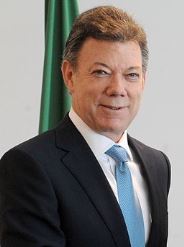
President Santos Calderón / Photo credit: Agência Brasil, Creative Commons

President Santos Calderón / Photo credit: Agência Brasil, Creative Commons License

Colombian President Juan Manuel Santos has yet to announce whether he will seek a second four-year term in May, but with the November deadline fast approaching for him to declare his candidacy, many Colombians are expressing dissatisfaction with his performance. Three years after taking office, and after a protracted honeymoon period, Santos’s approval ratings dropped to a dismal 21 percent several weeks ago. (A more recent poll surged to 41 percent but the rollercoaster ride appears likely to continue.) Colombia has experienced a wave of strikes and protests – perhaps reflecting a phenomenon evident from Brazil to Chile to Peru by which popular sentiment nosedives despite steady economic growth because much of the population is left out and institutions fail to respond to needs. The Santos administration has governed more democratically than his predecessor and shown greater commitment to the rule of law and accountability. Unlike the Clintonian dictum that “It’s the economy, stupid,” Colombia’s long-standing adage has been that “La economía va bien, el país va mal.”

The stalled peace talks between the Colombian government and the Revolutionary Armed Forces of Colombia (FARC) are also to blame for Santos’s dwindling public support. On October 13th, the 15th round of negotiations concluded in Havana without visible progress towards an agreement. (Talks are set to resume next week.) The agenda has six major points agreed to by both sides: land reform, political participation, disarmament, illicit drugs, rights of the victims, and implementation of an eventual peace accord. To date, agreement has been reached on only land reform and rural development. A number of thorny issues persist, including the FARC’s demand that a constituent assembly be convened to incorporate the peace deals into the country’s constitution – which the government has rejected.  In the latest development, the government also turned down the FARC’s call to have civil rights activist Reverend Jesse Jackson act as mediator in the release of Kevin Scott Sutay, a former U.S. marine abducted by the FARC earlier this year. Criticism of Santos’s handling of the talks is due in part to perennial public concern that the FARC is stalling the peace talks to regroup and rebuild its capabilities.

President Santos has staked his political legacy on ending Latin America’s longest-running armed conflict. Success or failure of the peace talks will define his presidency for many Colombians, and failure to reach an accord would cast a cloud over his political future. While he has talked tough – saying FARC stalling is wearing out the government and the Colombian people’s patience – President Santos appears in every bit of a hurry to see these negotiations come to a conclusion before the end of the year. Former President Alvaro Uribe and his loyalists in the Centro Democrático (CD) have already blasted what they claim is excessive leniency on the President’s part.  Santos is in a bind: if he rushes the peace talks, he risks making too many concessions and playing into the Uribistas’ hand, while canceling the talks would strip him of the desired distinction of being Colombia’s peace president. The easy road to reelection – effective conclusion of the peace process and greater responsiveness to the country’s widespread malaise – seems remote.  A strong opposition candidate has yet to emerge, however, giving Santos time to rebuild public support. CD frontrunner Francisco Santos’s recent threat to leave the party hints at a split within Uribismo.  The failure of an organized opposition may be the only advantage Santos has at the moment.

Argentina’s Mid-term Elections: The Beginning of the End for Cristina?

By Santiago Anria and Federico Fuchs *

Cristina Fernández mural Photo credit: CateIncBA / Foter / CC BY-NC-ND

Cristina Fernández mural Photo credit: CateIncBA / Foter / CC BY-NC-ND

Rising inflation, loss of confidence by the private sector, and lack of access to international credit markets make victory in Argentina’s mid-term elections on October 27 especially important for President Cristina Fernández – or else she will face the prospect of two years as a lame duck.  Her governing Front for Victory (FPV) faction of the Justicialist Party (PJ) seeks to protect its legislative majority.  (Half the seats of the lower chamber and a third of those in the upper chamber are at stake.)  Based on the results of the Open, Simultaneous and Obligatory Primaries (PASO) held on August 11, the FPV appears likely to lose some seats but still maintain a slight majority, considering that a number of the seats in dispute in the lower chamber correspond to districts in which it fared poorly in the 2009 elections.  Before her unexpected surgery last week, Fernández had been central to the electoral campaign, hand-picking and endorsing Lomas de Zamora Mayor Martín Insaurralde as the first deputy on the FPV’s list.  According to some surveys, previous adjustments to her communications strategy increased her approval ratings, and with her recovery from surgery expected to take a month, there is speculation that the FPV may win some additional “sympathy” votes.

The PASO primaries showed that the FPV lost in key electoral districts, including the city of Buenos Aires, and the provinces of Buenos Aires, Córdoba and Mendoza, but that it continues to be the only political force with national reach.  The opposition remains fragmented, but Sergio Massa, a former government ally and current mayor of Tigre (elected on the FPV ticket), has emerged as the key opponent in Buenos Aires province and as a likely presidential candidate for the 2015 elections.  He may challenge Daniel Scioli, who is the current governor of Buenos Aires and is, at least until now, backed by Fernández as her potential successor despite resistance from some factions within the FPV).  Massa’s Frente Renovador still has limited territorial reach, but he enjoys the support of the mainstream media, a branch of the General Confederation of Labor (CGT), the Church and, perhaps most importantly, a prominent group of mayors in Buenos Aires province.  He is trying to capture a more centrist vote, promising the “end of confrontational politics” and focusing on what he claims are the “real issues” affecting Argentines – corruption, citizen security and crime prevention, and inflation.

The results of the upcoming elections will define the options for the Fernández administration.  If the FPV fails to keep a solid majority in Congress, the issue of constitutional reform that would allow for reelection will be off the table, and Fernández will not be able to run for a third term.  In policy terms, negative results will increase pressure for economic adjustment and pro-business policies. Fernández and her predecessor, deceased husband Néstor Kirchner, have both proven their capacity to revamp their administrations after electoral defeat by defying such pressures and raising the stakes. But with defeat in the polls, and with a diminished force in Congress, it will be harder for her to maintain party discipline as the prospects for 2015 grow bleaker.  A lot also depends on how the opposition fares: a clear winner among them (most likely Massa) will become a clear challenger for 2015 and probably put even greater limits on any government strategy, whereas a still atomized opposition may give Fernández more leeway. The task ahead for the FPV will be to define and support a presidential candidate that can continue the Kirchnerista project. Performing well in the congressional elections will give Fernández more room to define this, or to at least block non-desired candidates.  We may be witnessing the beginning of the end for Cristina, but it is not clear whether any of the opposition candidates can force her to steer the Kirchnerista project in a new direction.  Not even the most plausible contender in the opposition (Massa) or the most likely successor in the FPV (Scioli) seems to have any meaningful change to offer. If both of them represent anything, it is Peronism’s ability to adapt in adverse times to stay in power. But that is nothing new in the history of Peronism.

* Santiago Anria and Federico Fuchs are graduate students in the Department of Political Science at the University of North Carolina at Chapel Hill.

Honduras Elections: Serious Challenges Ahead

Honduras coat of arms / public domain

Honduras coat of arms / public domain

Honduras faces an enormous challenge in the next two months:  ensuring that elections in November – when Hondurans go to the polls to elect their next president, 128 National Assembly deputies, and municipal authorities – are clean and transparent.  The elections are especially important because they are the first conducted outside the framework of the coup of 2009.  The elections that year, held five months after the coup, were conducted under the black cloud of the break in constitutional order and gave rise to the transition government headed by President Porfirio Lobo.  This year, nine parties are participating – a clear signal that the country’s traditional two-party system is ending.  The Freedom and Refoundation Party (LIBRE), with a base among supporters of ousted President Mel Zelaya, has nominated his wife, Xiomara Castro, as its Presidential candidate, and the Anticorruption Party, led by sports journalist Salvador Nasrala, represent a true challenge to the traditional political elite.

All of the polls give the edge to Xiomara Castro, with a lead ranging anywhere from two to eight percentage points, over the candidate of the National Party, Juan Orlando Hernández, who is President of the Congress.  The polls also show that a majority of the population, having witnessed multiple accusations of fraud during the primaries held by the two traditional parties (including Hernández’s), expect the elections to be marred by fraud.  Casting further doubt on the credibility of the outcome is the narrow representation of the parties and lack of professionalism of the Supreme Electoral Tribunal (TSE), which is charged with organizing and supervising the elections.  Only the three traditional parties have representatives serving on the TSE and, unlike in other countries, they are distinguished as militants of their parties rather than independents or experts in electoral processes.

Should the results of the election not be seen as legitimate, the potential for conflict is worrisome, and there are ample grounds for concern that the security forces that have proliferated under the Lobo government could be deployed to suppress protest.  Only strong international pressure and strong citizen pressure can guarantee that the elections will be clean and open the possibility for Honduras to overcome the political crisis that has now been damaging the country for several years. 

A number of events – including the firing of Supreme Court justices last December and the National Congress’s intervention in matters far outside its jurisdiction – underscore the continuing tendency toward authoritarian and illegal actions to suit ambitious politicians’ pursuit of power, with potentially dire consequences for the elections. An ongoing economic crisis, including a nearly 50 percent unemployment rate, and a serious deterioration of government finances, also contributes to political fragility. Against this backdrop, the United States and the rest of the international community can play a positive role in promoting elections that are fair and impartial and taking proactive measures to ensure that security forces ill-suited to managing social unrest not be deployed to suppress political dissent.  Failing to do so would waste an opportunity to help effect a truly democratic outcome in Honduras, and invite a further deterioration of a political, economic and social climate that is the most worrisome in Central America.

Chilean Watershed?


Michelle Bachelet / Photo credit: OEA - OAS / Foter.com / CC BY-NC-ND

Michelle Bachelet / Photo credit: OEA – OAS / Foter.com / CC BY-NC-ND

Sunday’s presidential primaries in Chile – the country’s first ever –reaffirmed former President Michelle Bachelet’s leadership of Concertación and cleared the way for a faceoff in November between herself and the Conservative candidate, Economy Minister Pablo Longueira.  Bachelet trounced challengers within her center-left coalition, winning 74 percent of the primary vote, and seems poised to build on the astounding 81 percent approval rating she had in 2010 when her first term ended.  (Current President Sebastián Piñera’s approval rating now hovers around 40 percent, a two-year high for him.)  Conservative Longueira will have the advantage of Piñera’s incumbency, but his party’s somewhat weaker performance on Sunday – with about 27 percent of all votes cast – and his slim 3 percent margin within the coalition suggest a tough campaign ahead for him.  Most observers deem Longueira’s performance in Piñera’s cabinet to have been competent but unexciting, and they predict an easy Bachelet victory in November.

Whichever candidate wins, Chile faces an evolving set of challenges.  Its commodities-driven economy is slowing down, and a stubborn gap between rich and poor is fueling demands for tax and education reforms.  Chile is ranked the most unequal country of the 34-member Organization for Economic Cooperation and Development (OECD).  Widespread demonstrations by students, teachers and professors have been demanding free tuition from preschool through university, and key labor unions are increasingly joining these mobilizations for reform.  Accepting her primary victory on Sunday night, Bachelet said voters were motivated by a desire for tax and education reform as well as a new constitution to replace the one created under dictator Pinochet in 1980.  She has also said that if elected she will halt the controversial HydroAysén project, which would build five mega-dams on two of Chilean Patagonia’s rivers.  Despite this rhetorical shift leftward and her role as the leader of the Socialist Party, such statements are not expected to lead to significant policy shifts; Chilean observers say she will continue to hew closely to the market-friendly policies that helped make Chile one of the region’s most stable countries during her first term.

Bachelet’s and Longueira’s competition may fail to excite the electorate in November, when voting will not be obligatory for the first time, and low turnout could deprive the victor of the mandate needed to lead thorough change, an arguable requisite  to increase the credibility of democratic institutions.  Empowered by two years of protests, student leaders are not leaving things entirely up to political elites.  Many are also running for office and aspire to bring a new perspective and direction to reforms in Chile.  International attention has focused in recent weeks on popular mobilizations in Brazil, but as recently as last week, tens of thousands of Chileans marched through the streets of Santiago and other major cities, challenging the credibility of the existing political order.  Bachelet has made deals with some of the protest leaders – agreeing, for example, not to run a Concertación candidate against one of them in a congressional race – but their demands are unremitting and strategic, and the winner of the upcoming election faces  a real challenge in trying to satisfy them.