Honduras: What is U.S. policy?

The sustained surge in crime and violence in Honduras – including more than 60 politically motivated murders in the past year – is raising doubts about the viability of the government and its institutions.  The term “failed state” is often abused, but there’s no doubt that Honduras falls short of the rhetoric about its stability and democracy that the Obama Administration recited when arguing for the country’s readmission to the OAS after the 2009 coup that removed President Mel Zelaya.  Indeed, the coup set the country on a downward spiral from being a weak democracy to one struggling for basic credibility.  The U.N. Office on Drugs and Crime says Honduras has the world’s highest murder rate – 91.6 murders per 100,000 inhabitants in 2011.

Undersecretary of State María Otero has spent time and energy trying to establish a policy toward Honduras.  During a visit to Tegucigalpa last month, she signed an agreement with Foreign Minister Corrales that “sets the stage for results-oriented action towards our shared objective of a safe Honduras that respects the rule of law and human rights,” and she announced that the United States would provide an additional $1.8 million in aid to help counter gang activity in Honduras.  Despite her efforts, the State Department and the U.S. Embassy in Tegucigalpa have failed to go beyond ready-made programs and put in place a framework for a comprehensive policy.  Programs are not policy.  The Administration appears reluctant to admit that its Honduras policy, which has failed, needs an overhaul.

Multimillion-dollar programs will not succeed until they take into account that the Honduran “partners” upon which they depend are themselves at the core of the problem.  Three years after the coup, the Obama Administration still fails to see that its allies in the struggle against transnational and local gangs, as well as its efforts to build judicial institutions, are the same people who mocked the rule of law, overthrew the previous president, and re-politicized the military and police to serve their own purposes.  (The reasons for Washington’s unwillingness to help fund a “Commission for Security Reform” approved by the Honduran Congress are unclear, but this may be a factor.)  There are strong suspicions in many sectors of Honduran society that members of the country’s political-economic elite are the sponsors of the sicarios (hired gunmen) who have killed dozens of citizens whose offense was to demand an end to government impunity.  Given the challenge that the growing popularity of the country’s new political party, LIBRE, poses to traditional powerbrokers, informed observers expect violence to increase in the run-up to elections next year.  Absent public explanation of U.S. policy, it is fair to ask why Washington hasn’t seen these patterns – obvious to Hondurans – and why it hasn’t offered sustained support from the FBI and other U.S. law enforcement to investigate the assassinations and trace them back to the power bosses.  It is also fair to ask Assistant Secretary of State Brownfield and others who espouse the militarized approach to dealing with organized crime how this strategy, which has failed elsewhere, will succeed in Honduras.  Why hasn’t the Obama Administration supported the sort of U.N.-sanctioned investigative capacity that has proven effective with the International Commission Against Impunity in Guatemala?  Why has Washington not even pushed for meaningful implementation of the recommendations of the Truth and Reconciliation Commission released last year?  If Washington wants to make its rhetoric about Honduras into reality, it needs to do more than just to funnel funds into programs run by questionable partners.

Unanswered Questions about Cuban Dissident’s Activities and Death

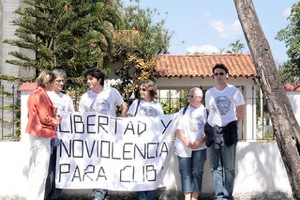
Libertad y noviolencia para Cuba

Photo by dumplife (Mihai Romanciuc) via Flickr, http://www.flickr.com/photos/62585343@N00/429146557/

Three weeks after the death of Cuban activist Osvaldo Payá, the questions that remain unanswered are not so much about the circumstances of the car accident that killed him – it appears to have been a tragic accident – but rather about the activities in which he and his European companions were engaged.  His family continues to claim that the vehicle was rammed off the road by state security agents.  According to Cuban authorities, the rental car veered off an unpaved stretch of road, and the driver, Angel Carromero, an activist from Spain’s conservative Partido Popular, has been charged with vehicular manslaughter.  At a Havana press conference, both Carromero and the other survivor, Jens Aron Modig of Sweden, confirmed the official version of the incident and asked the international community not to use the tragedy for political ends.  Since returning to Sweden, Modig, who admitted entering Cuba to deliver funds to Payá’s organization, has not disavowed the official account.  Nonetheless, the deluge of media coverage quick to frame the accident as a sinister government plot has not been corrected.

Though perhaps the most effective dissident to challenge the Cuban government, Payá was among the most tolerated.  His international celebrity – he won the EU Parliament’s Sakharov Prize for Freedom of Thought in 2002 – his opposition to the U.S. embargo and Helms-Burton regime-change programs, and his commitment to peaceful change on the island made him an unlikely target for a political assassination.

The project that put Payá on the road to Santiago has many of the markings of the secret operations carried out under “democracy promotion” programs run by the U.S. State Department and USAID.  These programs are shrouded in such secrecy that not even the Congressional oversight committees are briefed on them, so ascertaining the truth of who was directing the Carromero-Modig mission and the information campaign accusing the Cuban government of murder after the accident is practically impossible.  But strong circumstantial evidence has emerged.  In video testimony, Modig revealed that he met in Tbilisi with two major USAID grantees involved in such operations – the International Republican Institute (IRI) and the National Democratic Institute (NDI) – just before traveling to Cuba.  It is unclear whether Payá – known for eschewing foreign financial aid – was aware that Carromero and Modig’s primary objective on the trip was to hand out money to antigovernment activists.  It is conceivable that he chose not to know the details.  Regardless, his death represents a significant blow to Cuban activists seeking peaceful, democratic change without heavy foreign direction. 

Washington Politics: Fast and Very Furious

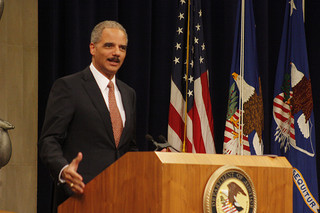
Photo by Ryan J. Reilly via Flickr, using a Creative Commons license

The operation codenamed “Fast and Furious” remains a hot topic in Washington two years after it went awry.  Conducted by the Bureau of Alcohol, Tobacco and Firearms and Explosives (ATF), the operation was intended to monitor the flow of weapons – through a “controlled delivery” – from Arizona gun dealers into the illegal channels by which tens of thousands of arms clandestinely enter Mexico each year.  Tracking the arms would allow the U.S. Government to disrupt the network.  However, ATF lost track of the weapons – and they reached their intended buyers.  The failure was made worse when traces showed that two of the weapons were used to kill a U.S. Border Patrol agent near the Mexican border in December 2010.

While both political parties in Washington have expressed disappointment, the Republicans have made the failed operation the centerpiece of efforts to weaken Attorney General Eric Holder (ATF is an agency of the Department of Justice, over which the Attorney General presides) and to discredit President Obama, according to numerous press reports.  The vote in the House of Representatives last week [[June 28]]to find Holder “in contempt” – for not handing over all of ATF’s internal documents on Fast and Furious that the Republicans demanded – was a party-line vote.  Many Democrats walked out of the chamber.

The political maneuvering around Fast and Furious has nothing to do with foreign policy, but the weakening of ATF undermines what modest efforts were under way to stanch the flow of illicit arms into Mexico and Central America.  “Controlled deliveries” are a standard operation for intelligence and law-enforcement agencies, and every agency involved in border issues has suffered similar mistakes.  ATF is the smallest such agency (2,500 special agents compared to FBI’s 13,400 and DEA’s 5,500) and is therefore more vulnerable to the internecine backstabbing.  In addition, ATF’s enforcement of laws relating to the use, manufacture, and possession of firearms often puts it at odds with American politicians who feel the agency threatens their interpretation of the gun rights under the Second Amendment of the U.S. Constitution.  The attacks on the ATF appear intended to weaken enforcement of U.S. law and embarrass the Attorney General and the President.  The obstacles to a sound policy of limiting the flow of weapons into Latin America are evidenced by the virulence of the debate over Fast and Furious.