Violence in Mexico: Forging a Civic Compact for Urban Resilience

By Daniel Esser

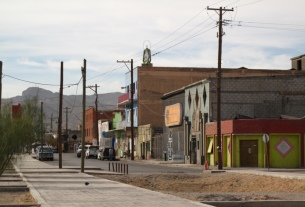
Ciudad Juarez | Photo by Daniel Esser

Ciudad Juarez | Photo by Daniel Esser

The media’s regular chronicling of human resilience in the aftermath of natural disasters and large-scale violent conflicts cover only part of story.  As inspiring as tales of individual heroism, resistance and resilience can be, they provide little guidance for public policy aiming to strengthen social ties within damaged communities, in which safety nets need to be created to work both preventatively and post-victimization.  Supported by a field research grant from the Social Science Research Council’s Drugs, Security and Democracy Program (DSD) and working jointly with a team of researchers based at the Universidad Autónoma de Ciudad Juárez, this writer recently spent four months on the U.S.-Mexico border to answer this question.  Members of 320 randomly sampled households in Ciudad Juárez were interviewed about their knowledge of non-violent collective action during the past five years.  Overall, the findings provide hope that Juárez’s social fabric has not suffered as badly as is widely claimed, but both Mexican and international policy-makers need to understand the nature of collective resilience before they can effectively support it.  Juárez no longer tops the world’s ranking of most violent cities per capita, as it did in 2010 and 2011, although organized violence continues to wreak havoc, exemplified by 30-60 murders per month.  Analysts agree that the downward trend is less the result of concerted government action and more a reflection of a reshuffling – likely temporary – of power structures within the transnational drug business.  Strikingly, most survey respondents argued that neighborly help had not decreased during the violent times.  Roughly a quarter even argued that residents’ willingness to help each other had in fact increased, mainly because people felt more united amid the terror.  Many people reported knowledge of collective street monitoring, peaceful marches, protests and public vigils, with between 5 and 8 percent saying they have actively participated in them.  For those residents, violence was not an abstract phenomenon; more than 30 percent reported personally knowing someone who had been murdered, and just under 20 percent had themselves been victims of violent crimes.  Surprisingly, almost two-thirds said they had not lost trust in local politicians and that they would vote for candidates promising to combat violence.

These findings serve as reminders of the political dimension of resilience in the context of chronic violence, implying that there are important local collective dynamics that can be leveraged through responsive and accountable political representation.  They also suggest that policymakers at all levels need to be mindful of the existence and potential of collective agency under extremely adverse conditions.  The violence in border cities created an opportunity for forging a civic compact between entities of the state on the one hand and neighborhood residents on the other, to mend frail ties between the electorate and its representatives.  This kind of deliberate state-building at the local level is precisely what Mexico needs in the aftermath of former President Calderón’s heavy-handed and, as many have claimed, detrimental strategy emphasizing federal-level and military-led programs and operations.  President Peña Nieto and his cabinet appear likely to embrace a local approach to increasing security as it complements his commitment to improving social services especially in secondary cities.  However, the most critical building block for effectively executing such a civic compact is a politically unbiased, data-driven selection of beneficiary communities and their needs.  Akin to approaches to civic reconstruction in war-torn countries such as Afghanistan and Iraq, communities should be in the driver’s seat in both project selection and monitoring.  After all, state-building is as much about procedural inclusion and justice as it is about tangible outcomes.

Dr. Esser teaches international development at American University’s School of International Service.  Click here for more information about this project.

Belize: An Outlier in the Middle of the Mess

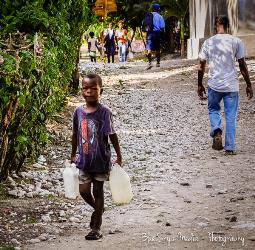
Belize - Boy carrying water. Photo credit: Blue Skyz Media / Foter.com / CC BY-NC-ND

Belize – Boy carrying water. Photo credit: Blue Skyz Media / Foter.com / CC BY-NC-ND

Though off the radar of most analysts, Belize appears to be the latest casualty of the drug trade and criminal violence.  It debuted on the Obama Administration’s annual blacklist of major drug-transit and -producing countries back in September 2011, alongside El Salvador, filling out the roster of Central American countries.  That U.S. government spotlight, however, has done little to halt the Mexican drug cartels’ expansion into Belize.  The U.S. State Department now estimates that about 10 metric tons of cocaine are smuggled each year along Belize’s Caribbean coast – partly the work of local contacts established by the Zetas and the Sinaloa cartel.

Like its neighbors’ security challenges, Belize’s problems are not limited to drug trafficking.  Urban gangs and the rivalries among them are the main driver of the escalating violence, which is rooted in the same causes as in neighboring countries – institutional weakness, rampant corruption, impunity, and unemployment.  The government-sponsored gang truce negotiated in 2011, which featured “salary” payments to members who ceased violent activities, collapsed last December when funds dried up.  (Click here for details documented by our colleagues at InSight Crime.)  Belizean authorities tallied a record number of homicides last year, edging out neighboring Guatemala for the sixth place slot in global per capita homicide rankings.  Porous borders make Belize attractive to transnational gangs, particularly El Salvador’s MS-13 and Barrio 18, both of which have established a significant presence in the capital city, Belmopan, and elsewhere.  About one-fifth of the country’s 325,000 people are Salvadoran citizens, making it difficult to track criminal elements.

The deteriorating conditions in Belize raise questions about the effectiveness of U.S. counternarcotics and “citizen security” programs in the region.  The patchwork of U.S. initiatives under the umbrella of the Central American Regional Security Initiative (CARSI) has not reversed regional trends even in tiny Belize.  While the country’s law enforcement agencies welcomed the heavy equipment, training, and technical assistance that make up the bulk of CARSI funding, the tactical gains have been obscured by a worsening strategic outlook.  The U.S. Government Accountability Office has voiced its concern that the State Department is confusing efforts with results.  Moreover, neither the Belizean nor U.S. government has mapped out a preventative strategy.  The most recent data show that less than half of the funds allocated to Belize from CARSI’s Economic Support Fund, used for programs to help at-risk youth, has been spent, and after handing out 1 million Belizean taxpayer dollars to gang members during the truce, for example, there is little to show for it.  In the run-up to President Obama’s summit with Central American presidents next week, Belizean Prime Minister Dean Barrow’s statement that “Obama hasn’t done anything for Belize” was subsequently qualified, but the fact remains that U.S. partnership with Belize, like with its neighbors, has not begun to work yet.

**An earlier version of this post inadvertently omitted the word “Belizean” before “taxpayer dollars” in the concluding paragraph, giving the false impression that State Department funds had been used to subsidize Belize’s gang truce.

Will Tensions Over Security Spoil the Obama-Peña Nieto Summit?

By Tom Long

Military in D.F. Photo credit: ·júbilo·haku· / Foter.com / CC BY-NC-ND

Military in D.F. Photo credit: ·júbilo·haku· / Foter.com / CC BY-NC-ND

The meeting in December between recently re-elected President Barack Obama and President-elect Enrique Peña Nieto was marked by cordiality and a desire to talk about anything but the often grisly drug-related violence in Mexico during the previous six years.  Since then, Peña Nieto has continued the changed emphasis, aided by headlines pivoting to positive stories.  Mexico has been recently hailed for its economic growth, particularly in export-oriented manufacturing, and for a series of political compromises that The Washington Post favorably compared with the U.S. Congressional stalemate.  Despite optimistic claims from the government, Mexican media reports indicate that drug-related violence continues at nearly the same pace as last year.  (Click here for a summary and analysis by our colleagues at InSight Crime.)  Moreover, pressure is growing on questions of human rights violations committed in the name of the war on drugs.  When Presidents Peña Nieto and Obama meet again in early May, holding back a renewed focus on security is likely to be a challenge.

Peña Nieto’s political incentives do not point to the same, high-profile cooperation with the United States that occurred under President Felipe Calderón, who had already begun shifting priorities last year.  Despite the major turnaround signified by the PRI’s signing NAFTA almost 20 years ago, Peña Nieto’s PRI still contains elements more skeptical of U.S. “intervention” than Calderón’s PAN.  Materially, moreover, most of the U.S. aid planned under the Mérida Initiative has been disbursed, and Congress exhibits little appetite for major new appropriations.  (Even at its height, U.S. spending was a fraction of Mexico’s contribution to the drug war.)  That reduction, coupled with growing awareness that the Calderón strategy actually fueled violence, diminishes the enthusiasm in and outside of government for continuing his policies.   Frustration from the left in both countries regarding persisting human rights violations and the slow pace of judicial reform could also grow more serious.

While these problems may be causing tensions between U.S. and Mexican police and military at the operational level, they seem to be manageable so far – and both Presidents are likely to emphasize intelligence-sharing and similar bilateral cooperation that does not require resources.  Upper echelons of the Obama administration seem to understand that Peña Nieto’s push to de-emphasize security and promise to focus on violence reduction over drug interdiction is politically necessary.  But the moral argument has not changed:  Mexicans suffer the violent consequences spawned by U.S. drug use and counterdrug policies.  Weapons sold on the U.S. side of the border continue to flow into Mexico, an issue now atop the U.S. political agenda for entirely domestic reasons.  If the two countries can manage to keep security problems at a lower decibel, they will better cooperate on issues that are just as vital but could pay larger dividends — immigration, transboundary energy, educational exchange, and infrastructure.

Honduras: Simmering Crisis

Porfirio Lobo and Hillary Clinton
US Embassy Guatemala
/ Foter.com / CC BY-NC-ND

Little good and lots of bad has transpired in Honduras since the night in June 2009 that an Army-backed coup d’état, orchestrated by the economic elites, ousted President Mel Zelaya and installed Roberto Micheletti as the de facto ruler.  Almost four years later, Honduras remains one of the places in the Americas where democracy is at permanent risk – where drug trafficking, corruption, impunity, private armies and feudal caudillos thrive in a climate of spiraling violence.  Honduras today is the most violent country in the Americas and last year was among the top three in the numbers of assassinated journalists.  Honduras also remains one of the poorest countries in the hemisphere.

President Porfirio “Pepe” Lobo lacked credibility from the moment he donned the presidential sash in January 2010 – the candidate who, by almost all accounts, would have lost the election had not the coup reversed that fate, clamped down on opposition media, and suspended many civil rights.  While Washington worked hard to gain OAS recognition of his government, Lobo offered no guarantees – to either Hondurans or foreigners – that he would reverse the ongoing activities of the Army and rapacious economic elites to undermine democratic institutions.

  • Timid attempts to show independence, such as a projected police reform, languished due to lack of political will and financial support.
  • Honduras’s doors opened ever wider to organized crime and corruption.  According to U.S. agencies, roughly 60 percent of the cocaine passing through Central America on its way to U.S. markets in 2011 went through Honduras.  (The Obama Administration funded a militarized drug interdiction program that sputtered after Honduran civilians were killed.)
  • Politically motivated murders by sicarios – reminiscent of 1980s death squads – skyrocketed.  Investigations were few, and prosecutions were nonexistent.
  • By the end of last year, Lobo was pointing fingers at his old allies in the Army, the elites, and even his own party, accusing them of trying to destabilize his government. He failed to pass constitutional reforms that he claimed would protect democracy.  General Romeo Vásquez Velásquez, the military commander during the coup, announced that he was running for president.
  • Honduras is facing one of the worst fiscal crises of its history – a significant landmark for the perennially mismanaged country.

In Washington none of this seems to raise red flags.  On the contrary, the ideological bent of statements from both the executive and legislative branches suggests satisfaction with the state of affairs in Honduras – and willingness to keep the crisis there unsolved.  Hillary Clinton´s State Department was, to say the least, shy when addressing the deteriorating situation of the Central American country.  In January, at Senator John Kerry’s confirmation hearing, Republican Senator Marco Rubio’s assertion that what happened in Honduras in 2009 wasn’t a coup went unchallenged – despite the overwhelming consensus otherwise throughout our hemisphere.  The first sign offered by Kerry as Secretary of State, however, gives room to expect at least a modest change in the narrative: on March 4th, the State Department gave one of eight International Women of Courage Awards to Julieta Castellanos, a respected human rights advocate and critic of corruption and impunity in Honduras.  This hint of a less ideological and a more strategic and humanistic approach to the unsolved Honduran question is welcome.

Might the U.S. Release Simon Trinidad?

By:  Antoine Perret, CLALS Research Fellow

Simon Trinidad mug shot | by US Government | public domain

Simon Trinidad mug shot | by US Government | public domain

In the peace talks between the Colombian government and the FARC, the guerrilla negotiators have requested the release of FARC leader Simon Trinidad – nom de guerre of Ricardo Palmera – who is imprisoned in the United States.  Publicly available information gives no hint that the Colombian government has officially asked Washington to consider the question, but – since the release of FARC members in prison in Colombia is not off the table – Washington should be prepared to consider the possibility.

Simon Trinidad was captured in Quito, Ecuador, in January 2004, extradited to the United States and put on trial for conspiracy to engage in drug trafficking and to hold hostages.  Each of four trials for drug trafficking ended in a hung jury, and eventually those charges were dropped.  In 2007, however, he was convicted for an alleged role in conspiring to kidnap three U.S. contractors taken hostage after their counterdrug surveillance plane crashed in 2003.  Trinidad is serving a 60-year-sentence in Colorado at the United States’ only federal “supermax” prison, with no prospect of parole.

The U.S. State Department has publicly stated that President Obama will not grant Trinidad parole, as the FARC requested, to participate in the negotiations.  But the question of his release if the Colombian government requests it within a peace settlement remains pending.  If such a request arises, the U.S. government’s lawyers will certainly report that the protocol (II) additional to the Geneva Conventions states that “at the end of hostilities, the authorities in power shall endeavor to grant the broadest possible amnesty to persons who have participated in the armed conflict, or those deprived of their liberty for reasons related to the armed conflict, whether they are interned or detained.”  The words “shall endeavor” obviously do not imply obligation, but by establishing that states should release members, they create a political dynamic that could drive a decision giving a useful push to resolving Colombia’s six-decade conflict. 

The Newtown Massacre: Another Lost Opportunity

Guns for sale at Dick's Sporting Goods store | by: Svadilfari | Flickr | Creative Commons

Guns for sale at Dick’s Sporting Goods store | by: Svadilfari | Flickr | Creative Commons

Latin Americans clearly are not holding their breath waiting for the United States to translate shock into action in the wake of the killing of 20 first-graders and six teachers at a school in Newtown, Connecticut, two months ago. In December and January, media such as El Espectador (Uruguay), La República (Peru), and El Universal (Mexico) reported that the easy access to firearms and lax gun controls were factors in the massacre.  While making note of President Obama’s pledge to reduce gun violence, including proposals he is sending to the U.S. Congress, few if any commentators in the region expressed confidence that the legislature, many of whose members are beholden to the National Rifle Association, will do anything.

Instead, Latin American media – presumably reflecting the values of their societies – point out the irony that, while the United States mourned the senseless loss of its children and politicians made emotional speeches, gun killings continue unabated.  They gave prominent coverage last week to an analysis by the on-line U.S. magazine Slate, documenting that 1,774 Americans – including 31 children, 101 adolescents, and 283 women – have been killed in the two months after Newtown.  The Excelsior of Mexico quoted U.S. political commentator Mark Shields as saying that since Senator and presidential candidate Robert Kennedy was assassinated in 1968 “more Americans have died from gunfire than died in all the wars of [U.S.] history.”

As the largest source of illegal weapons to Mexico, Central America and perhaps the rest of Latin America, the United States’ inability to control its own violence has a direct bearing on the region.  Rather than clamor for action as they would in the past, Latin American opinion-makers appear resigned to U.S. inaction – and puzzled at how a single lobby can prevail on an issue as sensitive as the safety of schoolchildren.  The dismay will only be fueled by reports by The Christian Science Monitor and other prestigious U.S. media this week that the “assault weapons ban” under consideration in Washington would exempt more than 2,200 specific firearms, including a semi-automatic rifle that is nearly identical to one of the guns used in the bloodiest shootout in FBI history. A retired FBI agent called the proposal “a joke,” and so will many Latin Americans.  As recently as 2010, Latin American governments called on Washington to ratify the Inter-American Convention against the Illicit Manufacturing of and Trafficking in Firearms, Ammunition, Explosives, and Other Related Materials (called CIFTA) – signed by the Clinton Administration in 1997 – but it is clearly a bridge too far now.

Religious Responses to Violence in Latin America

By Alexander Wilde, CLALS Research Fellow

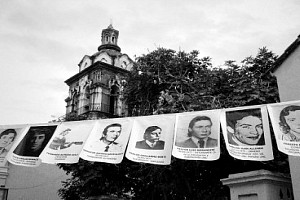
Commemoration of those killed in the 1980's at a church in Cordoba, Argentina | By: Pablo Flores "pablodf" | Flickr | Creative Commons

Commemoration of those killed in the 1980’s at a church in Cordoba, Argentina | By: Pablo Flores “pablodf” | Flickr | Creative Commons

Latin America today is one of the world’s most violent regions. It has been so for 50 years, although the character and agents of violence have changed considerably over time. The “old violence” of the 20th century was largely political, associated with revolutionary insurgencies and repressive regimes that systematically violated fundamental human rights. The “new violence” is largely criminal – illegal drug traffickers and urban gangs are among the leading perpetrators – but its consequences in many societies have been comparably lethal. Countries such as Honduras, El Salvador, Guatemala, Venezuela and Colombia have among the highest murder rates in the world.  “Citizen security” is a leading issue in politics throughout the region.

Religion played a significant part in confronting the old violence.  Human rights became a new cause for the Catholic Church, which in some cases helped legitimate peace settlements and democratic transitions. In the generation since then, Latin American Christianity has been transformed.  Evangelical and Pentecostal churches have achieved unprecedented growth. Catholicism has been reined in by Rome to curb the influence of Liberation Theology. More pietistic and spiritually-oriented theologies have flourished within both traditions. The result has been a tendency to turn away from the “political” ministries of the past – defending human rights and promoting social justice. The Christian churches, it is widely believed, have failed to address the widespread violence of today.

Fresh research, however, is revealing ways in which – although less visible at the national level – they remain a vital force in violence-plagued societies. A two-year project at American University has produced studies of religiously based shelters for Central American migrants in Mexico, a 15-year Jesuit program of peace building and development in Colombia, and an Evangelical prison ministry in Rio de Janeiro, among a dozen pieces of new research. They identify particularly the significance of an active church presence among poor and marginalized populations, who suffer disproportionately from violence. This “accompaniment” appears to be motivated by Biblically-based beliefs about Christian love, the redemptive power of God and the direct experience of living with these populations in perilous, threatening conditions. Another emerging theme in project research is the potential significance of supportive national and international allies – who clearly contributed to the defense of human rights in the past and remain important in our changed, globalized world.

Violence in Latin America today reflects the wrenching changes these societies have undergone in the last half-century, and religion has been a dynamic dimension of those changes. In the region’s civil societies and the lives of its citizens, Catholic and Evangelical Christianity remains a potent and creative presence. Where it is willing to work and live in situations of conflict and violence, it could find a new role in bringing about more stable, peaceful and just societies.

Salvadoran Gang Truce: Opportunities and Risks

By Héctor Silva, CLALS Research Fellow

President Funes of El Salvador | Photo by: Blog do Planalto | Flickr | Creative Commons

President Funes of El Salvador | Photo by: Blog do Planalto | Flickr | Creative Commons

Despite the general agreement that the truce between El Salvador’s two main gangs, MS-13 and Barrio 18, has lowered the homicide rate dramatically – from 14 killings a day in 2011 to some 5-6 in 2012 – many serious challenges persist. The truce was brokered by a former guerrilla commander and a Catholic bishop and, after two months of denying a government role, Security Minister General David Munguía Payés acknowledged that his office was the mastermind.  It is now entering a second stage in which six municipalities, ruled by both the governing FMLN and the rightist opposition party ARENA, have pledged to join the initiative. This new stage involves local ad hoc prevention plans aimed at gang members’ families and youth at risk. The truces have become the principal security policy of the Funes administration.

The lack of transparency around the planning and implementation – above all the origin of the initial pact –has fueled skepticism among journalists, politicians and the general public, and polling has not shown wide support for the truce.  The United States has become one of the fiercest critics of the initiative, with its first official reaction a few days after Salvadoran electronic news outlet El Faro revealed details in March 2012 of secret negotiations between the gangs and the Salvadoran intelligence service. U.S. Under Secretary of State María Otero, visiting San Salvador, declared that the gangs must disappear, suggesting disapproval of the appeasement implicit in secret talks, and U.S. law enforcement officials have always been privately skeptical.  The Treasury Department is helping local American police departments attack MS13’s financial networks, which some in San Salvador interpret as a political signal of Washington distancing itself from the truce – an ironic twist given that Munguía Payés was installed largely because of U.S. pressure.  The stakes were raised last week when the State Department issued a warning to travelers to El Salvador, expressing for the first time in writing doubts about the truce.

The Salvadoran state and society face a complex road ahead.  The reduction in the homicide rate is, of course, welcome, and opposition to the second stage of the plan, the municipal sanctuaries, will be muted in a preelectoral year.  (The ARENA candidate for President, Norman Quijano, has remained skeptical but seems likely to jump on the bandwagon.) But with its ambiguous public stance on the truce despite its Security Minister’s political commitment, the Funes administration has not pledged to fund the second stage of the truce, and it seems very unlikely that the United States will be stepping in.  Another factor is that while El Salvador´s security operations are constrained by the truce, other important problems – such as extortion, drug trafficking, impunity and corruption – remain untouched. Furthermore, evidence is slowly emerging that the organized crime rings are using the circumstances to expand their influence and take advantage of their relationship with some of the gangs’ most violent cliques to enhance trafficking routes. Washington’s skepticism about the truce is valid and should be followed up with an emphasis on the underlying causes of El Salvador’s ills.

Obama and Peña Nieto: Turning the same page?

By Tom Long
CLALS doctoral research fellow

Official White House photo by Pete Souza | public domain

Official White House photo by Pete Souza | public domain

On Saturday, Mexico’s new president Enrique Peña Nieto took office and the country’s oldest party, the Partido Revolucionario Institucional, returned to power. After six years dominated by an exhausting and bloody war against drug cartels, Mexico seems ready to turn the page on outgoing President Felipe Calderón. During the last few months, Peña Nieto has tried to steer the attention of the world—and the United States—away from a disproportionate focus on drug violence. In a recent article published in The Economist, the new president downplayed drug cartels, focusing instead on plans for the economy and to “recover our leadership in Latin America.” Security was just one of thirteen proposals in his inaugural speech. In part, Calderón has given Peña Nieto a head start as he begins his term, leaving behind strong economic growth and a dip in violence. Although Calderón himself started the switch to a violence-reduction strategy, his name is likely to remain closely associated with the frontal military assault on the cartels launched at the beginning of his administration and recalibrated only in his final year; Peña Nieto is positioned to gain credit for a return to normalcy.

This desire to turn the page also marked Peña Nieto’s s pre-inaugural meeting with President Barack Obama. Both leaders seemed to be playing the same tune.  Mexico has become the front line in the war on drugs, and the U.S. has spent billions on military, police, and other projects lumped under a “Merida Initiative” label. After their meeting, Obama and Peña Nieto promised to expand the bilateral agenda to include an expansion of trade, cooperation on energy, and discussions of immigration that go beyond border fences. Obama spoke effusively of Mexico’s importance as a partner, while Peña Nieto said the two had a “shared vision” of how to create jobs in both countries. On the stage with Obama as elsewhere, Peña Nieto reiterated calls for the United States and Canada to build on NAFTA and further regional integration to improve competitiveness.

It would be a healthy change if the two presidents could restore balance between economic and security aspects of U.S.-Mexico relations. Image matters – and the deterioration of Mexico’s brand has undermined both investment and tourism. The military approach to drug trafficking has inflicted enormous costs in economic and human terms with questionable payoffs, but Mexico cannot go back to old patterns of accommodation. Domestically, the new president needs to attack the culture of impunity by building a stronger and more independent judiciary in order to reduce the frightful percentages of crimes that are never investigated or prosecuted. Accountability remains weak, especially at state and local levels; improving it would require Peña Nieto to take on powers in his own party. Placing all these objectives under a “Merida plus” framework would counterproductively squeeze broad reforms into the drug-war box. If the two presidents are sincere about rebuilding a balanced partnership, they need to take action quickly on immigration and commerce. Otherwise, the gravitational pull of the war of drugs will again consume bilateral ties.

A Nicaraguan Model for the Drug War?

Daniel Ortega | Photo by: Presidencia de la República del Ecuador | Flickr | Creative Commons

Bilateral tensions going back to the Cold War have obscured the value of counternarcotics cooperation between the United States and one of its least-favorite governments in Latin America – that of former Sandinista guerrilla and three-term Nicaraguan President Daniel Ortega.  The man who battled U.S.-funded proxies, the Contras, in the 1980s is now the most effective soldier against the drug trade in Central America, although Washington appears loathe to admit it and to imbue the cooperation with political good will.  However, while closer U.S. allies such as Honduras and El Salvador have seen levels of violence climb, Nicaragua remains relatively safe.  According to U.S. government estimates, Honduras (with vastly greater assistance) interdicted more cocaine than did Nicaragua in 2011 (22 v. 9 metric tons), seized one-tenth as much heroin (8 v. 86 kilograms) and arrested only half as many drug-related criminals (84 v. 168) – but had a homicide rate six times greater than Nicaragua.

Managua has achieved its relative success with an approach quite different from its neighbors’ –less costly in both dollars and bloodshed.  Compared to the flow of allegations about human rights violations committed by the Mexican security forces, Nicaragua’s record appears clean and citizens feel relatively confident providing information to the police.  Its armed forces have been involved in drug interdiction, focusing on coastal seizures, often in cooperation with the U.S. Navy.  But the backbone of Nicaragua’s strategy has been a series of local initiatives such as community policing.  These programs focus on “juvenile delinquency, education, and reintegration into society by gang members and other young offenders,” scholars noted in a recent special issue of the journal Policing and Society.  Nicaragua’s geography may be a factor as well.  The cartels’ main routes to Mexico are through the northern tier of the isthmus, and Nicaragua does not have the same sort of migration patterns that shaped Salvadoran gangs, as Insight Crime noted last year.

Scaling up Nicaragua’s local solutions to fit Mexico would be an immense challenge because of the disparity between the countries’ size and history.  But elements of Managua’s approach could be tried and adapted in neighboring countries, particularly its emphasis on community policing and anticorruption efforts that help gain citizens’ confidence.  Within Nicaragua itself, some observers argue that the government should do more to integrate its Afro-descendant Creole population into these supportive measures.  Currently, these Creole coastal communities bear much of the effect of military-oriented U.S.-Nicaraguan counternarcotics cooperation, without the social assistance to deal with the underlying problems in the region.  As the costs – and limits on effectiveness – of the full-frontal assault on cartels become ever clearer, Nicaragua’s relative success stands as an important reminder that other paths are possible.