Latin America: Violence Against Young Women Worsened During COVID-19

By Carina Cione*

Young women gathering together in Cali, Colombia / Universidad del Valle / Creative Commons license

A research and practice-oriented initiative coordinated by la Facultad Latinoamericana de Ciencias Sociales (FLACSO) of Costa Rica has confirmed that the harmful impact of systemic violence and marginalization on the lives of vulnerable women in Latin American cities has worsened during the COVID-19 pandemic. The Vidas Sitiadas (Besieged Lives) project corroborated widespread anecdotes about the depth of the vulnerability of young women and mothers to gender-based violence, intimidation, and discrimination – in both public and private spaces – in the region. Women are targeted by gangs in their communities, and by masculine family members or partners behind closed doors in their homes. Often merely because of the neighborhoods in which they live, they suffer from systemic exclusion – shunned by society and excluded from much of their countries’ economic, social, and political lives.

  • The Vidas Sitiadas project found that the COVID-19 pandemic has exacerbated these problems. State-imposed quarantine measures confined families to close living quarters, and the burdens on mothers and sisters to keep the home running and to care for the ill multiplied. Loss of family income brought stress and conflict more deeply into homes, worsening already-unstable family dynamics.
  • The pandemic also reduced women’s economic independence. In 2020 and 2021, opportunities to earn money on the formal and informal market evaporated. Neighborhoods are less safe, and traveling through gang-controlled areas in Latin America poses increasing dangers for young women. Of 21 young mothers interviewed by FLACSO-Argentina, only 10 had remained employed during the first years of the pandemic. Most had low incomes and were unable to work remotely, which led them to financially depend upon others to make ends meet. That dependence on male family members, partners, and exes led to greater manipulation and exploitation than before 2020.

Through hundreds of interviews and survey responses, project researchers documented that violence, more than any other underlying factor, is what causes the sensation of living a vida sitiada – a life under siege. Across all five country reports, the majority of young women reported being witnesses or victims of abuse in the home as children, which they said had a “very radical impact” on their daily lives. Many were cared for by mothers or grandmothers who were abused and then, in turn, engaged in physical or psychological abuse of them. A large portion of participants’ fathers were absent. Sexual abuse was common, and some women had even witnessed gang-related homicides of family members.

  • Robbery and sexual violence, including harassment, aggressive touching, and rape, in public spaces are frequent phenomena for women. These crimes often force them to avoid certain parts of their own neighborhoods, to forgo essential travel outside the home, and to severely curtail social contact, thus hindering their ability to develop support networks. The Vidas Sitiadas studies reveal even tougher circumstances during COVID-19. In a survey by Universidad del Valle, half of low-income young women said that their communities in Cali, Colombia, have become more violent since 2020. They avoid spending time outside of their homes, especially in the early morning hours, but 15-20 percent still feel “very unsafe” on the street in the afternoons and early evenings. This limits their ability to cultivate personal connections and impedes their financial independence.
  • Traveling to work is also a risk. Espacio Público, a think tank, and Arbusta, an information technology company in Santiago, Chile, found that 30 percent of young women who commuted in the first years of the pandemic had experienced intimidation or abuse on their way to work. A third of these women face travel times of 60-90 minutes each way – a long time, especially in a vehicle in which passengers do not feel safe. Women who cannot reach their jobs safely either decide to quit or learn a trade they can master in the safety of their homes.

In addition to death, disease, and economic challenges, the COVID-19 pandemic has slowed and even reversed progress some Latin American societies had been making, if haltingly, toward updating gender roles and reducing stigmas pertaining to women’s place in society. In some sectors, it has contributed to the re-normalization of violence in the daily lives of women and girls by making many neighborhoods less safe and putting extraordinary stress on families. Women’s exclusion has deepened as COVID-19 has erased their access to jobs and the stigma of being from dangerous neighborhoods further reduces their prospects.

  • The Vidas Sitiadas project, coordinated by La Facultad Latinoamericana de Ciencias Sociales (FLACSO) in Costa Rica with funding from the International Development Research Centre (IDRC) of Canada, examines several efforts launched in recent years to begin addressing the underlying systemic causes of the challenges facing young women in these societies. They focus on giving them a chance to get a job, to learn work and personal skills, and to build the personal confidence to improve their lot. Advocates face the usual obstacles to calls for resources to address the big problems, including systemic economic inequity, the epidemic of social violence, and the residual culture of gender discrimination. But the Vidas Sitiadas initiatives have demonstrated that at least modest steps can be made to help women overcome the violent and manipulative environments in which they live.

August 4, 2022

*Carina Cione is Program Coordinator at the Center for Latin American & Latino Studies. For additional information about the project undertaken by FLACSO-Costa Rica and its partners, please consult the Vidas Sitiadas website.

Argentina: From Bad to Worse?

By Arturo C. Porzecanski*

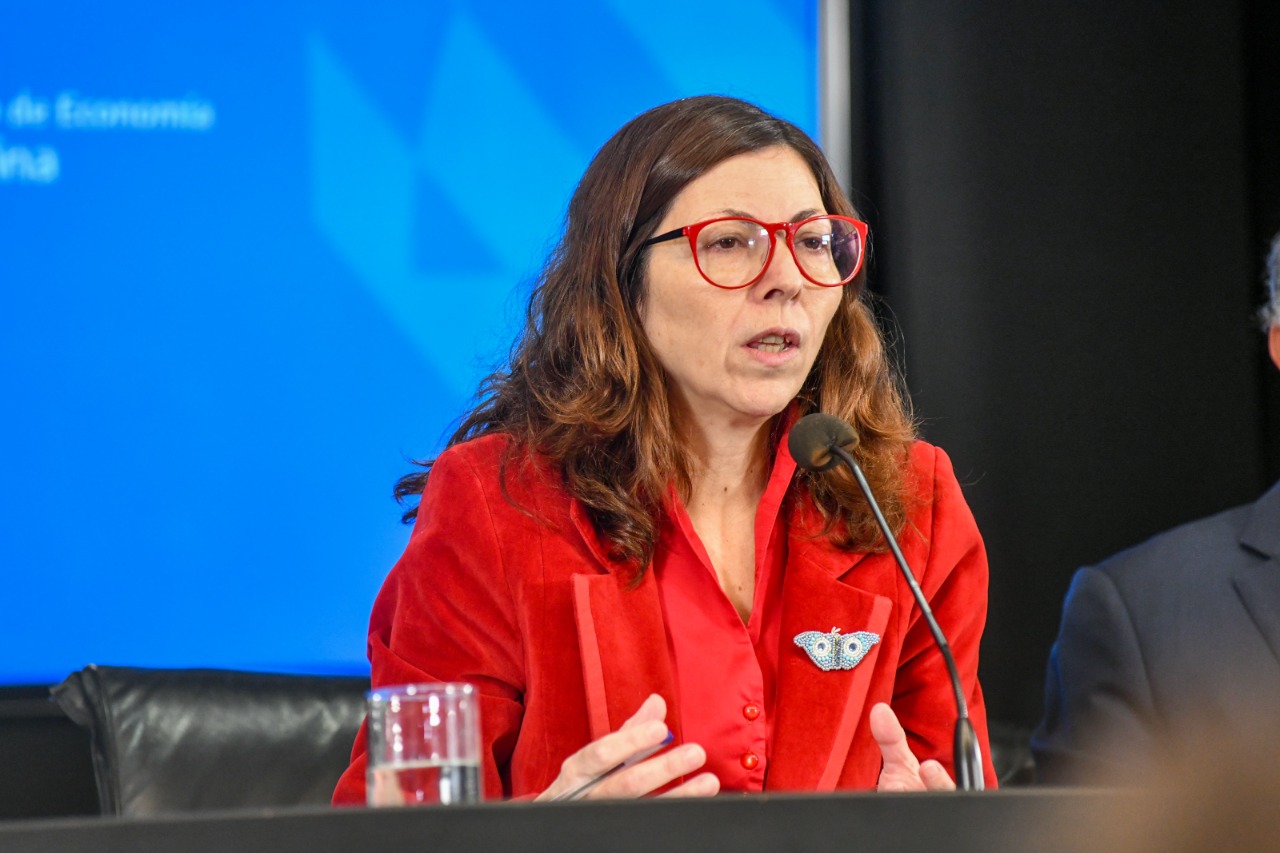
Argentina’s new Economy Minister, Silvina Batakis / Government of Argentina / Creative Commons license

Argentina’s mismanagement of fiscal, monetary, and exchange-rate policies – and its business-unfriendly, interventionist policies destructive of investor confidence – have delivered an increasingly unpopular mix of economic stagnation and accelerating inflation. While the government most likely will muddle through until the next national elections in October 2023, there is a non-negligible risk that remaining public confidence could collapse and lead to uncontrolled inflation, deepening recession, social unrest, and even the resignation of President Alberto Fernández.

  • By early 2021, the Argentine economy had already recovered from the 15 percent drop in real GDP caused by the pandemic in the second quarter of 2020. That was a relatively easy feat because the economy was already in a recession; real GDP in the first quarter of 2020 stood 11 percent below that in the fourth quarter of 2017. So far this year, the pace of economic activity has remained below that 2017 peak, and it has started to drop some more, with the latest consensus forecast projecting GDP declines in the second and third quarters, followed by stagnation in the fourth trimester.
  • Inflation has accelerated from a yearly average pace of under 50 percent in 2020 and 2021 to an annualized rate of 85 percent in the first half of this year. This month’s inflation rate may well have three digits once annualized. To slow down inflation, the government has resorted to price controls on staples sold by supermarkets; import and capital controls to prevent the currency from devaluing faster; export quotas on beef, corn, and wheat to keep domestic supplies higher and prices lower; and hefty subsidies to state-owned and private companies that supply electricity, gasoline, natural gas, mass transit, and water and sewer services to consumers. As a result, the headline inflation rate is underestimated by at least 10 percentage points, while the subsidies are keeping the fiscal deficit about 4 percent of GDP wider than otherwise.

By now Argentina wasn’t supposed to be in such lamentable economic shape. Barely four months ago, the government and the International Monetary Fund (IMF) completed negotiations on a $44 billion loan under an Extended Fund Facility (EFF). The country was granted an up-front disbursement of almost $10 billion, plus $4 billion more in late June.

  • The IMF program has three main targets for this year. The first is a modestly narrower fiscal deficit – 2.5 percent of GDP rather than last year’s 3 percent (measured excluding interest payments on the public debt). The second calls for a nearly $6 billion accumulation of central bank net international reserves, which would take the year-end total to over $8 billion. And the third requires a reduction in central bank financing of the government’s budget deficit, to the equivalent of 1 percent of GDP from 3.7 percent in 2021.
  • The program’s rather modest fiscal and monetary objectives are based on optimistic assumptions, however, and its structural reforms fall way short of what is required to spark confidence and a sustainable economic recovery. Populist economic measures – advocated mainly by the Peronist faction led by Vice President Cristina Kirchner – have greatly harmed the country’s business and investment climate.
  • It is an open secret in Argentina that the main purpose of the IMF loan is really to help the government avoid defaulting on the $44 billion the Fund previously loaned (in 2018-19) to President Mauricio Macri’s administration. That loan is scheduled for repayment in full between September 2021 and mid-2024, and the present government had made it plain to the IMF that it had no means to do so absent a reprofiling or a quid pro quo. Therefore, in Argentina, the new IMF loan is widely understood to be a fig leaf over what is an indirect debt rescheduling on an installment plan – and it is characterized as a debt refinancing by the government itself.

Even the mild conditionality attached to the new IMF loan has already proven difficult to meet and has claimed its first significant victim –Economy Minister and Fernández ally Martín Guzmán resigned on July 2. His replacement is Silvina Batakis, a heterodox Peronist economist handpicked by Cristina Kirchner.

  • All indications are that the government missed the IMF targets for end-June, especially once discounting any window dressing, and that, failing to take restrictive fiscal and monetary measures soon, it will miss the goals for the full year. Argentina’s financial markets have been reacting badly. The stock market index has been trailing far behind inflation; the government’s dollar-denominated bonds have plunged to distressed levels, mostly below 25 cents on the dollar; and the Argentine peso, whose value is set artificially by the central bank under a rationing system, trades in parallel (but legal) and black markets at less than half its official value.
  • Social and political tensions are on the rise, largely because wages and pensions are incapable of keeping up with inflation. On July 9, Independence Day celebrations were marred by nationwide protests against the government, though at least they were peaceful. On July 13, farmers staged a one-day strike to complain against punishing taxes, damaging currency controls, and a scarcity of diesel fuel that has hit them during the harvest season. New Economy Minister Batakis will need to walk a fine line between introducing unpopular corrective measures to break the inflation spiral – restrictive fiscal and monetary policies, in particular – and pleasing political masters who seem to be persuaded that a muddling-through scenario of tightening controls and ignoring market realities is still viable. A miscalculation could lead to triple-digit inflation, widespread social unrest, and the early exit of President Alberto Fernández.

July 14, 2022

*Dr. Arturo C. Porzecanski is Research Fellow at American University’s Center for Latin American and Latino Studies, and Global Fellow at the Woodrow Wilson International Center for Scholars.

Latin America: Lessons Learned from Abortion Rights Struggle

by Brenda Werth and Katherine Zien*

A protestor tying green scarves to a fence at a pro-abortion demonstration in Argentina / Fotomovimiento / Flickr / Creative Commons license

With the U.S. Supreme Court apparently poised to strike down Roe v. Wade, U.S. supporters of women’s reproductive rights could learn from the strategies of their Latin American counterparts, who have made important advances even if they still feel they must struggle for implementation. The decision will put the United States out of step with global progress being made in sexual and reproductive rights, according to the Secretary General of Amnesty International. In the last 25 years, around 50 countries have increased legal access to abortion. Latin America, a traditionally Catholic region, has been at the forefront of decriminalizing and legalizing abortion rights.

  • In 2012, Uruguay legalized abortion of fetuses up to 12 weeks. In January 2020, Argentina became the largest Latin American nation to legalize abortion, allowing pregnancies to be terminated up to 14 weeks. Mexico followed suit and decriminalized abortion in September 2021, and in February 2022, Colombia decriminalized abortion up to 24 weeks. Chile, if its new Constitution is approved, will be the first country in the world to make abortion a constitutional right. While abortion rights are more limited in 10 countries in Latin America and the Caribbean, these represent major strides forward.

The progress in Latin America comes on the heels of a revolution in gender and sexuality rights across the region catalyzed by feminist mobilization against gender violence and femicide in movements and street protests such as NiUnaMenos (Argentina), Un Violador en tu camino (Chile), and NiUnaMás (México). Abortion rights – framed as crucial to protecting reproductive health – were integrated into a preexisting human rights framework. Feminist groups have argued that the prohibition of access to legal and safe abortion is an act of gender violence.

  • The path toward legalization is clearest in Argentina, where a human rights culture created initially by groups like Madres de Plaza de Mayo during the last dictatorship (1976-83) led to feminist movements such as NiUnaMenos and the Marea verde (Green Tide), symbolized by the green handkerchiefs donned by supporters of the Campaign for Legal, Safe and Free Abortion. The Campaign also used inclusive language to expand the definition of those entitled to abortion rights to include anyone capable of gestation, including gender non-conforming individuals. The struggle has also been intergenerational (Barbara Sutton, “Intergenerational Encounters”). Sometimes referred to as the “revolución de las hijas” or “las pibitas,” a young generation including high schoolers took to the streets and transformed public spaces and social perceptions of abortion rights in Argentina.
  • Abortion rights in Argentina thus intersected with progressive legislation on gender and sexuality rights. In 2020, President Alberto Fernández, who described abortion as “a matter of public health” during his campaign, introduced the bill in Congress legalizing abortion. His predecessor, conservative President Mauricio Macri (2015‑2019), had allowed the bill to be debated in Congress, and before him, left-wing President Cristina Fernández de Kirchner (2007‑2015) supported progressive legislation on sexual and gender rights even though she refused to support abortion reform because of personal views.

The “doble militancia” (Debora Lopreite, “The Long Road”) – the popular mobilizations and political coalition-building pushing for reproductive rights as issues of human rights, public health, and social justice – contributed to Argentina’s landmark law. Activists continue to be vigilant, however, as abortion access has been hindered by opponents and the high percentage of doctors, particularly in the northwest provinces, who declare themselves “conscientious objectors.”

  • Argentina’s path has been very different from that of the United States. The right to abortion in the United States was nested within the umbrella of privacy rights and became a federal policy via the judiciary rather than the legislature. U.S. activists have not strategically framed it as a human right firmly in the context of public health and social justice. To achieve lasting change, they could shift discourse away from abortion as a single issue, an anti-religious position, or an abstract philosophical debate, and situate it firmly in the context of public health and social justice. Grassroots social mobilization across generations, strategic coalition-building, and transversal relationships between activists and policymakers don’t guarantee irreversible change, but they are more reliable drivers of change than the shifting political winds affecting Supreme Court justices.

June 9, 2022

* Brenda Werth is an Associate Professor of Latin American Studies and Spanish at American University. Katherine Zien is an Associate Professor of Drama and Theater at McGill University

U.S. Foreign Assistance Portals are Inadequate to Assess Reform on Locally Led Development

By Katerina Parsons*

USAID Administrator Samantha Power / Flickr / Creative Commons License

USAID has committed to increase direct assistance to local partners around the world – rather than directing aid through governments, international NGOs, or for-profit contractors – but civil society groups will have difficulty holding the agency accountable without significant changes to existing transparency portals.

  • In a recent speech, Administrator Samantha Power announced that USAID would increase assistance to local partners to 25 percent of total funding – short of earlier commitments but more than the current 5.8 percent. By the end of the decade, she added, 50 percent of USAID programming would “place local communities in the lead,” allowing them to co-design projects, set priorities, drive implementation, or evaluate programs’ impact. The NGO community has long called for these goals.

The U.S. government’s searchable foreign assistance trackers are still inadequate to assess progress, however.

  • ForeignAssistance.gov was relaunched in October, combining the State Department tracker of the same name with USAID’s Foreign Aid Explorer, which will no longer be updated. Aid organizations applauded the change for streamlining data, but the new site still does not include key data, such as the percentage of foreign assistance that is locally led, or even which implementing partners are based in the countries where they work. Many awards list no supporting documents detailing participants or outcomes; those that do include this information as a PDF file that is not searchable and cannot be easily compared across awards.
  • Some additional information can be found on other U.S. government sites. USASpending.gov, the open data source for all government spending, includes sub-award data for USAID, listing the percentage of the total amount that is sub-awarded and recipient names and sub-award amounts. Because most small, non-U.S. organizations that receive U.S. funds do so indirectly through sub-grants; this information is crucial for transparency.

An example – a Honduran organization for which I worked for several years – illustrates the challenge of tracking aid. According to USASpending.gov, as a USAID sub-grantee on a governance and citizen participation project, it received $787,000 over an eight-year period (FY2011-18) – enough to fund a small office of Honduran auditors, researchers, and legal experts who created a national corruption complaint mechanism, conducted social audits of government agencies, and led consultancies to strengthen the country’s higher courts. While substantial, this funding represented less than 4 percent of the $19.8 million total granted to the U.S. NGO managing the project. The U.S. NGO provided 36 percent of the total grant to Honduran implementing partners. Neither USASpending.gov nor ForeignAssistance.gov account for the remaining 64 percent of award funds.

  • This gap between amount awarded and amount delivered to community-based partners is not atypical. A $34.2 million violence-reduction award (FY2016-23) granted to a major U.S. contractor has given out just 13.1 percent of its funding in sub-contracts – and those only to U.S. and Honduran businesses, not Honduran NGOs. A $4.1 million “civil society and media activity” grant (FY2018-20) awarded just $80,000 to Honduran civil society organizations.
  • USASpending.gov does not code this as “international” or “local” spending; first-hand knowledge or web searches are required to determine the recipients. ForeignAssistance.gov provides even less detail.

USAID’s promises of millions of dollars to empower local organizations so far have not been complemented by a commitment to make public data on localization more transparent. One straightforward fix would be to add a search query to ForeignAssistance.gov for “recipient type” such as “local,” similar to USASpending.gov, where one can filter by contract recipients owned by women, minorities, or veterans.

  • Information on sub-grantees or sub-contractors (local, U.S., international) is also lacking. Additional clarity on the term “local” is also merited; USAID does not distinguish between “local entities” and “locally established partners,” which may be national chapters of international organizations. Particularly in larger multicultural countries, “local” leadership may still not be proximate to communities being served.
  • Fulfillment of Administrator Power’s pledge “to interrogate the traditional power dynamics of donor-driven development and look for ways to amplify the local voices of those who too often have been left out of the conversation” will depend on making public data on localized development transparent enough to make proximate leadership in foreign assistance – or the lack of it – more visible.

December 16, 2021

* Katerina Parsons is a master’s student in Development Management in the School of International Service. This article is based on research done for the Accountability Research Center, where she is a research assistant.

El Salvador: Eastern Region’s Weak Democratic Political Culture

By Rodolfo Mejía-Dietrich and Adán Mendoza*

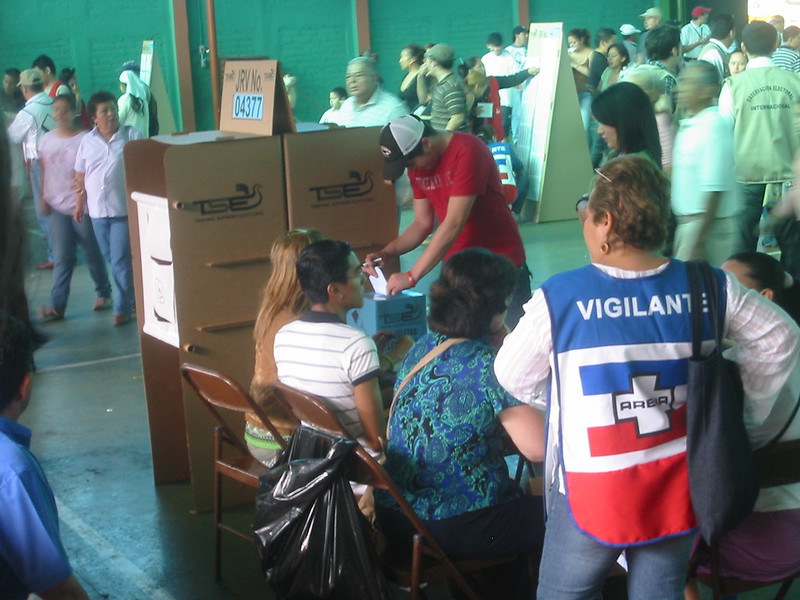
Polling place in El Salvador/ Amber/ Flickr/ Creative Commons License

El Salvador has made important democratic progress since the peace accord ending its bloody civil war in 1992, but the country still suffers from a profound deficit in citizens’ exercise of their rights and fulfillment of their democratic obligations – creating a serious risk of authoritarian practices and impunity by groups in power.

  • While President Nayib Bukele’s actions have catalyzed debate in the capital about democratic stability, surveys and research in the four departments of El Salvador’s eastern region show that low levels of interest in essential elements of democratic culture – community organizing; oversight of government operations; requests for public information; demands for public accountability; and efforts to root out corruption – are limiting direct and institutional democracy. This is among the key findings of surveys of 1,073 persons of diverse demographic groups by our center, the Centro de Investigación para la Democracia (CIDEMO) at the Universidad de Oriente.

Salvadorans have not lost faith in democracy as a system that, despite imperfections, would best serve their and the nation’s interests. But our surveys, conducted in September 2019, confirm that citizens are deeply frustrated with the country’s failure to achieve it. The country has at times shown the trimmings of democracy, but its political culture remains largely unchanged.

  • Confidence in democracy has been battered by citizens’ belief that the government is unable or unwilling to grapple with their daily challenges. Crime and personal insecurity, at 42.5 percent, are the problems at the top of citizens’ concerns. Poverty and unemployment are also major problems, respectively ranking 13.7 percent and 11.5 percent in the survey.
  • Despite the scourge of crime, the government institutions charged with combating criminal groups enjoy significant popular legitimacy; our polls show the military enjoys 81.2 percent popular confidence and the National Civilian Police, 72.2 percent. But those responsible for building and ensuring democratic practice do not. The Asamblea Legislativa polled at the time as the institution with the lowest level of confidence, and the Tribunal Supremo Electoral, upon which the credibility of elections depends, scored 56 percent.
  • At a little less than 5 percent, corruption ranked significantly lower as people’s greatest immediate concern, but other research indicates that it causes broad citizen apathy toward civic participation. There are widespread perceptions that opportunities to reduce corruption have been repeatedly blocked by those who most benefit from it. These conclusions coincide with those of Transparency International, which in 2019 ranked El Salvador 113 out of 180 countries (with 34 of 100 possible points). Among relatively stable countries, it is among the most corrupt in the world. Slightly more than 90.6 percent of citizens CIDEMO polled support the creation of an international commission against impunity (CICIES), which President Bukele promised during his campaign.

Nearly 30 years after the country started its juridical-institutional transformation, the same hindrances to effective democracy – high levels of poverty, precariousness (vulnerability), and inequality – remain colossal challenges to building a system of social participation, civic education, and inclusion. The country’s relative stability over the past two decades, certainly compared to the war years, disguise the underlying popular sense that the system has failed to serve them. The Oriente of El Salvador is far from the capital, San Salvador, and thus does not benefit from much of the country’s economic activity, and it has lost a great number of migrants seeking a dignified life elsewhere. But other research around the country shows its citizens’ frustration is not unique, as further documented by the World Bank and others that have found that about half of all households countrywide lack the conditions of dignified wellbeing.

  • The fundamental challenge for CIDEMO is to promote dialogue between citizens and emerging leaders to encourage citizen participation and to build capacities in civic education aimed at favoring the goal of expanding the exercise of citizens’ rights and duties. Our wager is that equality and freedom are critical wellsprings of advancing toward optimal levels of democratic governability.

* Rodolfo Mejía-Dietrich and Adán Mendoza are, respectively, the director and fulltime researcher at the Centro de Investigación para la Democracia at the Universidad de Oriente in San Miguel, El Salvador. This article is adapted from their recent study, Democracia, gobernabilidad y corrupción: Estudio de la cultura política en la región oriental de El Salvador. CLALS is providing technical assistance to CIDEMO under a USAID subaward that has made this UNIVO initiative possible.

Guatemala: Can the OAS Help Solve a Political Crisis?

By Ricardo Barrientos*

Protest in Guatemala, 2015./ hrvargas/ Flickr/ Creative Commons License

Guatemalan President Alejandro Giammattei, who has faced a number of challenges since his inauguration in January 2020, called in the Organization of American States (OAS) for help in the wake of last month’s protests over the 2021 budget, but the OAS’s impact was more negative than positive. As if the COVID pandemic, two tropical storms, and a series of corruption scandals weren’t enough, protests triggered by Congressional approval of the budget, which was plagued with allocations for corruption schemes and other anomalies, evoked the 2015 citizen mass demonstrations that brought down the government of President Otto Pérez Molina. Demands for the Giammattei’s resignation spread widely and became the main citizen demand: after only 10 months in office, the government was reeling.

  • Guatemala City’s Central Square was filled again with peaceful protesters, but a radical difference distinguished these from the 2015 protests. Away from the Central Square, small groups of individuals whom reliable sources have identified as infiltrators carried out violent acts, including setting the Legislative Palace on fire. These incidents were brutally repressed by the police, which brought back tragic memories of the civil war period. Two young boys lost an eye due to the police beating.
  • The crisis escalated even within the Government. The differences between Giammattei and his Vice President, Guillermo Castillo, deepened to the point that in a press conference the latter proposed that both resign, veto the budget, dismiss the Minister of the Interior and the police chief, and dissolve their highly controversial “Center of Government,” an entity headed by a close friend of the President that duplicated functions already assigned to ministries and state secretaries.

One of the government’s main responses was to invoke the OAS Inter-American Democratic Charter, based on an alleged coup threat. The OAS announced a mission to gather information and interview diverse Guatemalan sectors and actors. Right after the announcement, however, the lack of evidence of a coup d’état triggered distrust about the mission’s purpose.

  • Making things worse, the appointment of Fulvio Valerio Pompeo as mission head was not well received because, while serving as Strategic Affairs Secretary of Argentine President Mauricio Macri, he was directly involved in the failed sale of military aircraft to Guatemala last year. Almost immediately, the Guatemalan press highlighted this fact, feeding the perception that Pompeo might be seriously biased in favor of the government and against civil society, which had denounced the attempted plane deal. Moreover, OAS General Secretary Luis Almagro’s representative in Guatemala, Diego Paz Bustamante, and Guatemalan Foreign Minister Pedro Brolo are long-time friends. Brolo worked for Paz Bustamante in the OAS’s office in Guatemala in 2005-2011, further raising concerns of OAS bias in favor of the government. Due to this distrust, many civil society organizations, and even Vice President Castillo, declined an invitation to meet with the OAS mission.

An agreement earlier this month between the President and Vice President has moderated the crisis and reduced tensions. At a joint press conference, Giammattei announced dissolution of the Center of Government and assigned to Castillo control over the budget readjustment and reconstruction programs for storm damages. They also announced a review of the fitness of the Minister of the Interior and top police authorities to remain in their positions.

  • The Guatemalan crisis is far from over, and serious questions about the rationale for calling in the OAS – invocation of the Democracy Charter – and its response remain.  The OAS actions appeared based more on personal relations between its representatives and Guatemalan officials, particularly the appointment of someone with a clear conflict of interest stemming from the failed plane deal . Perhaps one lesson for OAS member countries from this latest round of Guatemalan convulsions is to think twice and carefully before asking for help from that regional organism, and to first use all local means to deal with an internal crisis.

December 16, 2020

* Ricardo Barrientos is a senior economist at the Central American Institute for Fiscal Studies (Icefi).

In the War for the Soul of Peru, a Battle Is Won

By Cynthia McClintock*

Protest in Lima, Peru – November 2020/ Samantha Hare/ Flickr/ Creative Commons License

The political battles that have seized Peru this month have been intense because the prospects for a democratic, ethical Peru are at stake. On November 9, Peru’s Congress impeached President Martín Vizcarra, a champion of the war against corruption in the country. He was succeeded by the Congress’s Speaker, Manuel Merino, who – after six days of massive protests from all social classes and all regions of the country – resigned. Legislators then came together around a respected centrist, Francisco Sagasti, as Peru’s new president. Sagasti promises to continue the reform effort.

  • The most important cause of the impeachment was elites’ pushback against anti-corruption efforts, particularly the prosecution of under-the-table payments by companies to politicians, an entrenched practice in Peru for centuries. By the estimate of the historian Alfonso Quiroz, under no administration since Peru’s independence was the cost of corruption less than one percent of its GDP. Amid the kickbacks, sub-par companies won bids for state contracts, leading to huge cost overruns and outright project failures. All four presidents elected since 2001 and scores of additional authorities have been prosecuted for this reason. Approximately half the legislators feared an end to their own immunity from prosecution. Legislators of two of the nine political parties in Congress have personal stakes in for-profit universities, which were threatened by newly introduced higher standards for universities.
  • Political interests were also at stake. One political party was pursuing amnesty for its imprisoned leader. Many legislators were dismayed by the brevity of their term (March 2020-July 2021), an upshot from the previous Congress’s confrontation with Vizcarra in late 2019. They hoped to postpone the legislative and presidential elections due in April 2021 and tilt the playing field for the elections in their favor.

The crisis challenges some long-held observations about Peru.

  • The argument of many political scientists that the cause of Peru’s democratic deficits has been the fragmentation among weakly institutionalized parties is questionable. In recent years, Fuerza Popular, led by Keiko Fujimori, was strongly institutionalized; in 2011 and 2016, Keiko was the runner-up for the presidency and, in 2016, the party gained an absolute majority of legislative seats. Merino hails from Acción Popular, a historic party that had recently rebounded. The impeachment vote in the legislature was overwhelming: 105 of 130 legislators in favor. Neither strongly nor weakly institutionalized parties were putting the interests of Peru first.
  • The argument that the cause was the “permanent moral incapacity” clause in Peru’s Constitution per se is also questionable. The clause is vague, but it had also been used to impeach Alberto Fujimori and threaten the impeachment of Pedro Pablo Kuczynski. Although the allegations against Vizcarra – of kickbacks for public-works contracts during his governorship of Moquegua – were made by suspects in criminal cases aspiring to plea bargains, they are worrisome.

For Peruvians, especially young Peruvians, the fear that their country would remain in the throes of the “traditional corrupt political class” was immense. The protests were the largest in Peru since the 1970s. As Merino enabled repression resulting in at least two deaths and hundreds of injuries, the outcry grew ever stronger.

  • Vizcarra was enjoying an approval rating near 60 percent – in the stratosphere for presidents in Peru. Some 90 percent of Peruvians opposed his impeachment. Despite the allegations of corruption against Vizcarra, what mattered to Peruvians was that he was fighting corruption now.
  • In his six days in the presidency, Merino was disastrous. A three-term Acción Popular legislator from Peru’s north without any known achievements, he was perceived as the embodiment of the term “political hack.” His cabinet appointments were far to the right of most Peruvians. Merino and his ministers dismissed protestors’ concerns, refusing even to acknowledge the police repression.

The challenges in Peru are immense. Elections are to be held in five months even though the pandemic has hit Peru exceptionally hard. Its mortality rate is the worst in Latin America, and the expected contraction of GDP for 2020 is the second worst after Venezuela. But Sagasti is off to an excellent start and seems poised to continue Peru’s move in an ethical, democratic direction.

  • A policy analyst and professor with a Ph.D. from the University of Pennsylvania, Sagasti was serving for the first time as a legislator with the centrist Partido Morado. Like him, most of the new cabinet members have advanced degrees and considerable experience in the public sector; ministers in the interior and justice portfolios are sympathetic to human rights concerns. In his inauguration speech, he promised to continue the war against corruption and respect democratic principles. He spoke movingly of the youths who had lost their lives in the protests. He ended with a poem – setting a tone that the country desperately needs.

November 20, 2020

*Cynthia McClintock is Professor of Political Science and International Affairs at George Washington University.

Why Are Chile’s Protests Continuing?

By Pablo Rubio Apiolaza*

protests in chile

Protests began in Chile October 2019/ Diego Correa/ Flickr/ Creative Commons License

Chile’s political agreement in November to hold a referendum on the country’s Constitution in April reduced protests for a while, but the underlying causes of discontent – deep-seated frustration among many Chilean citizens – continue to fester and drive an array of peaceful and violent protests. Since November, President Sebastián Piñera has promoted an aggressive social agenda, including raising the minimum wage and improving the pension system. A survey by the Center for Public Studies (CEP) in Santiago in early January, however, found that Piñera’s approval rating was around 6 percent – the lowest of any president since Chile’s return to democracy. By almost all accounts, distrust in the government and anger at the corruption of politicians and corporations remains deep. People want solutions “here and now” to many of their demands. Both peaceful and violent protests have continued through the traditionally quiet summer break.

The mobilizations are not as spontaneous as they were in October and November, according to many observers, but there’s little evidence of a conspiracy to disrupt the referendum agreement.

  • Trade unions and traditional social movements organized under the banner of the Mesa de Unidad Social have become important actors, but new activists have also emerged. The loosely organized “Primera Línea” (front line) has engaged in violent clashes with the Carabineros, mainly in Santiago. Anthropologist Magdalena Claude observed and interviewed some members of Primera Línea in January and called them the “ACAB clan,” borrowing an acronym popularized by British punk rockers proclaiming that All Cops Are Bastards. According to Claude’s research, the group is composed of young workers of the service sector, not members of political parties. They do not have a recognized leadership and organize in horizontal networks.
  • Some conservative Chileans are denouncing the protests as the result of “foreign intervention” and a “coup d’état” provoked by the “extreme left.” They cite as evidence a New York Times report on January 19 that the U.S. State Department estimated that nearly 10 percent of all tweets supporting the October protests originated with Twitter accounts that appeared to have links to Russia. Allegations of foreign intervention by Venezuela and other countries have been endorsed by Chilean Foreign Minister Teodoro Ribera and President Piñera. Neither the U.S. nor Chilean government has provided evidence to support any of these claims.

Damage to the government’s credibility and reputation since October seems likely to continue to embolden opponents in the runup to the referendum. Carabinero abuses have been verified and condemned by a host of observers, including Human Rights Watch, Amnesty International, the Inter-American Commission on Human Rights, and various Chilean organizations. The UN High Commissioner for Human Rights, led by former Chilean President Michelle Bachelet, has detailed “multiple allegations of torture, rape and other forms of sexual violence by the police against people held in detention.” More than 30 people have died in protests and, although the great majority of the tens of thousands of protestors detained have been released, anger over their arrest is fresh. The government has convened 15 experts to develop recommendations to reform the Carabineros – to enable them to move “forward with urgency the recovery of the public security with absolute respect for human rights” – but challenge of building public trust will be monumental.

  • A prestigious Chilean polling firm, Cadem, reported two weeks ago that 63 percent of the Chilean population approved of the protests and – importantly – 80 percent believe that Chile will be a better country after this critical situation. In any case, the plebiscite in April will take a place in an unstable context, with an uncertain outcome. For the Piñera administration, the challenges seem unlikely to abate, and pressures may surge when the school holidays end in March.

February 19, 2020

* Pablo Rubio Apiolaza is a historian, visiting researcher in the Department of History at Georgetown University, and researcher at the Library of Chilean Congress.

Chile: Can the Constitutional Plebiscite Lead to a New Social Contract?

By Peter M. Siavelis*

An agreement between the Chilean government and opposition to hold a referendum in April on whether to scrap the current Constitution — legacy of the Augusto Pinochet dictatorship — has helped reduce tensions throughout the country and signaled that stakeholders are willing to compromise in order to reestablish Chile as a model of stability in a tumultuous region.

  • The most significant, violent, and deadly protests since the end of the Pinochet era exploded in Chile on October 20, after several years of simmering protests and social discontent. The protests, accompanied by looting, attacks on property and infrastructure, and 23 deaths, represented a turning point. Widely billed in the press as sparked by opposition to increased transport fees, this social mobilization represents a much wider demand for a fundamental rewriting of Chile’s prevailing social contract. It shocked the international community and Chileans alike, challenging the idea that Chile was a model of peace and economic development in a regional sea of economic crisis and social conflict.
  • The initial response of center-right President Sebastián Piñera’s government only created more conflict. Calling protestors delinquents and terrorists, and contending the country was at war with itself, he conjured uncomfortable parallels with the dictatorship. Widespread evidence of human rights abuses by police and security forces reinforced these parallels.

Piñera eventually bowed to public and elite pressure and announced a set of immediate reforms, including boosting the minimum wage and pension payments, cutting the price of medicines, lowering public transportation costs, slashing electricity prices, implementing higher taxes for the rich, and reducing the salary of members of congress, who are the highest paid in the region. For the longer term, Piñera acquiesced — one month after the initial explosion of protests — to a process to potentially scrap Chile’s 1980 Constitution, which was also the target of protesters’ ire. The agreement, dubbed acuerdo por la paz y una nueva constitución, grew from intense negotiations between the government and political parties. It was approved in Congress by a wide margin (127 in favor, 18 against, and 5 abstentions).

  • The legislation establishes that on April 26 a nationwide plebiscite will ask Chileans whether they want a new constitution and how it is to be drafted, with two simple questions: if the voter wants a new constitution, and, if so, if the voter prefers a “Constitutional Convention” or a “Mixed Constitutional Convention.” The former will entail a constituent assembly of citizens elected by the population, and the latter a body of one-half members of Parliament and one-half private citizens.
  • Most polling shows over 80 percent of Chileans in favor of a new constitution, and a large majority of those preferring a constitutional convention — an indication of the low regard in which Chilean politicians are held by the public. Whatever mechanism is eventually used, a second plebiscite will be held at a date to be determined for ratification of the new constitution.

The agreement left elements of both sides dissatisfied. The right grudgingly accepted the arrangement, but its more extreme elements remained concerned that a Constitutional Convention will establish social guarantees similar to those of Venezuelan Chavismo and undermine social peace and Chile’s development. More progressive signatories of the agreement added their support, thrilled at the prospects of doing away with the authoritarian constitution, but were concerned it did not go far enough to offer guarantees of gender parity or reserve representation for Indigenous groups and independents.  The Communist Party and a smattering of small parties refused to sign because they wanted deeper reforms.

For now, the immediate reforms and the acuerdo have calmed the pace and tenor of protests, and most accounts point to a peaceful plebiscite in April. This constitutional moment is a big one for Chile. Given the government’s recognition of the severity of the crisis, there is no reason to doubt its sincerity to make the plebiscite go smoothly and provide a framework for moving peaceably forward. If the plebiscite is successful, Chileans will achieve what was nowhere on the horizon only months ago: a definitive end to the Pinochet constitution, one of the dictatorship’s most objectionable legacies. This change will be followed by a reconfiguration of Chile’s fundamental social pact and reforms to its extreme form of neoliberalism, which has created staggering economic and social inequality at the root of these protests. However, for Chile to reestablish its status as model of economic development and social peace, it will have to walk a careful line between reform between competing interests and reestablish some sense of order and predictability after what undoubtedly has been Chile’s most significant social convulsion since the end of the dictatorship. The strength of Chile’s democratic institutions and its political class — which is fundamentally different than others in the region in terms of political skill, respect for the rule of law, and relative probity enhances the possibilities that the country will be able to walk this line.  

January 9, 2020

* Peter M. Siavelis is Chair and Professor in the Department of Politics and International Affairs, and Associate Director of the Latin American and Latino Studies Program at Wake Forest University. His most recent edited book on Chile, with Kirsten Sehnbruch, is Democratic Chile: The Politics and Policies of a Historic Coalition.

Bolivia: Prospects for Post-Evo Transition

By Robert Albro*

Crowd march with boy holding the pan-indigenous flag

March in favor of Evo Morales /Flickr/ Creative Commons/ https://www.flickr.com/photos/santiagosuburbano/49098960458/

Bolivia’s streets have been calmer in recent days, but actions by self-proclaimed President Jeanine Áñez have raised legitimate concerns about what sort of transition Bolivians face after the almost 14-year presidency of Evo Morales. The protests, marches, and violence that have characterized the aftermath of the disputed presidential election on October 20 have left at least 33 people dead – including 30 since Áñez took office and soon thereafter issued a presidential decree (since rescinded) giving security forces immunity from prosecution when engaged in restoring “order.” While Áñez has claimed she is a caretaker whose only charge is to organize new elections within 90 days, she has not behaved like one.

  • Previously an obscure backbencher and opposition senator from an inconsequential political party representing remote Beni, Áñez had planned to retire from politics at the end of her term. Her position as second vice-president of the Senate was largely ceremonial, with little control over budgets. Down the list of constitutional succession, she became acting president only after multiple Morales administration officials resigned.
  • Although unelected and lacking a mandate, Áñez has taken a series of decisive steps to undo Morales’s legacy. A conservative Christian and Morales critic, she has proclaimed Bolivia a “Catholic country” and disparaged its Indigenous majority as “irrational.” She has surrounded herself with a cabinet composed of like-minded critics from Bolivia’s eastern lowlands. This region includes the departments of Santa Cruz, Tarija, Pando and Beni, together often called the Media Luna (Half Moon), and is the heartland of economic elites whose political power was substantially diminished by Morales’s rise. In 2008 the Media Luna was for months in open revolt against Morales and his government, contending for control of the country’s considerable natural gas revenues. Often cast in racist terms, these elites consistently and categorically rejected Morales’s presidency.

As interim president, Áñez has replaced the military’s leadership, cabinet ministers, and heads of major state-owned companies with her own appointees. She reestablished ties with Washington, severed relations with Venezuela, kicked out Cuban doctors working in the country, and is considering Bolivia’s withdrawal from the largely-defunct UNASUR. Áñez has not sought conciliation with lawmakers from Morales’s MAS party, who still command a legislative majority. Instead, seeming to turn to the playbook of the country’s and the region’s dictatorial past, her administration has accused Venezuela and Cuba of supporting subversive groups in Bolivia, threatening to prosecute former government officials now in hiding and to charge MAS lawmakers and journalists critical of her policies with “sedition.”

These moves do not bode well for an orderly electoral do-over. Luis Fernando Camacho, the Santa Cruz civic committee leader who has emerged as Áñez’s vocal and controversial far-right supporter, already seems to be in campaign mode, despite his scant political credentials. Political moderate and second-place finisher in last month’s election, Carlos Mesa, appears to be largely sidelined. Morales himself has been legally barred from participating, and MAS, while still a political force in Bolivia, lacks an obvious figure to replace him. Meanwhile, Áñez and the far-right cabal gathering around her appear to be gearing up for hardball politics, although they lack legitimacy among Morales’s supporters and the many citizens who might have grown tired of Morales but view with alarm the actions and tone of the new caretaker government. The election may be technically wide open, but Bolivia’s far-right appears intent on seizing this opportunity to restore its influence.

  • By alienating the country’s Indigenous majority and exacerbating latent ethnic and class tensions, while signaling a commitment to reverse the gains made during the Morales years, Áñez is setting up conditions for a period of intense social conflict. If present trends continue, it is hard to imagine that in 90 days, and perhaps for a lengthy period thereafter, Bolivia won’t again experience more paroxysms comparable to what it has endured since October’s contested election.

December 6, 2019

* Robert Albro is the Research Associate Professor at CLALS.