Trapped by Debt? China’s Role in Ecuador Oil Dilemma

Photo credit: Xinhua, https://images.app.goo.gl/rBnL1kuwMixrzmCh7

Ecuador’s struggle to move beyond oil is deeply tied to its financial obligations—especially to China. Over the past 15 years, oil revenues have not only funded public spending but also serviced billions in external debt, locking the country into a path of continued extraction. This tension was already visible when the Yasuní-ITT Initiative collapsed in 2013: efforts to protect the rainforest were ultimately sidelined as social spending and budgetary needs remained—if not deepened—the country’s dependence on oil income. A decade later, Ecuadorians voted to halt drilling in the same region, but implementation has slowed. While officials have cited fiscal pressures and legal complexities, it is also clear that a significant portion of Ecuador’s oil production remains tied up in long-term prepayment arrangements—including those linked to past oil-for-loan agreements with Chinese lenders. 

Following Ecuador’s 2008 debt default, China quickly emerged as the country’s primary financier. According to the China-Latin America Finance Database, since 2010 Chinese policy banks—primarily China Development Bank and Eximbank—provided over $18 billion in loans to Ecuador. Many of these were backed by future oil shipments. The structure followed a two-track model: financial agreements with policy banks, and parallel supply contracts with PetroChina or Unipec. In practice, this meant that while Chinese banks lent Ecuador billions in cash, PetroEcuador committed to deliver oil to Chinese traders as repayment—regardless of market prices at the time of shipment. This arrangement locked in large volumes of crude in exchange for upfront cash. By 2013, nearly 90% of Ecuador’s oil exports were committed under term contracts with Chinese buyers, giving Beijing outsized leverage over the country’s oil trade. 

These deals have had long-lasting implications. By committing barrels years in advance, they reduced Ecuador’s ability to adjust production in response to new priorities—such as conservation mandates or global price shifts. Pricing terms further undercut the country’s earnings. Although contracts referenced international benchmarks like West Texas Intermediate (WTI) or Brent, additional fees, quality discounts, and opaque delivery terms often meant Ecuador received significantly less than market value. In fact, in 2017 Petroecuador sought to renegotiate oil-for-loan contracts with Chinese firms precisely to secure better pricing and reduce the volume of barrels exported under onerous terms. A 2022 audit cited by Infobae estimated that Ecuador lost nearly $5 billion in revenue due to oil sold at below-market prices under those contracts; up to 87% of crude exports were tied to formulas that paid less than the spot market could have yielded. 

Independent investigations by journalists have also found that Chinese firms profited by reselling Ecuadorian crude at higher prices, while Petroecuador captured only a portion of the potential revenue. Contractual provisions—such as repayment accounts held abroad and sovereign immunity waivers—further limited Ecuador’s flexibility to renegotiate terms without risking legal or financial penalties. 

In this context, many of the barrels extracted today are already earmarked through older pre-sale deals. This complicates efforts to curb drilling, even when doing so in response to a clear public mandate. Contractual rigidity—not just fiscal reliance—has narrowed the government’s policy space. Reversing course isn’t just a matter of political will; it requires untangling years of embedded financial commitments. 

The 2022 debt restructuring with China offered a glimpse of what greater flexibility can unlock. By renegotiating loan maturities and rescheduling oil deliveries, Ecuador freed up dozens of cargoes that had been tied to repayment. Instead of shipping them under discounted terms, the government was able to sell them on the open market—during a favorable price window—generating millions in additional revenue. The volume of oil remained the same. What changed was when and how it could be sold. This shift in marketing autonomy directly expanded Ecuador’s fiscal space, without requiring increased production or new drilling. 

While extractive arrangements remain deeply entangled with prior commitments, recent developments suggest Ecuador is gaining modest room to pursue a different path. In mid-2025, the country secured $400 million from China’s PowerChina—part of a broader $1 billion renewable energy package that also included Spanish financing—to support solar and energy storage projects. This marks a shift in Chinese engagement away from fossil-backed infrastructure toward cleaner investments. At the same time, Ecuador has turned to debt-for-nature swaps to ease financial pressures without expanding oil production. Although these were led primarily by multilateral lenders and NGOs, they reflect a broader shift. The 2023 Galápagos blue bond refinanced $1.6 billion in debt to fund long-term marine conservation, while a second swap in 2024 unlocked $460 million for Amazon protection. Together, these efforts point to the possibility of more climate-aligned partnerships—offering early glimpses of how Ecuador, with support from external actors, including China, might gradually move beyond extractive dependence. 

Three lessons stand out. First, oil-for-loan deals may offer quick liquidity, but they impose long-term constraints that complicate democratic and environmental decision-making. Second, transparent and flexible oil sales consistently outperform opaque pre-sale contracts weighed down by discounts and delivery restrictions. And third, while China’s engagement has historically centered on extractive finance, recent shifts—such as investment in renewable infrastructure—suggest there is room for more climate-aligned and cooperative models. Deepening this kind of engagement, alongside support for flexible financing tools like debt-for-nature swaps, in line with its constitutional commitments, could help Ecuador reduce oil dependence.  

There is no easy path out of an oil-dependent economy for Ecuador. Oil still plays a major role in the country’s budget. But the choice is no longer between drilling or defaulting. The 2022 restructuring showed that smarter financing—focused on freeing future production from rigid terms—can create space to act on social and environmental goals. Greater control over the extractive model would not mean extending Ecuador’s reliance on oil, but rather using what production remains in a more strategic and limited way. This includes regaining flexibility over how and when oil is sold and ensuring that any revenues are used to actively support, rather than delay, the transition toward a more diversified and sustainable economy. The 2023 vote to halt oil drilling in the Yasuní reserve signaled a shift in public priorities. Whether Ecuador—and its partners—can align financing with that vision will determine whether Yasuní becomes a turning point or just another deferred promise. 

Edgar Aguilar is a Researcher at the Center for Latin American and Latino Studies and a graduate student in International Economics at American University 

Edited by Rob Albro, Associate Director, Research, at the Center for Latin American and Latino Studies 

*This post continues an ongoing series, as part of CLALS’s Ecuador Initiative, examining the country’s economic, governance, security, and societal challenges, made possible with generous support from Dr. Maria Donoso Clark, CAS/PhD ’91. 

The Ongoing Saga of a Chinese Infrastructure Project in Ecuador

By Julie Radomski, American University

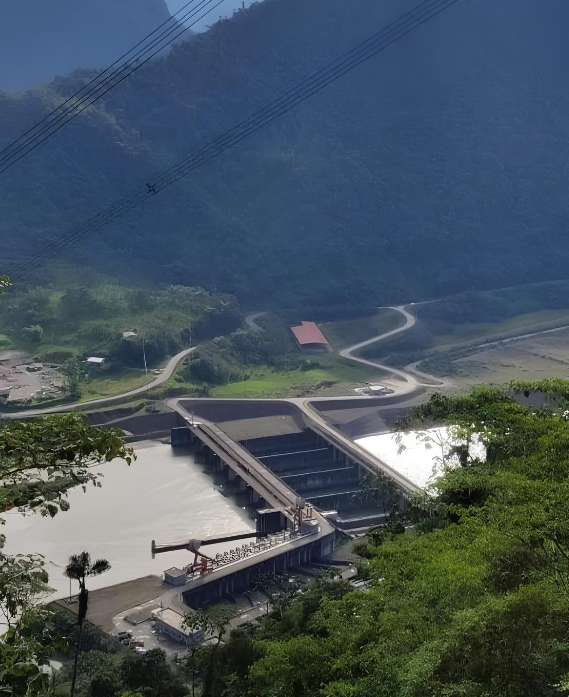
Photo credit to Julie Radomski

Ecuador’s Coca Codo Sinclair (CCS) hydroelectric plant has become an infamous symbol of the controversies associated with Chinese development finance in Latin America. As such, the project’s performance has outsized implications for China-Latin America relations. At the same time, CCS illustrates the inherent complexities of large infrastructure projects, where political, environmental, and technical issues can blur the lines between success and failure.

When it was inaugurated by Presidents Rafael Correa and Xi Jinping in 2016, CCS was celebrated as a triumph of South-South cooperation between Ecuador and China, and a contribution to sustainable green growth in Ecuador. Yet nearly eight years after this inauguration, the project has yet to be formally “received” by the Ecuadorian government from the contractor, Chinese state-owned enterprise Sinohydro. The reason for this prolonged state of limbo comes down primarily to fissures present in the powerhouse distributor pipes: despite repeated welding, they have yet to be fully repaired, and a durable fix may not be possible. In addition, the project’s sediment removal mechanisms have proven dysfunctional, leading to frequent pauses in the project’s operation over the past year. Separately, severe regressive erosion on the Coca River is advancing towards the dam and may trigger its collapse. The erosion advanced 1.2 kilometers upriver over the course of three days last month, and is currently located 6 kilometers from the dam.

For these reasons CCS is frequently cited by U.S. media and politicians as evidence of the threat posed by Chinese development cooperation, namely that it will saddle countries with debt, corruption, low-quality projects, and environmental damage. Meanwhile, the project’s protagonists point out that CCS produces 20-30% of Ecuador’s energy consumption on a daily basis, rendering it indispensable — hardly a white elephant. But closer examination of the details of this behemoth project makes clear that neither pro- nor anti-Chinese discourses on “China in Latin America” ring perfectly true.

Negotiations are reportedly underway between the Ecuadorian government and Sinohydro to conclude a deal in which Ecuador would sign over operation of CCS to Sinohydro in exchange for “liquidity.” Under such a deal, Sinohydro would be responsible for CCS’s repair, operations, and administration and would sell electricity back to the Ecuadorian grid. The concessioning of CCS to Sinohydro is just one of the many loose ends that could once again rewrite the story of this contentious megaproject. Beyond this hypothetical deal, the international arbitration case between the Ecuadorian state and Sinohydro has yet to reach a conclusion. The regressive erosion of the Coca River is anticipated to progress further upriver towards the diversion dam within the next five years. A corruption case initiated by the Attorney General’s office could result in the conviction of four Sinohydro representatives and a former Chinese Ambassador, as well as former Ecuadorian President Lenin Moreno. Some combination of these various developments will continue to make CCS headline news in Ecuador and abroad — and in so doing, they will rely upon prevailing narratives about China-Latin America relations.

CCS provides a vantage point for considering the longer-term effects of development cooperation between China and the region. Looking forward, while the outcomes of CCS are as of yet indeterminate, the project itself has had important implications both for Ecuadorians and for “China’s rise in Latin America” writ large. Chinese economic relations with Latin America have moved away from large state-to-state loans backed by the policy banks. This is due at least in part to the high reputational costs of scandals associated with projects like CCS. While the influence of Chinese actors on Latin American political economies has by no means waned, it now takes the form of Chinese companies’ direct investments or bidding on project contracts instead of by securing market access through granting large loans.

Nevertheless, even with the China-Latin America development relationship moving on from big infrastructure projects like CCS, the project’s politics still hold considerable weight. CCS demonstrates that infrastructure is enduring even as geopolitics can be fickle; its fate will continue to shape China-Latin America relations as a function of the still-ongoing natural and political processes enumerated above. Reductive pro- and anti-China discourses are only one part of the many factors shaping the outcomes of projects like CCS, including continuously evolving local ecologies and domestic political dynamics. In an age of great power competition and the “infrastructure state,” we must pay attention not only to the politics and capital that bring projects into being but also to how they evolve after they are ostensibly completed.

This piece can be reproduced completely or partially with proper attribution to its author.

Latin America: Will WTO Agreement on Fishing Rein in China’s Illicit Practices?

by Mateus Ribeiro da Silva*

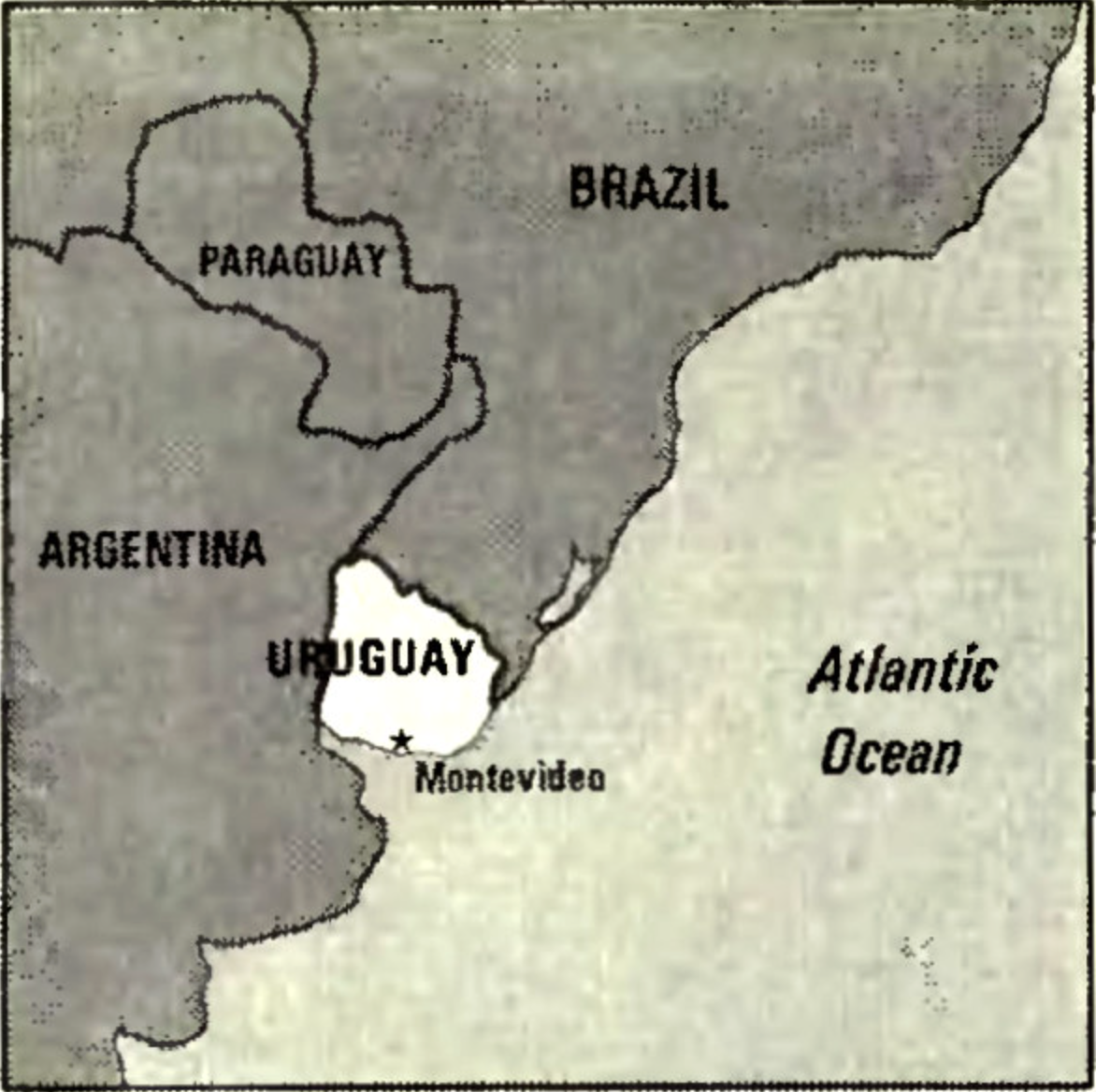
Chinese squid jiggers docked in Montevideo’s harbor / A. Davey / Flickr / Creative Commons license

China’s distant water fishing (DWF) fleet is the worst of various engaged in illegal, unreported, and unregulated (IUU) fishing along South American coasts, but Beijing may be shifting toward supporting a new World Trade Organization agreement that would limit such practices.

  • China has acknowledged having 3,000 ships in its DWF fleet, but studies by various experts, including the Stimson Center and the Overseas Development Institute (ODI), estimate the number to be between 10,000 and 16,000. China’s fleet accounts for about 38 percent of all fishing on the high seas and in other countries’ exclusive economic zones (EEZs). Ships from Taiwan are responsible for another 21.5 percent, and Japan, South Korea, and Spain each represent about 10 percent of DWF efforts. DWF ships usually hover outside EEZs but frequently turn off location devices to enter them undetected.
  • Although China’s most egregious IUU practices are around Africa and Southeast Asia, experts say the impact in Latin America is significant – an estimated $2.3 billion a year (see July 21 AULABLOG). Hundreds of Chinese fishing ships operate off the coasts of Central America, Ecuador, Peru, Chile, and Argentina practically year-round. DWF vessels fish for varieties of squid, tuna, shark, rays, and other species. Oceana, an ocean conservation NGO, says they fish along Argentina’s EEZ for the indigenous shortfin squid, a catch worth almost $600 million USD annually. In addition to turning off their Automatic Identification Systems (AIS) to operate clandestinely in EEZs, the vessels fish close to protected areas, such as near the Galapagos Islands, and capture – on purpose or in bycatch – endangered species, such as certain sharks, dolphins, sea turtles, and billfish. In 2020, a large Chinese fishing armada just off the Galapagos clocked a combined 70,000 hours of fishing in one month.

Because implementation of existing agreements has been chronically weak, the World Trade Organization (WTO) negotiated an innovative trade-based agreement to reduce subsidies to DWF fleets that are causing such economic and environmental harm. Approved in June after 20 years of effort, the Agreement on Fisheries prohibits certain subsidies to IUU fishing, further depletion of current overfished stocks, and fishing outside a member’s regional fisheries organization jurisdiction.

  • Critics are concerned about loopholes that could allow developed nations (including China) to continue current practices, but environmental NGOs hailed the arrangement as a significant first step towards a more sustainable blue economy. It will enter into force when two-thirds of WTO members deposit their instruments of acceptance.
  • In addition to attacking subsidies, the agreement bars fishers from operating outside their own EEZ or in areas overseen by a Regional Fishery Management Organization (RFMO) in which their port state or flag state is not a member. For their vessels to operate in South American waters, for example, national governments would need either local-access agreements, in the case of national EEZs, or to be members of regional RFMOs. This may encourage countries to join more RFMOs and could, optimistically, contribute to more consensual, negotiated regulation of fishing on the high seas. Governments will have recourse to WTO dispute settlement procedures when harmed by IUU practices.

Chinese support for the WTO agreement and faithful implementation would be major steps toward reducing IUU fishing and providing relief to Latin American coastal countries. Beijing provides its DWF fleets with the greatest subsidies – estimated by Oceana in 2018 to reach $5.9 billion a year (amounting to 38 percent of subsidies provided by the “big ten” subsidizing countries).

  • After years of reservations with the agreement – insisting that it should enjoy the benefits available to developing countries – Beijing now seems to be supporting it. Shortly before WTO approval in June, Commerce Minister Wang Wentao said, “China has taken a constructive part in fisheries subsidies negotiations and supports an early agreement so as to implement the United Nations’ 2030 Agenda for Sustainable Development.”
  • If China does sign, confidence that it will comply with the agreement will be initially weak. Observers are concerned that the opaque web of relationships between government and business in China will make detecting subsidies difficult. Practices that China has relied on in the past, such as fuel tax supports, are still permissible under the agreement. Shedding its scofflaw image will take time. In early July, just weeks after the WTO agreement was announced, Uruguayan authorities seized a Chinese vessel carrying more than 11 tons of hidden squid, a clear indication of IUU fishing. Although probably not fished after the accord was announced, the squid illustrate that it is still an open question whether China will break old habits and curb the predatory practices of its voracious DWF fleet.

August 30, 2022

*Mateus Ribeiro da Silva recently completed his Master’s in Global Governance, Politics, and Security in the School of International Service. This article draws on research he performed as a Research Assistant for a CLALS project on Illegal, Unreported, and Unregulated (IUU) fishing in nine Latin American and Caribbean countries.