
Peru: Humala’s Difficult Balancing Act

Photo: Peruvian mine | Mihai (clandestino_20) | Flickr | Creative Commons

Peru’s new cabinet installed in July – President Ollanta Humala’s third since his inauguration a year earlier – faces the daunting task of sustaining national development while increasing social enfranchisement.  The reshuffle came amid loud criticism of a crackdown, which killed five people, on protests against the proposed $5 billion Conga mining project in Cajamarca.  The incident underscored the difficulty for Humala as he endeavors to implement a dual strategy of capitalizing on the growth potential of Peru’s mining industry – primarily gold and copper (60 percent of exports) – while respecting community concerns about the environmental consequences of extraction.  Mining wealth is needed to improve the lives of ordinary people –28 percent of Peruvians live in poverty – but unlike preceding governments this administration has committed itself to consultation with residents of localities that will be affected directly.    The new prime minister has announced suspension of the Conga project until the U.S. mining company involved provides better environmental guarantees.

Humala’s popularity has plummeted.  Despite new laws increasing Peru’s mining revenue, the creation of a new Ministry of Social Inclusion, and a new Prior Consultation Law, indigenous protesters feel betrayed by Humala.  They accuse him of continuing the aggressive extractive policies of his predecessor, Alán García, and insist his administration has not given adequate attention to concerns of local communities on issues such as the integrity of the water supply in zones affected by the mining ventures.  Recent signs of a resurgence in violence by the Sendero Luminoso (Shining Path) guerrillas and of setbacks in efforts to curtail the influence of the narcotics trade are also eroding Humala’s support.

Humala narrowly won the presidency as a center-left candidate, committed to creating a framework for the more equitable distribution of the wealth generated by Peru’s natural resources.  Now, some of his political allies say he has courted foreign investment for the mining sector without adequate consultation, and further protests seem likely.  Humala’s challenge is not unlike that of other countries, including Bolivia and Ecuador, trying to balance between these competing interests.  His success or failure will have an impact beyond Peru’s borders, as South American countries dependent on commodity exports struggle to walk the tightrope between satisfying foreign investors and domestic electorates.
Ecuador’s Difficult Choice on Assange

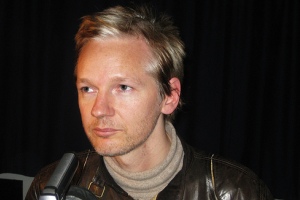
Photo: Julian Assange by Ben Bryan (bbwbryant) | Flickr | Creative Commons

Many observers have portrayed President Rafael Correa’s decision to grant asylum to Wikileaks founder Julian Assange as an act of defiance – a gratuitous slap at the United States – and, because of Correa’s mixed record of respect for a free press, as a sign of hypocrisy.  How can a President who has prosecuted newspapers for revealing damaging information about his government, according to Correa’s accusers, now stand up as the defender of Assange’s right to publish hundreds of thousands of sensitive U.S. Government documents?

The lack of clarity on British and Swedish intentions made the decision difficult.  American officials have minced no words about their hopes to prosecute Assange, although none has stated what the charges would be.  Even U.S. Vice President Joe Biden has referred to him as a “high-tech terrorist.”  Former Republican presidential nominees Sarah Palin and Mike Huckabee have called for his execution.  (A former senior Canadian official said, “I think Assange should be assassinated.”)  The Swedish government, which seeks only to question Assange about allegations of sexual abuses (important offenses in Swedish law), has refused to conduct the interrogations in London or by video, or  to provide reassurances that he will not be extradited to the United States.  British officials at one point even threatened to enter the Ecuadoran Embassy in London, a flagrant violation of well-established principles of international law.

Correa’s ancillary agendas notwithstanding, the asylum decision would have been difficult for almost any country.  There is no evidence that Assange would not get a fair trial in the United States or that he would face the sort of abuse and torture that Bradley Manning – the alleged American source of the Wikileaks documents – has faced.  But the American silence on the charges Assange might face, the rhetoric tarring him as a terrorist and the lack of U.S. accountability for past abuses – the Obama Administration last week announced yet another decision to forego prosecution of U.S. officials involved in alleged torture – makes the absence of a pledge regarding extradition to the United States politically sensitive.  Ironically, the U.S., British and Swedish position risks thrusting them into the same ironic contradiction as Correa finds himself:  claiming to protect human rights, they may open the door to prosecution of a man who published leaked information – and who by any reasonable standard is an indiscriminate whistle blower but hardly an agent of espionage.  If their pursuit of Assange were to result in his exposure to U.S. prosecution related to the Wikileaks matter, these democracies would potentially risk being parties to a serious violation of fundamental principles of free expression.

Colombia: Giving Peace Talks Another Try

Photo by: ideas4solutions | Flickr | Creative Commons

President Juan Manuel Santos and FARC Commander “Timochenko” announced this week that they have agreed to hold “direct and uninterrupted” negotiations beginning in Oslo as early as next month to “put an end to the conflict as an essential condition for the building of a stable and durable peace.”  Press reports suggest popular support for the talks, despite criticism from former President Álvaro Uribe and his allies in Bogotá and Washington.  U.S. Representative Ros-Lehtinen, chair of the House Foreign Affairs Committee, called the news “gravely disappointing.”  The role of Cuba and Venezuela in the preliminary talks and Havana’s future hosting of the post-Oslo phase of negotiations have particularly rankled Cuban-American legislators.  State Department spokeswoman Victoria Nuland said the United States “would, of course, welcome any efforts to end the hemisphere’s longest-running conflict and to bring about lasting peace in Colombia.”

Santos has stated that the time is right to start talks, although he has emphasized that the government “will not make any concessions on the military side” and that military operations “will continue with the same intensity.”  Observers note the conditions are indeed different from when previous efforts foundered.  The FARC leadership has been weakened considerably, and the group’s ideological grounding and foreign support have evaporated.  The FARC apparently feels that the security of demobilized combatants – a longtime concern – will not be compromised even though demobilized paramilitaries could very well try to hunt them down.  Timochenko said the FARC “come[s] to the table without grudges or arrogance,” and the group issued a “Video for Peace” with a rap song urging support for talks – signs of confidence in the process not seen previously.

The State Department’s statement welcoming the talks was positive but general.  Santos’s decision puts Washington on the spot – of which the sniping reflected in Chairwoman Ros-Lehtinen’s remarks is just one part.  Sitting on a massive U.S. investment in the military option and espousing similar programs against narcotics traffickers in Central America, the Obama Administration may be reluctant to go significantly beyond rhetorical support for the talks.  Cuba and Venezuela, whose influence over the independent-minded FARC has often been tenuous, are a moderating force, but Washington may be loath to acknowledge their value in a peace process.  Santos has little choice but to take the FARC’s sincerity at face value for now, but he surrenders little leverage in the current configuration.  The FARC may be cynically calculating that it can benefit from the sort of demobilization that the rightwing paramilitaries had – reaping benefits for commanders and troops, and then re-mobilizing as a newly configured force.  After all, the bandas criminales – BACRIMs – marauding through parts of rural Colombia today are essentially paramilitaries without the ideological and political overlay of the past.  Whereas the truce between former President Uribe and the paramilitaries had support from the Bush administration, it will be telling to see whether the Obama administration accepts what’s needed for a serious peace effort with the FARC, such as an expensive demobilization plan, launched by a Colombian president with stronger democratic credentials.

NOTE:  This is a corrected version of an article originally posted on September 7, which incorrectly characterized the State Department’s position on the talks.  We regret any confusion the inaccuracy may have caused.

Unanswered Questions about Cuban Dissident’s Activities and Death

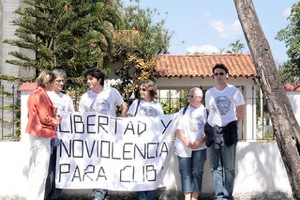
Libertad y noviolencia para Cuba

Photo by dumplife (Mihai Romanciuc) via Flickr, http://www.flickr.com/photos/62585343@N00/429146557/

Three weeks after the death of Cuban activist Osvaldo Payá, the questions that remain unanswered are not so much about the circumstances of the car accident that killed him – it appears to have been a tragic accident – but rather about the activities in which he and his European companions were engaged.  His family continues to claim that the vehicle was rammed off the road by state security agents.  According to Cuban authorities, the rental car veered off an unpaved stretch of road, and the driver, Angel Carromero, an activist from Spain’s conservative Partido Popular, has been charged with vehicular manslaughter.  At a Havana press conference, both Carromero and the other survivor, Jens Aron Modig of Sweden, confirmed the official version of the incident and asked the international community not to use the tragedy for political ends.  Since returning to Sweden, Modig, who admitted entering Cuba to deliver funds to Payá’s organization, has not disavowed the official account.  Nonetheless, the deluge of media coverage quick to frame the accident as a sinister government plot has not been corrected.

Though perhaps the most effective dissident to challenge the Cuban government, Payá was among the most tolerated.  His international celebrity – he won the EU Parliament’s Sakharov Prize for Freedom of Thought in 2002 – his opposition to the U.S. embargo and Helms-Burton regime-change programs, and his commitment to peaceful change on the island made him an unlikely target for a political assassination.

The project that put Payá on the road to Santiago has many of the markings of the secret operations carried out under “democracy promotion” programs run by the U.S. State Department and USAID.  These programs are shrouded in such secrecy that not even the Congressional oversight committees are briefed on them, so ascertaining the truth of who was directing the Carromero-Modig mission and the information campaign accusing the Cuban government of murder after the accident is practically impossible.  But strong circumstantial evidence has emerged.  In video testimony, Modig revealed that he met in Tbilisi with two major USAID grantees involved in such operations – the International Republican Institute (IRI) and the National Democratic Institute (NDI) – just before traveling to Cuba.  It is unclear whether Payá – known for eschewing foreign financial aid – was aware that Carromero and Modig’s primary objective on the trip was to hand out money to antigovernment activists.  It is conceivable that he chose not to know the details.  Regardless, his death represents a significant blow to Cuban activists seeking peaceful, democratic change without heavy foreign direction. 

Mercosur, Unasur Holding Firm on Democracy in Paraguay

Photo by Christian Van Der Henst S. via Flickr , http://www.flickr.com/photos/cvander/5215442086/

As Paraguay marked the one-month anniversary of the summary removal of President Lugo from office, the distance between South America and the rest of the hemisphere on how to deal with the “constitutional coup” remains great and is perhaps growing.  OAS Secretary General Insulza announced last week that the regional organization’s Permanent Council decided to take no further action, except to send a “support mission” to Asunción.  The Obama Administration’s inaction further indicates that the United States is prepared to allow things to stand unchallenged and even unexamined.

Mercosur, Unasur, Spain and, more predictably, ALBA have all been tougher.  Mercosur last week announced that the new Paraguayan government, led by President Federico Franco, is still barred from participating in the organization’s activities, although the government to be elected in April 2013 will be welcome.  Unasur made clear that Paraguay’s participation will be suspended “until democratic order is reestablished.”  ALBA countries have minced no words in condemning Lugo’s ouster.  Spanish Foreign Minister García-Margallo suggested publicly last week that Paraguay’s participation in the Ibero-American Summit in November may not be appropriate.

This division among hemispheric players is reminiscent of the tensions following the coup that removed democratically elected President Mel Zelaya in Honduras three years ago.  Whereas the United States quickly softened its stance on the value of isolating the golpista government of Roberto Micheletti in 2009 and later became Tegucigalpa’s most ardent advocate for speedy readmission to the OAS – while Brazil and most South Americans remained committed to seeking a more democratic outcome – Washington is now showing patience with the right-wing factions that ousted Lugo.  Mercosur’s formula for welcoming the government to be elected next year helps avoid the sort of crisis for the incoming leadership that hindered Honduran President Lobo’s efforts to push back against his country’s golpistas, who to this day are undermining his administration.


Cuban National Assembly Takes Modest Steps on Reforms

Photo by Nathan Laurell via Flickr http://www.flickr.com/photos/nglklm/7146331353

Speaking to the two-day semi-annual session, President Raúl Castro reiterated the leadership’s commitment to undertaking the reforms outlined in the Sixth Party Congress last year.  He didn’t explicitly address concerns reported in international media that implementation of the reforms has been halting, but he announced several concrete steps to be undertaken this year.  Among them is the creation of non-agricultural cooperatives – allowing a new form of private enterprise in 222 business areas and announcing government loans for them – and greater decision-making autonomy for state enterprises.  The Assembly passed a new tax law, details of which have not yet been published.

Castro was a little defensive about the lack of an “updating of migration policy” – widely understood to include lifting the requirement for exit visas – while “ratifying the will of the Party and State leadership to carry out the reformulation.”

From the beginning of the current round of reforms, Raúl Castro and the Communist Party have cautioned that the changes will be introduced gradually and adjusted during implementation.  The credible reports of frustration with the pace of change notwithstanding, the National Assembly appears to have validated that getting the reforms “right” is more important than doing them fast.  The government probably calculates that the new cooperatives and tax law are important elements of an infrastructure for change, but slow or partial implementation will undermine them.  The perennial question remains whether the government’s concern with control discourages important energy among the individuals it is counting on building the new limited private sector.

El Salvador’s “Constitutional Crisis”

Photo by: rosaamarilla via Flickr http://www.flickr.com/photos/amccy/3395160591/

A months-long political feud over the Supreme Court in El Salvador has blossomed into what observers are calling a constitutional crisis.  The first shot was fired in April when legislators from the FMLN engineered a “legislative decree” to replace five court Magistrates, the outgoing Assembly’s second shot at choosing justices during its three-year term.  The court’s Constitutional Chamber in June declared the decree unconstitutional – because each Legislature gets to vote only once for Magistrates.  At the same time, the Chamber invalidated a similar move by the opposition ARENA party affecting Magistrates chosen in 2006.

The theater came to a head this month when two feuding Supreme Courts met in different wings of the same building and claimed legitimacy – one with five members elected in 2009 and the other with the 10 invalidated members.  The rightwing ARENA party and its allies in Washington are claiming the crisis represents a shift against democracy by the FMLN.  Two Cuban-American members of the U.S. Senate have called on the Obama Administration to impose sanctions – principally suspending negotiations on a second Millennium Challenge Corporation compact potentially worth hundreds of millions of dollars – if the crisis is not ended quickly and in the manner they wish.  The Inter-American Commission on Human Rights (IACHR) has called for prompt resolution, and the U.S. Ambassador in San Salvador and the State Department have expressed “concern.”  A Washington Post editorial this week lambasted the FMLN for shifting toward Chávez-style authoritarianism and President Funes for failing to stop it.

This episode reflects maneuvering within the FMLN – fueled by frustration that President Funes’s soft line toward ARENA has only weakened the party’s influence – and poor judgment among activists on where and how to pick the fight.  The legislators rushed the decree because they anticipated correctly that they were about to lose control of the Assembly in elections several weeks later.  The crisis falls into a much more ominous pattern, however, in that – like the coups in Honduras (2009) and Paraguay (2012) – the right wing and its coreligionists in Washington exploit events to challenge the democratic credentials of a democratically elected reformist government to rationalize weakening it, while the Obama Administration responds timidly.  ARENA is again demonstrating its superior lobbying skills in Washington, which have already severely disadvantaged President Funes on issues such as relations between his security cabinet and its U.S. counterparts – resulting in a serious erosion of his own influence over security issues.  If the current political impasse is not resolved to the satisfaction of U.S. conservatives, Washington’s threats – ironically directed against the Administration’s “best friend” in Central America – will likely continue and relations will be strained, further persuading hardliners around Funes that moderation pays no dividends.

The Consequences of Deferring “Deferred Action”

Photo by Larry Engel

The Obama administration’s recent announcement of a sweeping initiative designed to remove the shadow of deportation from the lives of nearly 800,000 undocumented immigrants residing in the U.S. is the latest twist in the dual saga of immigration policy reform and enforcement. According to government sources, including the Secretary of the Department of Homeland Security (DHS) Janet Napolitano, the carefully worded policy of “deferred action” is not an attempt on the part of the administration to sidestep a deadlocked Congress, an example of executive overreach, nor a strategic campaign maneuver during an election year in which the Hispanic vote could be decisive. It is simply the “right thing to do.”

The disparity between this morally grounded, high-level rhetoric and actual immigration law enforcement practices—which last year resulted in a record 400,000 deportations—has sent mixed signals about the current administration’s sincerity. It seems that the rising rate of deportations, touted last year as a “step in the right direction,” is beginning to be viewed within the administration as an unfortunate miss-step. Nonetheless, to many advocacy groups who lobbied in support of the DREAM Act and against blind enforcement of immigration laws, this Friday’s announcement by the Department of Homeland Security provoked a case of déjà vu. Only a year ago, in June 2011, U.S. Immigration and Customs Enforcement Director John Morton enthusiastically revived the policy of “prosecutorial discretion,” promising to scale back the removals of young students, military service members, and others. However, as of May 29 of this year, only 4,363 cases —a mere two percent of the 232,000 backlogged cases under review—had been administratively closed or dismissed.

Beyond questions of electoral politics and policy implementation, one thing is certain: for many undocumented immigrants and their U.S.-based families, deferred action has come too late. A recent report from DHS cited that during the first six months of 2011 alone, over 46,000 parents of U.S. citizen children were forcibly removed—a statistic that raises serious concerns about the health and social impacts of deportation on U.S. Latino communities. As the current administration seeks to hammer out a consensus regarding a long-term solution to the country’s broken immigration system, it is crucial that such a consensus be informed about the consequences of political miss-steps.

Fiscal Policies Worsen Security Crisis in Central America

From left to right: Aaron Schneider, Maynor Cabrera and Hugo Noe Pino at the June 5 event on Central American fiscal policy.

Economists are warning that Central America – unlike some South American countries and Mexico – has still not rebounded from the 2007 global economic crisis, and that current fiscal policies dim prospects for improvement.  After making progress reducing poverty prior to 2007, the subregion has been stymied by static tax policies, insufficient investment in physical infrastructure, corruption, and natural disasters induced by climate change.  This is the assessment of Hugo Noe Pino, Ricardo Barrientos and Maynor Cabrera, economists from the Central American Institute on Fiscal Studies (ICEFI), and Aaron Schneider, Professor of Tulane University, who presented their work at a CLALS-sponsored seminar at the Woodrow Wilson Center on June 5.

The specialists’ research indicated that political resistance to fiscal reform is strong and comes from both new and traditional political and economic interests.  Elites have not found common ground with the middle and lower class in most of Central America – a key element of Costa Rica’s success prior to the financial crisis.  Absent an enduring fiscal pact, countries in the region are likely to remain plagued by persistently slow growth and unusually skewed income distribution.

Violence and security dominate Washington’s agenda on Central America, but this focus largely misses the underlying dynamic between economic decline and crime throughout the subregion.  Elites favor policies that discourage effective state‑building – including investment in security forces paid well enough that they are less vulnerable to corruption – and that exacerbate social inequalities.  Political fragmentation and low citizen confidence in government institutions have dire consequences for national security, and countries get caught in the Catch‑22 of being unable to attract investment from abroad and encourage development from within as long as fiscal policies fail to promote an educated, healthy and skilled workforce.

CLALS currently has a program investigating how traditional, renewed and emerging elites shape the political and economic landscape of Central America.  For more information click here.  And click here for a video of the ICEFI presentation and discussion at the Woodrow Wilson Center.

Honduras Adopting Failed Counternarcotics Model?

The rapid escalation of operations by U.S. and Honduran military and counterdrug teams against suspected drug-traffickers transiting Honduras suggests that Washington has persuaded Tegucigalpa to follow Mexico’s footsteps with a predominantly military strategy against the cartels.  The New York Times has published reports on the deployment of binational teams – patterned after U.S. operations in Iraq and Afghanistan – in remote areas of Honduras to disrupt clandestine aircraft dropping off Colombian cocaine for shipment by river to the north coast and then northward to the United States.  The aircraft, weapons, advisors, trainers, and intelligence used by the “Tactical Response Teams” are all provided by Washington.  U.S. Ambassador Lisa Kubiske said the Honduran units are “eager and capable partners in this joint effort.”

The units claim to have intercepted tons of cocaine, but the operations have also stirred up controversy.  In one operation near the northeastern town of Ahuas in May, a response team killed four citizens, including two pregnant women.  Although the circumstances of the victims’ presence in the area are not entirely clear, the mayor has protested the U.S.-inspired tactics, and local indigenous groups issued a statement that “declared these Americans to be persona non grata in our territory.”  One June 23, a DEA agent shot and killed a man during a raid in northern Honduras when the suspect reportedly pulled a gun on him.

This military-intensive strategy has yielded some 60,000 dead in Mexico – with negligible impact on cartel operations – and in Honduras, where institutions are much weaker, the violence probably will be proportionally even higher.  The U.S. Ambassador’s confidence in Honduran units notwithstanding, the military’s human rights record – never stellar – has steadily worsened since the coup that removed President Manuel Zelaya in June 2009.  Vetting units and keeping them clean when institutions are so weak and vulnerable to corruption and protecting operatives’ identities in Honduras’s “small-town” society all argue for an approach different from that which has failed in Mexico.