South America and the United States after Chávez

By Tom Long

Banco del Sur | Photo by: Presidencia de la N. Argentina | Foter.com | CC BY

Banco del Sur | Photo by: Presidencia de la N. Argentina | Foter.com | CC BY

In many depictions, South America’s relations with the United States have been structured around Hugo Chávez for much of the last decade.  So it is natural for the region to wonder where U.S. policy will head now that he is gone.  In the Bush Administration’s framework – which the Obama Administration has largely continued – Chávez and his closest allies in Ecuador, Bolivia, and Argentina were an emerging anti-American axis.  Colombia and Chile were considered Washington’s last bastions of support, and Brazil under Presidents Lula and Dilma variously positioned itself as a quiet moderator or, on occasion, private fan of the estrangement between the unruly ALBA countries and the United States.  With Chávez’s passing, the narrative will change.

Although Chávez’s charisma, boundless energy, seductive regional pride, and resumption of Venezuela’s traditional oil subsidies made him larger than life, the depth and endurance of his influence was exaggerated by friends and foes alike.  Elements of his vision of a “Bolivarian” Latin America united in resisting U.S. influence have always been present and always will be, but the dynamic Chávez sought, with himself at its center, seems likely to fade fast.  Bolivia’s President Morales was the closest to being a protégé, but even he has been compelled by domestic politics to give priority to relations with Washington. Ecuador’s President Correa was never as close to Chávez and largely steered his own independent course. Chavez’s detractors had tired of using him as a foil as well.  For years no Latin American leader had found tangling with Caracas – thereby giving Chávez the attention he craved – to be worthwhile.  Since Álvaro Uribe’s departure, even Colombia, apparently taking a cue from the oil-hungry United States, has made trade a bigger priority than criticizing its erratic neighbor.  Many high-profile Venezuelan initiatives for the continent, such as the Banco del Sur, fizzled.  Despite Chávez’s role in their founding, even UNASUR and CELAC had grown away from his personal leadership.

Concerns in Washington that someone will take Chávez’s place as counterweight to U.S. influence seem at least five years out of date.  There is no candidate with both the desire and ability to assume Chávez’s mantle.  Just as the benefits of close cooperation with the United States have declined, most leaders have little to gain from overt conflict.  South American international relations have already grown considerably more complex, as countries developed their own responses to Chávez without taking orders from either Washington or Caracas.  The trend of increasing autonomy is natural and, in ways, inevitable – even though it may be irksome to some in Washington, who are skeptical of Latin Americans’ commitment to what Washington thinks should be a shared interpretation of democracy, trade and counternarcotics policy.

The TecnoLatinas: A Start-Up Revolution

Foro de Ahorro de Energía Eléctrica, México | Photo credit: Alejandro Castro | Foter.com | CC BY-NC-SA

Foro de Ahorro de Energía Eléctrica, México | Photo credit: Alejandro Castro | Foter.com | CC BY-NC-SA

Latin America is experiencing a full-fledged start-up movement amid rapid growth of an innovation and information economy.  Over the last several years the region’s online population has grown faster than in any other part of the world – with approximately 255 million internet users as of last year.  Half of the top 10 markets worldwide, ranked by time spent on Facebook and other social media, are in Latin America.  Clusters of innovation start-ups, such as those around Monterrey, Mexico, are springing up with astonishing speed.  In 2012 Mexico was among the largest exporters of information technology services in the world.  Google is currently building a data center in Chile, while Amazon Web Services opened a data center in Sao Paolo last December.  But these are not information-era maquiladoras. Instead, Latin American entrepreneurs are combining the availability of open-source innovation tools and the emergence of cloud computing with effective bridge building in Silicon Valley to bring collaboration, expertise, and capital to their home markets.

  • Latin America offers multiple advantages for tech start-ups: a low cost of development, an educated and growing talent pool with the necessary technical and entrepreneurial skills, and increasingly available and affordable broadband and internet access.
  • In particular, Mexico, Chile, Brazil, Argentina, and Colombia, along with metropolitan areas across the region, are incentivizing the development of a competitive start-up ecosystem – an advantage attracting a growing number of “angel investors.”
  • Start-Up Chile, a national program begun in 2010 with 22 start-ups from 14 countries, offers seed capital, grants, tax protection, space, mentoring, and networking to “accelerate” promising ventures.  Its most recent competition drew 1421 applicants from 60 countries, including from Singapore, London, and San Francisco.

The lack of tech innovation and incentives for start-ups has been an Achilles’ heel of Latin American economies for decades.  If the start-up trend continues, the region could make significant, lasting progress toward narrowing the sizable gap between itself and the most dynamic developing countries, mostly in Asia.  Latin America’s start-up movement is both top-down and bottom-up, with a tech-savvy generation of entrepreneurs not afraid to take risks and to leverage government support, as part of a collaborative business model built on multiple ties to Silicon Valley.  A core challenge will be whether these initiatives are scalable, and whether governments can move away from stale policy debates rooted in antiquated paradigms to move their economies toward the frontiers of innovation of the information age.  Old elites with a lock on traditional industries are poorly positioned to obstruct the phenomenon, but if these emerging innovation hubs are to succeed, at some point they are likely to confront  the entrenched and oligopolistic business practices still prevalent in the region’s energy, telecom, and other sectors.

Changing of the Guard, Cuban-Style

By William M. LeoGrande

Cuba Coat of Arms | Wikipedia Commons

Cuban Coat of Arms | Wikipedia Commons

In his speech to the closing session of Cuba’s National Assembly on February 24, Raúl Castro formally announced that he would retire at the end of his current presidential term in 2018. Even now, only a handful of “los históricios” – the founders of the revolutionary regime – remain in office, though they still dominate the Communist Party’s Political Bureau. Raúl also announced the immediate retirement of several elderly comrades-in-arms, including First Vice-President José Machado Ventura. In his place, the Assembly elected 52-year-old, Miguel Díaz-Canel, putting a leader born after the triumph of the revolution in the direct line of political succession for the first time.

But Díaz-Canel is not the first presumptive heir to appear on the Cuban political scene. He is preceded by several others, all of whom came to a bad end, falling into disgrace and obscurity as quickly as they rose. The first was “Landy” – Luis Orlando Domínguez, a rising star in his forties whose power derived from his leadership of the Grupo de Apoyo, Fidel’s personal staff. He was arrested in 1987 for embezzlement and sentenced to 20 years in prison. The next was Roberto Robaina, the charismatic pony-tailed head of the Young Communist League. In 1993, Fidel appointed “Robertico” foreign minister at the age of 36, then sacked him six years later for disloyalty. Robaina, it turned out, was a little too friendly with foreign businessmen and officials.  Next came Felipe Pérez-Roque and Carlos Lage. Pérez-Roque served as Fidel’s personal assistant for a decade before being appointed, at age 34, to succeed Robaina at the Foreign Ministry. Announcing his appointment, Granma explained that he was qualified for the job despite his age because, “He is familiar, as very few others are, with Fidel’s ideas and thoughts.” Lage served as Fidel’s economic adviser during the Special Period, becoming one of the vice-presidents of the Council of State and executive secretary to the Council of Ministers – the closest thing Cuba had to a prime minister. Pérez-Roque and Lage were both removed by Raúl in 2009 for criticizing los históricos behind their backs and being too eager to push the older generation off stage. They were, as Fidel wrote, “seduced by the honey of power.”

All these early heirs owed their ascent to their personal relationships with Fidel.  Before his illness, the elder Castro was, as we social scientists say, a “minimum winning coalition” all by himself. If Fidel decided on a policy, the rest of the leadership dutifully fell into line. Political power, then, was directly correlated with proximity to Fidel. It was no accident that the principal path to power for an aspiring young politician led through Castro’s personal staff. But the meteoric rise of Domínguez et al., denied them the political savvy only experience can provide, and imbued them with the hubris of Icarus.

Díaz-Canel appears to be an heir of a different order. An electrical engineer by training, he has spent his career rising through the ranks of the Communist Party, building a reputation for competent, pragmatic management. He served as Party first secretary in Villa Clara and Holguín provinces before moving to the national stage, becoming Minister of Higher Education and a vice-president of the Council of State. In public, his austere demeanor suggests the archetypical apparatchik, but in person he is said to be warm, personable, and modest – disdaining the prerogatives of office. While serving as first secretary in Villa Clara, he visited far-flung towns and villages by bicycle.

Díaz-Canel seems to be as different from the earlier heirs as Raúl is from Fidel. Fidel was always suspicious of institutions that might constrain his freedom of action, and never hesitated to circumvent them when it suited his purposes. Raúl, on the other hand, has been the quintessential organization man, valuing careful management, sound administrative processes, and institution-building. His proposal for term limits for all senior government and party officials represents the final institutionalization of the revolution, elevating the system over the pretensions of individuals. In 1973, Granma ran a headline, “Men Die, but the Party is Immortal.” Now, as los históricos are dying, the future of the revolution is finally being vested in the institutions they built and the successors those institutions have produced.

Pope Francis I: The First Latin American Pope

Pope Francis | Photo credit: Catholic Church (England and Wales) | Foter.com | CC BY-NC-SA

Pope Francis | Photo credit: Catholic Church (England and Wales) | Foter.com | CC BY-NC-SA

What will the first Pope from Latin America mean for that region, home to 40 percent of the world’s Catholics?  Leading scholars – several of them participants in a multi-year research project at American University* – offered insights recently in The New York Times.  Among many factors that they point to as conditioning the leadership of the newly elected Pope Francis – Jorge Mario Bergoglio, the former Cardinal Archbishop of Buenos Aires – are how the Church meets the challenge of Evangelical Protestantism and deals with its own past in the region.

With their remarkable rise in recent decades, Evangelicals have broken centuries of Catholic monopoly and made Latin America far more pluralistic religiously than ever before.  Professors Virginia Garrard-Burnett and Daniel Levine underline the limitations of the strategies for renewal employed by the last two Popes – the return to traditional pieties, the adaptation of Pentecostal spiritual practices by “charismatic” Catholics, and the embrace of what Garrard-Burnett calls “neotraditional” organizations such as the elite, secretive Opus Dei.  Levine singles out various Evangelical strengths: churches that “work well with new media, have local leaders close to the community and provide expanded roles for women and minority groups.”  Perhaps the Evangelicals’ most fundamental advantage is their success in making religious faith relevant and real to the millions of Latin Americans that have swelled the region’s violent cities and experienced wrenching social change.

Latin American Catholicism will also be shaped by how it faces its own past in a region where democracies have replaced the dictatorships of old.  The personal story of Pope Francis illustrates different dimensions of that past: an “option for the poor” that took hold after the Second Vatican Council (1962-65) together with a long history of ecclesiastical accommodation with repressive regimes.  The Argentine hierarchy as a whole was seen as supportive of the military dictatorship during the massive violation of human rights in 1976‑83.  Bergoglio’s personal role is unclear.  His supporters hold that he combined pastoral concern for his flock with quiet humanitarian diplomacy toward the junta. His critics argue that he failed to protect several left wing priests and his silence constituted complicity with the regime.  Like many other clerics who rose to dominate today’s Latin American hierarchies, he did not publicly defend human rights.

As Pope Francis, Bergoglio’s personal style and pastoral simplicity already mark an important signal to his Church that it must be committed to the poor.  In Latin America it has a historic opportunity to stand for their dignity and foster their empowerment.  Public identification with their cause is vital, but so is living and working with them to overcome the poverty and violence of their communities.  John XXIII, Paul VI and notable Latin American bishops after Vatican II saw this as a matter of securing their fundamental human rights.  This is an enduring legacy of their leadership during dictatorships that Francis and his Church should build on in the democracies of today.

* 2012-13, with the support of the Religion and International Affairs Initiative of the Henry R. Luce Foundation

Honduras: Simmering Crisis

Porfirio Lobo and Hillary Clinton
US Embassy Guatemala
/ Foter.com / CC BY-NC-ND

Little good and lots of bad has transpired in Honduras since the night in June 2009 that an Army-backed coup d’état, orchestrated by the economic elites, ousted President Mel Zelaya and installed Roberto Micheletti as the de facto ruler.  Almost four years later, Honduras remains one of the places in the Americas where democracy is at permanent risk – where drug trafficking, corruption, impunity, private armies and feudal caudillos thrive in a climate of spiraling violence.  Honduras today is the most violent country in the Americas and last year was among the top three in the numbers of assassinated journalists.  Honduras also remains one of the poorest countries in the hemisphere.

President Porfirio “Pepe” Lobo lacked credibility from the moment he donned the presidential sash in January 2010 – the candidate who, by almost all accounts, would have lost the election had not the coup reversed that fate, clamped down on opposition media, and suspended many civil rights.  While Washington worked hard to gain OAS recognition of his government, Lobo offered no guarantees – to either Hondurans or foreigners – that he would reverse the ongoing activities of the Army and rapacious economic elites to undermine democratic institutions.

  • Timid attempts to show independence, such as a projected police reform, languished due to lack of political will and financial support.
  • Honduras’s doors opened ever wider to organized crime and corruption.  According to U.S. agencies, roughly 60 percent of the cocaine passing through Central America on its way to U.S. markets in 2011 went through Honduras.  (The Obama Administration funded a militarized drug interdiction program that sputtered after Honduran civilians were killed.)
  • Politically motivated murders by sicarios – reminiscent of 1980s death squads – skyrocketed.  Investigations were few, and prosecutions were nonexistent.
  • By the end of last year, Lobo was pointing fingers at his old allies in the Army, the elites, and even his own party, accusing them of trying to destabilize his government. He failed to pass constitutional reforms that he claimed would protect democracy.  General Romeo Vásquez Velásquez, the military commander during the coup, announced that he was running for president.
  • Honduras is facing one of the worst fiscal crises of its history – a significant landmark for the perennially mismanaged country.

In Washington none of this seems to raise red flags.  On the contrary, the ideological bent of statements from both the executive and legislative branches suggests satisfaction with the state of affairs in Honduras – and willingness to keep the crisis there unsolved.  Hillary Clinton´s State Department was, to say the least, shy when addressing the deteriorating situation of the Central American country.  In January, at Senator John Kerry’s confirmation hearing, Republican Senator Marco Rubio’s assertion that what happened in Honduras in 2009 wasn’t a coup went unchallenged – despite the overwhelming consensus otherwise throughout our hemisphere.  The first sign offered by Kerry as Secretary of State, however, gives room to expect at least a modest change in the narrative: on March 4th, the State Department gave one of eight International Women of Courage Awards to Julieta Castellanos, a respected human rights advocate and critic of corruption and impunity in Honduras.  This hint of a less ideological and a more strategic and humanistic approach to the unsolved Honduran question is welcome.

Mexico: A Hard Road for Reforms

By Tom Long

Enrique Peña Nieto by Edgar Alberto Domínguez Cataño | Flickr | Creative Commons

Enrique Peña Nieto by Edgar Alberto Domínguez Cataño | Flickr | Creative Commons

During the campaign, Mexican President Enrique Peña Nieto proclaimed in thousands of advertisements, “Me comprometo y cumplo” – I make a promise and I keep it.  Offering a list of potentially transformative reforms – regulations, security, telecommunications, energy, and more – he began with one of the most intractable:  the struggling public education system.  In December, at his instigation, the Mexican congress passed a constitutional reform to create stricter standards for teachers and move hiring authority from the teachers’ union to the government.  Enough states had ratified the amendment by the end of February to make it law.  After years of stagnation and interest-group politics, education reform suddenly became politically expedient, passing with support from the PRI, PAN, and PRD.  Last week, the government put an exclamation point on the reform by arresting the teachers’ union boss, Elba Esther Gordillo, on charges of using her post for illicit gains surpassing $100 million.  A PRI apostate whose opposing alliance was credited with helping former President Felipe Calderón win his razor-thin victory in 2006, she was not just expendable, but an obstacle.

According to OECD education data, just 45 percent of Mexican students complete their secondary education, though the rate has improved over the last decade.  Mexico spends 3.7 percent of GDP on primary and secondary learning, — less than Chile, Argentina, and Brazil but in line with the OECD average.  Experts believe that Mexico’s educational  problems are largely political, not budgetary.  A full 97 percent of spending goes to salaries, feeding a teachers’ union that has a history of patronage and graft.  The problem has deep roots in the clientelistic structure through which the old PRI governed during its 70 years in power before losing in 2000 – and with which the PAN governments coexisted for 12 years.

The storyline shares certain similarities with PRI President Carlos Salinas’ sacking of the head of oil workers’ union in the 1990s, presaging limited reforms in that sector.  Peña Nieto probably intends the removal of the most visible representative of old-style patronage politics as a clear signal that the PRI will not bring back the bad old ways – despite the possible appearance of the firing and arrest being driven by revenge – but the reform legislation is widely seen as a positive step forward.  Rhetorically at least, the major parties have agreed to a multi-pronged effort for more reforms in the “Pact of Mexico.”  However, forging consensus on further reforms will be more difficult, as entrenched PRI politicians at the local level are already resisting many of the president’s proposals.  The PAN and PRD are already criticizing Peña Nieto for being too cozy with media barons and for handling telecommunications reform behind closed doors.  Security policies and proposed energy reforms are more contentious still.  Reforming other sectors will require going after harder targets than Gordillo and will pose greater tests of Peña Nieto’s ability to win votes in the Mexican Congress.

Chávez’s Passing: In the Hemisphere’s Words

"Chavez" | by Donmatas1 | Flickr | Creative Commons

Chavez | by Donmatas1 | Flickr | Creative Commons

Below are excerpts from statements made by leaders of the Western Hemisphere upon learning of the passing of Venezuelan President Hugo Chávez.  The tone of the U.S. President and Canadian Prime Minister’s remarks is different from the Latin Americans’.

Barack Obama (U.S.A.)
“As Venezuela begins a new chapter in its history, the United States remains committed to policies that promote democratic principles, the rule of law, and respect for human rights.”

Stephen Harper (Canada)
” I would like to offer my condolences to the people of Venezuela on the passing of President Chávez.

“Canada looks forward to working with his successor and other leaders in the region to build a hemisphere that is more prosperous, secure and democratic.

“At this key juncture, I hope the people of Venezuela can now build for themselves a better, brighter future based on the principles of freedom, democracy, the rule of law and respect for human rights.”

Enrique Peña (México)
“Lamento el fallecimiento del Presidente Hugo Chávez. Mis más sentidas condolencias a su familia y al pueblo venezolano”.

Ollanta Humala (Perú)
“Adiós Comandante y amigo Hugo Chávez. Mis sentidas condolencias a su familia y a todo el pueblo venezolano”.

Ricardo Martinelli (Panamá)
“Deseamos expresarle nuestro pésame al Pueblo Venezolano y a la Familia Chávez por el sensible fallecimiento del Presidente Hugo Chávez”.

Evo Morales (Bolivia)
“Duele, pero también queremos decir a los pueblos, fuerza y unidad ahora más que nunca. Estamos destrozados”.

Juan Manuel Santos (Colombia)
“Lamento profundamente la muerte del presidente de Venezuela Hugo Chávez Frías. Nuestras sinceras condolencias”

Dilma Rousseff (Brasil)
“Estamos de luto por la pérdida de un gran amigo. Va a dejar un hueco en ‘la historia y en las luchas’ de América Latina”.

Sebastián Piñera (Chile)
“Fue un hombre profundamente comprometido con la integración de América Latina. …  Sin duda teníamos diferencias, pero siempre supe apreciar la fuerza, el compromiso y la voluntad con la cual el Presidente Chávez luchaba por sus ideas”.


Venezuela: A New Start?

By Fulton Armstrong and Eric Hershberg

Memorial for Hugo Chavez | by Steve Rhodes | Flickr | Creative Commons

Memorial for Hugo Chavez | by Steve Rhodes | Flickr | Creative Commons

The death of President Hugo Chávez yesterday, as has been duly noted, marks the beginning of a new era – new opportunities and new challenges – for Venezuela.  In view of the country’s history and institutional weaknesses through the 1990s, some of the convulsions of his 13 years in power may have been inevitable, but the need is now compelling, across the political spectrum, to take a sober look at the future, set aside some of the stalemated grudge matches, and get serious about becoming something better.

It’s easy to predict at least some short-term instability, bombastic rhetoric, and jejune nationalism, such as some fringe Chavistas’ allegation that the United States was responsible for Chávez’s death.  It’s harder for Venezuelans and outsiders alike to figure out how this country, hindered by the original sins that plague all rentier economies, learns how to do politics in a transparent, inclusive manner.  For analysts like us, the key thing is to set aside wishful thinking and keep our eye on the fundamental drivers of change.  Some thoughts:

  • For better or worse, Chávez had an impact that – if not as transcendental as he wished – dismantled the key institutional pillars of the sclerotic Venezuelan political system.  Beyond that, his legacy includes the profound and intentional division of Venezuelan society and politics into two camps – a tense split that did not exist (or was sublimated) 20 years ago and will take a long time to heal, as has the cleavage around Peronism in Argentina.  Like Peronism, over time chavismo need not necessarily have a standard left-right quality, and it is likely to retain a cult around Chávez’s persona, larger in death than in life.  Evita a la venezolana.
  • Chávez wasn’t the regional or global threat that the Bush Administration made him out to be, but he did open space for a particular species of Latin American populism – call it radical, “socialist,” or clientelist – that coincided with a broader U.S. withdrawal from Latin America.  Few observers could have imagined that this former military colonel – a failed putschist – could capitalize on the region’s crisis of representation and development to bring about the emergence and prosperity of the ALBA coalition and the identities it fostered.  The lifeline of petro-dollars that Chavez opened, a tool that, it is often forgotten, had been deployed by previous Venezuelan governments to gain outsize presence on the international stage, explains some of his influence, but his forceful personality and the siren song of his peculiar Bolivarian ideology multiplied his impact.  His model was not replicated elsewhere, but his fervent regional pride was.
  • Chavez’s successors, of any political stripe, will test Washington’s capacity to keep its hands off.  Venezuela – even the opposition – has changed, and United States policymakers will hear rhetoric and see things, such as a relationship with Cuba that’s likely both to shape and to survive both countries’ transitions, that will test their self-discipline.  Chávez is gone, and chavismo, though certain to endure, will inevitably change.  But Venezuela’s need for space – space granted by its neighbors and the United States – to grow and even make mistakes remains a constant.  Over the 15 years in which Chávez dominated the scene, from his first election in 1998, Washington sometimes resisted the temptation to play into the game, but more than occasionally took the bait.  Washington has often misread Latin America and, by endorsing the 2002 coup against Chávez and other actions, actually strengthened the Venezuelan president domestically and regionally.  Chávez’s passing presents an opportunity for a fresh start for the United States, too.

The Overlooked Dimension of U.S. Immigration Reform

By Eric Hershberg

Immigration reform rally | by Anuska Sampedro | Flickr | Creative Commons

Immigration reform rally | by Anuska Sampedro | Flickr | Creative Commons

The 2012 U.S. presidential elections brought national attention to the Latino vote and, with it, immigration reform.  Embarking on his second term, President Obama immediately labeled the matter a priority, and some but not all of the Republican leadership is eager to reach a deal.  Beyond electoral calculations, there are many good reasons for Washington to finally resolve the status of roughly 11 million people living in the United States without legal documentation.  The border with Mexico has become increasingly impermeable, stripping critics of reform of one of their principal talking points.  Virtually all credible studies demonstrate that immigrants contribute more to the tax base than they receive from public expenditures, and they are a crucial source of community revitalization in some of the nation’s depressed cities and towns.  Meanwhile, a generation of youth brought to the country as young children – the “Dreamers” – languishes without recognition of their de facto status as Americans.  There are also humanitarian issues: families and neighborhoods are torn apart by the more than 400,000 deportations in each of the past several years.

Immigration reform matters to Latin America as well.  With millions of Latin Americans residing in the United States, several of the region’s economies are highly dependent on a steady flow of remittances, which are destined to increase if undocumented workers come out of the shadows.  In 2012, Mexico and Central America received more than $35 billion from migrants in the U.S.  Particularly striking is the case of El Salvador, a U.S. ally.  Nearly a third of its population lives in the U.S., and remittances surpass all other sources of revenue – now 16 percent of GDP.  For several Central American governments the welfare of migrants working in the U.S. is not only a humanitarian concern: these citizens are a crucial foundation for economic viability – and thus nothing less than a national security priority.

Yet remarkably absent from the U.S. immigration debate are the implications of a comprehensive reform for the eroded credibility of the U.S. in Latin America.  Virtually alone among senior officials, former Secretary of State Hillary Clinton acknowledged soon before leaving her post that creating a pathway to citizenship “will be a huge benefit to us in the region, not just in Mexico, but further south.”  The point merits emphasis.  The failure to enact comprehensive immigration reform, the result of domestic policy shortcomings, has serious consequences for U.S. standing in the region – as serious as other policy failures such as Washington’s continued inability to normalize relations with Cuba, to stop illicit gun exports, or to stem the demand for illicit drugs that is fueling violence and corruption across the region.  If the new administration wishes to avoid a replay of the open rebellion by Latin American governments against U.S. policy that emerged at last year’s Summit of the Americas in Cartagena, it would do well to show the region that it is willing and able to enact comprehensive immigration reform.

Might the U.S. Release Simon Trinidad?

By:  Antoine Perret, CLALS Research Fellow

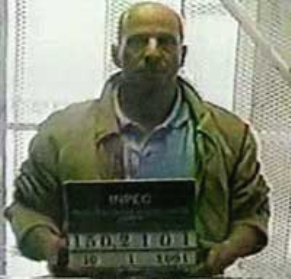
Simon Trinidad mug shot | by US Government | public domain

Simon Trinidad mug shot | by US Government | public domain

In the peace talks between the Colombian government and the FARC, the guerrilla negotiators have requested the release of FARC leader Simon Trinidad – nom de guerre of Ricardo Palmera – who is imprisoned in the United States.  Publicly available information gives no hint that the Colombian government has officially asked Washington to consider the question, but – since the release of FARC members in prison in Colombia is not off the table – Washington should be prepared to consider the possibility.

Simon Trinidad was captured in Quito, Ecuador, in January 2004, extradited to the United States and put on trial for conspiracy to engage in drug trafficking and to hold hostages.  Each of four trials for drug trafficking ended in a hung jury, and eventually those charges were dropped.  In 2007, however, he was convicted for an alleged role in conspiring to kidnap three U.S. contractors taken hostage after their counterdrug surveillance plane crashed in 2003.  Trinidad is serving a 60-year-sentence in Colorado at the United States’ only federal “supermax” prison, with no prospect of parole.

The U.S. State Department has publicly stated that President Obama will not grant Trinidad parole, as the FARC requested, to participate in the negotiations.  But the question of his release if the Colombian government requests it within a peace settlement remains pending.  If such a request arises, the U.S. government’s lawyers will certainly report that the protocol (II) additional to the Geneva Conventions states that “at the end of hostilities, the authorities in power shall endeavor to grant the broadest possible amnesty to persons who have participated in the armed conflict, or those deprived of their liberty for reasons related to the armed conflict, whether they are interned or detained.”  The words “shall endeavor” obviously do not imply obligation, but by establishing that states should release members, they create a political dynamic that could drive a decision giving a useful push to resolving Colombia’s six-decade conflict.