How Sustainable are Latin America’s Advances on Poverty and Inequality?

By Eric Hershberg

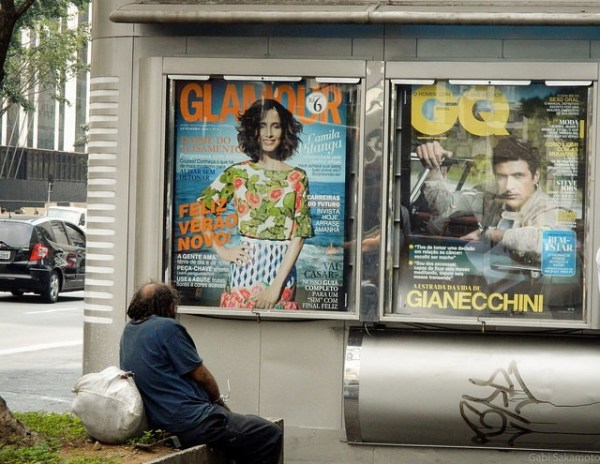
Brazil Contrasts

“Projeto Contrastes.” Photo Credit: Gabriela Sakamoto / Flickr / Creative Commons

The significant decline in poverty rates and income inequality in Latin America over the past two decades – driven by a combination of sustained economic growth and intelligently designed social policies – may slow or even be reversed as economic conditions deteriorate across much of the region.  Poverty had begun to drop in most countries even before the commodity boom accelerated growth rates in South America beginning around 2003.  The “Washington Consensus” policies of the 1990s impacted wage income and employment negatively, but other factors diminished their impact on poverty.  By overcoming profound macro-economic instability, which among other things produced hyperinflation that devastated disadvantaged sectors of the population, the economic adjustments of that period were not entirely regressive.  Moreover, a concurrent shift toward targeted social programs – which redirected subsidies away from less vulnerable segments of the population in order to protect the poorest of the poor.  By 2002, the number of people living on less than $1.90 a day had declined 4.6 per cent from where it had been at the beginning of the 1990s, according to the World Bank, while the number living on less than $3.10 stayed flat and actually rose (from 135.6 million to 138.1 million).  Performance varied across countries.  By 2012, after a strong decade of growth and a wave of progressive governments, the progress was much more impressive, with poverty dropping to 33.7 million ($1.90/day) and 72.2 million ($3.10/day).

Inequality declined also – a different challenge in the region that Kelly Hoffman and Miguel Centeno aptly labeled the “lopsided continent.”  Measured by GINI coefficients, income inequality in Latin America, which exceeded that of any other world region at the beginning of the century, grew less pronounced under governments of various ideological proclivities.  A substantial body of research shows that this was a product of two factors.

  • Investments in primary and secondary education, which accelerated during the neo-liberal years, meant lower wage premiums for those with more than basic skills: near universal attendance in secondary school reduced the significance of gaps between workers who had secondary education and those who had little schooling.
  • Innovative social policies – particularly conditional cash transfers – meant that the lower rungs of the income ladder received meaningful transfers from the state, enabling them to narrow the income gaps vis-à-vis less disadvantaged sectors. Less frequently acknowledged was the positive impact of reforms on minimum wage policies and the creation or expansion of non-contributory pensions, both of which were pushed aggressively by several governments associated with the “Left Turns.”  Non-contributory pensions were especially important since the most vulnerable of Latin American aged populations, having spent their working years toiling in the informal sector, had previously lacked any sort of retirement pension.  (Read further analysis of pension reform.)

The region’s slowdown in economic growth and the pressure on public finance brought about by the end of the commodity boom – and the infusion of cash into state coffers that it afforded – raise questions about the sustainability of these advances.  The benefits of investments in education will endure for some time.  Even if education budgets decline, the costs in terms of lower educational achievement would take years to become evident, and it is not at all certain that the funding will decline.  However, the social programs are much more vulnerable, as are the ambitious efforts to increase minimum wages and labor protections more broadly.  Should the economic contraction underway in some countries and on the horizon in others generate an increase in informality, the labor market achievements of recent years could be quickly eroded.   This would impact inequality, and it might soon exacerbate poverty as well.

June 3, 2016

Trumping GOP Resistance to Strengthened Ties with Cuba

By Eric Hershberg

Malecon Twilight

Nighttime on the Malécon in Havana, Cuba. Photo credit: William Beem / Google Images / Creative Commons

One wild card on the horizon in the normalization of U.S.-Cuba ties looks unlikely to materialize.  As pointed out in several CLALS publications (such as here and here), ever since Presidents Obama and Castro announced on December 17, 2014, that they intended to improve relations, there has been a sense of uncertainty regarding whether their successors might roll back the advances they make.  This was particularly so when several Republican politicians seeking their party’s presidential nomination campaigned against President Obama’s “coddling” of the Cuban Communists and his “unilateral concessions” to Havana.  Marco Rubio (Florida) and Ted Cruz (Texas) – two of the Cuban-Americans in the U.S. Senate –made particularly aggressive statements indicating an intention to reverse all or parts of the Obama administration’s executive actions affecting Cuba policy, which, unlike legislation, can be reversed by a subsequent administration.  But they have dropped out of the race as presumptive nominee Donald Trump defeated them and former Governor Jeb Bush, whose Florida political base, family background, and public statements also indicated opposition to normalization.

Trump and the leading Democratic candidate, Hillary Clinton, have very significant policy differences on many issues, but apparently not on Cuba.  Clinton in her memoirs about her tenure as Secretary of State, like Trump in his public statements, appears inclined to sustain the current direction of Washington’s engagement with Havana (although Trump claimed last year that “we should have made a better deal”).  The two likely nominees share noteworthy characteristics, including, remarkably, that they are the least popular candidates that either major party has nominated since polling data have been collected. Advocates of full normalization cannot take either candidate’s leadership on the issue for granted. Clinton’s challenger, Senator Bernie Sanders, has pushed her to the left on some domestic issues, but recent press profiles on her indicate that she remains wedded to a hawkish approach to foreign policy.  The endorsement of several key Washington Neo-Conservatives further suggests she could swing to the right on foreign policy matters.  On the other hand, Trump’s zigzagging on Cuba – 15 years ago he was a staunch proponent of the embargo – and his impulsive decision-making style leave open the possibility that he also could reverse Obama’s executive actions and call on the Congress to keep embargo legislation unchanged.

Although mistakes can occur and various wildcards can slow, or even break, the current momentum, the twists and turns of the U.S. primary election season seem to have diminished substantially prospects that a new President sworn in next January would significantly change Obama’s winning formula on Cuba.  Clinton will have no incentives to abandon a policy that she takes some credit for promoting.  Trump has, if anything, proven that he revels in taking on GOP orthodoxy – and will presumably continue to do so on Cuba policy.  His sympathies align much more clearly with the pro-business Chamber of Commerce, an aggressive opponent of the embargo against Cuba, than with the ideologues on the right of his party, and he will give a green light to the many members of Congress who want full trade with and free travel to the island to change the law.  Concerns that a new U.S. president could reverse Obama’s executive actions on January 20, 2017, can now be assuaged, and Congressional proponents of lifting the embargo likely will have time to build momentum to pass legislation rendering the executive measures moot.  One can imagine that the Donald’s criteria of success for Cuba policy begin with the glare of a gaudy neon Trump sign on a casino along the Havana Malecón, but it’s reasonable to wager that the Cuban government will negotiate a better deal.

May 31, 2016


Political Upheaval in South America

By Eric Hershberg

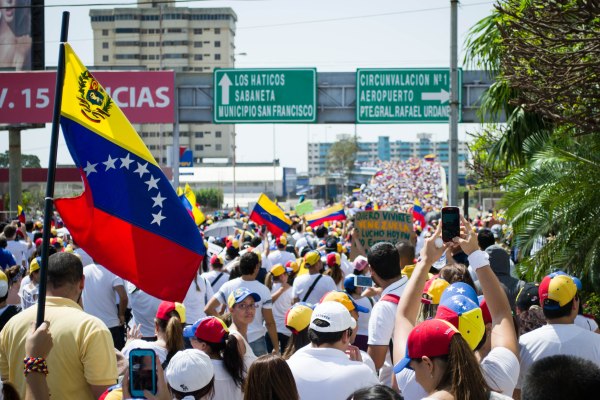
MarchaVenezuela

Thousands of protesters in Maracaibo, Venezuela. Photo Credit: Google Images / Creative Commons

2016 is proving to be this century’s most complicated year to date for South American political systems, and the coming months will be critical to assessing how well the region’s democracies can govern amid declining economic conditions and spiraling corruption scandals.  Brazil and Venezuela – two very different systems with very different problems – are suffering the most visible crises.

  • In Venezuela, where the Bolivarian project has descended into an incompetent Putinism in the tropics, is collapsing under the weight of monumental mismanagement of the economy. Many of the ills of the Venezuelan petrostate predate Chavismo, but during a collapse in oil prices President Maduro has doubled-down on profligate economic policies introduced by Hugo Chávez, bringing the country to catastrophe made worse by increasingly draconian repression of loyal and disloyal opposition alike.
  • President Dilma Rousseff’s mismanagement of coalitions in a presidential system predicated on coalition-building has opened the way to political and economic implosion in Brazil.  Contrary to the fervent assertions of important segments of the Workers Party (PT), her impeachment does not precisely constitute a coup, but it may indeed amount to an ill-advised bending of institutional mechanisms by cynical legislators and aggressive judges, egged on by rightist sectors whose commitment to democracy is in fact dubious.  Dilma didn’t invent the corruption and footloose budgetary practices that have been her undoing, but her fall does respond to overwhelming popular rejection of her performance.  Interim President Temer’s appointment of an entirely white male cabinet that includes representatives of some of the country’s most retrograde interests suggests abandonment of many of the most laudable achievements of more than a decade under PT rule – and more backlash as well.

Other institutional crises may be on the horizon.  Ecuadoran President Rafael Correa pursued a high-risk strategy of debt-driven expansion of the state, which is not sustainable amid economic contraction.  Argentine President Mauricio Macri’s honeymoon may prove short-lived.  Much-needed economic reforms are likely to provoke even greater inflation and have already stoked resistance from the Peronist opposition.  Macri enjoys some unprecedented assets – for the first time non-Peronists also control the city and province of Buenos Aires– but Argentine public opinion overwhelmingly favors statist economic policies that he aims to dismantle, and no non-Peronist elected president has completed his term in office since the rise of Peronism as a political force.  Chilean President Michelle Bachelet, wounded by a drop in mineral export revenues and comparatively minor corruption allegations involving her daughter-in-law, reshuffled her cabinet earlier this month but continues to tank in the polls.  Latinobarómetro reports that 70 percent of Chileans believe their political system doesn’t work.

It’s not hard to envision other relatively stable South American democracies facing hard times ahead.  The June 5 presidential runoff in Peru could leave the country deeply polarized, especially if Keiko Fujimori, heiress to the country’s darkest episode in recent history, wins.  It is not a foregone conclusion that Colombian President Juan Manuel Santos, who has staked his second term on a long-awaited and much-needed peace accord, will secure its ratification, risking lameduck status for the remainder of his administration.  If the presidents elsewhere appear to be weathering the storm, democratic governance nonetheless faces important challenges.  It would be rash to predict that democracy will fail the test – and that such failure will give rise to a new era of authoritarian rule – but it’s clear that the region will witness widespread instability during the coming years.

May 26, 2016

Haiti: Crisis Upon Crisis

By Fulton Armstrong

Haiti OAS

OAS Secretary General Almagro visits Haiti. Photo Credit: OAS / Flickr / Creative Commons

Haiti is stumbling, again, from one crisis into another, but the timing of this ongoing mess puts the United States and other international partners in a particularly bad position.  The country’s political institutions are dysfunctional, without an elected executive nor fully legitimate legislature, and efforts to rebuild them continue to be haphazard.  Under Interim President Jocelerme Privert (formerly leader of the Senate), the government has missed another deadline for resolving disputes over the first round of presidential elections held last October and re-running them or scheduling the second round.  Instead, Privert, who assumed the Presidency in February, on 28 April formed a five-member “verification panel” to take yet another look at allegations of first-round fraud and determine which candidates should participate in the runoff, with a 30-day deadline.  The deadline for Privert to step down passed on 14 May.

  • The move coincides with growing perceptions that Privert is enjoying the perquisites of the job and may be dragging things out on purpose. Both sides to the contested elections – supporters of Jovenel Moïse, former President Martelly’s hand-picked successor, and the opposition party’s Jude Célestin – are mobilizing crowds, some numbering thousands, for almost-daily protests.  Calls for Privert to resign are growing intense as suspicions of his own ambitions and imputed bias for or against one of the candidates surge.  Several dozen gunmen, allegedly directed by an enemy of Privert, shot up a police station in the southern city of Les Cayes earlier this week, resulting in six dead.
  • International reactions to Privert’s delays have been mixed but predictably of frustration.  The former leader of an official OAS mission to Haiti in early April supported the verification process, and OAS Secretary General Almagro said recently that elections “shouldn’t be rushed.”  But U.S. Secretary of State John Kerry last month condemned “this process of delay” and urged Haiti’s “so-called leaders” to act.  His Special Coordinator for Haiti Affairs, veteran diplomat Kenneth Merten, called the new verification process a “black box” and said it was “opaque and non-democratic.”

The political mess coincides with other serious challenges.

  • The World Food Program (WFP) is increasingly concerned about hunger caused by a three-year drought, aggravated by El Niño, and the country’s economic situation. Some 3.6 million Haitians (one third of the population) face “food insecurity,” including 1.5 million who are “severely food insecure.”  A U.S. program to send Haiti surplus peanuts, which is one of Haitian farmers’ most successful crops, has deflated prices and further hurt local food production.
  • Shortages of medical supplies, worsened by corruption, have prompted doctors to conduct strikes. High-profile cases, including the death of a bleeding pregnant woman at the entrance of the Port-au-Prince General Hospital, have led to dramatic demonstrations, on at least one occasion parading around a victim’s corpse.
  • Fear of spread of the Zika virus is rampant. The University of Florida recently confirmed that Zika was present in Haiti before the outbreak in Brazil last year.  (Carried by the same mosquito, Aedes aegypti, it was mistakenly identified as chikungunya, which has almost identical symptoms except microencephaly.)  Haiti’s cholera epidemic, which has killed 9,200 people since 2010, continues to claim about 50 lives a month, according to some estimates.

The usual threats by the United States and Haiti’s other international partners to suspend aid if the government doesn’t resolve the political impasse have been muted presumably because they’re unlikely to be credible while such major threats to Haitian citizens’ wellbeing loom large.  Haiti’s political and economic elites assume that the outsiders will care for the Haitian people and continue bailing the country out while they pursue their internecine struggles.  Former President Martelly, who is not free from blame for the elections impasse, has been in Miami these days to promote his autobiography ($50 a copy) and reestablish himself as a naughty boy Kompa musician.  The international community is, once again, in a lose-lose situation.  A previous caretaker government, headed by Gérard Latortue, lasted two years (2004-2006).  The United States and others can ill afford a deeper humanitarian disaster, so while Haitian elites fiddle, outsiders will try to put out the fires.

May 19, 2016

El Salvador: Dual Crackdowns Raise Questions

By Fulton Armstrong

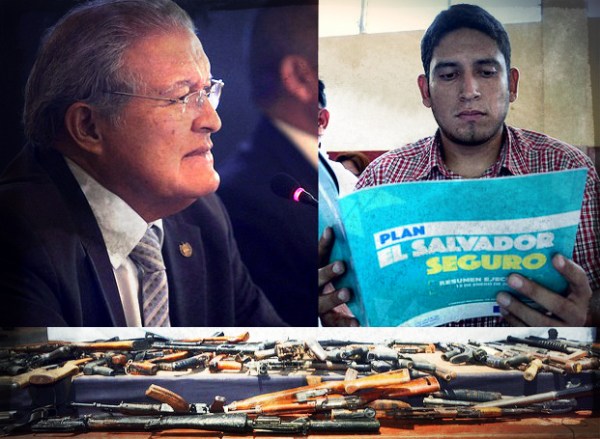
El Salvador Seguro

Photo Credits: Presidencia El Salvador and Departamento de Seguridad Pública OEA (modified) / Flickr / Creative Commons

Salvadoran President Sánchez Cerén’s months-long crackdown on gangs has broadened into a crackdown on proponents of negotiations with them.  Upon orders of Attorney General Meléndez, 18 former officials involved in the past truce (covering two periods in 2012-2014) have been arrested, among them a principal mediator, former FMLN Congressman Raúl Mijango.  Three others, including the former head of prisons, are on the run.  Meléndez claims that the recent passage of legislation outlawing negotiations with gangs was not a factor, and that the detainees are not being held for their role negotiating the previous truce, but rather for violations of laws in place during the truce.  They are accused of “dereliction of duty,” “illicit association,” smuggling mobile phones into prisons, and possible misuse of US$2 million for truce implementation.  Meléndez said the government-gang pact “was not illegal” and he noted that it did help reduce reported murders, but he has asserted that it gave rise to disappearances and other violence, and allowed the gangs to re-arm and consolidate their control in some sectors.

The campaign against pro-dialogue voices has left several prominent players untouched.  The government has distanced itself from the activities of current Interior Minister Arístides Valencia, whose taped conversations with gangs have been revealed by the media, but he has been neither fired nor arrested.  Former Security Minister (and current Defense Minister) David Munguía is widely seen as the principal architect of the previous truce (securing essential cover from the Church for it), but he too remains in place.  Munguía’s name is prominent in Meléndez’s report, according to press accounts, but the Attorney General said that he lacks evidence of his involvement in wrongdoing.  Paolo Luers of El Diario de Hoy (himself a secret negotiator in 2012) and others are severely criticizing the lack of charges against Munguía while others, whom they call “political prisoners,” are detained.

  • Meanwhile, the government is deploying elite joint Army-Police units to hunt down alleged gang members in the countryside, amid growing unconfirmed reports of human rights violations.  The Office of the Human Rights Ombudsman has identified 13 cases of extrajudicial killings in two operations last year.

The recent arrests have caused debate to flare over the costs and benefits of the past truce and any future agreements with the gangs – as well as the efficacy of the mano dura approach. The crackdown on advocates of negotiations and the simultaneous emerging signs of death squad operations could threaten the credibility of the Sánchez Cerén government’s El Salvador Seguro strategy, which entails an array of efforts requiring political agreement on how to address the violence crisis.  Amidst mounting concern about the implications of the police and army crackdown on gangs, Washington has kept a low profile on these developments.  If current trends continue, however, the dual crackdowns could potentially raise doubts about the Administration’s ability to meet the human rights and other conditions that the U.S. Congress has put on the Alliance for Prosperity under which El Salvador, Guatemala, and Honduras have agreed to form and execute a common strategy against violence and other problems in Central America’s northern triangle.

May 16, 2016

For previous AULABLOG items on the impact of the Salvadoran truce, click here (January 2013), here (November 2014), and here (April 2015).

*This version of the blog was updated May 16, 2016 at 10:25 a.m.

Increasing the Benefits of Trade Agreements

By Antoni Estevadeordal and Joaquim Tres*

Trade 1993-2016

Source: IDB (Full-sized images at bottom of page)

Latin American and Caribbean countries were major players in global trade liberalization in the 1990s but have since been held back by complex rules, infrastructural obstacles, and the poor flow of information.  The successful conclusion in 1994 of the Uruguay Round of multilateral trade negotiations and the establishment of the World Trade Organization (WTO) fueled growth and optimism in the region, but the slow progress of the Doha Round drove the region into the silent tide of regional trade agreements (RTAs), which now govern about half of world trade.  Latin American and Caribbean countries have concluded some 70 RTAs – a far cry from the handful of sub-regional customs unions and free trade areas in place in 1994.  As a result, tariffs applied by Latin American countries have dropped from an average of 40 percent to 10 percent during this period.

Despite these policy advances, Latin America and the Caribbean’s participation in international trade is still limited.  Whereas the region and the developing nations of Asia had a similar share of world trade in 1962 (around 6 percent), Latin America’s global trade share has remained relatively unchanged – and that of Developing Asia has grown to nearly three times its previous size.  Latin America registers lower levels of intra-regional trade – 18 percent – compared to 37% in Developing Asia and 61% in the European Union.  Our research indicates that Latin America and the Caribbean could close this gap through a series of measures:

  • Harmonizing the different rules of origin in the RTAs and the wide array of sanitary, phytosanitary, and technical standards that qualify market access.
  • Improving infrastructure and reducing inefficiencies at border crossings to reduce transportation and logistics costs, which amount to three times more than existing tariffs.
  • Harnessing the power of information and communications technology to reduce costs through one-stop shops and process automatization, such as the trade single windows being introduced in several countries in the region. The cost of information about consumer preferences, market demand, and foreign regulations is the first barrier that potential exporters face.
  • Simplifying and reducing administrative burdens through expedited and secure customs and other trade facilitation measures. Some experts estimate that, worldwide, some 75 percent of delays are due to inefficient processes (compared to 25 percent due to inadequate infrastructure).

The main lesson for Latin America and the Caribbean is that trade agreements are a necessary – but not sufficient – condition to achieve economic development potential.  Increasing companies’ participation in international value chains is key to unleashing trade as an engine for economic growth and poverty reduction.  Trade-driven growth in the region, much of it from South American commodities, enabled a reduction of poverty from 22 percent in 2002 to 12 percent by creating new employment opportunities and the fiscal capacity to fund poverty reduction initiatives such as conditional cash transfers (Mexico’s Programa Oportunidades, for example).  By our calculation, trade facilitation measures such as customs and border simplifications can increase Latin American and Caribbean exports by as much as 15 percent, translating into a 5 percent increase in export-supported jobs that pay almost 20 percent more than jobs at non-exporting firms.  It is within policymakers’ grasp to create the enabling environment for firms to export, especially for the small and medium-sized enterprises that may represent the next generation of exporters.

May 9, 2016

*Antoni Estevadeordal and Joaquim Tres are, respectively, the manager and principal specialist of the Integration and Trade Sector of the Inter-American Development Bank.  Click here to access the IDB’s new course on trade agreements, and here and here for related studies.

Trade 1993-2016 v2

Source: IDB

Mexico: Deepening Credibility Crisis

By Fulton Armstrong

Buitrago GIEI

Expert Angela Buitrago during the presentation of the initial GIEI report last October. Photo Credit: Comisión Interamericana de Derechos Humanos / Flickr / Creative Commons

Last week’s report on the disappearance of 43 Mexican students from the tiny village of Ayotzinapa left many questions unanswered about events on the bloody night of September 26-27, 2014, but it left no doubts about the depth of the corruption at the local and national level swirling around the youths’ tragic deaths.  The Mexican government – recipient of more than $2 billion in U.S. security assistance in the last eight years – not only produced a bogus report last year, based on tortured and otherwise impugnable sources, to divert attention from the tragedy; it also actively impeded the work of the Interdisciplinary Group of Independent Experts (GIEI), operating under the aegis of the Inter-American Commission on Human Rights, that produced the new report.  GIEI members documented the witness-tampering, obstructionism, and overall lack of cooperation of the administration of President Enrique Peña Nieto.  As the public presentation of the report wrapped up, the massacre victims’ families and supporters – some holding signs demanding to know ¿Dónde están?” – made clear their fear that the government will again sweep the case under the carpet and chanted to the experts, ¡No se vayan!”

Many details of the kidnapping, torture, and execution of the 43 youths, who were studying to be teachers, probably will never be known because much of the evidence has been tainted or destroyed.  The GIEI, however, pieced together a largely verifiable explanation of events in which local police, Federal Police, and the Army went on a bloody rampage after the students commandeered buses, as they had on other occasions with the tolerance of their owners, to transport classmates to a protest the following day.  The authorities tracked the students’ movements, set up roadblocks, systematically terrorized them, and summarily executed those who escaped and tried to tell of the atrocities.  The cover-up started immediately, culminating four months later in a report by the Office of the Attorney General (PGR) – one of Washington’s closest partners in curbing narcotics-related crime and violence – falsely claiming the students were mixed up in struggles among narcotraffickers.  The GIEI demonstrates that there is no way a serious PGR investigation did not know otherwise.

  • International and domestic reaction to the report has been strong, but Peña Nieto’s reaction has been low-key. (He also made headlines last week in proposing the decriminalization of marijuana.)  In several Tweets, the President thanked the GIEI; promised that the PGR will “analyze the complete report to improve its investigation of the tragic events”; and pledged that the PGR “will continue working so that there is justice.”  The U.S. Department of State issued a statement saying that “we trust the Mexican authorities will carefully consider the report’s recommendations.”

Peña Nieto cannot escape personal responsibility for the scandalous cover-up and obstructionism – he promised a full accounting long ago – but the GIEI report indicts much more than the presidency.  From the rural police and Army officers on the scene to the highest levels of law enforcement and the military command in Mexico City, the violence against the students has been neither admitted, condemned, nor punished, reinforcing Mexico’s longstanding culture of impunity.  The PGR’s report was tainted by deliberate falsehoods as well as the vicious forms of torture employed to exact false testimony from “witnesses.”  (Other torture stories, including an incident in which the Minister of Defense apologized for Army and Police torture of a woman in prison, are increasing in frequency.)  The U.S. Department of State’s human rights report, released two weeks ago, criticizes Mexico for its “impunity for human rights abuses,” but Washington also needs to ask whether the $2.1 billion of “Mérida Initiative” assistance it has provided to “help Mexico train and equip its law enforcement agencies, promote a culture of lawfulness, [and] implement key justice reforms” has been a good investment.  The U.S. Senate has finally confirmed the new U.S. Ambassador to Mexico, one of the architects of State Department’s implementation of the Mérida Initiative, and it stands to reason that she will demand some accountability.

May 2, 2016

The Critical Role of Universities in Latin America’s Future

By Rodrigo Arocena*

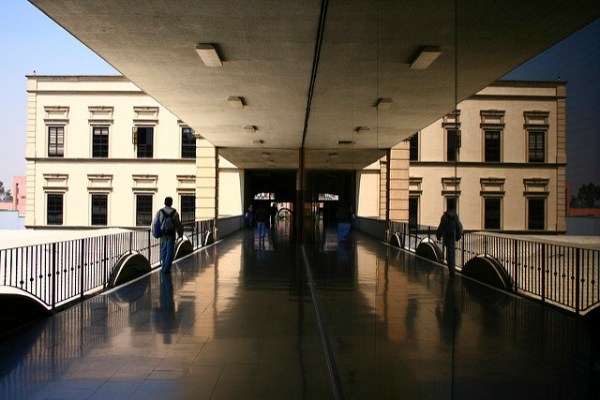
Tec de Monterrey

University students in Monterrey, Mexico. Photo Credit: ·júbilo·haku· / Flickr / Creative Commons

As the latest commodity boom winds down, universities in Latin America can play a leading role in helping the region rebound from the resulting economic slowdown and build itself a more prosperous and equitable future.  The consequences of the boom for economic, political, and social conditions in the region are hotly (and rightly) contested.  But one inescapable conclusion is that inadequate attention was paid to raising societies’ knowledge and qualifications in the production of goods and services.  This matters greatly, because knowledge gaps and skill deficits lie at the heart of what underdevelopment means today.  If the focus in the decades following World War II was on addressing disparities in industrialization, one of the challenges now is over-specialization in productive activities with low added-value of knowledge and qualifications.  When such specialization persists, social and environmental problems are not manageable in the long term.  Differences concerning knowledge and higher education are also one of the main factors behind inequality, in both North and South.  In Latin America, traditionally considered the most unequal region in the world, inequality in recent years has been reduced in a handful of countries and so has poverty in almost all of them.  But such social progress may be jeopardized soon not only because of economic and political changes but also because of quite weak progress made expanding knowledge capabilities and applying them to collective problems.

Universities are at the heart of the solution.  In the knowledge-based and innovation-driven economies that emerged in the North during the last decades of the 20th century, universities obviously made a difference.  They were fundamental actors in the accelerated expansion of advanced education that is closely connected with that type of economy.  They generated new scientific and technological knowledge and often channeled its use into productive activities.  Even then, in the advanced economies of the North private sector firms perform a quite larger proportion of total research and development than universities.  Moreover, Northern universities are mainly oriented by market demand, meaning that actors who are already knowledge-strong obtain most of the benefits of what universities do, fostering what could be called knowledge-based inequality.  This is different from Latin America in several ways:

  • Public universities in Latin America are the main generators of new knowledge, which is why they should get priority when thinking about the future of the region’s development.
  • They are frequently well plugged into National Innovation Systems, the web of actors and institutions responsible for upgrading productivity through the generation and effective use of new knowledge.
  • They represent a continuation, although at a weakened level, of the tradition of the socially committed university forged by the Latin American University Reform Movement.

In any country of the world, knowledge democratization deserves high priority in every progressive agenda – and Latin American universities are, at least potentially, fundamental actors in this task.  Democratizing access and success in higher education, and thus trying to overcome an ancient social divide that stymies development, is key.  The task also means fostering research in all disciplines and applying it to collective problems, as has occurred with research and innovation oriented to social inclusion.  The Latin American ideal highlights merging the modern university’s two long-established missions – teaching and research – with a third one, called “extension,” which entails cooperation with external actors in knowledge generation, cultural creation, and problem-solving, with priority given to the situation of deprived sectors.  As motors for knowledge expansion, and thus for social inclusion, Latin American universities make an invaluable contribution to development and the deepening of democracy.

April 28, 2016

* Rodrigo Arocena served as Rector of the Universidad de la República, Uruguay, from 2006 to 2014.


Latin America (Overall) Embraces Paris Climate Accord

By Fulton Armstrong

cop21 paris accord 2015

Heads of delegations at the 2015 United Nations Climate Change Conference in Paris. Photo Credit: Presidencia de la República Mexicana / Flickr / Creative Commons

Latin American support for the landmark climate agreement signed at the United Nations last week may not have been enthusiastic during the negotiations, but all but Nicaragua seem eager for early ratification and implementation of measures to mitigate the harm of global warming.  A record-breaking 175 countries signed the accord in one day, including a number from Latin America, committing them to take concrete steps to keep the increase in global temperatures from rising 2 degrees Celsius (or, ideally, 1.5 degrees) over preindustrial levels.  To take effect, at least 55 countries producing 55 percent of global emissions must ratify the agreement.  Fifteen small island nations, including several in the Caribbean, already presented their ratification papers last Friday.  China and the United States, the two greatest emitters of greenhouse gasses, have said they’ll ratify this year – as have France and other EU countries.

The region’s leaders have made significant contributions to the accord over the years.  Mexico and Peru, which were hosts of crucial international conclaves leading up to it, have given it a Latin American imprint, and others supported the final round of talks in Paris last December.  Brazilian President Dilma Rousseff’s reference in her speech to her political troubles back home overshadowed Brazil’s leadership, including its commitment to reduce its greenhouse gas emissions by 43 percent of 2005 levels by 2030.  In the past, ALBA countries complained loudly that the wealthy, developed nations, which produce the vast majority of climate-harming gasses, should shoulder the burden of reducing them and should compensate poorer countries for harm that environmental measures cause them.  All but Nicaragua, however, have submitted national plans (called an Intended Nationally Determined Contribution, INDC) required for full participation in international efforts under the Paris Accord.  Nicaraguan Representative Paul Oquist told the media that “voluntary responsibilities is a path to failure” and that wealthy countries should compensate Nicaragua for the $2 billion cost the measures would entail.

Latin America has clear incentives to support the accord.  Various scientific studies underscore the impact of global warming on the region, with potentially dire consequences.  The World Bank and Intergovernmental Panel on Climate Change have reported that failure to act would cause further extreme weather threatening agriculture; rapid melting of Andean glaciers that provide much-needed fresh water; erosion of coastal areas; catastrophic damage to Caribbean coral reefs; and dieback of Amazon forests.  ALBA demands for compensation may be overstated but contain a grain of truth – they aren’t prodigious producers of greenhouse gasses – and skepticism that the big guys will meet their targets isn’t entirely unwarranted.  President Obama has repeatedly demonstrated his personal commitment to addressing the problem, but obstacles posed by the U.S. Senate (which must ratify the agreement), Supreme Court (which in February stalled implementation of his Clean Power Plan), and politicians seeking the Republican Presidential nomination (who have sworn opposition to deals like the Paris Accord) have all but shut down U.S. movement toward ratification.  The ALBA outliers, on the other hand, have made their complaints heard and appear likely to join the rest of Latin America and the Caribbean in pushing for ratification and quick implementation – and probably will soon renew the push for even tougher measures by industrialized nations.

April 25, 2016

Cuba: Raúl Clarifies the Lack of Clarity on Future

By Fulton Armstrong

raul pcc congress

Photo Credit: Alexandre Seltz and Sarumo74 (modified) / Google Images / Creative Commons

The report that Cuban President Raúl Castro delivered to the 7th Party Congress last weekend walked a tightrope between pressing harder for change – embracing the importance of the small, emerging private sector – and reassuring party conservatives that the basic tenets of the revolution will not be touched.  He reiterated his commitment to step down in 2018 and promote younger cadre, but he left unclear what he proposes the Cuban system look like in the future.  He defended his decision to normalize relations with the United States, but used Washington’s continuation of the embargo and “democracy promotion” and immigration policies as a rationale for not letting down the Party’s guard.  Among key points:

On Conceptualización.  Castro said this Congress was basically to give “confirmation and continuity” to policies set five years ago to update Cuba’s economic and social model,  but it kicks off a process of consensus-building around a conceptualización, which he said “outlines the theoretical bases and essential characteristics of the economic and social model that we aim for as result of the updating process.”  Private property is a major topic, and Raúl sought to reassure the party that respect for it does not mean – “in the slightest bit” – a return to capitalism.

On reforms approved previously.  The road has been difficult, he said, held back by “an obsolete mentality that gives rise to an attitude of inertia and an absence of confidence in the future.”  He referred to the foot-draggers as “having feelings of nostalgia for other, less-complicated moments in the revolutionary process,” such as when the USSR and socialist camp existed.  But he insisted that the reforms have continued advancing at a steady pace – “without hurry but without pause.”

On upcoming reforms.  Castro talked more about what will not happen rather than any new vision.  He firmly ruled out “shock therapies,” and he said that “neoliberal formulas” to privatize state assets and health, education, and social security services “will never be applied in Cuban socialism.”  Economic policies can in no case break with the “ideals of equality and justice of the revolution.”  But he confirmed that one of the potentially most disruptive reforms – unifying currencies and exchange rates – must be done as soon as possible to resolve and many distortions.  On foreign investment, he called on the party “to leave behind archaic prejudices about foreign investment and to continue to advance resolutely in preparing, designing, and establishing new businesses.”

On Cuba’s economic model.  Castro acknowledged “the introduction of the rules of supply and demand” and claimed they didn’t contradict the principle of planning, citing the examples of China and Vietnam.  “Recognizing [the role of] the market in the functioning of our socialist economy,” Castro said, does not imply that the party, government, and mass organizations stand by and watch abuses occur.

On private and state enterprises.  He said the “non-state sector” – which includes “medium, small, and micro-enterprises” – is providing very important goods and services, and expressed hope for its success.  This sector will continue to grow, he said, “within well-defined limits and [will] constitute a complementary element of the country’s economic framework.”  Castro also called for greater reform efforts to strengthen the role of – and, simultaneously, the autonomy of – state companies, telling managers to overcome “the habit of waiting for instructions from above.”    He noted that the creation of cooperatives outside agriculture “continues in its experimental phase,” with some achievements and shortfalls.

On U.S. policies and intentions.  Castro criticized Washington’s efforts to drive political change in Cuba, which he called “a perverse strategy of political-ideological subversion against the very essence of the revolution and Cuban culture, history, and values.”  He said, “We are neither naive nor ignorant of the desires of powerful external forces that are betting on what they call the ‘empowerment’ of non-state forms of management as a way of generating agents of change in hopes of ending the revolution and socialism in Cuba by other means.” Castro said that U.S. officials recognize the failure of past policy toward Cuba but “do not hide that the goals remain the same and only the means are being modified.”

Rhetoric about forever rejecting capitalism (and multi-party democracy) is standard, especially for a Party event meant to assuage anxieties of conservative factions reluctant to give up their familiar, if failed, models.  The re-election of 85-year-old Vice President Machado Ventura is another sop to the aging right as the country inches each day to its biologically imposed transition, as Fidel Castro made explicit in his closing remarks.  The pace of change in Washington is also slow in some areas, particularly the embargo and the Administration’s “democracy promotion” strategies,  but pro-normalization voices cannot be faulted for lamenting that Cuba could more effectively influence U.S. policy through simple regulatory measures encouraging business deals that will give momentum to embargo-lifting initiatives in the U.S. Congress.  All politics is local, however, and both governments seem content holding off on changing their paradigms for now.

April 21, 2016