What does “Canada is back” mean in the Americas?

By Stephen Baranyi*

27950219435_acf41153d5_h

Mexican President Enrique Peña Nieto and Canadian Prime Minister Justin Trudeau during the “Tres Amigos Summit” in Ottawa, June 2016. / Presidencia de la República Mexicana / Flickr / Creative Commons

Canadian Prime Minster Justin Trudeau and his cabinet ministers’ statements following their election in October 2015 that “Canada is back” reflect a global strategy that is likely to give a boost to Canada-Latin America relations.  Canada never “left” the Americas during the decade of Conservative governments led by Prime Minister Harper, but the new administration is patching up its predecessors’ mixed record.  Building on the Americas Strategy launched in 2007, Ottawa signed new bilateral free trade agreements with Colombia, Peru and others; broadened its engagement in regional security affairs; and greatly increased its whole-of-government engagement in Haiti.  Canada played a major role at the Summit of the Americas in Panama (April 2015) and hosted the Pan American Games (July 2015).  Yet the revelation of Canada’s espionage in Brazil, visa restrictions on Mexicans, the poor reputation of some Canadian mining firms in the region, and its inability to reach a trade agreement with the Caribbean Community fed a growing desencanto in Canada’s relations with the region.

Through mandate letters issued to ministers in late 2015, the Trudeau government made clear that the Americas would remain an important priority, despite renewed emphasis on Asia and Africa, and that inclusive growth, the responsible governance of Canadian extractive activities abroad, and women’s and indigenous peoples’ rights would get emphasis in the region.  In June, Canada hosted the “Tres Amigos Summit” with NAFTA partners United States and Mexico.  Ottawa also announced that by December, Mexican citizens would no longer need visas to enter Canada, removing a big irritant in Canada-Mexico relations.  The government reaffirmed its partnership with Colombia by indicating its desire to make bilateral free trade more inclusive and announcing projects to support the implementation of peace accords.

  • Ottawa has opportunities for deeper involvement in these countries. In Mexico, Canadian interests will be served through a better balance between pursuing economic opportunities in sectors like petroleum and supporting Mexicans struggling to strengthen rule of law in a system compromised by corruption.  Colombia also requires a sophisticated whole-of-Canada engagement strategy, particularly since the failure of its referendum on the peace accords on Sunday.  Ottawa has signaled interest in continuing to support the rule of law and broader development in Haiti, but Trudeau’s ability to justify large expenditures there will depend on the completion of legitimate elections by February 2017.

Ottawa’s appointment of a new Ambassador to the Organization of American States (OAS) and commitment to revitalizing it as “the premier multilateral organization of the Americas” points to broader engagement on a regional level.  The Trudeau administration could join the Latin American and Caribbean trend on drug policy by decriminalizing the sale of marijuana at home and supporting reforms to OAS and UN counterdrug programs.  Assisting the implementation of the UN Small Arms Treaty, which Ottawa is poised to ratify, could also contribute to rule of law and security in the Americas.  Canada will also find many partners (from Chile to Costa Rica) to promote gender equality.  With regard to First Nations, Ottawa may be tempted to focus on funding new aid projects; yet Canada’s credibility will remain suspect until it ratifies the American Convention on Human Rights and ensures that all Canadian mining firms respect the rights of indigenous communities to free and prior informed consent in large-scale extractive activities.  The Trudeau government will probably monitor the multi-dimensional crisis in Venezuela, the situation in Brazil, and other challenges in the region – over which it probably lacks the leverage to make a significant difference but can lend moral authority to solutions.  Given its clear commitment to a global, rather than regional, strategy, the current administration is wise to carefully select entry points on which its thematic priorities align with opportunities in particular countries.

October 5, 2016

* Stephen Baranyi is an Associate Professor at the University of Ottawa’s School of International Development and Global Studies.  He also chairs the Latin America and Caribbean Group (LACG) of the Canadian International Council.  The author acknowledges his LACG colleagues’ input into this blog, while taking responsibility for its limitations.

Venezuela: Running Out the Clock in 2016

By Michael McCarthy*

venezuela-military

A military exercise in Caracas, Venezuela. The Venezuelan military remains tolerant, if not actively supportive, of President Nicolás Maduro’s government. / Cancilleria del Ecuador / Flickr / Creative Commons

Despite continuing high tensions in Venezuela, neither President Nicolás Maduro nor the opposition appears likely to gain an upper hand in their years-long confrontation over the next couple months.  Venebarómetro polls buttress press reports and observers’ impressions that the opposition is slowly making gains, but support for the government – while extremely low – has stabilized.  A plan to reschedule 2017 debt owed by the national oil company will probably give the administration some breathing room, especially if oil prices continue to recover – a more likely scenario thanks to OPEC’s announced production cut agreement.
  • The very high turnout for the opposition’s Toma de Caracas demonstration on September 1, which mobilized hundreds of thousands of people, showed the depth of support for the anti-Maduro platform. The Electoral Tribunal’s announcement last week of onerous requirements on the opposition to schedule a referendum to recall Maduro (requiring, for example, the signatures of 20 percent of residents of all states, rather than nationally) rekindled opposition anger and unity.  A Venebarómetro poll earlier this month showed that 90 percent of Venezuelans view their overall situation negatively, and 71 percent support Maduro’s immediate resignation, but that only roughly 50 percent identify with the opposition.  The Mesa de Unidad opposition coalition is under great pressure to satisfy different constituencies – promoting street mobilization and pursuing dialogue at the same time – even when these initiatives seem at counter purposes.  Hamstrung by coalitional politics, anti-Maduro forces have not shown the cunning needed to force a course reversal from the Electoral Tribunal.
  • While Maduro’s popular support remains extremely low (22 percent), an internal party revolt against him appears unlikely. The government’s big push for a deal under which PDVSA creditors would swap debt coming due in 2017 for generous new 2020 bonds is making headway, according to the press.  Enhanced short-term liquidity may result in increased imports, a development which cannot come soon enough for a government that faces a restive population that has seen quality of life deteriorate dramatically during the crisis.

The common wisdom that the military is at least tolerant, if not actively supportive, of Maduro still stands.  Armed Forces chief Vladimir Padrino López showed an independent streak during last December’s Parliamentary election but this has not translated into a public rivalry with Maduro.  He moved into the spotlight when Maduro tasked the military with taking charge of food distribution, but he has since kept a lower profile.  Other senior commanders’ political leanings are even more difficult to discern.  Appealing to the military is a key element of the opposition’s current strategy, but there are still no signs of an increase in the institution’s willingness to press Maduro to step down or even change policies.

Maduro’s time-buying strategy looks likely to prevail for now.  His repressive tactics toward the opposition – keeping pressure on while occasionally offering negotiations, prisoner releases, and other gestures – are gaining the government time but failing to address any of the underlying causes of the ongoing crisis.  The debt swap is also a palliative that only delays the implementation of major reforms.  Popular unrest, political instability, and even violence are the factors that might conceivably persuade the military that its support and patience are misplaced.  However, with the world watching, most of the opposition leadership wants to play by constitutional rules.  Those who consider the chances of success justify the human price of further ramping up protests may see their hand strengthened if government obstructionism kills the referendum this year.  Few Venezuelans, moreover, view possible talks with the Vatican and the United States as likely to produce a breakthrough.  Even if the government alleviates the pain a bit to generate some Christmas cheer, the country will wake up with a terrible national hangover in 2017.

September 30, 2016

* Michael McCarthy is a Research Fellow with the Center for Latin American and Latino Studies.  He is international associate for Venebarómetro polling and publishes Caracas Wire, a newsletter on Venezuela and South America.

El Salvador: Dealing with the New Reality of Violence

By Eric Hershberg

morazan-el-salvador

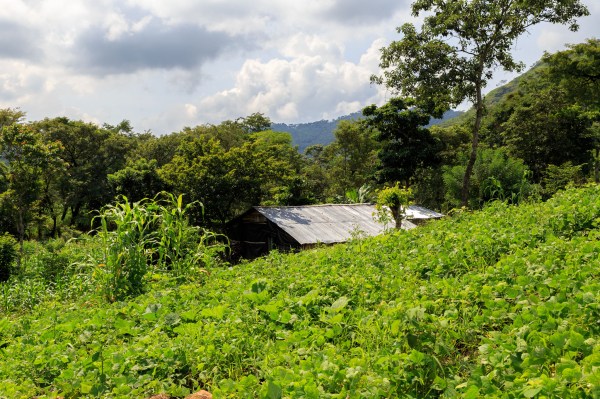
A farm in Morazán, El Salvador, a department that has maintained some sense of normalcy through its strong social organizations. / Cacaopera de Cerca / Flickr / Creative Commons

A surge in violence in El Salvador over the past five-plus years demands a more comprehensive and inclusive strategy than the ongoing Plan El Salvador Seguro.  A rigorous and highly readable study released last month by the Instituto Centroamericano de Investigaciones para el Desarrollo y el Cambio Social (INCIDE) employs quantitative and qualitative data to demonstrate that the pattern of violence in El Salvador has worsened.  Murders increased 66 percent in the 2010-2015 period; the murder rate of 102.9 per 100,000 inhabitants in 2015 made it the most violent year in decades.  Multiple-victim murders increased 126 percent in the same period, and murders of women skyrocketed 750 percent – from 40 in 2012 to 340 in 2015.  Gang-on-gang violence has produced a 72 percent increase in deaths, while armed confrontations between gangs and state personnel are growing more frequent.  Kidnappings and disappearance have surged.  For the first time since the end of the civil war in 1992, El Salvador has experienced forced displacements, both within the country and to other countries, most notably an unprecedented flow of rural Salvadorans into Nicaragua.

The 2012-2013 truce among the gangs and the government of then-President Mauricio Funes reduced violence somewhat, but INCIDE notes that it also allowed gangs to consolidate their control over territory while government planners failed to address the deeper causes of the violence.  While documenting that Salvador Seguro has had some positive results and won support, the study posits that the current strategy of frontal attack on gangs has also eroded the social and community fabric that represents an essential intangible asset for durable success in reducing violence.  Many communities live in fear of violence from all sides.  The INCIDE report emphasizes that the causes of spiraling violence are complex, deeply rooted, and require integrated responses tailored to specific conditions in different territories.  What is needed, says INCIDE, would be a strategy that:

  • Shuns one-size-fits-all national solutions. The government has failed for years to understand that the drivers of violence and stability are different across territories throughout the country.  INCIDE advocates the creation of a “territorial map” detailing each community’s security situation, the resources it can bring to bear against violence, and what it needs from national-level programs in order to strengthen local communities.
  • Empowers those local communities. A comparison between two locales – in Morazán and Jiquilisco – revealed that the former, which has fewer police and army personnel than the latter, has been able to maintain a more normal way of life because it has strong social organizations and a social commitment to preventing violence through informal vigilance, youth programs, and cooperation with authorities.  Jiquilisco lacks these assets and lives essentially in lock-down mode.

More research and better-targeted territorial strategies are certainly essential, but even INCIDE’s Director, Alexander Segovia (who was a senior aide to President Funes and principal author of the INCIDE study), wouldn’t say they will guarantee success.  In an extensive interview with the on-line magazine Revista Factum, he blamed the failure to stem the violence on the “negligence of the economic, political, and intellectual elites” of the country.  He asserted that El Salvador must “change perspectives – to examine how it’s been dealing with the topic of violence and insecurity, from the design of public policies to the participation of the different actors who make up society.”  Prevailing approaches emphasizing sectoral solutions – strengthening agriculture, industry or tourism in affected areas – have been too piecemeal to bring results.  INCIDE’s research underscores the need for a more inclusive, comprehensive approach tailored to specific local conditions.  Mobilizing and fostering cohesion in communities victimized by the violence may be a lot more difficult, but it is also potentially the most successful means to a solution.

Click here for the full text of INCIDE’s report and here for Director Alexander Segovia’s interview with Revista Factum.

September 26, 2016

As Mexico “Absorbs” Central American Refugees, Record Numbers Reach the U.S.

By Dennis Stinchcomb

uac-family-unit-apprehensions_aula-01

The meeting of world leaders that President Obama convened on Tuesday to rally support for refugee resettlement and inclusion across the globe was good diplomacy but contradicts Washington’s policies even in the Americas.  At a meeting on the margins of the UN General Assembly, Obama thanked Mexico for “absorbing a great number of refugees from Central America,” yet the data make clear that Mexico is hardly absorbing refugees.  During the first seven months of 2016, as WOLA has reported, Mexico granted asylum to just under 1,150 Central Americans but deported over 80,000 others.  Meanwhile, far greater numbers of Central Americans have reached the U.S., principally women with children (whom U.S. Customs and Border Protection labels “family units”) and minors traveling without a guardian (“unaccompanied children”).  With one month remaining in Fiscal Year 2016, apprehensions of Central American women with children total over 61,000 – up 79 percent from FY15 – and are on pace to surpass the FY14 record.  Likewise, apprehensions of unaccompanied children have already exceeded the FY15 total, and September numbers will likely push the current tally of 42,000 just shy of the FY14 record.

This renewed influx comes despite the Obama administration’s multi-pronged strategy to deter unauthorized migration from the Northern Triangle countries of El Salvador, Guatemala and Honduras:

  • U.S. support for Mexico’s Southern Border Program has resulted in unprecedented numbers of both detentions and deportations of Central Americans in Mexico, yet the dramatic increases in arrivals to the U.S. and shifting points of entry – including an upswing in seaborne trafficking – suggests that the exodus from the Northern Triangle continues and that human smugglers have adapted to stepped-up enforcement measures by forging new routes through Mexico.
  • Ongoing raids by U.S. Immigration Control and Enforcement (ICE) authorities, which under the banner of Operation Border Guardian aim to roundup unaccompanied youth who had been ordered deported from the U.S. and have recently turned 18, have not stemmed the tide of new arrivals fleeing untenable circumstances in their countries of origin.
  • Despite a July 2016 expansion of the CAM Program for in-country processing of youth applications for refugee status and for others in Central America asserting that they are at risk of harm, the pool of beneficiaries remains miniscule. Whereas the program had received 9,500 applicants by mid-year, only around 270 had been resettled in the U.S. With a six- to eight-month processing period and room for only 200 applicants at a time at shelters that have been set up in Costa Rica, desperate Central Americans continue to turn to more efficient human smugglers.
  • Public messaging campaigns launched in the region with U.S. government funding, to warn Central Americans of the dangers involved in irregular migration and to dispel misperceptions regarding U.S. immigration policies, also appear fruitless, as outlined in a recent American Immigration Council report).

President Obama’s efforts to galvanize international action in response to forced displacement worldwide highlight his own administration’s shortcomings in addressing refugee flows closer to home.  Expedited hiring of border patrol agents and an increase in the number of beds at contract detention facilities, among other domestic measures, have enabled the administration to process large volumes of Central American migrants while avoiding the appearance of a “border crisis” akin to 2014.  Meanwhile, an emphasis on curtailing outflows from Central America (without regard to the justification of people’s decision to flee), detention (rather than absorption) in Mexico, and deportation in both Mexico and the U.S. has not been matched with analogous investments to address the needs of Central American migrants already in the U.S. who may have legitimate claims for asylum or other forms of protection.  Central American families and unaccompanied children, for example, now account for over one-fourth (26 percent) of the 512,000-case backlog in immigration courts, yet only 53 percent of families and 56 percent of unaccompanied minors have access to attorneys.  In failing to guarantee legal representation for these vulnerable populations the administration is sidestepping the same moral obligation to thoroughly vet and provide safe, inclusive communities for refugees that President Obama challenges other governments to fulfill.  Perhaps funding that is supporting Mexico’s strategy of detention and deportation could be better allocated to programs that ensure proper adjudication of asylum claims – in both Mexico and the U.S. – and to genuinely seek to absorb individuals and families who, through due process, are judged to qualify as refugees.

September 22, 2016

Nicaragua: A New Family Dynasty Taking Root

By Aaron T. Bell*

nicaragua-0919l

Left: Photo of Daniel Ortega celebrating his latest presidential triumph (July 20, 2012) / Fundación ONG de Nicaragua / Wikimedia / Creative Commons; Right: Anastasio Somoza DeBayle / DemonSabre / Wikimedia / Creative Commons

Events in Nicaragua this summer have demonstrated that President Ortega and his family have a vision for the future that erodes a key element of political democracy – the replacement of the executive through free and fair elections – and risks establishing a dynasty of corruption and authoritarian rule.  In May 2016, President Daniel Ortega of the Frente Sandinista de Liberación Nacional (FSLN) announced his candidacy for a fourth presidential term – his third consecutive.  Since then the government has taken several steps to ensure that Ortega and his family remain in power in November’s elections for President and National Assembly, and beyond:

  • Voting irregularities, a lack of transparency, and accusations of fraud have marred several successive elections since Ortega’s return to power in 2007. In June of this year, Ortega announced that he would not permit international election observers to monitor this fall’s elections.
  • Weeks later, the Supreme Court stripped opposition leader Eduardo Montealgre of his position as head of the Partido Liberal Independiente (PLI) and replaced him with Pedro Reyes, considered by observers to be an Ortega ally. In July, Nicaragua’s electoral council removed 16 sitting members of the National Assembly and 12 alternates after they refused to recognize Reyes.
  • In August, Ortega announced that Rosario Murillo, his long-time partner and wife since 2005, would serve as his vice presidential candidate in the November election. Murillo has been a prominent figure in the Ortega government while serving as both first lady and chief spokeswoman.  Her political ascension is complemented by the rise to prominence in recent years of her and Ortega’s children as operators of business and media interests, including the couple’s eldest son and presidential adviser on investments, Laureano Facundo, who helped sell the stalled interoceanic canal project to Chinese businessman Wang Jing.

Nicaragua’s opposition parties have thus far been unable to mount an effective response and have shown the lack of cohesion and focus that have plagued them for decades. Montealgre announced that the coalition led by the PLI would boycott the election and called on others to do the same.  But rather than present a united front, opposition leaders are fighting amongst themselves to seize the mantle of leadership and challenge Ortega through several competing parties and coalitions.  This will be no easy task: polling conducted by M&R Consultores this summer shows that over 60 percent of voters are likely to vote for Ortega, with the leading opposition parties drawing low single digits.  Over a quarter of potential voters said they were unsure whom they would vote for.  With the opposition beset by division and lacking much legitimacy – tainted as they are by a history of corruption, self-interest, and financial support from the United States – it is unsurprising that protests and civil unrest have been largely absent.  The ouster of the PLI delegates has also stirred the FSLN’s old opponents outside the government, who have been largely quiescent in recent years but condemned the decision: the Bishops of the Episcopal Council, the Nicaraguan-American Chamber of Commerce, and the Consejo Superior de la Empresa Privada (COSEP), the largest business chamber that has enjoyed a working relationship with the Ortega government.

The FSLN’s authoritarian turn, Ortega’s long reign, and the rise to prominence of both Murillo and the couple’s children invite comparisons between Ortega and Somoza family dynasties.  It may be from COSEP and the business sector, rather than among the weak and divided political opposition, that a serious challenge to Ortega could eventually emerge. It was after all the defection of non-Somoza family interests in the private sector, combined with a popular insurrection led by a guerrilla insurgency, that did away with Nicaragua’s previous family dynasty.  But that combination only emerged following the shock of the 1972 earthquake and resulting massive corruption, the assassination of a national figure like Pedro Chamorro in 1978, and the particularly bloodthirsty turn that the Somoza regime had taken. With similarly game-changing circumstances absent at this juncture, the sort of cross-sector revolutionary movement that ultimately toppled the Somozas appears unlikely.  For the moment at least, an Ortega family will be well on its way to firmly preserving its dynastic power come November.

 September 19, 2016

* Aaron Bell is an Adjunct Professorial Lecturer in History and American Studies at American University.

Mexico: Environmental Initiatives Likely to Stir Things Up

By Daniela Stevens*

mexico-environment

Mexico City’s Reforma axis under a blanket of smog / Lars Plougmann / Flickr / Creative Commons

Mexico has made a big push on climate issues over the past month that could have far-reaching consequences internally and in the hemisphere.  On August 16, it announced a pilot Emission Trading System (ETS), also known as “cap-and-trade,” that will begin a simulation in November and officially initiate trading carbon permits in 2018.  Two weeks later, at the second Climate Summit of the Americas (CSA), the Mexican federal government signed a joint declaration with the Canadian provinces of Ontario and Québec to advance “cooperation activities on carbon markets.”  Mexico’s motives are not immediately clear.  For a middle-income nation, with annual growth (around 2 percent) compromised by the crash in oil prices, an ETS represents a potentially significant economic burden.  Mexican officials have not explained, moreover, how they might link their cap-and-trade to the Canadian provinces’ systems and to the Western Climate Initiative (WCI), North America’s largest carbon market and the second largest in the world.

The moves may be driven by increasing Mexican belief that more assertive, market-oriented approaches are necessary to meet its international commitments.

  • Mexico is dependent on fossil fuels for over a third of its total energy production, wreaking havoc with the country’s air quality. Over the last few months, Mexico City decreed several “environmental contingencies,” situations of abnormally high concentrations of ozone in the atmosphere.
  • Moreover, Mexico may be seeking the advantage that increased regional cooperation represents. Its international commitments on emission reductions are very ambitious, and a linkage to its North American partners lends itself almost as a natural solution to help in the advancement of its pledges.  Mexico could export sectoral offsets that American and Canadian partners need – contributing to Mexican revenues and to market stability.  Mexico would also benefit from the resulting transfer of information expertise, technology, training, and methodologies.
  • An important first step for the Mexican authorities would be to commit the resources to establish the robust institutional mechanisms and capacities to launch, monitor, enforce and sustain a system as intricate as a national ETS, and only after that, lend itself as a reliable partner in an internationally linked market.

The details of the pilot ETS have not been publicized, and the agreement with Québec and Ontario does not establish commitments beyond “identifying opportunities for linking systems as much as possible.”  Mexican companies already voluntarily buy and sell carbon bonds on a small national market – a system complemented by a carbon tax in place since 2013 – but an enforced and internationally linked market would highlight the disparities among the North American nations – and represent a challenge to Mexico.  Unlike its partners, Mexico is still an industrializing nation, with a thriving motor vehicle industry, and industrializing nations have traditionally been reluctant to pricing emissions.  Industrialized countries are the highest historical emitters and reached that status of development by polluting without paying the price.  Although the need to prioritize economic growth does not exempt Mexico from fulfilling its commitments as the eleventh highest global emitter, it does signal that besides opportunities, Mexico faces challenges with trading partners at different stages of development.  The Climate Summit of the Americas showed, however, that regional fora and of subnational partnerships can further environmental commitments beyond the global and national summits.  The CSA signaled an opportunity for the region to develop North American or, more ambitiously, hemispheric solutions to climate change.

September 15, 2016

* Daniela Stevens is a PhD candidate in the American University School of Public Affairs.  Her research focuses on national and subnational policies that put a price on carbon emissions.

Cuba: Time to Move Ahead with Reforms

By Ricardo Torres*

cuba-economy

Oil drums and a tobacco curing hut near Viñales, Cuba / Adams Jones / Flickr / Creative Commons

The economic challenges that Cuba currently faces probably do not signal the beginning of a new Período Especial – the profound crisis Cuba experienced in the 1990s – but they are a painful reminder of the country’s chronic structural problem: the inability to generate enough hard currency to develop the economy and the failure of efforts to overcome that obstacle so far.  The immediate predicament was caused by a combination of internal and external factors, including the Venezuelan crisis and the low prices for certain Cuban exports.  (Ironically, oil byproducts from a refinery in Cienfuegos, which Cuba jointly owns with Venezuela’s PDVSA, have become a leading export.)  Venezuela is affecting income from services that Cuba sells there (in particular that of medical doctors) as well as a drop in the supply of oil products, which has covered about a half of Cuba’s needs.  This has placed extreme stress on Cuba’s external finances and forced a significant economic adjustment.  The government has imposed restrictions on energy consumption and a reduction in imports and investments – with important recessionary effects on an economy that desperately needs growth.  The energy rationing has fueled fears that the country could repeat the deep shortages of the early 1990s and again experience one of the most powerful symbols of that period: blackouts.

The situation is serious, but a crisis on the scale of the Special Period does not appear to be on the horizon.  Cuba today has a more diversified economy and produces a significant portion of its own energy, and the majority of the population has other sources of income to cushion themselves during bad times.  Most creditors and suppliers have shown confidence in their ability to move ahead.  In July, important contracts were announced for French companies to expand and operate Havana’s airport, which has been overwhelmed by the increase of international visitors (one of the few bright spots in the economy this year) in tandem with the improvement in relations with the United States.  Early this month, Cuban officials made presentations to firms from around the world on the government’s timely interest in renewable energy.  They emphasized the great opportunities that exist, not just current problems.

Once again, a close partner’s difficulties have put Cuba in a bind – too many times in too short a period.  Moreover, these problems arise at a politically sensitive moment.  Cubans are discussing the new model and development strategy through 2030, and – while Cubans are expecting results after six years of reform – President Raúl Castro has little time remaining in office.  The current complications can further delay essential monetary and exchange reforms.  Cuba needs to fix its foreign trade to supply oxygen for dynamic activities, such as its booming private sector.  Its development potential can’t rely just on its mystique as la Perla del Caribe.  Today’s challenges are an opportunity to remove the obstacles to changes that already have been announced, such as by accelerating the heretofore slow and ineffective implementation of agreed policies on foreign investment.  Some multilateral financial institutions can help, but Havana’s recent agreement with the Corporación Andina de Fomento (CAF), while a positive signal, is not enough.  The short-term answer is clear:  Only a combination of structural measures can guarantee that this latest economic crunch will be the last.

September 12, 2016

*Ricardo Torres is a professor at the Centro de Estudios de la Economía Cubana at the University of Havana and a former CLALS Research Fellow.

Colombia: Peace by Pieces

By Angelika Rettberg*

colombiapaz

Photo Credit: Government of Venezuela / Public Domain.

Despite challenges ahead, the Colombian state’s confrontation with one of the longest active revolutionary groups in the Western Hemisphere appears likely to reach closure by December.  As Colombian writer Héctor Abad has said, the peace agreement preliminary signed on August 24 is long, imprecise, often ambiguous, and tedious – certainly not a piece of entertaining literature – but it is the most eagerly awaited, downloaded, shared, and controversial official document in recent Colombian history.  The signatures of Colombian President Santos and FARC leader “Timochenko” are still pending, as is the result of a national plebiscite, to be held on October 2.

  • Humberto de la Calle, the government’s chief negotiator, defined the agreement as the “best possible” – a lukewarm description that fits well a process that has been rather anti-climactic. President Santos, who started the peace process and staked his reelection (which he barely won) on it two years ago, was more emotional and said, “Today, August 24th, we can say that hope has become reality.”
  • The agreement has already made permanent a cease-fire between the two sides. FARC fighters have begun to gather in the areas in which they will hand in their weapons and await the initiation of transitional justice proceedings.

Even if “yes” wins in the upcoming plebiscite – as surveys now predict – this peace by pieces presents challenges.  The accord has accomplished more than any Colombian process before and, by many normative international and academic standards, has been better designed and more professionally negotiated than any other Colombian accord.  It does not seem, however, to awaken most Colombians’ enthusiasm.  A generalized apathy or, in many cases, open disapproval of the negotiations can be linked to the absence of a sense of conflict-related crisis, especially in urban areas, where there has been a steady decline in battle-related casualties for years.  In addition, as the World Bank and international media have reported, Colombia’s economic performance has been steadily improving.  No longer the Andean problem case, Colombia is now a preferred destination for international investment in Latin America.  The “paradox of plenty, Colombian style” – success in promoting security and investment amid conflict resulting – has ended up eroding support of peace negotiations.

International support for several peace-building tasks will not translate into enormous amounts of desperately needed resources.  FARC demobilization, victims’ reparations, and addressing the needs of the most conflict-affected regions of the country will carry a big price tag for years to come.  Most economic and political resources for implementing the agreements will need to be raised domestically, and local authorities and communities will be increasingly reluctant to prioritize the needs of conflict-related social groups.  In addition, much needed fiscal reform will further affect political support for the government.  A core group of economic elites have backed negotiations unconditionally and have been well represented at the table.  However, the costs and vagaries of the implementation process will strain the support of peace´s crucial allies.  In this context, it will be difficult for any leading candidate to fully endorse the agreements in the upcoming presidential election of 2018.  Considering these limitations, not only the peace agreement, but also the resulting change, may only be “the best possible.”

September 7, 2016

* Angelika Rettberg is Associate Professor in the Political Science Department, Universidad de los Andes, in Bogotá.

Peru’s Frente Amplio: The Emergence of a Post-Extractivist Left

By Carlos Monge*

OperacionesYanacocha

An abandoned gold mining project in the Cajamarca region, Peru / Wikimedia / Creative Commons

The surprising emergence of the Frente Amplio (FA), a coalition of political parties, social organizations and independent activists, in Peru’s recent presidential and congressional elections signals the first significant support for the Peruvian Left since the collapse of the Izquierda Unida in the 1980s.  The Left was not able to present its own alternatives in the ‘90s, the early 2000s, and again in 2011.  In October 2015 barely 13 percent of Peruvians knew about FA’s internal election to select presidential candidates.  Veronika Mendoza had the support of only 1 percent of intending voters, and over 60 percent of Peruvians did not even know who she was.  Nevertheless, FA ended up receiving 18.74 percent of the vote in the first electoral round, coming in third and only a couple of points behind Pedro Pablo Kuczynski (PPK), who secured 21.05 percent and ended up defeating the Fuerza Popular’s candidate, Keiko Fujimori, to become President for the 2016-2021 period.

FA’s “post-extractivist” program has been key.  Breaking away from the nationalist redistributive programs of leftists in Venezuela, Ecuador, Bolivia, Brazil, and Argentina, FA espouses economic diversification and tax reform rather than more mineral or hydrocarbon exports to sustain economic growth and public incomes.  FA also emphasizes the need to protect the environment and renewable natural resources for future generations and to recognize indigenous rights to territories, autonomy, direct political representation and effective consultations.

  • These are not only electoral campaign ideas. Indeed, FA local activists and national leaders have maintained staunch opposition to emblematic mining projects such as the Conga project in the northern Cajamarca region and the Tía María project in southern Arequipa.  In the same way, FA is denouncing that the new government is trying to lower air quality environmental standards to ease foreign investments in mineral smelters and has harshly criticized the new Minister of Production for abandoning the National Plan for Productive Diversification launched by the outgoing Ollanta Humala administration.
  • Frente Amplio is grounded in social movements that have long confronted extractivist projects. Veronika Mendoza left President Humala’s Nationalist Party in 2012 in a dispute over his repressive response to socio-environmental protests around mining projects in the highlands of her native Cusco.  Tierra y Libertad, FA’s largest party, has its roots in the Cajamarca rondas campesinas resistance against the Conga project.  Another factor is that the end of the commodities “super cycle” has moved extractive rents off center stage.  Even in Venezuela the official discourse is now moving in the direction of economic diversification.

Frente Amplio is not alone in Latin America in attempting to build a post–extractivist platform, but it seems to be the region’s most successful.  Similar policies were at the heart of the presidential campaign of Alberto Acosta and a coalition of social and indigenous organizations in Ecuador.  And in El Salvador, the Farabundo Martí government is also keeping extractivist temptations at bay.  But Acosta did not manage to get significant support or to build a stable political alternative, and El Salvador is not a major commodity exporter.  The importance of the FA experience is that it happens in a significant mineral and gas producer, that it has had immediate electoral success, and that it can become a permanent political player in Peruvian democracy.  FA and PPK will probably agree on issues such as the fight against corruption, crime, and violence against women, but they will certainly disagree over macroeconomic and sector policies, such as taxes.  Also, FA has denounced PPK for his call to lower air pollution standards and for his authorization to large fishing factories to operate up to 5 km off the coast, leaving very little for artisanal, small scale, internal market-oriented fishing activities.  Where this ends up is anybody’s guess, but this is certainly a process worth keeping an eye on.

August 29, 2016

*Carlos Monge is Latin America regional director at the Natural Resource Governance Institute in Lima.

Can Latin America Escape the Middle-Income Trap?

By Rick Doner and Ben Ross Schneider*

challenges logo (revised)2

Photo Credit: Inter-American Development Bank / CLALS / Edited 

Most literature on the “middle-income trap,” widely understood as a core obstacle to sustained development in Latin America, focuses solely on economic dynamics and understates the importance and challenges of political coalition-building.  That literature, largely generated by economists in academe and international financial institutions, argues convincingly that in Latin America, as well as Southeast Asia, once countries achieve some degree of success in economic development, they get stuck.  They are unable to compete with low-cost producers in traditional sectors – initial development success brings higher wages and other costs – while they also have failed to gain the capacity to compete with developed economies in frontier industries, where technological capabilities and productivity levels are far higher.  These analysts stress that Argentina, Brazil, Chile and Mexico – or for that matter Indonesia, Malaysia and Thailand – need to build on their achievements over the past half century in order to make the leap into the ranks of the world’s most prosperous nations.  They highlight the trap’s proximate origins in productivity slowdowns and recommend policy solutions that focus on improving human capital through investment in education and vocational training.  But identifying problems and potential solutions does not explain why leaders fail to adopt the solutions.  In other words, it’s not clear from existing writings why the trap is actually a trap.

The literature does not acknowledge that fundamental political obstacles, especially lack of effective demand and pressure for these solutions, are at the heart of the problem.  As is evident from the history of failed programs to improve education and R&D, political will to invest in such public goods is in short supply.  Politicians are rarely willing to forgo the short-term political benefits of satisfying entrenched interest groups for the long-term developmental benefits of creating institutions capable of helping the broader citizenry to upgrade its capacity for technology absorption.  A core reason for this lack of political will is the weakness of the societal constituencies that might demand the necessary policies and effective institutions.  Our research indicates that relations among key societal actors in middle-income countries are less amenable to building the consensus that economists advocate. In a recent article, we argue that the same conditions that facilitated or accompanied movement to middle-income status – such as foreign investment, low-skilled and low-paid work, inequality, and informality – have generated political cleavages that impede upgrading policies and the construction of institutions necessary to implement them.  This fragmentation is why the trap is a trap. Three lines of fragmentation are key:

  • Big business is divided between foreign and domestic firms. The former can undertake productivity-improving measures in-house and/or at their home headquarters, whereas local firms tend to focus in non-tradeable services and commodities whose demand for better training and R&D is lower than in manufacturing.
  • Labor is fractured between formal and large, growing informal sectors. Enjoying longer job tenure and on-the-job training for specific skills, formal workers have little interest in broader skills development.  Informal workers, on the other hand, constantly shift jobs and would prefer investments in vocational institutions offering general training.
  • These societies remain overall less equal and, as is now well known, inequality undermines the will and capacity to provide broad public goods such as quality universal education and support for technology development.

 Pro-growth coalitions of various types have been key to productivity improvements in now-high income East Asian countries, such as Korea and Taiwan.  The fact that these countries had stronger (and more autocratic) governments does not preclude developing or building on such coalitions in countries with messier political systems and weaker bureaucracies.  First, leaders can build on sectoral pockets of high productivity, such as aquaculture in Chile, wine in Argentina (and rubber in Malaysia).  Second, international and regional institutions can help supplement demands for skills by supporting programs that focus on technical and vocational institutions that actually meet and are linked to employers’ needs.  Third, organizations such as the ILO can promote business associations that represent the local firms for whom collective technical training and R&D are especially important.

August 22, 2016

* Rick Doner and Ben Ross Schneider teach political science at Emory University and MIT, respectively.