Guyana’s “New Decade” Begins in March

By Wazim Mowla*

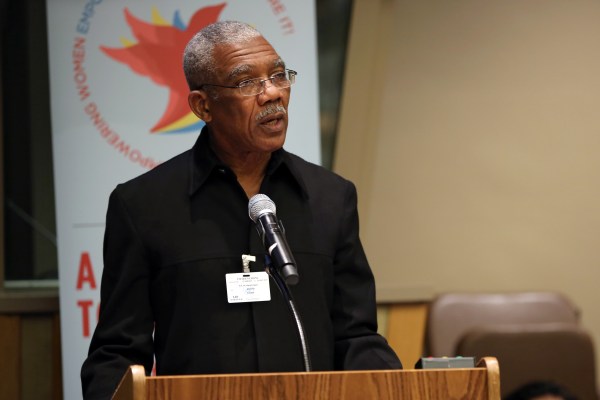
President David Granger speaking at a UN Women's Meeting

Guyana President David Granger Speaking at a Global Leaders’ Meeting on Gender Equality and Women’s Empowerment in 2015 / Flickr / Creative Commons License

Guyana’s national and regional elections on March 2 will be its most consequential in 30 years as a huge increase in oil revenues and international interest puts the country in a brighter spotlight, but the country’s new leadership – while having greater resources and opportunities – will still face vexing challenges that oil dollars won’t solve. Guyana continues to discover more oil and has produced its first commercial crude shipment in December 2019. ExxonMobil anticipates that the country will reach a capacity of 120,000 barrels per day this year, and the International Monetary Fund (IMF) estimates an 86 percent increase in GDP. This growth has energized the election campaigns.

  • Eleven political parties are campaigning, with the A Partnership for National Unity + Alliance for Change (APNU+AFC) coalition and the People’s Progressive Party/Civic (PPP/C) at the clear head of the pack. Reliable poll data is scarce, but incumbent President David A. Granger (APNU+AFC) appears confident in his reelection. He is proposing a new “contract with the people” under which he will use oil revenues to increase conditional cash transfers for food, housing, and transportation to residents in the populous coastal areas as well as invest in projects benefiting the 10 percent of Guyanese who live inland .
  • Representing the PPP/C is presidential candidate Dr. Irfan Ali, whose party narrative is that it helped build Guyana without oil and gas and will continue this progress by expanding social programs with the additional revenue. Specifically, Ali wants to reopen sugar estates that Granger closed, sparking protests by the Guyana Agricultural Workers Union (GAWU). To demonstrate its intention to tackle crime, the party has selected Brigadier (retired) Mark Phillips as its Prime Ministerial candidate.

Within the context of Guyana’s highly publicized racial divisions, both political parties are calling for national unity. APNU+AFC has traditionally drawn most of its support from the Afro-Guyanese population (about 30 percent of the population), while the PPP/C leans on the support of Indo-Guyanese citizens (about 40 percent) – while the mixed races (20 percent) and indigenous (10 percent) usually the swing voters who determine the election. The historic racial divisions within the domestic political elite have remained unnaturally suppressed during this election season – perhaps because, for the time being at least, oil is dominating the national dialogue. All political parties understand that Guyanese citizens care more about benefits than the party in power.

While projecting an optimistic vision of Guyana’s future, both major political parties certainly know that oil revenues will not resolve all of country’s problems when it enter what Granger has called its “Decade of Development.” Ethnopolitical divisions are certain to reemerge after the election, and managing suspicions about the use of oil revenues will pose a significant challenge to the victors, especially because the country’s current institutions do not afford the transparency and checks and balances necessary for calming anxieties. The new government is going to have to devise difficult policies on dealing with climate change, the damage to Guyana’s human capital, and the security risks threatening the country’s development.

  • Guyana’s sea level is rising faster than the global average. Large parts of the population live in areas 20 to 40 inches below sea level where groundwater extraction and wetland drainage worsen flooding. Inconsistent weather patterns are disrupting agricultural production, and the country’s sea walls do little to prevent the devastation of crops.
  • Guyana has one of the highest suicide rates in the world – an average of 44 per 100,000 people each year – and gender-based violence is also an increasingly serious problem. A recent survey by the Guyana Bureau of Statistics found that about half of all Guyanese women has experienced or will experience intimate-partner violence.
  • The country also needs to find solutions to threats from outside. The crises in Venezuela and Haiti have already triggered a costly refugee flow, and officials fear the country will become a hotspot for drug and human trafficking and organized crime. Experts expect the oil industry to attract illegal immigration from other Caribbean countries, Venezuela, and South America in search of job opportunities. Once the elections are over, political leaders will have to turn their attention to these troubling realities.

February 21, 2020

* Wazim Mowla is a graduate student at American University, specializing in Caribbean Studies.

Why Are Chile’s Protests Continuing?

By Pablo Rubio Apiolaza*

protests in chile

Protests began in Chile October 2019/ Diego Correa/ Flickr/ Creative Commons License

Chile’s political agreement in November to hold a referendum on the country’s Constitution in April reduced protests for a while, but the underlying causes of discontent – deep-seated frustration among many Chilean citizens – continue to fester and drive an array of peaceful and violent protests. Since November, President Sebastián Piñera has promoted an aggressive social agenda, including raising the minimum wage and improving the pension system. A survey by the Center for Public Studies (CEP) in Santiago in early January, however, found that Piñera’s approval rating was around 6 percent – the lowest of any president since Chile’s return to democracy. By almost all accounts, distrust in the government and anger at the corruption of politicians and corporations remains deep. People want solutions “here and now” to many of their demands. Both peaceful and violent protests have continued through the traditionally quiet summer break.

The mobilizations are not as spontaneous as they were in October and November, according to many observers, but there’s little evidence of a conspiracy to disrupt the referendum agreement.

  • Trade unions and traditional social movements organized under the banner of the Mesa de Unidad Social have become important actors, but new activists have also emerged. The loosely organized “Primera Línea” (front line) has engaged in violent clashes with the Carabineros, mainly in Santiago. Anthropologist Magdalena Claude observed and interviewed some members of Primera Línea in January and called them the “ACAB clan,” borrowing an acronym popularized by British punk rockers proclaiming that All Cops Are Bastards. According to Claude’s research, the group is composed of young workers of the service sector, not members of political parties. They do not have a recognized leadership and organize in horizontal networks.
  • Some conservative Chileans are denouncing the protests as the result of “foreign intervention” and a “coup d’état” provoked by the “extreme left.” They cite as evidence a New York Times report on January 19 that the U.S. State Department estimated that nearly 10 percent of all tweets supporting the October protests originated with Twitter accounts that appeared to have links to Russia. Allegations of foreign intervention by Venezuela and other countries have been endorsed by Chilean Foreign Minister Teodoro Ribera and President Piñera. Neither the U.S. nor Chilean government has provided evidence to support any of these claims.

Damage to the government’s credibility and reputation since October seems likely to continue to embolden opponents in the runup to the referendum. Carabinero abuses have been verified and condemned by a host of observers, including Human Rights Watch, Amnesty International, the Inter-American Commission on Human Rights, and various Chilean organizations. The UN High Commissioner for Human Rights, led by former Chilean President Michelle Bachelet, has detailed “multiple allegations of torture, rape and other forms of sexual violence by the police against people held in detention.” More than 30 people have died in protests and, although the great majority of the tens of thousands of protestors detained have been released, anger over their arrest is fresh. The government has convened 15 experts to develop recommendations to reform the Carabineros – to enable them to move “forward with urgency the recovery of the public security with absolute respect for human rights” – but challenge of building public trust will be monumental.

  • A prestigious Chilean polling firm, Cadem, reported two weeks ago that 63 percent of the Chilean population approved of the protests and – importantly – 80 percent believe that Chile will be a better country after this critical situation. In any case, the plebiscite in April will take a place in an unstable context, with an uncertain outcome. For the Piñera administration, the challenges seem unlikely to abate, and pressures may surge when the school holidays end in March.

February 19, 2020

* Pablo Rubio Apiolaza is a historian, visiting researcher in the Department of History at Georgetown University, and researcher at the Library of Chilean Congress.

Latin America: The Need to Face the Dire Impact of Climate Change

By Fernanda de Salles Cavedon-Capdeville and Erika Pires Ramos*

Farmer in Nicaragua

A farmer works a field in Nicaragua, one of the Central American countries experiencing increasing drought over the last two decades/ Neil Palmer/ Wikimedia Commons/ Creative Commons License

Latin America – one of the most vulnerable regions to climate change worldwide – is already experiencing dire consequences, including the displacement of millions of people, but the region has been slow to share the information needed for comprehensive strategies.

  • In 1998-2017, among the 10 countries most affected by climate risks in the world, five were in Latin America and the Caribbean, according to the Global Climate Risk Index 2019. Extreme events and disasters are increasing in the region. Out of 335 disasters registered globally in 2017, 93 took place in the Americas. Rapid-onset events, such as hurricanes, have been taking a progressively greater toll. In 2016, 17.3 percent of people affected by disasters lived in the region, far more than the average of 5.1 percent in the previous five years.

Changes in climate variability and in extreme events have severely affected the region. Over 1998-2017, Latin America was the continent with the highest economic losses due to climate-related disasters, representing 53 percent of the global figure, according to studies. The impact on people is aggravated by the high vulnerability and low adaptive capacity caused by poverty and economic inequality. Countries in the tropics and Southern Hemisphere subtropics are also projected to experience the largest impact on economic growth.

  • These economic, political, cultural and social factors – along with extreme-weather events and other effects of climate change, such as desertification and rising sea levels, combine to be a major cause of displacement in Latin America. Colombia, Chile, Haiti and Brazil joined the list of the 20 countries with the highest number of people displaced by disasters from 2008 to 2014.
  • More recently, 4.5 million people in the Americas were displaced by disasters in 2017, representing 23.8 percent of the global total. Three major hurricanes that year displaced over 3 million people, and floods throughout South America also drove many thousands from their homes that year. In 2018, 1.7 million people were displaced by disasters in the Americas. Another 2.5 million people were affected by drought that year in Central America, including migration hotspots Guatemala, Honduras, El Salvador and Nicaragua. Oxfam has highlighted that climate change – and the consequent loss of crops and food security – is increasingly a driver of migration in the Dry Corridor of Central America.

Experts at the World Bank and elsewhere estimate that slow-onset climate change events in Latin America alone could displace 17 million people by 2050. This and similar estimates are sound – and underscore the urgent need for action – but data on the impact of slow-onset events is difficult to get and, in general, data related to climate-induced human mobility has gaps. These information challenges will increasingly complicate efforts to deal with the problems of migration driven by climate change. There is also a lack of specific information about the climate laws, policies. strategies, and measures that governments will need to take to avert, minimize and best address the economic and human ravages the region is likely to experience.

  • The South American Network for Environmental Migration (RESAMA) is a regional independent network of experts and researchers developing and disseminating information on environmental migration and related topics, and promoting ways to enhance its inclusion in regional and national agendas. RESAMA, in partnership with the University for Peace (UPEACE) in Costa Rica, has designed the Latin-American Observatory on Human Mobility, Climate Change and Disasters (MOVE-LAM) to map, understand and address the topic in the region. The observatory intends to evolve into a regional hub to simplify and share information — transforming scientific knowledge into accessible and practical information available to actors and other stakeholders. It’s a huge task, but the challenges the hemisphere faces demand it.

February 10, 2020

*Fernanda de Salles Cavedon-Capdeville is a Postdoctoral Fellow at the Universidade Federal de Santa Catarina (UFSC) in Florianópolis, Brazil, and a RESAMA researcher.

*Erika Pires Ramos has a PhD in International Law from the University of São Paulo (USP) and is founder of RESAMA.

Latin America: Growing Threat from Brazil’s PCC

By Ludmila Quirós*

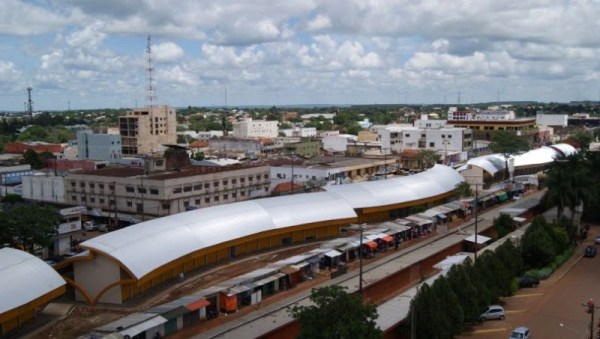
City view of Pedro Juan Caballero

Pedro Juan Caballero City, Paraguay/ Wikimedia Commons

The Brazilian prison gang “First Capital Command” (PCC) is extending its influence far beyond the original base it had in Brazil when it formed around 2005, now threatening security far beyond prison walls and Brazil’s borders. Over the past 10 years, according to my estimates, PCC has consolidated its power in 24 of Brazil’s 26 states. Moreover, the group’s criminal activities – attacks, prisoner escapes, and drug-related activities – now involve branches in Paraguay, Bolivia, and Argentina – and as far north as Venezuela and Colombia. They have sleeper cells (Argentina and Uruguay); alliances with clans linked to narcotraffickers (Bolivia, Colombia, and Venezuela); and deep penetrations of governments (such as Paraguay).

  • In Paraguay, where the depth of its cooptation of state authorities is most obvious, PCC is most active. In mid-January, the dramatic escape from a Paraguayan prison on the Brazilian border underscored the scope of the problem. Some 75 prisoners, including a dozen PCC members, fled the Pedro Juan Caballero Prison through a tunnel that Paraguayan authorities knew about but were unable to close because of corruption at multiple levels, according to numerous sources.
  • In Argentina, national authorities have been tracking the group’s growth since the first infiltration of cells in 2018, when elements attempted to enter a jail in Oberá, in the province of Misiones near the “Triborder Area” with Paraguay and Brazil. Otherwise, the group seems to be keeping a low profile, suggesting an emphasis on the emplacement of sleeper cells for the time being. These individuals could be involved in creating “micro-trafficking” networks and establishing communications with allies under arrest for drug activities, but confirmation is lacking.
  • Other PCC members appear to be setting up in Uruguay, where preliminary circumstantial evidence suggests they’re involved in laundering PCC funds, and in Bolivia, where establishing drug routes into Brazil would be top priority. In Colombia and Venezuela, which are more directly involved in the drug trade, PCC has similar activities, according to research. Efforts in Colombia involve “transfers” of senior PCC members to that country to negotiate the purchase of drugs and to manage their transport through chains that get the product into Brazil.

Although PCC’s corrosive influence is being felt gradually throughout the continent, Paraguay is clearly the group’s most vulnerable target. Its allies function as full franchises of the Brazilian PCC, and the prison escape, indicating that they have bought the cooperation of very senior officials, suggests it is able and willing to assume an even greater role in the country. PCC’s ability to negotiate among gangs in Brazil on issues as sensitive and strategic as levels of violence and truces means that in even more vulnerable societies, such as Paraguay, it could rise to play a kingmaker role on a range of security matters. In that context, prison escapes like last month’s enable it to do more than recruit local members and allies; they give PCC concrete leverage to use in interactions with Paraguayan authorities.

  • This possible contagion effect – infiltrating other countries and developing loyal followers – will increasingly challenge the regional and national security institutions in the region at a time that governments are distracted by other pressing issues and there is relatively little understanding of how organized crime is evolving.

February 6, 2020

Ludmila Quirós is a researcher at the Center for Studies on Transnational Organized Crime (CeCOT) and the International Relations Institute, La Plata National University in Argentina.

New Western Hemisphere Trade Pacts Push Back Against Big Pharma

By Thomas Andrew O’Keefe*

Money_and_pills_in_three_colors

Attempts to limit competition from generics by pharmaceutical giants were called “TRIPS-plus” provisions in USMCA drafts/ Ragesoss/ Wikimedia Commons

Two major trade agreements affecting the Western Hemisphere have recently struck blows against the pharmaceutical industry’s efforts to keep drug prices high by limiting competition from generic medications. Big Pharma tried, but failed, to include provisions in the United States-Mexico-Canada Agreement (USMCA) and the EU-MERCOSUR Association Agreement that would go beyond those expressly permitted by the World Trade Organization’s Agreement on Trade-Related Aspects of Intellectual Property Rights (TRIPS).

  • Those provisions would have made it extremely difficult for generic manufacturers to enter the market and contain costs. Unaffordable medicines are a large and growing global problem. Many people die of diseases today not because there is no cure, but because they cannot afford the medications.

In the version of USMCA approved by the U.S. Congress and to be signed by U.S. President Trump this week, the Democratic majority in the House of Representatives removed “TRIPS-plus” provisions that would have given “data exclusivity” for new uses of existing pharmaceutical products for up to three years and for so-called “biologics” for ten years. (Biologic drugs are produced from a living organism or contain components of a living organism, including a wide variety of products derived from humans, animals, or microorganisms by using biotechnology.)

  • Data exclusivity would have prevented generic manufacturers from utilizing the original trial results and other test data filed with regulatory health agencies concurrently with the patent application, demonstrating the medication’s safety, quality, and efficacy. Also removed from the USMCA was a provision that would have restricted competition from generic pharmaceutical manufacturers by delaying patent expirations to compensate for “unreasonable” bureaucratic delays in approving the patent. Furthermore, the USMCA now expressly allows generic manufacturers, as per Article 30 of the TRIPS Agreement, to utilize compounds used to make a patented drug in order to develop a generic version in anticipation of that drug’s patent expiration.

Similarly, the IPR chapter in last year’s EU-MERCOSUR agreement does not include TRIPS-plus provisions thanks, in part, to resistance from South American governments concerned about bankrupting their national health care systems because of increasing costs for new medications. The IPR chapter specifically supports World Health Assembly Resolutions on pandemic influenza preparedness and on a global strategy and plan of action on public health, innovation and intellectual property – both of which recognize that “intellectual property rights do not and should not prevent Member States from taking measures to protect public health.”

  • The IPR chapter is consistent with the Doha Declaration on the TRIPS Agreement and Public Health of November 2001. Furthermore, all the signatory states are required to implement articles of the TRIPS Agreement providing the legal basis for WTO members to grant compulsory licenses exclusively for the production and export of affordable generic medicines to other members that cannot domestically produce the needed medicines in sufficient quantities. (The only obligation is for the signatory states to make “best efforts” to adhere to the Patent Cooperation Treaty.)
  • The MERCOSUR countries resisted intense lobbying pressure from European pharmaceutical companies to accept provisions on data exclusivity and to compensate for bureaucratic delays by extending the monopoly on a patented medication beyond the 20-year maximum permitted by TRIPS. The fact that the United Kingdom, home to global pharmaceutical giants such as GlaxoSmithKline and AstraZeneca, was distracted by Brexit undoubtedly contributed to this outcome.

The successful pushback against attempts by the major pharmaceutical multinationals to extend their state-sanctioned monopolies to guarantee a steady flow of profits reflects public outrage over multiple scandals that have ensnared the industry in recent years. This includes not only the massive opioid addiction crisis in the U.S., but firms buying up patents that are about to expire and jacking up their prices in excess of 1000 percent. It makes the traditional industry argument of needing extended monopolies to incentivize innovation and the development of new drugs ring hollow as these speculators incur no research and development costs. As a result of the efforts of MERCOSUR and Democrats in the U.S. House of Representatives, the pharmaceutical industry may be facing a paradigm shift in which it will be forced to develop a new business model for pricing new treatments.

January 28, 2020

Thomas Andrew O’Keefe is the president of Mercosur Consulting Group, Ltd. and a lecturer at Stanford University. He is the author of Bush II, Obama and the Decline of U.S. Hegemony in the Western Hemisphere (Routledge, 2018).

Guatemala: Fiscal Challenges Await New President

By ICEFI and CLALS*

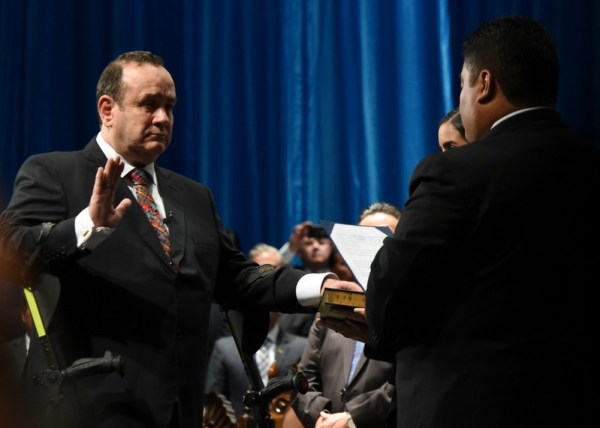
Guatemalan President Alejandro Giammattei is sworn in, January 14, 2020

Guatemalan President Alejandro Giammattei is sworn in, January 14, 2020/ US Embassy Guatemala/ Flickr/ Creative Commons/ https://bit.ly/2GeHS0U

Guatemalan President Alejandro Giammattei, inaugurated on January 14, faces a deeper public finance crisis than previously estimated, putting even greater pressure on him to undertake fiscal reforms and start the slow and difficult process of fiscal stabilization and recovery.

  • The Giammattei administration has inherited a fiscal mess from former President Jimmy Morales, during whose four-year administration public spending on principal social needs didn’t surpass 8 percent of GDP (7.9 percent in 2019). Despite slow, slight growth in the education budget in 2015-2019 and a growing population, the number of students enrolled at the elementary and high school level actually contracted. Spending on health – in a country with half of its children suffering from chronic malnutrition, one of the lowest health service levels, and one of the highest infant and maternal mortality rates in the world – remained around 1 percent of GDP. The military budget under Morales, however, expanded considerably, allowing the Armed Forces to purchase weapons and a ship and to at least try repeatedly to buy military aircraft.

The fiscal situation is worsened by the persistent inability of the national tax authority (SAT) to achieve its collection goals for almost a decade, as well as by the array of amnesties and fiscal privileges approved by the National Congress in 2015-19. As a result, the Morales administration ran up fiscal deficits from 1.1 percent of GDP in 2016 to 2.5 percent in 2019 – accelerating the increase in the stock of public debt from 24.7 percent of GDP in 2017 to 27.0 percent in 2019 – Guatemala’s highest in recent history.

  • Making things worse, the debt was principally handled through issuance of Treasury Bonds sold on the national and international markets at terms – higher rates and shorter maturity periods – less favorable to the Guatemalan government. Last September Congress passed a law, supposedly to formalize cattle growers and ranchers (a sector well known for not paying taxes), that many observers say is so badly written that it opens the door to more tax fraud and even money laundering by powerful drug cartels. ICEFI and even some members of Congress note this has the potential to cause even greater revenue losses in 2020.

Budgetary pressures seem very likely to continue rising this year, further complicating the new president’s challenges. The Constitutional Court in late November ruled that the Executive Branch must correct the way it calculates the transfers that the Constitution requires the Central Government make to the municipalities, the Judiciary, the San Carlos University (Guatemala’s only public university), and the federated and non-federated sports institutions. If this ruling is confirmed, it will generate a huge increase in those organizations’ budgets, seriously exceeding the government’s current fiscal capacity by more than US$1 billion (1.2 percent of GDP).

  • ICEFI’s analysis shows that the only way for the new government to overcome the public finance crisis is to undertake far-reaching fiscal reform – revitalization of tax administration, a credible fight against corruption and tax evasion, and correcting budget priorities. For a government more inclined to pro-business and liberal economic thinking, such reforms may represent a considerable political challenge.
  • President Giammattei also inherited a difficult political situation from his predecessor, whose conflict with the UN-supported International Commission against Impunity in Guatemala (CICIG) and whose alliance with persons widely believed to be involved in corruption further undermined popular confidence in the government. The new president will be judged harshly if he fails to demonstrate early on a commitment to fight corruption, increase transparency, and make government more accountable. Accusations that he himself has been involved in corruption are already arising. He faces these tough economic and political challenges – with diminished resources, fiscal chaos, and with the previous administration’s allies considerably strengthened – at a time that Guatemala can ill afford to continue to stumble from crisis to crisis.

January 23, 2020

* The Instituto Centroamericano de Estudios Fiscales conducts in-depth research and analysis on the region’s economies. Data and charts supporting this article can be found by clicking here. This is the fourth in a series of summaries of its analyses on Central American countries. The others are here, here and here.

Mexican Migration Crackdown Creates a “Wall” Before the Wall

By Maureen Meyer and Adam Isacson*

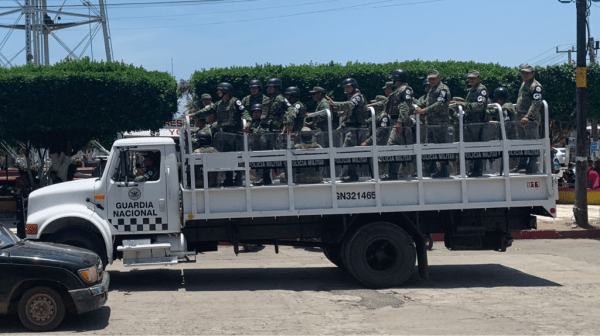
A truckload of military police, wearing National Guard armbands, passes through central Ciudad Hidalgo

A truckload of military police, wearing National Guard armbands, passes through central Ciudad Hidalgo/ Adam Isacson, WOLA

Facing U.S. threats to impose potentially steep tariffs on Mexican goods last June, Mexico has adopted a series of measures along its southern border with Guatemala that, while somewhat effective at stopping the flow, seems a partial solution with high financial and political costs.

  • Mexican authorities’ apprehensions of migrants in June, after U.S. President Donald Trump tweeted his threats, reached 31,416. Captures that month and in July were three times greater than the same period in 2018. (The total of migrants and asylum-seekers apprehended by the United States and Mexico last year is estimated to be more than a million.)
  • Mexico deployed nearly 12,000 of its newly minted National Guard troops to the southern border states with Guatemala. Many identify themselves to visitors as “soldiers”; appear to have little (or no) specialized training for migrant interdiction; and wear military uniforms with black armbands that read “GN.” The Guard, however, has not reduced criminal activities against migrants. Local and international experts report that criminal elements assault, rob, rape and kidnap people transiting the area and prosecutors’ offices take little action to investigate these criminal attacks. Observers report that coyotes, working with corrupt officials, arrange safe passage for many migrants on designated “safe buses” for up to US$2,600 per person.
  • Local observers say the enhanced operations have largely shut down what was the most transited of the four main routes through which migrants have traveled in recent times, but some people are learning to take alternate routes through puntos ciegos (blind spots) where government patrols don’t often go and where risks for migrants can be greater. One such corridor, in central Chiapas, seems to continue to be exploited robustly.

The Mexican government has been reluctant to deal with the consequences of its acquiescence to Washington’s demands, according to numerous border-area observers. At its peak, the aggressive patrolling filled detention centers to far over capacity (some at 300 percent capacity) with poor health conditions and alleged mistreatment. Apart from the members of the National Migration Institute’s Citizen Council, officials have restricted independent monitoring of detention facilities by human rights groups and migration specialists. The country’s refugee agency is on the verge of collapse, yet the Mexican government has yet to allocate sufficient resources to it. Over the course of 2019, the Mexican Commission for Refugee Assistance (COMAR) received over 70,000 asylum requests – more than double in 2018 – but its 2020 budget is a mere US$2.35 million (4 percent of UNHCR’s budget for Mexico operations).

  • The U.S. push has put the administration of President Andrés Manuel López Obrador (AMLO) in a bind. On his first day in office, he signed a decree with Guatemala, Honduras, and El Salvador – from which the vast majority of migrants come – to address the underlying causes of the migration. Another agreement was reached with El Salvador, to fund programs to preserve and create jobs in agriculture. While the Mexican government has not left behind the focus on reducing the “push” factors of migration, it has been largely put on the back burner.

The Mexican government has put managing U.S. relations ahead of addressing the strategic migration problems it faces. It did not push back when the Trump administration announced it would be returning U.S.-bound asylum seekers to Mexico to wait for their hearings through the “Remain in Mexico” program, and under the threat of steadily rising tariffs up to 25 percent on Mexican goods, it has largely complied with nearly all U.S. demands. The results have been mixed, and the costs have been high.

  • Sources in the southern border region report that the National Guard deployment and other Mexican actions over the past seven months have reduced – although estimates range from “not very significantly” to “probably just around 30 percent” – the number of Central American migrants arriving in Mexico. Shelters are not as full as they were in mid-2019, but several remain very full. Data on other nationalities is sketchy, but anecdotal information indicates that Cubans, Haitians, and even Africans continue to find their way to shelters in the area.
  • In complying with U.S. demands, AMLO and his government have risked violating some of their fundamental stated values. AMLO had campaigned on independence, transparency and improved human rights, but the border deployments of the National Guard represent a further militarization of Mexico’s border security strategy – with a significant risk of human rights violations – and the detention of fearful Central Americans and extra-continental migrants in substandard conditions.

January 17, 2020

* Maureen Meyer is Director for Mexico and Migrant Rights at the Washington Office on Latin America (WOLA), and Adam Isacson is WOLA’s Director for Defense Oversight. The full text of their report is at The “Wall” Before the Wall: Mexico’s Crackdown on Migration at its Southern Border.”

Honduras: A Renewed MACCIH with Teeth?

By Eric L. Olson*

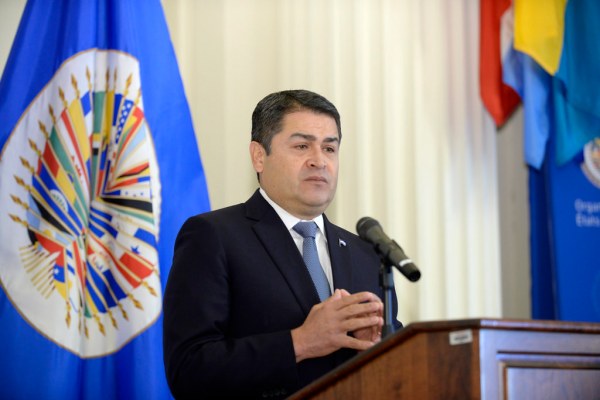
President of Honduras, Juan Orlando Hernandez, January 16,

Juan Orlando Hernández, President of Honduras, January 19, 2016/ Flickr/Creative Commons/ https://www.flickr.com/photos/oasoea/24115247729/in/photostream/

As the January 19 deadline for renewing the Support Mission to Combat Corruption and Impunity in Honduras (MACCIH) approaches, the Honduran government — never enamored of it — has a chance to demonstrate a commitment to root out one of the principal problems that undermine the nation’s democratic institutions and the opportunities citizens yearn for.

  • The Organization of American States has been engaged for months in low-profile discussions with Tegucigalpa on the future of MACCIH, created by an agreement between Honduran President Juan Orlando Hernández and OAS Secretary General Luis Almagro on January 19, 2016. Despite concerns that MACCIH lacked the independence and capacity to conduct investigations that its UN-based counterpart in Guatemala (CICIG) once had, it has demonstrated that Honduras can indeed conduct independent, non-partisan investigations into systemic corruption, and begin to prosecute and hold accountable senior officials.

Working with its partner in the Public Ministry, a special anti-corruption prosecutor’s unit (UFECIC), MACCIH has had a key role in 13 major cases involving 124 individuals, including 80 government officials and 44 private citizens. Several cases involve networks of corruption in the Honduran legislature as well as the former first lady (now sentenced to 58 years in prison), and graft and corruption in the country’s public health system (IHSS). The official evaluation of MACCIH’s first four years by the Mesa de Evaluación, a process established by agreement between the Honduran government and OAS, has recommended full renewal.

The brave work of the UFECIC prosecutors, who formalize the investigations that MACCIH first develops, has been crucial. MACCIH screens and recommends the prosecutors and investigators that make up UFECIC, but its mission is to support, not conduct, prosecutions. This distance is intended to strengthen capacity within Honduras’s justice system.

  • Honduran civil society, previously skeptical that MACCIH would work, is now largely on board. The Coalition for the Renewal of MACCIH has issued statements calling for the mandate to be extended — proclaiming ¡Renovación Ya! — as have the National Anti-Corruption Council, the Association for a More Just Society, the Catholic Bishops Conference and its Evangelical counterpart, and others. Even members of the business community, long leery of anti-corruption initiatives, support renewal.
  • At least rhetorically, the United States supports MACCIH renewal. Acting Assistant Secretary of State Michael Kozak and other State Department officials have endorsed it, and Democrats in the U.S. Congress have been strong advocates. Washington’s implicit approval of the Guatemalan government’s dismantling of CICIG, however, remains a concern for MACCIH supporters.

President Hernández’s foot-dragging on renewal has fueled worries. Renewal could be done simply with an exchange of letters in which the government signals its desire to renew the mandate as is; unless the agreement is to be amended, no congressional action or further steps are needed. The delay has given rise to fears that the government is seeking to limit the length of the new mandate (from the current four years to two or even one). There is further concern that the government, with pressure from Congress, seeks to limit the MACCIH mission to citizen oversight functions, prevention efforts, and technical training. These are all important elements of the mission, but the heart and soul of the MACCIH’s success has been its support for the UFECIC and its investigations. To undermine or limit investigations would likely lead to the demise of UFECIC and render the MACCIH toothless.

Renewal of MACCIH — with the investigative elements of its mandate intact — gives President Hernández, who labors under a cloud of allegations about involvement in narcotics trafficking and other illicit practices, an opportunity to demonstrate his commitment to fighting corruption, strengthening the rule of law, and building judicial and democratic institutions. If the mandate is changed, not simply renewed, it will have to be approved again by the Honduran Congress, where odds are long. The Congress has already recommended MACCIH not be renewed and, as the official Mesa de Evaluación documented, it has already attempted to reverse anti-corruption legislation, such as by lowering penalties for misuse of government funds.

  • Hernández has the clout to direct his supporters in Congress, many of whom fear MACCIH’s investigations into their activities, to abandon their obstructionist tactics, while reaching out to opposition legislators who support MACCIH. Alternatively, he could ignore Congress altogether and simply reach an executive agreement with the OAS, something that would carry less legal weight but may preserve MACCIH’s essential elements.
  • The President’s inaction hurts MACCIH and broader anti-corruption efforts as well as Honduras. Failure to push renewal — with teeth — will not only damage his reputation and further erode his legitimacy in the eyes of Hondurans and the international community; it will send a message of hopelessness and despair to Hondurans seeking to build a better future for their country.

January 13, 2020

* Eric L. Olson is Director of Policy, Seattle International Foundation, and a global fellow at the Wilson Center in Washington, DC.


Chile: Can the Constitutional Plebiscite Lead to a New Social Contract?

By Peter M. Siavelis*

An agreement between the Chilean government and opposition to hold a referendum in April on whether to scrap the current Constitution — legacy of the Augusto Pinochet dictatorship — has helped reduce tensions throughout the country and signaled that stakeholders are willing to compromise in order to reestablish Chile as a model of stability in a tumultuous region.

  • The most significant, violent, and deadly protests since the end of the Pinochet era exploded in Chile on October 20, after several years of simmering protests and social discontent. The protests, accompanied by looting, attacks on property and infrastructure, and 23 deaths, represented a turning point. Widely billed in the press as sparked by opposition to increased transport fees, this social mobilization represents a much wider demand for a fundamental rewriting of Chile’s prevailing social contract. It shocked the international community and Chileans alike, challenging the idea that Chile was a model of peace and economic development in a regional sea of economic crisis and social conflict.
  • The initial response of center-right President Sebastián Piñera’s government only created more conflict. Calling protestors delinquents and terrorists, and contending the country was at war with itself, he conjured uncomfortable parallels with the dictatorship. Widespread evidence of human rights abuses by police and security forces reinforced these parallels.

Piñera eventually bowed to public and elite pressure and announced a set of immediate reforms, including boosting the minimum wage and pension payments, cutting the price of medicines, lowering public transportation costs, slashing electricity prices, implementing higher taxes for the rich, and reducing the salary of members of congress, who are the highest paid in the region. For the longer term, Piñera acquiesced — one month after the initial explosion of protests — to a process to potentially scrap Chile’s 1980 Constitution, which was also the target of protesters’ ire. The agreement, dubbed acuerdo por la paz y una nueva constitución, grew from intense negotiations between the government and political parties. It was approved in Congress by a wide margin (127 in favor, 18 against, and 5 abstentions).

  • The legislation establishes that on April 26 a nationwide plebiscite will ask Chileans whether they want a new constitution and how it is to be drafted, with two simple questions: if the voter wants a new constitution, and, if so, if the voter prefers a “Constitutional Convention” or a “Mixed Constitutional Convention.” The former will entail a constituent assembly of citizens elected by the population, and the latter a body of one-half members of Parliament and one-half private citizens.
  • Most polling shows over 80 percent of Chileans in favor of a new constitution, and a large majority of those preferring a constitutional convention — an indication of the low regard in which Chilean politicians are held by the public. Whatever mechanism is eventually used, a second plebiscite will be held at a date to be determined for ratification of the new constitution.

The agreement left elements of both sides dissatisfied. The right grudgingly accepted the arrangement, but its more extreme elements remained concerned that a Constitutional Convention will establish social guarantees similar to those of Venezuelan Chavismo and undermine social peace and Chile’s development. More progressive signatories of the agreement added their support, thrilled at the prospects of doing away with the authoritarian constitution, but were concerned it did not go far enough to offer guarantees of gender parity or reserve representation for Indigenous groups and independents.  The Communist Party and a smattering of small parties refused to sign because they wanted deeper reforms.

For now, the immediate reforms and the acuerdo have calmed the pace and tenor of protests, and most accounts point to a peaceful plebiscite in April. This constitutional moment is a big one for Chile. Given the government’s recognition of the severity of the crisis, there is no reason to doubt its sincerity to make the plebiscite go smoothly and provide a framework for moving peaceably forward. If the plebiscite is successful, Chileans will achieve what was nowhere on the horizon only months ago: a definitive end to the Pinochet constitution, one of the dictatorship’s most objectionable legacies. This change will be followed by a reconfiguration of Chile’s fundamental social pact and reforms to its extreme form of neoliberalism, which has created staggering economic and social inequality at the root of these protests. However, for Chile to reestablish its status as model of economic development and social peace, it will have to walk a careful line between reform between competing interests and reestablish some sense of order and predictability after what undoubtedly has been Chile’s most significant social convulsion since the end of the dictatorship. The strength of Chile’s democratic institutions and its political class — which is fundamentally different than others in the region in terms of political skill, respect for the rule of law, and relative probity enhances the possibilities that the country will be able to walk this line.  

January 9, 2020

* Peter M. Siavelis is Chair and Professor in the Department of Politics and International Affairs, and Associate Director of the Latin American and Latino Studies Program at Wake Forest University. His most recent edited book on Chile, with Kirsten Sehnbruch, is Democratic Chile: The Politics and Policies of a Historic Coalition.

Cuba: Facing a Tough New Year

By Eric Hershberg, William M. LeoGrande, and Max Paul Friedman*

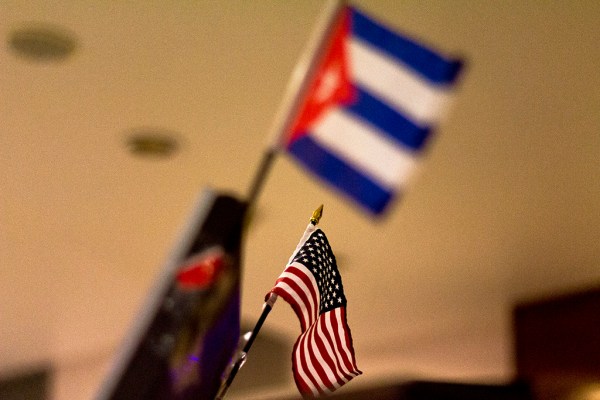
Intensified U.S. sanctions and the crisis in Venezuela are forcing renewed belt-tightening in Cuba and hindering the government’s ability to undertake even its modest economic reform agenda, but the country is not entering a new “special period” and significant instability does not appear likely in 2020 despite some increased social tensions. The big losers from U.S. sanctions are the small private-sector businesses — B&Bs, restaurants, and entrepreneurs — providing services to U.S. visitors, an estimated 638,000 a year before the Trump Administration clamped down over the course of 2019. But the government has also been forced to make major cutbacks.

  • To cope with fuel shortages caused by U.S. sanctions against oil companies shipping Venezuelan oil to Cuba, the government reduced production in many factories to maintain energy supplies to consumers and avoid overly straining the power grid. Public transportation also faced drastic cuts, largely because of a lack of diesel fuel needed to distribute gasoline. Only some of the affected bus routes have since been restored.
  • Shortages of an array of necessities — from bread, coffee, meat, and many basic medicines to all energy products — have been severe and show no sign of abating as the economy sputters. Domestic demand for products that Cuba can produce, including electric bicycles and appliances, is strong, but financing is too tight. The government is phasing out the convertible peso (CUC) that it artificially pegged to the dollar and is establishing new hard-currency stores to capture dollars now flowing abroad as Cubans buy both consumer goods and inputs for domestic private enterprises in Panama and elsewhere at the rate of $25 million per month — hard currency the government desperately needs. Those dollars the government captures will supposedly be made available for domestic producers to import essential inputs. Cubans expect the CUC to become worthless paper sooner as some vendors now accept only foreign currency, and the street value of a dollar is now more than 1.15 CUC (compared to the official rate of 0.87 CUC).

One leading economist deemed 2019 to have been the worst year since 1993 — with growth essentially flat — and said the forecast for 2020 looks no better. State-owned enterprises are failing to perform efficiently despite years of rhetoric about rationalization and improvements. Foreign purchases, long hindered by a lack of hard currency, have been made even harder by the U.S. sanctions, as suppliers increasingly fear Washington’s scrutiny. The government has not responded to growing pressures by accelerating the sorts of meaningful reforms that have long been needed to increase production and efficiency.

  • Its strategy focuses on import substitution, according to a senior economic official, to reduce the need for hard currency by producing more consumer goods and inputs domestically. The tourism sector has boomed over the past decade, but more than half the hard currency revenue it generates goes to imported inputs. Cuba spends some $2 billion importing food while more than half its arable land lies fallow.
  • Financing investment needed to make import substitution a viable strategy is difficult. Cuban government officials speak of doubling domestic investment, now only 11-12 percent of GDP, but without increasing indebtedness — a huge task for such an inefficient economy. In addition to encouraging tourism enterprises to substitute local for imported inputs, the government hopes to improve conditions during 2020 by implementing a decades-old proposal to establish a closed dollar-based system in which companies retain a portion of revenues to finance investment and imports.
  • Foreign direct investment is the other potential but a largely elusive source for capital. Government fact sheets continue to emphasize the importance of the Mariel Special Export Zone, which has some 50 promised users, $2.5 billion in promised activity, and 7,000 promised jobs. Actual activity in the Zone, however, falls far short of that. The Trump administration’s activation of Title III of the Cuban Liberty and Democratic Solidarity Act (“Helms-Burton”), which allows the previous owners of property expropriated after the 1959 revolution to sue anyone benefiting from it, has made new investors hesitant.

While the economic outlook looks difficult indeed, there are few signs that the government is anxious about social frustrations and tensions becoming a serious challenge, much less an existential threat. The government continues to resist obvious (and relatively easy) reforms, such as allowing cuentapropistas licenses for multiple lines of business. Allowing the CUC to disappear gradually may be a precursor to addressing the years-old distortions caused by the country’s multiple currencies and exchange rates, but there’s still no sign that the government is ready to implement a unified peso. Havana apparently calculates that the country is hardly the pressure-cooker that U.S. policy aims to create by, as U.S. Secretary of State Pompeo reportedly told EU diplomats recently, “starving” the population so as to bring about a regime collapse.

  • Young independent journalists say that public organizing via social media is at times successfully pressing the government, which they deem largely ignorant of popular concerns, to revoke unpopular measures. Yet growing access to the internet may also serve to distract youth from more threatening forms of organizing. Giving people a sense of input on issues like the arts, animal rights, and sexual identity that do not threaten core government policies and processes is probably taking an edge off discontent.
  • The new year is likely to be difficult, particularly as the Venezuela crisis drags on, but, as observers say, “Cuba does ‘bad’ pretty well.” Hope is never a plan, but virtually everyone in Havana expresses hope that U.S. elections in November might bring back a pro-engagement U.S. policy that helps grow Cuba’s private sector and relieving pressure on sources of financing for Cuba to move ahead with its modest reform strategy.

January 7, 2020

*AU Professors Hershberg, LeoGrande, and Friedman traveled to Cuba in December.