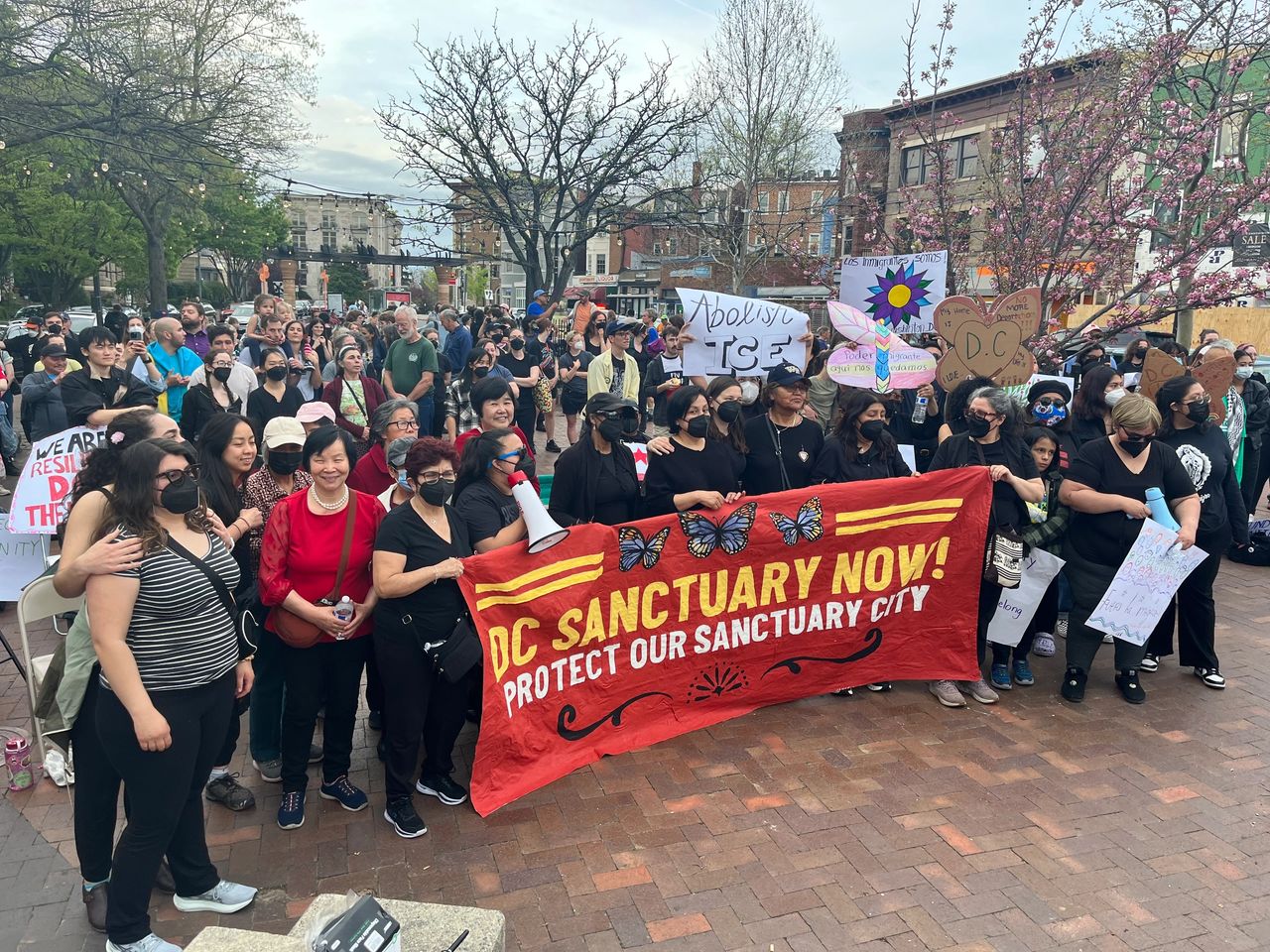
On January 25th, 2017, President Trump signed an Executive Order, called Enhancing Public Safety in the Interior of the United States, to attack sanctuary jurisdictions all over the U.S. Although this Executive Order was blocked by a judge, the side effects were seen. More cities became sanctuary jurisdictions, even colleges.
But what is a “Sanctuary Jurisdiction”? First, we have to understand that there isn’t one full definition of a “Sanctuary Jurisdiction,” nor does each one have the same laws. Generally, being a ‘Sanctuary Jurisdiction’ means to “have policies in place designed to limit cooperation with or involvement in federal immigration enforcement actions.” There is a range of how each policy works, but it keeps the immigrant communities safe.
In 2017, Illinois became a sanctuary state through the TRUST Act, and on December 15th, 2020, the D.C. District Council voted on the Sanctuary Values Amendment Act of 2020, establishing Washington, D.C. as a Sanctuary jurisdiction. On the opposite end, some states banned Sanctuary Cities straight out during the first Trump administration, including Arkansas, Florida, and Texas.
On the 1st day of the Biden-Harris Administration, President Biden signed an Executive Order called, Revision of Civil Immigration Enforcement Policies and Priorities, which undid Trump’s 2017 Executive Order. Since then, the republican party has attacked Sanctuary Jurisdictions again and again.
At a March 5th, 2025, hearing with the mayors of Boston, Chicago, Denver, and New York City, the Chair of the House Oversight Committee Rep. James Comer (R-KY-1) stated, “These reckless sanctuary policies also force federal immigration officers to go into local communities to apprehend criminal illegal aliens.” We keep hearing that sanctuary policies are bad for the United States, but that is not true.
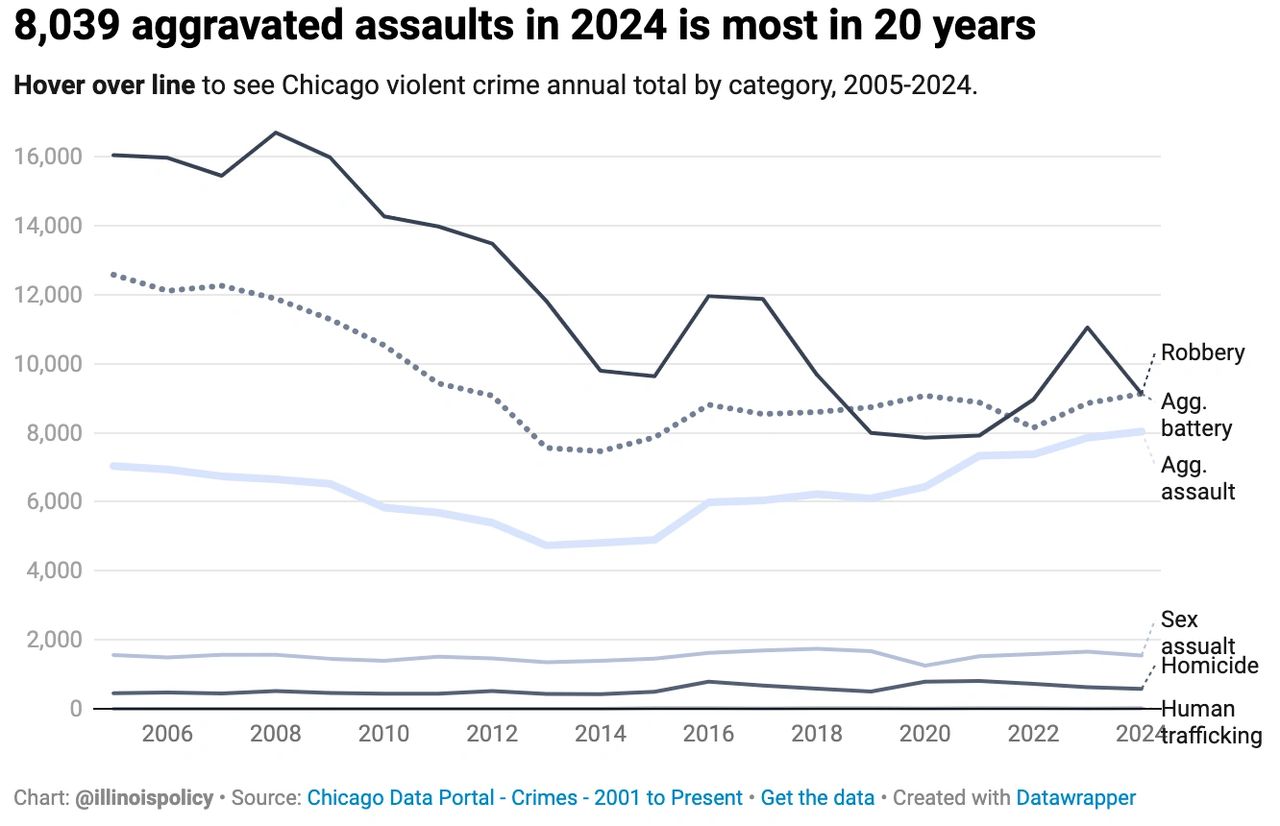
The National Immigration Law Center (NILC) posted on the same day of the hearing that a study found a “decrease in crime in cities and states that prioritize welcoming instead of targeting immigrants.” Looking at my home city of Chicago, crime keeps going down, even at a time when immigration has increased.
In 2025, Trump’s first day in office signed an Executive Order, called “PROTECTING THE AMERICAN PEOPLE AGAINST INVASION,” which, on its 17th section, calls for Sanctuary Jurisdictions to be punished until they get rid of the laws that make them sanctuary, or else they will not receive any federal funding. On April 24th, a judge ruled that it was unconstitutional.
Other related bills to look out for include 1) HR. 32 No Bailout for Sanctuary Cities Act; 2) HR. 205 No Congressional Funds for Sanctuary Cities Act; 3) HR. 1879 No Tax Breaks for Sanctuary Cities Act; 4) HR. 2056 District of Columbia Federal Immigration Compliance Act.
UPDATE APRIL 29TH
On April 28th, Trump signed a new Executive Order, called “Protecting American Communities from Criminal Aliens.” Under this order, any Sanctuary Jurisdictions will be stripped of any federal funding in 30 days. Additionally, this order will eliminate in-state tuition for undocumented and DACA students across the United States. Laws that help undocumented college students pay for college, for example, in Illinois, the Retention of Illinois Students & Equity (RISE) Act will be eliminated.
Anthony Sandoval is a research assistant with The Immigration Lab
Edited by Enresto Castañeda, Director of The Immigration Lab and Katheryn Olmos, Research Assistant
As of April 21, over 250 colleges and universities have identified more than 1,500 international students and recent graduates who have experienced a sudden change in their visa status. The exact number of students who have lost their F-1, J-1 visas, or their Optional Training (OPT) extension, however, is hard to track. Sometimes, the students are not immediately aware that their status has changed; universities are not informed if student visas have been revoked; and several universities have not been forthcoming about the exact number of students losing status.
THE PATH TO A US DEGREE
International students are some of the most vetted communities in the United States. Their journeys to American colleges and universities are long, arduous, and expensive. In addition to the enormous pressure to be the “best and brightest” in their respective nations, particularly to qualify for financial aid and/or scholarship, compared to their American counterparts, international students have to jump through additional hoops to enter the US. This involves submission of the visa application form, institutional certification (the college or the university of acceptances needs to be approved by SEVP Immigration and Customs Enforcement); proof of admissions and of full-time enrollment as a student; evidence of English language proficiency (the TOEFL exam, that has its own charges); extensive family financial information and banking documents); application fee payment for the Student and Exchange Visa form (SEVIS); the DS-160; a valid passport; evidence of permanent home residency; and evidence of economic resources and any financial aid they may be receiving in order to secure an interview date that may take weeks or months to schedule. Getting to the interview may be complicated if the Embassy is in a different city or country.
The interviews at the US embassy are relatively extensive procedures where vetting takes place in real-time. While USCIS officers are professionals, these interviews can be subjective – and acceptance and denial of an applicant may happen at the whims of an individual officer. Anecdotally, prospective students may be denied if they seem “suspicious,” assessed as “not likely to return to their home countries,” and even “for having family in the US.” Post 9/11, the US government has sub-contracted the visa application collection process to private security companies particularly in the Global South – this means that before the actual visa interview, prospective applicants have to submit all their paperwork to these companies – which involves another financial charge – before they are reviewed by USCIS officers.
If one is fortunate to have passed the interview step, international students are granted two things: a paper form connected to SEVIS (which determines whether a student can legally remain in the US once inside the country, and which is administered by the Department of Homeland [DHS] and used by the Immigration and Customs Enforcement (ICE) to monitor a student’s immigration record and identify individuals who may be in violation of their status) and the US F-1 (or similar) visa, which controls entry into the country and is granted by the State Department.
Once in the US, international students have to maintain their full-time student status, are not allowed to work more than 20 hours a week on campus, and cannot seek employment outside their respective campuses.
INTERNATIONAL STUDENTS IN THE US
For decades, the United States has remained the top destination for higher education. Boasting its Ivy League, fantastic STEM programs, well-renowned research centers and faculty, funding opportunities, competitive liberal arts colleges, and well-established public universities, education from the US is assumed to set an individual up for success. US academic institutions also have a global reputation as spaces of freedom of expression, where critical thinking is encouraged, and debates with peers and professors are fundamental to learning. Many of the students who are driven to come to US universities are not only attracted by the promise of a world-class education, but also by the opportunity to critique and analyze power without government surveillance and in an environment assumedly free of fear and censure. While many students do return to their home countries upon graduation, others choose to remain to pursue their graduate degrees, use the OPT to gain professional skills, or seek sponsorship for H1-B visas to continue working in their fields of specialization.
WHAT’S IN IT FOR THE US?
Higher education has not only been an unrivalled form of US soft power, but for decades it has been a reliable source of enormous revenue. First, the US has been able to benefit significantly from the talent pipeline of highly educated graduates in both STEM, the social sciences, humanities, and the arts. According to 2024 International Institute of Education (IIE) data, 56% of international students across academic levels have pursued STEM fields of study; one in four (25%) have studied math and computer science, while nearly one in five (19%) have studied engineering – within this pool, those who choose and can stay in the US are poised to be part of the community that continue to drive research and innovation forward. In 2024, Scott Weinhold, the then Senior Bureau Official for the State Department Bureau of Educational and Cultural Affairs stated, “The ties formed between U.S. and international students today are the basis of relationships for future business and trade, science and innovation, and government relations.”
There are over 1.1 million international students from 217 countries and territories, who combinedly comprise 6% of the total US higher education population. According to the Bureau of Economic Analysis, the education of international students has also been a reliable source of economic revenue, making it the country’s 10th-largest export. Last year, the economic contributions of international students totaled between $43.8 and over $50 billion – more than the value of U.S. telecommunications, computer, and information services exports combined. Their presence has also resulted in more than 378,175 jobs; i.e., for every three international students, one U.S. job was created.
Economic activities of international students in community colleges alone measured at $2.0 billion, and supported more than 8,400 jobs. Last year, 12 states broke the $1 billion mark as a result of international students generating 57 percent of the total dollar contribution to the U.S. economy, with California, New York, Massachusetts, Texas, and Illinois being the largest recipients of the economic gains. Furthermore, international students enrolled in U.S. colleges’ English language programs contributed $371.3 million and supported 2,691 jobs.
WHO ARE BEING TARGETED?
For a number of years, the majority of the international students in the US came from China, followed closely by India. Other countries of origin of many international students include Mexico, the Philippines, Canada, Colombia, Japan, Korea, Iran, Bangladesh, Pakistan, Ghana, Saudi Arabia, Nepal, Kenya, Italy, Spain, Nigeria, South Africa, and Ethiopia. In 2023-24, India became the country with the largest number of international students in the US, surpassing China with 331,602 students.
Given the large numbers of Indian and Chinese students in the US, the majority of those whose visas are being revoked and SEVIS cancelled are impacting Indian (50%) and Chinese (14%) nationals.
While not all universities have disclosed which nationals have been targeted, existing data shows that students from Bangladesh, Iran, Saudi Arabia, Mexico, South Korea, Colombia, Nepal, and Japan are also amongst the most impacted.
WHY IS THIS HAPPENING?
The pattern of whose visas and/or SEVIS are being cancelled is telling, pointing to the strategy as being part of a broader concerted effort to curtail immigration from the Global South in the name of “national security.” This means at the broadest level, the loss of legal status needs to be contextualized within the drag-net of multiple initiatives currently at play: increasing surveillance on migrants, suspension of US refugee resettlement; ending of temporary protected status (TPS) for populations such as the Afghans and efforts to end it for Venezuelans, Nicaraguans, and Haitians; cancellation of legal status of migrants who entered through the CBPOne app; detention; and efforts at ending birthright citizenship, and “mass expulsions” which have also resulted in the deportation of “non-white” individuals like Kilmar Abrego Garcia and the detention of 20-year old US citizen Juan Carlos Lopez-Gomez.
Tufts PhD student Rümeysa Öztürk, Columbia doctoral candidate Ranjani Srinivasan, and Cornell PhD student Momodou Taal, recently admitted to a PhD program Ohio State University Ahwar Sultan -all have one thing in common with legal permanent residents and Columbia students Mahmoud Khalil, Mohsen Mahdawi, and Yunseo Chung – they were either outspoken in writing and/or in student activism or, in the case of Ranjani, assumed to have a “pro-Palestinian” stance. Today, they are in detention and face the possibility of deportation (Rumeysa, Mahmoud, and Mohsen); have“self-deported” (Ranjani and Momodou under threat of ICE arrests); are in hiding from ICE (Yunseo); or have their visa revoked (Ahwar Sultan). In detention is also University of Alabama PhD student Alireza Doroudi, who has been arrested for “national security reasons” without any specified charges and whose lawyers have argued he has never participated in anti-government protests and did not violate any laws.
The politics around Palestine in the US and increasing silencing of academic freedom is at the heart of why international students and immigrants -mainly (although not only) from Muslim backgrounds – are being targeted with arrests, detentions, threats of deportation and possibly de-naturalization. Further evidence has been provided by the US administration itself. Secretary of State Marco Rubio has invoked the authority to penalize noncitizens for speech under two separate provisions of the 1952 Immigration and Nationality Act. Following Rümeysa’s chilling arrest, he further stated that the US was revoking visas to clamp down on pro-Palestinian students for writing op-eds, participating in “movements that are involved in doing things like vandalizing universities, harassing students, taking over buildings, creating a ruckus,” adding: “We do it every day, every time I find one of these lunatics.” The US State Department has also ordered consular offices to significantly expand their screening processes for new student visa applicants and requests for visa renewals through comprehensive social media investigations and exclude people they deem to support “terrorism” or hold “hostile attitude towards US citizens or US culture, including government institutions or founding principles.”
Chinese Students: Pawns in US-China Relations
For several years, there has been rising concern in conservative and Republican quarters regarding the presence of Chinese students in US colleges and universities. While many Chinese students and students from Hong Kong themselves are subjected to surveillance and harassment by Chinese authorities, they have also increasingly become pawns as tensions between the US and China have grown. Under the first Trump administration, during the trade war in late 2018, China expelled three Wall Street Journal reporters for a racially insensitive headline: “China Is the Real Sick Man of Asia” — a phrase that carries strong undertones of European colonial history in China. The US retaliated by limiting staff for five Chinese news organizations in the U.S, ending Hong Kong’s preferential trade status, and closing the Chinese Consulate in Houston, accusing it of espionage efforts. China then closed the American consulate in Chengdu. In 2018, then Senator Marco Rubio and FBI director Christopher Wray told a Senate panel that American academe is naïve about the intelligence and national security risks posed by Chinese students and scholars; Wray revisited these comments in 2022 regarding FBI investigations on the research connections between American universities and China. These accusations underlie the fact that Chinese students and scholars, particularly in the STEM field, have continued to come under scrutiny. In 2020, under the first Trump administration, more than 1,000 Chinese students had their visas revoked.
In 2025, there is a bill in the US Congress called the Stop CCP VISAs Act, aimed at halting the issuance of student visas to Chinese nationals looking to study at U.S. universities or take part in exchange programs. Furthermore, on March 19, the U.S. congressional committee on the Chinese Communist Party (CCP) sent a letter to Darryll Pines, President of the University of Maryland – College Park, requesting detailed information on Chinese students at the institution, citing that those enrolled in STEM programs, particularly in federally-funded research, constitute “national security risks.”
The Case of Minor Infractions
While Palestinian activism and tensions with China explain a significant number of visa revocations and SEVIS cancellations, many other international students are not aware of why they have suddenly lost their status. Emerging stories show that some of those who lost their status have had some type of minor infractions, where their fingerprints were taken by law enforcement during their residency in the US. Fingerprinting does not equate a criminal conviction and can be taken during arrests even if no charges are filed. In other words, any police detentions, non-arrest citations such as a traffic stop, fishing license violation, or other minor charges that were dismissed or dropped –none of which are deportable offenses – are now grounds for visa and/or SEVIS cancellations.
The American Association of University Professors (AAUP) has filed a lawsuit to block the Trump administration from carrying out large-scale arrests, detentions, and deportations of noncitizen students and faculty members who participate in protected First Amendment activities. More than 133 international students have also filed a lawsuit against the Trump administration. Thus far, a federal judge in Atlanta has issued a temporary restraining order (TRO) to prevent international students from having their visas revoked for a few weeks.
IMPACT OF SEVIS AND VISA CANCELLATIONS
Visa revocations mean that international students and, in some instances, their families are facing a legal limbo marked by confusion, anxiety, and fear. Losing status may mean, in some cases, that students are no longer able to continue with classes, graduate, or continue to work through the OPT program, which in turn translates immediately to a loss in income. Traditionally, the expiration of an exchange visitor visa does not mean a person is immediately considered to be in the country illegally. However, a number of students have received emails from DHS that they need to “self-deport” within seven days of their visa revocations or get arrested. The legality of such communications is still in question. Nonetheless, the fear of ICE arrests and detention is stalking many students, many of whom may not have the immediate means to purchase tickets to return to their countries of birth. Furthermore, being forced back to their countries of origin upon threat of deportation signals for many a bleak immediate future. In cases of PhD candidates such as Suguru Onda and Xiaotian Liu (whose visas were re-instated after their revocation), Ranjani Srinivasan, Momodou Taal and others who have been working for years on their research, SEVIS cancellations and visa revocations may mean they will not be able to receive their doctoral degrees.
The US too will be impacted by this ongoing attack on international students. Not only are campuses being disrupted by the loss of students in the classroom, but the American economy and society will not be able to benefit from the current and future contributions of these students if they are forced to leave the country.
In recent years, higher education has become a more competitive market, where US dominance has increasingly been challenged. Facing the rising costs of a US degree, complex, time-consuming, and expensive visa application processes, increasing scrutiny, and the risk of being caught up in US geopolitical tensions, international students have started turning to other countries for higher education. In recent years, Scandinavian countries such as Norway and Sweden have been accepting international students in larger numbers. Outside of Europe, China now has several prestigious universities, including in STEM, that are attracting Chinese students as well as students from the rest of Asia and Africa. Japan, Singapore, Hong Kong, Malaysia, and Korea now boast more affordable and rigorous university degrees, some of which also attract American students. In specialized fields such as medicine and engineering, India and Bangladesh are also attracting Asian and African students.
WHAT CAN US UNIVERSITIES DO?
Universities have a responsibility to protect both academic freedom and their students, staff, and faculty, both of which are at the heart of higher education. In this moment of crisis, in addition to protecting under-represented minorities, DACA recipients, undocumented students, transgender students and members of the LGBTQ+ community, they have a responsibility to protect international students and students with permanent residency, those who have been outspoken on humanitarian issues, and protect all students’ right to freedom of expression.
Universities should not release any records or personal data upon request unless the request is supported by a signed judicial warrant as required by law. They should make every effort to de-escalate a situation concerning a student where violence is not involved. Finally, given the level of uncertainty and anxiety facing international students and all other students with different citizenship status, it is incumbent on all faculty and higher ed community members to continue to respond to international students and vulnerable communities with the ethos of care and compassion as higher ed navigates these turbulent waters.
As of April 25th, the Trump administration has restored thousands of student visas that have been terminated
Tazreena Sajjad teaches at the School of International Service at American University and is a member of The Immigration Lab.
Anti-immigrant sentiment has been a salient theme in both American political and social discourse. Nativism enjoys periodic spikes in popularity. Legislation such as the draconian Immigration Act of 1924 dot the immigration policy landscape. One hundred years later, we find ourselves in an eerily similar position.
A successful political party, movement, or organization must have clear messaging in order to garner public support. Republicans have incarnated themselves as the party of contemporary nativism. This has resulted in a shift rightward regarding public discourse on immigration. Some Democrats have followed suit, with for example, some candidates supporting border wall construction as elections drew nearer.
In 2022, there were 77 competitive races (where either party won by less than 10%). In 2022, there were 53 campaigns with anti-immigrant rhetoric in their official materials (campaign websites, social media posts, and TV and YouTube ads). In 2024, there were also 77 competitive elections, with 43 having anti-immigrant rhetoric in their campaign materials. So, anti-immigrant discourse as a main campaign issue dropped from 69% to 56% among Republican candidates in competitive races (see Figure 1).
Figure 1. “Anti-Immigration Rhetoric in Republican Campaigns in Competitive Races”
In 2024, campaigns that employed anti-immigrant rhetoric had a win-loss ratio similar to 2022.
The presence of anti-immigrant sentiment among Republican campaigns fell from 2022 to 2024. While such rhetoric flourished in Trump’s presidential campaign, it was less present in House, Senate, and gubernatorial races. When anti-immigrant rhetoric was present, it ended in failure more often than victory. From this, we could deduce that people are less concerned about immigrants in their communities. Instead, they seem to be more concerned about border security and immigration on the national scale.
Figure 2, “Republicans Who Used Anti-Immigration Rhetoric with Election Results, 2022 and 2024”
In 2024, the Republican message emphasized migration as a security issue, rather than an economic or humanitarian one, arguing that immigration should be treated with the same urgency as any other potential foreign enemy. Migration is framed as a security issue through negative rhetoric surrounding the supposed criminality of migrants, such as the newly coined term “migrant crime,” used extensively by Republicans on the campaign trail. This term is a clear attempt to predetermine the culpability of migrants coming into the US and frame them as criminals, or even as invaders and terrorists, though not so much in competitive races.
Many Republican campaigns may disguise nativist sentiments under the guise of national security concerns. Border security narratives help reinforce anti-immigrant ideas that historically portray migrants, especially Latinos, as criminals or invaders. This ambiguous messaging may explain why many Trump voters did not believe he would legitimately carry out many of his campaign promises regarding mass deportations.
Republican parties promote border security and anti-immigrant discourse from the top down, reducing the need for individual House candidates to explicitly state their views towards immigration. With border securitization becoming a mainstream policy promoted by figureheads on both sides, down-ballot candidates can avoid directly addressing issues like immigration and border walls in their campaigns. By aiming to associate immigration with national defense, the “border crisis” is fabricated to be an existential threat. Oftentimes incendiary rhetoric is used to obfuscate what is real from unreal.
We identify a pattern across the Republican tickets, where candidates with military backgrounds tend to use anti-immigrant rhetoric justified by their experience in the military as evidence for their security concerns (Jay Furman TX–28, Laurie Buckhout NC–1, Mike Garcia CA-27). Evidently, using the facilities at Guantanamo Bay to house migrants reinforces the misconception many Republican candidates echo in their campaigns that migrants are security threats. This also contributes to why top party members, such as Ted Cruz and Donald Trump, used exceptionally strong anti-immigrant rhetoric to make down-ballot candidates more acceptable and mainstream where necessary, while maintaining the same broader party message.
For moral, ethical, and strategic reasons, Democrats should speak openly against anti-immigrant rhetoric. The threat of anti-immigrant rhetoric itself is a real threat, but data shows that the average American voter tends to be indifferent or in favor of immigration, especially at the local and state levels. The political mechanisms that produce this rhetoric have a firm grip on the mediascape that influences national elections, but when it comes to their own communities, voters trust their own eyes and lived experiences about how the immigrants they know are not that much different from themselves.
Joseph Fournier and Bennett Donnelly are Research Assistants at the Immigration Lab. Ernesto Castañeda, PhD is the Director of the Immigration Lab at American University.
In a world where less than 1% of refugees are ever permanently resettled, the United States has chosen to suspend all refugee admissions indefinitely. The Trump Administration has ordered significant changes to the U.S. refugee resettlement apparatus. The fallout from these executive actions has caused significant turmoil for resettlement agencies and the populations they serve.
The United States Refugee Admissions Program (USRAP) was established in 1980. Since then, including through wartime and the COVID-19 pandemic, the United States has accepted refugees in the wake of international crises and suffering, without fail. That is, until President Trump’s Executive Order “Realigning the United States Refugee Admissions Program.” Asserting that the United States has been “inundated” by immigrants and refugees, the Executive Order issued a 90-day pause on all refugee arrivals. This pause has now been extended to an indefinite suspension of arrivals.
In the wake of this Executive Order, flights with vetted refugees chosen to be resettled in the United States were canceled, lifelines were abruptly severed, and families were left separated.
The suspension of USRAP marks a stark juxtaposition not only to the approval designation of 125,000 refugee admissions in 2024 under the Biden Administration but also to the 15,000 approved refugee admissions under Trump’s final year in his first term. The USRAP is a pathway towards safety and stability for families facing persecution and a sometimes decades-long backlog to receive permanent resettlement.
Ahead of the suspension, 22,000 refugees were “approved for departure” and awaiting their flight to the United States. Refugees with this designation only have a certain amount of time to travel to the United States before they must restart the screening process, which often takes years to complete. These thousands of individuals fleeing violence and turmoil are watching their opportunity for resettlement slip away.
Another sweeping action affecting refugee resettlement in the United States is the January 24th Stop Work Order to programs funded through foreign assistance. While refugee resettlement operates in the United States, much of its international apparatus and funding are tied to foreign aid— namely, the funding that supports refugees in their first 90 days post-arrival. This period in refugee resettlement is called Reception & Placement (R&P).
R&P funding supports early-resettlement needs, including rental assistance, cultural orientation, and case management. It also subsidizes the salary of refugee staff. Since the Stop Work Order was issued, resettlement agencies could not incur new costs for services under the R&P period. Mass layoffs have become commonplace across U.S. resettlement agencies.
With the indefinite pause of USRAP, the R&P program in the U.S. became obsolete on April 20, as all admitted refugees hit the 90-day mark. However, the consequences of this funding loss will continue far beyond. There is legitimate concern across U.S. resettlement agencies because many refugee clients face housing insecurity and uncertainty surrounding the continuation of benefits like SNAP (food stamps) and Medicaid.
The actions of the Trump Administration have devastated refugee resettlement. The program’s international infrastructure is currently being dismantled, which, in turn, curtails the possibility of the program’s revival under current or future administrations. On February 26th, President Trump terminated contracts with major U.S. resettlement agencies, marking an attempt to end federal support of refugee resettlement definitively.
The future of refugee resettlement in the United States hangs in the balance of court cases like Pacito v. Trump, which are fighting for the return of both refugee resettlement funding and infrastructure. Through two separate rulings from a Washington District Court, U.S. District Judge Jamal Whitehead enjoined the Trump administration’s suspension of refugee admissions and termination of resettlement agency contracts. No tangible change has resulted from these rulings as the appeals process continues. Judge Whitehead’s Order has been appealed to the Ninth Circuit Court of Appeals.
The future of the program is uncertain, but the pain caused to specific refugees and the weakening of refugee resettlement worldwide are clear.
Reilly Phelan is a Research Assistant for the Immigration Lab. A 2024 American University’s School of International Service graduate, she now works in refugee resettlement.
Edited by Enresto Castañeda, Director of The Immigration Lab
Turning to shield herself from the biting January wind, 40-year-old Yolanda explained to us the tragic set of events that took her from her thriving market stall in Ecuador to the Manhattan street where she now sells hot meals to residents of a nearby migrant shelter.
Yolanda was part of a merchant association in Cuenca, Ecuador. In 2021, local gangs began extorting these vendors, charging a monthly “security fee.” From there, things only got worse. “The next thing they did was try to recruit our children,” she recalled. “I have a 20-year-old son. He’s the only child I have. They ordered me to give them my son so that he could work for them selling drugs.”
After she reported this to the police, Yolanda was beaten and robbed by gang members. Fearing for her life, she decided to leave Ecuador. “I told my son we couldn’t stay [in Ecuador], because these gangs are all over the country,” she said. “They have connections.” Having crossed seven countries to reach the United States, the two are now renting a room from an Ecuadorian woman in Brooklyn. “I’m here by the will of God, trying to get my daily bread,” she told us.
Yolanda’s journey is part of a sudden exodus from Ecuador. Fueled by economic hardship and a surge in violence, over 244,000 Ecuadorians have requested asylum in the US since 2021, the 8th-highest of all nationalities. Of those, 57% have settled in New York, New Jersey, and Connecticut, states with large Ecuadorian communities where many have contacts. At 52,000, Ecuador is the leading country of origin for asylum seekers in New York City.
Figure 1: Notices to appear in immigration court issued to Ecuadorian nationals by month. Source: Transactional Records Access Clearinghouse
Between December 2024 and January 2025, The Immigration Lab conducted fifty-five interviews with asylum seekers and recent immigrants in New York City. Thirty of the individuals we spoke to were from Ecuador. Two significant patterns emerged: many of them were small-business owners in Ecuador who faced extortion from gangs or parents who fled to protect their children from forced gang recruitment and violence. Their stories highlight the devastating impact of rising gang violence, economic instability, and the government’s failure to protect its citizens, all of which have contributed to a major exodus from the country.
In 2018, Ecuador was one of the safest countries in Latin America, with a homicide rate around 6 per 100,000—a figure comparable to the United States. By 2023, its homicide rate was the highest in the region at 47 per 100,000. These statistics reflect what many interviewees described as a collapse of public safety in the country of 18 million.
Source: InSight Crime
Ecuador is the latest country to fall victim to the failure of US-led drug policy in the Western Hemisphere. A shift in trafficking routes was the proximate cause of the recent spike in violence. With security tightening in Colombian ports, international traffickers began using ports on Ecuador’s Pacific coast to smuggle cocaine to North America and Europe. Factors such as lax security, a weak judicial system, and official corruption made Ecuador an attractive transit point.
Control over these newly lucrative routes became hotly contested, a process worsened when the nation’s largest gang, Los Choneros, split into several factions in 2020. The policy of dividing inmates by gang affiliation exacerbated the prison violence it was supposed to prevent and made prisons a nexus of recruitment and coordination for major gangs.
Gangs’ increased need for manpower to control contested areas coincided with an economic downturn worsened by the pandemic. From 2019 to 2022, unemployment, underemployment, and poverty all increased. Gang recruiters began frequenting schools and soccer pitches in impoverished areas, recruiting youths with promises of income and status. When this fails, they often use force, threatening the family members of those who refuse to join.
According to InSight Crime, this is especially common in strategically important, contested areas where gangs need manpower to assert control. A prime example is Esmeraldas, a coastal region that has seen severe violence due to its utility as a chokepoint for cocaine entering the country from Colombia. “Ecuador has practically fallen to pieces,” says Miguel, a 40-year-old fishmonger from Esmeraldas. When he didn’t let Los Lobos recruit his stepson, they kidnapped and beat the boy. “He came home all beaten, swollen,” Miguel recalls. “We had to leave everything behind, because otherwise they were going to kill us.”
Twenty percent of our participants said forced recruitment of their children forced them to flee Ecuador. Another 23% were small business owners who said gang extortion made their lives impossible. Reports of extortion grew nearly 800% from 2021 to 2023. According to InSight Crime, gangs that lose control of cocaine trafficking routes often turn to extortion to finance their operations.
Source: InSight Crime
Anthony, a 43-year-old father of three from Guayaquil, told us extortion ruined his growing business as a self-employed trucker. “When we said that we didn’t have any more to give, they said they were going to bring reprisals. They were going to kidnap my son, kill him,” he recalled. “Unfortunately, the politicians are corrupt up to the police themselves, so we couldn’t make a report.”
According to a November 2022 poll, 75% of Ecuadorians similarly viewed the police as unreliable. Police corruption has exacerbated Ecuador’s crisis, allowing the flow of thousands of weapons to gangs. In many cases, officers who try to challenge gangs’ power have been assassinated. This fate nearly befell Marcelo, 29, a police officer and restaurant owner in the city of Machala. In late 2022 gang hitmen arrived and committed the first murder in what Marcelo says had been a very peaceful city. “We arrested them the next day,” he said. “Because of that arrest, I received multiple death threats. They knew my address, my restaurant, my children.” Marcelo now lives in Ridgewood, Queens, selling bread and delivering for Grubhub to make ends meet.
While increased violence has fueled emigration from Ecuador, many interviewees were also motivated to come by economic advancement, particularly that of their children. As of 2022, 25% of Ecuador’s population lived in poverty and was classified as having “inadequate employment.” When asked why she came to America, Katy, 29, immediately responded, “My son. With my love as a mother, I wanted my son to have more opportunities, learn another language, go to college. I want him to have what I didn’t have.”
Others, especially those who came alone, were focused on improving their family’s situation back in Ecuador. “I come from a poor family, we don’t have many resources, that’s why we came,” says David, 33. “I want to buy a house [in Ecuador] for my daughter, because right now we don’t have a home.”
Some indigenous Ecuadorians felt constrained by both poverty and discrimination. Pedro, 38, from the Shuar people of the Ecuadorian Amazon, said his departure was motivated by a feeling that racism in Ecuador would prevent his daughters from succeeding. “Just for being indigenous, for being Shuar, people assume you’re ignorant,” he said. In addition, the candy vendors on New York City’s subways are largely Quechua women from the Andean highlands, many of whom were also vendors back home.
These women, like many recent arrivals, are currently struggling to find a reliable niche in New York City’s labor market as they seek to rebuild their lives. In our next article, we will highlight notable patterns in the experiences of Ecuadorians working to adjust to their new homes.
Marshall Plane is a Research Assistant at The Immigration Lab at American University
Erica Criollo is the Research Coordinator at The Immigration Lab at American University
Recent devastating fires in Hawaii, the Pacific Northwest, and Los Angeles, similarly catastrophic floods in Kentucky and severe hurricane damage in North Carolina, have brought home to people in the U.S. that natural disasters made worse by climate change are more frequently displacing a growing number of people around the world. An estimated 220 million people have been displaced by weather-related disasters over the previous decade, which amounts to approximately 60,000 per day. That number is expected to grow.
Over that same period an estimated 7.7 million people in Latin America and the Caribbean have been displaced due to disasters, with climate change an increasing contributor. In recent years the region has been repeatedly devastated by hurricanes, as well as floods and wildfires, all of which have become larger, more frequent, and damaging as a result of climate change.
In 2017 hurricanes Maria and Irma pummeled the Caribbean. Maria wrought long-lasting damage, leaving Puerto Rico without power for almost a year, with an estimated 130,000 people leaving the island in the storm’s aftermath to resettle in Florida and elsewhere. Irma followed soon thereafter, displacing a total of 1.7 million in 15 countries and territories, making it the largest global disaster event that year. In 2019 Dorian, the strongest recorded hurricane ever to hit the Bahamas, left at least 70,000 homeless. In 2024 Beryl tore through large parts of the Caribbean and Yucatan Peninsula, displacing an estimated 200,000 while damaging or destroying 90 percent of homes and buildings.
Massive flooding events are also now more common in Latin America. A result of the El Niño-la Niña oscillation, climate change has made such floods twice as likely. Brazil alone has been the scene of recurring annual flooding. In 2022 torrential rains caused the worst floods on record leading to nearly 700,000 displaced Brazilians. Again in 2024 a period of intense rainfall during April and May produced the worst floods to hit Brazil in over 80 years, displacing over 600,000. Many of these were migrants from other countries living in Brazil.
Wildfires are also becoming an increasingly familiar annual occurrence, particularly in South America. Since the 1970s the number of days per year with conditions of high fire risk have quadrupled in some parts of South America. Over the past decade the average annual number of wildfires has steadily risen, and 2024 saw the highest recorded number of fire hotspots ever in South America. Below-average rainfall in many areas, together with higher temperatures, and prolonged draughts, aggravated by logging and deforestation, are the main contributors.
In recent years Argentina, Chile, Bolivia, and Brazil have been particularly hard hit. In February 2024 an estimated 40,000 people in Chile’s Valparaíso region were displaced by fire, with 14,000 houses damaged or destroyed. So far in 2025 three large-scale fires in Argentina’s Patagonian region displaced more than 200 families. Finally, Brazil is in the midst of its worst draught since at least the 1950s. And Bolivia and Brazil experienced record numbers of fires in 2024, with thousands displaced.
Taken together, millions of people have been displaced in Latin America and the Caribbean in recent years as a result of climate-exacerbated natural disasters. But these numbers only account for rapid-onset destructive weather events. They do not reflect rising human mobility in response to slower-onset and harder to discern climate impacts and forms of environmental degradation, such as glacial melt, desertification, or sea level rise, which are directly negatively affecting agricultural economies throughout the region and forcing people to move. Addressing the consequences of displacement for these less obvious reasons promises to be among the major humanitarian challenges of the rest of this century.
The great majority of people displaced by environmental upheaval are internal and not international migrants. But particularly smaller and comparatively under-resourced states do not typically have the financial means or capacity to provide ongoing humanitarian assistance to victims of climate-related disasters. Regional entities, such as the Caribbean Disaster Emergency Management Agency (CDEMA), provide much needed resources and expertise, if often insufficient and unsustainable over the long term. International aid groups and multilateral agencies also assist with recovery and resilience efforts, but have been slow to organize and channel adequate resources to address the losses and damages incurred as a result of climate catastrophes. Short sighted U.S. disinvestment in humanitarian aid promises to make this situation considerably worse.
In the aftermath of disaster, understandably an initial priority of states is to mount a recovery effort, which includes stabilizing the economy and rebuilding critical material assets and infrastructure, including housing. But, as I’ve explored in depth elsewhere, intangible forms of non-economic loss are, so far, almost entirely neglected. And yet, as climate-induced displacement becomes widespread, we ignore their significance at our own peril.
Non-economic losses encompass family separations, the fragmentation of community, decline of social cohesion, disruption of cultural identities and relationships to heritage, among others. We should understand the difficulties posed by such losses as comparable to characteristic challenges of many post-conflict societies and failed states, where absent families, the erosion of norms, fractured social structures, and unaddressed grievances, often promote alienation and undermine human security as known factors contributing to the growth of gangs, and new forms of violence, criminality, and social instability. In Latin America, Haiti, Venezuela, El Salvador, and more recently, Ecuador, all serve as sobering reminders of what’s at stake. It’s time that we recognize the risks of ignoring the potentially comparable consequences of non-economic losses from increased climate displacement across the region.
Julio Enrique Zambrano Pérez y su esposa Luz dejaron Venezuela en 2018 debido a las difíciles condiciones sociales, políticas y económicas. Se trasladaron a Piura, Perú, donde la comunidad les ofreció un terreno, pero fueron objeto de discriminación por su ser venezolanos y luego extorsionados con pagos mensuales que apenas podían costear. Julio trabajaba a tiempo completo en la construcción y, también, como barbero para obtener ingresos extra. Su primera hija nació en Perú, pero por ser blanco del crimen organizado se mudaron a Chile en 2023. Julio trabajaba conduciendo y haciendo entregas, pero sufría asaltos con frecuencia, por lo que, tras ocho meses, decidieron ir hacia el norte.
Julio Enrique Zambrano Pérez ingresó con permiso a Estados Unidos, junto con su esposa e hija, por Matamoros el 30 de noviembre de 2023. Solicitaron asilo y les asignaron números de extranjero y permisos de trabajo.
Después de hablar en la televisión sobre los vuelos que llegaron a El Salvador desde EE. UU. el 15 de marzo de 2025, fui contactado por familiares de Julio Zambrano, preguntándome si tenía alguna idea de dónde podría estar. Él tiene esposa y dos hijas pequeñas en Carlina del Norte. Su hermana también vive en Estados Unidos. Según informan, los hechos son que Julio Enrique Zambrano Pérez, nacido en junio de 2000, fue detenido el 29 de enero de 2025 durante su cita de rutina en la oficina de ICE en Carolina del Norte. Su familia fue liberada, pero él no.
Lo separaron de su esposa embarazada y su hija pequeña y lo mantuvieron detenido debido a tatuajes incluidos uno en su mano con su nombre y una corona genérica. Se hizo el tatuaje cuando tenía solo 15 años. Horas después, el agente de ICE le dijo a su esposa que sospechaban que era miembro de la pandilla Tren de Aragua. Julio nació en Maracay, estado Aragua, Venezuela. Claramente, no todas las personas nacidas en el estado de Aragua son miembros de esta pandilla. Su esposa, hermana, madre y personas de Davidson, Carolina del Norte, afirman que no es miembro del Tren de Aragua ni ha cometido ningún delito. Julio estaba en los Estados Unidos con autorización y permiso de trabajo.
ICE lo trasladó desde la oficina de ICE en Carolina del Norte al Centro de Detención de Stewart en Georgia. Tuvo su primera comparecencia en la corte el 26 de febrero, cuando le negaron la libertad bajo fianza. Su segunda hija nació mientras Julio estaba bajo la detención de ICE y nunca la ha visto en persona. Su próxima cita en la corte de inmigración estaba programada para el 26 de marzo de 2025. Amigos, vecinos y personas de la escuela de su hija escribieron cartas sobre él, destacando que es una persona buena y honorable que trabaja en EE. UU. con un permiso de trabajo, para que pudiera presentarlas en la corte de inmigración. Pero ahora, es poco probable que esta cita se lleve a cabo — y no porque Julio se negara o evitara asistir.
Julio llamó a su familia el sábado 15 de marzo de 2025 a las 8 a.m., informándoles que había escuchado que lo sacarían del país en avión ese mismo día. Durante seis días, no pudimos encontrarlo en las bases de datos de detención. Los agentes en Texas, el último lugar donde estuvo detenido, dijeron que ya no estaba en Estados Unidos pero no dieron más detalles. No hay registros de que esté en Venezuela, por lo que su familia sospechaba que podría ser uno de los enviados a la prisión de máxima seguridad el CECOT en El Salvador o, si no, a Honduras, en un acuerdo similar pero menos discutido en los medios de comunicación. Sin embargo, la familia no lo sabía con certeza. Por eso, es apropiado hablar de desaparición forzada dirigida por el Estado, la violación del debido proceso dentro de Estados Unidos y la expulsión de personas que antes vivían en el país, bajo una débil acusación de pertenencia a una pandilla —convertidos en potenciales terroristas— sin pruebas demostradas en un tribunal.
El jueves 20 de marzo por la tarde, Julio Zambrano Pérez apareció en la lista de personas deportadas a El Salvador, incluyendo no-salvadoreños, que fue compartida por primera vez con el público, así fue que los familiares que no habían reconocido a sus parientes en los video distribuidos como propaganda implícitamente celebrando la “mano dura” de Trump y Bukele.
Julio trabajó en un hotel y luego en un restaurante, preparando comida y lavando platos en Cornelius, Carolina del Norte. Su jefe da testimonio de su trabajo y confirma que nunca tuvo problemas de conducta ni indicios de pertenencia a una pandilla. Julio no tiene antecedentes penales en Venezuela, Perú, Chile ni en Estados Unidos. ICE o el DHS nunca le informaron de lo contrario. Sin embargo, está siendo tratado y castigado como si fuera un criminal peligroso en el CECOT en El Salvador. Se violó el debido proceso, Julio no es terrorista, criminal, ni miembro de ninguna pandilla, EE UU. No esta en guerra con Venezuela por lo que la Ley de Enemigos Extranjeros no aplica. Por todo esto Julio y otros en su situación deben de ser devueltos con sus familias en Estados Unidos, indemnizados y regularizados.
Aunque las personas ya no estén en territorio estadounidense, el gobierno que las expulsó debe ser considerado responsable de su bienestar en el extranjero, así como de haberlas privado de su libertad de manera extralegal e incluso de estar sujetas a trabajo forzado y otras vejaciones. Los reos están bajo custodia del CECOT pero bajo la responsabilidad y pago de EE. UU.
After speaking on TV about the flights arriving from the U.S. to El Salvador on March 15, 2025, I was contacted by family members of Julio Zambrano, asking if I had any idea where he could be. He has a wife and two young daughters. His sister also lives in the United States. They report the facts to be that Julio Enrique Zambrano Pérez, born in June 2000, was detained on January 29, 2025, during his check-in appointment at the ICE office in North Carolina. His family was let go, but he was not.
Julio Zambrano working in a kitchen in North Carolina
They separated him from his pregnant wife and young daughter and held him in detention because of a tattoo on his hand with his name and a generic crown —He got the tattoo when he was only 15. Hours later, the ICE agent told his wife that they suspected he was a member of the Tren de Aragua gang. He was born in Maracay, State of Aragua, Venezuela. Clearly, not all people born in the state of Aragua are members of this gang. His wife, sister, mom, and people from Davidson, North Carolina, affirm that he is not a member of the Tren de Aragua, nor has he committed any crimes. He is in the United States with authorization and has a work permit.
ICE transported him from the ICE office in North Carolina to the Stewart Detention Center in Georgia. He had his first court appearance on February 26 when he was denied being released on bail. His second daughter was born while he was under ICE detention. His next immigration court appointment was set for March 26, 2025. Friends, neighbors, and people from the daughter’s school wrote letters about him being a good, upstanding person working in the U.S. with a work permit so he could present them at the hearing. But now, it will be unlikely to take place — and not because Julio would skip or refuse to attend the hearing.
He called his family on Saturday, March 15, 2025, at 8 am, letting them know that he had heard they would remove him from the country by plane that day. For six days, we could not find him in the detention databases anymore. Agents at the place where he was last detained in Texas said he was no longer in the United States but would not give more details. There are no records of him being in Venezuela, so his family suspected he was one of those sent to the CECOT high-security prison in El Salvador, or if not to Honduras, in a similar though less covered arrangement. But the family did not know for sure. That is why it is appropriate to talk about state-led disappearance, the violation of due process inside the United States, and the offshoring of people previously living in the U.S. with a weak claim of gang-belonging —turned into potential terrorists— not proven in court.
Even if people are not in U.S. territory anymore, the government that expelled them has to be held responsible for their well-being abroad and for being deprived of their freedom extra-legally and even being subject to forced labor and other vexations.
On late Thursday, March 20, Julio Zambrano Perez appeared on the list of people deported to El Salvador, including non-Salvadorians, shared then for the first time with the public and family members.
Julio Enrique Zambrano Pérez and his wife Luz left Venezuela in 2018 because of the tough social, political, and economic conditions. They moved to Piura, Peru, where the community gave them some land, but they were targeted as Venezuelans and then extorted for monthly payments, which they could barely pay. Julio worked in construction full-time and as a barber on the side for extra income. Their first daughter was born in Peru, but they were targeted by organized crime, and because of security reasons, they moved to Chile in 2023. Julio would drive and make deliveries, but he would be assaulted often, so after 8 months, they decided to head north. Julio Enrique Zambrano Pérez entered the United States with permission from Matamoros on November 30, 2023, along with his wife and daughter. They applied for asylum and were given alien numbers and work permits. He worked in a hotel and then in a restaurant, preparing food and as a dishwasher in Cornelius, North Carolina. The boss attests to this and shows no disciplinary or conduct issues or hints of gang belonging. Julio has no criminal record in Venezuela, Peru, Chile, or the United States. ICE or DHS never told him otherwise. Nonetheless, he is being treated and punished as if he were a dangerous criminal in the CECOT in El Salvador.
The administration uses a checklist of items, including physical markers like tattoos, to determine these individuals’ association with Tren de Aragua. Although in reality, the Tren de Aragua gang members do not use any specific tattoos.
I am an expert on immigration, and I think it is important to understand why classifying Tren de Aragua as a foreign terrorist organization has sparked debate among observers.
One important reason is that Tren de Aragua is primarily a profit-driven group, not an ideological one – placing the organization more firmly in the transnational organized crime category rather than a political terrorist group.
Tren de Aragua originated as a small prison gang in the early 2000s within Tocorón prison in Venezuela’s state of Aragua, located near the country’s capital, Caracas.
Over the past 25 years, Tren de Aragua has expanded rapidly across South and Central America, and evolved into a transnational criminal organization under the leadership of Hector Guerrero Flores. Also known as Niño Guerrero, Flores is a 41-year-old Venezuelan who first served time in Tocorón prison in 2010 for killing a police officer before he escaped for the first time in 2012. His current location is not known.
Flores is wanted by the U.S. and Colombia for various crimes related to expanding the group’s criminal network throughout South and Central America.
Today, an estimated 5,000 people are affiliated with Tren de Aragua, which is mainly focused on human trafficking and other crimes targeting migrants. The gang has also been linked to other criminal organizations in Latin America and is involved with extortion, kidnapping, money laundering and drug smuggling. The number of active members in the United States is in the low hundreds, and clearly the great majority of Venezuelans here are not members.
Homeland Security Secretary Kristi Noem arrives at the presidential palace in San Salvador, El Salvador, to discuss the deportation of Venezuelan immigrants to the country on March 26, 2025. Alex Brandon-Pool/Getty Images
Different end goals
Tren de Aragua has expanded in part because of its ability to exploit weak governance within the state of Aragua, and eventually across Venezuela, which faces political instability and a weak economy. An expansion beyond Venezuela has allowed the gang to connect with other transnational criminal networks.
Most accepted definitions of terrorism say it is a kind of violence, usually used against civilians, motivated by political and ideological beliefs and goals. Tren de Aragua does not fit that definition. It does not have a political ideology and therefore is not an actual terrorist organization.
The U.S. government considers a foreign terrorist organization a foreign group that engages in terrorist activity, or plans to do so, in a way that threatens the security of U.S. nationals or the country more broadly.
While transnational criminal organizations and foreign terrorist organizations both engage in violence and illicit activities, their end goals are different.
Terrorist groups and transnational criminal organizations are not the same
Tren de Aragua, as well as other transnational criminal groups like MS-13 – which originated in Los Angeles but now operates throughout the Americas – and the Sinaloa cartel, carry out illegal, violent activities across borders in order to make money.
These groups do not have political or ideological motives beyond creating conditions to maximize their own profits. They do not aim to take political power in the U.S. or elsewhere, or try to remake society in their own image. That is beyond their purview and capabilities.
Properly distinguishing between terrorist organizations and transnational criminal organizations is crucial for devising effective policies and responses to their violence. Mislabeling these groups can lead to inappropriate responses such as putting aside civil liberties, due process and human rights.
Incorrectly classifying Tren de Aragua and other criminal groups as terrorist organizations could shift U.S. foreign policy and resources toward counterterrorism efforts and away from decreasing the power and violence exercised by organized crime and drug cartels in many parts of Latin America.
However, the way in which many Venezuelans and other immigrants have been deported from the country over the past few months without passing through immigration court seems to indicate that the main rationale for the talk about alien enemies and these terrorist designations is to aid in the goal of mass deportations, rather than to fight domestic or international terrorism.
If the U.S. truly wants to curb undocumented immigration and reduce drug and human trafficking, then I believe that it should ensure that its classification of these organizations is accurate and aligned with its actual objectives.
Melissa Vasquez, a graduate student at American University studying international affairs and the Northern Triangle in Central America, contributed to this piece.
President Donald Trump aims to upend the immigration system in the United States in his first few days in office. On Jan. 20, 2025, Trump signedvarious executive ordersthat temporarily prevent refugees from coming to the U.S. and block immigrants from applying for asylum at a U.S. border, among other measures.
We arescholarsofimmigrationwho closely followpublic discussionsabout immigrationpolicy, trends and terminology. Understanding the many different immigration terms – some technical, some not – can help people better understand immigration news. While not an exhaustive list, here are 10 important terms to know:
1. Migrant
A migrant is a person who moves from their place of birth to another location relatively far away. There are different words used to describe migrants and their particular circumstances. Internally displaced people, for example, means people who are forced to move within their own country because of violence, natural disasters and other reasons.
International migrants move from one country to another, sometimes without the legal authorization to enter or stay in another country. There are also seasonal or circular migrants, who often move back and forth between different places.
Between 30% and 60% of all migrants eventually return to their birth countries.
There is not much difference in why people decide to migrate within their own country or internationally, with or without the legal permission to do so. But it is easier for people from certain countries to move than from others.
2. Immigrants
The terms immigrants and migrants are often used interchangeably. Migration indicates movement in general. Immigration is the word used to describe the process of a non-citizen settling in another country. Immigrants have a wide range of legal statuses.
An immigrant in the U.S. might have a green card or a permanent resident card – a legal authorization that gives the person the legal right to stay and work in the U.S. and to apply for citizenship after a few years.
An immigrant with a T visa is a foreigner who is allowed to stay in the U.S. for up to four years because they are victims of human or sex trafficking. Similarly, an immigrant with a U visa is the victim of serious crimes and can stay in the U.S. for up to four years, and then apply for a Green Card.
Many international students in higher education have an F-1 visa. They must return to their country of birth soon after they graduate, unless they are sponsored by a U.S. employer, enroll in another educational program, or marry a U.S. citizen. The stay can be extended for one or two years, depending on the field of study.
Photo cerdits to Brandon Bell/Getty Images
3. Undocumented Immigrants, Unauthorized Immigrants and Illegal Immigrants
These three charged political terms refer to the same situation: migrants who enter or remain in the country without the proper legal paperwork. People in this category also include those who come to the U.S. with a visa and overstay its permitted duration.
Some of these immigrants work for cash that is not taxed. Most work with fake Social Security numbers, pay taxes and contribute to Social Security funds without receiving money after retirement.
Immigrants without legal authorization to be in the U.S. spent more than US$254 billion in 2022.
4. Asylum Seekers
An asylum seeker is a person who arrives at a U.S. port of entry – via an airport or a border crossing – and asks for protection because they fear returning to their home country. An immigrant living in the U.S. for up to one year can also apply for asylum.
Asylum seekers can legally stay temporarily in the U.S. while they wait to bring their case to an immigration judge. The process typically takes years.
Someone is eligible for asylum if they can show proof of persecution because of their political affiliation, religion, ethnic group, minority status, or belonging to a targeted group. Many others feel they need to leave their countries because of threats of violence or abusive relationships, among other dangerous circumstances.
A judge will eventually decide whether a person’s fear is with merit and can stay in the country.
Photo cerdits to Angela Weiss/AFP via Getty Images
5. Refugees
Refugees are similar to asylum seekers, but they apply to resettle in the U.S. while they remain abroad. Refugees are often escaping conflict.
The Biden administration had a cap of admitting up to 125,000 refugees a year.
Refugees can legally work in the U.S. as soon as they arrive and can apply for a green card one year later. Research shows that refugees become self-sufficient soon after they settle in the country and are net-positive for the country’s economy through the federal taxes they pay.
6. Unaccompanied Children
This is a U.S. government classification for migrant children who enter the U.S. without a parent or guardian, and without proper documentation or the legal status to be in the country. Because they are minors, they are allowed to enter the country and apply for the right to stay. Most often, they have relatives already in the country, who assume the role of financial and legal sponsors.
7. Family Separation
This refers to a government policy of separating detained migrant parents or guardians from the children they are responsible for an traveling with as a family unit. The first Trump administration separated families arriving at the border as part of an attempt to reduce immigration.
Legal migration systems that lack avenues for immigrants who work in manual labor to move with their families, and deportations, both also create family separations.
8. Immigration Detention
Immigration detention refers to the U.S. government apprehending immigrants who are in the U.S. without authorization and holding them in centers that are run similar to prisons. Some of these centers are run by the government, and others are outsourced to private companies.
When a U.S. Customs and Border Protection official apprehends an immigrant, they are often first brought to a building where they are placed in what many call a hielera, which means icebox or freezer in Spanish. This refers to cells, cages or rooms where the government keeps immigrants at very low temperatures with foil blankets and without warm clothing.
Immigrants might then be quickly deported or otherwise released in the country while they await a court date for an asylum case. Other immigrants who are awaiting deportation or a court date will be placed in an immigration detention center. Some must post bond to be released while awaiting trial.
9. Coyote
A coyote is the Spanish word for a guide who is paid by migrants and asylum seekers to take them to their destination, undetected by law enforcement. Coyotes used to be trusted by the migrantsthey were helping cross into the country. As the U.S. has tried to make it harder to enter illegally, the business of taking people to and across the U.S.-Mexico border unseen has become more expensive and dangerous.
10. The Alphabet Soup of Government Players
The Department of Homeland Security, or DHS, is a law enforcement agency created after 9/11. It includes a number of agencies that focus on immigration.
These include U.S. Customs and Border Protection, or CBP, an agency that is in charge of collecting import duties, passport and document controls at airports, ports, and official points of entry along the border.
The Border Patrol is a federal law enforcing agency under CBP in charge of patrolling and securing U.S. borders and ports.
Immigration and Customs Enforcement, or ICE, is a branch of DHS that works within the U.S., within its borders, focusing on detaining and deporting immigrants.