Who Really Benefited from the Commodities Supercycle – and Who Loses with Its End?

By Carlos Monge*

2017-05-13 AULABLOG_Carlos_Monge_graphic

Latin American governments and business associations have tended to overstate the benefits of extractive industries during the commodities supercycle that ended in 2014-15.  Resource-rich Latin American countries did experience high rates of economic growth and diminished poverty and inequality during the boom years.  On the surface, this would appear to strengthen arguments that – despite their negative environmental impact – extractive industries are the key to progress, especially in resource-rich areas.  Nevertheless, a closer look at data from household surveys in Bolivia, Chile, Colombia, Ecuador, and Peru shows that things are a bit more complicated.

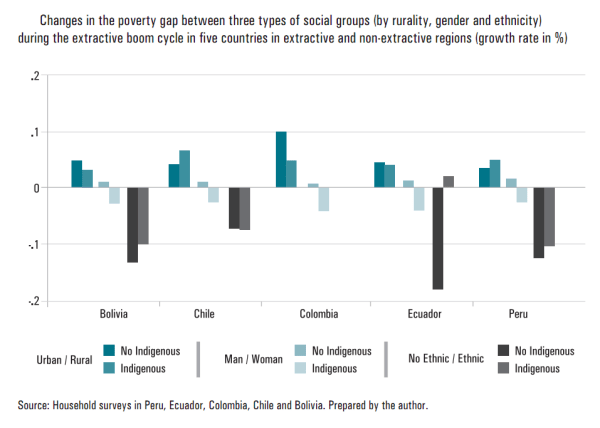
  • The inequality gap between individuals, as measured on the GINI Index, has narrowed, but the gaps between groups of the population have not evolved evenly. For example, the National Resource Governance Institute (of which I’m regional director) recently completed a study of the performance of social indicators during the supercycle that concluded that the poverty gap between urban and rural populations has increased in all countries.  (The report is available in English and Spanish.)  In Peru and Chile, the gap increased more in territories where extractive territories are located, while in Colombia, Bolivia, and Ecuador less so.  The gap between indigenous and non-indigenous populations increased only in extractive territories in Ecuador, decreasing in both extractive and non-extractive settings in the rest of the countries considered.  Regarding gender, in all five countries the gap between men and women increased slightly in non-extractive territories and decreased a bit more in extractive ones.

This report establishes correlations between the increase in extractive activities, the availability of extractive rents, and patterns of inequality reflected in social indicators, but it does not establish a causal relation between such variables.  For example, the data show that urban populations in Peru’s extractive regions have benefited more than rural ones – which some very preliminary research shows is probably because urban centers provide extractive projects with the goods and services they need, while less sophisticated rural areas do not.  At the same time, rural populations have to compete with the extractive projects for those same urban goods and services, and with local governments for the labor force that the public sector contracts to develop infrastructure projects that are paid for through increased revenues delivered by the extractive sector.  This is what we have called the “Cholo Disease.”  A variation of the “Dutch Disease,” it reflects a loss of competitiveness resulting not from large exports of raw materials causing the currency to appreciate, but rather from increases in the cost of labor and of urban goods and services consumed by campesinos.  However, a more definitive explanation regarding exactly how this happens in Peru and in other countries certainly needs further research.

While our data clearly show the impact of mining and hydrocarbons extraction and the resulting expenditure of extractive rents on the poverty gaps between urban and rural populations, men and women, and indigenous and non-indigenous populations, further investigation into the causes and consequences is needed.  The end of the supercycle has already meant a fall in growth rates and extractive revenues, leading to a worrisome rebound in poverty rates.  We are still unable to answer, however, the question of how broadly it will impact the substantial segments of Latin America’s population that emerged from poverty but remains in a vulnerable position – and how it will aggravate poverty gaps among individuals and between groups in extractive and non-extractive territories.

May 16, 2017

* Carlos Monge is Latin America Director at the Natural Resource Governance Institute in Lima.
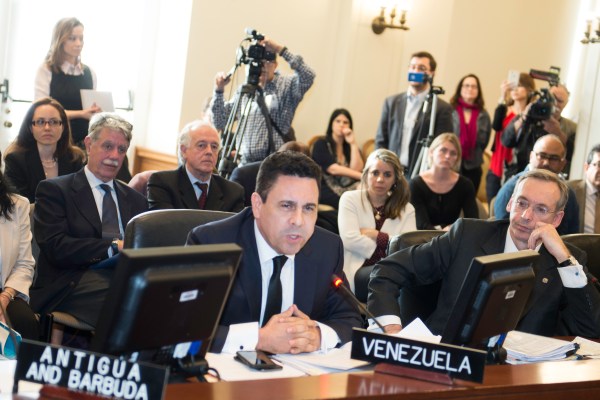
Venezuela- OAS: New Chapter in a Long Story

By Stefano Palestini Céspedes*

Special Meeting of the Permanent Council, April 3, 2017

On April 3, a special meeting of the OAS Permanent Council voted to condemn Venezuela’s action that allows the Tribunal Supremo de Justicia (TSJ) to take over the functions of the National Assembly. / Juan Manuel Herrera/ OAS / Flickr / Creative Commons

Venezuelan President Nicolás Maduro seems determined to validate critics’ claims that the separation of powers in Venezuela has been breached, thereby strengthening diplomatic efforts to force him to reverse course.  After the OAS Permanent Council met for two days to discuss Secretary General Almagro’s call for Caracas’ suspension, Venezuelan courts on March 29 authorized the Tribunal Supremo de Justicia (TSJ) to take over the functions of the National Assembly, and to limit the immunity of the members of the parliament.  The action reinvigorated an exhausted domestic opposition and further infuriated international observers.  Two days later, the TSJ overturned the two rulings after Maduro, casting himself as a mediator between competing constitutional powers, requested it.  These erratic actions signaled the worsening erosion of the rule of law as well as the divisions in the government and the Bolivarian movement.

  • The reversal did not take the edge off OAS General Secretary Almagro’s and others’ condemnation of the power grab as an autogolpe or “self-coup.” The Inter-American Democratic Charter was designed in 2001 precisely to provide the OAS with instruments to deter self-coups in the aftermath of those carried out by Alberto Fujimori (Peru) and Jorge Serrano (Guatemala) in the 1990s.

The TSJ decisions and Venezuela’s defiance didn’t put Almagro’s suspension efforts over the top, but the Permanent Council is now much more actively involved in the crisis.  Venezuela has isolated itself within the Permanent Council.  Speaking at the Council, its delegation severely criticized individual member states the day before the TSJ decisions.  Chile and Peru recalled their ambassadors for consultation after it.  Ecuador, an ally since the time of Hugo Chávez, distanced itself from Maduro.  On April 1, MERCOSUR invoked the Protocol of Ushuaia – the group’s democracy clause – against Venezuela, and it joined Colombia and Chile in a forceful public statement on behalf of UNASUR.  Mexico, historically a jealous guardian of the principle of non-intervention, has assumed the leadership in holding Venezuela accountable for its undemocratic practices.  As a result, the Permanent Council on April 3 approved a resolution condemning the TSJ decisions and committing to “undertake as necessary further diplomatic initiatives to foster the restoration of the democratic institutional system,” including convening a ministerial meeting.

Building a consensus for tougher action in the Permanent Council will be difficult, however.  Last week’s resolution was approved by 19 member states, but four abstained and 10 were absent.  Any proposal to suspend Venezuela will require two-thirds of the members’ affirmative votes.  Although there is still a long way to go to make the OAS part of the solution of the Venezuelan crisis, the General Secretary’s activism has set an important precedent in rallying a majority of states in the Americas to come together to discuss a member’s erosion of democratic principles and institutions – and to condemn the non-democratic actions of a democratically-elected government.  This is a first for the organization, and it is a big step toward fulfilling the original purpose of the drafters of the Inter-American Democratic Charter.

April 10, 2017

* Stefano Palestini Céspedes is a CLALS Fellow and Postdoctoral Fellow at the Department of Political and Social Sciences at the Freie Universität Berlin, where he specializes in international organizations and regional governance.

Latin America: End of “Supercycle” Threatens Reversal of Institutional Reforms

By Carlos Monge*

Monge graphic

By Eduardo Ballón and Raúl Molina (consultores) and Claudia Viale and Carlos Monge (National Resource Governance Institute, América Latina), from Minería y marcos institucionales en la región andina. El superciclo y su legado, o las difíciles relaciones entre políticas de promoción de la inversión minero-hidrocarburífera y las reformas institucionales, Reporte de Investigación preparado por NRGI con colaboración de la GIZ, Lima, Marzo del 2017. See blog text for high-resolution graphic

Policies adopted in response to the end of the “supercycle” have slowed and, in some cases, reversed the reforms that moved the region toward greater decentralization, citizen participation, and environmental protection over the past decade.  Latin American governments of the left and right used the commodities supercycle to drive growth and poverty reduction at an unprecedented pace.  They also undertook institutional reforms aimed at improving governance at large.

  • Even before demand and prices for Latin American energy and minerals began to rise in the early 2000s, some Latin American countries launched processes of decentralization (Colombia and Bolivia); started to institutionalize mechanisms for citizens’ participation in decision making (Colombia and Bolivia); and built progressively stronger environmental management frameworks (Colombia and Ecuador). Peru pressed ahead with decentralization and participation at the start of the supercycle, and when it was in full swing, created a Ministry of the Environment.
  • Implementation of the reforms was subordinated by governments’ overarching goal of fostering investments in the extractive sector. Indigenous consultation rights in Peru, for example, were approved in the second half of 2011, but implementation was delayed a year and limited only to indigenous peoples in the Amazon Basin.  President Ollanta Humala, giving in to the mining lobby, claimed there were no indigenous peoples in the Andes and that no consultations were needed around mining projects.  Local pressure forced a reversal, and by early 2015 four consultation projects on mid-size mining projects were launched.

These reformist policies have suffered setbacks since the decrease in Asia’s and particularly China’s appetite for Latin American energy and minerals has caused prices to fall – and the value of exports, taxes, and royalties, and public incomes along with them.  The latest ECLAC data show a decline in economic growth and a rebound of poverty both in absolute and relative figures.  The gradual fall in the price of minerals starting in 2013 and the abrupt collapse in oil prices by the end of 2015 reversed this generally favorable trend.

The response of the governments of resource-dependent countries has been “race to the bottom” policies, which included steps backward in fiscal, social, and environmental policies.  Governments’ bigger concern has been to foster investments in the new and more adverse circumstances.  In this new scenario, the processes of decentralization, participation, and environmental management have been negatively impacted as local authorities and citizens’ participation – as well as environmental standards and protocols – are perceived by companies and rent-seeking public officials as obstacles to investments.

  • Peru’s Law 30230 in 2014, for example, reduced income tax rates, weakened the oversight capacity of the Ministry of the Environment, and weakened indigenous peoples’ claim public lands.

The correlation between the supercycle years and the progress and regressions in reforms is clear. (click here for high-resolution graphic).  During the supercycle – when huge amounts of money were to be made – companies and government were willing to incorporate the cost of citizen participation, decentralization and environmental standards and protocols.  But now, governments are desperate for new investments to overcome the fall in economic growth and extractive rents, and extractive companies are not willing any more to assume these additional costs.  Those who oppose the “race to the bottom strategy” are fighting hard to restore the reforms and to move ahead with decentralization, increased participation, and enhanced environmental management, to achieve a new democratic governance of the territories and the natural resources they contain.

April 7, 2017

* Carlos Monge is Latin America Director at the Natural Resource Governance Institute in Lima.

UNASUR and the Venezuelan Hot Potato

By Andrés Serbin and Andrei Serbin Pont*

Ernesto Samper UNASUR

Photo Credit: Carlos Rodríguez/ANDES/Flickr/Creative Commons

The Venezuelan crisis, which the hemisphere has turned to UNASUR to resolve, could break the South American organization and overshadow its past successes in regional mediation.  UNASUR was created in 2008, amid the proliferation of regional organizations such as ALBA that excluded the United States and Canada, as an inter-governmental mechanism to promote regional autonomy, conflict prevention and resolution, and the coordination of public policies, particularly regarding social issues, security, infrastructure, and energy.  It has been driven by individual presidents’ leadership and managed by high-ranking officials and, despite rhetoric to the contrary, has not shown deep commitment to greater civil society participation.  Among its important successes have been defusing internal conflicts in Bolivia and Ecuador, as well helping reduce tensions between Ecuador and Colombia, and between Colombia and Venezuela.  In years past, the group’s effectiveness raised questions about the OAS’s comparative ability to deal with regional conflicts.

In recent years, however, UNASUR has suffered decline.  As the commodities boom ended, regional economies were hit hard, and internal political factors started to change the political map, undermining leftist governments and enabling the election of center-right governments less committed to the UNASUR vision.  This coincided with the profound decline of Venezuela as it fell into the abyss of hyperinflation, debt, scarcity, criminality, and debilitating political instability.  The Venezuelan opposition’s achievement of a parliamentary majority last December, after 17 years of Chavista hegemony, brought no relief as the government reacted with an all-out effort to block it.  UNASUR, which first sought to foster a dialogue between the government and the opposition in 2013, has repeatedly failed to broker a solution.  In May 2016 the organization turned to three former heads of state – Spanish Prime Minister José Luis Rodríguez Zapatero, Dominican Lionel Fernández, and Panamanian Martín Torrijos – to attempt mediation again, to no avail so far.  The government continues to resist change, and the opposition, in addition to remaining firm in its demands of a recall vote to remove Maduro and the unconditional release of political prisoners, has shown persistent mistrust of UNASUR and its representatives, whom they perceive as allies of the government. Such suspicions may not be unfounded, considering Zapatero’s objections regarding the participation of some relevant opposition leaders in the dialogue process.

For the first time in its almost 10 years of existence, UNASUR faces potential failure in its attempt to solve a strategically important political crisis in the region.  To hold off an initiative by OAS Secretary General Almagro to enforce the Inter-American Democratic Charter against Venezuela, the OAS Assembly called on UNASUR and the former presidents to renew mediation efforts yet again last month, but neither Maduro nor the opposition has budged from their fundamental positions.  The situation is, again, stalled.  Indeed, in the context of declarations, extraordinary sessions, initiatives and trips, the commitment to end the crisis in Venezuela still appears quite limited among OAS members, including UNASUR.  Governments supporting dialogue seem most eager to avoid risking valuable political capital both in the domestic and the international spheres.  Neither UNASUR nor the OAS is prepared to handle the Venezuelan hot potato, and both stand to lose credibility for this failure.  But UNASUR’s general lack of leadership and direction in recent years suggests that failure in this crisis, with implications beyond Venezuela’s borders, would be potentially fatal to the organization.  UNASUR, with previous achievements in social, political and regional matters, must now prove that it is still a viable regional mechanism, able to deal collectively with the political turbulence of a changing regional landscape.

July 6, 2016

* Andrés Serbin and Andrei Serbin Pont are members of the analysis team of the Coordinadora Regional de Investigaciones Económicas y Sociales (CRIES), a Latin-American think tank.

Political Upheaval in South America

By Eric Hershberg

MarchaVenezuela

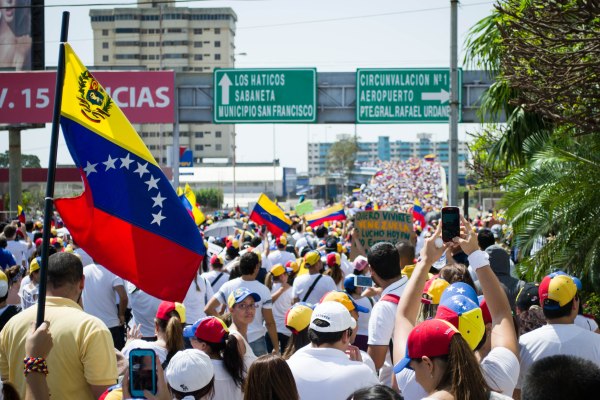
Thousands of protesters in Maracaibo, Venezuela. Photo Credit: Google Images / Creative Commons

2016 is proving to be this century’s most complicated year to date for South American political systems, and the coming months will be critical to assessing how well the region’s democracies can govern amid declining economic conditions and spiraling corruption scandals.  Brazil and Venezuela – two very different systems with very different problems – are suffering the most visible crises.

  • In Venezuela, where the Bolivarian project has descended into an incompetent Putinism in the tropics, is collapsing under the weight of monumental mismanagement of the economy. Many of the ills of the Venezuelan petrostate predate Chavismo, but during a collapse in oil prices President Maduro has doubled-down on profligate economic policies introduced by Hugo Chávez, bringing the country to catastrophe made worse by increasingly draconian repression of loyal and disloyal opposition alike.
  • President Dilma Rousseff’s mismanagement of coalitions in a presidential system predicated on coalition-building has opened the way to political and economic implosion in Brazil.  Contrary to the fervent assertions of important segments of the Workers Party (PT), her impeachment does not precisely constitute a coup, but it may indeed amount to an ill-advised bending of institutional mechanisms by cynical legislators and aggressive judges, egged on by rightist sectors whose commitment to democracy is in fact dubious.  Dilma didn’t invent the corruption and footloose budgetary practices that have been her undoing, but her fall does respond to overwhelming popular rejection of her performance.  Interim President Temer’s appointment of an entirely white male cabinet that includes representatives of some of the country’s most retrograde interests suggests abandonment of many of the most laudable achievements of more than a decade under PT rule – and more backlash as well.

Other institutional crises may be on the horizon.  Ecuadoran President Rafael Correa pursued a high-risk strategy of debt-driven expansion of the state, which is not sustainable amid economic contraction.  Argentine President Mauricio Macri’s honeymoon may prove short-lived.  Much-needed economic reforms are likely to provoke even greater inflation and have already stoked resistance from the Peronist opposition.  Macri enjoys some unprecedented assets – for the first time non-Peronists also control the city and province of Buenos Aires– but Argentine public opinion overwhelmingly favors statist economic policies that he aims to dismantle, and no non-Peronist elected president has completed his term in office since the rise of Peronism as a political force.  Chilean President Michelle Bachelet, wounded by a drop in mineral export revenues and comparatively minor corruption allegations involving her daughter-in-law, reshuffled her cabinet earlier this month but continues to tank in the polls.  Latinobarómetro reports that 70 percent of Chileans believe their political system doesn’t work.

It’s not hard to envision other relatively stable South American democracies facing hard times ahead.  The June 5 presidential runoff in Peru could leave the country deeply polarized, especially if Keiko Fujimori, heiress to the country’s darkest episode in recent history, wins.  It is not a foregone conclusion that Colombian President Juan Manuel Santos, who has staked his second term on a long-awaited and much-needed peace accord, will secure its ratification, risking lameduck status for the remainder of his administration.  If the presidents elsewhere appear to be weathering the storm, democratic governance nonetheless faces important challenges.  It would be rash to predict that democracy will fail the test – and that such failure will give rise to a new era of authoritarian rule – but it’s clear that the region will witness widespread instability during the coming years.

May 26, 2016

Brazil: Crises Hindering Foreign Policy

Dilma 2016

Photo Credit: Marcelo Camargo / Agência Brasil / Flickr / Creative Commons

by Tullo Vigevani*

The pace of Brazil’s rise in international affairs since 2000 is likely to be slowed by the multiple crises facing President Dilma Rousseff’s government and the private sector, but Brasilia will strive as best it can to maintain its global and regional priorities.  Political tensions are soaring amid corruption indictments and severe economic contraction – the nearly 4 percent decline in GDP in 2015 is expected to be repeated this year, with increasingly negative social consequences.  The government faces growing criticism that extends beyond the principal opposition parties: its own party base and supportive labor unions and social movements criticizing Rousseff’s administration.  The corruption investigations have spread far beyond the national oil company, Petrobras, and into corporate networks across economic sectors, exacerbating a climate of growing anxiety.  Major media are railing against the President and her predecessor, Luiz Inacio Lula da Silva, whose detention for questioning by a judge last week deepens the crisis and further dims the already faint prospects for a restoration of stability in 2016.

These developments have created an element of paralysis in foreign policy.  Foreign minister Mauro Vieira, like his two immediate predecessors – Luis Alberto Figueiredo (2013-2015) and Antonio Patriota (2011-2013) – has been unable to sustain the “active and proud” policy of Lula-era Foreign Minister Celso Amorim (2003-2010).  After basking not long ago in the fruits of its assertive foreign policies – including selection as host of the 2016 Olympics – Brazil’s government now is dealing with matters such as the Zika virus and microcephaly taking front stage.  Rousseff on one hand is barraged by criticism of a lack of macroeconomic rigor and the failure to better integrate Brazil’s economy into global production chains, and on the other she is criticized for slow investments and development policies.  Her ambition to promote South American trade and economic integration is being undermined by the recessionary pressures confronting Brazil and neighboring economies buffeted by the end of the commodities boom.

  • MERCOSUR remains a priority for the administration. Criticism by liberal economists will mount, however, that Mercosur, as a customs union, discourages potential agreements with developed economies, particularly the United States, thus exacerbating Brazil’s de-industrialization.  There is evidence that Mercosur helps companies that produce high value-added goods: whereas in 2014 manufacturing accounted for 77 percent of Brazilian exports within Mercosur, it accounted for only 4 percent of exports to China.  (The figures for the European Union and the U.S. were 37 and 55 percent, respectively).  Progress on trade agreements with the United States and other developed countries appears unlikely, but agreements on trade promotion seem likely.
  • Cooperation with UNASUR will remain a priority as well, but plans that rely on Brazil’s ability to provide resources face new political and economic restraints. The Ministries of Finance and Planning and the Central Bank reportedly are going to rein in contributions of the Brazilian Development Bank (BNDES), and funding for the South American Council of Infrastructure and Planning (COSIPLAN).  Initiatives such as the South American Defense Council will continue.  Clearly, state enterprises such as Petrobras and private-sector conglomerates will face limits on their foreign activities, reducing Brazil’s influence in the region.

The relationship between domestic and international affairs is inescapable, and Brazil is no exception.  But even as the domestic political and economic conditions deteriorate for a period, the country will not turn inward or abandon its interest in the international arena, particularly with China and the BRICS.  However rough the road ahead, President Rousseff’s government appears likely to remain steadfast in its approach to regional diplomatic and political organizations – including the Community of Latin American and Caribbean States (CELAC) and the OAS – even though resources will be tight.  It will remain active, within its diminished capacity, in an array of multilateral settings ranging from UN peacekeeping operations and the FAO, to the G-20, WTO and IMF.  Moreover, senior officials in Brasilia, including in the Foreign Ministry, appear committed to stronger bilateral ties with core partners, particularly the United States, and continued Brazilian support for democratic stability throughout Latin America, including in resolution of the Venezuelan crisis.  Even though resources and performance may suffer, a robust role in the hemisphere appears likely to remain a pillar of Brazil’s foreign policy.  The idea of Brazil’s autonomy in the international arena has deep roots, and whatever the domestic criticism leveled against the Rousseff administration, these will be matters of interpretation rather than a fundamental questioning of Brazil’s greater insertion into global processes and of political and economic interdependence.

March 7, 2016

*Tullo Vigevani is Professor of Political Science and International Relations at the State University of São Paulo (UNESP) and a researcher at the Center for Studies on Contemporary Culture (Cedec) and the Brazilian National Institute of Science and Technology for Studies on the United States (INCT-INEU), in São Paulo.

Zika Challenges Mount

By Rachel Nadelman* and Fulton Armstrong

Scientists and Zika

Photo Credit: Pan American Health Organization / Creative Commons / Flickr

While scientists struggle to confirm their theories over the link between the Zika virus and the dread health conditions it apparently causes, national and regional leaders face the monumental task of addressing popular anxiety that’s spreading faster than the virus itself.  The Health Minister in Brazil – site of the largest outbreak of microcephaly – has said he is “absolutely sure” that the virus is causing women to give birth to babies with the condition, characterized by abnormally small heads and serious developmental deficits.  The head of the World Health Organization’s emergency response team said last week (2/19) that the “virus is considered guilty until proven innocent,” but that it will take four to six months to even potentially be sure.  In the meantime, other questions are emerging:

  • Argentine scientists calling themselves “Physicians in the Crop-Sprayed Villages” suspect that the outbreak has been caused by pesticides. They note that thousands of Zika-infected pregnant women in Colombia – where the larvicide pyriproxyfen has not been added to drinking water as in Brazil – have delivered normal babies.  El Salvador, also hard hit by Zika, has not reported Zika-related microcephaly cases.  Other scientific authorities, including the U.S. National Academy of Sciences, question the evidence for this theory, and the later arrival of the disease in these countries means the consequences for infected expectant mothers cannot be fully determined.  Research is ongoing.
  • In lowland Colombia, along the Caribbean Coast, the virus is being blamed for an outbreak of Guillain-Barre syndrome, when victims’ immune systems damage nerve cells and cause pain, weakness, sometimes paralysis, and even death. Scientists are investigating.
  • Mental health experts say the Zika virus closely resembles some infectious agents that have been linked to autism, bipolar disorder, and schizophrenia. They can’t confirm their suspicions.
  • Entomologists and climatologists are warning that global warming will accelerate the spread of Zika and other diseases transmitted by the mosquito Aedes aegypti, which thrives in warmer, more humid environments. They caution that the number of people currently exposed to the mosquito, roughly 4 billion, will grow steadily.  Evidence is inconclusive.
  • Other theories include that the birth defects are caused by genetically modified mosquitoes released by a British company in Brazil to combat dengue; and by vaccinations given to pregnant women to prevent rubella and pertussis. But doctors and scientists have so far rejected each one.

Regional organizations and governments are taking whatever actions they can while awaiting more conclusive science.  Briefing the OAS, the Assistant Director of the Pan American Health Organization called on countries to “to mobilize to eliminate mosquito breeding sites in every corner where they may be” and pledged PAHO’s support to do so.  Brazil has formed special teams to travel around the country to rigorously quantify cases of Zika and possible links with microcephaly.  U.S. President Obama has asked Congress for US$1.9 billion and approval to reprogram funds left over from Ebola eradication efforts to deal with Zika in Latin America and the United States.  Cuban President Raúl Castro has mobilized 9,000 troops and police to spray neighborhoods and eliminate standing water in which the mosquitoes breed.

The “epidemic,” as some leaders are calling it, will be difficult to respond to even after scientists certify the mosquito-virus link.  Solving the mystery of the higher concentration of microcephaly cases in Brazil, or linked to Brazil, will also be essential to developing an effective public health response.  Eradicating all mosquitos would be a monumental undertaking – further complicated by the fact that the history of pesticides shows equal or even greater risks to citizen health when used widely.  The Aedes mosquito sucks the blood of both rich and poor, but population density and weak infrastructure — allowing for stagnant water – makes lower-income communities much more vulnerable.  Focusing on the mosquito may not be enough, moreover, because there are early indications that Zika can be sexually transmitted.  Traces of Zika have been found in breast milk, but the implications remain unclear.  Such questions fuel popular panic, increasing the risk that governments will make rash decisions that could have  profound costs.

February 26, 2016

* Rachel Nadelman is a PhD candidate in International Relations at the School of International Service.  Her dissertation research focuses on El Salvador’s decision to leave its gold resources unmined.

Ignoring MERCOSUR and UNASUR at Your Peril

By Thomas Andrew O’Keefe*

Mercosur map

Participating countries in MERCOSUR. Image Credit: Immanuel Giel (modified) / Wikimedia / Creative Commons

Pundits who dismiss MERCOSUR and the Union of South American Nations (UNASUR) as failed attempts at Latin American economic integration should look again.  MERCOSUR has presided over an explosion in intra-regional trade among its four original member states (Argentina, Brazil, Paraguay, and Uruguay) from just over US$ 5 billion at its launch in 1991 to US$ 43 billion by 2014.  UNASUR, for its part, is credited with thwarting a coup attempt against Evo Morales in 2008 and putting a damper on continental arms races.

  • MERCOSUR and UNASUR member countries have taken additional important steps toward convergence since 2014, when MERCOSUR’s highest governing body adopted “CMC Decision 32,” which allows initiatives pursued by either collective to be binding on both if they arise from a set of goals and objectives common to both. The document reaffirms the UNASUR founding treaty stipulation that “South American integration shall be achieved through an innovative process that includes all of the achievements and advances by the processes of MERCOSUR and CAN [Andean Community].”  Chile has spearheaded this effort as a means of reducing duplication of efforts, and is also attempting to bridge ideological differences between the Pacific Alliance (Chile, Colombia, Mexico, and Peru) and MERCOSUR to further build Latin American unity.

Given the relentless negative assessment of both integration projects, multinational pharmaceutical companies were caught off guard when MERCOSUR and UNASUR forced them late last year to make substantial price cuts for public-sector purchases of Darunavir, an antiretroviral to combat HIV-AIDS, as well as Sofosbuvir, used with other medications to treat Hepatitis C.  Both drugs are on the World Health Organization’s List of Essential Medicines.  As a result of CMC Decision 32/14, the Ministers of Health of all the South American nations met in Montevideo on September 11, 2015, and launched a joint MERCOSUR/UNASUR committee to negotiate with multinational pharmaceutical companies on the prices for bulk purchases of certain high-priced drugs.  The committee, made up of representatives from each government’s agency responsible for purchasing medicines, won major price cuts last November – a steep reduction for Darunavir from Hetero Labs as well as lower prices with Gilead for Sofosbuvir.  The new costs were premised on the lowest amount charged to any one of the member governments, and enabled Chile’s Ministry of Health to pay 90 percent less than what it previously paid for Darunavir.  The South American governments as a whole are expected to save US$ 20 million in 2016 on purchases of this anti-retroviral.  A proposed 14 percent reduction in the cost of the combination Sofosbuvir-Ledispaver drug for Hepatitis C – if accepted by the MERCOSUR/UNASUR committee – would enable further savings.

The South American governments have their eyes set on several additional high-priced medications, with a particular focus on drugs used to treat cancer.  In order to aid the committee’s work, UNASUR is creating a data bank of the prices charged by the multinationals for specified medicines purchased by the public health sector in each member state.  The fact that the purchases are made jointly through the Pan American Health Organization’s already existing Strategic Fund opens the possibility that countries in Central America and the Caribbean can benefit as well.  It also means that all these countries can access the Fund’s capital account and do not need to have the cash in hand to acquire medications required to address public health emergencies.  MERCOSUR and UNASUR – often dismissed as ineffective – are demonstrating that integration produces tangible results.

February 11, 2016

* Thomas Andrew O’Keefe is President of San Francisco-based Mercosur Consulting Group, Ltd. and is former chair of Western Hemisphere Area Studies at the U.S. State Department’s Foreign Service Institute (2011-15).

Correction: Due to an editing error, an earlier version of this post mistakenly stated that “a 14 percent reduction in the cost of its combination Sofosbuvir-Ledispaver drug for Hepatitis C will enable Chile’s Ministry of Health to pay 90 percent less than what it previously paid for Darunavir.”  The outcomes of the cost negotiations for the two medications are unconnected.

The Politics of the Refugee Crisis in Latin America

By Luciano Melo*

Syrian refugees Uruguay

Syrian refugees arriving in Uruguay. Photo Credit: International Organization for Migration / Flickr / Creative Commons

Several Latin American governments have pledged to accept Syrian refugees – part of one of the largest refugee movements in history – but support for robust resettlement programs appears likely to fall short.  According to the United Nations Refugee Agency (UNHCR), some 6 million Syrians have been displaced within their country and 4 million more have fled abroad, mostly to Turkey, Lebanon, Jordan, Iraq, and Egypt.  One million have entered Europe, putting a heavy burden on the EU, and the United States has agreed to settle 10 thousand (although the refusal by 31 U.S. governors to accept them raises questions about follow-up).  Public support for receiving migrants dropped in the aftermath of the Paris attacks in November, but France has announced that it will admit 30,000 new refugees in the next two years, a measure that President Hollande characterized as the country’s “humanitarian duty.”

Several Latin American governments also have agreed to absorb refugees.

  • Brazil, with ties to Syrian immigrants since the 19th century and one of the largest communities outside Syria, has promised to accept 20,000 refugees from the current conflict. More than 8,000 have already settled in Brazil.
  • Venezuela also set a goal with the UNHCR of receiving 20,000 Syrians, but President Nicolás Maduro’s defense of Syrian President Bashar al-Assad as “the only leader with authority in Syria” suggests low enthusiasm for implementation.
  • Chile and Argentina have had modest programs to settle Syrian refugees since the beginning of the war. Chilean President Bachelet has agreed to settle 100 Syrian families, whereas Argentina’s “Syria Program” agreed to offer permanent residence to 300 Syrians after three years.
  • Uruguay, which resettled Syrian families from Jordanian camps in 2004, recently suffered a setback when refugees in September protested in front of a government building complaining about the cost of living and lack of jobs. Observers estimate that almost 100 Syrians will actually leave the country.

The cost of settling families and individual refugees can be high, and each country will face challenges in meeting their commitments.  Brazil is in a deep crisis – with negative GDP growth expected next year, impeachment processes initiating against President Dilma, and gigantic corruption scandals rocking the political system.  The Venezuelan economy is in shambles, with skyrocketing inflation, and the country appears to be in permanent political crisis.  Chile has experienced an economic slowdown since the price of copper fell, and Argentina has been trying to recover from recession and double-digit inflation rates in the first months of the newly elected President Macri.  Even Uruguay expects lower growth – down to 2 percent from the previously estimated 2.5 percent – and a fiscal deficit of 3.6 percent of GDP.  The good news is that accepting refugees does not necessarily affect the economy negatively.  Turkey and Lebanon, which have resettled 2.2 million and 1.8 million since the war started, are expected to have 4 percent and 3 percent growth in the coming year, confirming that the issue is mostly political rather than economic.  In Latin America, in contrast with the U.S., the crisis has not been used by leaders to polarize public opinion.  In fact, the topic is barely on the radar of common citizens, and the media rarely cover it.  The Syrian war and ISIS terrorism are remote concerns, and more pressing local matters – recessions, corruption scandals, and impeachments – take precedence.

January 4, 2016

* Luciano Melo is a PhD candidate at American University’s School of Public Affairs specializing in comparative politics.

Pope Francis’s Pastoral Mission

By Alexander Wilde*

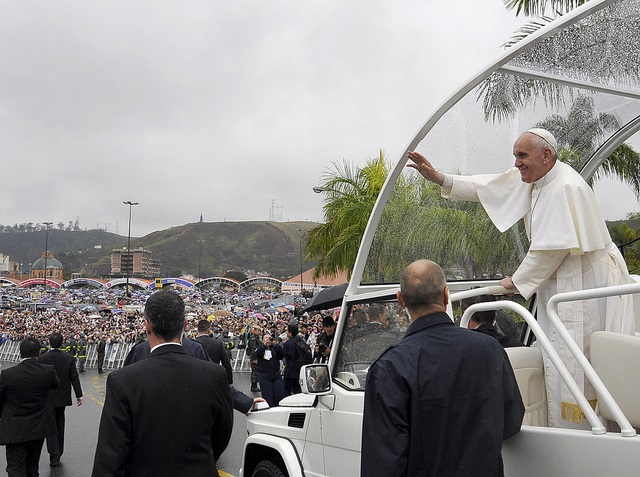
Photo Credit: Ministério da Defesa / Flickr / Creative Commons

Photo Credit: Ministério da Defesa / Flickr / Creative Commons

The primary purpose of Pope Francis’s trip to Latin America – like all papal visits since Pope Paul VI made the first in 1968 before the historic meeting of Latin American bishops in Medellín, Colombia – is pastoral.  The media are grasping for the implications of his visiting Ecuador, Bolivia, and Paraguay this week, looking for a theme, for example, in the common factors of their poverty, indigenous populations, and environmental conflicts.  Others wonder if this Argentine pope, well acquainted with Peronism, carries a political message about the dangers of left-wing populism.  Yet others posit this trip in terms of religious “competition” to recapture market share from Evangelicals.

This visit and this extraordinary pope, however, are focused on his broader pastoral message – conveying to the faithful his deepest beliefs about what their faith demands of him and of them.  Francis, in contrast to his immediate predecessors, has given a strongly social orientation to this pastoral ministry, while reinforcing its spiritual foundation in personal faith.  In doing this, he has embraced the renewal wrought by the Second Vatican Council (1962-65) and what he apparently judges the positive insights of liberation theology.  Christians must live their faith in the world and their times, and that includes engaging with other “men and women of good will” to realize God’s purposes for humanity.  Pope Francis repeats that phrase, taken from Pope John XXIII, in his new environmental encyclical Laudato Si’.  Visiting these three countries – in which conflicts over land, oil, forests, and water have mobilized social protests – presents clear opportunities to speak out about how the encyclical’s analysis and moral judgments may apply in concrete settings.

Pope Francis brings to his pastoral visit a belief that he and the Catholic Church should “meet people where they are.”  During 15 years as Archbishop of Buenos Aires, that meant being an active presence among the poor in the villas miserias.  Now he links that pastoral injunction to global issues of poverty, development, and the environment.  He appears to feel a deep responsibility to spur action but at the same time a strong grasp of the intractability of the larger processes, political and natural, involved.  He has said more than once that he expects his papacy to be brief, suggesting that he may view this trip within a God-given responsibility to use his limited time and moral authority to help us confront the most fundamental problems of our future together in this world.  Latin Americans have shown growing awareness of these problems.  Their response to this trip is probably not best judged by Mass attendance but rather by whether they can take concrete steps to link, as Francis does, the “cry of the poor” and the “cry of the earth” in their societies. 

July 7, 2015

* Alexander Wilde is editor of Religious Responses to Violence: Human Rights in Latin America Past and Present (University of Notre Dame Press, forthcoming December 2015).