Latin America United Against Violence in Gaza

By Aaron T. Bell

Sergio / Flickr / Creative Commons Attribution-NonCommercial-ShareAlike 2.0 Generic (CC BY-NC-SA 2.0)

Sergio / Flickr / Creative Commons Attribution-NonCommercial-ShareAlike 2.0 Generic (CC BY-NC-SA 2.0)

Israel’s assault on Gaza this summer provoked sharp criticism from Latin American governments.  Condemnation came not only from Cuba, a long-time critic of Israel, and from Bolivia, Venezuela, and Nicaragua, which have been without diplomatic ties to Israel since cutting them after previous conflicts in Gaza in 2009 and 2010.  This summer’s UN-estimated 1,500 civilian deaths also provoked outrage from center-left governments, as Brazil, Chile, Ecuador, El Salvador, and Peru all withdrew their ambassadors.  At the Mercosur summit at the end of July, Brazil, Venezuela, Uruguay, and Argentina issued a joint statement in which they criticized Israel’s “disproportionate use of force…which has almost exclusively affected civilians.”  And one of the largest popular demonstrations worldwide against the Israeli action took place in Chile, home to hundreds of thousands of Palestinian descendants.

Latin American interest in Israeli-Palestinian affairs is deeply rooted in the past.  Waves of immigration beginning a century ago have made the region home to the largest Palestinian diaspora outside the Arab world.  Latin American governments provided crucial support for the 1947 UN Partition Plan for Palestine that led to the creation of the state of Israel, but they roundly condemned the occupation of the Gaza Strip 20 years later.  In the Cold War era, Israel provided military hardware to rightwing military regimes in the region while the Palestine Liberation Organization, more leftist than Islamic in its revolutionary views, lent political and economic support to the Sandinista government in Nicaragua.  Contemporary Latin American governments have taken a balanced approach in their relations with Israel and the Palestinians.  All but Colombia, Mexico, and Panama have recognized a Palestinian state based on national borders prior to the 1967 Arab-Israeli war, and trade with Israel has flourished.  Brazil is the top destination for Israeli exports, totaling over $1 billion per year.  In addition, Israel signed free trade agreements with Mercosur in 2007 and 2010; became an official observer to the Pacific Alliance (Chile, Colombia, Mexico, and Peru) in 2013; and in May 2014 approved a four-year, $14 million plan to boost trade with the PA nations and Costa Rica.  Israel’s recent efforts to further trade in Latin America ironically developed out of a desire to shrug off some of its dependency on Europe, where criticism of Israeli policy has become widespread and boycotts of Israeli goods are being organized by advocates of the Palestinian cause.

This summer’s fighting in Gaza chilled diplomatic relations between Latin American governments and Israel.  The Israeli Foreign Ministry described the withdrawal of Latin America ambassadors as a “hasty” decision that would only encourage Hamas radicalism, and it struck a nerve in Brazil when dismissing its “moral relativism” as an example of “why Brazil, an economic and cultural giant, remains a diplomatic dwarf.”  But both Israel and Latin America stand to gain from stronger economic ties, and with the exception of Chile’s suspension of trade talks, there are no pending signs that economic relations will suffer further now that this round of fighting in Gaza has come to an end.  The significance of this summer’s events lies instead in the autonomous decision by Latin American governments of all political stripes to act in favor of peaceful conflict resolution and the protection of civilians enveloped by the violence of war.  The Assad regime’s massacre of its own citizens in Syria in recent years provoked a more reticent condemnation from Latin America’s center-left governments and regional blocs, which backed a negotiated solution to the conflict while strongly opposing the possibility of foreign military intervention.  Without the specter of a wider conflict looming over this summer’s Gaza crisis, Latin American governments seized the opportunity to stake out a firmer position.  The region’s reaction to future atrocities – which may come sooner rather than later as the US prepares to battle the “Islamic State” in Syria and Iraq – will show how durable this new approach will be.
Middle Class Abandons Public Education

By Osvaldo Larrañaga*

Photo credit: NoticiasUFM / Foter / Creative Commons Attribution-NonCommercial 2.0 Generic (CC BY-NC 2.0)

Photo credit: NoticiasUFM / Foter / Creative Commons Attribution-NonCommercial 2.0 Generic (CC BY-NC 2.0)

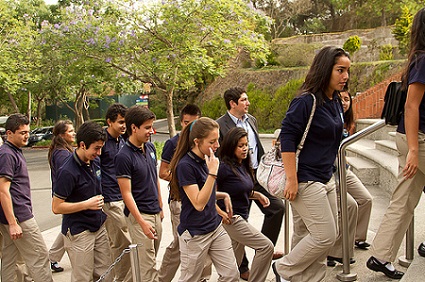
Seven of the most developed countries of Latin America – Argentina, Brazil, Chile, Colombia, Costa Rica, Peru and Uruguay – are experiencing an exodus of the middle class from public schools to private schools.  In Clases Medias y Educación en América Latina, my colleague María Eugenia Rodríguez and I present evidence that in these countries private schools offer primary and secondary middle-class students better opportunities to learn, better resources, and in almost every country a more disciplined learning environment.  However, the shift may worsen the region’s already deep inequality because private education is likely to multiply inequality.  Private schools show signs of high levels of social segregation, with implications for countries’ social cohesion and development.  On average, 87 percent of the students in these schools belong to the same social class (be it middle- or upper-class), as compared to 42 percent in the public schools.  According to our research, the challenge for governments is to strike the balance between allowing families to give children the best education they can and ensuring social cohesion and equity.

Some countries outside Latin America have achieved this virtuous balance. In the Netherlands, Belgium and Ireland, governments finance private schools so that families’ financial resources are not a factor in school selection.  In those countries, 60-70 percent of students from different social classes attend private schools, with excellent academic results.  Dutch and Belgian students place at the top in the Program for International Student Assessment (PISA) test, while Irish students score at the average of the OECD nations.  Another model – in Finland, Canada and New Zealand – produced the highest PISA scores outside Asia.  In those countries, 93-97 percent of students attend public schools, proving that public management of education is not incompatible with excellence.

Another key development needing attention in the region is that the number of students in higher education has tripled in the past 15 years as the middle and emerging classes see education as the most effective means for social mobility.  Increased demand for tertiary education has been covered primarily by private rather than public institutions, yet governments have done little to ensure the quality of the education students receive or to assist them in financing it.  Failure to address these issues invites a scenario that could result in frustration and social tensions.  Our research indicates that the problem – and its solution – has three principal aspects: the need to create information systems that enable the evaluation of graduates; the need to introduce mechanisms for financial aid for students attending private institutions; and the need for an accreditation process that ensures that financial aid goes to students attending quality institutions of higher education.  With such reforms, Latin America stands a much better chance of advancing social equity even while relying increasingly on the private provision of education.

*Dr. Larrañaga coordinates the poverty and inequality reduction area at UNDP in Chile.

Climate Change: Creating Spaces for Action

Pacchanta women with Ausangate Glacier in the background.  Photo credit: Oxfam International / Foter / Creative Commons Attribution-NonCommercial-NoDerivs 2.0 Generic (CC BY-NC-ND 2.0)

Pacchanta women with Ausangate Glacier in the background. Photo credit: Oxfam International / Foter / Creative Commons Attribution-NonCommercial-NoDerivs 2.0 Generic (CC BY-NC-ND 2.0)


The Organization of American States (OAS) has resolved to strengthen its role in addressing climate change, but it has yet to demonstrate that it can convene Latin American countries around this urgent issue.  Participants at a recent OAS roundtable agreed that Latin American leaders have moved beyond debating the existence of climate change and are now focused on mitigating its immediate and future effects.  Of primary concern are the potentially devastating economic consequences of climate change for the region, which the Inter-American Development Bank estimates will reach $100 billion per year by 2050 – severely jeopardizing national economies that are currently growing at a healthy rate.  Based on recent climate change reports and initiatives, the potential of a looming transnational cataclysm is driving a sense of urgency for action within an effective regional framework.

Within the consensus for action, there will be competing priorities.  Climate change presents different challenges to different parts of Latin America and the Caribbean.  In Peru, for example, a major concern is glacier melt in the Andes, which affects fresh water resources, agricultural irrigation, and sustainable urban development.  This has created a need not only for new dams and reservoirs to redirect water, but also for managing internal social conflicts generated by an increasing scarcity of basic resources.  In the Caribbean, where tourism revenue represents the greatest proportion of the regional economy (14 percent of GDP), the top priority is managing the triple threat of rising sea levels, the loss of coastal livelihoods, and intensifying weather conditions.  And in Brazil, as Evan Berry highlighted here recently, deforestation, carbon markets and land use, among other concerns, need to be addressed.

The OAS would appear to be the logical forum to address these issues and provide a negotiating framework regarding climate change.  On recent non-environmental issues, however, the OAS has struggled to coordinate actions and lost prestige among many in Latin America.  The OAS response toward Honduras following the 2009 presidential coup was divisive and ultimately was end-run when the United States cut a deal with the coup regime.  The 2012 OAS assembly in Bolivia was plagued by persistent absenteeism of member states.  Washington has repeatedly pressed the OAS toward a more political agenda, especially pressing for condemnation of Venezuelan Presidents Chávez and Maduro, and has even threatened to suspend its contributions to the organization’s budget.  Insofar as the OAS is perceived as a U.S. proxy, its effectiveness on difficult issues with a north-south spin, like climate change, is undermined.  At the same time, the OAS is competing with other regional bodies, such as UNASUR and CELAC, and the region has raised its profile in international venues such as the 2010 alternative climate summit held in Bolivia after UN negotiations in Copenhagen failed.  With the UN’s 20th Conference of Parties (COP20) taking place in Lima in December 2014, Latin America will again be center stage during conversations on ways to strengthen and replace the 1997 Kyoto Protocol.  Should the OAS overcome its problems of effectiveness and image, and participate successfully in the current dialogue around climate change, this issue could redefine its existing agenda and give it relevance for years to come.

Equal Pay Day in Latin America

By Yazmín A. García Trejo*
Embed from Getty Images
For Latin American women, “Equal Pay Day” – observed on April 8 in the United States – would be in mid-May.  The day symbolically marks the time of year that women’s earnings finally catch up to men’s earnings during the previous year.  In the United States women make, on average, 77 cents for every dollar that men do.  Women have made great advances in Latin America, but they still earn 36 percent less than men, according to the International Labor Organization (ILO).  In many countries of the region, the gender gap in education has closed; now women and men have similar levels of education, and the World Bank’s Gender at Work report indicates that women increased labor force participation by 35 percent between 1990 and 2012.  Nonetheless, women have to work an additional four and a half months to catch up with men’s earnings.  According to an AmericasBarometer survey in 2012, this inequality also occurs within families; 54 percent of working women earn less than their partners.

The debate around the pay gap points to individual and institutional factors as the main causes.  For various personal and social reasons, according to “New Century, Old Disparities,” a 2012 co-publication of the Inter-American Development Bank and the World Bank, women tend to gravitate toward occupations with lower pay ascribed to traditional gender roles such as education (teachers) and healthcare (nurses).  Women are also more likely to settle for lower salaries when hired, and work more in part-time jobs due to their dual responsibilities as providers and caretakers of children or elderly parents.  Institutionally, women still experience pay discrimination and have less access to managerial occupations.  Public policies on women in the workplace reinforce the dual role of working women in Latin America.  According to the 2013 Global Gender Gap Report, Latin American and Caribbean women get an average of 14 weeks of maternity leave, but men get paternity leave in only 9 of the 15 countries – and then only for an average of about one week.

The social and political implications of the wage gap are far-reaching.  Women with lower earnings not only are unable to create wealth as men in similar positions can; they cannot secure a retirement plan that provides them and their families security.  Lower wealth, moreover, translates into lower political participation. According to the 2012 AmericasBarometer survey, wealthier people are more likely to vote, are generally more knowledgeable about how government works, feel they understand national politics, tend to participate more on leadership roles at the community level, and are more actively involved in electoral campaigns.  A disadvantage on wealth and longer work hours undermine women’s ability to invest in learning about or participating in politics.  “Equal Pay Day” in Latin America in the next two weeks would mark not just women’s reduced financial clout but an obstacle to their broader contributions to society as well.  With pay inequality, we all lose.

*Yazmín A. García Trejo is a PhD candidate at the University of Connecticut’s Department of Political Science and a Research Fellow at CLALS.

The “Informal City” and Latin America’s Urban Future

By Robert Albro

Embed from Getty Images

Latin American cities are powerful engines for growth, but sustaining that progress will require moving workers from the informal into the formal sector.  Latin America is the most urbanized continent in the world, and its cities are now the region’s main economic engine.  Its ten largest cities account for about half of the region’s economic output, and their share of economic activity is projected to increase by 2025.  They are also increasingly aspiring to insertion in the global economy. And mayors often assume a CEO-like autonomy in attracting international capital, business, and talent to their cities, while pursuing policies designed to enhance their municipal standing as critical global nodes, hubs or platforms of innovation, manufacturing and services.  Strategies include international city-to-city cooperation, corporate and multinational partnerships to fund infrastructure, global policy forums for mayors to share best practices regarding sustainability or climate change, and new urban planning intended to increase connectedness to global information flows.  Citi and the Wall Street Journal in 2013 judged Medellín, Colombia, the “most innovative city” in the world.  San José, Costa Rica, has become a telemarketing outsourcing center, in large part because of its well-prepared workforce.  And cities like Monterrey, Mexico, and Curitiba, Brazil, are emerging tech hubs.

Over the last several decades, however, rapid urban growth in Latin America has also greatly expanded the urban informal sector.  With sub-Saharan Africa, Latin America has the largest informal sector in the world.  Of all workers in greater Bogotá, for example, 59 percent operate in the informal economy.  Low levels of technology, finance and job skills conspire to limit productivity and to distance Latin America from the frontiers of the global economy.  Along with low earnings and the lack of social benefits or income security, a large informal labor sector generates inadequate tax revenue for municipalities and chronic underinvestment and neglect of urban infrastructure.  Pervasive informality also contributes to social exclusion.  More than 80 percent of the top 50 most violent cities in the world are in Latin America, and this violence is concentrated along rapidly expanding urban margins.  In the absence of resources from municipal authorities, marginal urban dwellers turn to illicit actors and activities for unregulated or pirated services and protection.  Potentially competitive enterprises are hesitant to establish a presence in cities where property ownership is contested or where government voids leave land, money, governance and other resources, vulnerable to criminal capture.

Latin America’s cities aspire to effective insertion into the global economy while also struggling with very local and hard-to-change challenges of informality and unregulated urban growth.  Labor flexibilization and privatization, hallmarks of 1990s-era neoliberal policies, at once promote the growth of the informal economy and complicate urban planning intended to facilitate the development of assets necessary for global competitiveness.  Urban planners mistakenly continue to treat participants in the informal economy as a transient reserve army of labor composed of rural in-migrants not yet absorbed into the industrial sector.  Yet if cities want to develop their niche in the global economy, policy makers will also have to attend to the connections between urban informality and social exclusion. Large-scale and violent protests, such as last year’s flash mob protests in shopping malls by working-class Brazilian youth, are demanding their “right to the city.” The economic future and competitiveness of Latin America’s cities significantly depends upon their capacity to address the second-class citizenship of their informal workforce. Overcoming social exclusion is a first step to competing effectively in a global economy characterized by increasingly stiff competition among cities.

What does the New Year hold for Latin America?

We’ve invited AULABLOG’s contributors to share with us a prediction or two for the new year in their areas of expertise.  Here are their predictions.

Photo credit: titoalfredo / Foter.com / CC BY-NC-SA

Photo credit: titoalfredo / Foter.com / CC BY-NC-SA

U.S.-Latin America relations will deteriorate further as there will be little movement in Washington on immigration reform, the pace of deportations, narcotics policy, weapons flows, or relations with Cuba.  Steady progress toward consolidating the Trans-Pacific Partnership (TPP), however, will catalyze a shared economic agenda with market-oriented governments in Chile, Mexico, Peru and possibly Colombia, depending on how election-year politics affects that country’s trade stance.

– Eric Hershberg

The energy sector will be at the core of the economic and political crises many countries in the Americas will confront in 2014.  Argentina kicked off the New Year with massive blackouts and riots.  Bolivia, the PetroCaribe nations, and potentially even poster child Chile are next.

– Thomas Andrew O’Keefe

Unprecedented success of Mexico’s Peña Nieto passing structural reforms requiring constitutional amendments that eluded three previous administrations spanning 18 years, are encouraging for the country’s prospects of faster growth.  Key for 2014: quality and expediency of secondary implementing legislation and effectiveness in execution of the reforms.

– Manuel Suarez-Mier

Mexico may be leading the way, at least in the short term, with exciting energy sector reforms, which if fully executed, could help bring Mexico’s oil industry into the 21st Century, even if this means discarding, at least partly, some of the rhetorical nationalism which made Mexico’s inefficient and romanticized parastatal oil company – Petróleos Mexicanos (PEMEX) – a symbol of Mexican national pride.  Let’s see if some of the proceeds from the reforms and resulting production boosts can fortify ideals of the Mexican Revolution by generating more social programs to diminish inequality, and getting rid of the bloat and corruption at PEMEX.

– Todd Eisenstadt

Brazil is without a doubt “the country of soccer,” as Brazilians like to say.  If Brazil wins the world cup in June, Dilma will also have an easy win in the presidential elections.  But if it loses, Dilma will have to deal with new protests and accusations of big spending to build soccer fields rather than improving education and health.

– Luciano Melo

Brazilian foreign policy is unlikely to undergo deep changes, although emphasis could shift in some areas.  Brazil will insist on multilateral solutions – accepting, for example, the invitation to participate at a “five-plus-one” meeting on Syria.  The WTO Doha Round will remain a priority.  Foreign policy does not appear likely to be a core issue in the October general elections.  If economic difficulties do not grow, Brazil will continue to upgrade its international role.

– Tullo Vigevani

In U.S.-Cuba relations, expect agreements on Coast Guard search and rescue, direct postal service, oil spill prevention, and – maybe – counternarcotics.  Warming relations could set the stage for releasing Alan Gross (and others?) in exchange for the remaining Cuban Five (soon to be three).  But normalizing relations is not in the cards until Washington exchanges its regime change policy for one of real coexistence.  A handshake does not make for a détente.

– William M. LeoGrande

A decline in the flow of Venezuelan resources to Cuba will impact the island’s economy, but the blow will be cushioned by continued expansion of Brazilian investment and trade and deepened economic ties with countries outside the Americas.

– Eric Hershberg

In a non-election year in Venezuela, President Maduro will begin to incrementally increase the cost of gasoline at the pump, currently the world’s lowest, and devalue the currency – but neither will solve deep economic troubles.  Dialogue with the opposition, a new trend, will endure but experience fits and starts.  The country will not experience a social explosion, and new faces will join Capriles to round out a more diverse opposition leadership.  Barring a crisis requiring cooperation, tensions with the United States will remain high but commerce will be unaffected.

– Michael McCarthy

Colombia’s negotiations with the FARC won’t be resolved by the May 2014 elections, which President Santos will win easily – most likely in the first round.  There will be more interesting things going on in the legislative races.  Former President Uribe will win a seat in the Senate.  Other candidates in his party will win as well – probably not as many as he would like but enough for him to continue being a big headache for the Santos administration.  Colombia’s economy will continue to improve, and the national football team will put up a good fight in the World Cup.

– Elyssa Pachico

Awareness of violence against women will keep increasing.  Unfortunately, the criminalization of abortion or, in other words, forcing pregnancy on women, will still be treated by many policy makers and judges as an issue unrelated to gender violence.

– Macarena Saez

In the North American partnership, NAFTA’s anniversary offers a chance to reflect on the trilateral relationship – leaving behind the campaign rhetoric and looking forward. The leaders will hold a long-delayed summit and offer some small, but positive, measures on education and infrastructure. North America will be at the center of global trade negotiations.

– Tom Long

The debate over immigration reform in Washington will take on the component parts of the Senate’s comprehensive bill. Both parties could pat themselves on the back heading into the mid-term elections by working out a deal, most likely trading enhanced security measures for a more reasonable but still-imposing pathway to citizenship.

– Aaron Bell

The new government in Honduras will try to deepen neoliberal policies, but new political parties, such as LIBRE and PAC, will make the new Congress more deliberative. Low economic growth and deterioration in social conditions will present challenges to governability.

– Hugo Noé Pino

In the northern tier of Central America, despite new incoming presidents in El Salvador and Honduras, impunity and corruption will remain unaddressed.  Guatemala’s timid reform will be the tiny window of hope in the region.  The United States will still appear clueless about the region’s growing governance crisis.

– Héctor Silva

Increased tension will continue in the Dominican Republic in the aftermath of the Constitutional Tribunal’s decision to retroactively strip Dominicans of Haitian descent of citizenship.  The implementation of the ruling in 2014 through repatriation will be met with international pressure for the Dominican government to reverse the ruling.

— Maribel Vásquez

In counternarcotics policy, eyes will turn to Uruguay to see how the experiment with marijuana plays out. Unfortunately, it is too small an experiment to tell us anything. Instead, the focus will become the growing problem of drug consumption in the region.

– Steven Dudley

Eyeing a late-year general election and possible third term, Bolivian President Evo Morales will be in campaign mode throughout 2014.  With no real challengers, Morales will win, but not in a landslide, as he fights with dissenting indigenous groups and trade unionists, a more divisive congress, the U.S., and Brazil.

– Robert Albro

In Ecuador, with stable economic numbers throughout 2014, President Rafael Correa will be on the offensive with his “citizen revolution,” looking to solidify his political movement in local elections, continuing his war on the press, while promoting big new investments in hydroelectric power.

– Robert Albro

Determined to expand Peru’s investment in extractive industries and maintain strong economic growth, President Ollanta Humalla will apply new pressure on opponents of proposed concessions, leading to fits and starts of violent conflict throughout 2014, with the president mostly getting his way.

– Robert Albro

China in Latin America: Is the Dragon Here to Stay?

By Ivanova Reyes & Amy Ruddle

Source: Based on Gallagher et al. (2012).

Source: Based on Gallagher et al. (2012).

As China has become a major importer of Latin American & Caribbean commodities, it has significantly increased its financing and investment in the region.  Data on Chinese investment is not complete, but we estimate that it reached 38 percent of the combined financing from the IDB and World Bank to the region during 2005-11, with Venezuela getting the most.  In 2010 China became the third largest outside investor in the region (behind the United States and the Netherlands), and it provided an estimated $22 billion in 2011 – approximately 13 percent of total investment flows to Latin America and the Caribbean.

This investment is likely to continue to grow.  The Chinese government provides tax breaks, lines of credit and other incentives for companies to invest in key industries overseas, and a great deal of its lending corresponds to “finance for assured supply,” such as a  $10 billion loan from the Chinese Development Bank to Brazil’s Petrobras in 2009 in exchange for 200,000 barrels of oil per day.  Currently, according to Gallagher et al. (2012), 72 percent of the Chinese lending to the region is in the oil and mining industries and in related infrastructure projects.  The remaining funds lent in recent years have gone towards other infrastructural developments (21 percent), and towards trade, finance, and communications (7 percent).  Latin American countries have implemented policies aimed to attract Chinese investment.  They generally impose fewer conditions than those demanded by international financial institutions and require less compliance with environmental standards.

Recent surveys indicate that citizens overall view the growing influence of China in the region as a positive thing.  Indeed, Vanderbilt University’s AmericasBarometer found in 2012 that 20 percent of respondents viewed China as already the most influential country in the region, and an average of 63 percent said it had a positive influence.  However, respondents see China as less trustworthy than the United States.  Across those nations polled, roughly 38 percent viewed China as “very trustworthy” or “somewhat trustworthy,” whereas 45 percent had similarly positive views of the United States.

Although the growing Chinese investment and trade may give Latin America and the Caribbean a great opportunity to generate growth, there are several challenges.  If Chinese participation in the mining and oil industries results in environmental degradation, indigenous rights advocates and community organizations already skeptical of commodity driven growth will increasingly confront Latin American states as well as foreign enterprises. In addition, Chinese concentration in the commodities industries has generated strong structural changes in Latin American economies, further relegating manufacturing to a secondary role and raising the possibility of Dutch disease, in which high commodity prices harm other exports by reducing the country’s competitiveness.  It has become commonplace to observe that South America is building a 21st century economy on a 19th century logic of primary product exports. A third concern is that, since Latin America as a region is the smallest recipient of Chinese investment in the world, China will turn elsewhere if governments start putting conditions on Chinese projects.  Ultimately, these concerns make a strong case for Latin American countries to cultivate stronger ties with the Chinese economy while remembering that China’s strategic interest in extractive industries may collide with each country’s own development strategies.


References

ECLAC. 2010. “Chapter III: Direct investment by China in Latin America and the Caribbean.” In ForeignDirect Investment in Latin America and the Caribbean. Retrieved November 2013, from http://www.eclac.cl/publicaciones/xml/0/43290/Chapter_III._Direct_investment_by_China_in_Latin_America_and_the_Caribbean.pdf.

Faughnan, Brian M. and Elizabeth J. Zechmeister. 2013. “What do Citizens of the Americas Think of China?” AmericasBarometer: Topical Brief, June 13.

Gallagher, Kevin P., Amos Irwin, and Katherine Koleski. 2012. “The New Banks in Town: Chinese Finance in Latin America.” In 30 Years of Inter-American Dialogue Report: Shaping Policy Debate for Action.

Zechmeister, Elizabeth J., Mitchell A. Seligson, Dinorah Azpuru, and Kang Liu. 2013. “China in Latin America: Public Impressions and Policy Implications.” Presentation of the LAPOP.

Subnational Regimes Reveal Uneven Nature of Democracy

By Agustina Giraudy

Peruvian mayoral campaign poster / Photo credit: Pedro Rivas Ugaz / Flickr / CC-BY

Peruvian mayoral campaign poster / Photo credit: Pedro Rivas Ugaz / Flickr / CC-BY

Most Latin American countries have transitioned away from autocracy and authoritarianism over the past three decades, but much of their democratic advancement has been territorially uneven and mostly limited to the national level.  In Argentina, Peru, Brazil, Bolivia, Mexico and other countries, democracy has not trickled down to subnational levels of government.  Many provinces, states, and municipalities in these (and other) countries continue to be governed in ways that resemble the period of undemocratic rule.  In these subnational undemocratic regimes (SURs), the political and civic rights of regular citizens and the political opposition are severely curtailed.

In SURs such as Formosa, San Luis or La Rioja in Argentina; Oaxaca (pre 2010), Puebla (pre 2010), or Tabasco in Mexico; and Goiás in Brazil, provincial autocrats use a variety of undemocratic, illegal, and informal actions – such as electoral fraud, electoral violence, and changes in electoral rules and political institutions – to prevent the opposition from gaining access to state positions.  My research and others’ indicates that, to further protect their own power, these subnational rulers frequently and arbitrarily reshuffle provincial- and state-level supreme courts, capriciously remove opposition mayors from office, deny funding to municipalities controlled by the opposition, and arbitrarily commission provincial- and state-level audits to investigate contrived financial misdeeds of opposition mayors.  They also co-opt or divide local organized groups, such as small unions, social movements, and street vendors, to undermine potential opposition.

The existence of SURs within national democracies underscores the difficulty of assessing the quality of a democracy from a purely national perspective.  As recent research has shown, the continuation of SURs in national democracies requires that we take a different approach and, importantly, grasp how seemingly democratic national-level leaders benefit from and, in some circumstances, encourage the SURs as a reliable base outside the capital.  Subnational undemocratic rulers, who typically control voters and legislators in the national congress, are seen by national officials as key partners for crafting winning electoral and legislative coalitions.  To the extent that national democratic incumbents succeed at inducing and securing autocrats’ cooperation, the former have strong incentives to help the latter stay in power.  Ironically, the accepted practice of democratic coalition-building contributes to the obstruction of democratization at the subnational level.  In the second decade of the 21st century, the quality of Latin American democracies depends at least as much on subnational democracy – and reducing the influence of SURs – as on the quality of national-level institutions.

Replicating the U.S. Shale Gas Revolution in Latin America

By Thomas Andrew O’Keefe*

Photo credit: Energy Information Administration / Foter.com / Public domain

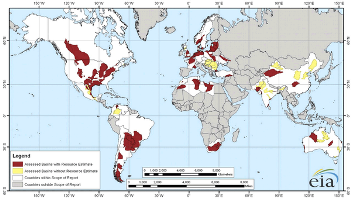
World Shale Gas Map / Photo credit: Energy Information Administration / Foter.com / Public domain

The shale gas revolution in the United States promises not only to soon make the country energy self- sufficient but also serve as the catalyst for a major revival of manufacturing.  Similar high hopes have been raised for Latin America, where some of the planet’s largest reserves of shale gas are found.  According to U.S. Energy Information Administration estimates, Argentina is said to have the world’s second largest reserves of technically recoverable shale gas (China is first).  The United States is currently in fourth place, followed by Canada and Mexico.  Brazil is in tenth place, with Chile and Paraguay not far behind.  The possibility that Latin America can pursue a successful shale gas strategy, however, is tempered by a number of important legal and/or geological differences that can serve as important bottlenecks.  In addition, the region’s tumultuous politics often get in the way of implementing policies that boost investment and encourage a highly productive energy sector.

The most important legal difference is that subsoil rights belong to the above ground property owner in the United States, while everywhere else in the Western Hemisphere the government (national, state or provincial) is the owner.  Developers have had an easier time purchasing access to shale gas deposits from individual landowners throughout the United States.  This explains, in great measure, why Canada’s significant shale gas reserves have not been as extensively exploited as in the United States, despite a hydrocarbons regime receptive to private-sector investment.  In addition, environmental protection legislation that impacts the shale gas industry is fractured among Federal, state, and local government authorities in the U.S.  That has facilitated developers extracting waivers and more lenient treatment in the United States that would be harder to obtain in most Latin American nations, where environmental protection is the exclusive or predominant prerogative of the central government.  Furthermore, current technology for extracting natural gas from shale reserves demands huge amounts of water, a resource that is scarce in those regions of Mexico, for example, where most of its extensive shale gas reserves are located.

Political realities are the most crucial (and often overlooked) factor that can easily undermine any effort to develop Latin America’s extensive shale gas reserves.  On paper, Argentina should be a regional energy powerhouse, supplying not only its own energy needs but those of its neighbors. However, the country has for years pursued policies that have scared off private-sector investment, heightened Argentine dependence on foreign energy imports, and led to a steady hemorrhaging of hard currency reserves.  To outsiders these policies appear illogical, but they make perfect sense to Argentine political leaders trying to consolidate their power base.  Mexico is an example of a country constrained by its Constitution from developing its extensive off-shore hydrocarbon resources.  Any political party that tries to make major amendments to those constitutional provisions, however, risks annihilation at the polls.  Brazil’s recent adoption of nationalistic legislation to encourage the domestic manufacturing of hydrocarbon-related technology could well impede exploiting its shale gas reserves if similar mandates are created for the highly specialized and capital-intensive hydrofracking equipment the industry utilizes.  In fact the only Latin American country where the stars seem aligned to repeat the U.S. shale gas success story is investor-friendly, politically-stable, energy-starved, and free-market oriented Chile, whose shale gas reserves are concentrated in the remote, under populated (and very wet) far south of the country that desperately seeks new opportunities to promote local economic development.  

*Thomas Andrew O’Keefe is the President of San Francisco based Mercosur Consulting Group, Ltd. and teaches at Stanford University.

Latin America’s Emerging Burden of Chronic Non-Communicable Diseases

By Fernando De Maio*

Photo credit: FLICKR.com/diapositivasmentales / Foter.com / CC BY

Photo credit: FLICKR.com/diapositivasmentales / Foter.com / CC BY

Despite significant improvements over the past 30 years in some of the most crucial health indicators – including increases in life expectancy and decreases in infant mortality – Latin America faces an impending epidemic of chronic non-communicable diseases such as heart disease, stroke, cancer, chronic respiratory diseases and diabetes.  The region has avoided the worst effects of the HIV/AIDS epidemic.  Brazil, for example, is now widely accepted by health policy analysts as offering the world valuable lessons for combating the spread of HIV and in ensuring access to life-saving antiretroviral medicine.  But chronic non-communicable diseases are now stretching under-funded and fragmented health care systems, revealing deep lines of social inequality.

The World Health Organization (WHO) has warned of an impending epidemic of such ailments, which are already the leading causes of death in all areas of the world except for sub-Saharan Africa.  In Latin America, chronic diseases account for more than 60 percent of deaths, with some variance between countries (more than 70 percent in Uruguay, more than 60 percent in Argentina and Chile, but less than 40 percent in Bolivia and Paraguay).  The latest data indicate that this burden is growing across the region, driven by increases in some of the most important risk factors (physical inactivity and obesity in particular).  Surveys in the region allow us to disaggregate national data, revealing the social inequalities underlying the problem.

In Argentina, we have used the National Risk Factor Surveys from 2005 and 2009 to examine how social gradients are changing:

  • Physical inactivity – an important risk factor for cardiovascular disease – has increased substantially (from 46 to 55 percent).  The further down we go in the socioeconomic hierarchy, the more this important risk factor seems to be increasing.
  • Obesity has also increased in this four-year period (from 14 to 18 percent), with a steepening social gradient for women.
  • Data on diabetes from these surveys are mixed.  The percentage of the adult population told they have diabetes or high blood sugar has risen (8.4 to 9.6 percent), but experts believe the increase reflects both increases in diabetes in the population and an in access to health care resulting in more cases being detected.
  • Some good news may be found in preventive cancer screening: rates of mammograms and pap smears have increased, and social gradients for mammograms are decreasing, raising the hope of diminished inequalities in cancer mortality in the future.

The WHO’s Commission on the Social Determinants of Health recently concluded that “reducing health inequalities is… an ethical imperative.  Social injustice is killing people on a grand scale.”  Among its recommendations is a call for the routine monitoring of health inequalities.  The growing body of data documents the linkage between inequality and the occurrence of chronic non-communicable diseases – demonstrating that, fundamentally, it is a question of social justice.  Social inequalities in physical inactivity, obesity, diabetes – and, crucially, tobacco consumption – are not natural but socially and politically produced.  Empirical research in the coming years will need not only to document the rise of chronic non-communicable diseases in aggregate terms, but also to closely monitor the inequalities embedded in national figures.  Policy analysis will likewise need to examine not just the national-level effects of new initiatives, such as new taxes on tobacco products or new standards for salt consumption, but, at a disaggregated level of analysis, examine how new initiatives affect people across the socioeconomic spectrum.

* Dr. De Maio is a professor in the Department of Sociology at DePaul University.