The Papal Encyclical: Driving Debate in Latin America

By Evan Berry*

Pope Francis

Photo Credit: Raffaele Esposito / Flickr / Creative Commons

Pope Francis’s encyclical on human ecology, due to be published this week, seems likely to contribute to a range of ongoing debates.  Entitled Laudato Sii, the document has already become a touchstone for debates about the moral dimension of climate politics and triggered heated debate within the global Catholic community about the pontiff’s authority on climate change.  It links care for the poor with environmental stewardship and makes a theological case against the “culture of consumerism.”  A vocal Catholic environmental movement has embraced it, while detractors are raising concerns about the fusion of theology and science, and some Church conservatives fear it will feed into arguments for “population control.”  Non-Catholics, including secular environmental organizations, the progressive media, and leaders from other religious traditions, are also studying it.

Champions of the document claim that it could have broad implications.  They expect it to legitimize civil society organizations committed to the climate and justice; affect the behavior of millions of individual Catholics; influence Catholic political leaders who are skeptical or obstructionist about climate change; and become a factor in ongoing international negotiations.  Perhaps zealously, these claims imply that tectonic changes are underway in the international political landscape, especially in the United States, where Hispanic Catholics are the demographic group most concerned about climate change, and in Latin America, a region both shaped heavily by Catholic tradition and uniquely imperiled by the threat of global warming.

For Latin America, which has been front and center in climate politics in recent years, the implications of the encyclical are potentially deep.  Peru and Brazil have hosted recent international conferences on climate change, and the Amazon, a key global carbon sink, ensures governments’ high interest in the international environmental dialogue.  The region’s vulnerability to glacial melt, storm intensification, drought, and rising sea levels also give the issue salience.  The challenges posed by climate change come at a time that many lower-income countries believe that Latin America can be a source of development models that address income gaps, raise literacy rates, and expand access to health care while protecting the environment.  Francis’s teachings on ecology and consumerism will resonate with and reinforce existing ecological movements – Buen Vivir and other groups link the issues – and his imprimatur could even facilitate rapprochement between leftists and centrists within the Church.  On a political level, the region’s reliance on energy exports, such as in the Pope’s native Argentina, may make it harder for public officials to advocate oil and gas development without seriously addressing the climatic impact.  The situation is similar in Brazil, where Pope Francis’ popularity and ecological orientation are starkly contrasted with the President Rousseff’s abysmal ratings and poor oversight of Petrobras.  But religion, environment, and politics are nowhere more likely to come into confluence than in Peru, where an upcoming election touches on several intensive socio-environmental conflicts, and where public awareness about climate change is well established.  Whether or not the Latin American leader of the region’s historically dominant religion has all the solutions, his encyclical seems likely to play into the moral and political debates the region needs and welcomes.

June 16, 2015

*Evan Berry is Associate Professor in the Department of Philosophy and Religion at American University.

OAS: New Leadership, Old Challenges

By Aaron Bell and Fulton Armstrong

José Miguel Insulza and Luis Almagro Lemes Photo Credit: OEA - OAS / Flickr / Creative Commons

José Miguel Insulza and Luis Almagro Lemes Photo Credit: OEA – OAS / Flickr / Creative Commons

Uruguayan diplomat Luis Almagro, elected secretary general of the Organization of American States (OAS) last week, says he wants to revitalize the hemispheric organization – a herculean, if not impossible, task.  Almagro was the only candidate remaining after Guatemalan Eduardo Stein and Peruvian Diego García-Sayán withdrew from the race – the former for health concerns, and the latter due to a perceived lack of support from his government.  Almagro previously served as Foreign Minister under former president José Mujica and is a member of his Movimiento de Participación Popular, whose left-leaning sympathies led observers to wonder whether Almagro could draw sufficient backing even running unopposed.  But Almagro received formal support from several prominent nations ahead of time, including Brazil, Argentina, Mexico, and the United States, and he got 33 of 34 votes (Guyana abstained) to secure his election.  Following the election, U.S. Deputy Secretary of State Antony Blinken called for the new Secretary General to “lead the OAS through this genuine reform process by helping to refocus the OAS on its core pillars – democracy, human rights, sustainable development, and citizen security,” all while resolving its fiscal challenges.  “We look to [him] for his leadership, but we want him to know that he does not stand alone.”  His five-year term begins in May.

In his acceptance speech, Almagro stated that he intends to rise above the role of crisis manager and facilitate “the emergence of a revitalized OAS,” but major challenges await him:

  • The political crisis in Venezuela has long challenged the OAS, and an escalation in sanctions and rhetoric from the United States has made its balancing act harder. Current Secretary General José Miguel Insulza criticized the Obama administration’s national security warnings while also calling out the Maduro government for the arrest of opposition leader Antonio Ledezma and its resistance to dialogue with the opposition.  Almagro has been critical of U.S. sanctions as well, and quietly worked behind the scenes to encourage negotiations between political opponents in Venezuela, but his public silence on abuses by the Maduro government worries his critics.
  • The Cuba issue will also put Almagro in a tight spot. Havana’s participation in the Summit of the Americas is likely to build pressures for its readmission to the OAS, and Almagro’s record shows he’ll be sympathetic.  But the process could be fraught with risks for the new Secretary General.  Outgoing Secretary General Insulza bears scars attesting to U.S. Senators’ penchant for personalizing attacks when the OAS doesn’t go their way.
  • Any reform agenda is going to get battered from both sides. The OAS mandates are broad and expensive, and members don’t agree on priorities.  As Deputy Secretary Blinken’s comments suggest, Washington wants the organization to focus on its agenda, but much of South America, particularly the ALBA countries, wants the OAS to pull away from U.S. influence.  Nor do differences lie strictly along North-South lines, as made clear by protests during last year’s general assembly against Brazil’s resolution condemning discrimination based on sexual orientation and gender identity.

Almagro seems to have the experience and temperament to be an excellent choice for the job, and his coming from Uruguay, whose good offices have credibility virtually everywhere, may serve the OAS well.  But the challenges will be daunting.  He faces several ongoing crises, particularly in Venezuela, and ongoing splits within the region over the OAS’s role.  One tempting option would be for Almagro to try to distance himself and the organization from Washington – a difficult task at best.  Not only is his headquarters several hundred meters from the White House and the State Department, but the United States government (and to a lesser extent Canada) provides substantially more funding for the OAS’s general fund and through special donations than any other member state.  Almagro’s actions will also be watched closely by U.S. conservatives who, stung by President Obama’s move toward diplomatic relations with Cuba, are looking for a fight over Venezuela, Ecuador, Argentina, and even on some issues with Brazil.  Whatever Almagro does, it will be with the black cloud of the OAS’s financial difficulties over him, and the possibility that failing to successfully balance all of these issues may weaken the OAS and benefit regional organizations like CELAC and UNASUR, which are smaller and less well established, but independent of North American influence.

March 23, 2015

Pension Reform: Uneven Progress

By Christina Ewig*

Two Women

Nathan Gibbs / Flickr / Creative Commons

Recent pension reforms in Latin America show promise for greater gender equity across the region, but progress remains uneven in coverage and generosity.  Since 2007, 13 countries have either introduced or expanded some form of non-contributory pension, offered to defined groups as a social right, while others have made reforms to their existing pension systems that specifically compensate for gender inequalities.  These reforms in several instances were conceived with the participation of gender equity advocates.

  • The introduction of non-contributory pensions has equalized pension coverage between women and men in the region, according to a comprehensive study by the Organización Iberoamericana de Seguridad Social.
  • The equalization of men’s and women’s retirement age in the Dominican Republic, Mexico, and Uruguay makes it easier for women to attain the minimum number of working years for eligibility for a minimum pension.
  • The use of gender-neutral mortality tables in Bolivia and a return to the state-run defined-benefit system that treats men and women equally in Argentina, are also improvements.
  • More innovatively, in the 2007 expansion of the non-contributory pension in Bolivia and the 2008 reforms of the traditional pension systems in Chile and Uruguay, women were given credit toward their pensions for children born or adopted, to compensate for time out of the labor market.

The need for such reforms is great globally and in Latin America.  Women face much greater risks than men of poverty in old age due to workplace discrimination and gender imbalances in family carework responsibilities – the “motherhood wage gap” – during their working years.  Women are employed in smaller numbers than men in the formal economy, and they are often concentrated in the lower-paid and less-stable informal sector.  Domestic workers, primarily women, are in a sector notorious for employers’ evasion of pension payments.  Women in Latin America are also more likely than men to be found among the ranks of the unemployed or partially employed.  When employed full time in the formal sector, they face a diminishing but still substantial wage gap, earning 17 percent less on average than similarly educated men, according to the Inter-American Development Bank.  While the original pay-as-you-go pension systems were based on a male-breadwinner model that envisioned women as “dependents,” the 1990s push toward pensions that relied entirely on individual earnings magnified the effects of these discriminatory employment contexts and carework imbalances.  Moreover, in the individual capital account model, practices such as the use of differential mortality tables to determine monthly payments further reduced women’s income in old age, due to their greater expected longevity.

Despite the progress toward greater gender equity in pension policy, the issue deserves wider attention because advances have been uneven.  For example, while most countries in the region have adopted some form of non-contributory pensions, the percentage of the population eligible for these varies dramatically – as does the monthly payment.  Moreover, while the gap in pension coverage between men and women has narrowed, the compensation levels remain dramatically unequal.  Reforms, like those of Bolivia, Uruguay and Chile, that build-in compensation for market and carework inequalities deserve wider replication. 

February 26, 2015

*Dr. Ewig is Associate Professor of Gender and Women’s Studies and Political Science at the University of Wisconsin-Madison.  She is the author of Second-Wave Neoliberalism: Gender, Race and Health Sector Reform in Peru.

Inter-American Educational Exchange: A Drop in the Bucket

By Aaron T. Bell

Photo Credit: Public Domain

Photo Credit: Public Domain

The Obama administration’s program for strengthening inter-American ties through cooperative education – “100,000 Strong in the Americas” – is now several years old and making incremental progress toward its stated goal of a multilateral exchange of 100,000 students between the United States and Latin America.

  • The latest Open Doors report from the Institute of International Education shows that the number of Latin American students studying in the United States during the 2013-14 academic year (AY) rose 8.2 percent from the previous AY to 72,318 – the largest number to date and the largest annual percentage increase in at least 15 years. Mexico and Brazil now rank ninth and tenth respectively as places of origin for foreign students in the United States.
  • The most recent data on U.S. students studying in Latin America is less promising. In the 2012-13 AY, 45,473 U.S. students studied in Latin America, the highest number to date but a smaller annual percentage increase (1.8 percent) compared to the late 2000s.

Countries’ investments in such exchanges vary widely.  Under “100,000 Strong,” figures for U.S. spending are elusive.  In early 2014 the State Department announced the creation of the Innovation Fund, partnership grants that will be awarded over the next several years to strengthen collaboration between higher education institutions – including 38 grants totaling over one million dollars last year.   Mexican President Peña Nieto has introduced Proyecta 100 Mil, which in addition to sending 100,000 students to the United States by 2018, hopes to entice 50,000 U.S. students to study at its own universities.  (U.S. students in Mexico dropped from 10,000 in 2005-06 to less than 4,000 in 2012-13 because of security concerns.)  Both countries’ financial commitment to international education pales next to that of Brazil.  President Rousseff announced last summer the renewal of its Science Without Borders program, the first phase of which cost US$1.36 billion.

These programs, universally seen as laudable, have thus far let certain countries fall through the cracks.  Vice President Joe Biden recognized in his recent New York Times editorial that “inadequate education” is one of the barriers holding back Guatemala, Honduras, and El Salvador, from which thousands of children have fled in recent years.  The development assistance portion of President Obama’s proposed $1 billion budget for Central American assistance is in part slated for strengthening literacy and vocational education.  Bringing Central America into the Innovation Fund program is a logical addition to the President’s efforts, yet Central American partners were notably absent in 2014.  Only one of the five grant rounds was open to Central American countries – where it arguably could have a greater national-level impact – and of the 109 recipient institutions of Innovation Fund grants, only two were from the region – and none from the Northern Triangle (Honduras, Guatemala, and El Salvador).  That disparity suggests that, in spite of the rhetoric, education exchange is considered a supplementary tool rather than a leading means of bolstering development in Latin America.  While the 100,000 Strong in the Americas program deserves applause as a cooperative, multilateral program, it remains an underutilized tool of U.S. engagement in much of the hemisphere.

February 16, 2015

Elite Power and State Strength: A Timely Focus of Academic Studies

By Eric Hershberg

lapidim / Flickr / Creative Commons

lapidim / Flickr / Creative Commons

Insufficient state revenues are one fundamental reason that many Latin American governments fail to provide their citizens with adequate education, health care, public transportation, environmental protection and the physical and technological infrastructure needed to move their countries toward high-income country status.  As a whole, the region’s governments were able to spend only 14.8 and 15.25 percent of GDP in 2013 and 2014, according to the UN Economic Commission for Latin America and the Caribbean (ECLAC).  Rationalization of expenditures is a goal that can only be pursued in practice if there are adequate funds to begin with, and few Latin American states have that luxury.  (To be sure, even where states are well financed, as in Brazil and Argentina, governments typically fail to spend resources efficiently.)  Historically primitive and regressive tax systems have not evolved in a manner consistent with the development needs of the region.  During the second decade of the 21st century this remains a major obstacle for those who strive to build more effective and democratic states across Latin America.

Several ambitious new books in comparative political economy offer insightful and complementary analyses of the political conditions that perpetuate state weakness as well as the dynamics that offer hope of overcoming it.

  • Aaron Schneider’s 2012 Cambridge University Press volume on State-Building and Tax Regimes in Central America was an initial contribution to this emerging literature, linking that sub-region’s changing relationship to the world economy to aggressive efforts by different factions of the elite to fashion tax systems that reflect their narrow interests rather than a broader agenda of societal development.
  • A book that will be launched later this month in Guatemala City builds on this work by underscoring the importance of political contestation regarding the fiscal arena more broadly – encompassing state expenditure as well as revenue. That study, prepared under the auspices of CLALS and the Instituto Centroamericano de Estudios Fiscales (ICEFI), illustrates the ways in which Central American elites have exercised disproportionate influence to render states ineffective and regressive: they contribute little to state coffers and extract much from them, with consequences that diminish the life chances of a majority of that region’s population.
  • Tasha Fairfield’s conceptually ambitious and empirically rich comparative study of South American cases, to be published later this year by Cambridge University Press, is a landmark contribution to literature on elites and Latin American political economy. It consists of a thorough comparative analysis of Argentina, Bolivia and Chile, revealing that strong business associations tied closely to the state augment elite capacity to block progressive tax reforms.  Conversely, she finds that social movement influence over the state can undermine elite capacity to resist the sorts of taxation needed to redistribute wealth.
  • Evelyne Huber and John Stephens demonstrated previously, in their 2012 University of Chicago Press book on democracy and the left, that there is a clear link between the capabilities of the political left in democratic regimes and the prospects for more equitable social policies in Latin America. Such policies, as this recent wave of publications make clear, will only come about if societies develop systems of taxation compatible with the emergence of effective states.

Scholarship on Latin American economic development has until recently devoted little attention to political power imbalances as drivers of state weakness and the consequent failure of societies across the region to forge pathways toward developed-country levels of income and opportunity.  These studies highlight the centrality of elite collective organization and behavior, as well as the political strength of countervailing forces in society, for determining levels of taxation across the region.  Taken as a whole, this welcome wave of social science research restores Latin American political economy to its rightful place as a domain of scholarship that speaks to the concrete challenges facing the region today and in the future.  Policymakers throughout the hemisphere who speak of democracy and economic growth need the clear analysis to progress that scholarly works such as these provide.

February 5, 2015

CELAC: Losing Relevance?

By Michael M. McCarthy

Presidencia de la República del Ecuador / Flickr / Creative Commons

Presidencia de la República del Ecuador / Flickr / Creative Commons

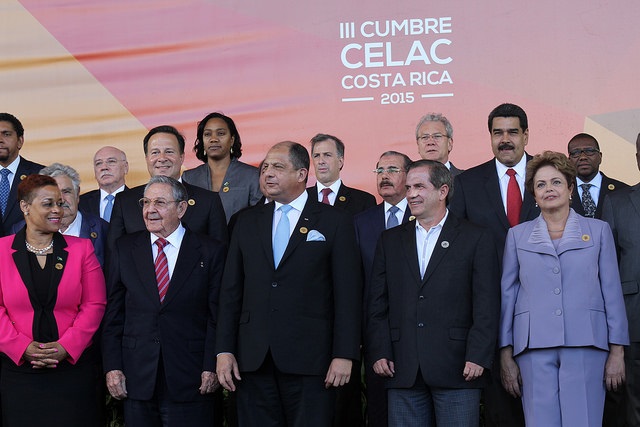
The announcement by Presidents Obama and Castro of their intention to normalize diplomatic relations could leave a big hole in the agenda of the Community of Latin American and Caribbean States (CELAC), which met January 28-29 for its third heads of state Summit in San José, Costa Rica.  Raúl Castro kicked off last year’s summit, in Havana, with a speech decrying the United States NSA spying scandal.  In San José, he moderated his tone, noting that “our America has entered a new era” since CELAC was founded (2010) while also calling on the U.S. to end the trade embargo – a point other member states echoed – and to return the naval station at Guantanamo Bay.  In concrete terms, the results of last week’s CELAC summit were modest.  The technocratic goals of quantifying progress on poverty and technology development announced by Ecuador, the group’s 2015-2016 President Pro-Tempore, suggest no major changes are imminent.

Since President Chávez’s death March 5, 2013, the former leader’s Bolivarian vision of Latin American and Caribbean integration and unity has shown signs of weakening.  CELAC now faces even tougher challenges defining and defending its identity and mission beyond the creation of a common political space for regional decision making insulated from the U.S. and Canada.  With Chávez’s successor, President Nicolás Maduro, losing support amid economic crisis, the Alianza Bolivariana para los Pueblos de Nuestra América (ALBA) can no longer throw its weight around on the international scene.  Cuba’s inclusion in the Summit of the Americas – increasing the likelihood of its participation in the OAS – is a major achievement but represents the loss of a major rallying point. 

Going forward, three issues will determine the groups trajectory.  The Cuba issue wont go away suddenly, but rapid change in U.S.-Cuba ties could reset hemispheric relations and leave CELACs mission muddled and potentially irrelevant.  Disagreement among CELAC members over issues such as Puerto Ricos status may create tensions, as they did when Nicaraguan President Daniel Ortega gave the island a high profile during the presidential plenary underlining the risks inherent in the unity within diversity principle embraced by CELAC.  (Ecuadoran President Correa, another ALBA supporter, chided Ortega.)  But perhaps the biggest determinant of the groups future relevance lies in its emerging relationship with ChinaA CELAC-China foreign ministers forum met in Beijing last month, formalizing the Asian nations relationship with CELAC.  The forum announced the 2015-2019 China-CELAC cooperation plan calling for the doubling of two-way trade and the increasing of Chinese investment in the region to $250 billion.  Exclusion of the U.S. and Canada may remain a tenet of CELACs platform, but the groups leaders may judge that its long-term relevance can be rescued by reaching out to China instead.

February 2, 2015

*Michael McCarthy is a Research Fellow with the Center for Latin American and Latino Studies.

The Impact of Falling Oil Prices on the Western Hemisphere

By Thomas Andrew O’Keefe*

L.C. Nøttaasen / Flickr / CC BY-NC 2.0

L.C. Nøttaasen / Flickr / CC BY-NC 2.0

The sharp drop in the benchmark Brent crude price of oil from just under US$115 per barrel in June 2014 to its current perch around US$50 has important ramifications for the Western Hemisphere.  For Venezuela, which earns some 95 percent of its foreign exchange from petroleum exports, it is a potential disaster.  Underlying political tensions will be exacerbated if there is no money to continue funding social welfare programs or heavily subsidizing gasoline.  It probably also spells the end of PetroCaribe’s generous repayment holidays and what are in essence below-market interest loans for Caribbean and Central American nations.  Sharply lower oil prices also put at risk major energy projects such as the development of Brazil’s pre-salt reserves, which require a minimum price of $50 to $55 to be economically viable.  Equally tenuous are Argentine efforts to regain energy self-sufficiency by exploiting its vast shale oil and gas reserves and Mexican plans to attract foreign investors to participate in deep-water oil exploration and drilling.  The minimum price for a barrel of oil below which new investment projects in Canada’s oil sands are no longer attractive is around $65.  Shale oil producers in the United States are also being squeezed by low petroleum prices.

On the other hand, net energy importers such as Chile, Paraguay and Uruguay benefit from sharply lower oil prices.  Although being weaned off  PetroCaribe will be painful for the Caribbean and Central America in the short term, they will be able to seek oil at the lower prices elsewhere.  The pressure on the Obama administration to lift the ban on U.S. crude oil exports, in response to a glut of domestic shale oil production, could also redound in favor of the Caribbean and Central America by lowering international oil prices further through increased global supply.  Already, 2015 began with U.S. companies authorized to export an ultralight crude called condensate.

In hopes of rallying OPEC to stabilize oil prices, Venezuelan President Maduro last weekend rushed off to lobby Saudi Arabia, which just two months ago refused to decrease production in order to raise prices, but oil industry sources say there’s little chance of a policy change.  Meanwhile, the environment may turn out to be among the biggest beneficiaries of lower oil prices.  Less investment in shale oil production reduces the risk of leaks of methane, a potent greenhouse gas, as well as decreases flaring.  Similarly, slowing down oil sands production in Alberta and Saskatchewan means that the very high levels of greenhouse gas emissions associated with extracting crude oil from bitumen (not to mention the negative impact on water resources) is diminished.  Although lower fossil fuel prices traditionally have undermined incentives to move to greater reliance on renewable and non-traditional energy resources, this may no longer be true.  For one thing many governments around the world are now embarked on ambitious efforts to reduce carbon emissions by, among other things, raising the costs associated with petroleum usage through cap and trade regimes that force companies to buy government-issued pollution permits.  Still others have enacted outright carbon taxes on utilities and large factories per metric ton of carbon dioxide emissions.  In addition, the heavy initial capital investment that was previously associated with things like wind, solar and geothermal power are falling.  For example, a combination of technological advances and Chinese overproduction have resulted in much lower prices for solar panels so that the cost of generation from a large photovoltaic solar plant is now almost 80 percent less than five years ago.  Geothermal energy may be the renewable that most benefits as drilling rigs idled by lower oil prices are now available at a lower cost for geothermal projects.  

*Thomas Andrew O’Keefe is President of San Francisco-based Mercosur Consulting Group, Ltd. and teaches at the Villanova University School of Law.

January 13, 2015

Social Science that Matters: Pérez Sáinz on Latin America’s Inequalities

By Eric Hershberg

Image courtesy of FLACSO-Costa Rica

Latin America has made important advances dealing with income inequality over the past decade, but sustaining this modest progress requires a deeper grasp of its underlying causes.  Since Princeton sociologists Miguel Centeno and Kelly Hoffman in 2003 published their provocative article “The Lopsided Continent” probing Latin America’s infelicitous distinction as the region with the most unequal income distribution, the GINI coefficients – indicators of the gap between rich and poor – have declined in a number of Latin American countries.  Most of the advances, which admittedly appear tenuous and were slowed by the Great Recession of 2008-2009, can be traced to the expansion of secondary education and, particularly in countries governed by the left, unprecedented investments in social programs that have benefited the most disadvantaged sectors of the population.  Even now, however, income distribution in the region remains as unequal as anywhere on the planet – sapping productivity by depriving populations of opportunities to upgrade skills that could be deployed in knowledge-intensive economic activities.  Inequality also provokes social dislocations that undermine the welfare of the poor and non-poor alike, place burdens on over-extended state institutions and generate pathologies, such as crime, that undermine economic performance.  Moreover, the task of sustaining democratic political regimes is rendered much more difficult.

A new book by Juan Pablo Pérez Sáinz, a sociologist at the Latin American Faculty of Social Sciences (FLACSO) in Costa Rica, takes a fresh look at the dynamics of unequal power that influence how the fruits of economic activity become concentrated in some individuals and social groups – and remain beyond the reach of large swathes of a country’s inhabitants.  MERCADOS Y BÁRBAROS: La persistencia de las desigualdades de excedente en América Latina is in my view a landmark contribution to the sociological literature, and it identifies four intertwined processes that account for the disempowerment of important segments of the population, often characterized by subordinate status associated with gender, race, ethnicity or region.

  • The prevalence of precarious employment in labor markets, as a result of which people are condemned to toil endlessly but never enjoy the benefits of having a stable job.
  • The impossibility for most small-landholders or petty entrepreneurs to accumulate capital that might enable them to invest in the future of themselves, their families and their communities.
  • The weakness or absence of state institutions that might contribute to forging social citizenship encompassing all of a country’s inhabitants, the result of which is that vulnerable individuals and communities are left to fend entirely for themselves.
  • The overwhelming weight in Latin America of social categorizations – motivated by pervasive sexism, racism, ethnocentrism and xenophobia – that define excluded populations as less deserving of rights and opportunities than others.

If societies are to be expected to invest in social science, then it is reasonable to expect that social scientists strive to illuminate the underlying roots of their greatest challenges, such as the yawning inequalities in Latin America, and the sources of their persistence over time.  Through his historically informed and empirically rich analysis, drawing on theoretical insights from Marxian traditions and from the work of sociologists such as the late Charles Tilly, Pérez Sáinz has made an invaluable contribution to intellectual debates about inequality which should inform efforts to consolidate the modest gains we have seen in Latin America and thus help the region outgrow its enduring legacy of debilitating inequality.

December 4, 2014

The Open Veins of Latin America: Disowned?

By Núria Vilanova

tintincai / Flickr / CC BY-NC 2.0

tintincai / Flickr / CC BY-NC 2.0

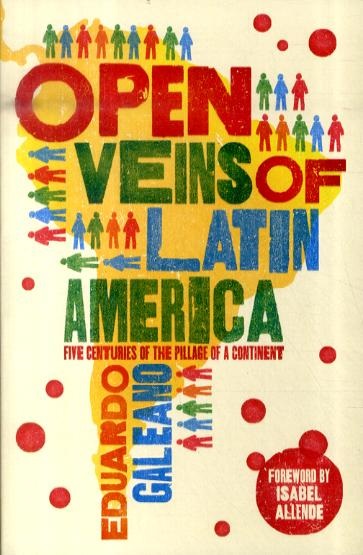
Forty-three years after its publication, the emblematic and widely read Latin American anti-colonialist bestseller The Open Veins of Latin America has been disowned by its creator, 74-year-old Eduardo Galeano – but its literary message remains vital.  Interviewed last May about the book often called the “Bible of the Latin American Left,” Galeano said, “I don’t regret having written it, but it belongs to a time that to me has been overcome.”  His words left a sense of abandonment and deceit among many, who asked:  What had happened to the bleeding veins of Latin America drained by European and U.S. colonial powers?  Hadn’t the region been sacrificed since Columbus to profit diabolic foreign interests?  When Venezuelan President Hugo Chávez gave President Obama a copy of the book in 2009, was he clinging to an interpretation of Latin American history no longer embraced by the region’s leading thinkers?  Others asked, however well-deserved a denunciation of the exploitation and oppression laid out in the book was, were they to be blamed for all of the damage inflicted in the region?

Galeano’s interview signaled a refocussing of his analysis rather than wholesale rejection of it.  He said Open Veins was too boring and written in a tedious style and with the doctrinal tone of the traditional left.  He added that in those early days of his career he did not know enough politics and economics to write a book of such reach.  What Galeano has demonstrated by this unassuming recognition is that he has evolved through the years and, like many others, realizes that the dependentista paradigm, with its rejection of western capitalism, that fueled his book had important shortcomings, and overlooked other key problems.  He underestimated the impact of weak institutions – anticipated by Bolívar in the early 19th Century – and internal political and economic issues such as government corruption and the unwillingness of the ruling classes to contribute to the development of more democratic and egalitarian societies, as Marx himself would argue when writing about Southern countries.

The real – and not insignificant – value of Open Veins today lies in its literary character.  Its capacity to capture the spirit, the hope and the rage of those turbulent times in the region lives on.  Filled with metaphors and symbolism, it is an essay, whose literary dimension makes it current and ageless.  Stemming from a deep Latin American tradition, the book crosses the blurred borders between literature and history, sociology, politics and other disciplines alike.  Like José Martí, Ricardo Palma and Octavio Paz, Galeano attempted to transgress the boundaries between literature – subjectivity, imagination and hyperbole – and disciplines based on empiricism and factuality.  This practice can lead to challenges over facts, but the messages remain compelling.  Elizabeth Burgos’s testimonial account of Mayan activist Rigoberta Menchú in I Rigoberta Menchú (1984) was criticized for alleged inaccuracies, yet it is difficult for anyone to deny that the suffering of the Mayan Quiché community in the 70s and 80s was at least as cruel as Rigoberta depicted in the book.  Carlos Fuentes once said that reality will always overpower fiction, no matter how hard writers tried.  The intellectual evolution that Galeano has displayed is welcome, and it is also an inspiration to reread Open Veins and Latin America with much-needed fresh eyes.

December 2, 2014

Post-Snowden Challenges for U.S. Information and Communication Technology Firms

By Robert Albro

infocux Technologies / Flickr / CC BY

infocux Technologies / Flickr / CC BY

A year after Edward Snowden’s dramatic disclosures about NSA surveillance in Latin America, U.S. companies hoping to make inroads into the region’s fast-growing information and communication technology market are running into increasing obstacles.  If the political costs were immediately forthcoming, especially in Brazil, the fallout for Silicon Valley’s tech giants has taken longer to assess. The biggest problem is the lingering lack of trust resulting from the revelation that the U.S. companies enabled the NSA’s eavesdropping by giving it direct access to their servers.  A 2014 NTT Communications survey found that, in response to the Snowden affair, 88 percent of information and communication technology decision-makers around the world, including Latin America, have changed their buying behavior around large-scale data storage.  In Brazil, Argentina, Mexico and Chile, “data sovereignty” has become a major issue, in the form of new data privacy and disclosure laws now shaping the direction of the region’s developing market.

According to the Information Technology & Innovation Foundation, U.S. software firms are expected to lose $35 billion in sales overseas through 2016. Forrester Research, an independent technology and market research company, puts potential losses as high as $180 billion.  Latin American investors have been questioning the wisdom of using US data storage companies, and established U.S. dominance in the cloud computing sector has already taken a hit. Cisco’s last quarterly earnings, for example, were down 7 percent – 27 percent in Brazil – even as the cloud computing market in Latin America is predicted to grow at a 26 percent clip through 2018.  The emergence of Miami as a major global tech hub and gateway to Latin America’s fast-growing information technology markets is threatened by a proposed EU-Brazil trans-Atlantic cable to circumvent the city as a key node for Latin American access to the global internet.  As investor e-news service 4-Traders has reported, Chinese tech giants like Baidu, Alibaba and Tencent are establishing and expanding beachheads in Latin America, while China’s government pursues cooperative partnerships with Latin American counterparts to accelerate the development of the region’s information infrastructure.  Meanwhile, US-based data mining and analytics firms like Choicepoint Inc., currently major players in the region’s business intelligence and online security markets, have become the subject of investigation by skeptical governments and privacy advocates in the region.

The U.S.-centric view of the internet as “free and open,” a basic feature of the business model of U.S. tech firms, is being challenged in Latin America, where the regulatory balance between free expression and privacy is increasingly tilting toward the latter.  Despite the fact that the region’s online population is the world’s fastest growing and that it boasts a dynamic tech start-up movement, U.S. internet technology firms should expect more such challenges.  Regional trends in internet governance are largely anti-American, focused on displacing U.S. commercial dominance of the internet, and promoting open-source software as alternatives to U.S. products and services.  As Latin America builds out its cloud computing market, it is doing so in ways poised to compete and not collaborate with U.S. companies.  Privacy controls and requirements to conform to local laws already create new and costly disincentives for U.S. companies, which might opt to pull up stakes.  Meanwhile, business models for Latin American start-ups are not copycatting U.S. models as frequently as in the past.  If Latin American entrepreneurs have maintained close ties with U.S. centers of innovation and investors, they are now more focused on developing their own intellectual property, instead of technology transfer, to meet specific demands of their local and regional markets.  What just yesterday seemed wildly improbable – that U.S. tech giants might lose their edge in Latin America – has become a credible scenario.

October 23, 2014