Summit of the Americas: Awkward Agenda, Dim Prospects

By Eric Hershberg

Large group of men and women stand awkwardly while waving to a crowd

Leaders from the hemisphere during the last Summit of the Americas in 2015. / Maria Patricia Leiva / OAS / Flickr / Creative Commons

Preparations for the 8th Summit of the Americas, scheduled for April 13-14 in Lima, face a number of challenges.  Trump Administration measures have upended longstanding assumptions throughout the hemisphere about Washington’s agenda in the region and beyond.  No less distracting is the wave of ongoing corruption scandals in Latin America and impending elections in numerous countries.

  • The three presidential summits attended by President Barack Obama (2009, 2012, and 2015) arguably were shaped by the standing of the United States in the region. Emphasizing “change we can believe in” at his first presidential summit, in Trinidad, Obama pledged that the United States would be a partner rather than an embodiment of hubris.  Leaders across the ideological spectrum applauded.  Yet the second, three years later in Cartagena, was a disaster for Washington, with even friendly heads of state lambasting the President for continuing an unacceptable Cold War line on Cuba and rigid drug control policies.  It was in the wake of this embarrassment that Obama finally moved to change policy toward Cuba.  This watershed, supplemented by advances in other areas overseen by Vice President Biden, made Obama’s third summit, in Panama in 2015 – attended by Cuban President Raúl Castro – a much more positive experience.

This year’s Summit seems unlikely to produce advances – substantive or symbolic – and indeed has the potential both to highlight conflicting agendas and even to provoke widespread ridicule.

  • Under normal circumstances, the partial but damaging reversal of Obama’s Cuba opening would elicit hostility from Latin American leaders, but tensions over Trump’s dramatic departure from traditional U.S. positions on trade and climate, and his caustic posturing on immigration policies that especially impact Mexico and Central America, may overshadow regional bewilderment at Washington’s renewed hostility towards Havana. Latin American countries that Trump jilted at the altar when he summarily withdrew the United States from the Trans-Pacific Partnership (TPP) have begun moving on – negotiating trade deals with China while uniting with Canada and seven Asian countries to form “TPP 2.0.”  That chauvinism and race, not security, are at the heart of Trump’s “Great Wall” proposal is widely understood and resented in Latin America.
  • Trump’s postures and policies are by no means the only strain on the summit agenda. Venezuela’s meltdown and impending elections are of grave concern to virtually all leaders who will attend, whether President Maduro does or not, yet there is no consensus on what to do about the problem and the humanitarian emergency it has spawned.  Questions about the legitimacy of Brazilian President Michel Temer diminish the standing of the hemisphere’s second largest democracy.  Tensions swirling around the Summit’s host – Peruvian President Pedro Pablo Kuczynski (PPK) – are also intense.  PPK is but one of numerous incumbent and recent Latin American presidents under siege by corruption allegations.  Strong evidence of corruption among presidents of Latin American countries big and small will hardly be news to anyone, but the scope of the problem – and the strength of public rejection of it – means many governments will come to the Summit wounded and distracted.

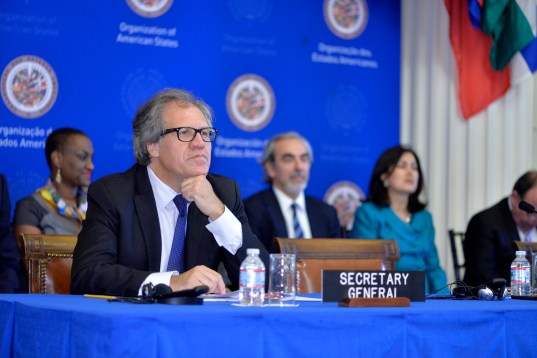
The irony that the theme of this year’s Summit is “Democratic Governance against Corruption” will be lost on no one, as the Lava Jato investigations and lesser inquiries reveal the venality of government after government.  OAS Secretary General Luis Almagro, a co-host of the Summit, has done his fair share to rescue the region from authoritarian and corrupt leaders – challenging both Maduro and the tainted reelection of Honduran President Juan Orlando Hernández – but few others in the hemisphere have lived up to the lofty rhetoric about democracy and anti-corruption at previous summits.  The Peruvian national host is hardly in a position to steer the Summit to take on Trump on matters such as TPP.  If he were not so badly tainted by recent events, he could have represented the globalists in the Americas who are convinced that a misguided America First posture issuing from Washington amounts to a U.S. abdication of leadership on trade, climate, and other pressing matters.  Yet it is now doubtful whether he will be able to say anything more than “Welcome to Peru.”  The smiling faces in the protocol photos will conceal the striking disjuncture between the Summit agenda and its protagonists.

 February 6, 2018
Prospects for Reproductive Rights Dim with End of “Left-Turn”

By Merike Blofield and Christina Ewig*

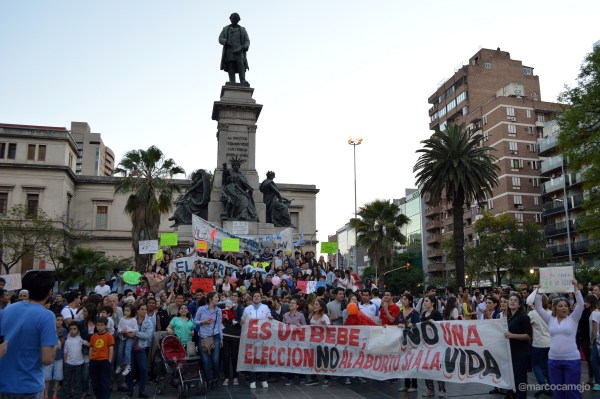
A large group of women and men gather in front of statue in a plaza.

A demonstration against abortion in Córdoba, Argentina, shortly after President Mauricio Macri’s election. / Marco Camejo / Flickr / Creative Commons

The end of Latin America’s “pink tide” suggests the region will make little progress in protecting reproductive rights in coming years and may even face some policy reversals.  With five Latin American governments slated to elect new leaders in 2018, and with recent elections of right-leaning governments in Chile and Argentina, Latin America may well be concluding the left-turn that has characterized the region’s politics since the early 2000s.

  • The past two decades of pink tide governments coincided with a flurry of legislative activity on abortion policy – in sharp contrast to previous decades of policy stasis, when high rates of clandestine abortions coexisted with restrictive laws. Since the turn of the millennium, abortion laws have been revised by Latin American legislatures and courts on 11 separate occasions in eight different countries.  Even in countries where legal reforms did not go through, legislatures debated bills at a prevalence not seen before.
  • Several left governments have carried through liberalization in response to public opinion and social mobilization. Last August, for example, the Chilean Supreme Court upheld its Congress’ liberalization of abortion law – to allow for abortion under three circumstances (threat to life; fatal fetal defect; rape) – overturning the absolute prohibition that had been in effect since the last days of the Pinochet military regime in 1989.  Some left governments went even further:  Uruguay legalized abortion in 2012, and Mexico City did so even earlier, in 2007.

Yet left governments have not been unequivocally liberal; some have actively upheld or enacted conservative laws, even absolute prohibitions.  In 2006, the Sandinista Party in Nicaragua reversed course from allowing therapeutic abortion to supporting absolute prohibition, while Ecuadoran President Rafael Correa in 2013 rejected a provision allowing abortion in the case of rape.  The FMLN in El Salvador has doggedly, even brutally, enforced a total prohibition, to the detriment of many (primarily poor) women’s lives.  In a recent study (published in Social Politics), we show this split in policy roughly follows the “institutionalized” vs. “populist” typology of lefts.

  • Institutionalized parties – like those in Chile and Uruguay – have channels in place for civil society organizations, including feminist ones, to have bottom-up influence. Given their respect for the rules of the game, however, the institutionalized lefts are also likely to face well-organized conservative opposition, which slow down reform, shape final legislation, or even veto it altogether.  In Uruguay and Chile, feminists had a voice, but conservatives were also are able to block, slow down, and water down liberalization.  This is why the Uruguayan reform took so long and why in both cases the final legislation is less liberal than the original proposals.
  • By contrast, populist governments, like those of Nicaragua under Daniel Ortega and Ecuador under Rafael Correa, often see advocates for liberalization as political threats – particularly feminists who also represent more general claims for individual autonomy and pluralism. Moreover, an issue like abortion, where the practical costs of a restrictive stance are born almost exclusively by low-income women, is likely to be used by populist leaders as a pawn in a power struggle with well-organized, influential religious forces.

Although we systematically analyzed only abortion politics, we found that sex education, contraceptive access, and other reproductive health policies more broadly have followed similar dynamics in Ecuador, Nicaragua, Chile, and Uruguay.  For example, the Uruguayan left government expanded sex education after assuming power in 2006, while in Ecuador, leaders appointed in health bureaucracies sought to reduce access to publically provided reproductive health services.  Nicaragua, on the other hand, has the highest rate of teenage pregnancies outside sub-Saharan Africa.

As Latin America’s left shift appears to be coming to a close, reproductive health policies promise to remain contentions – and abortion continues to be a public health crisis across most of Latin America even with the limited liberalizations of the past decade.  The Alan Guttmacher Institute recently estimated that 6.5 million abortions are annually performed in the region.  The vast majority are still done in clandestinity, resulting in high maternal mortality and tens of thousands of annual hospitalizations, which affect low-income women the most.  While it is unlikely that recent changes will be reversed in the more institutionalized settings, the rightward shift that is occurring among especially these countries does not bode well for further liberalization and resolution to the abortion crisis.

 January 18, 2018

 * Merike Blofield is Associate Professor of Political Science at the University of Miami.  Christina Ewig is Professor of Public Affairs and Director of the Center on Women, Gender and Public Policy at the Humphrey School of Public Affairs, University of Minnesota.

The Anticorruption Imperative for Latin America

By Matthew Taylor*

Bar graph showing accountability in Latin America

Graphic courtesy of author. For a larger version, please click here.

Latin America’s reactions to the massive transnational scandals involving the Brazilian construction giant Odebrecht and its subsidiary Braskem are an important sign of progress in anticorruption efforts.  But across the region, courts’ reluctance to challenge elites remains a major obstacle to deeper accountability.  Brazilian, Swiss, and U.S. authorities’ announcement in December 2016 of a multibillion dollar global corruption settlement with the Brazilian firms – valued at $3.5 to 4.5 billion – was remarkable for being the largest in history.  It was also shocking for its revelations: Odebrecht admitted using a variety of elaborate subterfuges to launder bribe payments and corrupt proceeds, including by setting up a bribe department and buying an offshore bank.  Graft allowed executives to rewrite laws in their own favor, and guaranteed that the right officials were in the right place when public contracts were up for bidding.  The firms netted $3.60 for every $1 they spent on bribes in Brazil, and admitted to paying $788 million in bribes across twelve countries, including ten in Latin America.

The political salience of the charges is roughly similar in all ten Latin countries, muddying the reputations of presidents or former presidents in Argentina, Colombia, the Dominican Republic, Peru, Panama, Venezuela and, of course, Brazil.  Ministers and high-level officials have been implicated in the remaining countries: Ecuador, Guatemala, and Mexico.  Nearly one year after the settlement, it is time to ask how well law enforcement and judicial processes are resolving the allegations against these high-powered public and private sector elites.

  • In a paper forthcoming in Daedalus, I argue that accountability can be thought of as the outcome of a basic equation – A = (T + O + S) * (E – D) – combining transparency (T), defined in its most essential sense as public access to information about the government’s work; oversight (O), meaning that government functions are susceptible to surveillance that gives public or private agents the right to intensively evaluate the government’s performance; and sanction (S), effectively punishing wrongdoing and establishing societal norms to their rightful place. These are tempered by institutional effectiveness (E) – understood as the outcome of state capacity, relevant laws and procedures, and citizen engagement – and political dominance (D), which diminishes the incentives for active oversight or energetic sanction.  The graph above uses a combination of data points from the World Justice Project to measure each of the five variables.
  • The comparison yields mixed findings. On average, the nations implicated in the Odebrecht settlement do quite well on transparency, effectiveness, and political dominance – the outcome of a generation of democratic rule (with Venezuela being the obvious outlier).  But all ten countries perform comparatively poorly when it comes to oversight, and abysmally when the criterion is sanction.  This does not bode well for accountability, especially if we consider that among the Odebrecht Latin Ten, the highest-scoring country on the sanction criteria is Argentina, whose score is still below the middle-income country average.  In Brazil, where trial courts have led the way in imposing sanctions on business elites, political leaders are nonetheless protected against meaningful sanctions by an arcane system of privileged standing in the high courts.

Latin American judicial systems – long rigged to protect local economic and political elites – remain the principal obstacle to accountability.  The Odebrecht settlement signaled that a new day has arrived: new international norms and law enforcement across multiple jurisdictions are likely to continue to upset the cozy arrangements that have protected the region’s elites from corruption revelations for decades.  But true accountability will only come when local courts and prosecutors are empowered to effectively punish corrupt elites.  That implies changes in legal procedure, new laws, and most importantly, political will.  Perhaps the Odebrecht case will galvanize domestic public opinion and mobilize policymakers about the need to improve local justice systems.  The enormous costs of corruption revealed by the Odebrecht settlement suggest that change cannot come soon enough.

November 6, 2017

* Matthew Taylor is Associate Professor at the School of International Service at American University.  His forthcoming article in Daedalus is entitled “Getting to Accountability: A Framework for Planning and Implementing Anticorruption Strategies.”

Intense Electoral Year in Latin America

By Carlos Malamud*

16792672892_a08a2fbd6d_k

Chilean President Michelle Bachelet with the leaders of her coalition, Nueva Mayoría. The Chilean presidential election of 2017 will determine the legacy of the Nueva Mayoría. / Gobierno de Chile / Flickr / Creative Commons

The new year will be an intense one for Latin American elections.  Although perhaps not as important as those taking place in 2018, this year’s elections will have a significant impact on the countries holding them and, in some cases, the region as a whole.

  • In Ecuador’s presidential and legislative elections on February 19, the PAIS Alliance will run a slate of nominees for the first time without Rafael Correa heading its slate. The President said he’s stepping down for family reasons, but Ecuador’s economic problems, aggravated by the decline in oil prices, apparently convinced him to seal his legacy on a high note now rather than end his time in office in defeat.  The party’s presidential candidate, former Vice President Lenin Moreno, has a 10-point lead in polls over his closest competitor and has the advantage of facing an opposition divided among seven candidates, but his leadership remains uncertain.
  • In Mexico, the state governors of México, Nayarit, and Coahuila and mayor of Veracruz are up for election on June 4. The race in México state will measure the popular backing of the four parties in contention – PRI, PAN, PRD, and López Obrador’s new Movimiento Regeneración Nacional (Morena) – in the 2018 presidential election.  The older parties will begin to weed out the weaker pre-candidates.
  • Elections for half of the Argentine Congress and a third of its Senate in October will define the second half of President Mauricio Macri’s presidency. The government is confident that economic recovery will strengthen its election prospects.  A weak showing will strengthen the Peronista opposition and complicate Macri’s agenda.  The Peronistas are currently divided into three big factions – that of Sergio Massa; the “orthodox” wing headed by some provincial governors, and corruption-plagued Kircherismo grouping headed by former President Cristina Fernández.  Open, simultaneous, and obligatory primaries (known by the Spanish acronym PASO) in August will be an important test for all.
  • Chile will elect a successor to President Michelle Bachelet on November 19. Primaries in July will reveal whether the country’s two big coalitions – the center-left (including the President’s Nueva Mayoría) and the center-right – are holding, as well as the presidential candidates’ identity.  The names of former Presidents Sebastián Piñera and Ricardo Lagos are in the air, but it’s too early to know how things will play out in the environment of growing popular disaffection with politics and politicians.
  • Honduras will hold elections on November 26. Due to a Supreme Court decision permitting reelection, incumbent President Juan Orlando Hernández could face a challenge from ex-President Manuel “Mel” Zelaya, who was removed from office by the Army in June 2009, running as head of the Libertad y Refundación (Libre) Party.
  • Also in November, Bolivia will elect members of various high courts, including the Constitutional, Supreme, and Agro-Environmental Tribunals and the Magistracy Council. These elections will reveal the support President Evo Morales will have as he tries to reform the Constitution to allow himself to run for yet another term in office.

These elections in 2017 have a heavy national component but will shed light on the region’s future direction.  The success or failure of the populist projects in Ecuador and Honduras, or of President Bachelet’s Nueva Mayoría in Chile, will tell us where we are and, above all, help us discern where we’re headed.

January 17, 2017

*Carlos Malamud is Senior Analyst for Latin America at the Elcano Royal Institute, and Professor of Latin American History at the Universidad Nacional de Educación a Distancia (UNED), Madrid.  This article was originally published in Infolatam.

2017: Happy New Year in Latin America?

By Eric Hershberg and Fulton Armstrong

posse_de_michel_temer_3

Brazilian President Michel Temer surrounded by members of his party in mid-2016. His government will continue to face questions of legitimacy in 2017. / Valter Campanato / Agência Brasil / Wikimedia / Creative Commons

The year 2016 laid down a series of challenges for Latin America in the new year – not the least of which will be adapting to a radically different administration in Washington.  Last year saw some important achievements, including an elusive peace agreement in Colombia ending the region’s oldest insurgency.  Several countries shifted politically, eroding the “pink tide” that affected much of the region over the past decade or so, but the durability and legitimacy of the ensuing administrations will hinge on their capacity to achieve policy successes that improve the well-being of the citizenry.  The legitimacy of Brazil’s change of government remains highly contested.  Except in Venezuela, where President Maduro clung to power by an ever-fraying thread, the left-leaning ALBA countries remained largely stable, but the hollowing out of democratic institutions in those settings is a cause for legitimate concern.  Across Latin America and the Caribbean, internal challenges, uncertainties in the world economy, and potentially large shifts in U.S. policy make straight-line predictions for 2017 risky.

  • Latin America’s two largest countries are in a tailspin. The full impact of Brazil’s political and economic crises has yet to be fully felt in and outside the country.  President Dilma’s impeachment and continuing revelations of corruption among the new ruling party and its allies have left the continent’s biggest country badly damaged, with profound implications that extend well beyond its borders.  Mexican President Peña Nieto saw his authority steadily diminish throughout the course of the past year, unable to deal with (and by some accounts complicit in) the most fundamental issues of violence, such as the disappearance of 43 students in 2014.  The reform agenda he promised has fizzled, and looking ahead he faces a long period as a lame duck – elections are not scheduled until mid-2018.
  • The “Northern Triangle” of Central America lurches from crisis to crisis. As violence and crime tears his country apart, Honduran President Hernández has devoted his energies to legalizing his efforts to gain a second term as president.  Guatemala’s successful experiment channeling international expertise into strengthening its judicial system’s ability to investigate and prosecute corrupt officials is threatened by a weakening of political resolve to make it work, as elites push back while civil society has lost the momentum that enabled it to bring down the government of President Pérez Molina in 2015.  El Salvador, which has witnessed modest strides forward in dealing with its profound corruption problems, remains wracked with violence, plagued by economic stagnation, and bereft of decisive leadership.
  • Venezuela stands alone in the depth of its regime-threatening crisis, from which the path back to stability and prosperity is neither apparent nor likely. The election of right-leaning governments in Argentina (in late 2015) and Peru (in mid-2016) – with Presidents Macri and Kuczynski – has given rise to expectations of reforms and prosperity, but it’s unclear whether their policies will deliver the sort of change people sought.  Bolivian President Morales, Ecuadoran President Correa, and Nicaraguan President Ortega have satisfied some important popular needs, but they have arrayed the levers of power to thwart opposition challenges and weakened democratic institutional mechanisms.
  • As Cuban President Raúl Castro begins his final year in office next month, the credibility of his government and his successors – who still remain largely in the shadows – will depend in part on whether the party’s hesitant, partial economic reforms manage to overcome persistent stagnation and dissuade the country’s most promising professionals from leaving the island. Haiti’s President-elect Jovenel Moise will take office on February 7 after winning a convincing 55 percent of the vote, but there’s no indication he will be any different from his ineffective predecessors.

However voluble the region’s internal challenges – and how uncertain external demand for Latin American commodities and the interest rates applied to Latin American debt – the policies of incoming U.S. President Donald Trump introduce the greatest unknown variables into any scenarios for 2017.  In the last couple years, President Obama began fulfilling his promise at the 2009 Summit of the Americas in Trinidad and Tobago to “be there as a friend and partner” and seek “engagement … that is based on mutual respect and equality.”  His opening to Cuba was an eloquent expression of the U.S. disposition to update its policies toward the whole region, even while it was not always reflected in its approach to political dynamics in specific Latin American countries.

 Trump’s rhetoric, in contrast, has already undermined efforts to rebuild the image of the United States and convince Latin Americans of the sincerity of Washington’s desire for partnership.  His rejection of the Trans-Pacific Partnership – more categorical than losing candidate Hillary Clinton’s cautious words of skepticism about the accord – has already closed one possible path toward deepened ties with some of the region’s leading, market-oriented economies.  His threat to deport millions of undocumented migrants back to Mexico and Central America, where there is undoubtedly no capacity to handle a large number of returnees, has struck fear in the hearts of vulnerable communities and governments.  The region has survived previous periods of U.S. neglect and aggression in the past, and its strengthened ties with Asia and Europe will help cushion any impacts of shifts in U.S. engagement.  But the now-threatened vision of cooperation has arguably helped drive change of benefit to all.  Insofar as Washington changes gears and Latin Americans throw up their hands in dismay, the region will be thrust into the dilemma of trying to adjust yet again or to set off on its own course as ALBA and others have long espoused.

 January 4, 2017

Can Latin America Escape the Middle-Income Trap?

By Rick Doner and Ben Ross Schneider*

challenges logo (revised)2

Photo Credit: Inter-American Development Bank / CLALS / Edited 

Most literature on the “middle-income trap,” widely understood as a core obstacle to sustained development in Latin America, focuses solely on economic dynamics and understates the importance and challenges of political coalition-building.  That literature, largely generated by economists in academe and international financial institutions, argues convincingly that in Latin America, as well as Southeast Asia, once countries achieve some degree of success in economic development, they get stuck.  They are unable to compete with low-cost producers in traditional sectors – initial development success brings higher wages and other costs – while they also have failed to gain the capacity to compete with developed economies in frontier industries, where technological capabilities and productivity levels are far higher.  These analysts stress that Argentina, Brazil, Chile and Mexico – or for that matter Indonesia, Malaysia and Thailand – need to build on their achievements over the past half century in order to make the leap into the ranks of the world’s most prosperous nations.  They highlight the trap’s proximate origins in productivity slowdowns and recommend policy solutions that focus on improving human capital through investment in education and vocational training.  But identifying problems and potential solutions does not explain why leaders fail to adopt the solutions.  In other words, it’s not clear from existing writings why the trap is actually a trap.

The literature does not acknowledge that fundamental political obstacles, especially lack of effective demand and pressure for these solutions, are at the heart of the problem.  As is evident from the history of failed programs to improve education and R&D, political will to invest in such public goods is in short supply.  Politicians are rarely willing to forgo the short-term political benefits of satisfying entrenched interest groups for the long-term developmental benefits of creating institutions capable of helping the broader citizenry to upgrade its capacity for technology absorption.  A core reason for this lack of political will is the weakness of the societal constituencies that might demand the necessary policies and effective institutions.  Our research indicates that relations among key societal actors in middle-income countries are less amenable to building the consensus that economists advocate. In a recent article, we argue that the same conditions that facilitated or accompanied movement to middle-income status – such as foreign investment, low-skilled and low-paid work, inequality, and informality – have generated political cleavages that impede upgrading policies and the construction of institutions necessary to implement them.  This fragmentation is why the trap is a trap. Three lines of fragmentation are key:

  • Big business is divided between foreign and domestic firms. The former can undertake productivity-improving measures in-house and/or at their home headquarters, whereas local firms tend to focus in non-tradeable services and commodities whose demand for better training and R&D is lower than in manufacturing.
  • Labor is fractured between formal and large, growing informal sectors. Enjoying longer job tenure and on-the-job training for specific skills, formal workers have little interest in broader skills development.  Informal workers, on the other hand, constantly shift jobs and would prefer investments in vocational institutions offering general training.
  • These societies remain overall less equal and, as is now well known, inequality undermines the will and capacity to provide broad public goods such as quality universal education and support for technology development.

 Pro-growth coalitions of various types have been key to productivity improvements in now-high income East Asian countries, such as Korea and Taiwan.  The fact that these countries had stronger (and more autocratic) governments does not preclude developing or building on such coalitions in countries with messier political systems and weaker bureaucracies.  First, leaders can build on sectoral pockets of high productivity, such as aquaculture in Chile, wine in Argentina (and rubber in Malaysia).  Second, international and regional institutions can help supplement demands for skills by supporting programs that focus on technical and vocational institutions that actually meet and are linked to employers’ needs.  Third, organizations such as the ILO can promote business associations that represent the local firms for whom collective technical training and R&D are especially important.

August 22, 2016

* Rick Doner and Ben Ross Schneider teach political science at Emory University and MIT, respectively.

Can Latin America Achieve Fiscally Sustainable and Egalitarian Social Citizenship?

By Fernando Filgueira*

Uncertain Future

Photo Credit: Jan Tik / Flickr / Creative Commons

Latin America is undergoing a profound transformation of its social policies and of the very concept of social citizenship, but the outcome of this process is far from certain.  Electoral democracy, urbanization, increased educational attainment, and increased exposure to new and broader consumption patterns have destroyed the political foundations for conservative modernization.  The turn of the century has witnessed advances in social outcomes and public policies that for the first time provide a true window of opportunity for achieving more productive and egalitarian societies.

  • Decreasing poverty, lower income inequality, improved and expanded employment, and access to transfers and services to popular sectors were made possible by five critical factors: booming prices for Latin American commodities fueled economic growth and employment; stable prices – a positive legacy of the Washington Consensus era – meant that wages and transfers were not undermined by inflation; increased state fiscal capacity and commitment to social policy enabled a doubling in 15 years of real social per-capita expenditure; a demographic dividend, when combined (the young and the elderly) dependency ratios are lowest as a percentage of the population; and improved education access, completion, and credentials, which facilitated enhanced opportunity and increased productivity.

Yet these five advantages will lose steam in the next couple of decades.  Growth will wither as the commodity boom ends and expansionary monetary policy is limited.  Most Latin American economies are facing increased inflationary pressures. Existing tax structures and in some cases productivity levels will not permit social expenditure to increase at the rate of the last 15 years.  The easy phase of the demographic transition (when dependency rates are going down) is or will be over in most countries towards 2025.  Some countries in the region will face the European dilemma of an aging population, but they will do so with a lower GDP per-capita, weaker fiscal capacities of states, and a significantly more unequal income distribution.  While the soft targets of expanded education – primary school and expansion of lower middle school – have been achieved, the tough ones remain: extended coverage in early childhood, completion of high school, quality improvement, and true reduction of inequality of outcome in learning.

  • Five fault lines in Latin American social regimes make these problems a major threat to the sustainability of both social and economic development. A) Women’s incorporation into the labor market remains low (50 percent) and is highly stratified.  B) The absence of a robust state-led care system for early childhood and the persistence of a patriarchal distribution of care burdens undermines a route to development that is both more efficient and egalitarian.  C) Stark contrasts between insiders and outsiders in informal and formal labor markets and access to social protection and cash transfer  systems contribute to an expansionary monetary and fiscal policy that mainly benefits insiders unwilling to be taxed for redistributional public and collective goods and insurance. D) The region’s middle class and new emergent class, moreover, are not willing to increase taxation, since they do not perceive the quality of public goods and collective social services as adequate. And E) the pattern of fertility shows some of the worst patterns in social terms, including that most biological reproduction is left to the poor: Latin American governments do not equalize opportunity early on and through the educational system – which in the most unequal region of the world with diminishing but non-convergent fertility rates – leads to a productivity failure since underinvesting in the poor is underinvesting in the frontier of productivity enhancement.

These challenges will condition the possibility of a new social citizenship and a social investment model based on robust public goods, expansion of merit goods, and universality of entitlements.  It is not enough that elites are no longer able to control the political and economic game through status enclosure and authoritarianism.  In order to craft truly universal social policies conducive to providing inclusion for all, societies must confront narrow corporatism and restricted targeting – and the political economy they sustain.  Contributory models based on formal wages and targeted social policies based on need will not disappear, but they have to take a back seat to a model of basic universalism where access to quality public and collective goods is truly universal, and entitlements in transfers and services are not dependent on need or labor formality.  There have been important advances, such as a marked increase in non-contributory systems of cash transfers in terms of pensions and child-family transfers, but the commodity boom and the rise of the emergent and middle classes that drove them are not permanent.  A coalition that is willing to forgo private spending power in order to enhance quality of life through collective services is needed.  Such a coalition is made conceivable by these political, economic, and social epochal changes, but it is by no means guaranteed.  If reforms do not make it a reality, the promise will be shattered, and the pendulum between failed populism, with state-led “Robin Hood” incorporation attempts, and a technocratic closure of democracy and state bashing, will remain the central and tragic dynamic of the region.**

July 18, 2016

*Fernando Filgueira is a Senior Resarcher at the Centro de Información y Estudios del Uruguay (CIESU) and Collaborating Researcher the Economic Commission for Latin America and the Caribbean.  He is a member of the International Panel for Social Progress led by Amartya Sen.

**Read the full version of this essay, which is based on research done for the Economic Commission for Latin America and the Caribbean (ECLAC) and for EUROsociAL on social policy, labor dynamics, and demographic change.

Latin America Sees Little That’s “Great” about U.S. Caudillo

By Aaron T. Bell*

Trump Latin America

Photo Credit: Maialisa/Pixabay/Public Domain (modified) and NASA/Wikimedia Commons/Public Domain

Donald Trump’s presumptive nomination as the Republican Party’s candidate for president is raising fears among Latin Americans that the United States could close the door on them, while also provoking self-reflection about the region’s own potential to produce a Donald of its own.  Mexico has borne the brunt of Mr. Trump’s hostility for “beating us economically” and “sending people that have a lot of problems.”  He has proposed imposing steep tariffs on Mexico, restricting its access to visas, and forcing it to pay for a border wall.  Gustavo Madero, former president of the Partido Acción Nacional, denounced him as a “venom-spitting psychopath,” while members of Mexico’s Partido de la Revolución Democrática organized a social media campaign – #MXcontraTrump – to rebut Mr. Trump’s attacks.  Mexican President Peña Nieto has pledged to stay out of U.S. electoral politics and work with whomever is elected, but he rejected any notion that Mexico would pay for a wall and compared Mr. Trump’s rhetoric to Adolf Hitler and Benito Mussolini’s.  In addition to initiating a public relations campaign to promote the positive effects of U.S.-Mexican relations, Peña Nieto replaced his ambassador to the United States, who was criticized for soft-pedaling Mr. Trump’s comments, with Carlos Sada, an experienced diplomat with a reputation for toughness.

Other nations have joined in the criticism while looking inward as well:

  • Latin American critics have compared Trump’s populism to that of Venezuelan Presidents Hugo Chávez and Nicolás Maduro, and former Argentine President Cristina Fernández de Kirchner. In Colombia, a member of the Partido Verde described former President Álvaro Uribe’s call for civil resistance to peace negotiations with the FARC as a “Donald Trump-like proposal.”  In Lucia, Prime Minister Kenny Anthony accused opposition leader Allen Chastenet of “fast becoming the Donald Trump of St. Lucian politics” for resorting to the “politics of hate and divisiveness.”
  • While worrying what might happen if immigrants to the United States are forced to return home, the editorial page of Guatemala’s La Hora has raised the issue of the long-term wisdom of relying on remittances. Meanwhile Argentina’s Nueva Sociedad used attention to Trump’s immigrant comments to analyze restrictive immigration policies within Latin America.
  • Some political observers see Mr. Trump’s rise as a warning of the danger of divisive politics. In Colombia’s El Tiempo, Carlos Caballero Argáez wrote that polarization and anti-government discourse in Washington paved the way for a “strong man” like Trump, and cautioned that something similar could happen in Colombia.  In El Salvador, Carlos G. Romero in La Prensa Gráfica attributed Trump’s success to his ability to connect with the working class, and warned that his country’s own parties risk facing a Trump lest they make similar connections.

Much of Latin America’s take on Trump mirrors that of opponents in the United States: they recognize that his support reflects the frustration of those who feel cut out from the benefits of globalization and ignored by political elites of all stripes; they reject his anti-immigrant and misogynistic comments; and they fear that someone with seemingly little depth on global politics may soon be the face of a global superpower.  While the region hasn’t exactly surged in its appreciation for President Obama’s leadership over the past seven years, Trump’s popularity reminds them that many Americans have less appealing values and principles, which could result in policies harmful to the region.  Latin Americans know of what they speak.  One need not look too far into the past to see the catastrophic effects of simplistic, nationalistic, strong-man policies on the people of Latin America.

 June 21, 2016

* Aaron Bell is an adjunct professor in History and American Studies at American University.

Correction 2016.06.22: Gustavo Madero is the former president of Mexico’s PAN, currently headed by Ricardo Anaya.

Almagro’s Freshman Year: Bold Actions or Unnecessary Risk?

By Maria Carrasquillo*

Luisito

Photo Credit: Juan Manuel Herrera (OAS)/Flickr/Creative Commons

Secretary General Luis Almagro’s quest to revitalize the Organization of American States (OAS) seems premised on being an “activist” Secretary General in what could be a make-or-break gambit to assert the organization’s hemispheric leadership.  Only 13 months in office, Almagro has taken an approach that is a clear departure from the low-key, consensus-building ways of former Secretary General José Miguel Insulza.  In his 2015 inaugural address, Almagro laid out his plans for the rejuvenation of the OAS, including internal changes to “adapt it to the realities of the 21st century” and “insert [it] into a world different from the one in which it was developed and has grown and operated.”  Almagro underscored the need for the OAS to promote transparent and inclusive elections throughout Latin America and, in regard to democratic governance, “lend a hand to countries that are going through moments of tension and conflict.”

Almagro has taken a number of positions that confirm his desire to redefine the OAS’s role in the region.

  • In 2015, Almagro took the lead in developing a plan to fight corruption in Honduras, resulting in the formation of the Support Mission Against Corruption and Impunity (MACCIH) – a watered-down version of the successful UN-backed CICIG in Guatemala. The jury is still out on whether MACCIH will have a serious impact, but Almagro has staked his reputation on its credibility.
  • He has claimed that the impeachment of Brazilian President Dilma Rousseff lacked sufficient justification and that accusations against her were politically driven. Almagro also called for anticorruption investigations under Operação Lava Jato to continue as essential for the rule of law.
  • Prior to the Peruvian elections, Almagro warned that the disqualification of two candidates reflected unequal application of the law and raised concerns that the contests would be “semi-democratic.” Following a meeting with disqualified frontrunner Julio Gómez, Almagro called for the reinstatement of both candidates’ right to participate in the elections.
  • Perhaps Almagro’s most controversial action has been his attempt to invoke the OAS Democratic Charter against the government of Venezuela, without a finding by the Permanent Council, as required under Article 20 of the Charter, that the situation there amounts to “an unconstitutional alteration of a constitutional regime.” The Permanent Council implicitly rejected his appeal by urging more dialogue between the OAS and Venezuela.  Almagro then sent a strongly worded letter to Venezuelan President Nicolas Maduro accusing him of lying and “betraying his people,” and calling for the release of political prisoners, restoration of legitimate powers to the National Assembly, and a referendum to recall Maduro in 2016. (The Permanent Council is set to discuss the situation in Venezuela again on June 21.)

Almagro has taken on some very difficult issues, and explanations for his motivations are varied but not mutually exclusive.  Some observers perceive a personal embrace of OAS principles, others detect a desire to avoid the sort of U.S. criticism that plagued Insulza and constrained U.S. support and funding, and still others speculate about his future political ambitions as a reformist on the non-radical left of Latin America.  The democratic principles he is defending are clearly enshrined in OAS documents, but his activism has so far not reversed adverse situations: Rousseff was impeached, the Peruvian candidates were forced to sit out the election, and Maduro has yet to soften.  Being an “activist” Secretary General in the case of Venezuela entails great risks; his predecessors were criticized both for getting too directly involved in the country’s internal affairs and for remaining passive in the face of growing authoritarianism in Caracas.  It seems, moreover, as though Almagro has often acted alone, and the tone of his letter to Maduro was uniquely strident.  A great deal is on the line for the OAS.  If Almagro’s activism works, it will enhance the organization’s leadership on a range of issues confronting the hemisphere, but it may also put the OAS in the middle of future conflicts in which failure would bring a loss of institutional credibility. 

June 16, 2016

* Maria Carrasquillo is a recent graduate of the M.A. Program in American University’s School of International Service and a research assistant at the Center for Latin American and Latino Studies.

How Sustainable are Latin America’s Advances on Poverty and Inequality?

By Eric Hershberg

Brazil Contrasts

“Projeto Contrastes.” Photo Credit: Gabriela Sakamoto / Flickr / Creative Commons

The significant decline in poverty rates and income inequality in Latin America over the past two decades – driven by a combination of sustained economic growth and intelligently designed social policies – may slow or even be reversed as economic conditions deteriorate across much of the region.  Poverty had begun to drop in most countries even before the commodity boom accelerated growth rates in South America beginning around 2003.  The “Washington Consensus” policies of the 1990s impacted wage income and employment negatively, but other factors diminished their impact on poverty.  By overcoming profound macro-economic instability, which among other things produced hyperinflation that devastated disadvantaged sectors of the population, the economic adjustments of that period were not entirely regressive.  Moreover, a concurrent shift toward targeted social programs – which redirected subsidies away from less vulnerable segments of the population in order to protect the poorest of the poor.  By 2002, the number of people living on less than $1.90 a day had declined 4.6 per cent from where it had been at the beginning of the 1990s, according to the World Bank, while the number living on less than $3.10 stayed flat and actually rose (from 135.6 million to 138.1 million).  Performance varied across countries.  By 2012, after a strong decade of growth and a wave of progressive governments, the progress was much more impressive, with poverty dropping to 33.7 million ($1.90/day) and 72.2 million ($3.10/day).

Inequality declined also – a different challenge in the region that Kelly Hoffman and Miguel Centeno aptly labeled the “lopsided continent.”  Measured by GINI coefficients, income inequality in Latin America, which exceeded that of any other world region at the beginning of the century, grew less pronounced under governments of various ideological proclivities.  A substantial body of research shows that this was a product of two factors.

  • Investments in primary and secondary education, which accelerated during the neo-liberal years, meant lower wage premiums for those with more than basic skills: near universal attendance in secondary school reduced the significance of gaps between workers who had secondary education and those who had little schooling.
  • Innovative social policies – particularly conditional cash transfers – meant that the lower rungs of the income ladder received meaningful transfers from the state, enabling them to narrow the income gaps vis-à-vis less disadvantaged sectors. Less frequently acknowledged was the positive impact of reforms on minimum wage policies and the creation or expansion of non-contributory pensions, both of which were pushed aggressively by several governments associated with the “Left Turns.”  Non-contributory pensions were especially important since the most vulnerable of Latin American aged populations, having spent their working years toiling in the informal sector, had previously lacked any sort of retirement pension.  (Read further analysis of pension reform.)

The region’s slowdown in economic growth and the pressure on public finance brought about by the end of the commodity boom – and the infusion of cash into state coffers that it afforded – raise questions about the sustainability of these advances.  The benefits of investments in education will endure for some time.  Even if education budgets decline, the costs in terms of lower educational achievement would take years to become evident, and it is not at all certain that the funding will decline.  However, the social programs are much more vulnerable, as are the ambitious efforts to increase minimum wages and labor protections more broadly.  Should the economic contraction underway in some countries and on the horizon in others generate an increase in informality, the labor market achievements of recent years could be quickly eroded.   This would impact inequality, and it might soon exacerbate poverty as well.

June 3, 2016