Cuba: Change in the Wind

Three American University professors recently traveled to Cuba for research and discussions on Cuba’s reform process – called “Updating Socialism” – and the island’s relations with the United States.  Today’s entry looks at the economic changes.
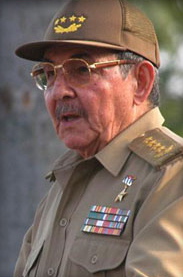
Photo by: Globovisión | Flickr | Creative Commons

Photo by: Globovisión | Flickr | Creative Commons

In offices, shops and on the street in Havana, “change” seems to be one of the most commonly used words.  Billboards proclaim “The changes in Cuba are for more socialism” and “Updating socialism is the answer.”  But the words “reform” and – in some conversations – “privatization” pop up with significant frequency.  Party members previously reluctant to talk about change now speak of introducing “elements of capitalism” to make Cuba a “mixed economy” patterned closely after the “Vietnam model,” with its economic loosening but one-party rule.  Previous reforms have brought better, if sometimes expensive, food to many Cuban dinner tables, but the strong consensus in and outside the party is that a lot more needs to be done.

  • The law-decree on “non-agricultural cooperatives” provides a politically correct way ahead for the formation of small and medium private enterprises.  Cuentapropistas were given a prominent place in the May Day parade, and some are being nominated for office on the Communist Party slate.
  • The government is making another run at tearing down the barriers between hard-currency and peso purchases, with an eye to unifying the currency in the future.  Price tags at at least one major Havana store list prices in both convertible and national currency, at a 23-to-one conversion rate.
  • The law already allows Cubans to hire workers – a right previously given only to the state – and a draft labor law will further legalize private workers’ activities and integrate them into the economy.
  • Some 200-plus state enterprises are being put on a sink-or-swim program in which new management selected by the workers will be given a year to transform the firms into businesses closely resembling private cooperatives.
  • In January, the National Assembly will take up amendments to foreign investment laws.  Under consideration are direct foreign sales to non-state cooperatives and the direct hiring, firing, and paying of Cuban workers by foreign companies.
  • The travel reform law that goes into effect on January 14, ending the necessity for an exit visa and removing restraints on most Cubans from obtaining a passport, will also stimulate interaction with foreign countries.

The macro situation is still a mess, and the reforms have a long way to go to attain even the level of Vietnam’s prosperity.  Cuban stores sell Vietnamese cookies, not vice versa.  As the rhetoric indicates, the government – long expert at managing popular expectations – continues to emphasize continuity as the changes proceed.  But while no one is expecting a fast shift to capitalism, many middle-aged and elderly Cubans have a renewed sense of hope that life ahead will be better, which has political benefits and risks for the government.  One thing for sure is that the socialism that is being “updated” is a far cry from the communism that Cuba attempted in the 60s, 70s and 80s.

Arms, Allies, and Ahmadinejad: Lessons from the Cuban Missile Crisis

By Robert A. Pastor and Tom Long

Photo by: Bruce Tuten | Creative Commons | Flickr

On its 50th anniversary, the Cuban missile crisis continues to attract attention as a landmark event in U.S. foreign policy.  Unfortunately, the lessons that are often drawn from the crisis are the wrong ones – and they are predicated on a version of the history that is built on more fabrications than facts.  The lesson most often drawn from the crisis is that President John F. Kennedy’s firmness and resolve compelled Soviet Premier Nikita Khrushchev  to withdraw the missiles.  As Secretary of State Dean Rusk put it:  “We’re eyeball to eyeball, and I think the other fellow just blinked.”  Unlike Chamberlain at Munich, Kennedy confronted Khrushchev and prevailed.

However, the more complete story that we now know – forcefully buttressed by a host of excellent books released to commemorate this anniversary – is very different, and one of the reasons is that we have learned much more about the complicated role of Cuban President Fidel Castro, who initially opposed the Soviet proposal to place Missiles in Cuba, but then felt betrayed when Khruschev decided to withdraw them without consulting.  We also learned that the nuclear warheads and a substantial number of tactical nuclear weapons were already stationed in Cuba when the missiles were detected.  If Khrushchev had not withdrawn the missiles, and the U.S. had invaded, which it was about to do, these weapons would have been used, triggering a nuclear holocaust.   More recently, we learned that Castro tried to convince the Soviets to leave the tactical missiles, which the U.S. did not know about, after the denouement of the crisis, but fortunately, Khruschev rejected that proposal.

We cannot be absolutely certain as to why Khrushchev decided to withdraw the missiles, but all the available evidence suggests several factors.   First, Robert F. Kennedy had conveyed a complex proposal to Soviet Ambassador Dobrynin:  the U.S. would  not  invade Cuba if the Soviet Union withdrew the missiles.  More important, he said that the U.S. would withdraw its missiles from Turkey but only on condition that this information would not be made public.  Because of this deal, Kennedy was able to “spin” the event so that it looked like we won without giving up anything.  Robert Kennedy also said that he feared that the U.S. military might take matters into its own hands if the crises were not resolved soon.  At the same time, Fidel Castro sent a long message to Khrushchev, saying he expected an imminent invasion by the U.S. and recommending that the Soviet Union launch a first strike against the United States.  Coupled with the shoot-down of a U-2 over the island and a straying of another U-2  in Soviet Asia, these various factors led the Soviet leader to fear that both he and Kennedy were losing control of events, and thus, an immediate resolution of the crisis was essential.   That is why he transmitted his decision on radio.

Today’s great U.S. foreign policy fear is that a nuclear Iran will destabilize the Middle East.  Once again, the drama plays out in the middle of a U.S. electoral campaign, as did the Cuban crisis.  Once again, there are calls for threats and “red lines.”  An honest look at the events of 1962 yields useful lessons for today.  First, we should expect our leaders to have the courage to negotiate with adversaries to avoid conflict – and to stand up to domestic voices, including generals and advisors, pressing for war.  The second, more challenging lesson requires a U.S. president to step inside Nikita Khrushchev’s shoes.  The Soviet premier was able to stand up to an ally to avoid being dragged into a war with nuclear ramifications.  If Israel insists on a pre-emptive attack on Iran, will a U.S. president have the courage to restrain his ally, as Khrushchev had in restraining Fidel Castro?

Robert A. Pastor is a professor of International Relations at American University’s School of International Service and a faculty affiliate at the Center for Latin American and Latinos Studies. He has served as National Security Advisor for Latin America under President Jimmy Carter, and he was a Senior Fellow and director of programs on democracy, Latin America, and China at the Carter Center. Most recently, he is the author of The North American Idea: A Vision of a Continental Future.

Tom Long is a doctoral research fellow at the Center for Latin American and Latino Studies.

Unanswered Questions about Cuban Dissident’s Activities and Death

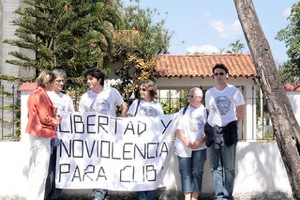
Libertad y noviolencia para Cuba

Photo by dumplife (Mihai Romanciuc) via Flickr, http://www.flickr.com/photos/62585343@N00/429146557/

Three weeks after the death of Cuban activist Osvaldo Payá, the questions that remain unanswered are not so much about the circumstances of the car accident that killed him – it appears to have been a tragic accident – but rather about the activities in which he and his European companions were engaged.  His family continues to claim that the vehicle was rammed off the road by state security agents.  According to Cuban authorities, the rental car veered off an unpaved stretch of road, and the driver, Angel Carromero, an activist from Spain’s conservative Partido Popular, has been charged with vehicular manslaughter.  At a Havana press conference, both Carromero and the other survivor, Jens Aron Modig of Sweden, confirmed the official version of the incident and asked the international community not to use the tragedy for political ends.  Since returning to Sweden, Modig, who admitted entering Cuba to deliver funds to Payá’s organization, has not disavowed the official account.  Nonetheless, the deluge of media coverage quick to frame the accident as a sinister government plot has not been corrected.

Though perhaps the most effective dissident to challenge the Cuban government, Payá was among the most tolerated.  His international celebrity – he won the EU Parliament’s Sakharov Prize for Freedom of Thought in 2002 – his opposition to the U.S. embargo and Helms-Burton regime-change programs, and his commitment to peaceful change on the island made him an unlikely target for a political assassination.

The project that put Payá on the road to Santiago has many of the markings of the secret operations carried out under “democracy promotion” programs run by the U.S. State Department and USAID.  These programs are shrouded in such secrecy that not even the Congressional oversight committees are briefed on them, so ascertaining the truth of who was directing the Carromero-Modig mission and the information campaign accusing the Cuban government of murder after the accident is practically impossible.  But strong circumstantial evidence has emerged.  In video testimony, Modig revealed that he met in Tbilisi with two major USAID grantees involved in such operations – the International Republican Institute (IRI) and the National Democratic Institute (NDI) – just before traveling to Cuba.  It is unclear whether Payá – known for eschewing foreign financial aid – was aware that Carromero and Modig’s primary objective on the trip was to hand out money to antigovernment activists.  It is conceivable that he chose not to know the details.  Regardless, his death represents a significant blow to Cuban activists seeking peaceful, democratic change without heavy foreign direction. 

Cuban National Assembly Takes Modest Steps on Reforms

Photo by Nathan Laurell via Flickr http://www.flickr.com/photos/nglklm/7146331353

Speaking to the two-day semi-annual session, President Raúl Castro reiterated the leadership’s commitment to undertaking the reforms outlined in the Sixth Party Congress last year.  He didn’t explicitly address concerns reported in international media that implementation of the reforms has been halting, but he announced several concrete steps to be undertaken this year.  Among them is the creation of non-agricultural cooperatives – allowing a new form of private enterprise in 222 business areas and announcing government loans for them – and greater decision-making autonomy for state enterprises.  The Assembly passed a new tax law, details of which have not yet been published.

Castro was a little defensive about the lack of an “updating of migration policy” – widely understood to include lifting the requirement for exit visas – while “ratifying the will of the Party and State leadership to carry out the reformulation.”

From the beginning of the current round of reforms, Raúl Castro and the Communist Party have cautioned that the changes will be introduced gradually and adjusted during implementation.  The credible reports of frustration with the pace of change notwithstanding, the National Assembly appears to have validated that getting the reforms “right” is more important than doing them fast.  The government probably calculates that the new cooperatives and tax law are important elements of an infrastructure for change, but slow or partial implementation will undermine them.  The perennial question remains whether the government’s concern with control discourages important energy among the individuals it is counting on building the new limited private sector.