Colombia: President Santos’s Challenges

By Maribel Vasquez

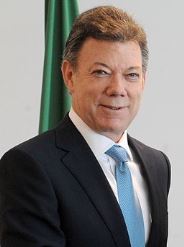
President Santos Calderón / Photo credit: Agência Brasil, Creative Commons

President Santos Calderón / Photo credit: Agência Brasil, Creative Commons License

Colombian President Juan Manuel Santos has yet to announce whether he will seek a second four-year term in May, but with the November deadline fast approaching for him to declare his candidacy, many Colombians are expressing dissatisfaction with his performance. Three years after taking office, and after a protracted honeymoon period, Santos’s approval ratings dropped to a dismal 21 percent several weeks ago. (A more recent poll surged to 41 percent but the rollercoaster ride appears likely to continue.) Colombia has experienced a wave of strikes and protests – perhaps reflecting a phenomenon evident from Brazil to Chile to Peru by which popular sentiment nosedives despite steady economic growth because much of the population is left out and institutions fail to respond to needs. The Santos administration has governed more democratically than his predecessor and shown greater commitment to the rule of law and accountability. Unlike the Clintonian dictum that “It’s the economy, stupid,” Colombia’s long-standing adage has been that “La economía va bien, el país va mal.”

The stalled peace talks between the Colombian government and the Revolutionary Armed Forces of Colombia (FARC) are also to blame for Santos’s dwindling public support. On October 13th, the 15th round of negotiations concluded in Havana without visible progress towards an agreement. (Talks are set to resume next week.) The agenda has six major points agreed to by both sides: land reform, political participation, disarmament, illicit drugs, rights of the victims, and implementation of an eventual peace accord. To date, agreement has been reached on only land reform and rural development. A number of thorny issues persist, including the FARC’s demand that a constituent assembly be convened to incorporate the peace deals into the country’s constitution – which the government has rejected.  In the latest development, the government also turned down the FARC’s call to have civil rights activist Reverend Jesse Jackson act as mediator in the release of Kevin Scott Sutay, a former U.S. marine abducted by the FARC earlier this year. Criticism of Santos’s handling of the talks is due in part to perennial public concern that the FARC is stalling the peace talks to regroup and rebuild its capabilities.

President Santos has staked his political legacy on ending Latin America’s longest-running armed conflict. Success or failure of the peace talks will define his presidency for many Colombians, and failure to reach an accord would cast a cloud over his political future. While he has talked tough – saying FARC stalling is wearing out the government and the Colombian people’s patience – President Santos appears in every bit of a hurry to see these negotiations come to a conclusion before the end of the year. Former President Alvaro Uribe and his loyalists in the Centro Democrático (CD) have already blasted what they claim is excessive leniency on the President’s part.  Santos is in a bind: if he rushes the peace talks, he risks making too many concessions and playing into the Uribistas’ hand, while canceling the talks would strip him of the desired distinction of being Colombia’s peace president. The easy road to reelection – effective conclusion of the peace process and greater responsiveness to the country’s widespread malaise – seems remote.  A strong opposition candidate has yet to emerge, however, giving Santos time to rebuild public support. CD frontrunner Francisco Santos’s recent threat to leave the party hints at a split within Uribismo.  The failure of an organized opposition may be the only advantage Santos has at the moment.
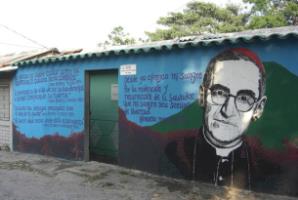
Moving Toward Religious Unity in Response to Violence?

Bishop Oscar Romero mural, El Salvador / Photo credit: alison.mckellar / Foter / CC BY

Bishop Oscar Romero mural, El Salvador / Photo credit: alison.mckellar / Foter / CC BY

Many Latin American churches are struggling to address the criminal violence challenging their societies – and are finding new ways of promoting peace in ways reflecting each country’s different conditions.  As part of American University’s multi-year project (click here) on religious responses to violence in Latin America, 40 grassroots activists representing two-dozen faith-based ministries in seven countries gathered in Guatemala City in mid-July to share experiences ministering to victims of the region’s rampant violence.* Their ministries in Mexico, Central America and Colombia ranged from programs for at-risk youth, to rehabilitation centers for former gang members, to shelters for Central American migrants crossing through Mexico.  Just as they developed a range of responses to the threats posed by authoritarian governments in the past, religion-based activists today are adapting strategies to a wave of “new” violence, a battery of social ills that includes gang violence, gender-based violence, and violence against migrants, as well as the persistent violence in states that have formally democratized but failed to deliver basic security.

Conflicting interpretations of the Church’s message of peace affect how churches define victims, how they emphasize or downplay the structural causes of violence, and how they respond to human suffering.  Thus, while many of the participants characterized the current crisis in terms of structural or institutional violence, such convictions were not always reflected in churches’ proposed solutions to the crises facing their communities.  There was no consensus, for example, on how faith-based organizations can effectively engage state institutions and policies, particularly where governments are perceived as corrupt and ineffective:  some participants believe the church’s role is to condemn corruption, while others saw no alternative to holding elected and appointed authorities accountable by pressing them to deliver justice.  One of the participating ministries based in Honduras, for example, provides legal aid for victims and their families, encouraging them to press charges, provide testimony, and follow-up with police and courts until they obtain a conviction.

For many of those in attendance, the ecumenical meeting was a first – in the words of a Mexican participant, “historic” – by offering a unique opportunity for religious practitioners to learn about the realities of neighboring countries, exchange ideas about best practices responding to violence, and discuss possible means of collaboration across borders.  Despite diverse traditions and circumstances, the churches are becoming a more visible and potentially more unified force in the struggle against violence in Latin America. In a region marked by ecclesiastical competition, they are challenging traditional understandings of “accompaniment” and are recognizing their shared responsibility to respond to violence with concrete action.  Indifference, passivity, fear, and silence received the greatest condemnation from the meeting’s participants.  These churches are realizing that their diverse activities are in fact complementary, and that they have a critical role to play – both to mitigate existing suffering and to eradicate root causes of violence.  

*The seminar “The Role of the Church in the Face of Violence in Mesoamerica: Models and Experiences of Peace in Contexts of Conflict and Violence” was co-organized by AU’s Center for Latin American and Latino Studies and the Latin American Anabaptist Seminary (SEMILLA) based in Guatemala City.

OAS Drug Report: Let’s Get Serious

The OAS Preparing their Report on the Drug Problem in the Americas | Photo credit: OEA - OAS | Foter.com | CC BY-NC-ND

The OAS Preparing their Report on the Drug Problem in the Americas | Photo credit: OEA – OAS | Foter.com | CC BY-NC-ND

The Organization of American States’ most recent report on the drug problem in the Americas – released last week in Bogotá – takes a fresh, analytical look at the issue and, by advocating discussion of new approaches, subtly signals the “war on drugs” so far has failed.  The report was mandated by hemispheric leaders last year at the Summit of the Americas in Cartagena, who “agreed on the need to analyze the results of the current policy in the Americas and to explore new approaches to strengthen this struggle and to become more effective.”  It takes an analytical approach toward drug-related problems in the hemisphere and includes a discussion of both the supply and demand factors of the drug trade.  (Click here to view the OAS documents.)

The report does not make bold policy recommendations.  It calls for greater attention to the public-health implications of the drug problem, but generally avoids advocating particular strategic solutions to the production, transportation and consumption of illegal narcotics, instead providing different scenarios for the evolution of the drug problem in the Americas.  It envisions the legalization of certain drugs, such as marijuana, in various countries, but makes clear that the OAS is not advocating legalization or decriminalization.  Instead, the report emphasizes the need for countries in the Western Hemisphere to work together to combat the drug problem and discuss new approaches.

The OAS’s unique status in the hemisphere – demands on its performance are high but support for its efforts  from key governments in the region is inconsistent – may not make it the best organization to take the lead on an issue as thorny as the “war on drugs.”  The increasingly clear consensus south of the Rio Grande is that the past couple decades of effort have been not been worth the cost in dollars and lost lives, and many Central Americans, in particular, believe the militarized approach has been disastrous.  Often criticized by U.S. politicians and bureaucrats, Secretary General Insulza was probably wise not to use the report to formalize the hemisphere’s rejection of Washington’s policies.  But moving the discussion to the analytical level – rather than parroting support for another Plan Colombia or Mérida Initiative – is a significant accomplishment in itself.  Rolling out the report in Bogotá, where talk of “new approaches” is also growing, probably helped strike the right balance between old and new.  In addition to platitudinous calls for regional cooperation, the OAS can demonstrate its leadership and relevance by channeling the criticism, the lessons learned, frustration with U.S. consumption, and regional governments’ prescriptions on the way ahead into a serious, constructive strategy for the hemisphere.  With this report, the OAS has indicated that it’s time to get serious about viable alternative solutions to this multi-faceted issue – and that clinging to old models and rejecting new ideas is no longer an acceptable response to calls for rethinking the “war on drugs.”

Colombia’s Uribe Out of Office, But Not Out of Mind

By Tom Long

Alvaro Uribe receiving the Medal of Freedom | Photo credit: White House photo by Chris Greenberg / Foter.com / Public domain

Alvaro Uribe receiving the Medal of Freedom | Photo credit: White House photo by Chris Greenberg / Foter.com / Public domain

Former Presidents George W. Bush and Álvaro Uribe of Colombia were close allies in the “war on terror,” but they are taking very different approaches to their post-presidency.  While the former has taken up painting and appears at few public events, since leaving office in 2010 Uribe has consistently tried to upstage his hand-picked successor, Juan Manuel Santos.  He has frequently taken to Twitter with biting criticisms, and in recent months – as provincial and municipal elections near – Uribe’s public condemnations have grown both more vociferous and more damaging.  Even ardent supporters of Uribe’s presidency are questioning his post-presidential politicking, according to press reports.

In particular, the former president’s attacks on the ongoing peace talks with the FARC and Colombia’s more conciliatory approach to Venezuela have contributed to a drop in Santos’ support, according to polls, and made the two endeavors more difficult and politically costly.  On the former, Uribe has repeatedly accused Santos of offering “impunity” to FARC fighters.  He’s also accused Santos of “turning his back on democracy” for joining (albeit reluctantly) the UNASUR consensus to recognize Nicolás Maduro’s narrow victory in the Venezuelan presidential elections.  And Uribe has slammed Santos’s efforts to hold Uribe-era officials responsible for violence and corruption.  Though Uribe’s attacks have complicated Santos’ position with his own party on these issues, the reaction has been quite different in the United States.  Though Uribe’s criticism has found an audience with the far right in the United States, Santos retains considerable U.S. backing.  Uribe’s role as the main U.S. ally in South America in the past was warmly rewarded and he was held up as Colombia’s savior – President Bush gave him the Medal of Freedom – but his hectoring of Santos and his failure to atone for violations during his government appear to have undermined his credibility.

Uribe’s post-presidential antics should spark a re-evaluation of his presidency, even among those who downplayed human rights problems and suspected links to paramilitaries among Uribe’s party and family.  His accomplishments in rebuilding the Colombian military and imposing tactical defeats on the FARC cannot be denied, but in doing so, he ran roughshod over civilian institutions, used a secret intelligence unit to harass opponents in and out of government, and, with the deaths of potentially thousands of “false positives,” appears to have been complicit in serious violations of human rights. Out of office, he continues to show a similar lack of respect for democratic processes and decorum – even as he levels that same accusation against Venezuelan leaders – and he still seems profoundly resentful that he failed to amend the Constitution to allow himself a third term.  In a democracy, there can only be one president at a time.  Former presidents have the right to speak out, but it’s fair to ask if their goal is constructive and contributes to the integrity of democratic institutions.


Might the U.S. Release Simon Trinidad?

By:  Antoine Perret, CLALS Research Fellow

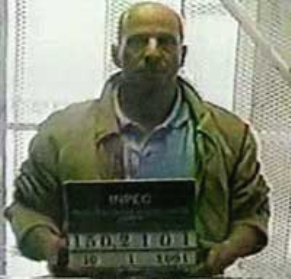
Simon Trinidad mug shot | by US Government | public domain

Simon Trinidad mug shot | by US Government | public domain

In the peace talks between the Colombian government and the FARC, the guerrilla negotiators have requested the release of FARC leader Simon Trinidad – nom de guerre of Ricardo Palmera – who is imprisoned in the United States.  Publicly available information gives no hint that the Colombian government has officially asked Washington to consider the question, but – since the release of FARC members in prison in Colombia is not off the table – Washington should be prepared to consider the possibility.

Simon Trinidad was captured in Quito, Ecuador, in January 2004, extradited to the United States and put on trial for conspiracy to engage in drug trafficking and to hold hostages.  Each of four trials for drug trafficking ended in a hung jury, and eventually those charges were dropped.  In 2007, however, he was convicted for an alleged role in conspiring to kidnap three U.S. contractors taken hostage after their counterdrug surveillance plane crashed in 2003.  Trinidad is serving a 60-year-sentence in Colorado at the United States’ only federal “supermax” prison, with no prospect of parole.

The U.S. State Department has publicly stated that President Obama will not grant Trinidad parole, as the FARC requested, to participate in the negotiations.  But the question of his release if the Colombian government requests it within a peace settlement remains pending.  If such a request arises, the U.S. government’s lawyers will certainly report that the protocol (II) additional to the Geneva Conventions states that “at the end of hostilities, the authorities in power shall endeavor to grant the broadest possible amnesty to persons who have participated in the armed conflict, or those deprived of their liberty for reasons related to the armed conflict, whether they are interned or detained.”  The words “shall endeavor” obviously do not imply obligation, but by establishing that states should release members, they create a political dynamic that could drive a decision giving a useful push to resolving Colombia’s six-decade conflict. 

ICJ Decision on Colombia-Nicaragua Dispute Settles Little

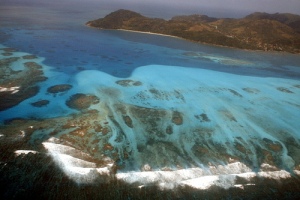
Photo: Patricia Iriarte Diaz Granados "orianauta" | Flickr | Creative Commons

Photo: Patricia Iriarte Diaz Granados “orianauta” | Flickr | Creative Commons

The decision announced last month by the International Court of Justice on a three-decade maritime dispute between Nicaragua and Colombia has pleased Managua and angered Colombia.  The court confirmed Colombia’s sovereignty over seven islets known as San Andrés and Providencia, but it extended Nicaragua’s sovereignty over 200 nautical miles.  The ruling means that, although Colombian jurisdiction includes a 12-mile radius around the islands, Nicaragua will control a much bigger area of the Caribbean – and greater access to fishing grounds and potential underwater oil deposits.

Colombia has rejected the ICJ verdict; refused to withdraw its navy from the contested waters; and withdrawn from the Pact of Bogotá, which recognizes ICJ jurisdiction.  Foreign Minister Holguín said Colombia wants to protect itself from future challenges to Colombian territory.  This position has implications for its neighbors.  Colombia’s withdrawal leaves a pending case brought against it by Ecuador regarding harm caused by herbicides from aerial fumigation near its border.  It also shifts back into bilateral renegotiations Colombia’s dispute with Venezuela over the Gulf of Venezuela, which Colombia had often proposed taking to the ICJ.  According to press reports, Panama, Costa Rica, and Honduras did not see themselves affected by the ICJ decision.

While ICJ decisions are final and cannot be appealed, the Court lacks the means to enforce them.  Colombia’s rejection of the ruling suggests it will take advantage of that, setting itself and Nicaragua on a collision course that will undoubtedly raise tensions in the region.  (Non-enforcement is an old problem.  The United States got the UN Security Council to support it in rejecting an ICJ decision in the 1980s that Nicaragua was entitled to reparations for U.S. support of the Contras.)  Even if the countries don’t come to blows, the dispute puts regional cooperation in crucial areas, such as counternarcotics, at risk.  It also raises questions about the willingness of countries to work with multilateral institutions.  The ALBA countries support ICJ jurisdiction now, but Colombia’s position probably will embolden them to reject it if inconvenient in the future.  Maritime disputes appear to be increasing worldwide, and Central America promises to be no different.

Colombia Peace Talks in Havana: Peace on the Horizon?

Photo by: “medea_material” | Flickr | Creatives Commons

The Colombian government and its old adversary, the FARC, are taking tentative steps toward peace.  After a brief delay, the two sides initiated negotiations on a five-point agenda in Havana this week and quickly showed signs of progress.  The FARC declared a unilateral, two-month truce – a step beyond what they granted the last time talks were held from 1999-2001 – without assurance that the Colombian government would reciprocate.  President Juan Manuel Santos, already criticized for the talks, has rejected a cease-fire so far and appears reluctant to double-down on his political bet.  If the truce holds, it would create a much improved environment for the talks.

Most commentators have stressed that the Colombian government is in a much better position now than a decade ago because the FARC has been beaten back militarily.  What has received less attention is how President Santos has put himself in a better position through important non-military reforms.  He has pressed through important measures such as the ley de víctimas, compensating those who have suffered from the conflict; the creation of a more independent judiciary; and agrarian reform measures intended to improve life in the countryside.  Santos is not about to adopt the FARC’s anti-capitalist line, but his policies have addressed some of the problems the guerrillas claim to be fighting to redress.  At the same time, nearly three-quarters of the Colombian people support the talks, according to a Gallup Colombia poll.

Stronger rhetorical support from the Obama Administration – even as it properly remains on the sidelines of the actual talks – would enhance the peace process.  Even an implicit U.S. guarantee of support for implementation of any accord would be a powerful boost to President Santos and help him face down criticism from ex-President Álvaro Uribe and his political allies.  It would also be a clear signal to Latin America that Washington supports social and economic reforms to attain peace and stability, not just military programs.  The Cuban government, accused of fomenting unrest in the past, has shown that it favors peace and undertaken this initiative apparently without expecting any quid pro quo from Colombia’s primary backer, the United States.  Chile and Venezuela have shown support as observers.  For the United States to hesitate, apparently in response to bombastic comments from the Chair of the House Foreign Affairs Committee, Rep. Ileana Ros-Lehtinen, undermines U.S. influence and leadership on an important issue with hemispheric implications.

Colombia: Giving Peace Talks Another Try

Photo by: ideas4solutions | Flickr | Creative Commons

President Juan Manuel Santos and FARC Commander “Timochenko” announced this week that they have agreed to hold “direct and uninterrupted” negotiations beginning in Oslo as early as next month to “put an end to the conflict as an essential condition for the building of a stable and durable peace.”  Press reports suggest popular support for the talks, despite criticism from former President Álvaro Uribe and his allies in Bogotá and Washington.  U.S. Representative Ros-Lehtinen, chair of the House Foreign Affairs Committee, called the news “gravely disappointing.”  The role of Cuba and Venezuela in the preliminary talks and Havana’s future hosting of the post-Oslo phase of negotiations have particularly rankled Cuban-American legislators.  State Department spokeswoman Victoria Nuland said the United States “would, of course, welcome any efforts to end the hemisphere’s longest-running conflict and to bring about lasting peace in Colombia.”

Santos has stated that the time is right to start talks, although he has emphasized that the government “will not make any concessions on the military side” and that military operations “will continue with the same intensity.”  Observers note the conditions are indeed different from when previous efforts foundered.  The FARC leadership has been weakened considerably, and the group’s ideological grounding and foreign support have evaporated.  The FARC apparently feels that the security of demobilized combatants – a longtime concern – will not be compromised even though demobilized paramilitaries could very well try to hunt them down.  Timochenko said the FARC “come[s] to the table without grudges or arrogance,” and the group issued a “Video for Peace” with a rap song urging support for talks – signs of confidence in the process not seen previously.

The State Department’s statement welcoming the talks was positive but general.  Santos’s decision puts Washington on the spot – of which the sniping reflected in Chairwoman Ros-Lehtinen’s remarks is just one part.  Sitting on a massive U.S. investment in the military option and espousing similar programs against narcotics traffickers in Central America, the Obama Administration may be reluctant to go significantly beyond rhetorical support for the talks.  Cuba and Venezuela, whose influence over the independent-minded FARC has often been tenuous, are a moderating force, but Washington may be loath to acknowledge their value in a peace process.  Santos has little choice but to take the FARC’s sincerity at face value for now, but he surrenders little leverage in the current configuration.  The FARC may be cynically calculating that it can benefit from the sort of demobilization that the rightwing paramilitaries had – reaping benefits for commanders and troops, and then re-mobilizing as a newly configured force.  After all, the bandas criminales – BACRIMs – marauding through parts of rural Colombia today are essentially paramilitaries without the ideological and political overlay of the past.  Whereas the truce between former President Uribe and the paramilitaries had support from the Bush administration, it will be telling to see whether the Obama administration accepts what’s needed for a serious peace effort with the FARC, such as an expensive demobilization plan, launched by a Colombian president with stronger democratic credentials.

NOTE:  This is a corrected version of an article originally posted on September 7, which incorrectly characterized the State Department’s position on the talks.  We regret any confusion the inaccuracy may have caused.

FARC Activity

A French journalist has become the latest victim of Colombia’s internal conflict.  The French Foreign Ministry announced that journalist Romeo Langlois was kidnapped by leftist rebels last Saturday following an armed raid on Colombian troops who were attempting to dismantle cocaine laboratories.  Colombian Defense Minister Juan Carlos Pinzón told reporters that Langlois had been wounded in the arm during the attack, which left a police officer and three soldiers dead.  Langlois had been traveling with the army to film a documentary about illegal mining and Colombia’s notorious drug trade.  This attack indicates that the FARC, though severely weakened after decades of armed conflict, are still very much a powerful force to be reckoned with.  Analysts suspect that this latest action, coming after a declaration to end kidnappings in February, is a message to President Juan Manuel Santos, who has refused to negotiate with guerrilla leaders.