Drug Dealing in Costa Rica: A Perverse Path toward Social Inclusion

By Rodolfo Calderón Umaña*

Antonio / Flickr / Creative Commons Attribution-NonCommercial-ShareAlike 2.0 Generic (CC BY-NC-SA 2.0)

Antonio / Flickr / Creative Commons Attribution-NonCommercial-ShareAlike 2.0 Generic (CC BY-NC-SA 2.0)

Central America’s emergence as a principal transit route for illicit drugs from South America to the U.S. has given rise to local retail markets supplying users within the region.  A study of three Costa Rican communities – one in greater San José and two along the Caribbean coast – highlights several factors that determine the scale and consequences of these local markets.  Among the most important are the high levels of social exclusion experienced by households in these localities and residents’ motivation to become involved in the business because it offers resources (money, power and prestige) that cannot be achieved through the legitimate channels of education or quality employment.  Other factors include the proximity of the communities to drug trafficking routes and the extent of previously existing demand from local consumers.

One of the most significant characteristics of local drug markets in these communities, as elsewhere, is that they are socially and territorially bounded because trust is the key factor shaping relationships between suppliers, sellers and consumers.  Some local suppliers maintain direct ties to cartels, but they operate their businesses independently.  Youth are assigned the most vulnerable tasks and are thus disproportionately represented among those arrested and convicted of crimes.  Violence serves as the principal instrument for controlling and regulating the drug trade, and the result is that for youth in these settings violence becomes normalized as a routine form of behavior.  This spawns a generalized climate of fear and insecurity, and the typical response of community residents is to retreat from public space and to isolate themselves inside their homes.

These findings support calls for new responses to the drug trade at the community level.  Central American governments, encouraged to a significant degree by U.S. programs, have tended to emphasize repressing and “combatting” the scourge of drug trafficking, yet where this approach has been implemented – particularly in Central America’s Northern Triangle — social problems have only gotten worse.  In Costa Rica, it’s not too late to undertake a comprehensive strategic review of policies in this domain and to bolster programs to stabilize affected areas.  Particularly if designed and implemented from the bottom up, programs can identify and reach out to vulnerable residents before they are drawn into drug micro-markets as vendors, consumers, or both.  Vocational training programs matched to real employment opportunities are absolutely fundamental – to reduce residents’ social exclusion.  Our research findings indicate that enhancement of public spaces where community residents can congregate and initiatives focused on building trust between communities at risk and representatives of the state can also be highly productive.  Costa Rica is at a critical juncture: it can either sustain and expand the participatory policy frameworks that buttress community cohesion and resilience or run the risk of falling into the devastating spiral of delinquency and violence that has plagued its neighbors in the Northern Triangle.

*Dr. Calderón Umaña is a researcher at FLACSO-Costa Rica.  The study is being conducted by FLACSO-Costa Rica with funding from the International Development Research Centre.
Child Migrants: Deepening Challenges

By CLALS Staff

A surge in the number of unaccompanied children fleeing criminality, family problems, and violence in Honduras, Guatemala, El Salvador and Mexico underscores the personal tragedy of undocumented immigrants – they escape old threats only to face new ones – but the issue so far has sparked only the usual partisan acrimony in Washington.  According to U.S. government sources, the number of child migrants reaching the United States has increased 92 percent over the past year.  Some 47,000 have arrived since last October, and a draft document by the Department of Homeland Security speculated the figure could reach 90,000 by the end of the fiscal year.  (Only 5,800 children arrived alone each year 10 years ago.)  Mexican children still outnumber others, but the current surge is coming from the northern-tier countries of Central America.  Polls conducted by the UN High Commission for Refugees indicate that about half of these children are driven by criminal insecurity; 21 percent by abuse and other problems in the home; and the rest by other forms of violence.  The influx of these refugee migrants is not a strictly U.S. phenomenon: Mexico, Nicaragua, Costa Rica and Panama have seen a 435 percent increase in child arrivals from the northern tier since 2012 as well.  The UNHCR has made an urgent plea for assistance.

President Obama last Monday declared the problem was an “urgent humanitarian crisis,” and he directed the delivery of aid to house and provide care to the children, who remain in government custody while relatives in the United States are located or other solutions are planned.  The White House also announced an initiative to assign legal advisors to those under 16 who are facing deportation but are not in government custody.  Republican critics reacted forcefully.  Texas Senator Ted Cruz said the crisis was a “direct consequence of the President’s illegal actions,” including allegedly lax enforcement of immigration law.  The Chairman of the Judiciary Committee in the House of Representatives called it an “administration-made disaster.”

Shifts in immigration numbers traditionally have been a function of “push” factors (poverty, violence and other problems) in sending countries and of “pull” factors in the United States – particularly the perception that safely entering the country and finding work is easy.  The Obama Administration’s aggressive deportation policies – physically removing about two million undocumented migrants – arguably have reduced the “pull” over the past six years, and it seems premature to conclude that the Administration’s recent rhetorical shift has shined a bright green light as far as Honduran hamlets.  That the influx is occurring in countries other than the U.S. provides further evidence that local push factors (as the UNHRC posits), and not Obama Administration policies, are the most credible cause of the surge, in spite of the fact that criminality and violence in Central America’s northern triangle have not shown a commensurate increase during this period.  Regardless, predictable demagoguery around this growing crisis probably will further complicate the Administration’s efforts to carry out those few progressive steps it has launched by Presidential order, including programs to normalize the status of “Dreamers” – undocumented migrants’ children eager to overcome the stigma and obstacles to citizenship.  The approach of mid-term elections in the United States promises that this humanitarian crisis will sustain more name-calling and political paralysis in Washington.

Central American Governments Face Tough Challenges

by Benedicte Bull*

CLALS last week convened a panel in San Salvador to discuss the findings of its multi-year project on “Elites, States and Reconfigurations of Power in Central America.”  Attended by over 120 people, the event analyzed how the evolving role of elites will affect the new administrations in El Salvador, Costa Rica, and Honduras.  The following day featured a daylong event to launch the Instituto Centroamericano de Investigación sobre el Desarrollo e Inclusión Social (INCIDE), a new think tank that aims to foster fresh thinking about the difficult challenges facing the region.  Here are some key conclusions:

The leftist FMLN in El Salvador and the centrist Partido Acción Ciudadana (PAC) in Costa Rica have won crucial elections, but their ideological labels don’t fully capture how they will relate to three decisive actors: legal capital (the private sector), illicit capital (organized crime) and the United States.  The elections of Salvador Sánchez Cerén and Luis Guillermo Solís do not signal a strong turn to the left in Central America, but rather show that the population in both countries increasingly questions the political elites and institutions.  Solís capitalized on the corrupt image of Costa Rica’s two traditional parties, and what tipped the elections in El Salvador were all those who feared the return of a corrupt and elitist right, whose dirty laundry was made public in feuding between ARENA and the breakaway party GANA.

The new governments’ ability to restore confidence will depend firstly on how they relate to business and private capital.  All the countries of Central America are included in the free trade agreement with the United States (CAFTA-DR) and have been generally pursuing market-oriented development strategies since the late 1980s, but economic elites are still dependent on the state for survival.  Many build their business primarily on contracts with the state; all depend on the state involvement in infrastructure and services; but few are willing to pay sufficient taxes to allow their governments to face important challenges.  Honduras, which has accommodated elites the most, may establish a free zone fully exempt not only from taxes but all government regulations.  Nicaragua’s approach, under Daniel Ortega, is to build an alliance between the presidency and business, facilitated by Venezuelan assistance and growing integration into ALBA trade networks.

Institutional weaknesses throughout the region make it difficult to bring organized criminal groups under control.  In Guatemala, where congressmen frequently jump between political parties, organized crime easily buys political control and influence.  Weak parties, weakened ideologies, and leaders’ unwillingness and inability to build a state capable of implementing policies for the common good also allow organized crime a strong grip over politics.  In both Honduras and Guatemala, criminalization of politics has blurred distinctions between legal and illegal elites.

Central America’s relations with the United States also tend to hold it back.  While South America has come a long way towards independence from the United States, many Central Americans believe the old hegemon does not intend to let go of their region.  U.S. policy has in many ways become more sophisticated, but former members of governments speak freely of various methods the U.S. uses – often with the support of Washington lobbyists representing Central American rightwing elites – to restrict Central America’s room for maneuver.  This overshadows debate in Central America over China’s influence and Brazil’s growing leadership.

Taken together, these factors contribute to the conclusion that, even with winds blowing slightly to the left in Central America, the new presidents will have little space to make new policies.  For former guerrilla Sánchez Cerén and former history professor Solís, their experience and wisdom may be their best assets to move forward their agendas.

*Dr. Bull is Associate Professor at the Center for Development and the Environment (SUM) at the University of Oslo.

Social Exclusion and Societal Violence: The Household Dimension

By Juan Pablo Pérez Sáinz*

A street in Pacuare, Costa Rica—one of the FLACSO project's research sites  Photo credit: d.kele | Foter | CC BY-NC-SA

A street in Pacuare, Costa Rica—one of the FLACSO project’s research sites
Photo credit: d.kele | Foter | CC BY-NC-SA

Ongoing research in Central America increasingly points to citizens’ exclusion from basic markets, especially the workforce that receives certain social guarantees, as the cause of societal violence in the region.  Their lack of access to the labor, capital, land and other markets, in which almost all income is generated, leads to an extreme disempowerment – a primary exclusion – that reverberates through citizens’ lives.  Analysts of Latin American societies often focus on poverty and income inequality as important elements in violence, but a study by FLACSO-Costa Rica and FLACSO-El Salvador indicates that social exclusion is the underlying cause of these problems and, therefore, is the more reliable indicator of a country’s vulnerability to societal violence.  The processes of social exclusion may be responsible for the epidemic of violence that plagues urban spaces across the isthmus and elsewhere in Latin America.

In Central America, labor markets are increasingly important drivers of primary exclusion.  These are societies riven by endemic unemployment and generalized job precariousness, and much of the population is relegated to the kinds of self-employment that offer no prospects of ever moving beyond satisfying the survival imperatives of households.  Numerous South American governments in recent years have helped neutralize citizens’ exclusion through carefully designed social programs, but when the state lacks the capacity or will to supply access to such “citizenship,” as has been the case in much of Central America, exclusion only deepens.  A least two basic narratives establish clear linkages between social exclusion and violence, especially among youth.

  • First, when the state abandons marginal urban territories, these fall under the control of youth gangs that establish themselves as new authorities and obtain a monopoly on the instruments of violence.
  • Second, precarious employment – the inability of citizens to generate incomes sufficient to satisfy minimal aspirations of consumption – leads to lifestyles in which the line between legal and illegal becomes murky.

FLACSO’s study of several urban communities in Costa Rica and El Salvador has identified a possible third link between social exclusion and violence – in the household.  The domestic sphere, typically glorified as the sole space of security amidst the external insecurity that these communities find in public spaces, can also become a source of exclusion-driven violence.  Male unemployment, especially that of heads of household, is expressed not only in violence among adults but also violence by adults against children.  That violence in turn is projected outward, toward other members of the community, as victims of violence within households become perpetrators of violence outside them.  The complex chain of different types of violence, beginning with the structural violence that society generates through social exclusion, passing through the household unit, and then rebounds outward toward the community.  If this is in fact what is occurring, it suggests that efforts to overcome primary exclusion are imperative to reduce all levels of violence.

*Juan Pablo Pérez Sáinz is a senior researcher for the Latin American Social Science Faculty in San José (FLACSO-Costa Rica) and lead researcher in this project supported by the IDRC.  For a description of the project please click here.

Central America: Elections Send Different Messages

By CLALS Staff

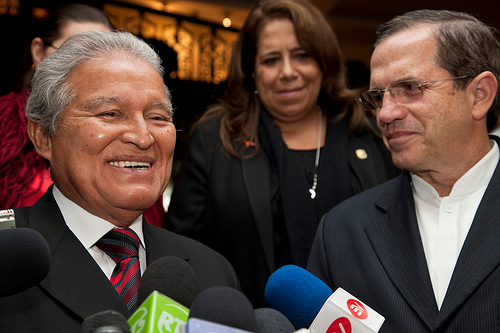
Salvadoran Presidential candidat Salvador Sánchez Ceréne  Photo credit: Cancillería Ecuador / Foter / CC BY-SA

Salvadoran Presidential candidate Photo credit: Cancillería Ecuador / Foter / CC BY-SA

The two elections held last weekend reflected different states of mind in El Salvador and Costa Rica. In the former, FMLN candidate Sánchez Cerén didn’t win the majority necessary to avoid a runoff, but the rejection of the ARENA party was strong and almost nationwide. ARENA candidate Norman Quijano not only trailed by 10 percentage points; his party’s victory in only one of the country’s 14 departments – remote Cabañas – was a serious blow to its image.  According to press reports, party infighting is intensifying.

Costa Rican Presidential candidate Johnny Araya and Antonio Álvarez Desanti, Chief of the Araya Presidential Campaign  By Lcascante2000 (Own work) [CC-BY-SA-3.0 (http:/via Wikimedia Commons

Costa Rican Presidential candidate Johnny Araya (left) / By Lcascante2000 / CC-BY-SA-3.0 / Wikimedia Commons

In Costa Rica, the eleventh-hour surge of a left-leaning progressive – Legislator José María Villalta – gave rise to a unified effort by the traditional parties to cast themselves as essential to warding off “Chavismo” and even Communism. Commentators judged that Citizen Action Party candidate Luis Guillermo Solís ran a mediocre campaign, but he denied ruling National Liberation Party candidate Johnny Araya – whose large campaign coffers gave him a significant edge – a first-round victory, beating him by about 1.5 percent (but still far short of the 40 percent to avoid a runoff). Both candidates’ red-baiting tactics apparently got people out to vote – abstentionism was not higher than in the past as feared – and popular cries for change shifted to a mandate for the status quo.

Jockeying for the second- round elections – on March 9 in El Salvador and April 6 in Costa Rica – has begun in both countries.  The FMLN’s Sánchez Cerén appears likely to win even without a pact with former President Saca, formerly an ARENA standardbearer. In Costa Rica, Solís is widely believed likely to win, as Araya is burdened by a lackluster record as San José mayor for 21 years and by his party ties to President Laura Chinchilla, whose disapproval ratings have broken records in the history of polling in the country.

Neither new president will have an easy time governing. Their legislatures are deeply fractured, and corruption and weak Executive Branch institutions will plague them as they’ve plagued their predecessors. ARENA appeared as weak as ever and, already showing signs of crisis, will need to retool. As it loses its access to the lucre of government treasury, it’s going to lose the glue that holds it together and infighting will persist and intensify. Costa Rica’s legislators, including those of the majority National Liberation Party (PLN), have in recent years shown little willingness or ability to put aside venal interests and engage in the serious business of policymaking. Insofar as they construe voters’ last-minute rejection of Villalta as a rejection of change, Costa Rican politicians probably judge that the coast is clear for business as usual.


Violence in Central American Urban Communities: Challenging Common Perceptions

By Juan Pablo Pérez Sáinz*

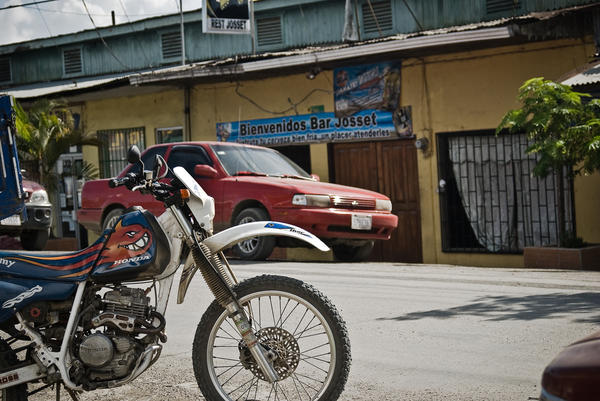
Urban storefront within a community of Sonsonate, El Salvador / Photo credit: Lon&Queta / Foter.com / CC BY-NC-SA

Urban storefront in a community of Sonsonate, El Salvador / Photo credit: Lon&Queta / Foter.com / CC BY-NC-SA

A recent survey on urban violence revealed that several kinds of violence are more serious in Costa Rica than in El Salvador.  Common wisdom, buttressed by homicide rates and other traditional “hard” indicators, is that El Salvador suffers from violence similar to Guatemala and Honduras, while Costa Rica does not. Historical factors stand out as possible explanations. Conflict among Salvadoran elites in the 1930s left the country deeply polarized and politically closed, laying the groundwork for war in the latter half of the century – with violence continuing, albeit in new forms, after the war ended. Costa Rica, on the other hand, emerged democratic, and the Second Republic created a welfare state committed to development. The structural economic adjustments of the 1980s challenged that order, and the growing inequality resulting from “neo-liberalism” has been accompanied by a rise in violence, but violence in Costa Rica did not reach the levels of its Central American neighbors.

A survey conducted by FLACSO specialists in El Salvador and Costa Rica challenges those theses. Polls of families in nine urban communities cast new light on the problem of violence, revealing important differences in the occurrence of three main categories of violence.

  • Members of 15.1 and 18.4 percent of the families in two Costa Rican communities reported suffering from criminal violence against persons, while the highest figure registered in El Salvador – in a community in Sonsonate – was only 11.5 percent.
  • The three Costa Rican communities also reported a higher incidence of violence against personal property (household wealth), with 26 percent of families in Cariari (in Limón Province, on the Caribbean coast) reporting such violations, and only 12.8 percent reporting this kind of violence in El Salvador’s hardest-hit community.
  • Only in the case of domestic violence did Salvadoran respondents report a higher incidence than did their Costa Rican counterparts.

Several hypotheses may explain these findings. Costa Rica’s higher level of socioeconomic development may be a factor in its higher rate of crimes against property even in less-affluent communities. Another possible explanation is that violence is a relatively recent phenomenon there and has not yet induced attitudes of resignation and acceptance of crime as something natural, leading to more accurate reporting.  In the case of Cariari, where the highest levels of violence in Costa Rica are reported, the existence of a local awareness program may be prompting residents to be more forthcoming in expressing concerns about violence. In El Salvador, on the other hand, the existence of youth gangs – maras – and the government’s abandonment of these communities have given rise to an institutionalization of their role in violence. The maras don’t permit the presence of other actors, and some of their actions may be perceived by communities as legitimate (for example, extortion could be interpreted as an act of protection). In addition, it’s noteworthy that the poll was conducted during the truce among the gangs, which at least until recently appears to have reduced violence. FLACSO will explore these explanations more deeply in the next phase of our research, which is being supported by the International Development Research Centre of Canada (IDRC).

*  Juan Pablo Pérez Sáinz is a senior researcher for the Latin American Social Science Faculty in San José (FLACSO-Costa Rica) and lead researcher in this project supported by the IDRC. For a description of the project please click here.

Moving Toward Religious Unity in Response to Violence?

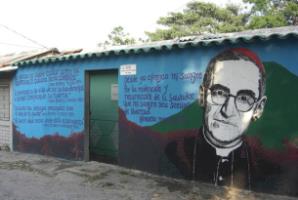
Bishop Oscar Romero mural, El Salvador / Photo credit: alison.mckellar / Foter / CC BY

Bishop Oscar Romero mural, El Salvador / Photo credit: alison.mckellar / Foter / CC BY

Many Latin American churches are struggling to address the criminal violence challenging their societies – and are finding new ways of promoting peace in ways reflecting each country’s different conditions.  As part of American University’s multi-year project (click here) on religious responses to violence in Latin America, 40 grassroots activists representing two-dozen faith-based ministries in seven countries gathered in Guatemala City in mid-July to share experiences ministering to victims of the region’s rampant violence.* Their ministries in Mexico, Central America and Colombia ranged from programs for at-risk youth, to rehabilitation centers for former gang members, to shelters for Central American migrants crossing through Mexico.  Just as they developed a range of responses to the threats posed by authoritarian governments in the past, religion-based activists today are adapting strategies to a wave of “new” violence, a battery of social ills that includes gang violence, gender-based violence, and violence against migrants, as well as the persistent violence in states that have formally democratized but failed to deliver basic security.

Conflicting interpretations of the Church’s message of peace affect how churches define victims, how they emphasize or downplay the structural causes of violence, and how they respond to human suffering.  Thus, while many of the participants characterized the current crisis in terms of structural or institutional violence, such convictions were not always reflected in churches’ proposed solutions to the crises facing their communities.  There was no consensus, for example, on how faith-based organizations can effectively engage state institutions and policies, particularly where governments are perceived as corrupt and ineffective:  some participants believe the church’s role is to condemn corruption, while others saw no alternative to holding elected and appointed authorities accountable by pressing them to deliver justice.  One of the participating ministries based in Honduras, for example, provides legal aid for victims and their families, encouraging them to press charges, provide testimony, and follow-up with police and courts until they obtain a conviction.

For many of those in attendance, the ecumenical meeting was a first – in the words of a Mexican participant, “historic” – by offering a unique opportunity for religious practitioners to learn about the realities of neighboring countries, exchange ideas about best practices responding to violence, and discuss possible means of collaboration across borders.  Despite diverse traditions and circumstances, the churches are becoming a more visible and potentially more unified force in the struggle against violence in Latin America. In a region marked by ecclesiastical competition, they are challenging traditional understandings of “accompaniment” and are recognizing their shared responsibility to respond to violence with concrete action.  Indifference, passivity, fear, and silence received the greatest condemnation from the meeting’s participants.  These churches are realizing that their diverse activities are in fact complementary, and that they have a critical role to play – both to mitigate existing suffering and to eradicate root causes of violence.  

*The seminar “The Role of the Church in the Face of Violence in Mesoamerica: Models and Experiences of Peace in Contexts of Conflict and Violence” was co-organized by AU’s Center for Latin American and Latino Studies and the Latin American Anabaptist Seminary (SEMILLA) based in Guatemala City.

U.S.-China: Competing over Central America and the Caribbean?

President Obama and President Chinchilla in Costa Rica | Photo by: The White House | Public domain

President Obama and President Chinchilla in Costa Rica | Photo by: The White House | Public domain

The recent visits to Central America, Mexico, and the Caribbean by Chinese President Xi Jinping and U.S. President Obama (and Vice President Biden to Trinidad and Tobago) suggest a handoff from Washington to Beijing of the role as the region’s sugar-daddy, but not a strategic shift in influence.  The presidents’ visits were similar in their innocuous itineraries.  Both got pompous welcomes; met with “real” citizens (Xi ate empanaditas de chiverre with a coffee farmer); and praised the bilateral relationships.  Both held sub-regional summits – Obama in San José and Xi in Port of Spain.  Both repackaged ongoing or recently negotiated projects as new “accords.”  Obama pledged another $150 million a year for funding the Central America Regional Security Initiative (CARSI), part of the strategy started under President Bush to counter the drug trade and related threats.  Xi got headlines in Costa Rica for providing more than $1.5 billion for refinery and road projects and to purchase replacement taxis and buses from Chinese manufacturers.  Significantly, China is also building Costa Rica’s new National Police Academy – the sort of project Washington used to thrive on.

President Chinchilla and President Xi Jinping | Photo credit: Presidencia de la República de Costa Rica / Foter.com / CC BY-NC-SA

President Chinchilla and President Xi Jinping | Photo credit: Presidencia de la República de Costa Rica / Foter.com / CC BY-NC-SA

Despite the similarities, the visits had different orientations and feel.  Xi’s principal task appeared to be to open his checkbook, while Obama’s main deliverable was a policy shift – the welcome word that Washington was pulling back from making its top regional priority the interdiction of narcotics produced in South America and transiting the isthmus on their way to consumers in the United States.  According to press reports, despite the continued CARSI funding, Obama had absorbed Costa Rican President Chinchilla’s complaint last year at a summit with Biden that it was unfair that Central Americans were dying in efforts to stop narcotics that Americans use.  The media tried to give the two presidents equal coverage, but the disparity became obvious.  The Chinese distributed copies of the China Daily (in English) even into the San José suburbs, whereas Obama didn’t need to do his own publicity.  Despite whiffs of resentment about airport and street closures, the papers covered all of Obama’s events with affectionate quotes from government and common folk alike – and showed people, including a kid dressed as Spider-Man, waving to his motorcade.  La Nación, on the other hand, reported that school children cheering a Chinese speaker couldn’t understand a word he was saying.

The goodies each president brought created little excitement – and no small amount of skepticism.  Important details about China’s offer to help repair the Costa Rican gasoline refinery remain unknown, and Chinese cars already have a bad reputation.  China’s handouts aren’t going to be turned down, of course, and Xi’s pledge to buy more Costa Rican coffee (now about 5 percent of what Japan buys) and to encourage Chinese tourists to travel to the country (now a micro-percentage of visitors) are welcome.  Obama’s CARSI funding looks like bureaucracy on autopilot.  Few Central Americans can cite concrete benefits from the seven-year-old Central American Free Trade Agreement (CAFTA) with the United States either, and the general impression – reinforced by Secretary Kerry’s recent reference to the region as the U.S. “backyard” – is that Washington is yielding the playing field to China.  But the natural ties and strategic mutual interests between Central America and the United States remain strong and give the United States, should it wish to fill it, ample space to play a positive role in the region’s future beyond programs on autopilot.

OAS Drug Report: Let’s Get Serious

The OAS Preparing their Report on the Drug Problem in the Americas | Photo credit: OEA - OAS | Foter.com | CC BY-NC-ND

The OAS Preparing their Report on the Drug Problem in the Americas | Photo credit: OEA – OAS | Foter.com | CC BY-NC-ND

The Organization of American States’ most recent report on the drug problem in the Americas – released last week in Bogotá – takes a fresh, analytical look at the issue and, by advocating discussion of new approaches, subtly signals the “war on drugs” so far has failed.  The report was mandated by hemispheric leaders last year at the Summit of the Americas in Cartagena, who “agreed on the need to analyze the results of the current policy in the Americas and to explore new approaches to strengthen this struggle and to become more effective.”  It takes an analytical approach toward drug-related problems in the hemisphere and includes a discussion of both the supply and demand factors of the drug trade.  (Click here to view the OAS documents.)

The report does not make bold policy recommendations.  It calls for greater attention to the public-health implications of the drug problem, but generally avoids advocating particular strategic solutions to the production, transportation and consumption of illegal narcotics, instead providing different scenarios for the evolution of the drug problem in the Americas.  It envisions the legalization of certain drugs, such as marijuana, in various countries, but makes clear that the OAS is not advocating legalization or decriminalization.  Instead, the report emphasizes the need for countries in the Western Hemisphere to work together to combat the drug problem and discuss new approaches.

The OAS’s unique status in the hemisphere – demands on its performance are high but support for its efforts  from key governments in the region is inconsistent – may not make it the best organization to take the lead on an issue as thorny as the “war on drugs.”  The increasingly clear consensus south of the Rio Grande is that the past couple decades of effort have been not been worth the cost in dollars and lost lives, and many Central Americans, in particular, believe the militarized approach has been disastrous.  Often criticized by U.S. politicians and bureaucrats, Secretary General Insulza was probably wise not to use the report to formalize the hemisphere’s rejection of Washington’s policies.  But moving the discussion to the analytical level – rather than parroting support for another Plan Colombia or Mérida Initiative – is a significant accomplishment in itself.  Rolling out the report in Bogotá, where talk of “new approaches” is also growing, probably helped strike the right balance between old and new.  In addition to platitudinous calls for regional cooperation, the OAS can demonstrate its leadership and relevance by channeling the criticism, the lessons learned, frustration with U.S. consumption, and regional governments’ prescriptions on the way ahead into a serious, constructive strategy for the hemisphere.  With this report, the OAS has indicated that it’s time to get serious about viable alternative solutions to this multi-faceted issue – and that clinging to old models and rejecting new ideas is no longer an acceptable response to calls for rethinking the “war on drugs.”

Belize: An Outlier in the Middle of the Mess

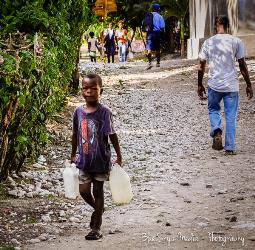
Belize - Boy carrying water. Photo credit: Blue Skyz Media / Foter.com / CC BY-NC-ND

Belize – Boy carrying water. Photo credit: Blue Skyz Media / Foter.com / CC BY-NC-ND

Though off the radar of most analysts, Belize appears to be the latest casualty of the drug trade and criminal violence.  It debuted on the Obama Administration’s annual blacklist of major drug-transit and -producing countries back in September 2011, alongside El Salvador, filling out the roster of Central American countries.  That U.S. government spotlight, however, has done little to halt the Mexican drug cartels’ expansion into Belize.  The U.S. State Department now estimates that about 10 metric tons of cocaine are smuggled each year along Belize’s Caribbean coast – partly the work of local contacts established by the Zetas and the Sinaloa cartel.

Like its neighbors’ security challenges, Belize’s problems are not limited to drug trafficking.  Urban gangs and the rivalries among them are the main driver of the escalating violence, which is rooted in the same causes as in neighboring countries – institutional weakness, rampant corruption, impunity, and unemployment.  The government-sponsored gang truce negotiated in 2011, which featured “salary” payments to members who ceased violent activities, collapsed last December when funds dried up.  (Click here for details documented by our colleagues at InSight Crime.)  Belizean authorities tallied a record number of homicides last year, edging out neighboring Guatemala for the sixth place slot in global per capita homicide rankings.  Porous borders make Belize attractive to transnational gangs, particularly El Salvador’s MS-13 and Barrio 18, both of which have established a significant presence in the capital city, Belmopan, and elsewhere.  About one-fifth of the country’s 325,000 people are Salvadoran citizens, making it difficult to track criminal elements.

The deteriorating conditions in Belize raise questions about the effectiveness of U.S. counternarcotics and “citizen security” programs in the region.  The patchwork of U.S. initiatives under the umbrella of the Central American Regional Security Initiative (CARSI) has not reversed regional trends even in tiny Belize.  While the country’s law enforcement agencies welcomed the heavy equipment, training, and technical assistance that make up the bulk of CARSI funding, the tactical gains have been obscured by a worsening strategic outlook.  The U.S. Government Accountability Office has voiced its concern that the State Department is confusing efforts with results.  Moreover, neither the Belizean nor U.S. government has mapped out a preventative strategy.  The most recent data show that less than half of the funds allocated to Belize from CARSI’s Economic Support Fund, used for programs to help at-risk youth, has been spent, and after handing out 1 million Belizean taxpayer dollars to gang members during the truce, for example, there is little to show for it.  In the run-up to President Obama’s summit with Central American presidents next week, Belizean Prime Minister Dean Barrow’s statement that “Obama hasn’t done anything for Belize” was subsequently qualified, but the fact remains that U.S. partnership with Belize, like with its neighbors, has not begun to work yet.

**An earlier version of this post inadvertently omitted the word “Belizean” before “taxpayer dollars” in the concluding paragraph, giving the false impression that State Department funds had been used to subsidize Belize’s gang truce.