Central America: Hybrid Anti-Corruption Commissions Can Work

By Chuck Call*

Map of Guatemala, Honduras and El Salvador, with Guatemala and Honduras territory being covered by photos of well-known politicians being arrested.

Prospects for an International Commission against Impunity and Corruption in El Salvador: Lessons from Neighboring Countries in Central America logo / CLALS / https://www.american.edu/centers/latin-american-latino-studies/Prospects-for-an-International-Commission-against-Impunity-and-Corruption-in-El-Salvador-Lessons-from-Neighboring-Countries-in-Central-America.cfm

If newly inaugurated Salvadoran President Nayib Bukele pursues his campaign calls for the creation of a hybrid international commission to fight corruption and strengthen judicial institutions, he will face tough challenges from entrenched interests. However, the experiences of Guatemala’s CICIG and Honduras’s MACCIH show that a strong investigative mandate, close partnership with vetted national prosecutors, strong international backing, and transparent accountability will increase the chances of success of any such mission. (Full text of the study is here and aquí.) CICIG and MACCIH were born of political crises, but they were given different authorities, faced different expectations, and delivered different results.

  • Both missions have had historic investigative and prosecutorial achievements – bringing former and current senior officials to account as never before and putting powerful elites on notice that impunity will not be tolerated. CICIG has dismantled corrupt networks, exposing their reach into the Congress and the Cabinet, indicting hundreds. MACCIH has helped indict dozens of legislators and a former First Lady. Working with special units of prosecutors, they have also contributed to local institutional capacity to root out corruption.

Both CICIG and MACCIH have struggled against the pressure tactics of the many corrupt officials, legislators, and economic interests who most feel threatened by them. In contrast to Guatemala, where CICIG was key to the adoption of several laws that served as a foundation for effective investigation of organized crime, the Honduran Congress has refused to pass such laws. Legislatures in both countries have changed laws specifically to vitiate prosecutions (including of themselves) advanced by the missions. Corruption among judges, especially in Honduras, has made winning convictions extremely difficult. After CICIG shifted its sights beyond politicians to powerful businessmen a few years ago, Guatemalan elites launched a campaign to smear CICIG as an incursion on sovereignty and a socialist plot. Both missions have confronted constitutional challenges.

Key lessons from CICIG and MACCIH’s experience include:

  • Realistic expectations are important. The legal and diplomatic negotiations and logistics necessary to set up “hybrid” units combining domestic and international investigators slowed both entities’ starts. It took over two years for CICIG to secure its first convictions, and MACCIH’s investigations have led to only 12 cases, although these are major corrupt networks. The focus of many Hondurans on ousting President Juan Orlando Hernández has obscured some of the important cases advanced by the mission and its Honduran partners.
  • Anti-impunity missions can threaten systems of political and economic power in ways that go beyond judicial processes. Despite the technical and juridical character of both the missions, they have exposed in detail how criminal enterprises interact with political parties, elected, and appointed officials, and current and former security officials. The missions have also detailed how legislators receive illicit campaign funds and how they fraudulently spend public monies, forcing changes to these decades-old corrupt practices. In Guatemala, the prosecutions have dismantled corrupt networks involving cabinet ministers, generals, top business leaders and the former president and vice president, altering the political profile of parties and undermining the ability of prominent and corrupt elite structures of power to operate.
  • Strong partnerships with national prosecutorial units and with civil society are crucial for success and sustainability. CICIG and MACCIH could not have achieved what they did without close cooperation with carefully selected and vetted prosecutorial units. Those units, especially the UFECIC in Honduras, carried out much of the investigation and led the prosecution in both countries. The legacy of the hybrid missions rests in the future of these empowered professionals and society’s raised expectations of clean behavior from their public officials. Both missions have generated a greater sense that high-level politicians, officials and elites can be imprisoned for corruption and organized crime. Yet these missions have not heeded or informed civil society as much as they might have. Moreover, these experiences and the likely end to both missions in the coming months show that civil society is vital to educating society on the importance and possibility of accountable governance, and for demanding it from politicians and the justice system.
  • International sponsorship brings both advantages and challenges. The association with the UN (for CICIG) and the OAS (for MACCIH) has brought valuable political legitimacy, professional capacity, and needed resources. But it has also brought complications. In the case of MACCIH, slow and politicized appointments, questionable allocation of resources, and excessive day-to-day oversight from Washington, not to mention personal spats and undue interference by specific member states, have undermined performance and credibility. CICIG’s status as a non-UN body gave its commissioner the independence needed to take on tough cases and ignore political considerations. However, that lack of accountability is seen as having contributed to the alienation of many sectors in ways that left it politically vulnerable. Wavering U.S. support for CICIG since 2017 has emboldened the missions’ critics.

The experiences of CICIG and MACCIH show that, despite ups and downs, hybrid international-national missions can help a society fight corruption. In Guatemala and Honduras, these commissions achieved more than most observers originally predicted by dint of the vision and discipline of their leaders and sponsors as well as the work of courageous national officials and civil society groups often risking their livelihoods and lives. Their performance also shows that getting the mission right and sustainable takes time, communication, and strong partnership with national prosecutors. The main challenge now is that corrupt officials and businesses have become proficient at blocking investigations, prosecutions, and convictions.

  • Creating an International Commission against Impunity in El Salvador (CICIES) may be harder now than before CICIG and MACCIH scored their victories. However, President Bukele may have a historic opportunity to press the country’s two main (but weakened) parties, ARENA and the FMLN, to approve a strong mandate that fits the country’s particular needs. Experts advising then-President Mauricio Funes (himself ironically now on the lam for alleged corruption) concluded in 2010 that the country’s Constitution provides the basis for an international mission with a sufficiently strong investigative powers to have impact. The Guatemalan and Honduran missions show that a strong mandate and significant national and international backing could improve help El Salvador’s justice system reduce corruption and impunity. Such efforts may also have comparable impact in exposing in dirty detail, and perhaps reforming, unaccountable and exclusionary systems of political representation.

* Chuck Call teaches International Peace and Conflict Resolution at American University, where he directs a Center for Latin American & Latino Studies project analyzing MACCIH and anti-corruption efforts in Honduras.

Guatemala: Mortal Doubt and Transnational Gangs

By Anthony W. Fontes*

Family members of slain gang member at his gravesite

Family members of slain gang member at his gravesite (Guatemala, 2005) / Wikimedia Commons / Creative Commons

Central America’s maras, or transnational gangs, are symptoms of societies suffering from legacies of Cold War-fueled atrocities and authoritarian rule, misguided law enforcement policies, and long-term entanglement with U.S. culture and foreign policy. Feuds between Mara Salvatrucha and Barrio18, the region’s most powerful gangs, have helped make the Northern Triangle (Guatemala, Honduras, and El Salvador) the deadliest non-combat zone in the world. My fieldwork in prisons, police precincts, and urban slums in Guatemala City and other cities since 2010 for Mortal Doubt: Transnational Gangs and Social Order in Guatemala City has mapped their dystopian evolution. The gangs are not the problem, and the problem does not begin or end with them. But they are important symbolic figures for societies struggling with out-of-control insecurity that have obscured the complex structural factors driving the countries’ extreme peacetime violence.

When they first took root in Central America in the 1990s, the maras were little more than disorganized groups of kids imitating Latino gangs in Los Angeles, vying for turf in cities struggling to recover from decades of authoritarian rule and extreme inequality. Over the years, they became brutal organizations engaged in extortion, contract killings, and the drug trade.

  • The gangs’ evolution was driven by histories of mass incarceration in both the United States and Central America, making them a symptom of these societies’ predilection to punish. In Guatemala, through the early 2000s, the gangs fought to survive behind bars against cadres of ex-military officers, the most powerful of which was led by Byron Lima, a U.S.-trained special forces Army captain convicted of a 1998 assassination of a Catholic bishop who had catalogued military human rights abuses in the Guatemalan armed conflict. The violence and deprivations of prison life, alongside the unprecedented coordination between gang leaders that being locked up together made possible, drove the gangs to become far more brutal and organized in their street operations.
  • Mara extortion rackets, among the most feared and despised criminal enterprises, are also emblematic of the symbiotic relationships between the state, law-abiding society, and the underworld in Guatemala. While maras are responsible for much of the extortion, they have in fact become a mask and a model for others profiting from it. Bus companies, private security corporations, corrupt police, and even Guatemala’s biggest banks play key roles in the extortion commodity chain.

Perhaps the most painful truth about the maras is that their rank and file are very young – primarily 10-18 years old – and the average age of recruitment is dropping. Youths are killing each other. A young man named Andy had killed and tortured for MS-13 since he was eight, when the gang adopted him after liquidating his family, who were members of a rival gang. In interviews, Andy struggled to make sense of the violence of which he was both victim and perpetrator by seamlessly folding fantasy and reality – swinging between made-in-Hollywood montages, mara myths circulated in newspapers, and actual acts of murder and torture. MS-13 found and executed Andy, who was in a witness protection program, less than six weeks after his last interview. Very real suffering is powerfully intertwined with bloody fantasy, and the dichotomies dividing innocent from guilty, good from evil, are often false. These are key lessons for understanding the maras and for effectively confronting the crisis of criminal violence in Central America that they have come to represent in such spectacular fashion.

May 23, 2019

* Anthony W. Fontes teaches international studies at American University. Mortal Doubt: Transnational Gangs and Social Order in Guatemala City was published by University of California Press. The book was winner of the William M. LeoGrande Award for the best scholarly book or article on Latin American or Latino Studies published by a member of the American University community in 2017–2018.

U.S.-Central America: Suspending Aid Won’t Help

By Joseph Wiltberger*

Honduran President Juan Orlando Hernández, U.S. Vice President Joe Biden, Guatemalan President Jimmy Morales, and El Salvador President Salvador Sánchez Cerén during a Northern Triangle meeting on January 14, 2016

Honduran President Juan Orlando Hernández, U.S. Vice President Joe Biden, Guatemalan President Jimmy Morales, and El Salvador President Salvador Sánchez Cerén during a Northern Triangle meeting on January 14, 2016 / https://commons.wikimedia.org/wiki/File:Reuni%C3%B3n_Tri%C3%A1ngulo_Norte_con_Vicepresidente_Biden2.jpg / Creative Commons

President Trump’s recent announcement to cut off U.S. aid to Guatemala, Honduras, and El Salvador – intended to pressure those governments to stop migrant caravans headed for the U.S.-Mexico border – would suspend and divert an estimated $700 million dollars in funds directed mainly to regional security and economic programs with mixed impacts on migration. A comprehensive impact evaluation of recent U.S. aid to the region has not yet been conducted, so the consequences of this move are open to debate. While some of the aid may help those vulnerable to migration, other allocations to the three countries may be counterproductive to slowing migration.

The three countries have received around $2 billion in aid since 2015, when former U.S. Vice President Joe Biden initially committed Washington’s contribution to the Alliance for Prosperity Plan (A4P) in response to a surge in the migration of Central American families and unaccompanied minors. The A4P, a document drawn up by the Inter-American Development Bank and the three nations’ governments, has guided most of the U.S.’s strategic aid allocations to the region. The U.S. Congress allocated about $750 million in assistance in fiscal year 2016, $655 million in 2017, and $450 million in 2018. About a third of those funds have been aimed at improving citizen security through support for police, the judicial sector, and violence prevention programs. Roughly another third has been geared toward promoting economic development, and the remainder has been split mainly between anti-corruption efforts and support for military personnel through training and arms to fight drug trafficking and human smuggling.

  • NGOs working with communities susceptible to migration complain that the A4P was drafted by Central American leaders without their input, and that its framework – also reflected in U.S. aid priorities – favors elite business and political interests. It gives tax incentives to foreign investors and, opponents say, makes way for resource extraction, maquilas, and other transnational industries dependent on cheap labor and known to contribute to displacement. It directs hundreds of millions of dollars in aid to military and police forces notorious for human rights violations that are rarely prosecuted, a problem that human rights advocates warn endangers citizens and can force more migration.
  • Some of the programs aligned with the A4P, however, grasp the underlying causes of migration from these nations and show how aid can help if properly channeled. They aim to combat corruption and reduce violent crime by improving judicial systems and government transparency, and with community-based violence prevention programs. Many projects – such as initiatives to create economic, extracurricular, and educational opportunities for at-risk youth, and grassroots endeavors such as cooperatives of women and small farmers – are led by local organizations with a long-standing track record of effective local work on the ground in marginalized areas. One of the more rigorous impact evaluations to date found that USAID-funded community-based gang violence prevention programs were effective.

President Trump’s announcement to cut aid did not reflect an assessment of its effectiveness but instead appears to be a political maneuver to counter domestic political opponents who support aid and to punish the governments he believes have “set up” migrant caravans and should do more to stop them. Ending assistance doesn’t help. U.S. aid to Central America should be focused on proven ways to improve security and economic conditions and to combat corruption and guard against human rights violations – problems that drive the region’s emigration today. Cutting off aid will not stop caravans and runs contradictory to the A4P’s stated goal of addressing the root causes of migration. It is counterproductive to the current administration’s interests. Aid strategies would benefit from setting U.S. political and business interests aside to instead focus more on measures that effectively fight corruption, protect human rights, and provide support for trusted organizations proven to be effectively creating opportunities and safer communities for those most vulnerable to migration.

April 29, 2019

* Joseph Wiltberger is a cultural anthropologist. He holds appointments as Assistant Professor of Central American Studies at California State University, Northridge and as Visiting Scholar at the Center for Comparative Immigration Studies at the University of California, San Diego.

Central America: Evolution of Economic Elites

By Alexander Segovia*


El Salvador landscape

El Salvador landscape / Google Images / Creative Commons

The elites of Central America – traditionally organized in national business groups with strong family ties – have lost power and allowed certain reforms to advance over the past 30 years, but the full impact of this historic shift has been blunted by the lack of broad, inclusive national debates and the growing role of regional economic powers. Until the 1980’s, the powerful interests of the traditional agricultural export economy dominated for more than a century, with enormous influence by virtue of their control over property and every facet of the production, processing, and domestic and foreign marketing of their products.

  • For these traditional elites, the state was to be used for their own benefit. Their decisive influence continued even as economies changed and exports diversified somewhat after World War II. It survived the growth of cities, the emergence of new players in industry, the growth of organized labor, and the expansion of government bureaucracies. Elites obstructed changes that threatened their interests and parried others into minor tweaks of the essentially agro-export model that they dominated. They preserved many inequities in social and economic systems, slowed diversification, and protected governments that were weak, corrupt, disorganized, and often authoritarian, repressive, and undemocratic.

Since the late 1980’s, according to my research, the agro-export model that enabled elites to have such power has changed significantly – facilitating the emergence of new economic models (albeit with different manifestations in each country) and eroding the old elites’ grip on society. The change was driven by the armed conflicts, political and social crises, emigration, and the flow of remittances. Neoliberal economic reforms, including liberalization, deregulation, privatization, and opening to foreign investment, had an impact within the context of the broader capitalist globalization gaining momentum during the period.

  • Although not always with alacrity, elites had to accept the advent of new spaces and patterns in which other actors were able to accumulate wealth and power. Tourism, telecommunications, banking, and other service sectors gave rise to new voices, as did the development in some countries of non-traditional exports. New entrepreneurs brought in new foreign actors, including many from neighboring countries and the rest of Latin America. Powerful transnational economic groups (known by the Spanish acronym GETs), with strong family ties, began to operate across borders – creating both new opportunities and new challenges. The GETs have already flexed their enormous influence over public policies. As a result, the traditional elites gradually have found themselves forced to function within a matrix of national and regional power, with new dynamics, over which their grip had been broken or at least significantly weakened.

National elites such as El Salvador’s have broken with the old stereotype of selfish economic interests united around an extreme right wing ideology – being more heterogeneous today in composition and perspectives than ever before – but deeper, lasting change is going to take time and effort. An inclusive national dialogue in each country to build agreement on the broad outlines of a political project to address how to effect national transformation and modernization would be the best way of reassuring all sides that their voices count, but unfortunately no country is holding one. Generational change – characterized in part by younger family members’ constant connectivity with peers outside strictly national circles – could also be a factor.

  • The increased activism of the GETs may explain why breaking the grip of the nation-based traditional elites has not led to deeper and broader change – essentially swapping one elite’s manipulation of government for another’s. The GETs have important, and sometimes decisive, influence over public policies not just in their home countries, but beyond. The future of reform therefore would appear to depend on the willingness of regional elites to pursue them. Several initiatives, including one undertaken by the Instituto Centroamericano de Investigaciones para el Desarrollo y Cambio Social (INCIDE), of which I am President, aim to promote a constructive dialogue between society and the GETs. Progress hasn’t been easy or quick, but we have proven that change is indeed possible.

March 21, 2019

*Alexander Segovia is a Salvadorean economist and President of the Instituto Centroamericano de Investigaciones para el Desarrollo y el Cambio Social.  He was Technical Secretary of the Presidency of El Salvador (2009-2014). This article is adapted from his recent book, Economía y Poder: Recomposición de las Élites Económicas Salvadoreñas.

Latin America Takes on Big Pharma

By Thomas Andrew O’Keefe*

Colorful pills in capsule form and tablet form

Generic pills / Shutterstock / Creative Commons

For the past decade, Latin America has attempted to reduce the prices of high-cost medications through either joint negotiations, pooled procurement, or both, but so far with limited success.  The incentive for reducing prices is that all Latin American countries have national health care systems, and in some cases (such as Colombia and Uruguay) are legally obligated to provide their citizens with any required medication free of charge and regardless of cost.

  • In the bigger countries, such as Brazil and Mexico, the prices for certain pharmaceutical products and medical devices for public-sector purchase at the federal, state, and even municipal level are negotiated by a single governmental entity. Argentina, Chile, and Mexico also have mechanisms for pooled procurement of public-sector health-related purchases at all levels of government.  Given its huge internal market, Brazil also unilaterally caps prices on medications and threatens to issue compulsory licenses to extract concessions from pharmaceutical multinationals.

Latin American countries have also tried turning to sub-regional mechanisms to protect themselves from excessively high prices, albeit with meager results.

  • The Central American Integration System (SICA) has the most active regional mechanism to negotiate the prices of high-cost drugs and medical devices. The governments of Belize, Costa Rica, the Dominican Republic, El Salvador, Guatemala, Honduras, Nicaragua, and Panama have authorized the Council of Central American Ministers of Health (COMISCA) to negotiate lower prices on their behalf.  Those medications and devices that obtain a reduction are then acquired by the public sector utilizing each government’s procurement procedures.  By negotiating as a bloc, the SICA countries report total savings of about US$60 million on dozens of products since the initiative began in 2010.
  • In late 2015, MERCOSUR launched a mechanism to negotiate prices for both the full and associate member states. Since those 12 countries coincided with UNASUR’s membership, that entity was given a supporting role to create a continental data bank of pharmaceutical prices paid by each member government that would be used to support the MERCOSUR negotiations.  That data bank proved to be ineffective, however, as not all countries submitted the required information and the methodologies for determining prices was inconsistent.  To date, MERCOSUR has only obtained price reductions for one HIV medication, manufactured by an Indian firm eager to establish a market presence in South America, and reportedly for an immunosuppressive drug used after organ transplants to lower the risk of rejection.  Reduction offers by Gilead for its Hepatitis C cure have, so far, been rejected by the MERCOSUR governments as inadequate.

MERCOSUR’s limited achievements appear to have encouraged individual countries to press on alone.  Colombia, while initially supporting the MERCOSUR initiative as an associate member, eventually established its own national mechanism to negotiate prices, and in July 2017 announced that it had obtained cost savings of up to 90 percent for three Hepatitis C treatments.  MERCOSUR’s sparse track record also helps to explain why Chile’s Minister of Health announced in October 2018 that his country, Argentina, Colombia, and Peru would utilize the Strategic Fund of the Pan American Health Organization (PAHO) to purchase 10 state-of-the art cancer treatments.  Because of PAHO’s annual bulk purchases, it is often able to obtain significant price reductions from pre-qualified manufacturers and suppliers that are then passed on to member governments.  Member states facing a public health emergency can also make purchases without cash in hand, as the Strategic Fund will extend a short-term loan at no interest.  In the future, the Latin American countries are likely to pragmatically utilize a range of options in trying to contain the rising costs of new medications that include both national and regional mechanisms as well as PAHO’s Strategic Fund.  The challenge will be to avoid Big Pharma “red lining” the region and excluding it from accessing the most innovative medical cures such as gene therapies that can fetch a million-dollar price tag per treatment.

February 19, 2019

* Thomas Andrew O’Keefe is president of New York City-based Mercosur Consulting Group, Ltd. and a lecturer at Stanford University.  He is the author of Bush II, Obama, and the Decline of U.S. Hegemony in the Western Hemisphere (New York: Routledge, 2018).

U.S. Immigration: Call for Wall Ignores Changing Migrant Profile

by Dennis Stinchcomb

Graph of southwest border apprehensions, FY 2012-2019

Southwest border apprehensions, FY 2012-2019 / Note: FY 2019 data is through November 2018. Figures may not total 100% due to rounding. / Data source: U.S. Customs and Border Protection

As a record number of Central American families and unaccompanied children flock to the U.S.-Mexico border, the Trump administration’s demand for a $5.7 billion wall ignores changing migrant demographics and leaves largely unaddressed an asylum system buckling under unprecedented strain.  While undocumented immigration at the U.S.-Mexico border remains at historic lows, over 48,000 individuals comprising family units (parents traveling with children) were apprehended at the U.S. southwest border between October and November 2018 – a 308 percent increase over the same two months in 2017.  Such a staggering rise comes on the heels of what was already a record-setting year.  Between October 2017 and September 2018, border officials tallied the highest level of family crossings on record; the over 107,000 individuals detained by border officials dwarfed the roughly 40,000 apprehensions of unaccompanied children that prompted the Obama administration to declare a “crisis” in summer 2014.

A closer look at recent immigration trends underscores changing realities at the border:

  • Central American families and children represent an ever-growing share of migrants. Because overall undocumented immigration at the border has dropped and families and children have surged, the latter now account for 40 percent of all unauthorized migrants apprehended, up from 10 percent in 2012.  (Prior to 2012, family apprehensions were not publicly reported.)
  • Guatemalans now account for over half of all Central American family and child migrants. Though Guatemala is more populous than neighboring El Salvador and Honduras, proportional disparities in migrant flows from the three Northern Triangle countries have widened in recent years.  Guatemalan families apprehended at the border doubled between 2017 and 2018, and the number of unaccompanied Guatemalan minors increased by over 50 percent.  An increasing share of these migrants are coming from indigenous communities where poverty and malnutrition are rampant, so border officials face compounding challenges including linguistic barriers and health needs – factors that may have contributed to the recent deaths of two Guatemalan children while in Border Patrol custody.
  • Family and child migration from El Salvador has plummeted to its lowest level since 2013. The abrupt decline in Salvadoran migration to the United States has led many experts to point to the chilling effects of the Trump administration’s decision to terminate Temporary Protected Status (TPS) for nearly 200,000 Salvadorans currently residing in the U.S.  The “Trump effect” following his early 2017 executive orders, however, was short-lived, and other events, such as possible controversy over elections next month, could renew migratory pressures and further exacerbate conditions at the border.
  • The dramatic increase in migrant flows from Central America has fueled an historic surge in asylum claims. At the border, credible-fear claims – the preliminary step in soliciting asylum – continue to climb precipitously, up from 9,000 in 2010 to 79,000 in 2017.

The U.S. Government’s proposed solutions to the burgeoning humanitarian crisis do not reflect the evolving profile of migrants at the U.S.-Mexico border.  President Trump’s border wall – a hallmark promise of his 2016 campaign – appears aimed at the familiar Mexican adult migrant of the early 2000s or the mythical “bad hombre” spawned by his own nativist tendencies.  His Administration’s recent attempts to deter migrants or bar their access to asylum, either by separating families or rolling back protections for victims of domestic violence, have not stemmed the flood of arrivals.  A new “caravan” of migrants is set to depart Honduras this week.  Nor will a wall extinguish migrants’ legal right to request asylum.  The President’s most recent budget request for modest funds for hiring immigration judges and providing border infrastructure to support “vulnerable populations” is being held up by the political impasse in Washington over his greatly disproportionate spending on a wall, Border Patrol agents, and detention facilities.  Compromise between the President and Congressional Democrats remains elusive three weeks into a confrontation that has shut down much of the U.S. Government.  While Democrats have expressed willingness to beef up border security in exchange for a significant immigration win, such as legalization of the Dreamers or renewal of TPS, anything short of meaningful reform to the U.S. asylum system will do little to resolve the backup at the border.

Jan 15, 2019

U.S.-Central America-Mexico: Migrant Caravan Shaking up Relations

By Fulton Armstrong

Honduran migrants meet with Mexican police in Chiapas

Honduran migrants meet with Mexican police in Chiapas. / Pedro Pardo / AFP Photo / Creative Commons

The underlying drivers of Central American migration remain the same as always – the lack of economic opportunity and strong institutions to protect citizens from violence and other threats – but the Trump administration’s accusations and threats in reaction to the caravan of migrants heading toward the United States is moving relations into uncharted territory, just two weeks after the parties congratulated themselves for progress made at a summit in Washington.

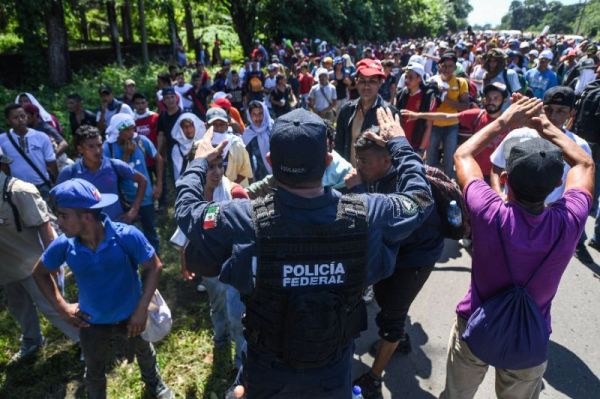
  • Honduran, Guatemalan, and now Mexican authorities have been unable to stop the peaceful caravan of 5,000-7,000 people without violating their rights and causing ugly incidents with high political costs at home. After shows of force, Guatemalan and Mexican border guards allowed them to pass, and local businesses and churches have spontaneously provided food, water, and shelter in each town.  Mexico originally said it would allow only those with current passports and identification to apply for refugee status, but, citing obligations under international agreements and national law, relented.  The migrants are now in Chiapas.

At a meeting with U.S. Vice President Pence and Secretary of State Pompeo on October 11, leaders from Central America’s three “Northern Triangle” countries – Honduran President Hernández, Guatemalan President Morales, and Salvadoran Vice President Ortiz – and Mexican Foreign Minister Videgaray trumpeted the progress that they had made in slowing the flow of migrants from the region to the United States since launching the Alianza para la Prosperidad in 2014.  CLALS research, other studies, and many press reports show, however, that the underlying drivers of migration remain essentially unchanged.

  • The Alianza may eventually foment economic growth and jobs, but multidimensional poverty and high underemployment continue to drive many to flee their homeland. An analysis by the Instituto Centroamericano de Estudios Fiscales (ICEFI) shows that about 6.2 million children, adolescents, and young adults in the Northern Triangle lack access to an educational system.  Homicide rates have declined, but the region remains one of the most violent in the world.  UN estimates show a steady increase in the number of gang members in all three countries, up to 20,000 each in El Salvador and Guatemala.  The gangs often fill voids left by government institutions that are underfunded and, often, weakened by corrupt officials’ embezzlement.  While violence has long been a driver of migration from urban areas, it is now causing new patterns of migration from rural areas as well.  Domestic violence and abuse, which UN data indicate affects up to 40 percent of girls and 16 percent of boys, is another problem some parents want children to escape.
  • President Trump has not acknowledged these drivers, and instead has portrayed the migrants in the caravan as an “onslaught” of criminals. (He also claimed that “unknown Middle Easterners” are among them but later admitted “there’s no proof of anything.”)  He apparently calculates that stirring up fear helps his allies in the U.S. Congress as midterm elections approach, as well as his campaign for a new wall on the U.S.-Mexico border.  He has threatened the Northern Triangle governments and Mexico for not stopping the migrants, tweeting Monday that he will “now begin cutting off, or substantially reducing, the massive foreign aid routinely given to [them]” because “they did nothing for us. Nothing.”  Mexican officials, relieved that the confrontation over the NAFTA renegotiation was resolved, now fear another major disruption in bilateral relations.

The migrant caravan is testing the administration’s relations with its closest allies in Central America.  Trump’s jettisoning of the nice talk from Pence’s recent summit will not in itself harm ties; the Central Americans and Mexicans are aware of his impulsive streak and may calculate that they can weather the windstorm.  His accusations and threats to suspend aid, however, reveal a fundamental misunderstanding of the underlying drivers of the migration, and he seems unaware that his partners have been unwilling to undertake the political and economic reforms needed to address those drivers except in minor ways that U.S. aid enables.  Trump apparently thinks his partners should use force – even the military if needed (as he’s threatened on the U.S. border) – to stop the flight of humans from the miserable conditions in which they live.  He also apparently judges that the more migrants are made to suffer, such as through the separation of family members who manage to cross the border, the less likely they are to try.  The caravan’s provocations and Trump’s reactions could blow up the game that has allowed both sides to pretend the problem will go away with token programs, intimidation, and a wall.

October 24, 2018

U.S. Immigration: Lacking Lawyers, Newcomers Join the Undocumented

By Dennis Stinchcomb

Immigration court backlog

Pending cases from the Northern Triangle in U.S. immigration courts. These cases now account for over 53% of the total backlog. / Note: FY 2018 data is through July 31. / Data source: TRAC, “Immigration Court Backlog Tool,” http://trac.syr.edu/phptools/immigration/court_backlog/.

As Central Americans swell the backlog of cases in U.S. immigration courts, the tens of thousands of them who do not have lawyers are joining the ranks of the country’s undocumented population.

  • The immigration court system lacks the resources to keep pace with the influx of unaccompanied children and families from the “Northern Triangle” countries of El Salvador, Guatemala, and Honduras. The backlog of cases has more than doubled since 2013 – from 350,000 to over 764,000 as of August – with cases involving people from these three countries now accounting for more than half of them.  The wait for a hearing is now several years, and pro bono or low-cost attorneys are overburdened.
  • Many thousands of other newcomers – lacking information and the ability to overcome linguistic and cultural barriers and fear – are not looking for legal assistance, and they remain unaware that representation is critical to their chances of legally staying in the United States. Migrants without an attorney are far less likely to appear in court, and many – nearly 40 percent (or 103,000) of all Central Americans whose cases were filed in 2013-17 and have been decided– are ordered deported “in absentia” just for failing to appear at a scheduled hearing.  Immigrants with an outstanding removal order who are apprehended are subject to expedited deportation without judicial review, meaning that – again, without a lawyer – they will be returned to their home countries without ever having the legal merit of their claims evaluated.

Nonprofit community-based organizations across the country are mobilizing resources – often in collaboration with local governments and pro bono partners – to address these people’s legal needs, but a report* by CLALS reveals that access to counsel varies widely.

  • Access remains inadequate even in large receiving destinations like the Washington, DC, metropolitan area, where robust legal service infrastructures have developed in response to decades of immigration. In less traditional destinations, like North and South Carolina, only around a quarter of juveniles are represented in immigration proceedings.  In addition to geographical disparities, newcomers face differing odds of securing an attorney depending on their nationality.  Less than half of Central American minors nationwide have an attorney.  Based on a review of decided cases initiated in 2013-17, Salvadoran juveniles were more than twice as likely to be represented than their Guatemalan and Honduran counterparts, probably a reflection of the extent their communities are organized.

President Trump is justified in claiming that the immigration courts are inefficient – cases take an average of almost two years – but his proposal (tweeted on June 24) is to restore “Law and Order” and to “immediately, with no Judges or Court Cases, bring [migrants] back from where they came.”  His deeper dissatisfaction appears to be with a legal process that requires the impartial application of U.S. law – which for the majority of Central Americans fortunate enough to have an attorney results in a grant of legal status.  While this outcome may be unacceptable to the president, many localities across the United States have recognized the social and economic costs of destabilizing families and communities, and of depriving immigrant community members of due process.  Trump may hope that denying due process will dissuade individuals from entering or remaining in the United States, but the crisis in the U.S. immigration adjudication system is likely to remain serious, and tens or even hundreds of thousands more newcomers are likely to join the millions of immigrants already living in the shadows.

October 16, 2018

*The full report, “Newcomer Central American Immigrants’ Access to Legal Services,” is available for download here.  No registration is necessary.  The report is the first in a series generated as part of the project by CLALS in collaboration with the University of Houston, “The Impact of Central American Child and Family Migration on U.S. Communities,” led by Eric Hershberg and Jodi Berger Cardoso.

U.S.-Latin America: “Zero Tolerance” Makes Zero Progress

By Ernesto Castañeda *

Children and adults stand in a line

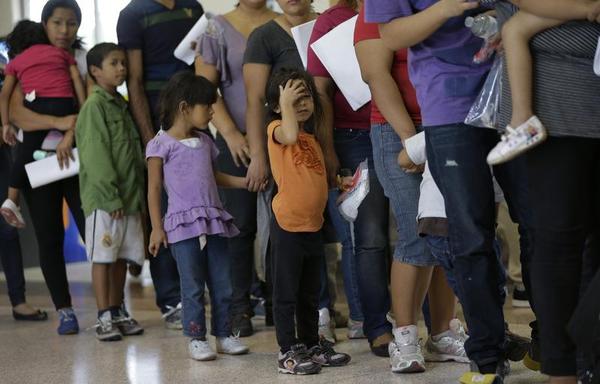
Central American migrant children and their parents. / Pride Immigration Law Firm PLLC / Wikimedia

U.S. President Donald Trump’s family separation policies, despite his June 20 executive action ending them, will have long-term negative consequences and will do nothing to stem the flow of migrants into the United States.

  • Hundreds of families remain separated. Families are detained indefinitely for applying for asylum or crossing into the United States.  Political outrage in the United States may be new, but these policies are not.  Millions of families have been separated across U.S. borders for many years.  After growing up without their parents, children who did not originally accompany migrating parents often attempt to reunify with them in the United States, resulting in the increase of unaccompanied minors that we have seen since 2014 and the surge in violence in Central America.
  • The Trump Administration’s policies fail to address the underlying causes of migration – violence, impunity, corruption, and poverty in sending countries and high U.S. demand for low-cost workers – which show no sign of abating. Many Mexicans and Central Americans are fleeing kidnappings, extortions, and death threats as they explain during credible-threat interviews that give them valid claims for asylum.  U.S.-backed militarized responses to drug trafficking have produced much of the violence and corruption in Mexico and Central America, generating asylum-seekers.  Beyond the traditional economic and social reasons, many recent immigrants are escaping violence, as they did during the Mexican Revolution and the political violence in Central America in the 1980s.

Family separation and the detention of unaccompanied minors in shelters are not new practices either.  What was new in recent months was the separation of families that come to the United States seeking asylum.

  • These forced separations cause the children lifelong trauma. The American Psychiatric Association recently stated that “the evidence is clear that this level of trauma also results in serious medical and health consequences for these children and their caregivers.”  Separation inflicts trauma on adults too; parents suffer from being away from their children due to their decision to migrate.

The logic behind “zero tolerance” is to discourage migration by making conditions as miserable as possible for intending migrants – building psychological walls as well as the physical wall that Trump has pledged to build along the border with Mexico.  By ignoring the underlying causes of these movements of people, this approach is not only cruel but unlikely to be successful.  The concern is also misplaced, despite the increasing visibility of refugees and asylum-seekers in the media, as border apprehensions show a steep downward trend.

  •  The U.S. Congress has so far rejected solutions to the issue of family separation, such as creating larger guest worker programs, strengthening asylum courts, passing the DREAM Act, and demilitarizing responses to drug trafficking. Until the underlying causes of migration are addressed, Washington will be squandering its money prosecuting and causing lasting trauma for innocent children and parents.  Contrary to Trump’s claim that immigrants hurt U.S. culture, my research shows that immigrants are skillful at integrating into American life.  New pathways for legal immigration are the only way ahead to reduce undocumented migration.

 July 3, 2018

 * Ernesto Castañeda is an Assistant Professor of Sociology at American University and author of A Place to Call Home: Immigrant Exclusion and Urban Belonging in New York, Paris, and Barcelona (Stanford, 2018).

MS13: Criminal Patterns Defy Traditional Solutions

By Steven Dudley and Héctor Silva*

Gang members gather behind bars

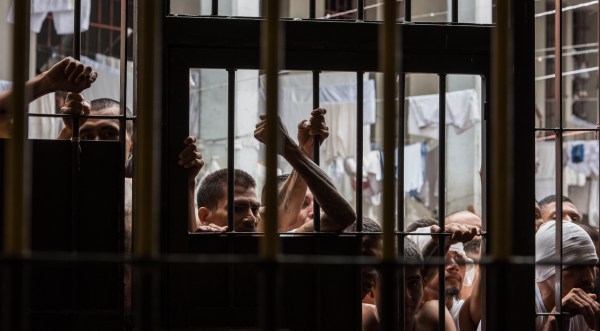
Incarcerated members of the MS13 in Sonsonate, El Salvador. / FBI / Creative Commons

The Mara Salvatrucha (MS13) is one of the world’s largest and most violent street gangs and – despite decades of law enforcement action in two hemispheres – it remains a persistent threat.  In a report based on three years of research released this week by CLALS and InSight Crime (click here for full report), we estimate that the MS13 has between 50,000 and 70,000 members concentrated in mostly urban areas in Central America or other countries with a large Central American diaspora.  In the United States, its strongest base is in the Los Angeles and Washington, DC metropolitan areas, but it is expanding beyond urban areas in California and along the Eastern seaboard from Boston to North Carolina.  The failure to understand the gang’s roots, organizational contours, and everyday dynamics have long hindered efforts to combat it.

  • The MS13 is a social organization first, and a criminal organization second. It creates a collective identity that is constructed and reinforced by shared experiences, often involving acts of violence and expressions of social control.  The MS13 draws on a mythic notion of community, with an ideology based on its bloody fight with its chief rival, the Barrio 18 (18th Street) gang.  In Los Angeles and El Salvador, gang “cliques” have developed some degree of social legitimacy by prohibiting predatory activities (such as domestic violence) in areas of influence where the state provides no protection.
  • The MS13 is a diffuse, networked phenomenon with no single leader or leadership structure that directs the entire gang. It’s a federation with layers of leaders who interact, obey, and react to each other differently depending on circumstances.
  • Internal discipline is often ruthless, but the gang has guidelines more than fixed or static rules. Haphazard enforcement leads to constant internal and external conflicts and feeds violence wherever the gang operates.  Gang-related murders (of which MS13 represents a fraction) are thought to represent around 13 percent of all homicides in the United States, and upwards of 40 percent of the homicides in El Salvador, Honduras, and Guatemala.  The violence at the heart of the MS13 builds cohesion and camaraderie among the dispossessed men and boys who comprise it and it has enhanced the gang’s brand name, allowing it to expand in size and geographic reach.  However, that extraordinary violence has also undermined its ability to enter more sophisticated, money-making criminal economies because partners see it as an unreliable and highly visible target.
  • The MS13 is a transnational gang, but it is not a transnational criminal organization (TCO), as it only plays a part-time role in drug-trafficking, human smuggling, and international criminal schemes. Its growing involvement in petty drug dealing, prostitution, car theft, human smuggling, and, particularly in Central America, extortion schemes nearly always depends on its ability to control local territories rather than to command trafficking networks that span jurisdictions.  Significantly, we’ve found no evidence that it is involved in encouraging or managing the flow of migrants from Central America through Mexico and into the United States.

The U.S. government has placed MS13 at the center of several policies that do not give sufficient weight to these key characteristics.  The gang’s violent activities have also become the focus of special gang units and inter-agency task forces across the United States, including the Department of Homeland Security (DHS), the Drug Enforcement Administration (DEA), and other agencies involved with federal, state, and local law enforcement.

Policymakers in the United States and Central America have devoted many millions of dollars to law enforcement programs aimed in part at eliminating MS13, but they have generally been reluctant to address the underlying causes of the group’s growth – exclusion and the lack of opportunity – that push youths into its arms.  Gang recruitment will continue to flourish until societies create a space in which young people find community, potentially created by NGOs, schools, churches, parents, and other members of the community.  In the United States, moreover, lumping all members with the most violent offenders, casting immigrants as criminals, and isolating gang-riddled communities inspires fear and reduces cooperation with local authorities.  The U.S. and Central American governments also empower MS13 by making it a political actor, either by negotiating truces with it (as San Salvador has) or by making it a center-point of immigration policies that have little to do with its fortunes (as Washington does).  The gang will prosper until governments base policies and programs on a realistic evaluation of its strengths, origins, and internal dynamics.

February 13, 2018

* Steven Dudley is co-director of InSight Crime and a CLALS Fellow, and Héctor Silva is a CLALS Fellow.  Their three-year research project was supported by the National Institute of Justice of the U.S. Department of Justice, but the report’s conclusions are their own.  The report will be the subject of a discussion entitled Inside MS13: Separating Fact from Fiction at the Inter-American Dialogue (Washington, DC) on Friday, February 16.  Click here for details.