Mexico: A Hard Road for Reforms

By Tom Long

Enrique Peña Nieto by Edgar Alberto Domínguez Cataño | Flickr | Creative Commons

Enrique Peña Nieto by Edgar Alberto Domínguez Cataño | Flickr | Creative Commons

During the campaign, Mexican President Enrique Peña Nieto proclaimed in thousands of advertisements, “Me comprometo y cumplo” – I make a promise and I keep it.  Offering a list of potentially transformative reforms – regulations, security, telecommunications, energy, and more – he began with one of the most intractable:  the struggling public education system.  In December, at his instigation, the Mexican congress passed a constitutional reform to create stricter standards for teachers and move hiring authority from the teachers’ union to the government.  Enough states had ratified the amendment by the end of February to make it law.  After years of stagnation and interest-group politics, education reform suddenly became politically expedient, passing with support from the PRI, PAN, and PRD.  Last week, the government put an exclamation point on the reform by arresting the teachers’ union boss, Elba Esther Gordillo, on charges of using her post for illicit gains surpassing $100 million.  A PRI apostate whose opposing alliance was credited with helping former President Felipe Calderón win his razor-thin victory in 2006, she was not just expendable, but an obstacle.

According to OECD education data, just 45 percent of Mexican students complete their secondary education, though the rate has improved over the last decade.  Mexico spends 3.7 percent of GDP on primary and secondary learning, — less than Chile, Argentina, and Brazil but in line with the OECD average.  Experts believe that Mexico’s educational  problems are largely political, not budgetary.  A full 97 percent of spending goes to salaries, feeding a teachers’ union that has a history of patronage and graft.  The problem has deep roots in the clientelistic structure through which the old PRI governed during its 70 years in power before losing in 2000 – and with which the PAN governments coexisted for 12 years.

The storyline shares certain similarities with PRI President Carlos Salinas’ sacking of the head of oil workers’ union in the 1990s, presaging limited reforms in that sector.  Peña Nieto probably intends the removal of the most visible representative of old-style patronage politics as a clear signal that the PRI will not bring back the bad old ways – despite the possible appearance of the firing and arrest being driven by revenge – but the reform legislation is widely seen as a positive step forward.  Rhetorically at least, the major parties have agreed to a multi-pronged effort for more reforms in the “Pact of Mexico.”  However, forging consensus on further reforms will be more difficult, as entrenched PRI politicians at the local level are already resisting many of the president’s proposals.  The PAN and PRD are already criticizing Peña Nieto for being too cozy with media barons and for handling telecommunications reform behind closed doors.  Security policies and proposed energy reforms are more contentious still.  Reforming other sectors will require going after harder targets than Gordillo and will pose greater tests of Peña Nieto’s ability to win votes in the Mexican Congress.

Chávez’s Passing: In the Hemisphere’s Words

"Chavez" | by Donmatas1 | Flickr | Creative Commons

Chavez | by Donmatas1 | Flickr | Creative Commons

Below are excerpts from statements made by leaders of the Western Hemisphere upon learning of the passing of Venezuelan President Hugo Chávez.  The tone of the U.S. President and Canadian Prime Minister’s remarks is different from the Latin Americans’.

Barack Obama (U.S.A.)
“As Venezuela begins a new chapter in its history, the United States remains committed to policies that promote democratic principles, the rule of law, and respect for human rights.”

Stephen Harper (Canada)
” I would like to offer my condolences to the people of Venezuela on the passing of President Chávez.

“Canada looks forward to working with his successor and other leaders in the region to build a hemisphere that is more prosperous, secure and democratic.

“At this key juncture, I hope the people of Venezuela can now build for themselves a better, brighter future based on the principles of freedom, democracy, the rule of law and respect for human rights.”

Enrique Peña (México)
“Lamento el fallecimiento del Presidente Hugo Chávez. Mis más sentidas condolencias a su familia y al pueblo venezolano”.

Ollanta Humala (Perú)
“Adiós Comandante y amigo Hugo Chávez. Mis sentidas condolencias a su familia y a todo el pueblo venezolano”.

Ricardo Martinelli (Panamá)
“Deseamos expresarle nuestro pésame al Pueblo Venezolano y a la Familia Chávez por el sensible fallecimiento del Presidente Hugo Chávez”.

Evo Morales (Bolivia)
“Duele, pero también queremos decir a los pueblos, fuerza y unidad ahora más que nunca. Estamos destrozados”.

Juan Manuel Santos (Colombia)
“Lamento profundamente la muerte del presidente de Venezuela Hugo Chávez Frías. Nuestras sinceras condolencias”

Dilma Rousseff (Brasil)
“Estamos de luto por la pérdida de un gran amigo. Va a dejar un hueco en ‘la historia y en las luchas’ de América Latina”.

Sebastián Piñera (Chile)
“Fue un hombre profundamente comprometido con la integración de América Latina. …  Sin duda teníamos diferencias, pero siempre supe apreciar la fuerza, el compromiso y la voluntad con la cual el Presidente Chávez luchaba por sus ideas”.


Venezuela: A New Start?

By Fulton Armstrong and Eric Hershberg

Memorial for Hugo Chavez | by Steve Rhodes | Flickr | Creative Commons

Memorial for Hugo Chavez | by Steve Rhodes | Flickr | Creative Commons

The death of President Hugo Chávez yesterday, as has been duly noted, marks the beginning of a new era – new opportunities and new challenges – for Venezuela.  In view of the country’s history and institutional weaknesses through the 1990s, some of the convulsions of his 13 years in power may have been inevitable, but the need is now compelling, across the political spectrum, to take a sober look at the future, set aside some of the stalemated grudge matches, and get serious about becoming something better.

It’s easy to predict at least some short-term instability, bombastic rhetoric, and jejune nationalism, such as some fringe Chavistas’ allegation that the United States was responsible for Chávez’s death.  It’s harder for Venezuelans and outsiders alike to figure out how this country, hindered by the original sins that plague all rentier economies, learns how to do politics in a transparent, inclusive manner.  For analysts like us, the key thing is to set aside wishful thinking and keep our eye on the fundamental drivers of change.  Some thoughts:

  • For better or worse, Chávez had an impact that – if not as transcendental as he wished – dismantled the key institutional pillars of the sclerotic Venezuelan political system.  Beyond that, his legacy includes the profound and intentional division of Venezuelan society and politics into two camps – a tense split that did not exist (or was sublimated) 20 years ago and will take a long time to heal, as has the cleavage around Peronism in Argentina.  Like Peronism, over time chavismo need not necessarily have a standard left-right quality, and it is likely to retain a cult around Chávez’s persona, larger in death than in life.  Evita a la venezolana.
  • Chávez wasn’t the regional or global threat that the Bush Administration made him out to be, but he did open space for a particular species of Latin American populism – call it radical, “socialist,” or clientelist – that coincided with a broader U.S. withdrawal from Latin America.  Few observers could have imagined that this former military colonel – a failed putschist – could capitalize on the region’s crisis of representation and development to bring about the emergence and prosperity of the ALBA coalition and the identities it fostered.  The lifeline of petro-dollars that Chavez opened, a tool that, it is often forgotten, had been deployed by previous Venezuelan governments to gain outsize presence on the international stage, explains some of his influence, but his forceful personality and the siren song of his peculiar Bolivarian ideology multiplied his impact.  His model was not replicated elsewhere, but his fervent regional pride was.
  • Chavez’s successors, of any political stripe, will test Washington’s capacity to keep its hands off.  Venezuela – even the opposition – has changed, and United States policymakers will hear rhetoric and see things, such as a relationship with Cuba that’s likely both to shape and to survive both countries’ transitions, that will test their self-discipline.  Chávez is gone, and chavismo, though certain to endure, will inevitably change.  But Venezuela’s need for space – space granted by its neighbors and the United States – to grow and even make mistakes remains a constant.  Over the 15 years in which Chávez dominated the scene, from his first election in 1998, Washington sometimes resisted the temptation to play into the game, but more than occasionally took the bait.  Washington has often misread Latin America and, by endorsing the 2002 coup against Chávez and other actions, actually strengthened the Venezuelan president domestically and regionally.  Chávez’s passing presents an opportunity for a fresh start for the United States, too.

The Overlooked Dimension of U.S. Immigration Reform

By Eric Hershberg

Immigration reform rally | by Anuska Sampedro | Flickr | Creative Commons

Immigration reform rally | by Anuska Sampedro | Flickr | Creative Commons

The 2012 U.S. presidential elections brought national attention to the Latino vote and, with it, immigration reform.  Embarking on his second term, President Obama immediately labeled the matter a priority, and some but not all of the Republican leadership is eager to reach a deal.  Beyond electoral calculations, there are many good reasons for Washington to finally resolve the status of roughly 11 million people living in the United States without legal documentation.  The border with Mexico has become increasingly impermeable, stripping critics of reform of one of their principal talking points.  Virtually all credible studies demonstrate that immigrants contribute more to the tax base than they receive from public expenditures, and they are a crucial source of community revitalization in some of the nation’s depressed cities and towns.  Meanwhile, a generation of youth brought to the country as young children – the “Dreamers” – languishes without recognition of their de facto status as Americans.  There are also humanitarian issues: families and neighborhoods are torn apart by the more than 400,000 deportations in each of the past several years.

Immigration reform matters to Latin America as well.  With millions of Latin Americans residing in the United States, several of the region’s economies are highly dependent on a steady flow of remittances, which are destined to increase if undocumented workers come out of the shadows.  In 2012, Mexico and Central America received more than $35 billion from migrants in the U.S.  Particularly striking is the case of El Salvador, a U.S. ally.  Nearly a third of its population lives in the U.S., and remittances surpass all other sources of revenue – now 16 percent of GDP.  For several Central American governments the welfare of migrants working in the U.S. is not only a humanitarian concern: these citizens are a crucial foundation for economic viability – and thus nothing less than a national security priority.

Yet remarkably absent from the U.S. immigration debate are the implications of a comprehensive reform for the eroded credibility of the U.S. in Latin America.  Virtually alone among senior officials, former Secretary of State Hillary Clinton acknowledged soon before leaving her post that creating a pathway to citizenship “will be a huge benefit to us in the region, not just in Mexico, but further south.”  The point merits emphasis.  The failure to enact comprehensive immigration reform, the result of domestic policy shortcomings, has serious consequences for U.S. standing in the region – as serious as other policy failures such as Washington’s continued inability to normalize relations with Cuba, to stop illicit gun exports, or to stem the demand for illicit drugs that is fueling violence and corruption across the region.  If the new administration wishes to avoid a replay of the open rebellion by Latin American governments against U.S. policy that emerged at last year’s Summit of the Americas in Cartagena, it would do well to show the region that it is willing and able to enact comprehensive immigration reform.

Might the U.S. Release Simon Trinidad?

By:  Antoine Perret, CLALS Research Fellow

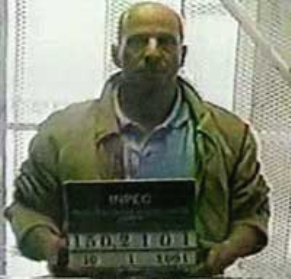
Simon Trinidad mug shot | by US Government | public domain

Simon Trinidad mug shot | by US Government | public domain

In the peace talks between the Colombian government and the FARC, the guerrilla negotiators have requested the release of FARC leader Simon Trinidad – nom de guerre of Ricardo Palmera – who is imprisoned in the United States.  Publicly available information gives no hint that the Colombian government has officially asked Washington to consider the question, but – since the release of FARC members in prison in Colombia is not off the table – Washington should be prepared to consider the possibility.

Simon Trinidad was captured in Quito, Ecuador, in January 2004, extradited to the United States and put on trial for conspiracy to engage in drug trafficking and to hold hostages.  Each of four trials for drug trafficking ended in a hung jury, and eventually those charges were dropped.  In 2007, however, he was convicted for an alleged role in conspiring to kidnap three U.S. contractors taken hostage after their counterdrug surveillance plane crashed in 2003.  Trinidad is serving a 60-year-sentence in Colorado at the United States’ only federal “supermax” prison, with no prospect of parole.

The U.S. State Department has publicly stated that President Obama will not grant Trinidad parole, as the FARC requested, to participate in the negotiations.  But the question of his release if the Colombian government requests it within a peace settlement remains pending.  If such a request arises, the U.S. government’s lawyers will certainly report that the protocol (II) additional to the Geneva Conventions states that “at the end of hostilities, the authorities in power shall endeavor to grant the broadest possible amnesty to persons who have participated in the armed conflict, or those deprived of their liberty for reasons related to the armed conflict, whether they are interned or detained.”  The words “shall endeavor” obviously do not imply obligation, but by establishing that states should release members, they create a political dynamic that could drive a decision giving a useful push to resolving Colombia’s six-decade conflict. 

The Newtown Massacre: Another Lost Opportunity

Guns for sale at Dick's Sporting Goods store | by: Svadilfari | Flickr | Creative Commons

Guns for sale at Dick’s Sporting Goods store | by: Svadilfari | Flickr | Creative Commons

Latin Americans clearly are not holding their breath waiting for the United States to translate shock into action in the wake of the killing of 20 first-graders and six teachers at a school in Newtown, Connecticut, two months ago. In December and January, media such as El Espectador (Uruguay), La República (Peru), and El Universal (Mexico) reported that the easy access to firearms and lax gun controls were factors in the massacre.  While making note of President Obama’s pledge to reduce gun violence, including proposals he is sending to the U.S. Congress, few if any commentators in the region expressed confidence that the legislature, many of whose members are beholden to the National Rifle Association, will do anything.

Instead, Latin American media – presumably reflecting the values of their societies – point out the irony that, while the United States mourned the senseless loss of its children and politicians made emotional speeches, gun killings continue unabated.  They gave prominent coverage last week to an analysis by the on-line U.S. magazine Slate, documenting that 1,774 Americans – including 31 children, 101 adolescents, and 283 women – have been killed in the two months after Newtown.  The Excelsior of Mexico quoted U.S. political commentator Mark Shields as saying that since Senator and presidential candidate Robert Kennedy was assassinated in 1968 “more Americans have died from gunfire than died in all the wars of [U.S.] history.”

As the largest source of illegal weapons to Mexico, Central America and perhaps the rest of Latin America, the United States’ inability to control its own violence has a direct bearing on the region.  Rather than clamor for action as they would in the past, Latin American opinion-makers appear resigned to U.S. inaction – and puzzled at how a single lobby can prevail on an issue as sensitive as the safety of schoolchildren.  The dismay will only be fueled by reports by The Christian Science Monitor and other prestigious U.S. media this week that the “assault weapons ban” under consideration in Washington would exempt more than 2,200 specific firearms, including a semi-automatic rifle that is nearly identical to one of the guns used in the bloodiest shootout in FBI history. A retired FBI agent called the proposal “a joke,” and so will many Latin Americans.  As recently as 2010, Latin American governments called on Washington to ratify the Inter-American Convention against the Illicit Manufacturing of and Trafficking in Firearms, Ammunition, Explosives, and Other Related Materials (called CIFTA) – signed by the Clinton Administration in 1997 – but it is clearly a bridge too far now.

Correa’s Second Term

By Rob Albro, CLALS Faculty Affiliate

President Rafael Correa, Ecuador | by: "el quinto infierno" | Flickr | Creative Commons

President Rafael Correa, Ecuador | by: “el quinto infierno” | Flickr | Creative Commons

Little drama accompanied results of the February 17 election in Ecuador, where center-left incumbent Rafael Correa retained the presidency by a wide margin. Correa enjoys the highest approval rating – nearly 80% late last year – of any Latin American head of state. He will be the first Ecuadoran president to complete his term since 1996, and his resounding victory at the polls will in principle keep him in office until 2017. Most pre-election polls had projected Correa to win decisively, and he did just that with 56.7% of the popular vote. The opposition is fractured, with seven different candidates running against him. His nearest rival, banker Guillermo Lasso, garnered only 23.3% of the vote. A testament to Correa’s dominance is that the right-leaning Lasso offered a vision little different from the president’s own policies and even adopted key elements of Correa’s discourse. The title of Lasso’s recent book, Another Ecuador is Possible, references the World Social Forum.

Correa’s political base was consolidated during the anti-neoliberal protests of 2005, and his “citizen’s revolution” represents an unorthodox combination of nationalist populism, robust social welfare spending and rhetorical flourishes in defense of Ecuador’s national sovereignty. Correa’s social spending – increasing the health budget, minimum wage, pensions, and access to medical care; offering micro-credit and free school lunches; providing new housing and anti-poverty subsidies –is highly popular, especially with the urban poor. These programs, dependent upon a commodity-led export strategy, have enabled Correa to marginalize once important political actors of the left and right. Organized labor and indigenous movements on the left, like economic and media elites on the right, have picked fights with Correa, objecting to his authoritarian style, attacks on the press, petroleum policies in the Amazon, poor record on crime, and outbursts directed toward foreign investors. But this has made little dent in his popularity.

If Correa is certain to face resistance to his agenda in his new term, the political fragmentation and lack of dramatic choices evident during the campaign suggest that it will not necessarily be effective.  Despite potential fiscal headwinds, redistributive social welfare policies are likely to continue to expand. Questions do remain: regular social investment has been enabled by ramping up an extraction-based economy dependent on oil, which has also generated some social conflict.  But there is mounting evidence that aside from being popular these policies are also measurably successful. Ecuador’s election comes on the heels of Venezuela’s, where opposition candidates also found it necessary to tout redistributive policies. If the economy turns south, a splintered opposition might find common cause. But as in a number of other South American countries, the redistributive politics of an incipient social welfare state will inform the agenda of Correa’s eventual successor. The long-term management of these policies, and whether the President will seek to alter the Constitution to permit indefinite re-election, are matters that could prove vexing during the coming years.

Is Chairman Menendez the Right U.S. Signal for Latin America?

By Eric Hershberg and William M. LeoGrande, Professors of Government, American University School of Public Affairs

U.S. Senator Bob Menendez | by Talk Radio News Service | Flickr | Creative Commons

U.S. Senator Bob Menendez | by Talk Radio News Service | Flickr | Creative Commons

Fresh and credible allegations about U.S. Senator Bob Menendez’s bullying of Latin American governments and influence-peddling for political cronies raise further doubts about what Washington is signaling to the region – and the implications for U.S. relevance in the second Obama Administration.  Secretary of State Kerry’s successor as chairman of the Senate Foreign Relations Committee, Menendez is now a major architect of U.S. policy, and his activities and policies are an indication of U.S. intentions around the world, especially in Latin America, which has been the focus of much of the Senator’s attention.

Media reports have documented well how Menendez persistently intervened on behalf of a wealthy campaign donor to pressure the government of the Dominican Republic to institute port security programs over legitimate objections of local authorities.  When Dominican officials appropriately exercised their duties and pointed out that the donor lacked expertise for the exorbitantly priced contract, Menendez only turned up the heat.  This was consistent with an ongoing pattern of behavior.  In 2011, according to reliable sources, Menendez demanded a U.S. policy of forcing the government of El Salvador to fire a cabinet minister he did not like, clearing the way for the military to capture the position.  Earlier, when the OAS opened discussions on whether to lay out conditions for Cuba’s readmission to the hemispheric body, he threatened to cut all of its U.S. funding.  A self-proclaimed champion of “democracy promotion” and “accountability” in Latin America, the New Jersey Democrat never missed a chance to criticize centrist or left-leaning governments.  Governments in the region are not the sole targets of his interventions:  Menendez has used his influence to intimidate bureaucrats throughout the U.S. foreign policy community into either supporting his initiatives or, at least, turning a blind eye to them.

Latin American opinion-makers grew accustomed to Menendez’s ways during his tenure (2010‑12) as Chairman of the Senate’s subcommittee on the western hemisphere, but his ascension to the chair of the full committee from within Obama’s own party makes his voice – and style – much more important.  His influence-peddling for his buddies’ business interests – at the expense of other U.S. government and foreign partners’ priorities – can only fuel greater cynicism about U.S. preachiness on anticorruption and “democracy promotion.”  It also further risks U.S. relevance at a time that many in the region remain hopeful of a revival of President Obama’s short-lived emphasis on “partnership” in the “neighborhood.”  The investigations into Menendez’s activities may run into serious obstacles – many bureaucrats fear his ire, and will be reluctant to talk – but it’s already clear that his bullying and influence-peddling make him the wrong person for a leadership role in U.S. policy toward Latin America. 

Religious Responses to Violence in Latin America

By Alexander Wilde, CLALS Research Fellow

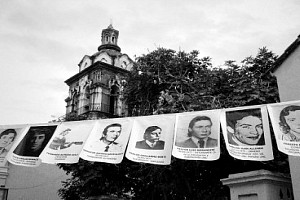
Commemoration of those killed in the 1980's at a church in Cordoba, Argentina | By: Pablo Flores "pablodf" | Flickr | Creative Commons

Commemoration of those killed in the 1980’s at a church in Cordoba, Argentina | By: Pablo Flores “pablodf” | Flickr | Creative Commons

Latin America today is one of the world’s most violent regions. It has been so for 50 years, although the character and agents of violence have changed considerably over time. The “old violence” of the 20th century was largely political, associated with revolutionary insurgencies and repressive regimes that systematically violated fundamental human rights. The “new violence” is largely criminal – illegal drug traffickers and urban gangs are among the leading perpetrators – but its consequences in many societies have been comparably lethal. Countries such as Honduras, El Salvador, Guatemala, Venezuela and Colombia have among the highest murder rates in the world.  “Citizen security” is a leading issue in politics throughout the region.

Religion played a significant part in confronting the old violence.  Human rights became a new cause for the Catholic Church, which in some cases helped legitimate peace settlements and democratic transitions. In the generation since then, Latin American Christianity has been transformed.  Evangelical and Pentecostal churches have achieved unprecedented growth. Catholicism has been reined in by Rome to curb the influence of Liberation Theology. More pietistic and spiritually-oriented theologies have flourished within both traditions. The result has been a tendency to turn away from the “political” ministries of the past – defending human rights and promoting social justice. The Christian churches, it is widely believed, have failed to address the widespread violence of today.

Fresh research, however, is revealing ways in which – although less visible at the national level – they remain a vital force in violence-plagued societies. A two-year project at American University has produced studies of religiously based shelters for Central American migrants in Mexico, a 15-year Jesuit program of peace building and development in Colombia, and an Evangelical prison ministry in Rio de Janeiro, among a dozen pieces of new research. They identify particularly the significance of an active church presence among poor and marginalized populations, who suffer disproportionately from violence. This “accompaniment” appears to be motivated by Biblically-based beliefs about Christian love, the redemptive power of God and the direct experience of living with these populations in perilous, threatening conditions. Another emerging theme in project research is the potential significance of supportive national and international allies – who clearly contributed to the defense of human rights in the past and remain important in our changed, globalized world.

Violence in Latin America today reflects the wrenching changes these societies have undergone in the last half-century, and religion has been a dynamic dimension of those changes. In the region’s civil societies and the lives of its citizens, Catholic and Evangelical Christianity remains a potent and creative presence. Where it is willing to work and live in situations of conflict and violence, it could find a new role in bringing about more stable, peaceful and just societies.

High Time for a U.S.-Bolivia Reset

By Rob Albro, CLALS Faculty Affiliate

President Evo Morales in a climate meeting at the University of Oslo | by Utenriksdept | Flickr | Creative Commons

President Evo Morales in a climate meeting at the University of Oslo | by Utenriksdept | Flickr | Creative Commons

Little has changed in the U.S-Bolivia relationship since each expelled the other’s ambassador and suspended full diplomatic ties in 2008.  Last month a Bolivian official accused the United States of trying to sabotage the administration of President Evo Morales, and Morales has not dropped his pugnacious anti-U.S. rhetoric.  Washington, for its part, has persistently criticized Bolivian anti-drug policies, while not acknowledging the failures of its own decades-long “war on drugs.”  As discussions surrounding Secretary of State Kerry’s January 24 confirmation hearing suggested, U.S. policy toward several Latin American countries – including Bolivia – is still on Cold War autopilot, continuing to use code-words like “socialism,” implicitly and incorrectly viewing the recent and historic changes in that country largely through the prisms of Venezuela and Cuba.

Along with many observers outside of Washington, the Bolivian government understands itself to be addressing long-standing demands to correct a historical lack of social inclusion, to institute a more participatory (and “plurinational”) democratic process, and to pursue economic sovereignty.  In notable contrast to Venezuela, with which Bolivia is often lumped together, the country’s long-marginalized indigenous majority is in the national political driver’s seat for the first time.  Despite Morales’s rhetoric to the contrary, Bolivia is far from rejecting the free market. It recently applied for full participation in MERCOSUR, and has welcomed foreign investment in its sizable petroleum and lithium deposits. Along with Peru and Ecuador, Bolivia has also sought ways to maintain economic growth while protecting the environment and avoiding unsustainable extractivist policies.  Bolivia’s is a hybrid approach: mixing an alternative democratic tradition domestically with the promotion of Bolivia Inc. globally.

It is past time for Washington to move on from its one-size-fits-all approach toward Andean countries, and to take more seriously the perspectives and priorities of their peoples and governments.  And Bolivia’s recent history provides ample opportunity for the U.S. to identify common – if not identical – ground.  Morales’s frequent statement that Bolivia is looking for “partners, not bosses” echoes President Obama’s own 2009 speech about “partnership” in our hemispheric “neighborhood.” Obama’s recent inaugural call for more effective “collective action” resonates with the spirit of Bolivia’s ongoing plurinational democratic experiment.  And if climate change is back on the U.S. political agenda, Bolivia continues to be a global catalyst for this important multilateral discussion. Emphasizing these shared problems, experiences, and aspirations, can provide a foundation for closer relations.