U.S.-Mexico: Border Liaison Groups—the Bread and Butter of Cooperation

By Carolyn Gallaher and David Shirk
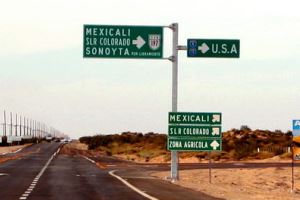
"Little Road, Big Intersection" Photo credit: “Caveman Chuck” Coker / Foter / CC BY-ND

“Little Road, Big Intersection” Photo credit: “Caveman Chuck” Coker / Foter / CC BY-ND

Drug traffickers often find ingenious ways to get their product across the U.S.-Mexico border, but cooperation among Border Liaison Officers can often stop them.  In Mexicali, one trafficker used a pneumatic cannon attached to his truck bed to shoot packages of marijuana across the border for pickup.  After some surveillance, Border Patrol caught the truck in action.  Agents took down the license plate number and called an officer in the Mexicali police department, who looked up the number, tracked down the truck’s owner, and made an arrest.  Border Patrol agents knew who to call in Mexicali because they belong to the same border liaison group.  Although they receive little public attention, border liaison groups are a crucial part of the cooperative infrastructure between the two nations.  They allow cooperation to continue during, and in spite of, political transitions, diplomatic imbroglios, and other shifts in bilateral relations.

Border liaison groups are semi-formal organizations in which officers cooperate on policing cross-border crimes such as auto theft, low-level drug crimes, and smuggling.  They are usually organized and maintained by law enforcement officials.  The San Diego Police Department, for example, used to have a full team of officers whose full-time job was to liaison with officers in Mexico.  Membership in border liaison groups is not compulsory, however, and there are no restrictions on which agencies for which a member must work.  Groups usually include a mix of local, state, and federal officials. And meetings are typically held in informal places like restaurants, barbeques at members’ homes, or at organized events, such as boxing matches and softball games.

Border liaison groups facilitate cooperation in a number of ways.  In a structural sense, they help individuals navigate the other side’s bureaucracy – i.e. identifying which agency is in charge of a particular issue, and who in the agency you should call.  They are also fundamental for establishing trust.  In a context where corruption is an ever-present concern, border liaison groups give members a chance to get to know one another, and to discern potential partners’ trustworthiness.  A member of the Baja state’s preventive police force (known by its Spanish acronym PEP) told us, for example, that officers often use the “gut test.”  You only work with someone your gut says is “ok.”  (A California law enforcement officer told us it was similar to the “gut check” he used when meeting his teenage daughters’ suitors.)  Officers also use more tangible tests.  It is not uncommon to share a piece of information and track what happens with it.  If the information is used appropriately, the agent initiating the test may decide to share more substantial information.

One of the biggest threats facing border liaison groups is funding.  Budget cuts in California, for example, have led several law enforcement agencies to reduce liaison positions, or they have grafted liaison duties onto established jobs.  Another problem is replicating these groups in non-border areas.  The Cook County Special Investigations Unit in Chicago, for example, told us “we are the border,” noting that perpetrators and victims of crime in the city are often Mexican.  Without contacts on the other side, however, the unit can only communicate through official conduits in Washington (e.g., the FBI or Immigration and Customs Enforcement, ICE) – a cumbersome process that most officers avoid.  Indeed, the sorts of information border liaison group members share – drivers’ license numbers, last known addresses, known associates – are too time-sensitive for formal channels to be of use.  The recent arrests of high-level kingpins in the Zetas and Gulf cartel tend to get widespread media attention, but the daily work by law enforcement officers is often just as important. 

Carolyn Gallaher is a professor in the School and International Service at American University.  David Shirk is a professor in the Political Science Department at the University of San Diego.

This project was supported by Award No. 2011-IJ-CX-0001, awarded by the National Institute of Justice, Office of Justice Programs, U.S. Department of Justice. The opinions, findings, and conclusions or recommendations expressed in this publication/program/exhibition are those of the author(s) and do not necessarily reflect those of the Department of Justice.

Ben Kohl: The Loss of a Scholar-Activist who Taught About Bolivia

By Eric Hershberg

This AULA blog post does not follow our standard format, but it is one that I hope will motivate readers to seek out some singularly insightful analyses of contemporary Bolivia.

Los marchistas del TIPNIS llegan a La Paz (19/10/2011) Photo credit: Szymon Kochanski / Foter / CC BY-NC-ND

Los marchistas del TIPNIS llegan a La Paz (19/10/2011) Photo credit: Szymon Kochanski / Foter / CC BY-NC-ND

I was terribly distressed to learn that Temple University Professor Ben Kohl, a noted expert on Bolivia, passed away suddenly in late July, at the age of 59. I had the privilege of meeting Ben briefly on two occasions, on both of which he struck me as charming and intellectually lively. But I already knew of Kohl through his writings, which had taught me, and many of my students, a great deal about how and why Bolivian politics and society have evolved in such remarkable ways in recent years.  Faculty, students and non-academic audiences in Washington and beyond would be well served by surveying his writings, in part because of how effectively they make sense of a country with which the U.S. government has often related unproductively.

Most of Kohl’s work was co-authored with his journalist wife, Linda Farthing (he also collaborated with my CLALS colleague Rob Albro on a fine collection of articles on Bolivia that was published by Latin American Perspectives). Among their prolific writings on Bolivia, two books stand out as especially significant. Impasse in Bolivia and From the Mines to the Streets: an Activist’s Life in Bolivia established Kohl and Farthing as pivotal voices in shaping understanding of that Andean country’s politics and society.  Their work is unusual in the effectiveness with which it speaks simultaneously to advanced scholarly readers and to students and people in advocacy and policy circles who are engaged sympathetically with that country’s remarkable social movements and transformations.

What stands out for me about Impasse, aside from its deep and nuanced understanding of the fault lines dividing Bolivian society, is that it successfully blends attention to social dynamics and political mobilization at the micro-level with an appreciation for how those phenomena interact and reflect larger scale, deeply embedded social structures.  Written on the eve of Evo Morales’ rise to the Presidency, in the wake of several years of social and political “impasse,” the study combines ethnographic insight with sophisticated interpretation of macro-level historical and sociological processes.  Impasse in particular highlights how and why Bolivia took a decisively “indigenous turn” in its national politics beginning around 2000, and ably portrays the resistance that this elicited from long dominant elites. The book was an especially novel and eloquent contribution to the literature on Bolivia at a crucial juncture in the country’s history, a juncture that ushered in fundamental changes in the political system.

Mines, like Impasse, was written for more than a strictly scholarly audience, but it is a very different sort of monograph.  The autobiographical story told to Kohl and Farthing by labor activist Félix Muruchi Poma, and very intelligently framed for a foreign audience, brings to life aspects of contemporary Bolivia (and other parts of Latin America) that are rarely presented in such a compelling and readable form.  As noted in the brief bibliographic note at the conclusion of the book, several previous books provide historical accounts of issues and events covered in Muruchi’s story, but none of the English language literature does so in this “testimonial” genre.  That genre is difficult to pull off well, as Kohl acknowledged in an insightful article for the Journal of Latin American and Caribbean Anthropology, but this work is up to the task, and points to the activist side of Kohl and Farthing’s scholarship.  One is reminded, inevitably, of the classic I, Rigoberta Menchu, which focused on the life and politicization of an indigenous Guatemalan woman during a period that overlaps in part with that covered by Muruchi’s chronicle.  The many university faculty who assign the Menchu book for introductory Latin American Studies courses would do well to consider assigning this one alongside of it.

A number of Kohl’s recent articles and book chapters were aimed more strictly at scholarly audiences than were either Impasse or Mines. A 2012 essay published in Political Geography is the most insightful analysis I have encountered of the contradictions between what Kohl and Farthing label “resource nationalist imaginaries,” articulated in practice by strong social movements in Bolivia and more disparate actors in neighboring countries, and the circumstances of economies that remain as dependent as ever on revenues derived from natural resources. The study’s use of the theoretical concepts of “imaginaries” and “framing” strikes me as an especially valuable lens through which to understand the roots of social movement resistance to an economic model that has persisted despite the rise to power of Bolivia’s first indigenous President. Re-reading that piece as I was drafting this blog post, I am reminded of how Kohl’s passing is a great loss to those of us for whom innovative scholarship motivated by concerns about fairness and justice in Latin America is to be treasured, not unlike tin or gas or water for many Bolivians, as a precious commodity.

Is Obama Declaring “Mission Accomplished” on Drugs?

By Kevin Gatter

Photo Credit: Ministerio de Seguridad Argentina / Foter / CC BY-NC-ND

Photo Credit: Ministerio de Seguridad Argentina / Foter / CC BY-NC-ND

The Obama Administration is claiming major progress in the war on drugs, but the evidence is subject to challenge – and the good news surely hasn’t reached Latin America yet.  On July 9, the Office of National Drug Control Policy (ONDCP) released an annual report that asserted a significant decline in the U.S. cocaine market, with sizable decreases in both the number of deaths caused by cocaine overdose and the rate of people testing positive for cocaine in the workplace.  It also suggests that potential pure cocaine production capacity in the Andes has fallen by approximately 41 percent since 2001, including 10 percent last year alone.  The report credits this decrease to numerous factors, including U.S.-Colombia partnership, “strengthened democratic institutions,” an increased commitment to counternarcotics cooperation and citizen security in Peru, alternative development, enhanced law enforcement efforts, and focused and persistent education about drug abuse.

Other experts say the picture may not be as rosy.  The UNODC has yet to find what it considers accurate data on coca cultivation since 2011 and, importantly, asserts that declines in past years were offset by an increase in efficiency in the manufacturing chain from coca bush to cocaine hydrochloride.  Additionally, the UNODC estimates that while the estimated total area of coca cultivation in 2011 was only three-quarters of the level in 1990, the quantity of cocaine manufactured in 2011 was at least as high as in 1990.  In any event, it is important to recognize that even if the U.S. is consuming less cocaine, demand for other drugs remains high.  Some analysts speculate that the U.S. market is moving away from Andean cocaine and toward marijuana and methamphetamines from Mexico.  Furthermore, some experts say that growing cocaine demand in Europe and elsewhere is driving prices up and reducing U.S. consumption.

ONDCP’s report has a self-congratulatory tone that – combined with Obama’s clear de-emphasis of counternarcotics at his Central American Summit in San José in May – suggests eagerness to declare victory in a 40-year war against a scourge that continues to have dire implications for every country touched by the drug trade, especially those in Central America and Mexico.  The data are extremely difficult to corroborate.  Cultivation estimates, based on satellite studies of a sampling of possible growing areas, have been notoriously suspect, and the UNODC’s concerns about ignorance of leaf-to-cocaine yield are valid.  Many of the flow estimates are based on interdictions, but U.S. agencies have openly acknowledged that interdiction operations have been significantly reduced for budgetary reasons.  A drug flow that Washington doesn’t detect is not a drug flow that has disappeared.  Moreover, the National Survey on Drug Use and Health is based on self-reporting in interviews and omits significant populations, including the homeless and incarcerated. Policy makers around the hemisphere surely hope that ONDCP’s triumphalism is warranted, but the key indicators of success will be a decline in drug-related violence, a weakening of transnational criminal groups, an end to the southbound flow of arms from the United States, the flourishing of alternative economic options for coca farmers, and reversal a pervasive popular suspicion that governments and security agencies have been corrupted by the billions of drug dollars flowing through the region.

Health Reforms in Latin America: Lessons for the U.S.?

Photo credit: World Bank Photo Collection / Foter / CC BY-NC-ND

Photo credit: World Bank Photo Collection / Foter / CC BY-NC-ND

While Washington struggles to implement modest health care reforms, a number of Latin American countries over the past decade have been changing their health systems in ways that may offer encouragement to advocates of progressive change in the United States.  Reforms in Brazil, Chile, Colombia, Mexico and others strive to provide universal care in circumstances that are, in some cases, much tougher than those facing proponents of Obamacare.  Some challenges and accomplishments include:

  • In Chile, after years of investment, about 73 percent of the population now uses the public health care system.  A Family Health Plan in Brazil, which accounts for US$2 billion of the US$3.5 billion of the government’s health budget each year, has contributed to expansion of health care participation to 70 percent of the population.  When Colombia passed a health care law in 1993, only 24 percent of its citizens had coverage; in 2007, it had reached 80 percent.  Mexico has gone from 40 percent in 2004 to about 70 percent.  (In the U.S., about 83 percent had access to health insurance as of 2010.)
  • Latin American elites, like their U.S. counterparts, have long resisted providing the resources needed to cover health care costs, either through workplace insurance or through paying taxes to support state provision of health services.  But Latin American experience shows that this reticence can be overcome.  Substantial taxes have been levied in recent years – such as a 7 percent health care tax in Chile – and, according to various databases, health-related spending has grown to almost 7 percent of GDP in Mexico, about 7 percent in Colombia, about 7.5 percent of GDP in Chile, and around 8 or 9 percent in Brazil.  (Health care spending accounts for about 18 percent of the U.S. GDP – about half from public spending.)

These Latin American governments have demonstrated that, Sí, se puede when it comes to reforming health care and challenging entrenched interests wary of change.  Spending is rising as a percentage of GDP, but expenditures remain a fraction of those in the U.S. – and the gap in quality of care is narrowing.  Latin Americans have expanded coverage at a time that access to good care in the United States remains a challenge for tens of millions of people.  The U.S. economy generates more than sufficient resources to guarantee health care for the entire population, but the Obama administration seems too weak to implement its tepid reforms on schedule – recently postponing an important mandate that large employers provide insurance coverage.  Health care providers in Latin America appear to be adapting to the new playing field, but their U.S. counterparts are lagging.  If Latin American leaders had advice for their U.S. counterparts on how to slay this dragon, it would probably involve taking note that reforms in the region invariably emerged from decisive leadership from the executive branch and, with the exception of Mexico, a willingness to increase tax burdens to expand coverage.  They would also note that, much like is evident in public opinion polling of Latino populations in the U.S., citizens of Latin American countries are overwhelmingly in favor of public guarantees of health services for all.

Moving Toward Religious Unity in Response to Violence?

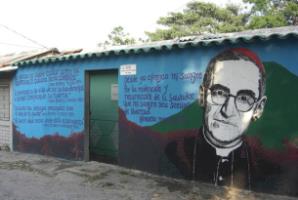
Bishop Oscar Romero mural, El Salvador / Photo credit: alison.mckellar / Foter / CC BY

Bishop Oscar Romero mural, El Salvador / Photo credit: alison.mckellar / Foter / CC BY

Many Latin American churches are struggling to address the criminal violence challenging their societies – and are finding new ways of promoting peace in ways reflecting each country’s different conditions.  As part of American University’s multi-year project (click here) on religious responses to violence in Latin America, 40 grassroots activists representing two-dozen faith-based ministries in seven countries gathered in Guatemala City in mid-July to share experiences ministering to victims of the region’s rampant violence.* Their ministries in Mexico, Central America and Colombia ranged from programs for at-risk youth, to rehabilitation centers for former gang members, to shelters for Central American migrants crossing through Mexico.  Just as they developed a range of responses to the threats posed by authoritarian governments in the past, religion-based activists today are adapting strategies to a wave of “new” violence, a battery of social ills that includes gang violence, gender-based violence, and violence against migrants, as well as the persistent violence in states that have formally democratized but failed to deliver basic security.

Conflicting interpretations of the Church’s message of peace affect how churches define victims, how they emphasize or downplay the structural causes of violence, and how they respond to human suffering.  Thus, while many of the participants characterized the current crisis in terms of structural or institutional violence, such convictions were not always reflected in churches’ proposed solutions to the crises facing their communities.  There was no consensus, for example, on how faith-based organizations can effectively engage state institutions and policies, particularly where governments are perceived as corrupt and ineffective:  some participants believe the church’s role is to condemn corruption, while others saw no alternative to holding elected and appointed authorities accountable by pressing them to deliver justice.  One of the participating ministries based in Honduras, for example, provides legal aid for victims and their families, encouraging them to press charges, provide testimony, and follow-up with police and courts until they obtain a conviction.

For many of those in attendance, the ecumenical meeting was a first – in the words of a Mexican participant, “historic” – by offering a unique opportunity for religious practitioners to learn about the realities of neighboring countries, exchange ideas about best practices responding to violence, and discuss possible means of collaboration across borders.  Despite diverse traditions and circumstances, the churches are becoming a more visible and potentially more unified force in the struggle against violence in Latin America. In a region marked by ecclesiastical competition, they are challenging traditional understandings of “accompaniment” and are recognizing their shared responsibility to respond to violence with concrete action.  Indifference, passivity, fear, and silence received the greatest condemnation from the meeting’s participants.  These churches are realizing that their diverse activities are in fact complementary, and that they have a critical role to play – both to mitigate existing suffering and to eradicate root causes of violence.  

*The seminar “The Role of the Church in the Face of Violence in Mesoamerica: Models and Experiences of Peace in Contexts of Conflict and Violence” was co-organized by AU’s Center for Latin American and Latino Studies and the Latin American Anabaptist Seminary (SEMILLA) based in Guatemala City.

Snowden’s Revelations Rile Latin America

"Snowden Day in Brasilia, Brazil" Photo credit: midianinja / Foter / CC BY-NC-SA

“Snowden Day in Brasilia, Brazil” Photo credit: midianinja / Foter / CC BY-NC-SA

Allegations by former U.S. intelligence officer Edward Snowden about U.S. operations in Latin America have stirred further recriminations toward Washington.  According to press reports, Snowden revealed that U.S. agencies monitored internet traffic, especially in Colombia (with a special focus on the FARC guerrillas), Venezuela, Brazil and Mexico.  The National Security Agency (NSA) allegedly spied on military procurement and the oil industry in Venezuela, as well as the energy sector and political affairs in Mexico.  The Huffington Post reported that almost every Latin American country was targeted to one degree or other.

Regional reaction has been strong:

  • O Globo (Brazil) columnists, claiming that Brazil was the most spied upon country in Latin America, called the surveillance a genuine invasion of privacy that undermines both Brazilian authorities and citizens.  Former President Cardoso said, “If such activities existed, if they were done, as with all espionage, it was outside the law.”  The Senate has already “invited” Cabinet ministers to testify – and they have pledged to investigate.  (It also invited U.S. Ambassador Tom Shannon, but he is under no obligation to appear before the Brazilian Congress.)
  • El Espectador (Colombia) said the U.S. spying was an attack on Colombian sovereignty.  It quoted various senators as saying that “one does not spy on one’s friends and even less when they’ve been political allies in big decisions between states” and demanding that the government limit such activities.  Foreign Minister Holguín sent a delegation to Washington to seek explanations.
  • Mexican President Peña Nieto called the U.S. spying “totally unacceptable,” and the opposition PRD has accused the government of being “too soft” in its response to the alleged espionage.
  • The ALBA countries have been strident.  Venezuelan President Maduro has demanded “answers and explanations, [and] more than explanations, apologies.”  Ecuadoran President Correa said “we will put up with no more abuses, arbitrariness, disrespect for human rights.”

The extent of U.S. intelligence operations will not be known for decades.  It took experts 30 years, for example, to pry loose information about the CIA’s role in the coup that brought Chilean strongman Pinochet to power.  But the tensions such allegations create do not fade rapidly.  Even accounting for hyperbole in political rhetoric, these protestations cannot be helpful to U.S. short-term efforts to win Latin American help in capturing Snowden, nor in long-term efforts to revive the Obama Administration’s stated goal of building “partnership” in the region.  Continued threats – thinly veiled – from unnamed senior U.S. officials also run counter to that goal of building partnership and the related objective of minimizing fallout from accusations of spying.

Emerging Engines for Latin American Economies? The Potential of Cultural and Creative Industries

By Robert Albro
Associate Research Professor, CLALS

Filming in Chile / Photo credit: Patt V / Foter / CC BY-NC-SA

Filming in Chile / Photo credit: Patt V / Foter / CC BY-NC-SA

In global terms Latin America’s economy is expected to grow at a relatively brisk 4% in 2013. In the medium-term, however, the picture is not as rosy, since this growth is largely sustained by the export of natural resources and raw materials, the demand for which is expected to slow. If Latin America hopes to continue to enjoy economic growth and stability, other sectors will need to emerge. One strong candidate is cultural and creative industries, a sector that includes all copyrightable entertainment, education, information, and other cultural goods and services, like film, T.V., music, or video games, but also tourism and local heritage products. One of the world’s fastest growing sectors, it has quadrupled its share of world trade since 1995. In 2012 it represented an estimated $2.2 trillion, or 11% of the global total. Cultural and creative industries are also seen as largely immune to the ups and downs of the business cycle. At the height of the recession in 2008, global trade declined by 12%, while trade in creative goods increased by 14%.

Signs that the creative industries are taking off in Latin America are widespread. As the 2010 Creative Economy Report noted, regional governments are now actively promoting policies for this sector, including to incentivize tourism, create new cultural infrastructure, and increase intellectual property protection. South America’s MERCOSUR Cultural, a regional network of over 400 institutions, is centralizing country-based cultural data. Latin America’s film industry is resurgent, with more than 600 million gate receipts last year, and in 2011 Mexico’s television content distribution business alone topped an estimated $251 billion. As a burgeoning tech start-up hotspot, Chile has also become an important video game incubator. Buenos Aires’s design industry is a global player with double digit growth that accounts for 3% of Argentina’s total economy. Designated a UNESCO “creative city” in 2012, Bogotá is now the focus of major government investment as a center of music innovation. Meanwhile, in Brazil the new Creative Rio Program has been launched to enhance that city’s creative economy.

If there is cause for optimism, significant barriers remain. Cities rather than countries are the critical units of scale, as cultural platforms and global nodes in an emerging information economy. But the persistent lack of citizen security across Latin America’s cities is likely to undermine the sustainable development of this sector. The creative industries are also highly unevenly distributed throughout Latin America. Audiovisual production, for example, is limited to Argentina, Mexico, Brazil, Colombia, and Venezuela. Cultural goods and services, too, can become vehicles for regional concerns about the threats posed by globalization, leading to trade frictions. Most importantly, a thorough assessment of the organization and diversity of the region’s cultural and creative industries has yet to be done, debilitating future strategic decision-making. Assessment of this sector is undermined by inadequate or incomplete metrics. But even with metrics in hand, how to make best sense of these in ways that account for the exceptional status of cultural goods as key sources of collective identity, community well-being and quality of life remains a real challenge, one which CLALS is currently partnering with the Inter-American Development Bank to address.

The Snowden Case: Provocations and Intimidation

By Fulton T. Armstrong

Edward Snowden / Photo credit: zennie62 / Foter / CC BY-ND

Edward Snowden / Photo credit: zennie62 / Foter / CC BY-ND

The rhetoric and diplomatic jostling surrounding the flight of American whistleblower (or, depending on perspective, criminal leaker) Edward Snowden have once again thrust to the fore Latin America and U.S. policy toward the region.  Some Latin American presidents have seemed to go out of their way to prick U.S. sensitivities, and Washington seems to have gone out of its way to stomp on Latin American sensitivities.  Both sides have been happy to live up to the caricatures of themselves held by the other, but both sides’ interests have been harmed in the process.

The drama started, of course, while Snowden was in hiding in Hong Kong, and it has dragged on as he’s resided in a transit lounge of the Moscow airport.  U.S. media, which in the past have published stories casting Cuba, Venezuela, Ecuador, and others as eager to poke the U.S. in the eye, ran pieces – shifting attention to Latin America – and away from China and Russia’s even bigger slap in Washington’s face in refusing to hand the leaker over.  Reporters believed their own rumors and piled into an Aeroflot plane bound for Cuba.  Washington rolled out the big guns, including Vice President Biden, to discourage the Latin Americans from offering Snowden any help – and seemed to have success.  Ecuador, which has protected Wikileaks boss Julian Assange from British, Swedish and U.S. pursuit, initially welcomed Snowden but, after a phone call from Washington, pointed out that an asylum petition could not be considered until he arrived in country.  The crisis between the U.S. and Latin America deepened, however, when several European countries – presumably responding to U.S. pressure and bad U.S. intelligence – closed their airspace to Bolivian President Morales, who someone, somewhere, suspected of flying Snowden out of Moscow on the president’s return home.  Latin American condemnation exploded.

Venezuelan President Maduro, stating that that he wanted “to protect this young man from the persecution unleashed by the world’s most powerful empire,” publicly offered Snowden asylum on Friday.  That move ended the slight progress Caracas and Washington had made toward rapprochement– evident since the OAS General Assembly in June – and bilateral relations will surely worsen.  But the Obama Administration’s relations with Latin America writ large don’t appear likely to fare much better.  Some leaders’ rhetoric may be over the top, but Washington’s language has been threatening, and its actions speak louder than its words.  An unidentified senior U.S. official told the New York Times that “there is not a country in the hemisphere whose government does not understand our position at this point,” adding that any aid for Mr. Snowden “would put relations in a very bad place for a long time to come.” Such statements leave one wondering whether we are approaching the point where this administration will cease proclaiming its commitment to a new era of US-Latin America relations characterized by partnership and respect among equals.  Transcripts of Mr. Biden’s calls will not be released, but rarely do countries reverse their positions publicly in the absence of either serious threats or generous inducements – and few clear-thinking Ecuadorans, tracking the Administration’s attitudes toward President Correa, see the latter as in the cards.  In pressuring its European allies to establish a no-fly zone to keep a head of state from returning home, Washington took an action that many Latin Americans – not without a grain of truth – believe it would never take against a region that it respected.  Repairing the damage of el asunto Snowden will be hard for both sides, but Washington has the bigger task ahead.


Chilean Watershed?


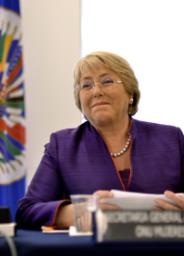
Michelle Bachelet / Photo credit: OEA - OAS / Foter.com / CC BY-NC-ND

Michelle Bachelet / Photo credit: OEA – OAS / Foter.com / CC BY-NC-ND

Sunday’s presidential primaries in Chile – the country’s first ever –reaffirmed former President Michelle Bachelet’s leadership of Concertación and cleared the way for a faceoff in November between herself and the Conservative candidate, Economy Minister Pablo Longueira.  Bachelet trounced challengers within her center-left coalition, winning 74 percent of the primary vote, and seems poised to build on the astounding 81 percent approval rating she had in 2010 when her first term ended.  (Current President Sebastián Piñera’s approval rating now hovers around 40 percent, a two-year high for him.)  Conservative Longueira will have the advantage of Piñera’s incumbency, but his party’s somewhat weaker performance on Sunday – with about 27 percent of all votes cast – and his slim 3 percent margin within the coalition suggest a tough campaign ahead for him.  Most observers deem Longueira’s performance in Piñera’s cabinet to have been competent but unexciting, and they predict an easy Bachelet victory in November.

Whichever candidate wins, Chile faces an evolving set of challenges.  Its commodities-driven economy is slowing down, and a stubborn gap between rich and poor is fueling demands for tax and education reforms.  Chile is ranked the most unequal country of the 34-member Organization for Economic Cooperation and Development (OECD).  Widespread demonstrations by students, teachers and professors have been demanding free tuition from preschool through university, and key labor unions are increasingly joining these mobilizations for reform.  Accepting her primary victory on Sunday night, Bachelet said voters were motivated by a desire for tax and education reform as well as a new constitution to replace the one created under dictator Pinochet in 1980.  She has also said that if elected she will halt the controversial HydroAysén project, which would build five mega-dams on two of Chilean Patagonia’s rivers.  Despite this rhetorical shift leftward and her role as the leader of the Socialist Party, such statements are not expected to lead to significant policy shifts; Chilean observers say she will continue to hew closely to the market-friendly policies that helped make Chile one of the region’s most stable countries during her first term.

Bachelet’s and Longueira’s competition may fail to excite the electorate in November, when voting will not be obligatory for the first time, and low turnout could deprive the victor of the mandate needed to lead thorough change, an arguable requisite  to increase the credibility of democratic institutions.  Empowered by two years of protests, student leaders are not leaving things entirely up to political elites.  Many are also running for office and aspire to bring a new perspective and direction to reforms in Chile.  International attention has focused in recent weeks on popular mobilizations in Brazil, but as recently as last week, tens of thousands of Chileans marched through the streets of Santiago and other major cities, challenging the credibility of the existing political order.  Bachelet has made deals with some of the protest leaders – agreeing, for example, not to run a Concertación candidate against one of them in a congressional race – but their demands are unremitting and strategic, and the winner of the upcoming election faces  a real challenge in trying to satisfy them. 

Nicaragua: Model for Citizen Security?

Police in Managua, Nicaragua / Photo credit: jorgemejia / Foter.com / CC BY

Police in Managua, Nicaragua / Photo credit: jorgemejia / Foter.com / CC BY

Nicaragua – often accused of keeping bad company on political and economic matters – finds itself in a special group of countries that are doing quite well combatting crime.  Along with Chile, Costa Rica, and Uruguay, it has one of the lowest crime and violence rates in Latin America.  At a discussion* at the Wilson Center in Washington this week (click here for video), experts identified factors explaining why these countries stand out, including the democratic traditions, relatively strong institutional frameworks, and economic stability in Chile, Costa Rica, and Uruguay.  Nicaragua, on the other hand, has witnessed dictatorships, coups, chronically weak institutions, and the sort of grinding poverty that fuels chronic security challenges.  Gross generalizations are risky, but analysts probed why Nicaraguans generally trust their police force and commit fewer violent crimes.

Among the key factors is that Nicaragua, like the other three top performers, separated the police from the armed forces and increased civilian control over it.  Unlike in the rest of Central America, where revolutionary movements did not triumph, the Sandinistas abolished the hated National Guard in 1979 and created a force under the Interior Ministry.  Over the course of the Esquipulas peace accords, the elections in 1990, and the passage of a Ley Orgánica de la Policía Nacional in 1996, civilian oversight was institutionalized and respect for human rights and judicial process grew.  The Sandinistas’ promotion of mechanisms for community vigilance – a negative when used to root out suspected “counterrevolutionaries” in the 1980s – later helped communities develop cohesive approaches to citizen security and contributed to respect of institutions.  Another factor is that, like the other three countries under discussion, Nicaragua has a relatively low gun ownership rate.

Chile, Uruguay, Costa Rica and Nicaragua have another thing in common:  none has resorted to the sort of militarized strategies toward transnational or homegrown crime that Colombia, Mexico and the United States have espoused.  The Nicaraguan National Police have generally maintained closer ties with their Scandinavian counterparts, who emphasize addressing the root causes of crime and violence – a philosophy that Nicaraguans of most political stripes embrace more readily than the emphasis on military-style operations.  The steadily worsening situation in Honduras, where Washington has pursued collaboration with the military, has convinced many in Central America that the militarized approach doesn’t work.  The mix of limited training and operational cooperation that the United States provides Costa Rica would probably work well in Nicaragua, but Washington – prodded by legislators who still see Nicaragua through a 1980s optic and condition cooperation on electoral performance – appears cool to fashioning a flexible package of joint initiatives.  Rather than applying the Colombian-Mexican security model to Central America, perhaps the successful elements of the Nicaraguan model can be expanded in the troubled region.

*CLALS Research Fellow and InSight Crime Senior Fellow Javier Meléndez delivered the lead presentation on Nicaragua.