The 50 States and U.S.-Latin America Relations

By Aaron Bell

48outlineObservers seeking to fully understand U.S. relations with Latin America often focus on the federal level, but much is occurring in the majority of U.S. states as well.  Over 40 state governments have engaged with issues related to Latin America, most commonly confronting the legal aspects of immigration (particularly rights for undocumented workers who are overwhelmingly Latin American in origin), and organizing trade missions for local businesses.  Arizona, frustrated with federal policies to counter illegal immigration, enacted its own package of restrictive measures under SB 1070 in 2010, which was followed by similar legislative efforts in Alabama, Georgia, Mississippi, and South Carolina.  On the trade front, after abandoning pursuit of a hemisphere-wide free trade area and then focusing on bilateral trade deals, the federal government has shifted focus toward development of a Pacific Alliance. States meanwhile have pursued commercial opportunities themselves, sending at least 17 trade delegations to Latin America over the past three years, primarily to Brazil, Mexico, and Chile.  Trade initiatives have infrequently clashed with federal policy, but a 2012 law in Florida — blocking the state government from contracting with companies with direct or subsidiary business ties to Cuba and Syria – was a rebuke of what some Floridians perceive as a weak approach by Washington. The Brazilian company Odebrecht, which has projects in Cuba that do not violate the U.S. Embargo, successfully sued the state for overstepping federal jurisdiction.  The bill’s sponsors say they intend to pursue new legal means and rally local political opposition to discourage state contracts with “sponsors of terrorism.”

Coordination initiatives by Arizona and Colorado stand out as unique models for other U.S. states.  The Arizona-Mexico Commission and its counterpart, La Comisión Sonora-Arizona, were founded in 1959 by the governors of Arizona and Sonora to coordinate local support for improvements to infrastructure, education, and security in order to benefit economic development in both states. In Colorado, the Biennial of the Americas was first organized in 2010 to highlight Denver’s role as a site of Pan-American cultural exchange.  The second Biennial, held this summer, hosted art exhibitions and roundtable discussions of social issues facing the region.

The trade and immigration focus of most of the state-level initiatives usually does not clash with Washington’s priorities and indeed are complementary of them.  When the states’ initiatives do challenge the federal government, however, the courts usually come down on the side of the latter.  Yet when states have ultimately lost out to federal power, their actions have at times brought U.S.-Latin American relations to the forefront of national debate, such as when Arizona passed tough immigration laws in 2010.  Bold initiatives from the states are rare, but there are alternatives to the standard trade-and-immigration fare.  The binational approaches of Arizona and Colorado aren’t perfect – critics of the Biennial of the Americas note that corporations use it as a platform for their own interests —but the connections they build are valuable and promote progress by connecting actors with shared interests and developing economic and cultural organizations around those ties.


Aaron Bell is a PhD candidate in the Department of History at American University.


The Catholic Church as a Field Hospital after Battle

By Alexander Wilde

Pope Francis / Photo credit: Catholic Church (England and Wales) / Foter / CC BY-NC-SA

Pope Francis / Photo credit: Catholic Church (England and Wales) / Foter / CC BY-NC-SA

Pope Francis is presenting a fresh and personal vision of the Catholic church and Christian faith that seems likely to breathe new life into the church in Latin America.  In a long interview released last week, he couched his message in terms appropriate to his global responsibilities, but it reflects how this first Pontiff from Latin America reads the recent history of his native region and its church. “I see the church,” he said, “as a field hospital after battle.” Having lived through several generations of often bitter conflict and traumatic violence, he clearly believes that the church must, in his words, “heal the wounds, heal the wounds…. And you have to start from the ground up.” This dramatic, arresting metaphor of the church’s role in ministering to the human condition as he sees it today suggests that he aims to chart a fresh course – in the church and in society – after the divisions that marked the papacies of his two immediate predecessors. “The image of the Church I like,” he said in language that echoes the Second Vatican Council (1962-65) and Latin America’s Liberation Theology, “is that of the holy, faithful people of God…on the journey through history, with joys and sorrows.”

This vision seems firmly rooted in his own experience as Jesuit Provincial and Archbishop in Argentina, where despite controversies over his actions or inactions during the 1976-1983 dictatorship, he is universally admired for his dedication to pastoral ministry. With this fundamental focus on those wounded by life, Francis will build on a foundation that already exists in Latin America today. Despite the notorious purges of liberationist tendencies in church structures that began in the 1970s, priests, nuns and lay people can be found throughout the continent living out pastoral vocations amidst new (and old) forms of violence at the grassroots. Francis will almost certainly, like his predecessors, affirm most doctrinal orthodoxies, such as the intrinsic value of even unborn human life (“I am a son of the Church”). But already his pastoral emphasis is a clear break: “The people of God want pastors, not clergy acting like bureaucrats or government officials. The bishops, particularly, must … be able to accompany the flock that has a flair for finding new paths.”

Francis thinking is permeated by concepts and practices that come from the Council, Liberation Theology and the pastoral experience of the Latin American church. He clearly hopes to move beyond old divisions and draw from what that church has learned to meet the regions challenges today. Those include a challenge to convey the churchs deepest truths of salvation in ways that Evangelical Protestants have done so successfully in the region. And it is not coincidental that he urges, We need to proclaim the Gospel on every street corner. He will, undoubtedly, be opposed by conservatives that dominate the church’s ecclesiastical structures (resisting, for example, new paths of policy advocacy by the faithful on issues of poverty and inequality). His new appointments to gatekeeper roles such as nuncios and bishops will be closely watched. He has also inherited an institution shamed by sexual and financial scandals that will demand much of his time and energy. But in just a few months Pope Francis has changed perceptions among Christians and non-believers alike of how the Catholic church may again become a vital force in our world today. In Latin America a new emphasis on face-to-face pastoral ministries among the poor could well move its moral voice for social justice behind already visible popular pressures against growing economic inequality.

Alexander Wilde directs the Center’s two-year project on Religious Responses to Violence in Latin America with support from the Henry R. Luce Initiative on Religion and International Affairs.

Honduras Elections: Serious Challenges Ahead

Honduras coat of arms / public domain

Honduras coat of arms / public domain

Honduras faces an enormous challenge in the next two months:  ensuring that elections in November – when Hondurans go to the polls to elect their next president, 128 National Assembly deputies, and municipal authorities – are clean and transparent.  The elections are especially important because they are the first conducted outside the framework of the coup of 2009.  The elections that year, held five months after the coup, were conducted under the black cloud of the break in constitutional order and gave rise to the transition government headed by President Porfirio Lobo.  This year, nine parties are participating – a clear signal that the country’s traditional two-party system is ending.  The Freedom and Refoundation Party (LIBRE), with a base among supporters of ousted President Mel Zelaya, has nominated his wife, Xiomara Castro, as its Presidential candidate, and the Anticorruption Party, led by sports journalist Salvador Nasrala, represent a true challenge to the traditional political elite.

All of the polls give the edge to Xiomara Castro, with a lead ranging anywhere from two to eight percentage points, over the candidate of the National Party, Juan Orlando Hernández, who is President of the Congress.  The polls also show that a majority of the population, having witnessed multiple accusations of fraud during the primaries held by the two traditional parties (including Hernández’s), expect the elections to be marred by fraud.  Casting further doubt on the credibility of the outcome is the narrow representation of the parties and lack of professionalism of the Supreme Electoral Tribunal (TSE), which is charged with organizing and supervising the elections.  Only the three traditional parties have representatives serving on the TSE and, unlike in other countries, they are distinguished as militants of their parties rather than independents or experts in electoral processes.

Should the results of the election not be seen as legitimate, the potential for conflict is worrisome, and there are ample grounds for concern that the security forces that have proliferated under the Lobo government could be deployed to suppress protest.  Only strong international pressure and strong citizen pressure can guarantee that the elections will be clean and open the possibility for Honduras to overcome the political crisis that has now been damaging the country for several years. 

A number of events – including the firing of Supreme Court justices last December and the National Congress’s intervention in matters far outside its jurisdiction – underscore the continuing tendency toward authoritarian and illegal actions to suit ambitious politicians’ pursuit of power, with potentially dire consequences for the elections. An ongoing economic crisis, including a nearly 50 percent unemployment rate, and a serious deterioration of government finances, also contributes to political fragility. Against this backdrop, the United States and the rest of the international community can play a positive role in promoting elections that are fair and impartial and taking proactive measures to ensure that security forces ill-suited to managing social unrest not be deployed to suppress political dissent.  Failing to do so would waste an opportunity to help effect a truly democratic outcome in Honduras, and invite a further deterioration of a political, economic and social climate that is the most worrisome in Central America.

September 11 Coup in Chile: Global Ramifications

By Eric Hershberg

Chilean Grape export photo by Dick Howe Jr CC-BY-NC Flickr / Indictment of Pinochet, Photo by a-birdie CC-BY-NC Flickr

Chilean Grape export photo by Dick Howe Jr CC-BY-NC Flickr / Indictment of Pinochet, Photo by a-birdie CC-BY-NC Flickr

In Washington last week many events recalled the bloody coup of September 11, 1973, which overthrew the Popular Unity government of Chilean Socialist President Salvador Allende and ushered in a dictatorship that, even by South American standards of the time, stood out for its brutality.  Discussion about “the other September 11” highlighted the human cost of the coup, the role of U.S. government agencies in undermining Chilean democracy and encouraging the military’s actions, and the memories of the coup and dictatorship that remain deeply embedded in Chile today.  These and similar gatherings around the world and in Chile featured demands for the full truth about the dictatorship’s crimes – the fate of some thousand of the disappeared remains unknown today, according to the Human Rights Observatory of the Diego Portales University – and to hold those who committed them fully accountable.

The coup led by General Augusto Pinochet destroyed Latin America’s longest standing democratic regime and ended a unique experiment testing the proposition that electoral democracy could catalyze a transition to socialism.  In Chile, the coup initiated 17 years of military rule grounded in state-sponsored violence, but it also resonated far beyond that country’s borders, marking a watershed in global affairs.  To this day how people around the world conceive fundamental issues of political change, economic development and human rights is affected by September 11, 1973.  These broader legacies were the focus of a panel discussion at American University, co-sponsored by the Center for Latin American Studies and the Washington College of Law, this week.  (Click here for details.)

We can now see three large sets of consequences that the Chilean coup had far beyond its borders. 

Political:  Across Southern Europe, it reverberated powerfully, undermining the confidence of sectors of the Left that believed fervently a socialist transition could be effected through victory at the ballot box.  After the coup, Eurocommunists in Italy and Spain came to believe that victory would require an alliance with Christian Democrats or other centrists, lest a coup coalition akin to that in Chile bring down democracy altogether. For much of the Latin American left, the Chilean experience would over time prove a wake-up call, alerting those aspiring to turn the world upside down that democracy was not a mere bourgeois luxury and suggesting that “second-best” options – more gradual change –were preferable to maximalist goals that would likely jeopardize democracy.

Economic: The coup paved the way for “neoliberal” policies that would shake the foundations of conventional thinking about development for nearly three decades.  They were prescribed across Latin America.  It would not be until the emergence of ALBA in the mid-2000’s that the region would again witness a faith (however misguided), in the capacity of import-substitution and inward-oriented redistribution to achieve lasting economic advance in the region. 

U.S. policy:  Finally, the coup set in train levels of violence and human rights abuses so abhorrent that they drove major changes in U.S. human rights policy and international jurisprudence.  In the United States, advocacy organizations, progressive majorities in Congress, and the Carter Administration introduced unprecedented legislation aimed at preserving democracy and curbing human rights abuses.  Well beyond Washington, numerous international regimes put in place to combat impunity were motivated and influenced by what had taken place in Chile and the imperative of ensuring that it not happen again.  

Just as the cataclysmic event that took place in the U.S. on 9/11/01 opened the door to extreme and ongoing changes felt around the world, so too did the Chilean tragedy that began on 9/11/73.

Confusion over “Responsible Mining”

By Robin Broad

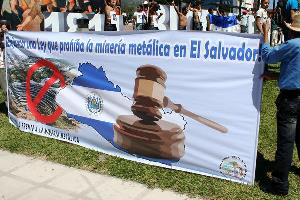
Anti-minng campaign, El Salvador / Photo credit: laurizza / Foter / CC BY

Anti-minng campaign, El Salvador / Photo credit: laurizza / Foter / CC BY

One of today’s buzzwords – “responsible mining” – is like most others, so vague that it means whatever its user wants.

  • For most corporate executives and many government officials, mining is responsible if it aims to maximize economic growth and economic profits, because mainstream economic theory tells us that that will make everyone better off in the most efficient way.  In this view, the benefits multiply and trickle down to the poor.  In terms of environmental impact, some proponents of this view argue that as a country grows in economic terms, certain environmental pollutants decrease.  The governments of Guatemala and Honduras, which have increased the number of licenses granted to global mining corporations, seem to embrace this definition.
  • Some corporations cast the definition of “responsible mining” within their concept of “corporate responsibility.”  Typically, such companies do not change the production process itself, but rather commit to using some profits to do something “good.”  In the Philippines, for instance, Australian-headquartered OceanaGold plants trees near its mine and contributes to medical missions and community programs.
  • Yet another definition of “responsible mining” focuses on increasing the portion of the economic and financial benefits of mining that accrue to the Southern “host” country versus to the foreign mining entity.  This typically centers on increasing the taxes levied on the mining companies.  A more “progressive” version of this approach emphasizes how much of the funds stay on a local versus national level within the host country.
  • The ideal – and probably least common – definition of “responsible mining” involves a comprehensive assessment of long-term economic, social, and environmental costs and benefits.  This requires the free, prior, and informed consent of local communities before corporations influence communities or officials with social “contributions.”  Environmentally, it involves careful assessment – based on full information by an objective party – of the impact of the mining, including all chemicals used in the mining process, all toxins released, and the broader environmental impacts and risks.

The ideal definition may sound like pie in the sky, but it is not.  Case in point: The government of El Salvador has not issued new mining licenses since 2008, primarily because a growing citizens’ movement has rallied around protecting the affected watershed, which supplies the majority of the country and is already severely polluted.  So too did the Salvadoran government demand a Strategic Environmental Review, overseen by both the Ministry of the Environment and the Ministry of the Economy, to try to weigh  the economic benefits (wages, taxes, etc.) during a mine’s limited life against social and environmental impacts.  Indeed, in El Salvador, as in the Philippines, grassroots communities and some key elected officials are trying to give deeper meaning to the definition of “responsible mining,” so that it is no longer merely a buzzword.

Dr. Broad is a professor in American University’s School of International Service.

Mexico: Peña Nieto’s Big Push

By CLALS Staff

President Enrique Peña Nieto / Photo credit: Eneas / Foter / CC BY

President Enrique Peña Nieto / Photo credit: Eneas / Foter / CC BY

President Peña Nieto’s reformist agenda wins kudos from the business and financial class, but both a recalcitrant leftist opposition and mass organizations previously aligned with his party are taking to the streets in protest – raising serious doubts about its prospects.  In his first state of the nation speech, delivered last week, Peña Nieto pledged to plow ahead with “transformational” reforms, giving flesh to the PRI’s slogan that it is Transformando a México. In education, he’s proposed a more rigorous system for hiring, evaluating, promoting and firing teachers who have resisted change despite evidence that the current system is not equipping Mexican youth for employment.  In the energy sector, he wants to open up the oil and gas industry to foreign investment, an idea that was strictly off-limits in the past even though lagging investment has caused production in Mexico’s leading export industry to decline steadily.  He is also pursuing tax reforms that, although watered down when announced on Sunday, entail political risk and, tellingly, raise marginal rates by 2 percent for higher earners and impose a levy on capital gains.  In June, he picked a fight with powerful business leaders over control of the country’s telecommunications industry, an oligopolistic structure that imposes excess costs on consumers and producers alike, diminishing Mexico’s economic competitiveness.

The teachers unions, whose symbiosis with the PRI in the past ensured cooperation, mobilized huge protests in Mexico City, forcing Peña Nieto to delay his speech by a day and then causing monstrous traffic jams during it.  The President cloaked his announcement of the energy reform in nationalistic rhetoric, and PEMEX, the oil company, followed it up with predictions of positive results – huge increases in oil investment and production that purportedly would help to create 500,000 new oil-sector jobs by 2018 and 2.5 million by 2025. But opposition to the reform has been strident, and tens of thousands filled the Zócalo on Sunday to protest it as a “covert privatization.”  Opposition leaders are already pledging demonstrations to oppose taxes, though the likelihood of this may be diminished because the long rumored reform unexpectedly left untouched the value-added tax exemption for food and medicines, which would have been a major rallying point for the Left.

Some Mexican commentators say Peña Nieto’s leadership is already losing its shine and that his Pacto por México, the loose coalition he engineered in Congress, is at risk of falling apart.  He prevailed in his congressional showdown over the long overdue education reforms, but success in transforming the underperforming education sector appears uncertain, as the teachers are threatening more protests.  The arrest of narco bosses from the Gulf Cartel and the Zetas have not given him a bounce on the security front; indeed, Mexican press reports indicate that kidnapping, extortion and other crimes that more directly affect citizens’ lives continue to rise. Further complicating Peña Nieto’s life is news last month that the economy is slowing down.  The first contraction in four years has forced the government to cut its 2013 GDP growth forecast in half, to 1.8 percent.  The administration will undoubtedly point to data showing that PEMEX production has fallen by about a quarter in the past decade because of low investment, and will emphasize that this makes modernization of the oil sector all the more imperative.  But Mexicans have heard promises before, during NAFTA debates and since, that economic reforms and greater openness to trade and investment will massively improve their lives.  Whether there is any fuel left in that rhetorical tank remains to be seen.

Egypt Policy – Latin America Style

By Fulton Armstrong

U.S. Department of State Headquarters | Wikimedia Commons

U.S. Department of State Headquarters | Wikimedia Commons

We who follow U.S. policy in Latin America shouldn’t be surprised to see Washington’s policy toward Egypt drift from support for democracy to support for the status quo ante.  President Obama’s 2009 speech in Cairo reaching out to Muslims – calling for an end to the “cycle of suspicion and discord” – came just six weeks after he told the Summit of the Americas that he wanted “an equal partnership” with the hemisphere and sought “a new beginning with Cuba.”  When 30-year President Hosni Mubarak stepped down in 2011, the Administration eagerly linked Egypt to the “Arab Spring” and, despite concerns about the Muslim Brotherhood roots of Egypt’s first democratically elected president, tried to make the relationship with Mohamad Morsi work.  Over time, however, Morsi – successor to an undemocratic regime in an undemocratic country with no democratic traditions and no democratic institutions – was accused of being undemocratic.  The estrangement grew so deep that the Obama Administration still cannot bring itself to call the July 3 coup against Morsi a coup, and Secretary of State Kerry saw fit to refer to the military takeover as “restoring democracy” even as the Army was firing on unarmed crowds.

To Latin America watchers, this chronology is reminiscent of U.S. policy in our own hemisphere.  The case of Honduran President Mel Zelaya is clearest.  The Honduran military removed Zelaya– in his pajamas – from his home and country in June 2009 for proposing a referendum that, the putschists claimed, violated the Honduran constitution.  The Obama Administration’s nominee to be Assistant Secretary of State at the time, Arturo Valenzuela, testified that the action was, in his opinion, a coup, but the State Department never categorized it as such and, despite rhetoric committing to restore Zelaya, the Administration let the interim regime consolidate power.  Amidst a state of emergency, media closures, and other irregularities, the State Department also gave its blessing to elections held several months later.  Zelaya’s rhetoric before the coup was caustic, and he squandered political capital in needless confrontations, but he never threatened Honduran “democracy” or violated human rights as the interim regime did.  Nor did he preside over a steady deterioration of security, civil rights, and the economy as the current government has.  Yet, ironically, the Obama Administration has never set the history of the coup straight – just as the Bush Administration never rectified its disastrous support for the 2002 coup against Chávez in Venezuela.

The excesses of some leaders, like Zelaya and Chávez, make supporting or turning a blind eye to a coup very tempting.  But Washington has also shelved its moral outrage when much less provocative presidents – democratically elected but progressive-leaning – have been removed from power, if not with a gun at their head.  The “constitutional coup” against President Lugo in Paraguay last year is the most recent example.  The gap between U.S. rhetoric about democracy, rule of law, and due process on the one hand and its tangible actions on the other has a number of causes. 

  • American “exceptionalism” – the sense that U.S. success gives it a right to judge others and intervene even when national interests are not at stake – sometimes leads Washington to over-extend and make rash decisions.
  • Eagerness to act quickly – to appear decisive – often makes policymakers confuse the symptoms of problems, which seem amenable to quick solutions, and the essence of the problems themselves.  Policies address the short-term while neglecting the strategic.
  • Washington lobbies – the pro-Israel lobby in the case of any matter in the Middle East and the Cuban-American lobby in Latin America – are able to dominate U.S. perceptions of events, pushing administrations into a corner. 
  • Administrations embarrass themselves when they throw around words like “Arab Spring” and “democracy.”  When the inevitable bumps in the road occur, they act betrayed rather than admit they got carried away by wishful thinking. 
  • Double-standards –the expectation that progressives succeeding authoritarians will be perfectly democratic and flawlessly inclusive – make it difficult for Washington to avoid prematurely throwing a potential ally overboard. 
  • Another factor, and potentially the most important, is that the U.S. government builds deeper relationships with elites and the security services that do their bidding than with any other forces.  During the Bush Administration’s “War on Terror,” the U.S. Government entrusted Egypt with extremely sensitive operations, including the interrogation (and alleged torture) of suspected terrorists, and Washington relies on Latin American security services to prosecute the “war on drugs.” 

When U.S. interagency committees discuss how to respond to crises, the departments and agencies with the deepest ties in the country under discussion claim more influence over events there than anyone else – and win most policy debates.  The problem is that their ties are mostly to political and economic elites – or the military and intelligence services that back them – which are rarely agents of change.  Washington winds up allied with forces that suppress the new voices essential for the “springs” and “democracies” that it says it wants.


Will the U.S. Support Controls on Security Contractors in Latin America?

Photo by: Charles Atkeison / flickr / Creative Commons

Photo by: Charles Atkeison / flickr / Creative Commons

An upcoming conference in Switzerland will test U.S. willingness to make good on its rhetorical support for greater control over private contractors involved in wars or similar circumstances.  The “Montreux plus five” conference in December will discuss implementation of the Montreux Document, which lays out legal obligations and “best practices” for countries that hire “Private Military and Security Companies” (PMSCs) during armed conflict.  The process emerged in 2008 to reiterate state responsibilities after contractors were found to be deeply involved in incidents in Iraq – including the torture of detainees at Abu Ghraib prison and a confrontation at Nissour Square in which 17 civilians were killed.  The United States, which participated in discussions of the Document and endorsed it, has been developing its own “standards” based on it.

Although the PMSCs in Iraq and Afghanistan – and their alleged involvement in human rights abuses – are most widely known, security contractors are deeply engaged in U.S. efforts in Latin America related to the “war on drugs.”  In the 2005-2009 period, DynCorp, Lockheed Martin, Raytheon, ITT, and ARINC collectively received counternarcotics contracts in Latin America worth a total of $1.8 billion.  The contracts include provision of intelligence, surveillance, reconnaissance, information technology, and communications equipment.  Lockheed Martin received contracts for training, equipment, and other services in Colombia and Mexico. Yet the majority (Democratic) staff of the subcommittee on contracting oversight of the U.S. Senate Committee on Homeland Security and Governmental Affairs concluded in 2010 that neither the State Department nor the Department of Defense had adequate systems to track the implementation of counternarcotics contracts.  Referring to contract and accounting errors, the Bureau of International Narcotics and Law Enforcement Affairs told the subcommittee chairman that it “does not … maintain discrete records of such occurrences since these challenges routinely occur at the embassies.”

The subcommittee’s focus was on contracting anomalies, but publicly acknowledged incidents – such as DynCorp’s violation of guidelines governing coca eradication in Colombia – suggest oversight over operations is also lacking.  In Colombia, for example, two cases of rape of a minor involving U.S. contractors were reported yet remain uninvestigated, and in Mexico a contractor appears to have been involved in torture training.

PMSCs often carry out their work within the dark interstices of sensitive operations – beyond the government’s immediate operational control but functioning with its imprimatur and expecting its protection when things go wrong.  The U.S. Senate’s acknowledgement of the need for better management and oversight over them has not driven significant reforms yet.  If the Iraq and Afghanistan experiences are any guide, problems with the monitoring of expenditures are the tip of the iceberg.  Security contractors tend to run rough over human rights, and they are often a source of tensions with both governments and the population in host countries.  The use of security contractors without effective monitoring is a source of diplomatic tension within the region as well.  DynCorp’s aerial eradication operations, for example, provoked Ecuador to file suit against Colombia in the International Court of Justice, arguing that Colombia dispersed toxic herbicides into Ecuadoran territory, damaging human health, property and the environment.  The two countries recently resolved the dispute, but the case illustrates the risk of outsourcing sensitive operations to contractors without careful monitoring.

What’s Up with Cuba Policy?

By William M. LeoGrande

Photo by Rinaldo W. / Flickr / Creative Commons

Photo by Rinaldo W. / Flickr / Creative Commons

A little over six months into President Obama’s second term, the administration is giving hints that something is afoot in relations with Cuba.  Back in 1994, Fidel Castro told a group of former U.S. ambassadors that he needed a two-term U.S. president to normalize relations with Cuba because no first-term president would have the political courage to do it.  Could Barack Obama be that president?  Efforts to engage with Cuba during his first term were frozen after the 2009 arrest of USAID subcontractor Alan Gross.  Despite evidence that Gross had violated Cuban law, the administration insisted that Gross had done nothing improper and demanded that he be freed immediately.  When he wasn’t, the U.S. position hardened: there would be no improvement in relations with Cuba, not even on issues of mutual interest, until Gross was released.  Gross is still in jail four years later; the non-negotiable demand strategy failed utterly.

The second Obama administration appears to be trying something new.  In May, the Department of Justice dropped its insistence that René González, a member of the “Cuban Five,” serve out his probation in Miami rather than Cuba.  Shortly thereafter, Cuba granted Alan Gross’ request to be examined by his own doctor.  In late May, Josefina Vidal, the Cuban Foreign Ministry official in charge of relations with the United States, met in Washington with Assistant Secretary of State for Western Hemisphere Affairs Roberta Jacobson – the highest-level U.S. official to meet with a Cuban diplomat in several years. After this reportedly constructive encounter, the State Department announced the resumption of bilateral talks on immigration (suspended since January 2011), and on re-establishing direct postal service. Working-level diplomats have resolved most points of disagreement on a postal accord, a Coast Guard search and rescue accord, and an oil spill containment protocol – although the U.S. side is loath to use the word “agreement,” lest it stir up trouble with a small but loud contingent in Congress.

Although U.S. policy is no longer completely paralyzed by the predicament of Alan Gross, it remains tentative, cautious, and incremental – far from the bold stroke that Fidel Castro was hoping for from a second-term president.  In May, the State Department again listed Cuba as a “state sponsor of terrorism” in its annual report, although the rationale read more like a justification for removing Cuba from the list—a move reportedly under discussion by the Obama team.  When the administration sent its FY2014 budget request to Capitol Hill, it again requested $20 million for “democracy promotion” in Cuba, continuing programs like the one that got Alan Gross arrested.  Radio and TV Martí, which cost U.S. taxpayers $28 million a year, continue to beam programs below Voice of America standards to a shrinking radio audience and non-existent TV viewers.  (Cubans call TV Martí “la TV que no se ve” —No-See TV.)  If Obama had the mettle to make the bold stroke, these provocative, ineffectual programs  would be on the chopping block in tough budgetary times.  More positively, the president could take the initiative by appointing a special envoy to talk turkey with Havana, and he could promote a U.S. policy debate on Cuba that’s long overdue.  Incrementalism will only take us so far.  Real change in U.S.-Cuban relations requires vision and courage – qualities Obama displayed on comprehensive health care and immigration reform.  After all, as Lyndon Johnson once said, “What the hell’s the presidency for?”

Dr. LeoGrande is Professor of Government in the School of Public Affairs at American University.

Resource Extraction and Ecuador’s Fragile Ecological Sustainability

By Peter Redvers-Lee

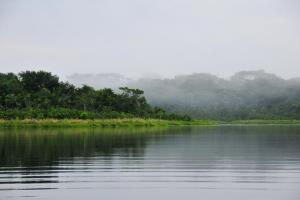
Yasuní National Park /Photo credit: joshbousel / Foter / CC BY-NC-SA

Yasuní National Park /Photo credit: joshbousel / Foter / CC BY-NC-SA

The world has failed Ecuador again.  That, at least, is the sentiment of Ecuador’s president, Rafael Correa, explaining his decision to discontinue an innovative environmental plan to save sections of the Yasuní National Park, a UNESCO Biosphere Reserve on the border with Peru.  The 2010 plan was for Ecuador to refrain from granting oil concessions in the park if it could raise $3.6 billion from other countries and international organizations.  To date, only $13 million has been raised.  Correa’s about-face comes a few months after another environmental U-turn.  In June, Ecuador’s legislature passed a new mining law that, while not garnering new friends among large mining companies, rolls back taxes and other regulations to favor smaller and medium-size mining ventures.

Both developments heighten the likelihood of further environmental degradation in Ecuador.  Increased mining and drilling is likely to have an immediate and negative impact on the sustainability of local ecosystems upon which communities depend.  The rivers that make up the Mataje-Cayapas watershed have been an important means of livelihood for the local indigenous and African-descendent communities that dot the river banks from the mangroves on the coast to the foothills of the Andes.  Environmental degradation accelerated in the 1990s, when the first major roads reached the area and mining, logging, shrimp farming and other industries moved in.  Mercury, used in mining, is already present at unacceptable levels in populations of blue crabs in the lower reaches of the watershed, where the crab forms a staple in local diets.  The destruction of the mangrove forests to make way for shrimp ponds has increased.  The roads allowed for more efficient logging, and increasing numbers of internal migrants flooded the area.  Once the Chocó forest was cleared, palm plantations took root, further displacing African-descendent communities that made up the bulk of the local inhabitants.  The African palm, used for biofuels and other purposes, often entails liberal use of toxic chemicals.

The failure of the Yasuní proposal and Ecuador’s new mining laws have ominous implications for Ecuador and, perhaps, beyond.  Toxins in the Mataje-Cayapas watershed have contaminated the water supply on which thousands of mainly African-descendent communities rely for their livelihoods.  The recent setbacks will also accelerate commercial exploitation of the watershed for gold, exposing it to even more toxic chemicals, and the ever-increasing palm plantations will add to the existing brew of fertilizers, pesticides, and fungicides sprayed liberally on the crop.  It’s unclear whether the world “failed” Ecuador or that President Correa’s proposal – protecting preserves in return for cash – is not viable.  Skepticism that the $3.6 billion would be put to good use, rather than for politically gratifying short-term programs, is also reasonable.  Either way, the country’s long-running pattern of resource extraction and environmental destruction continues in one of the most diverse ecological spots on earth.  And now Yasuní faces a similar fate.

Peter Redvers-Lee is CLALS Faculty Affiliate and Professorial Lecturer in American University’s School of International Service.  He has worked in the Mataje-Cayapas watershed since 2004.