Latin America’s Emerging Burden of Chronic Non-Communicable Diseases

By Fernando De Maio*

Photo credit: FLICKR.com/diapositivasmentales / Foter.com / CC BY

Photo credit: FLICKR.com/diapositivasmentales / Foter.com / CC BY

Despite significant improvements over the past 30 years in some of the most crucial health indicators – including increases in life expectancy and decreases in infant mortality – Latin America faces an impending epidemic of chronic non-communicable diseases such as heart disease, stroke, cancer, chronic respiratory diseases and diabetes.  The region has avoided the worst effects of the HIV/AIDS epidemic.  Brazil, for example, is now widely accepted by health policy analysts as offering the world valuable lessons for combating the spread of HIV and in ensuring access to life-saving antiretroviral medicine.  But chronic non-communicable diseases are now stretching under-funded and fragmented health care systems, revealing deep lines of social inequality.

The World Health Organization (WHO) has warned of an impending epidemic of such ailments, which are already the leading causes of death in all areas of the world except for sub-Saharan Africa.  In Latin America, chronic diseases account for more than 60 percent of deaths, with some variance between countries (more than 70 percent in Uruguay, more than 60 percent in Argentina and Chile, but less than 40 percent in Bolivia and Paraguay).  The latest data indicate that this burden is growing across the region, driven by increases in some of the most important risk factors (physical inactivity and obesity in particular).  Surveys in the region allow us to disaggregate national data, revealing the social inequalities underlying the problem.

In Argentina, we have used the National Risk Factor Surveys from 2005 and 2009 to examine how social gradients are changing:

  • Physical inactivity – an important risk factor for cardiovascular disease – has increased substantially (from 46 to 55 percent).  The further down we go in the socioeconomic hierarchy, the more this important risk factor seems to be increasing.
  • Obesity has also increased in this four-year period (from 14 to 18 percent), with a steepening social gradient for women.
  • Data on diabetes from these surveys are mixed.  The percentage of the adult population told they have diabetes or high blood sugar has risen (8.4 to 9.6 percent), but experts believe the increase reflects both increases in diabetes in the population and an in access to health care resulting in more cases being detected.
  • Some good news may be found in preventive cancer screening: rates of mammograms and pap smears have increased, and social gradients for mammograms are decreasing, raising the hope of diminished inequalities in cancer mortality in the future.

The WHO’s Commission on the Social Determinants of Health recently concluded that “reducing health inequalities is… an ethical imperative.  Social injustice is killing people on a grand scale.”  Among its recommendations is a call for the routine monitoring of health inequalities.  The growing body of data documents the linkage between inequality and the occurrence of chronic non-communicable diseases – demonstrating that, fundamentally, it is a question of social justice.  Social inequalities in physical inactivity, obesity, diabetes – and, crucially, tobacco consumption – are not natural but socially and politically produced.  Empirical research in the coming years will need not only to document the rise of chronic non-communicable diseases in aggregate terms, but also to closely monitor the inequalities embedded in national figures.  Policy analysis will likewise need to examine not just the national-level effects of new initiatives, such as new taxes on tobacco products or new standards for salt consumption, but, at a disaggregated level of analysis, examine how new initiatives affect people across the socioeconomic spectrum.

* Dr. De Maio is a professor in the Department of Sociology at DePaul University.
 

Revitalization of the OAS: More Than an Act of Congress

By Carlos Portales*

OAS logoU.S. Congressional passage in late September of the “Organization of American States Revitalization and Reform Act of 2013” could either help revitalize the troubled body or contribute to its irrelevance. By directing the U.S. Secretary of State to develop and drive OAS reform options, the bill seeks to give much higher priority in the OAS and Summit of the Americas to promoting and consolidating democracy in the hemisphere – “with due respect for the principle of nonintervention” – while recognizing that “key OAS strengths” are also in strengthening peace and security, assisting and monitoring elections, and fostering economic growth. Reducing “mandates” – ongoing programs that tend to get institutionalized – is another priority. The new law also requires Secretary Kerry to devise a strategy for a new fee structure in which no member state would pay more than 50 percent of OAS’s assessed yearly fees. (The U.S. Library of Congress reports that the United States, the organization’s largest donor, contributed an estimated $67.5 million in fiscal year 2012 – nearly 43 percent of the total 2012 budget.)

The reforms parallel ideas presented by OAS Secretary General Insulza in his “Strategic Vision of the OAS” on December 2011 (updated in March 2013) striving for concentration on four main pillars: democracy and conflict resolution; human rights; development (in association with the Inter-American Development Bank); and security (mainly against drugs and organized crime). He also advocated limiting a single state contribution to 49 percent without reducing the OAS’s total budget. The Secretary General embraced similar reforms when the legislation was first introduced by then-Senator Kerry in the previous Congress.

Agreement that the OAS needs reform is nearly universal, but any strategic transformation will have to take into account important developments among the Latin American international organizations. The OAS handily accommodated the creation of subregional organizations such as SICA and CARICOM in the past.  But new bodies – such as UNASUR, CELAC and ALBA – have posed new challenges to the organization’s relevance and effectiveness. Differences among the organizations have emerged over trade, democracy (different value attributed to the independence of powers and to press freedom, as well as of handling of crises in Venezuela, Honduras, and Paraguay), security (withdrawal of five countries from the Inter-American Treaty of Reciprocal Assistance), the strategy against drugs, and relations with the United States.  The organizations have also created new arenas for leaders to meet, at times taxing governments’ ability to keep up. From 1990 to 2012 there have been 272 Latin American regional and subregional summits, including eight Summits of the Americas.  When Secretary Kerry delivers his plan, it will be difficult for him to strike a balance between bringing the OAS more in line with Washington priorities, as laid out in the legislation, and seeking a bigger tent that addresses some of the concerns that gave rise to the plethora of competing organizations.

*Carlos Portales is the Director of the Program on International Organizations, Law and Diplomacy at WCL, American University. He was Ambassador of Chile to the OAS between 1997 to 2000.”

Colombia: President Santos’s Challenges

By Maribel Vasquez

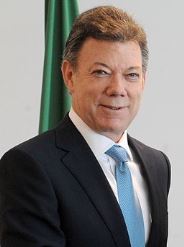
President Santos Calderón / Photo credit: Agência Brasil, Creative Commons

President Santos Calderón / Photo credit: Agência Brasil, Creative Commons License

Colombian President Juan Manuel Santos has yet to announce whether he will seek a second four-year term in May, but with the November deadline fast approaching for him to declare his candidacy, many Colombians are expressing dissatisfaction with his performance. Three years after taking office, and after a protracted honeymoon period, Santos’s approval ratings dropped to a dismal 21 percent several weeks ago. (A more recent poll surged to 41 percent but the rollercoaster ride appears likely to continue.) Colombia has experienced a wave of strikes and protests – perhaps reflecting a phenomenon evident from Brazil to Chile to Peru by which popular sentiment nosedives despite steady economic growth because much of the population is left out and institutions fail to respond to needs. The Santos administration has governed more democratically than his predecessor and shown greater commitment to the rule of law and accountability. Unlike the Clintonian dictum that “It’s the economy, stupid,” Colombia’s long-standing adage has been that “La economía va bien, el país va mal.”

The stalled peace talks between the Colombian government and the Revolutionary Armed Forces of Colombia (FARC) are also to blame for Santos’s dwindling public support. On October 13th, the 15th round of negotiations concluded in Havana without visible progress towards an agreement. (Talks are set to resume next week.) The agenda has six major points agreed to by both sides: land reform, political participation, disarmament, illicit drugs, rights of the victims, and implementation of an eventual peace accord. To date, agreement has been reached on only land reform and rural development. A number of thorny issues persist, including the FARC’s demand that a constituent assembly be convened to incorporate the peace deals into the country’s constitution – which the government has rejected.  In the latest development, the government also turned down the FARC’s call to have civil rights activist Reverend Jesse Jackson act as mediator in the release of Kevin Scott Sutay, a former U.S. marine abducted by the FARC earlier this year. Criticism of Santos’s handling of the talks is due in part to perennial public concern that the FARC is stalling the peace talks to regroup and rebuild its capabilities.

President Santos has staked his political legacy on ending Latin America’s longest-running armed conflict. Success or failure of the peace talks will define his presidency for many Colombians, and failure to reach an accord would cast a cloud over his political future. While he has talked tough – saying FARC stalling is wearing out the government and the Colombian people’s patience – President Santos appears in every bit of a hurry to see these negotiations come to a conclusion before the end of the year. Former President Alvaro Uribe and his loyalists in the Centro Democrático (CD) have already blasted what they claim is excessive leniency on the President’s part.  Santos is in a bind: if he rushes the peace talks, he risks making too many concessions and playing into the Uribistas’ hand, while canceling the talks would strip him of the desired distinction of being Colombia’s peace president. The easy road to reelection – effective conclusion of the peace process and greater responsiveness to the country’s widespread malaise – seems remote.  A strong opposition candidate has yet to emerge, however, giving Santos time to rebuild public support. CD frontrunner Francisco Santos’s recent threat to leave the party hints at a split within Uribismo.  The failure of an organized opposition may be the only advantage Santos has at the moment.

Venezuela: The True Scope of Chávez’s Legacy

By Andrés Serbin and Andrei Serbin Pont*

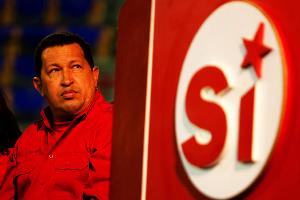
Hugo Chávez / Photo credit: ¡Que comunismo! / Foter / CC BY-NC-SA

Hugo Chávez / Photo credit: ¡Que comunismo! / Foter / CC BY-NC-SA

Chávez’s legacy for Venezuela goes well beyond the Bolivarian government he left in Nicolás Maduro’s hands.  Three conflicts overshadow the country’s future and contribute to many uncertainties:

  • The first, and most urgent, is the standoff between the two main factions of the ruling PSUV over how to overcome the current economic crisis, characterized by the IMF as “difficult and probably unsustainable.”  The pragmatists focus on making currency controls more flexible, and the ideologues are oriented toward increasing state control over the economy.
  • The internal party conflict between President Maduro and his supporters, committed to building the “socialismo del siglo XXI,” on the one hand, and the pragmatic sector of the governmental party (pragmatic in the sense of ensuring their businesses operate without interruption) led by the President of the General Assembly, former army officer Diosdado Cabello, with the support of high ranking military and businessmen who benefited from the “revolutionary” process through legal and illegal business.
  • The conflict between the PSUV, wielding the power of the government, and the opposition, which it accuses of being an “enemy of the revolution” linked to the “external enemies” (basically the United States) who want to derail the revolutionary process.

The dire state of the economy is aggravating each of these conflicts.  By the end of September, according to government data, inflation rates hit 4.4 percent per month, and rose to 38.7 percent in 2013 so far.  The opposition estimates an annual inflation rate of 49.4 percent—the highest since 1997.  According to the 2012 UN Economic Commission for Latin America and the Caribbean (ECLAC) report, an increasing number of Venezuelans are living under the poverty line – with a 29.9 percent increase in the poverty rate last year – with income no longer enough to fulfill basic needs.  Shortages of food and other necessities are severe; the depreciation of the Bolívar has accelerated in the currency black market, and the Central Bank is printing paper currency in an attempt to cope with the financial deficit.  Within this context, the struggle between the pragmatic and the ideological fronts of the PSUV only contributes to the chaos.

Caracas’s international relations are also a factor in the internal tensions and are fueling concerns within the armed forces, according to NGOs and others with good contacts in the military.  The economic crisis has affected the government’s ability to continue its “petro diplomacy” – diminishing its influence – and the opposition has continued persistent accusations of inadequate management of the relationship with Guyana and the claim over the Essequibo, contested territory along their common border.  In addition, a recent incident involving a maritime exploration ship of Panamanian flag with a U.S. crew detained by the Venezuelan Navy in waters under dispute with Guyana aggravated the current national and international political scenario.  The government usually resorts to nationalist appeals, but criticism of its handling of these problems is likely to grow.

The core issue in all of these situations continues to be the potential scenario of a social outbreak driven by the shortages, rising inflation, the broad sense of insecurity, and perceptions of blatant corruption in government.  These frustrations appear to cut across all sectors of Venezuelan society regardless of ideological identity.  Given the historical reluctance of the armed forces to intervene (particularly since the experience of the “Caracazo” of 1989), most observers still wonder when and if a social explosion will move them to action.  The economic and social crises, the internal tensions in the government, and the polarization with the opposition, along with the possibilities of an international incident, may add up to enough to move the military, perhaps with the support of several state governors, to act, but determining that breaking point – the Venezuela analyst’s greatest challenge – remains elusive.

* Andrés Serbin and Andrei Serbin Pontare members of the analysis team of the Coordinadora Regional de Investigaciones Económicas y Sociales (CRIES), a Latin-American think tank.

El Salvador: Memory, the Persistent Discomfort

By Héctor Silva Ávalos

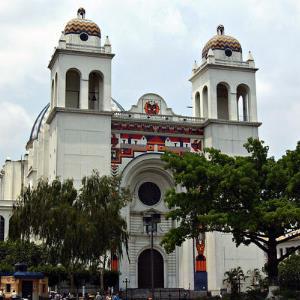
Mural that was removed from the Metropolitan Cathedral under Archbishop Escobar Alas / Photo credit: J. Stephen Conn / Foter / CC BY-NC

Mural that was removed from the Metropolitan Cathedral under Archbishop Escobar Alas / Photo credit: J. Stephen Conn / Foter / CC BY-NC

The sudden closure of the Legal Aid Service – Tutela Legal – of the Archbishop of San Salvador appears to be a massive blow to efforts to hold human rights violators and war criminals from the civil war accountable for their deeds.  Without previous notice or warrant, workers arrived at their offices on September 30 to find new locks on the doors and private guards blocking the entrance.  That same day some of the workers claimed to have discovered evidence indicating that Monsignor José Luis Escobar Alas, the Archbishop, had long before decided to close Tutela.  The office was opened in 1982 by Mons. Arturo Rivera Damas to fulfill a project designed by his predecessor, Mons. Óscar Arnulfo Romero, the Archbishop killed two years earlier during mass by a death squad and who is now under consideration for sainthood by the Vatican.  It holds one of the most detailed archives on the repression, crimes and human rights violations committed during the Salvadoran war, mainly by state-sponsored agents.

Mons. Escobar Alas has surprised observers in the past.  In late 2011, he ordered the removal of a mural by a popular Salvadoran artist from the Metropolitan Cathedral without any explanation to the artist or to the church’s large congregation.  The mural commemorated the earliest attempts at a negotiated settlement to the war.  Facing an outcry, Escobar Alas claimed the mural was Church property and that the Church was entitled to do with it as it pleased.  The same tone was evident after the Tutela closing as protests came not just from a good number of Catholics but from the Ombudsman’s office, the President of the Republic and 258 US and Salvadoran scholars who ran an ad in a major newspaper.  The Archbishop and his spokesmen provided at least three different versions of the event, saying alternately that Tutela was closed because it had already served the purpose for which it was created in the war years; it was closed to give its spaces to an ad hoc commission (with an unclear mandate and authorities); and that the Church had encountered financial wrongdoings in Tutela so grave that it had to close.

The closure happened at a time of important progress in human rights accountability.  At the center of it all was access to Tutela’s archives, some 50,000 files about the infamous 1980s – potentially crucial evidence in ongoing or upcoming judicial processes that Salvadoran elites have long tried to keep under wraps.  For the first time in a decade, last month the Attorney General’s office made public its intention to open a special unit committed to review war massacres such as the one in El Mozote, where some 1,000 peasants were killed by a U.S.-trained elite battalion.  Also, for the first time since the early post-war period, an independent Constitutional Chamber of the Supreme Court of Justice agreed to hold a hearing on the admissibility of a case under the Amnesty Law, the legal provision that has prevented many cases from being brought to justice.  And for the first time, there is a real chance for a Spanish court to address the murder of six Jesuit priests and their two aides after one of the accused in that massacre, a colonel, was convicted and imprisoned in a U.S. jail pending extradition to Madrid.  In all of these legal cases, the files held by Tutela Legal would provide crucial documentation to prosecutors.  The only credible explanation for the closing of the service is that pressure was brought to bear on the Archbishop by interests that wish to block access to this important body of evidence in the event that they are unable to prevent trials from opening. 

The ad hoc commission that the Archbishop said will be formed will include members with credibility – including Father José María Tojeira, former Jesuit envoy for Central America, and Mons. Jesús Delgado, Archbishop Romero´s biographer – and may hold some promise.  But the vagueness about its authority and technical questions, including the legal admissibility of Tutela files as the chain of custody is broken, raise serious doubts.  Whatever happens, the many Salvadorans who believe in the healing power of memory – and accountability – will need to remain constantly vigilant.  The same memory has been a persistent discomfort to some Salvadoran elites, who have long thwarted such efforts.


Argentina’s Mid-term Elections: The Beginning of the End for Cristina?

By Santiago Anria and Federico Fuchs *

Cristina Fernández mural Photo credit: CateIncBA / Foter / CC BY-NC-ND

Cristina Fernández mural Photo credit: CateIncBA / Foter / CC BY-NC-ND

Rising inflation, loss of confidence by the private sector, and lack of access to international credit markets make victory in Argentina’s mid-term elections on October 27 especially important for President Cristina Fernández – or else she will face the prospect of two years as a lame duck.  Her governing Front for Victory (FPV) faction of the Justicialist Party (PJ) seeks to protect its legislative majority.  (Half the seats of the lower chamber and a third of those in the upper chamber are at stake.)  Based on the results of the Open, Simultaneous and Obligatory Primaries (PASO) held on August 11, the FPV appears likely to lose some seats but still maintain a slight majority, considering that a number of the seats in dispute in the lower chamber correspond to districts in which it fared poorly in the 2009 elections.  Before her unexpected surgery last week, Fernández had been central to the electoral campaign, hand-picking and endorsing Lomas de Zamora Mayor Martín Insaurralde as the first deputy on the FPV’s list.  According to some surveys, previous adjustments to her communications strategy increased her approval ratings, and with her recovery from surgery expected to take a month, there is speculation that the FPV may win some additional “sympathy” votes.

The PASO primaries showed that the FPV lost in key electoral districts, including the city of Buenos Aires, and the provinces of Buenos Aires, Córdoba and Mendoza, but that it continues to be the only political force with national reach.  The opposition remains fragmented, but Sergio Massa, a former government ally and current mayor of Tigre (elected on the FPV ticket), has emerged as the key opponent in Buenos Aires province and as a likely presidential candidate for the 2015 elections.  He may challenge Daniel Scioli, who is the current governor of Buenos Aires and is, at least until now, backed by Fernández as her potential successor despite resistance from some factions within the FPV).  Massa’s Frente Renovador still has limited territorial reach, but he enjoys the support of the mainstream media, a branch of the General Confederation of Labor (CGT), the Church and, perhaps most importantly, a prominent group of mayors in Buenos Aires province.  He is trying to capture a more centrist vote, promising the “end of confrontational politics” and focusing on what he claims are the “real issues” affecting Argentines – corruption, citizen security and crime prevention, and inflation.

The results of the upcoming elections will define the options for the Fernández administration.  If the FPV fails to keep a solid majority in Congress, the issue of constitutional reform that would allow for reelection will be off the table, and Fernández will not be able to run for a third term.  In policy terms, negative results will increase pressure for economic adjustment and pro-business policies. Fernández and her predecessor, deceased husband Néstor Kirchner, have both proven their capacity to revamp their administrations after electoral defeat by defying such pressures and raising the stakes. But with defeat in the polls, and with a diminished force in Congress, it will be harder for her to maintain party discipline as the prospects for 2015 grow bleaker.  A lot also depends on how the opposition fares: a clear winner among them (most likely Massa) will become a clear challenger for 2015 and probably put even greater limits on any government strategy, whereas a still atomized opposition may give Fernández more leeway. The task ahead for the FPV will be to define and support a presidential candidate that can continue the Kirchnerista project. Performing well in the congressional elections will give Fernández more room to define this, or to at least block non-desired candidates.  We may be witnessing the beginning of the end for Cristina, but it is not clear whether any of the opposition candidates can force her to steer the Kirchnerista project in a new direction.  Not even the most plausible contender in the opposition (Massa) or the most likely successor in the FPV (Scioli) seems to have any meaningful change to offer. If both of them represent anything, it is Peronism’s ability to adapt in adverse times to stay in power. But that is nothing new in the history of Peronism.

* Santiago Anria and Federico Fuchs are graduate students in the Department of Political Science at the University of North Carolina at Chapel Hill.

ALBA’s Future: Continuity or Break Down?

By Marcela Torres

ALBA Emblem | public domain

ALBA Emblem | public domain

The death of Hugo Chávez last March and the increasingly severe economic dislocations inside Venezuela have raised serious questions about the sustainability of the Bolivarian Alliance for the Peoples of the Americas (or ALBA).  Born out of an agreement between the Venezuelan and Cuban governments in 2004, the alliance was intended as a response to the U.S. goal of a Free Trade Area of the Americas (FTAA), as well as a vehicle for Chávez to project his Bolivarian vision for Latin American solidarity around a socialist project.  The regional bloc won its first symbolic battle at the Fourth Summit of the Americas in 2005, where Argentina, Brazil, Uruguay, and Paraguay definitively halted negotiations led by U.S. allies to create a single hemispheric free trade area (excluding Cuba, of course).  Over time, ALBA and its oil-based extension, Petrocaribe, have had a significant impact on economies in the region, providing crucial underpinning for presidents who signed on to Chávez’s vision for ideological or pragmatic reasons.  Among the greatest beneficiaries have been the Castro government in Cuba and the Ortega government in Nicaragua, which have received petroleum in exchange for food, in the case of Nicaragua, and doctors and teachers, in the case of Cuba. Ecuador and Bolivia, along with several states in the greater Caribbean, have also become key players in the ALBA network.

Venezuela’s leadership of ALBA, frequently described as “petro diplomacy,” has repeatedly come under fire from the country’s political opposition and from government critics in other ALBA-friendly nations.  The critiques in Venezuela rarely acknowledge the degree to which petro diplomacy has been a recurring feature of that country’s foreign policy, most notably during the governments of Carlos Andrés Pérez in the 1970s and 1980s.  Critics inside Venezuela and beyond frequently accused Chávez of building dependent clientelistic networks with countries desperate for energy resources. However, ALBA activities have transcended ideological divides, a fact demonstrated by Misión Milagro in Colombia, where Cuban doctors indirectly supported by Venezuela provide medical services in conflict zones.  If Chavez’s oil and charisma initially defined ALBA’s possibilities, the alliance has also fostered economic ties and investments among member countries, independent from Venezuela.

Though the election of Nicolás Maduro as Chávez’s successor might appear to guarantee political continuity, lacking Chávez’s charisma, Maduro might not be able to continue Chávez’s level of oil-fueled investment in ALBA.  Public spending in Venezuela continues to increase dramatically, with the fiscal deficit at 9-12 percent, inflation exceeding 40 percent, and the scarcity of dollars contributing to shortages of basic consumer goods.  To sustain its financial backing for ALBA, Maduro will have to stabilize the economy at home lest he lose the  popular legitimacy — no simple challenge.  Following the Twelfth Presidential Summit of ALBA in July, the presidents of Ecuador, Bolivia and Nicaragua joined Maduro in reaffirming their shared commitment to a socialist project in the region and a desire to maintain the international exchanges initiated by Chávez, suggesting that the alliance will not disappear at least in rhetoric in the medium term.  It is possible, however, that Maduro’s leadership will be challenged.  After the airplane in which Bolivian President Evo Morales was traveling was not allowed to land in France and Portugal this summer,  he proposed creating an ALBA army and convening another anti-imperialist summit.  Recently re-elected Rafael Correa of Ecuador has also hinted he might want to lead ALBA.  Without Venezuelan oil and sweeteners like Petrocaribe, it’s hard to see how ALBA will amount to more than a platform for personalistic agendas.


Prospects for U.S.-Latin American Educational Exchange

By Aaron Bell

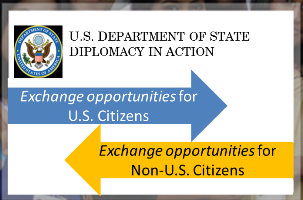
Picture3Regional educational exchange has become an important talking point for U.S. administrations in recent years, but data is still lacking to judge it a success or failure.  In 2011, the Obama administration announced the 100,000 Strong in the Americas initiative, intended to promote a north-south multilateral exchange of 100,000 students by 2020.  The State Department casts it as a means for students in the hemisphere to develop the relationships and skills necessary to meet four contemporary challenges: citizen security, economic opportunity, social inclusion, and environmental sustainability.  The organizations tasked with fulfilling the program’s goals include the National Association for Foreign Student Affairs, whose 60-plus years of advocacy on behalf of international education is based on the belief that “international education leads to a more peaceful world.” Whether such lofty aspirations are possible is subject to some debate, but the more-easily measured effect of 100,000 Strong will become clearer when the Institute of International Education releases its report later this year on international study to and from the United States during the past academic year.

Latin American countries as diverse as Brazil, Ecuador, Mexico and El Salvador have student exchange programs of their own, with the U.S. a leading destination.  Mexico sent the most students to the U.S. of any Latin American nation in 2011-12, but its 13,000 students were only the ninth largest source of international students in the U.S.  The most commonly touted example of U.S.-Latin American exchange is cooperation with the Brazil Scientific Mobility Program, part of the Brazilian government’s plan to send 100,000 students abroad by 2015 to study in key science, technology, engineering and math (STEM) fields.  Responding to the weakness of these fields in many Brazilian universities and to the growing demand for highly qualified graduates in high-tech industries, so far over 7,000 Brazilian students have studied at over 200 U.S. universities and interned at 300 companies, with another estimated 3,900 now in such programs.  Cooperation in education exchange is not limited to high-tech fields.  In Washington, for example, Georgetown University administers leadership training to “disadvantaged communities” and “historically underserved populations” from Latin America through the State Department’s Central America Youth Ambassadors Program and the USAID’s Scholarships for Economic Education and Development (SEED) Program.

While governments like Brazil’s have financed their international study programs, the U.S. has asked the private sector to take the lead in expanding pre-existing programs like Fulbright.  Two years ago, 64,000 Latin American students studied in the U.S., compared to 40,000 U.S. students in Latin America, of which one third stayed only for a summer.  If part of the purpose of 100,000 Strong is to improve regional relations through personal contact and exposure to the region’s sociocultural diversity, educational exchanges will need to flow north-south on a more equal footing.  It remains to be seen if the U.S. private sector is willing to meet such a commitment.  There is also the perennial question of whether educational exchange programs enhance economic development and mobility in Latin America or instead contribute to “brain drain.”  The development of high tech industries in places like Brazil offers a more promising future for returning students, but their absence in poorer regions like Central America is a source of concern.  Finally, 100,000 Strong and similar programs should be judged on how they respond to the largest challenges facing universities throughout the Americas: affordability, providing quality education for students of diverse socioeconomic backgrounds, and in Latin America specifically, making local universities appealing settings for internationally-trained intellectuals and experts.

Brazil-U.S.: Implications of Postponed State Visit

By Luciano Melo

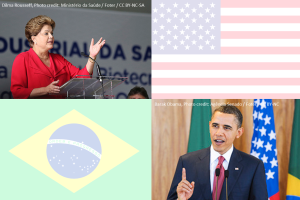
Picture2The postponement of Brazilian President Dilma Rousseff’s state visit to Washington was officially cast as the consequence of the lack of a good explanation for the National Security Agency’s cyber-espionage targeting her, the cabinet, Petrobras (the national oil company), and others.  Although the Brazilian Foreign Ministry issued a letter stating that both countries agreed to the postponement, Dilma’s remarks at the UN General Assembly on September 25 about NSA’s activities were so harsh that it was clear that frustration with the Americans’ widespread spying on Brazilians remains extremely high in Brasilia.

Experts agree that economically the postponement and bilateral tensions hurt the United States more than Brazil.  Contracts worth billions of dollars between Boeing and the Brazilian air force (FAB) are at stake, as are agreements that would favor cooperation in oil exploration and development of biofuels and others that would facilitate the transfer of “sensitive technologies.”  For Brazil, on the other hand, the postponement jeopardizes progress in talks to allow Brazilian citizens to enter the United States without visas – a project long-desired by Brazilians that was on the agenda for the state visit. Some observers in Brazil also speculate that, with the overall Brazilian economic slowdown, Dilma may actually prefer to have Brazilians spending their reais at home, not in the United States.

In a tactical sense, Dilma may have feared that Edward Snowden will leak more damaging information during her visit to the U.S., causing her even greater embarrassment at home and abroad.  In this way, fear and self-protection certainly played a role in her decision. On the other hand, the Brazilian president almost certainly saw domestic political advantages in a good old fight between the Brazilian David and the American Goliath.  She is desperately in need of boosting her popularity after the demonstrations against corruption in the country.  In fact, opinion polls show that public approval of her leadership increased from 45 to 54 percent just since the NSA dustup.

In strategic terms, the postponement fits Brazil’s strategy for claiming its position as a global player – and expressing unhappiness when it feels frustrated.  Dilma already had told President Obama in 2011 that Brazilians would seek a “more balanced relationship” with the United States. The postponement, like the speech at the UN, clearly reflects Brazilians’ desire to be treated better by the United States.  Obama’s speech at the General Assembly the same day, on the other hand, was interpreted by many Brazilians as emphasizing the United States’ traditional role as world policeman – not as the respectful neighbor in a new, multi-polar world order.  In this battle of self-images, Brazil sees itself as one of the global leaders, while the United States sees itself as the mighty one, considering only the European powers as full equals.  The broad base of Brazilians that Dilma is reaching out to is not “anti-American” in sentiment, and indeed wants a robust and respectful U.S.-Brazil relationship.  That is in the interest of both countries, but for this shared objective to be achieved, Washington will need to recalibrate its responses to Brazilian concerns.

Luciano Melo is a PhD candidate in the Department of Government at American University.

Brazilian Evangelicals: Stepping out into the Streets?

By Andrew Johnson

Kneeling in prayer. Photo by: Philip Anema

Kneeling in prayer. Photo by: Philip Anema

There is growing evidence of a potential shift in how Evangelicals engage in social issues in Brazil.  I witnessed their traditional approach recently inside a prison in one of Rio de Janeiro’s gritty peripheral suburbs.  Twelve men stood with their eyes closed and their arms draped around each other’s shoulders while an Evangelical pastor led the group in prayer.  After the final “amèm,” an inmate leader embraced the pastor and thanked him for his visit, to which the pastor responded, “I know that if I am ever in here in the future, you would come to visit me too.”  The pastor’s presence in the cellblock and his subtle pledge of solidarity with the inmates is typical of how Evangelicals have confronted pressing social problems through direct intervention and meeting the immediate needs of individuals in distress. They have been more likely to try to change the prison system by visiting inmates than by voting for a particular candidate or pushing for prison-specific legislation.  Theirs is a politics of presence.  But recently there have been signs that Brazilian Evangelicals’ intentional proximity to the needy is pushing some towards a different and more public strategy: street protest.

Even without an explicit political agenda, Brazilian Evangelicals have proven their ability to mobilize.  In early July, an estimated 2 million Evangelicals participated in the “March for Jesus” in the streets of São Paulo.  They sang hymns and prayed for the future of their country, but they did not use their collective voice to make demands of the government.  In contrast, just two weeks earlier, 65,000 people captured the global media’s attention by marching through the same avenues in São Paulo to protest increased public transportation fares, government corruption, and the fortune being spent on soccer stadiums for the 2014 World Cup.  The street protests gained momentum over the summer, but many Evangelical pastors and leaders were hesitant to offer public support, preferring to continue a strategy that relies on their direct service to the poor, the oppressed, and the imprisoned in their communities.

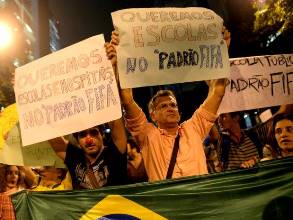
Antonio Carlos Costa and volunteers from Rio de Paz protesting in the streets of Rio de Janeiro asking the government for “FIFA Quality” Hospitals and Schools.  Photo by: Gabriel Telles

Antonio Carlos Costa and volunteers from Rio de Paz protesting in the streets of Rio de Janeiro asking the government for “FIFA Quality” Hospitals and Schools. Photo by: Gabriel Telles

Evangelical support of the street protests in Brazil has been minimal, but not completely absent. Some Evangelicals appear eager to move beyond a “politics of presence” approach and address the social structures and institutions they blame for many of Brazil’s social problems.  In Rio de Janeiro, the human rights NGO Rio de Paz – one of the most visible and vocal groups in the recent protests – is led by an Evangelical pastor, and the bulk of the volunteers are Evangelicals.  One such volunteer, a son of a Pentecostal pastor, joined the masses demanding governmental reform and, to encourage  others from his church to follow his lead,  posted Proverbs 29:4 to his Facebook page: “By justice a king gives a country stability, but those who are greedy for bribes tear it down.” He closed his appeal by writing that “in 30 years I want to tell my children that they live in a more dignified country because their parents didn’t sit at home waiting for a change.”  If that message resonates widely among Brazil’s 40 million Evangelicals, the Brazilian government will confront ever greater pressure from the streets to carry out long overdue reforms of corrupt institutions and practices.

Andrew Johnson is a Research Associate at the Center for Religion and Civic Culture at the University of Southern California and a contributor to a two-year project on Religious Responses to Violence in Latin America carried out by the AU Center for Latin American & Latino Studies with support from the Henry R. Luce Initiative on Religion and International Affairs.