Bolivia’s Constitutional Referendum Marks New Political Era

By Miguel Centellas*
Referendo Morales

Photo Credit: Organo Electoral Plurinacional de Bolivia and Alain Bachellier, respectively / Wikimedia and Flickr / Creative Commons

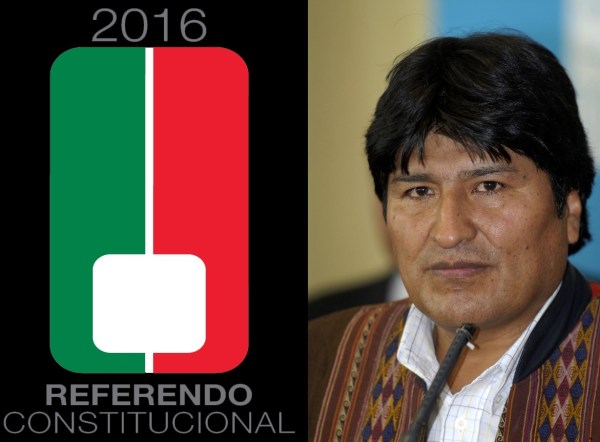
Bolivian voters’ rejection last week of a constitutional amendment to allow an incumbent president to run for a third consecutive term is a setback for President Evo Morales but a step forward for the country.  Both the government and opposition understood the national referendum as a plebiscite on Morales, who is now the longest serving head of state in Bolivian history.  Had the referendum passed, Morales would have been able to run for a fourth five-year term in 2019.  (Because Morales was first elected in 2005, before the new constitution was approved in 2009, the high court decided that he was eligible to run for reelection in 2014.)  During the months leading up to the referendum vote, polls showed a narrow gap between the votes in favor of the amendment and the No votes, with a large number of undecided.

As the final count began to crystalize (the official count is not yet available), it became clear that No won by a slim margin (51.3% to 48.7%).  At first, Morales and members of his government disputed the results, arguing that late-arriving rural ballots would vindicate him.  Later, they claimed opposition fraud and manipulation, including a “dirty” war waged by the opponents and the media.  Several scandals, however, appear to have been the real cause of Morales’s loss.

  • New developments in lingering accusations of fraud committed at the Fondo Indígena, an organization established to support economic, social, and political development of marginalized peoples. Government auditors last year uncovered more than a hundred incomplete or non-existent projects valued at tens of millions of dollars.  The case involved several ex-ministers in Morales’s government and leaders of his MAS party.
  • New allegations of corruption involving Gabriela Zapata Montaño, a romantic liaison of the President in 2006 who is now an executive for a Chinese-owned company (CAMC) that was awarded a large number of no-bid contracts for government development projects. Some sources claim millions of dollars have been misappropriated.  Zapata was arrested shortly after the vote.
  • Accusations that the MAS (and, implicitly, Morales) instigated angry protesters to attack the municipal building in El Alto, Bolivia’s second largest city, killing seven people and injuring many others. The mayor, Soledad Chapetón, and La Paz provincial governor Felix Patzi, a former education minister under Morales, were the first two opposition candidates to win those positions since MAS came to power.  The government dismissed the allegations and suggested that Chapetón orchestrated the violence to make herself a martyr.

The results of the referendum – and, more importantly, the frenzied reactions from Morales and other high-ranking members of his government – make the immediate future appear uncertain.  Morales accepted the results of the referendum but also ominously pointed out that there are other ways to amend the constitution.  He also dared opponents to initiate a recall referendum to remove him.  Nevertheless, some members of MAS – showing eagerness to carry the party’s wide support among Bolivians into the future – have begun publicly discussing possible successors.  Another positive sign is that Bolivia’s electoral court showed itself to be truly autonomous, bolstering opposition confidence in a key institution.  The question is whether Morales believes his party (and by extension his legacy) is worth preserving, or whether he wants to risk them for another dubious bid for reelection.  Claims that Morales’s setback is part of a “conservative tide” sweeping through Latin America may be premature, but this referendum may have repercussions elsewhere.  Ecuador’s Rafael Correa’s public comments that he would not seek reelection in 2017 may now become firmer.  The day of the three- or four-term president seems over.

March 3, 2016

* Miguel Centellas teaches political sociology at the Croft Institute for International Studies at the University of Mississippi.

A Divided Court on U.S. v. Texas: A Safety Net for the Administration?

By Dennis Stinchcomb

Supreme court Scalia

Photo Credit: Ted Eytan / Flickr / Creative Commons

The passing of Supreme Court Justice Antonin Scalia reshuffles the deck of possible outcomes in the highly politicized case involving President Obama’s executive actions on immigration.  When the White House petitioned the Court to review its dispute with Texas and 25 other states, it could not have imagined a result that now appears to be possible: a tie.  An evenly split decision would mean that the injunction against the measures issued by the lower court – the Fifth Circuit – would stand, an outcome that critics of Obama’s executive actions would herald as a triumph.  It may, however, also prove to be a safety net for the Administration and the over five million undocumented immigrants whose status is at stake because the law stipulates that a tie vote is not precedent-setting.  That means that the underlying case would proceed to trial in Texas district court – and could then potentially find its way back onto the Supreme Court’s docket, perhaps under more favorable conditions for a future Democratic administration.

This is, of course, purely speculative as a complex web of scenarios remain in play, including:

  • A 5-3 Decision in Favor of the Administration: If the Court finds that the states do not have the right (or standing) to sue the President, the case will be immediately dismissed.  A decision recognizing the states’ right to sue would force the Court to address the other two matters at stake – whether the President’s actions are consistent with existing immigration law, and whether he met the requirements for public notice and comment.  Some experts believe that members of the Court’s conservative wing may side with the Administration on these questions, striking down the injunction and allowing the deferred action programs to proceed.
  • A 3-5 Decision in Favor of Texas: A majority ruling against the Administration seems most plausible on the constitutional issue of whether the President abdicated his responsibility to “take care that the laws be faithfully executed.”  Though the Court had appended the separation-of-powers question to the roster of issues under consideration, it is under no obligation to hand down such a wide-reaching decision.  But should the case become a constitutional showdown, it is not inconceivable that a member of the Court’s liberal bloc might side with conservatives to prevent what would amount to be a significant expansion of executive authority – and an undermining of the judiciary’s ability to curb excesses.  Observers say it is less likely that a liberal would find the Administration in violation of immigration law or public notification procedures.

Beyond the struggle between the President and his opponents in the U.S. Senate over whether a successor to Scalia should be confirmed this year, the prospect of a tie in U.S. v. Texas and the potential for a rematch down the road has raised the stakes in this U.S. election year.  Candidates from both parties have been calling on voters to transform the November election into a referendum on the Supreme Court.  At least on the immigration front, the presidential nominees and voters alike will have to wait until the Court announces its decision in mid-summer to find out what exactly has been won or lost, and what more can be done or undone.  Though a tie would leave open the door for the legal merits of the case to be revisited by a full complement of justices under a new president during a non-election year, such a scenario is hardly ideal for the outgoing Administration.  The possibility that victory in the short-term for immigration conservatives could translate into a permanent victory should the Republican nominee win the presidency is a gamble the Administration would rather not face. 

 February 29, 2016


Zika Challenges Mount

By Rachel Nadelman* and Fulton Armstrong

Scientists and Zika

Photo Credit: Pan American Health Organization / Creative Commons / Flickr

While scientists struggle to confirm their theories over the link between the Zika virus and the dread health conditions it apparently causes, national and regional leaders face the monumental task of addressing popular anxiety that’s spreading faster than the virus itself.  The Health Minister in Brazil – site of the largest outbreak of microcephaly – has said he is “absolutely sure” that the virus is causing women to give birth to babies with the condition, characterized by abnormally small heads and serious developmental deficits.  The head of the World Health Organization’s emergency response team said last week (2/19) that the “virus is considered guilty until proven innocent,” but that it will take four to six months to even potentially be sure.  In the meantime, other questions are emerging:

  • Argentine scientists calling themselves “Physicians in the Crop-Sprayed Villages” suspect that the outbreak has been caused by pesticides. They note that thousands of Zika-infected pregnant women in Colombia – where the larvicide pyriproxyfen has not been added to drinking water as in Brazil – have delivered normal babies.  El Salvador, also hard hit by Zika, has not reported Zika-related microcephaly cases.  Other scientific authorities, including the U.S. National Academy of Sciences, question the evidence for this theory, and the later arrival of the disease in these countries means the consequences for infected expectant mothers cannot be fully determined.  Research is ongoing.
  • In lowland Colombia, along the Caribbean Coast, the virus is being blamed for an outbreak of Guillain-Barre syndrome, when victims’ immune systems damage nerve cells and cause pain, weakness, sometimes paralysis, and even death. Scientists are investigating.
  • Mental health experts say the Zika virus closely resembles some infectious agents that have been linked to autism, bipolar disorder, and schizophrenia. They can’t confirm their suspicions.
  • Entomologists and climatologists are warning that global warming will accelerate the spread of Zika and other diseases transmitted by the mosquito Aedes aegypti, which thrives in warmer, more humid environments. They caution that the number of people currently exposed to the mosquito, roughly 4 billion, will grow steadily.  Evidence is inconclusive.
  • Other theories include that the birth defects are caused by genetically modified mosquitoes released by a British company in Brazil to combat dengue; and by vaccinations given to pregnant women to prevent rubella and pertussis. But doctors and scientists have so far rejected each one.

Regional organizations and governments are taking whatever actions they can while awaiting more conclusive science.  Briefing the OAS, the Assistant Director of the Pan American Health Organization called on countries to “to mobilize to eliminate mosquito breeding sites in every corner where they may be” and pledged PAHO’s support to do so.  Brazil has formed special teams to travel around the country to rigorously quantify cases of Zika and possible links with microcephaly.  U.S. President Obama has asked Congress for US$1.9 billion and approval to reprogram funds left over from Ebola eradication efforts to deal with Zika in Latin America and the United States.  Cuban President Raúl Castro has mobilized 9,000 troops and police to spray neighborhoods and eliminate standing water in which the mosquitoes breed.

The “epidemic,” as some leaders are calling it, will be difficult to respond to even after scientists certify the mosquito-virus link.  Solving the mystery of the higher concentration of microcephaly cases in Brazil, or linked to Brazil, will also be essential to developing an effective public health response.  Eradicating all mosquitos would be a monumental undertaking – further complicated by the fact that the history of pesticides shows equal or even greater risks to citizen health when used widely.  The Aedes mosquito sucks the blood of both rich and poor, but population density and weak infrastructure — allowing for stagnant water – makes lower-income communities much more vulnerable.  Focusing on the mosquito may not be enough, moreover, because there are early indications that Zika can be sexually transmitted.  Traces of Zika have been found in breast milk, but the implications remain unclear.  Such questions fuel popular panic, increasing the risk that governments will make rash decisions that could have  profound costs.

February 26, 2016

* Rachel Nadelman is a PhD candidate in International Relations at the School of International Service.  Her dissertation research focuses on El Salvador’s decision to leave its gold resources unmined.

Hope Fading for Guatemalan Spring

By Ricardo Barrientos*

Jimmy Morales

Photo Credit: Publinews Guatemala / YouTube / Creative Commons

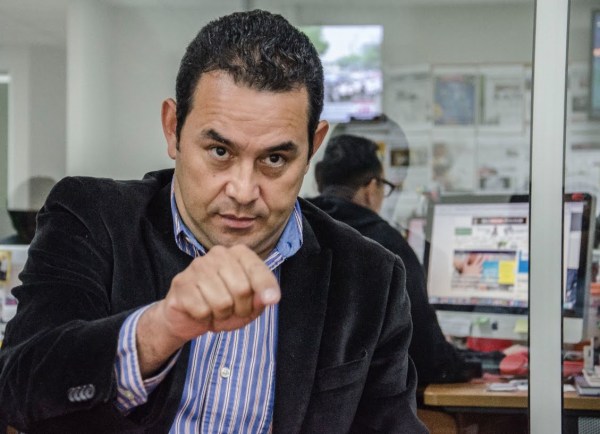
The high hopes created by Guatemala’s peaceful, democratic change of government last year are hitting the shoals of reality.  Guatemalans managed a major political crisis in 2015 in an exemplary way: massive citizen demonstrations against authorities accused of corruption lasted four months without a single incident of violence.  Acceptably free and fair elections took place just three days after disgraced President Pérez Molina resigned, and a transition government was formed as mandated by the Constitution to govern until Jimmy Morales, the new Guatemalan President, was sworn in on January 14.  Although lacking experience, a cabinet, and a plan, Morales inspired confidence with a very good slogan (that he was “neither corrupt, nor a thief”) and good communication skills honed as a former TV comedian.  Voters had rejected and punished the “old politics” and felt hope that honesty would prevail.

Since Morales took office, however, serious mistakes have caused confidence to dim.

  • His reluctance or inability to answer questions from journalists and to refrain from underestimating audiences by telling silly jokes and childhood stories are raising concerns among observers of an emerging authoritarian personality.
  • Secrecy surrounding his cabinet selection process has led to missteps. His Minister of Communications, Infrastructure, and Housing was forced to resign after just 11 days in office – in the face of evidence of tax fraud and a serious conflict of interest.
  • His first approach to Congress was only to reverse the position on 2016 public debt cuts that his representatives advocated last November. Asking Congress to reduce debt proved popular back then, but now transfers to the Public Prosecutor Office or to the public university can be made only if the original debt amount is restored by Congress.  That condition is not only unpopular; it risks hampering the effort to prosecute corruption.
  • Instead of asking Congress for an urgently needed budget increase to solve ongoing shortages of medicines and equipment in public hospitals and clinics – almost a humanitarian tragedy, he accepted pharmaceutical company donations of expired medications – in a deal redolent of past corruption.
  • Morales’s political party, Frente de Convergencia Nacional (FCN), has grown substantially in Congress by receiving “turncoat” congressmen, directly contradicting an important campaign promise. “Turncoating,” jumping from party to party in Congress (always for a “price”), is one of the practices condemned in 2015 as part of the “old politics” and was strongly rejected by voters who trusted Morales.  The Public Prosecutor Office has received complaints denouncing bribes, government jobs, and contracts offered to “turncoats” now affiliating with the FCN.

Events in Guatemala over the past year present a huge contrast with what the country was a couple of decades ago – triumph for a society deeply marked by civil war, poverty, and brutal inequality, with the fresh hope of a new democratic spring.  Jimmy Morales appears to be squandering a historic opportunity to harness this democratic momentum.  Voters who set aside concerns about his links to right-wing Army veterans accused of crimes against humanity during the civil war could soon feel deceived because the “old politics” is still in place.  Guatemala’s democratic spring may fade before it blooms, sowing the seeds of crisis and instability in the future.

February 22, 2016

*Ricardo Barrientos is a senior economist at the Central American Institute for Fiscal Studies (Icefi).

Venezuela: Trying to Stay Afloat

By Michael McCarthy* and Fulton Armstrong

Venezuela Oil Maduro

Photo Credit: Democracy Chronicles and Charles Henry (modified) / Flickr / Creative Commons

Venezuelan President Nicolás Maduro continues to receive increasingly bleak economic news, and his modestly positive policy responses seem unlikely to help.  Oil revenues dropped 293 percent from 2014 (US$37 billion) to 2015 (US$12.5 billion).  The value of oil exports, which account for 95 percent of the country’s export earnings, has dropped to a 30-year low ($30 a barrel), accelerating a recession, paralyzing shortages, and soaring inflation.  The Central Bank reported that inflation reached 180.9 percent in 2015, and that the GDP contracted for the second consecutive year (5.7 percent).  Maduro blamed an “imperialist strategy in a petroleum war” aimed at destroying OPEC.  He also asserted that Venezuela suffered from an “international financial blockade” that – by obstructing the country’s efforts to refinance its debt – was intended to force it “to its knees” and to “take over” its wealth.

Several days after celebrating a Supreme Court decision reaffirming his authority to declare an “economic emergency,” which the opposition challenged last month, Maduro this week announced several modest economic measures aimed at stemming the slide.

  • He ordered a 60-fold increase in gasoline prices – dramatic-sounding but preserving Venezuelan gas (about US$0.23 per gallon at the black-market exchange rate) as one of the cheapest in the world – but the decision is significant as the first increase in about 20 years. An increase in 1989 triggered riots – the famous Caracazo that most analysts cite as the beginning of the end of the old order that Hugo Chavez toppled definitively when elected President in 1998.  In allusion to this past, Maduro said he “hoped people on the streets would understand.”  (Caracas-based consultancy Ecoanalítica estimates that the existing fuel subsidy costs the Venezuelan government US$12 billion a year.)
  • Maduro also announced a 37 percent devaluation of the bolívar – from 6.3 to 10 to the U.S. dollar – for official exchange rates used for the essential goods like food and medicine. The bolívar trades at about 1,000 to one on the black market, but the decreased subsidy implicit of the official rate for necessities is nonetheless significant.
  • Venezuela’s proposal for an OPEC freeze in oil production, in hopes of driving oil prices back up, drew supportive remarks from Qatar, the United Arab Emirates, Russia, Saudi Arabia, and even Iran, but the scheme has lacked traction. Industry observers said one reason is that Tehran is eager to increase exports to regain market share as sanctions against it are lifted.
  • Maduro replaced economic czar Luis Salas – known as a hardline leftist – just five weeks after appointing him, and appointed in his place a more business-friendly economist, Miguel Pérez Abad, who had been serving as Minister of Commerce. Pérez Abad, whose appointment the President of the Venezuelan Chamber of Commerce described as a “friendly sign,” has publicly (and accurately) said that Venezuela must simplify its byzantine exchange rate system.
  • These changes come amid Maduro’s increasingly frank self-criticism about state corruption. He recently described a government food distribution company as “rotten” while calling for a restructuring of state-run food import and distribution outlets.

In a four-hour speech replete with foul language and insults against opposition leaders, the President argued that the measures are “a necessary action to balance things,” and he said, “I take responsibility for it.”  But his measures are piecemeal at best.  As opposition leaders have pointed out, he has not explained how he is going to pay Venezuela’s debt, obtain the foreign exchange to import sufficient amounts of basic goods, and guarantee food for the people.  With US$10 billion in bond payments coming due this year, the country has no clear path for avoiding default.  However painful for the population and politically costly for the government, measures such as gasoline price increases will have little impact.  The government wanted the opposition to share some of the costs for economic policy changes, but opposition politicians say that the gas price increase and devaluation are too little, too late. Most believe economic revival depends on dismantling the entire chavista system.  They are once again talking about removing Maduro through a referendum or other means – with one leader, Henrique Capriles, openly calling for a presidential recall, and another, Henry Ramos, the President of the National Assembly, calling for a constitutional amendment to cut the presidential term from six to four years.  The government’s measures suggest a welcome change from Maduro’s previous strategy of buying time through diversionary tactics.  However, the economic measures are likely to fail and, moreover, they increase the chances political temperatures will surge once again.

February 19, 2016

* Michael McCarthy is a Research Fellow with the Center for Latin American & Latino Studies.

Honduras: President Hernández’s Mission

By Fulton Armstrong

Hernandez honduras 2

Photo credit: Public domain

Honduran President Juan Orlando Hernández, who last month passed the half-way point in his four-year term, has scored some important political gains, with uncertain implications for his country.

  • The Obama Administration has embraced him as a partner in the “Alliance for Prosperity,” to which it has committed $750 million year to “build a safer and more prosperous future for [Northern Triangle] citizens.” It represents a doubling of U.S. assistance.
  • In a decision Hernández said he “would respect,” last April the Honduran Constitutional Court – key members of which the Congress elected under circumstances of questionable legality when he was Congress President – allowed him and other former presidents to run for reelection. The Chairman of the Congressional budget committee last week said there “should be no doubt” that the party is committed to Hernández serving a second term.
  • He successfully parried efforts to create a copy in Honduras of the International Commission against Impunity in Guatemala (CICIG), the UN-sponsored body with extensive powers in that country. The final terms of reference of the OAS-sponsored “Mission to Support the Fight against Corruption and Impunity in Honduras” (MACCIH) aren’t as loose as he had proposed, but many of its key definitions, personnel, and funding remain highly uncertain.  OAS Secretary General Almagro’s public blessing of it was a public relations coup.
  • The Honduran Congress’s approval last week of a new 15-member Supreme Court took numerous rounds of voting – presidents traditionally get the slate approved in one vote – but his party did well enough. Allegations of bribery arose immediately.  Praising the new court, he said last Friday that he would soon launch a national dialogue on additional Constitutional reforms and on “revising the social contract of Honduras” and building “a new Honduras.”

Hernández is not without critics in Tegucigalpa and Washington – even if their attacks have not thwarted him.  Opponents claim that his desire to overturn Constitutional prohibitions on a second term was more blatant than that of former President Mel Zelaya, whose removal by the military in 2009 Hernández supported claiming that Zelaya violated the prohibition.   Hernández has admitted that his party received funds embezzled from the national Social Security agency.  The Indignados, a grassroots opposition, doesn’t have the lobbying resources that the government has, but they have mobilized massive peaceful demonstrations, and veteran Honduras watchers praise their idealism, discipline, and maturity beyond their youthfulness.

Hondurans and foreign governments often favor leaders whose appearance of power promises stability, rather than favor processes and values – such as transparency and inclusiveness – that promise more effective democratic institutions.  Hernández was elected with barely 35 percent of the vote, but his growing power, coinciding with the weakening of legislative and judicial institutions, has concentrated power on the executive.  The country arguably faces one of the most complex situations in its history, on the cusp of either difficult change, such as reducing shocking levels of impunity, or a deepening of the current crisis.  The economic and political elites who control the nation have driven it into a rut from which “more of the same” does not appear a viable way out.  Hernández won praise from the international financial community by pushing through fiscal adjustments, yet these measures increased inequality in a country where half the population lives on less than $4 a day.  Preliminary data show that austerity has brought about an increase in unemployment and underemployment, which already affected roughly half of the labor force.  A U.S. and Mexican crackdown on Central American migration has reduced one of the only options that young Hondurans fleeing poverty, violence, and impunity thought they had.  While many Hondurans may wind up accepting a President’s reelection to a non-consecutive term, Hernández’s big push for a consecutive one and his talk of a “new social contract” understandably fuels skepticism if not angst.

February 16, 2016

Ignoring MERCOSUR and UNASUR at Your Peril

By Thomas Andrew O’Keefe*

Mercosur map

Participating countries in MERCOSUR. Image Credit: Immanuel Giel (modified) / Wikimedia / Creative Commons

Pundits who dismiss MERCOSUR and the Union of South American Nations (UNASUR) as failed attempts at Latin American economic integration should look again.  MERCOSUR has presided over an explosion in intra-regional trade among its four original member states (Argentina, Brazil, Paraguay, and Uruguay) from just over US$ 5 billion at its launch in 1991 to US$ 43 billion by 2014.  UNASUR, for its part, is credited with thwarting a coup attempt against Evo Morales in 2008 and putting a damper on continental arms races.

  • MERCOSUR and UNASUR member countries have taken additional important steps toward convergence since 2014, when MERCOSUR’s highest governing body adopted “CMC Decision 32,” which allows initiatives pursued by either collective to be binding on both if they arise from a set of goals and objectives common to both. The document reaffirms the UNASUR founding treaty stipulation that “South American integration shall be achieved through an innovative process that includes all of the achievements and advances by the processes of MERCOSUR and CAN [Andean Community].”  Chile has spearheaded this effort as a means of reducing duplication of efforts, and is also attempting to bridge ideological differences between the Pacific Alliance (Chile, Colombia, Mexico, and Peru) and MERCOSUR to further build Latin American unity.

Given the relentless negative assessment of both integration projects, multinational pharmaceutical companies were caught off guard when MERCOSUR and UNASUR forced them late last year to make substantial price cuts for public-sector purchases of Darunavir, an antiretroviral to combat HIV-AIDS, as well as Sofosbuvir, used with other medications to treat Hepatitis C.  Both drugs are on the World Health Organization’s List of Essential Medicines.  As a result of CMC Decision 32/14, the Ministers of Health of all the South American nations met in Montevideo on September 11, 2015, and launched a joint MERCOSUR/UNASUR committee to negotiate with multinational pharmaceutical companies on the prices for bulk purchases of certain high-priced drugs.  The committee, made up of representatives from each government’s agency responsible for purchasing medicines, won major price cuts last November – a steep reduction for Darunavir from Hetero Labs as well as lower prices with Gilead for Sofosbuvir.  The new costs were premised on the lowest amount charged to any one of the member governments, and enabled Chile’s Ministry of Health to pay 90 percent less than what it previously paid for Darunavir.  The South American governments as a whole are expected to save US$ 20 million in 2016 on purchases of this anti-retroviral.  A proposed 14 percent reduction in the cost of the combination Sofosbuvir-Ledispaver drug for Hepatitis C – if accepted by the MERCOSUR/UNASUR committee – would enable further savings.

The South American governments have their eyes set on several additional high-priced medications, with a particular focus on drugs used to treat cancer.  In order to aid the committee’s work, UNASUR is creating a data bank of the prices charged by the multinationals for specified medicines purchased by the public health sector in each member state.  The fact that the purchases are made jointly through the Pan American Health Organization’s already existing Strategic Fund opens the possibility that countries in Central America and the Caribbean can benefit as well.  It also means that all these countries can access the Fund’s capital account and do not need to have the cash in hand to acquire medications required to address public health emergencies.  MERCOSUR and UNASUR – often dismissed as ineffective – are demonstrating that integration produces tangible results.

February 11, 2016

* Thomas Andrew O’Keefe is President of San Francisco-based Mercosur Consulting Group, Ltd. and is former chair of Western Hemisphere Area Studies at the U.S. State Department’s Foreign Service Institute (2011-15).

Correction: Due to an editing error, an earlier version of this post mistakenly stated that “a 14 percent reduction in the cost of its combination Sofosbuvir-Ledispaver drug for Hepatitis C will enable Chile’s Ministry of Health to pay 90 percent less than what it previously paid for Darunavir.”  The outcomes of the cost negotiations for the two medications are unconnected.

U.S.-Colombia: Launching “Peace Colombia”

By Eric Hershberg and Fulton Armstrong

Kerry Santos

Photo Credit: U.S. Department of State / Flickr / Public Domain

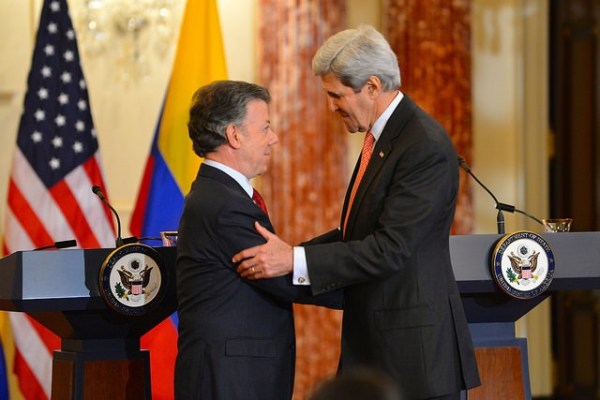
The United States, buoyed by good feelings about what President Obama called Colombia’s “remarkable transformation,” last week pledged $450 million a year in continued aid for the next five years, but it’s not clear yet whether “Peace Colombia” will be very different from Plan Colombia, to which the United States contributed some $10 billion.  The new spending includes unspecified amounts to support the reintegration of FARC combatants who lay down their arms as part of a peace accord expected next month, but much of the emphasis appears to be on old priorities, such as “consolidating and expanding progress in security and counternarcotics.”

  • Obama and Colombian President Santos announced the new program in Washington events marking the 15th anniversary of the launch of Plan Colombia. Amid the many remarks about Colombia’s progress, indicators such as homicide rates (down 50 percent since 2002), kidnapping rates (down 90 percent), economic growth (averaging 4.3 percent), and poverty and unemployment (down slightly) stand out.  By most accounts, moving around core regions of Colombia is easier and safer than it’s been in decades.

Some of these gains of the past 15 years remain tenuous, and “Peace Colombia” will face new challenges as well.  In speeches and backgrounders, government officials have acknowledged that coca eradication and crop substitution programs have failed to reverse Colombia’s role as the world’s biggest producer of coca.  Moreover, programs supporting the demobilization of the FARC will be more difficult to implement than those given to the rightwing paramilitaries in 2002-2006.  Tens of thousands of former paramilitaries are now active in bandas criminales (BACRIMs), which President Santos recently referred to as “2,500 miniscule criminal organizations scattered throughout the country.”  Changing economic circumstances could also complicate efforts to advance peace.  During the years of Plan Colombia, the country got a healthy bump from both domestic and foreign investment – because of the improved security environment as well as the external economic environment, including the U.S.-Colombia Free Trade Agreement and Chinese demand for commodities.  Investment remains strong, but the export boom is over, which is lowering growth and squeezing government budgets.

The creation of economic opportunity is at least as important to the success of Peace Colombia as continued support for the Colombian military and security system, although last week’s speeches and press releases did not shed much light on that.  Achieving peace and building democracy will also require addressing infrastructure deficits, educational inequality, inadequate job training, and poverty.  Several Florida congressmen, arguing that “Peace Colombia” supports an accord that’s overly generous to the FARC, say they’ll oppose Obama’s pledged aid.  The assistance will almost certainly advance, however, because of the strong Washington consensus that Colombia is its biggest (if not only) success worldwide in beating back irregular armed groups.  Moreover, as President Santos and U.S. Secretary of State Kerry emphasized in a press conference, there are no conditions on the new assistance – which should assuage Congressional opponents’ concerns that the relationship will get held up by investigations into alleged human rights violations in the past.  The Presidents spoke of pulling Colombia back from the “verge of collapse” in the 2000s to the “verge of peace” now.  A broadening of strategies in both capitals, including a reassessment of the emphasis on military options, could push the country toward becoming a more inclusive democracy, which ultimately may be what is required in order to achieve lasting peace.

February 8, 2016

U.S.-Cuba: Migration Policy Growing Tortuous, Dangerous

By Fulton Armstrong

Cuban migrants

Photo Credit: Coast Guard News / Flickr / Creative Commons

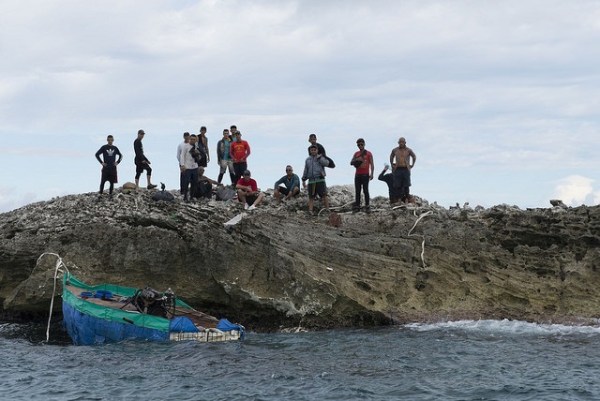
The surge in Cuban migration – prolonged at this point by U.S. policy paralysis – may show a dip soon but is growing tortuous and dangerous.  Since January 12, chartered aircraft and buses have been carrying about 360 Cubans a week from Costa Rica to El Salvador, and then through Guatemala and Mexico to the United States, where they are admitted with special status.  The US$550 cost of the trip is being paid by the migrants or unidentified “donors.”  The air bridge has begun relieving pressure on Costa Rica, which has been caring for 8,000 Cubans since Nicaragua in October halted the underground railway transporting them up the Central American isthmus.  (Three thousand more are reportedly stuck in Panama.)  Despite the progress, an estimated 1,500 migrants have left holding facilities and turned to alien-smugglers to take them to Mexico (for $800) or to the United States ($1,500), according to press reports.

  • Cubans’ fear of a change in U.S. migration policy since reestablishment of U.S.-Cuba diplomatic relations is most often cited as causing the surge, estimated at some 40,000 in 2015. It does not explain the estimated 20,000 who crossed into Texas in 2014 and before, when alien-smuggling networks were less developed.
  • Ecuador’s agreement to establish visa requirements for Cubans promises to slow the immediate flow, but the crisis has revealed corruption among migration authorities throughout the region, which will make stopping it difficult.
  • Central American resentment of the welcome Washington gives illegal migrants from Cuba is growing – aggravated in part by the arrival of airplanes from the United States full of deported citizens in the same timeframe. Senior officials from Costa Rica, El Salvador, and Guatemala have blamed the surge in trafficked Cubans on the preferences the United States gives them.

The U.S. Coast Guard reports an increase in the volume and violence of seaborne migration.  Migrants interdicted in Fiscal Year 2015 (ending September 30) grew to almost 3,000 – 900 more than the previous year – and, according to press reports, surged to 1,500 in the last quarter of 2015.  The Coast Guard says the migrants have concluded that Cuba’s economy will not improve even after U.S.-Cuba normalization, and they want to go before U.S. migration policy changes.  The service has reported a spike in violent confrontations with Coast Guard officers, violence against fellow migrants, and even suicide threats..

The U.S. government’s mantra that it will not change policy toward either overland or seaborne migrants is not working – and could even be backfiring by reminding Cubans of the special treatment they receive upon arrival.  The airlift and bussing of thousands of migrants from Costa Rica to the United States helps Costa Rica deal with its crisis, but also signals yet again to Cubans remaining on the island how far the United States will go to bring them in.  Violence among seaborne migrants has traditionally been rare, but the increased aggressiveness suggests that migrants have the impression that they can act with impunity and still be welcomed into the country.  Overland migrants’ preference to use coyotes, known for violence, is another red flag.  The United States has expended political capital by washing its hands of the Cuban migrant mess in Central America, and grumbling among the region’s leaders suggests that options like airlifts will disappear soon.  U.S. law, including the Cuban Adjustment Act, fully empowers the President to turn off the green light to undocumented Cuban migration – and reality could very well nudge him in that direction soon.

February 4, 2016

The Zika Virus and a New Debate on Reproductive Rights

By Rachel Nadelman*

Zika Women

Photo Credit: Day Donaldson and PresidenciaRD / Flickr / Creative Commons

The call by half a dozen Latin American and Caribbean governments for women to put off pregnancies – as the World Health Organization warns the feared Zika virus is “spreading explosively” – is stimulating a new debate on reproductive rights in the region.  El Salvador’s Health Ministry has urged women to “avoid becoming pregnant this year and next,” and Brazil, Jamaica, Colombia, and others are issuing similar advisories.  A mosquito-borne disease spreading rapidly in the Western Hemisphere for the first time, Zika is blamed for causing devastating neurological birth defects in newborns whose mothers contract the virus during pregnancy.  The U.S. Center on Disease Control has advised pregnant women to avoid travel to the more than 20 Latin American and Caribbean countries now hosting the disease.

Named for the Uganda forest where it was discovered in the late 1940s, Zika is carried and transmitted by the Aedes Aegypti mosquito, best known as the vector for life-threatening viruses like yellow fever and dengue.  Within the Western Hemisphere, the Aedes population has increased drastically in recent years, linked by scientists to changes in climate.  Yet Zika’s arrival in Latin America last year, first documented in Brazil, and subsequent expansion did not attract major attention until the pattern of birth defects emerged.  Zika’s symptoms are sometimes imperceptible or typically mild, including fever, joint aches, and conjunctivitis, so health officials did not consider it a major threat to the general population.  Although definitive clinical proof is still lacking, Zika is now linked to microcephaly, a rare neurological condition that causes children to be born with small heads because of abnormal brain development in the womb or immediately after birth.  The emergence of Zika in Latin America has coincided with a more than 20-fold increase in the incidence of microcephaly.  (Brazil has reported 4,000 cases in the past year, a drastic increase from just 150 in 2014).  The babies suffer from poor brain function and reduced life expectancy.  Doctors are finding traces of the virus in the brains of microcephaly-inflicted babies who were stillborn or died soon after birth.

Warnings and advisories offer no help to the millions of women who live in afflicted countries.  Governments are launching fumigation programs to reduce the Aedes mosquito population and thereby limit disease transmission.  Asking populations to refrain from having children appears a bit facile, if not cynical, in a region with low levels of access to birth control for reasons that range from religious dictates to economic obstacles.  Severely restrictive abortion laws also complicate potential parents’ options.  Five Latin American countries (including Honduras and El Salvador, hard hit by Zika) ban abortion without exception, even to save the mother’s life.  Others criminalize abortion with few allowances.  According to the Guttmacher institute, 95 percent of abortions in Latin America are unsafe, contributing to high maternal mortality rates. It’s not surprising, therefore, that Zika’s link to these devastating birth defects has generated unprecedented public discussion throughout Latin America about women’s and families’ rights and responsibilities for taking control of reproduction.  It is far too early to know if the health advisories will have practical impact on the incidence of microcephaly – or on attitudes toward reproductive rights over the longer term.   

February 1, 2016

* Rachel Nadelman is a PhD candidate in International Relations at the School of International Service.  Her dissertation research focuses on El Salvador’s decision to leave its gold resources unmined.