Challenges to “Safe Country” Strategy in Central America Mounting

By Fulton Armstrong

San Ysidro

Processing at the San Ysidro Port of Entry/ U.S. Customs and Border Protection/ Flickr/ U.S. Government Works

Challenges to the U.S. government’s “Asylum Cooperation Agreements” (ACAs) with Central American countries – under which asylum seekers approaching the U.S. border are sent to camps in the Northern Triangle – are mounting fast, but the administration of President Donald Trump does not appear likely to budge significantly from its current approach. Under the threat of loss of $143 million in aid to the three Central American countries, Guatemala signed its agreement under former President Jimmy Morales last August; a similar accord with Honduras is to “come online any day,” according to U.S. officials; and El Salvador is also deep in negotiations. (Aid has been restored.) The ACAs stipulate that asylum seekers apply for asylum in the “first safe country” they enter after fleeing their own. As a result, the United States has sent about 800 persons of various nationalities to Guatemala.

  • Immigration and human rights advocates have condemned the agreements. They report that Guatemala – where most asylum seekers have been sent so far – lacks the ability to process them. Human Rights Watch recently reported, moreover, that individuals repatriated to El Salvador since 2013 – as envisioned by the ACAs – have been assassinated at an alarming rate. The group has confirmed 138 cases of individuals killed after deportation and another 70 beaten, sexually assaulted, extorted, or tortured.
  • The chairs of the U.S. House Committee on Foreign Affairs and relevant subcommittees (all Democrats) have called the ACAs “illegal, dangerous, and antithetical to U.S. values.” In a letter to Secretary of State Pompeo, they said that U.S. law requires that asylum seekers have “access to a full and fair procedure for determining a claim to asylum” – which the Guatemalan facilities lack. The Congressmen assert, moreover, that U.S. law requires adherence to international law on non-refoulement, which mandates that asylum seekers cannot be sent to a country in which they will face further persecution.
  • The workers’ union representing 700 U.S. asylum and refugee officers has declared that the agreements and the administration’s implementation of them are a “violation” of international treaty obligations. These are the career specialists on the front line charged with carrying out the policies. The Guatemalan government has raised its own concerns, citing its “very limited capacity” to process asylum-seekers sent there. Newly inaugurated President Alejandro Giammattei has never appeared comfortable with the ACA and has asked Washington for “clarifications” of his country’s obligations under it.

U.S. reaction so far has been to deny anything is wrong. Senior officials say that very few asylum seekers deported to Guatemala are applying for asylum there, with the vast majority instead choosing to return to their home countries. Citing experts, the U.S. congressmen say that less than 4 percent have “been able to seek protection through Guatemala’s overburdened system.” Others report that victims of violence in their home countries face similar prejudices in Guatemala.

  • Apparently to encourage potential asylum seekers to apply for U.S. visas, the administration on March 5 announced it is increasing H2‑B visas for non-agricultural workers this year, with 10,000 reserved for applicants from the Northern Triangle. But if H2‑B visas are issued along the same guidelines as other visas, U.S. consular officers will be required to deny them to applicants they have reason to suspect will try to remain in the United States – as all ACA cases have tried.

The ACAs are a key element of the Trump administration’s efforts to move the “wall” blocking asylum seekers as far off the U.S. border as possible, shifting the burden to the same Central American countries whose poverty, violence, and corruption are driving citizens to flee. However compelling the Foreign Affairs Committee’s arguments that the administration is violating U.S. law and values, the letter’s impact has been blunted by widespread perceptions that the novel coronavirus (COVID-19) is further proof that the United States needs to keep outsiders from entering the country. The Administration is also not swayed by the fact that the U.S. State Department’s own repeated warnings that U.S. citizens limit travel to Northern Triangle countries – because of widespread “violent crime … rape, and narcotics and human trafficking – contradict the assertion that the ACA partners are “safe countries.”

  • Guatemala’s call for “clarification” of implementation guidelines and talks on the final details of Honduras and El Salvador’s arrangements give the administration a chance to make cosmetic adjustments and, perhaps, promise more resources to the designated “safe countries.” But it has given no sign of reconsidering its overall approach. The Trump administration remains as committed as ever to addressing the migration problem by closing the U.S.’ door rather than addressing the underlying conditions in the region driving people to risk their lives to get to the United States. Central American analysts are already deeply concerned that the economic impact of the COVID‑19 pandemic (including 1 percent growth or less), coupled with USAID’s own budget cuts, spell reduced aid and a worsening of the vicious cycle of poverty that drives emigration and empowers illicit actors.

March 17, 2020

Colombia: Lame Duck President?

By Fernando Rojas*

Uribe and Duque

Former Colombian President Álvaro Uriba (left) and President Iván Duque. / Centro Democrático (left), Casa de América (right) / Flickr, modified / Creative Commons

A combination of defections from within his governing team and widespread street protests suggest that Colombian President Iván Duque’s administration may be running out of steam 18 months into his four-year term. Doubts are mounting as to whether he has built a discernible platform for addressing the country’s most pressing social, environmental, political, or geopolitical dilemmas.

  • Soon after his inauguration in August 2018, Duque announced a major tax reform and succeeded in pushing through a promised expansion of incentives and other privileges for large corporations and higher-income groups. His Administration’s first development plan was a potpourri of policy inertia without a clear message or Presidential imprint. Members of his planning team either resigned or were dismissed soon after the plan became law. His other big push was for a gradual reorientation of the peace agreement that two years earlier had ended Colombia’s 50-year insurgency. That agenda has advanced mostly through non-implementation of accord provisions rather than through alternative policies.
  • Duque’s greatest political asset was his endorsement by former President Álvaro Uribe. Unlike former President Juan Manuel Santos (2010-18) – another candidate initially backed by Uribe but who subsequently broke from his mentor to launch the peace process – Duque has opted to adhere to Uribista critiques of the accords.

During Duque’s term so far, some policies that had been successful under President Santos have atrophied through inattention.

  • Funds for programs initiated under Santos to secure peace and stability in the countryside have been channeled into communities and municipalities based on political criteria. The Regionally Focused Development Plans (Planes de Desarrollo con Enfoque Territorial, PDET), for example, are managed and selectively funded directly by the President’s office. One of the requirements to support rural communities in conflict-ridden areas appears to be adherence to Duque’s implicit pacification strategy. Most visibly, the government has paid little attention to the killings of more than 100 community organizers – even calling a UN report on them last month an unwelcome intervention in the country’s sovereignty and roughly equating the murders to robberies of cell phones on the street. A long-debated initiative to expand identification of the use of land plots in order to better focus social and economic development policy is increasingly being deployed to formalize land property in its current hands – not in the name of the millions of displaced peasants awaiting restitution of their plots.
  • Government silence on environmental protection has allowed small legal and illegal miners – often protected by guerrillas or paramilitary groups – to circumvent the opposition of communities concerned about the mercury and other poisonous elements such operations dump into water supplies. Powerful international corporations are being granted concessions for extraction of gold and precious metals in mountains that provide water and are home to unique flora and fauna.

Uribe has no choice but to support Duque through the end of his term in 2022, while hoping that political protests do not interrupt his term – for the first time in Colombia since 1953. Duque’s approach to national affairs does serve the interests of many Uribistas, who welcomed the tax cuts and reprogramming of funds from ordinary peasants to peasant-sympathizers or landowners. But political loyalty is a fragile virtue when there is no vison of common values nor transparent consensus on how to make them reality. The riots that shook the government in November, although short-lived, revealed a sort of vulnerability about Duque that could strain Uribe’s patience. Duque appears to be at the mercy of both those who enabled his rise to power and those who want to overthrow him.

March 9, 2020

* Fernando Rojas is a consultant on government management, decentralization, and multi-level governance.

USMCA: Devil’s in the Details on Automotive Content

By Frank L. DuBois*

Automated manufacturing of cars

Automated car manufacturing/ Steve Jurvetson/ Flickr/ Creative Commons License

The automotive trade regime in the recently completed U.S.-Mexico-Canada Trade Agreement (USMCA) – “NAFTA 2.0” – will create headaches for many manufacturers but appears unlikely to deliver the big boost in jobs it promises. Much of the focus of the negotiations was on changing the automotive rules of origin (ROOs) to encourage more auto manufacturing in the United States and Canada and make it difficult for automakers to shift production from high-wage locations to low-wage factories in Mexico. Under the new rules, some manufacturers will see significant changes in operational strategies while others will be less impacted.

According to the agreement, a 2.5 percent tariff will be applied to the import value of cars (25 percent for light trucks) if the vehicles don’t meet the new ROOs:

  • 70 percent Regional Value Content (RVC) rather than 62.5 percent under the old rules.
  • 40 percent of the Labor Value Content (LVC) of vehicles (45 percent in the case of light trucks) must be made in plants that employ workers making at least $16 per hour.
  • 70 percent of the value of steel and aluminum used in the vehicle must be of regional origin.

The Kogod Made in America Auto Index (KMIAA), which I’ve been compiling for seven years, challenges assumptions used when calculating the U.S. content of a car, including some used as marketing strategies to portray products as being more “American” than what a buyer might think.

  • KMIAA results and rankings differ significantly from those indices that evaluate domestic content solely based on where a car is assembled, without taking into account the country of ownership of the brand. (Japanese, Korean and German car manufacturers are treated the same as U.S. manufacturers despite non-US R&D and profits that are repatriated back to the home country). Location of manufacture of engines and transmissions, which account for approximately 21 percent of vehicle value, may also not be addressed in other indices. Likewise, assembly labor accounts for around 6 percent of vehicle value.
  • The index reveals the complicated nature of content calculations. Toyota assembles only one vehicle at its plant in Tijuana – the Tacoma light truck with an engine of either U.S. or Japanese origin (depending on displacement) and a transmission of either U.S. or Thailand origin. Toyota has made the same truck in San Antonio, Texas, but recently announced that all of Tacoma production will be moving to the Mexican factory. Toyota is likely to reduce its non-North American sourcing (fewer engines and transmissions from Asia), and restructure supply chains to place a premium on U.S. parts and power train sourcing. Other manufacturers face greater shifts. The Audi Q5, for example, currently has 79 percent Mexican parts content and only 3 percent U.S. parts.

Producers’ operational responses are likely to run the gamut from full compliance to limited changes. Some automakers may simply pay the WTO tariff of 2.5 percent for access to the U.S. market. A separate requirement that at least 40 percent of the value of cars be made in plants with $16 per hour labor will be problematic given that wages in Mexican auto plants average $3 to $4 per hour. Producers will have to decide whether to raise wages in Mexican plants, shift sourcing to U.S. and Canadian plants, or attempt to develop ways to game the system by shifting some high-wage expenses into the labor value category. While the new rules may boost some manufacturing jobs in the U.S. and Canada, they will raise costs leading to lower auto sales, and have nowhere near the impact that their boosters have promised. Again, the devil is in the details.

March 5, 2020

* Frank L. DuBois is an Associate Professor of Information Technology and Analytics at American University’s Kogod School of Business. Data for the KMIAA comes from data automakers provide under the American Automotive Labeling Act (AALA) and from field visits to car lots in the DC metropolitan area.

Brazil: Relative Success – So Far – Receiving Venezuelan Refugees, Migrants

By João Jarochinski Silva*

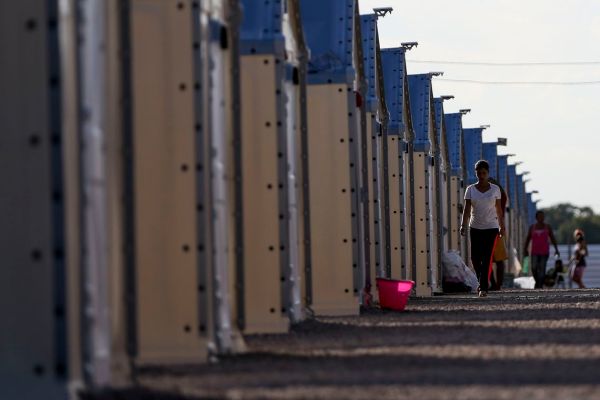
Venezuelan migrants walk past UNHCR tents at a camp in Boa Vista, Roraima

Venezuelan migrants walk past UNHCR tents at a camp in Boa Vista, Roraima/ Marcelo Camargo/ Wikimedia Commons/ Creative Commons License

The influx of Venezuelan refugees and migrants since 2013 into the Brazilian state of Roraima has challenged the state’s ability to settle them, but a continued or increased flow will require a significant expansion of efforts to relocate and integrate the new arrivals. The flow has not been unmanageable or caused significant problems in public services, as some local politicians claim, and has actually generated some benefits. In the past six years, over 260,000 Venezuelans have applied for refugee or residency status in Brazil, with the vast majority entering through Roraima, which is north of Manaus and shares borders with both Venezuela and Guyana. A voluntary relocation program, called Interiorização, has moved more than 20,000 to other Brazilian cities, but most remain in municipalities near the border. Roraima state itself has less than 600,000 inhabitants.

  • The Venezuelans in Roraima are mostly working age (16-64 years old). National authorities, assisted by UNHCR, the International Organization for Migration (IOM), and others, have developed policies related to education, training, and employment to take advantage of their productive capacity and facilitate their integration in Brazil. These initiatives enhance the emergency benefits the migrants receive and help them become autonomous.

International, national, and local experts, including at the Federal University of Roraima, Getulio Vargas Foundation, and OBMigra, have found that the Venezuelan arrivals’ impact on Roraima has been mixed.

  • The state registered positive economic growth and diversification during 2016‑17, the period of most intense Venezuelan flow, when Roraima’s GDP grew 2.3 percent, compared to the 1.4 percent of other Brazilian states. In the two following years, the state registered significant growth in agricultural production, including Brazil nuts and some livestock items, and showed the largest recorded increase in planted area (28.9 percent), while Brazil as a whole saw a decline of 0.6 percent. Roraima surpassed all other regions with an 8 percent increase in its economic diversification index. Expanded retail trade and exports in 2018‑19 fueled a 25 percent increase in tax revenues.
  • Unemployment and poverty, on the other hand, also rose during this period. While many of the Venezuelans found jobs in services such as restaurants, retail, and construction, unemployment in the state rose by 6.1 percentage points between 2017 and 2019, while Brazil’s national rate fell 0.6 percentage points. The incidence of extreme poverty in Roraima also grew from 1.64 percent in 2015 to 5.7 percent in 2018, compared to 4.2 percent nationally in 2018. (The new Venezuelan workers, however, have not significantly reduced the wages of Brazilians living in Roraima.)

Local anxieties about new strains on social services have not been fully borne out. The Venezuelans have enrolled children in schools and used medical services, but available data do not show unusually high demand. There has been, in fact, a downward trend in outpatient care provided by Roraima municipalities, and the increase in hospitalizations in the state coincided with that seen nationally.

  • The research suggests that the state’s increase in tax revenues is on a par with the additional costs of these and other services provided to the Venezuelans. Both figures are about US$22.5 million.

Roraima’s experience – so far – shows that the influx of refugees and migrants into Brazil has not had a profound impact, but the crisis in Venezuela shows no sign of abating and could get worse. Roraima, the state with the smallest population in Brazil, has a limited ability to absorb new arrivals and settle them locally without significant new resources. Expansion of the successful elements of Roraima’s approach, such as the voluntary Interiorização relocation program, would help. Additional work-related training and professional qualification programs would also help new arrivals contribute economically after relocation. Particularly if flows continue to be strong or increase, Roraima state and its municipalities are likely to feel growing urgency to develop systems to manage them and beef up social protection networks to support relocation – with the same goal of taking advantage of the economic potential of the Venezuelans’ full social and economic integration.

February 3, 2020

* João Jarochinski Silva is a CLALS fellow, professor at the Universidade Federal de Roraima (UFRR), and one of the report’s researchers. The research, funded by the Escola Superior do Ministério Público da União (ESMPU) and the UNHCR, is available here in Portuguese.

Spanish Language: Unlikely Battleground for Gender Inclusion

By Juliana Martínez*

Spanish-speaking communities have become one of the most significant battlegrounds in the push for gender-inclusive language. Often associated with traditional gender norms and anti-LGBT sentiment, Spanish-speakers in general and in Latin America in particular are discussing gender in language, causing as much ire and excitement as use of they as a non-binary singular pronoun has in the United States and beyond. In the English-speaking world, the Merriam-Webster Dictionary’s recognition of they as “word of the year” in 2019 signaled this shift. Many young Spanish speakers are also increasingly unwilling to accept gender hierarchies in any social, political, or cultural realm as natural, innocuous, or unchangeable; and they find the gender binary limiting and exclusionary for themselves or for society more broadly.

  • In the last 15 years few regions have made larger strides in LGBT recognition than Latin America. During this period, some of the most advanced legislation and policies in the world – such as gender identity laws, same-sex marriage, adoption rights for same-sex partners, and non-discrimination statutes – have been passed in Latin America, the great majority in Spanish- and Portuguese-speaking countries.

There are two main issues at the heart of inclusive language efforts: to challenge androcentric conventions, and to expand the gender binary by incorporating gender-expansive options for speakers. In many languages, Spanish included, masculine forms constitute the linguistic and social norm. In society and grammar alike, masculinity, heterosexuality, and gender-conformance have been taken as the unmarked norm through which human experience is measured and communicated. However, just as the mere presence of a gender system in a language does not make it sexist or cis-normative, the push for inclusive language does not put the integrity of the language at risk and does not seek to dismantle its grammatical gender system.

  • As my colleague Salvador Vidal-Ortiz and I note in a recent article, substituting an e for a gender-specific o or a in a noun does not challenge the assigned gender of nouns that do not refer to specific populations. No one is suggesting that carro (the masculine noun in Spanish for “car”) should be “carre” instead. That is a caricature and, more importantly, would suggest denying speakers the right and means to name themselves by claiming that their lives are a grammatical – and also a biological, social, and legal – error or impossibility.
  • These efforts have been around for a while both in Latin America and the U.S as exemplified by the shifts in the term Latino. First came Latina/o, then the “@” in Latin@, then Latinx, and now Latine. All these forms have been (and continue to be) used as gender-neutral and expansive options to the masculine o or the feminine a. The e in particular has been getting traction and considerable (not always positive) attention. Argentina has been a trailblazer. Nowadays, it is practically impossible to attend a political rally or march in the country without hearing words like bienvenides (welcome) alongside or instead of the traditional bienvenidos or bienvenidas, or to see words like todes (instead of todas or todos) written on signs. Last year two events marked the widening spread of these shifts in the country. President Alberto Fernández made history when he used the word chiques (the gender-expansive alternative to the binary chicos or chicas) during a student rally – drawing a standing ovation; and last December Argentina made international headlines when a judge ruled in favor of including “non-binary” as the sex marker of a person’s national identification document

Despite this progress, opposition to gender-inclusive language has been fierce and is unlikely to fade quickly. La Real Academia de la Lengua (RAE), the governing body that presides over Spanish grammar, syntax, and morphology, has resisted it sternly – not surprising for an institution that has accepted only 11 women in 300 years of existence. History has shown, however, that calls for language purity and grammar correctness tend to be covers for social anxieties about upholding gender and sexual hierarchies. What upsets many speakers – particularly those used to being at the center of discourse and accustomed to holding cultural, social, economic, and political power – is not the language; it is the changing worldview that it names and advances. Inclusive language is neither a threat to the language nor a sign of its decline. Rather, it signals plasticity and health, as it illustrates its ability to adapt to shifting cultural and social norms.

February 25, 2020

* Juliana Martínez is Assistant Professor in the Department of World Languages and Cultures at American University. Parts of this post were previously published, with Salvador Vidal-Ortiz, in Latinx thoughts: Latinidad with an X in Latino Studies in October 2018.

Guyana’s “New Decade” Begins in March

By Wazim Mowla*

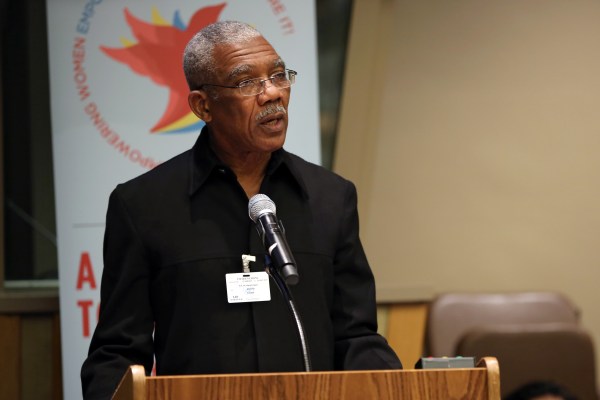
President David Granger speaking at a UN Women's Meeting

Guyana President David Granger Speaking at a Global Leaders’ Meeting on Gender Equality and Women’s Empowerment in 2015 / Flickr / Creative Commons License

Guyana’s national and regional elections on March 2 will be its most consequential in 30 years as a huge increase in oil revenues and international interest puts the country in a brighter spotlight, but the country’s new leadership – while having greater resources and opportunities – will still face vexing challenges that oil dollars won’t solve. Guyana continues to discover more oil and has produced its first commercial crude shipment in December 2019. ExxonMobil anticipates that the country will reach a capacity of 120,000 barrels per day this year, and the International Monetary Fund (IMF) estimates an 86 percent increase in GDP. This growth has energized the election campaigns.

  • Eleven political parties are campaigning, with the A Partnership for National Unity + Alliance for Change (APNU+AFC) coalition and the People’s Progressive Party/Civic (PPP/C) at the clear head of the pack. Reliable poll data is scarce, but incumbent President David A. Granger (APNU+AFC) appears confident in his reelection. He is proposing a new “contract with the people” under which he will use oil revenues to increase conditional cash transfers for food, housing, and transportation to residents in the populous coastal areas as well as invest in projects benefiting the 10 percent of Guyanese who live inland .
  • Representing the PPP/C is presidential candidate Dr. Irfan Ali, whose party narrative is that it helped build Guyana without oil and gas and will continue this progress by expanding social programs with the additional revenue. Specifically, Ali wants to reopen sugar estates that Granger closed, sparking protests by the Guyana Agricultural Workers Union (GAWU). To demonstrate its intention to tackle crime, the party has selected Brigadier (retired) Mark Phillips as its Prime Ministerial candidate.

Within the context of Guyana’s highly publicized racial divisions, both political parties are calling for national unity. APNU+AFC has traditionally drawn most of its support from the Afro-Guyanese population (about 30 percent of the population), while the PPP/C leans on the support of Indo-Guyanese citizens (about 40 percent) – while the mixed races (20 percent) and indigenous (10 percent) usually the swing voters who determine the election. The historic racial divisions within the domestic political elite have remained unnaturally suppressed during this election season – perhaps because, for the time being at least, oil is dominating the national dialogue. All political parties understand that Guyanese citizens care more about benefits than the party in power.

While projecting an optimistic vision of Guyana’s future, both major political parties certainly know that oil revenues will not resolve all of country’s problems when it enter what Granger has called its “Decade of Development.” Ethnopolitical divisions are certain to reemerge after the election, and managing suspicions about the use of oil revenues will pose a significant challenge to the victors, especially because the country’s current institutions do not afford the transparency and checks and balances necessary for calming anxieties. The new government is going to have to devise difficult policies on dealing with climate change, the damage to Guyana’s human capital, and the security risks threatening the country’s development.

  • Guyana’s sea level is rising faster than the global average. Large parts of the population live in areas 20 to 40 inches below sea level where groundwater extraction and wetland drainage worsen flooding. Inconsistent weather patterns are disrupting agricultural production, and the country’s sea walls do little to prevent the devastation of crops.
  • Guyana has one of the highest suicide rates in the world – an average of 44 per 100,000 people each year – and gender-based violence is also an increasingly serious problem. A recent survey by the Guyana Bureau of Statistics found that about half of all Guyanese women has experienced or will experience intimate-partner violence.
  • The country also needs to find solutions to threats from outside. The crises in Venezuela and Haiti have already triggered a costly refugee flow, and officials fear the country will become a hotspot for drug and human trafficking and organized crime. Experts expect the oil industry to attract illegal immigration from other Caribbean countries, Venezuela, and South America in search of job opportunities. Once the elections are over, political leaders will have to turn their attention to these troubling realities.

February 21, 2020

* Wazim Mowla is a graduate student at American University, specializing in Caribbean Studies.

Why Are Chile’s Protests Continuing?

By Pablo Rubio Apiolaza*

protests in chile

Protests began in Chile October 2019/ Diego Correa/ Flickr/ Creative Commons License

Chile’s political agreement in November to hold a referendum on the country’s Constitution in April reduced protests for a while, but the underlying causes of discontent – deep-seated frustration among many Chilean citizens – continue to fester and drive an array of peaceful and violent protests. Since November, President Sebastián Piñera has promoted an aggressive social agenda, including raising the minimum wage and improving the pension system. A survey by the Center for Public Studies (CEP) in Santiago in early January, however, found that Piñera’s approval rating was around 6 percent – the lowest of any president since Chile’s return to democracy. By almost all accounts, distrust in the government and anger at the corruption of politicians and corporations remains deep. People want solutions “here and now” to many of their demands. Both peaceful and violent protests have continued through the traditionally quiet summer break.

The mobilizations are not as spontaneous as they were in October and November, according to many observers, but there’s little evidence of a conspiracy to disrupt the referendum agreement.

  • Trade unions and traditional social movements organized under the banner of the Mesa de Unidad Social have become important actors, but new activists have also emerged. The loosely organized “Primera Línea” (front line) has engaged in violent clashes with the Carabineros, mainly in Santiago. Anthropologist Magdalena Claude observed and interviewed some members of Primera Línea in January and called them the “ACAB clan,” borrowing an acronym popularized by British punk rockers proclaiming that All Cops Are Bastards. According to Claude’s research, the group is composed of young workers of the service sector, not members of political parties. They do not have a recognized leadership and organize in horizontal networks.
  • Some conservative Chileans are denouncing the protests as the result of “foreign intervention” and a “coup d’état” provoked by the “extreme left.” They cite as evidence a New York Times report on January 19 that the U.S. State Department estimated that nearly 10 percent of all tweets supporting the October protests originated with Twitter accounts that appeared to have links to Russia. Allegations of foreign intervention by Venezuela and other countries have been endorsed by Chilean Foreign Minister Teodoro Ribera and President Piñera. Neither the U.S. nor Chilean government has provided evidence to support any of these claims.

Damage to the government’s credibility and reputation since October seems likely to continue to embolden opponents in the runup to the referendum. Carabinero abuses have been verified and condemned by a host of observers, including Human Rights Watch, Amnesty International, the Inter-American Commission on Human Rights, and various Chilean organizations. The UN High Commissioner for Human Rights, led by former Chilean President Michelle Bachelet, has detailed “multiple allegations of torture, rape and other forms of sexual violence by the police against people held in detention.” More than 30 people have died in protests and, although the great majority of the tens of thousands of protestors detained have been released, anger over their arrest is fresh. The government has convened 15 experts to develop recommendations to reform the Carabineros – to enable them to move “forward with urgency the recovery of the public security with absolute respect for human rights” – but challenge of building public trust will be monumental.

  • A prestigious Chilean polling firm, Cadem, reported two weeks ago that 63 percent of the Chilean population approved of the protests and – importantly – 80 percent believe that Chile will be a better country after this critical situation. In any case, the plebiscite in April will take a place in an unstable context, with an uncertain outcome. For the Piñera administration, the challenges seem unlikely to abate, and pressures may surge when the school holidays end in March.

February 19, 2020

* Pablo Rubio Apiolaza is a historian, visiting researcher in the Department of History at Georgetown University, and researcher at the Library of Chilean Congress.

Latin America: The Need to Face the Dire Impact of Climate Change

By Fernanda de Salles Cavedon-Capdeville and Erika Pires Ramos*

Farmer in Nicaragua

A farmer works a field in Nicaragua, one of the Central American countries experiencing increasing drought over the last two decades/ Neil Palmer/ Wikimedia Commons/ Creative Commons License

Latin America – one of the most vulnerable regions to climate change worldwide – is already experiencing dire consequences, including the displacement of millions of people, but the region has been slow to share the information needed for comprehensive strategies.

  • In 1998-2017, among the 10 countries most affected by climate risks in the world, five were in Latin America and the Caribbean, according to the Global Climate Risk Index 2019. Extreme events and disasters are increasing in the region. Out of 335 disasters registered globally in 2017, 93 took place in the Americas. Rapid-onset events, such as hurricanes, have been taking a progressively greater toll. In 2016, 17.3 percent of people affected by disasters lived in the region, far more than the average of 5.1 percent in the previous five years.

Changes in climate variability and in extreme events have severely affected the region. Over 1998-2017, Latin America was the continent with the highest economic losses due to climate-related disasters, representing 53 percent of the global figure, according to studies. The impact on people is aggravated by the high vulnerability and low adaptive capacity caused by poverty and economic inequality. Countries in the tropics and Southern Hemisphere subtropics are also projected to experience the largest impact on economic growth.

  • These economic, political, cultural and social factors – along with extreme-weather events and other effects of climate change, such as desertification and rising sea levels, combine to be a major cause of displacement in Latin America. Colombia, Chile, Haiti and Brazil joined the list of the 20 countries with the highest number of people displaced by disasters from 2008 to 2014.
  • More recently, 4.5 million people in the Americas were displaced by disasters in 2017, representing 23.8 percent of the global total. Three major hurricanes that year displaced over 3 million people, and floods throughout South America also drove many thousands from their homes that year. In 2018, 1.7 million people were displaced by disasters in the Americas. Another 2.5 million people were affected by drought that year in Central America, including migration hotspots Guatemala, Honduras, El Salvador and Nicaragua. Oxfam has highlighted that climate change – and the consequent loss of crops and food security – is increasingly a driver of migration in the Dry Corridor of Central America.

Experts at the World Bank and elsewhere estimate that slow-onset climate change events in Latin America alone could displace 17 million people by 2050. This and similar estimates are sound – and underscore the urgent need for action – but data on the impact of slow-onset events is difficult to get and, in general, data related to climate-induced human mobility has gaps. These information challenges will increasingly complicate efforts to deal with the problems of migration driven by climate change. There is also a lack of specific information about the climate laws, policies. strategies, and measures that governments will need to take to avert, minimize and best address the economic and human ravages the region is likely to experience.

  • The South American Network for Environmental Migration (RESAMA) is a regional independent network of experts and researchers developing and disseminating information on environmental migration and related topics, and promoting ways to enhance its inclusion in regional and national agendas. RESAMA, in partnership with the University for Peace (UPEACE) in Costa Rica, has designed the Latin-American Observatory on Human Mobility, Climate Change and Disasters (MOVE-LAM) to map, understand and address the topic in the region. The observatory intends to evolve into a regional hub to simplify and share information — transforming scientific knowledge into accessible and practical information available to actors and other stakeholders. It’s a huge task, but the challenges the hemisphere faces demand it.

February 10, 2020

*Fernanda de Salles Cavedon-Capdeville is a Postdoctoral Fellow at the Universidade Federal de Santa Catarina (UFSC) in Florianópolis, Brazil, and a RESAMA researcher.

*Erika Pires Ramos has a PhD in International Law from the University of São Paulo (USP) and is founder of RESAMA.

Latin America: Growing Threat from Brazil’s PCC

By Ludmila Quirós*

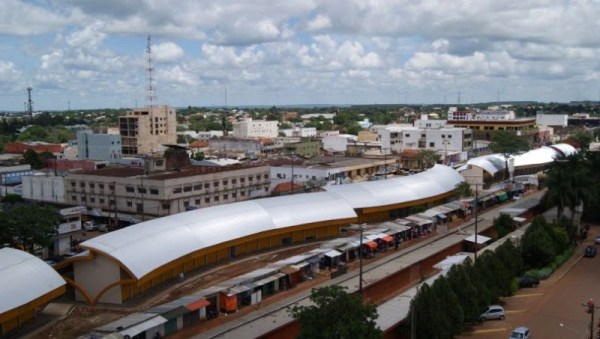
City view of Pedro Juan Caballero

Pedro Juan Caballero City, Paraguay/ Wikimedia Commons

The Brazilian prison gang “First Capital Command” (PCC) is extending its influence far beyond the original base it had in Brazil when it formed around 2005, now threatening security far beyond prison walls and Brazil’s borders. Over the past 10 years, according to my estimates, PCC has consolidated its power in 24 of Brazil’s 26 states. Moreover, the group’s criminal activities – attacks, prisoner escapes, and drug-related activities – now involve branches in Paraguay, Bolivia, and Argentina – and as far north as Venezuela and Colombia. They have sleeper cells (Argentina and Uruguay); alliances with clans linked to narcotraffickers (Bolivia, Colombia, and Venezuela); and deep penetrations of governments (such as Paraguay).

  • In Paraguay, where the depth of its cooptation of state authorities is most obvious, PCC is most active. In mid-January, the dramatic escape from a Paraguayan prison on the Brazilian border underscored the scope of the problem. Some 75 prisoners, including a dozen PCC members, fled the Pedro Juan Caballero Prison through a tunnel that Paraguayan authorities knew about but were unable to close because of corruption at multiple levels, according to numerous sources.
  • In Argentina, national authorities have been tracking the group’s growth since the first infiltration of cells in 2018, when elements attempted to enter a jail in Oberá, in the province of Misiones near the “Triborder Area” with Paraguay and Brazil. Otherwise, the group seems to be keeping a low profile, suggesting an emphasis on the emplacement of sleeper cells for the time being. These individuals could be involved in creating “micro-trafficking” networks and establishing communications with allies under arrest for drug activities, but confirmation is lacking.
  • Other PCC members appear to be setting up in Uruguay, where preliminary circumstantial evidence suggests they’re involved in laundering PCC funds, and in Bolivia, where establishing drug routes into Brazil would be top priority. In Colombia and Venezuela, which are more directly involved in the drug trade, PCC has similar activities, according to research. Efforts in Colombia involve “transfers” of senior PCC members to that country to negotiate the purchase of drugs and to manage their transport through chains that get the product into Brazil.

Although PCC’s corrosive influence is being felt gradually throughout the continent, Paraguay is clearly the group’s most vulnerable target. Its allies function as full franchises of the Brazilian PCC, and the prison escape, indicating that they have bought the cooperation of very senior officials, suggests it is able and willing to assume an even greater role in the country. PCC’s ability to negotiate among gangs in Brazil on issues as sensitive and strategic as levels of violence and truces means that in even more vulnerable societies, such as Paraguay, it could rise to play a kingmaker role on a range of security matters. In that context, prison escapes like last month’s enable it to do more than recruit local members and allies; they give PCC concrete leverage to use in interactions with Paraguayan authorities.

  • This possible contagion effect – infiltrating other countries and developing loyal followers – will increasingly challenge the regional and national security institutions in the region at a time that governments are distracted by other pressing issues and there is relatively little understanding of how organized crime is evolving.

February 6, 2020

Ludmila Quirós is a researcher at the Center for Studies on Transnational Organized Crime (CeCOT) and the International Relations Institute, La Plata National University in Argentina.

New Western Hemisphere Trade Pacts Push Back Against Big Pharma

By Thomas Andrew O’Keefe*

Money_and_pills_in_three_colors

Attempts to limit competition from generics by pharmaceutical giants were called “TRIPS-plus” provisions in USMCA drafts/ Ragesoss/ Wikimedia Commons

Two major trade agreements affecting the Western Hemisphere have recently struck blows against the pharmaceutical industry’s efforts to keep drug prices high by limiting competition from generic medications. Big Pharma tried, but failed, to include provisions in the United States-Mexico-Canada Agreement (USMCA) and the EU-MERCOSUR Association Agreement that would go beyond those expressly permitted by the World Trade Organization’s Agreement on Trade-Related Aspects of Intellectual Property Rights (TRIPS).

  • Those provisions would have made it extremely difficult for generic manufacturers to enter the market and contain costs. Unaffordable medicines are a large and growing global problem. Many people die of diseases today not because there is no cure, but because they cannot afford the medications.

In the version of USMCA approved by the U.S. Congress and to be signed by U.S. President Trump this week, the Democratic majority in the House of Representatives removed “TRIPS-plus” provisions that would have given “data exclusivity” for new uses of existing pharmaceutical products for up to three years and for so-called “biologics” for ten years. (Biologic drugs are produced from a living organism or contain components of a living organism, including a wide variety of products derived from humans, animals, or microorganisms by using biotechnology.)

  • Data exclusivity would have prevented generic manufacturers from utilizing the original trial results and other test data filed with regulatory health agencies concurrently with the patent application, demonstrating the medication’s safety, quality, and efficacy. Also removed from the USMCA was a provision that would have restricted competition from generic pharmaceutical manufacturers by delaying patent expirations to compensate for “unreasonable” bureaucratic delays in approving the patent. Furthermore, the USMCA now expressly allows generic manufacturers, as per Article 30 of the TRIPS Agreement, to utilize compounds used to make a patented drug in order to develop a generic version in anticipation of that drug’s patent expiration.

Similarly, the IPR chapter in last year’s EU-MERCOSUR agreement does not include TRIPS-plus provisions thanks, in part, to resistance from South American governments concerned about bankrupting their national health care systems because of increasing costs for new medications. The IPR chapter specifically supports World Health Assembly Resolutions on pandemic influenza preparedness and on a global strategy and plan of action on public health, innovation and intellectual property – both of which recognize that “intellectual property rights do not and should not prevent Member States from taking measures to protect public health.”

  • The IPR chapter is consistent with the Doha Declaration on the TRIPS Agreement and Public Health of November 2001. Furthermore, all the signatory states are required to implement articles of the TRIPS Agreement providing the legal basis for WTO members to grant compulsory licenses exclusively for the production and export of affordable generic medicines to other members that cannot domestically produce the needed medicines in sufficient quantities. (The only obligation is for the signatory states to make “best efforts” to adhere to the Patent Cooperation Treaty.)
  • The MERCOSUR countries resisted intense lobbying pressure from European pharmaceutical companies to accept provisions on data exclusivity and to compensate for bureaucratic delays by extending the monopoly on a patented medication beyond the 20-year maximum permitted by TRIPS. The fact that the United Kingdom, home to global pharmaceutical giants such as GlaxoSmithKline and AstraZeneca, was distracted by Brexit undoubtedly contributed to this outcome.

The successful pushback against attempts by the major pharmaceutical multinationals to extend their state-sanctioned monopolies to guarantee a steady flow of profits reflects public outrage over multiple scandals that have ensnared the industry in recent years. This includes not only the massive opioid addiction crisis in the U.S., but firms buying up patents that are about to expire and jacking up their prices in excess of 1000 percent. It makes the traditional industry argument of needing extended monopolies to incentivize innovation and the development of new drugs ring hollow as these speculators incur no research and development costs. As a result of the efforts of MERCOSUR and Democrats in the U.S. House of Representatives, the pharmaceutical industry may be facing a paradigm shift in which it will be forced to develop a new business model for pricing new treatments.

January 28, 2020

Thomas Andrew O’Keefe is the president of Mercosur Consulting Group, Ltd. and a lecturer at Stanford University. He is the author of Bush II, Obama and the Decline of U.S. Hegemony in the Western Hemisphere (Routledge, 2018).