Chile: Finding a Path to a New Social Pact

By Pablo Rubio Apiolaza*

Chileans demand constitutional reform/ Jose Pereira/ Public Domain/ Creative Commons License

Chile’s constitutional plebiscite on October 25 has calmed the aftershocks of the political earthquake that began with social protests one year earlier, and optimism is currently high that the two-year process of drafting and approving a new Constitution will help the country establish a much-needed new social pact.

  • The October 2019 demonstrations and the government’s response – including violence perpetrated by both sides – were a shock to Chilean society. The Carabineros were found to have committed serious human rights violations. A political negotiation between the government and opposition signed the following month included an agreement to hold a national referendum on the country’s Constitution, which has remained in force since 1980, when Gen. Augusto Pinochet ruled the country.
  • That accord and the COVID‑19 pandemic that hit Chile several months later diminished the social protests. The plebiscite originally was to take place in April, but was delayed, initially without contention, due to coronavirus. Nevertheless, in the campaign in the runup to the vote, social conflict flared up between the supporters of changing the Constitution (Apruebo) and those who wish to preserve it (Rechazo). Clashes between protesters and Carabineros ensued. The violence has little support among Chileans, however. According to a mid-October survey by Plaza Pública Cadem, a Chilean polling firm, around 73 percent “reject the violence in the protest,” and only 25 percent think “violence is legitimate for achieving social change.”

The October referendum provides an institutional framework and legitimizes mechanisms for resolving the social conflict or at least reduce it. The overwhelming margins of the vote eliminated challenges. According to official results, Apruebo won 78.2 percent, with landslides in all 16 regions of the country, even in conservative and right-wing areas like La Araucanía in the south. Overall, Apruebo won in 341 of the 346 comunas of the country.

  • The vote also showed Chilean people support an elected “Constitutional Convention” (79 percent in favor) to draw up a new Constitution, rather than a “mixed” convention with current members of Congress comprising half its delegates. The convention will have 155 members, with equal amounts of men and women, elected by popular ballot next April.
  • While only 50 percent of eligible voters turned out for the referendum, there is no doubt that the results reflect the preferences of the population. The most votes in Chilean political history were cast, with 7.5 million electors. According to an exit poll by Plaza Pública Cadem, 85 percent of young voters supported Apruebo. In the same poll, supporters said their primary reason was to “guarantee fundamental social rights like health, education and pensions.”
  • Congress is discussing some changes to the Convention scheme approved by the plebiscite, such as assigning a number of “reserved seats” to indigenous, who the last census determined to be 12.8 percent of the Chilean population. There apparently is a consensus to move this reform forward.

The referendum has dealt a peaceful but grievous blow to the legacy of Pinochet 30 years after he left office, and opens the way for Chile to achieve a new social pact. The plebiscite has helped reduce protests and violence in the short term, and it represents the beginning of a long process ushering in a new era for Chile. Between now and the 2022 scheduled date for another referendum on the text of the new Constitution, the country will have to elect delegates, in April, whose work will include between nine and 12 months of debate and negotiation.

  • Meanwhile, President Sebastián Piñera, who steps down in March 2022, has to grapple with the immediate needs and social demands resulting from the pandemic and Chile’s other challenges. He remained neutral in the referendum, but his administration has been seriously weakened by the protests and their aftermath; his support in the polls is about 18 percent. He is trying to reform the Carabineros, pressing it to improve its human rights record and accept greater civilian and democratic control, and he recently replaced the senior commander and the Minister of Home Affairs, but reform implies a radical change in the force’s institutional culture.

November 11, 2020

* Pablo Rubio Apiolaza is a Chilean historian and researcher at the Library of Chilean Congress. Until recently, he was Visiting Researcher at Georgetown University.

Bolivia: Impressive Victory, Huge Challenges

By Valery Valdez Pinto*

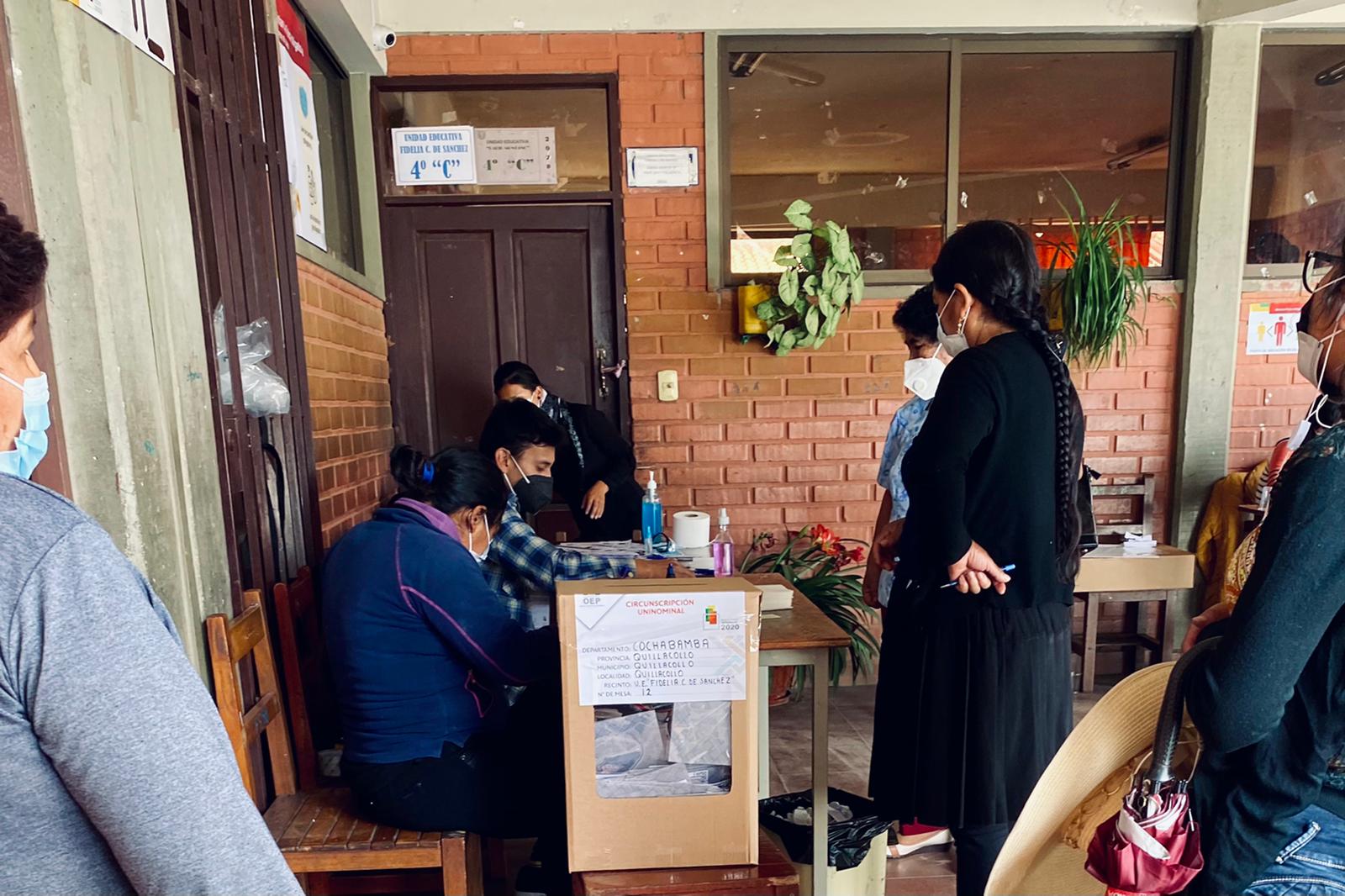
Polling place in Quillacollo, Cochabamba.
Polling place in Quillacollo, Cochabamba./ Valery Valdez Pinto

The Movimiento al Socialismo’s (MAS) first-round electoral victory last weekend surprised even some masistas – and antimasista claims of fraud are not gaining traction – but President-elect Luis Arce Catacora will take office on November 8 amid daunting political, social, economic, and public health challenges.

  • Winning 55.1 percent of the vote, Arce and his running mate, former Foreign Minister David Choquehuanca, surpassed what even the most optimistic polls predicted. Despite initial distrust in election-day exit polls – sole measure of the contests after the Supreme Electoral Tribunal (TSE) cancelled the official quick-counts out of fear they would destabilize the process – outgoing interim President Jeanine Áñez, who dropped out of the race in September, and Comunidad Ciudadana candidate Carlos Mesa congratulated Arce early in the process. Creemos candidate Luis Fernando Camacho made his tearful concession speech later. MAS supporters peacefully took to the streets and celebrated with firecrackers, indigenous music, wiphalas (flags celebrating Bolivian multiculturalism), and a boisterous rhetoric of a return to democracy.
  • Some in the antimasista camp (apparently without Mesa’s support) have alleged fraud but failed to present evidence. The defeat of Arce’s opponents at the polls, moreover, seems to have aggravated splits among them. The new President’s inauguration is expected to be a relatively calm transfer of power in, as many MAS supporters would say, a restoration of democratic continuity. Analysts credit the MAS’s efforts to clean up its image since the tumultuous elections of October 2019.

Opposition leaders’ statements promise continued challenges to the new government, but they have serious internal problems to overcome. Mesa and Camacho, running on centrist and rightist platforms respectively, offered little to undecided voters, including most importantly voters in rural areas – where they hardly campaigned – as well as voters disillusioned by the conduct of the MAS and former President Evo Morales in last year’s tumultuous elections. Camacho’s unwillingness to drop out of the race also split the anti-MAS ranks, depriving Mesa of valuable votes in the important Santa Cruz area.

  • Mesa (runner-up in the election) and Camacho (a distant third) both tried to persuade voters that they represented the voto útil – that a vote for them would not be wasted – but neither succeeded. Mesa’s campaign weakened as the election got closer, reviving long-standing criticism of his “tibio” personality, and Camacho was running on a regionalist platform that only resonated with the communities in Santa Cruz. Neither seemed to recognize the diversity of Bolivia’s 11.5 million people, leaving an important number of indigenous to again find a political home in the MAS.
  • Bolivian political analysts also assert that Mesa and Camacho were hurt by the Áñez’s government’s extensions in power and her widely criticized handling of the COVID 19 pandemic and its economic impact. Local observers say the pandemic turned a transitional government into one that felt like a complete term. The antimasistas were originally hopeful that her administration would pave the way for their victory, but allegations of corruption and widespread disillusionment due to her administration’s repression of Morales’s supporters and indigenous interests in general, the pandemic, and the economy all undermined the credibility of anti-MAS politicians.

Although antimasistas in Santa Cruz and Cochabamba are planning protests, most prominent oppositionists appear aware that challenging the elections is unlikely to be a winning strategy. Reports from media across the political spectrum indicate that Bolivians’ main focus is to navigate through the broken economy and the continuous threat posed by the pandemic. Moving forward with a return of MAS to power will nonetheless be difficult for some in the opposition. Hardliners are already condemning allegedly clandestine negotiations between some opposition leaders, including Áñez and Mesa, and Arce and his team. Suspicions that anti-MAS objectives will be sold out for personal advantage will aggravate divisions among rightists.

  • Even if political pressures subside, Arce faces massive challenges. He is Evo Morales’s hand-picked successor but has to keep him at a distance and make good on promises to continue reforming MAS, learning from mistakes made during the former President’s 14 years in power. Arce has pledged to “govern for all Bolivians” and “bring unity to our country” – monumental tasks in a nation unaccustomed to inclusion and compromise, especially during profound health and economic crises. As former Minister of Economy and Public Finance, he built a reputation for pragmatism – such as measures to strengthen the internal market and to industrialize natural resources – but fear and distrust at all levels of society are formidable obstacles. Arce has to rebuild and reform the MAS, and the opposition has to rebuild itself around a strategy that includes traditionally non-Bolivian values of positive engagement with a party and large segments of society that they, under Jeanine Áñez, tried hard to put in a box.

October 29, 2020

* Valery Valdez Pinto is a graduate student in Ethics, Peace, and Human Rights and a Graduate Assistant at CLALS.

Venezuela: Is “Responsibility to Protect” a Way to Go?

By Andrei Serbin Pont*

Juan Guaidó in Washington, DC, February 2020./ Flickr/ Creative Commons License

Venezuelan opposition leader Juan Guaidó’s recent call on the United Nations to invoke its “responsibility to protect” (R2P) norm to remove Nicolás Maduro and protect the Venezuelan people was a bold, even sophisticated, diplomatic gambit but has little chance of bearing fruit. Guaidó – recognized as Venezuela’s President by some 50 countries – did not speak officially to the UN but used the virtual format, in place because of the pandemic, to create the appearance among his constituents and international allies that he was addressing the UNGA.

Guaidó’s call for R2P was different from his previous appeals for restoring democratic institutions and advancing peaceful means to displace Maduro. He argued that the international community had a responsibility to invoke the R2P norm, endorsed by all UN member states in 2005, to safeguard the millions of Venezuelans living under Maduro’s rule. He said the international community must contemplate it as a strategy for what happens once all diplomatic measures are exhausted, a reference to preparations for taking “collective action, in a timely and decisive manner,” as outlined in paragraph 139 of the UN’s 2005 World Summit Outcome Document. Appealing to the so-called “grey states,” those skeptical but not opposed to the R2P doctrine, Guaidó argued that the diplomatic, humanitarian, and other peaceful means of effecting regime change in Venezuela taken so far have had no effect.

  • Guaidó further argued that “crimes against humanity,” as documented last month in a 400-page report by an independent fact-finding mission appointed by the UN Human Rights Council, meet the criteria for R2P action. The mission found “patterns of violations … that were highly coordinated” by Venezuelan authorities, including targeted repression, political assassinations, extrajudicial killings, human rights violations in the context of social protests, arbitrary detentions, lack of due process, and torture and inhumane treatment – all actions that are mainstream subjects of debate for the human rights and R2P community at the UN.
  • Even more bold was Guaidó’s reference to national sovereignty as a normative cornerstone of R2P, which embraces the idea of “sovereignty as responsibility” – rather than unrestricted respect for national sovereignty and the uncompromising defense of non-intervention.

Guaidó’s invocation of R2P will not prevail however articulate his arguments. From a purist perspective, R2P can only be invoked if it follows the UN Charter, which would require the international community, specifically the UN Security Council, to approve the use of force – a very remote possibility. Some experts may argue that R2P could be utilized outside the UN framework, especially if debate is systematically blocked by Russia and China, but the reality is that only one country has the capacity to intervene militarily in Venezuela, and that country – despite occasionally bellicose rhetoric – seems unlikely to do so. Even if the United States were to try it, the international community, including those which followed Washington’s lead in recognizing Guaidó 20 months ago, are highly unlikely to embrace the logic for what would probably be an invasion and prolonged occupation.

  • Guaidó’s effort, however, was not a total bust.  He may have advanced a secondary purpose by drawing attention away from questions of his own legitimacy and placing the onus on Maduro to demonstrate his own legitimacy and responsibility for protecting the Venezuelan people.

October 21, 2020

* Andrei Serbin Pont is an international analyst and director of the CRIES regional thinktank.

United States: Biden Versus the Arc of Immigration Policy

By Dennis Stinchcomb and Jayesh Rathod*

Acting Deputy Commissioner Ronald D. Vitiello visits the Border Wall Construction Site near the Otay Mesa Port of Entry/ Photo Courtesy of U.S. Customs and Border Protection/ Yesica Uvina/ whitehouse.gov/issues/immigration/ Creative Commons License

U.S. Democratic presidential nominee Joe Biden has pledged more than just a return to the Obama-era status quo on immigration, but the historical arc of immigration policy, the pandemic, entrenched agency cultures, and the limitations of executive lawmaking point to modest progress by a would-be Biden Administration. Absent from the Biden-Harris immigration platform are many of the more progressive proposals of Biden’s rivals for the Democratic nomination, including commitments to decriminalize border crossings, abolish or restructure Immigration and Customs Enforcement (ICE), eliminate expedited removal proceedings, and temporarily halt deportations in hopes of compelling Congressional action. Even so, the Biden-Harris plan promises urgent action within their first 100 days to reverse President Trump’s sweeping changes to the immigration system, followed by novel reforms.

But the challenges faced by a Biden Administration would extend far beyond the mountain of executive formalities (and potential defensive litigation) needed to “undo Trump’s damage.” Since 1986 – the last time Congress passed comprehensive immigration legislation – two dominant trends embraced by administrations from both parties have constrained the potential for pro-immigration advances, leading to a one step forward, two steps backward dynamic from which a Biden Administration would have to break free.

  • Criminalization. In the runup to his 1996 re-election, President Clinton signed the Illegal Immigration Reform and Immigrant Responsibility Act (IIRIRA), which laid the groundwork for the aggressive immigration enforcement regime of the Trump Administration. IIRIRA subjected legal immigrants to deportation for a range of non-violent offenses, limited the due-process rights of certain categories of immigrants facing deportation, and facilitated the recruitment of local law enforcement agencies to carry out immigration directives. Today, a remarkably broad swath of criminal activity triggers immigration consequences, and migration-related conduct (including unlawful entry) is increasingly subject to criminal sanction.
  • Securitization. The Bush Administration’s framing of immigration as a security issue after 9/11 and the reorganization of the Immigration and Naturalization Service within a new Department of Homeland Security (DHS) put additional pressure on migrants. Intensive vetting of would-be migrants, including extra scrutiny of nationals from certain countries, often dovetail with the “criminal alien” narratives, particularly when migrant streams are portrayed as vectors for drug trafficking and organized crime.

President Obama gradually realigned enforcement priorities and promoted a culture of prosecutorial discretion, but the deeply entrenched notions of immigrants as lawbreakers with suspect intentions limited and undermined his pro-immigration policies. When faced with record numbers of arrivals at the southern border, the Obama Administration could not escape the enforcement paradigm, choosing to dramatically expand the practice of family detention and deport millions of noncitizens without criminal records.

  • This enforcement dragnet reinforced an agency culture within ICE and other components of DHS that equated increased apprehensions and removals with success. Obama’s timid reform policies and aggressive enforcement left enshrined criminalization and securitization as hallmarks that made it easy for Trump to implement unprecedented restrictionism. The President has infused his rhetoric with repeated references to immigrants as “bad hombres” and as threats, not just to public safety, but to American culture and identity.

If Mr. Biden takes office, we can expect a deluge of executive orders undoing many of the 400-plus actions taken by the Trump Administration that dramatically curtailed legal immigration, cut off temporary protections, and dismantled the asylum system. But an immigration counterrevolution is unlikely. Biden has acknowledged the missteps of the Obama-Biden Administration, but his middle-of-the-road approach – compared to the proposals advanced by other Democrats – fails to recognize that the ills of the immigration system predate President Trump.

  • Far-reaching reforms that break the decades-long trend to criminalize immigrants and view them through a security lens will require more than regulatory tinkering. Another wave of White House-mandated programs that grant temporary relief while subjecting immigrants to perpetual uncertainty is unlikely to satisfy immigrant communities and their advocates. The public health crisis caused by COVID-19, moreover, has provided renewed impetus for the securitization of immigration and may prove one of the greatest obstacles to Biden’s immigration agenda, which is silent on the pandemic.
  • Hope for groundbreaking reforms may only come in the form a Democratic-controlled Senate, where a legislative overhaul might embrace the decarceration and other less punitive approaches gaining traction in the criminal justice context. But even then, a Biden Administration would have to contend with thousands of existing DHS employees with a fundamentally different vision for migration management. These conditions, which align with the broader arc of immigration policy, forecast only incremental progress.

October 13, 2020

* Dennis Stinchcomb is the CLALS Assistant Director for Research, and Jayesh Rathod is Professor of Law and Director of the Immigrant Justice Clinic at the Washington College of Law.

U.S.-Latin America: Who Can Learn from Whom about Elections?

By Todd A. Eisenstadt*

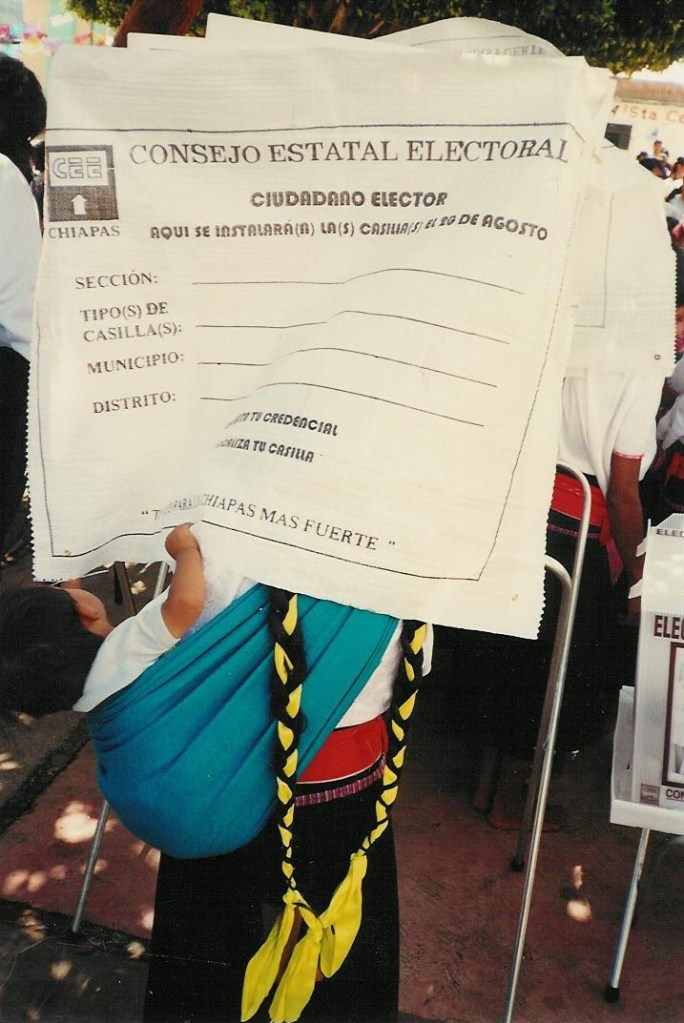
Polling station in the outskirts of San Cristóbal de las Casas in Chiapas, Mexico, during the 2003 gubernatorial election in Chiapas.
Polling station in the outskirts of San Cristóbal de las Casas in Chiapas, Mexico, during the 2003 gubernatorial election in Chiapas./ Dr. Todd Eisenstadt

The irony of an increasingly probable electoral crisis in the United States this year is not lost on observers in Latin America, who have endured multiple challenges to the legitimacy of elections for decades – nor is the irony that the United States could learn from the region’s hard, if still incomplete, lessons in democracy. U.S. President Donald Trump’s efforts to raise doubts about the fairness of the November 3 elections have been reported widely in Latin America. Citing unknown sources and unconfirmed events, he has alleged massive voter fraud and predicted court challenges so serious that, he said, it’s especially urgent that his nominee to the Supreme Court be seated immediately.

Such ominous-sounding challenges to elections are not new to most of Latin America. Mexico is not unique in this regard, but I saw its whimsical and exotic election frauds closeup in the 1980s and ‘90s as an international elections observer.

  • In the razor-close 1988 election, the lights went out during the vote count, and by the time they came back on the renegade outsider leftist had lost his lead against the PRI’s candidate. Political operatives called mapaches (“racoons” because they worked only in the dark), breakfast bribes (called Tamale Operations), and voters who made the rounds all day long to cast ballots in different precincts (carruseles or “carrousels”) were common. Crazy Mouse, named after the board game, was a scheme in which opponents of the PRI were sent from precinct to precinct only to be told they were to vote across town. Similar tricks, as well as intimidation, have been common in many other countries. Latin Americans are accustomed to wondering whether the military will have to escort a president who loses an election out the door, but it’s a totally new point of speculation for the U.S. population.

Although still far from perfect, Mexico and other Latin American countries have improved their elections. The unwritten code among political bosses in Mexico has long been to not ruin national institutions (like the postal system) or invite foreign interference (like Russian manipulation of public opinion). But other steps signal a shift away from zero-sum political games.

  • Since the 1990s, post-electoral negotiations to mollify the victors’ opponents – “keep them in the game” rather than make them a destabilizing force – gave them perches from which to eventually mount legal challenges, including rightist Vicente Fox (an interim governor who later became President) and current President Andrés Manuel López Obrador. The U.S. Supreme Court in 2010 in Citizens United reduced regulation of campaign donations, but Mexico has limited campaign finance and TV advertising. It has encouraged the independence of electoral institutions and set federal standards in all 32 states, which have one voter list matched against one voter ID per citizen – rather than 50 states and 3,000 counties with different criteria. Electoral observers are trained about citizens’ rights and responsibilities, not mobilized out of distrust for the system or to intimidate voters.
  • Since the turn of the century, most Latin American countries have put greater emphasis on the rule of law and tried, albeit inconsistently, to address economic inequality and other threats to democracy and stability. They have also learned the hard lesson that sometimes “dirty elections” must be cleaned through broad citizen mobilization with the support of national and international leaders. Some observers wonder whether the Black Lives Matter movement will expand and evolve into a mobilization akin to the cacerolazos in Chile and elsewhere in the 1980s that helped galvanize opposition to the dictatorships of the era.

The chaos, isolation, and economic pain caused by COVID‑19 make Latin America’s democracy lessons even more pressing for the United States. Voters fear going to the polls and are anxious about trusting balloting systems, such as mail-in voting, that President Trump is trying to delegitimize. The U.S. military, wittingly or not, mobilized troops to support the President’s suppression of civil protests. U.S. voters are in unfamiliar territory.

  • The hemisphere is watching closely if – and how – El Norte figures out how to exorcise the fears and the doubt that are undermining its democracy. Bringing in a slew of smart and seasoned international election observers from Mexico and elsewhere would be a start. So would learning from the Mexican opposition parties how to subvert expediency, especially in the time of COVID, in favor of longer-term discipline for democratization.

October 6, 2020

* Todd A. Eisenstadt teaches political science at American University and is author of several books on democratization, including Courting Democracy in Mexico: Party Strategies and Electoral Institutions, for which he observed over a dozen local and national elections there.

U.S.-IADB: A Last-Ditch Effort at Securing U.S. Hegemony?

By Christy Thornton*

The Inter-American Development Bank building in Washington, DC
The Inter-American Development Bank in Washington, DC./ Wally Gobetz/ Flickr/ Creative Commons License

The election this month of Cuban-American hardliner and Trump National Security Council staffer Mauricio Claver-Carone to head the Inter-American Development Bank (IADB) signals a significant shift in Washington’s approach toward the multilateral institution, but Trump’s attempt to reassert U.S. strength through the bank may, paradoxically, be a sign of weakness. Claver-Carone was the first U.S. candidate put forward to head the Bank in its 60-year history, overturning an unwritten rule that the president of the Bank should be a Latin American. After a long summer of procedural maneuvering failed to delay or block the contest, other potential candidates from Argentina and Costa Rica withdrew.

  • Mexico’s decision in August to go along with the election cleared the way for the quorum necessary to hold the vote, and Claver-Carone won election despite fully one-third of member countries abstaining.

As I show in my forthcoming book, Revolution in Development, U.S. administrations since FDR have often responded to Latin American demands for representation in and redistribution through multilateral organizations by ceding procedural power to Latin Americans.  

  • In earlier eras – during the negotiations over the first Inter-American Bank in 1939‑40, the Bretton Woods institutions in 1944, and then the founding of the IABD in 1959 – Latin Americans demanded a seat at the table and decision-making power. U.S. leaders acquiesced, preferring to lead through consent rather than coercion. When the IADB was created, the United States agreed to a minority-share position and a concessional lending program, allowing it to both meet Latin American demands for development and also counter accusations of commercial and financial domination.
  • While the bank’s tenure has not been without controversy, the major congruence in economic policy prescriptions that emerged with the Washington Consensus in the 1990s meant that, even without its representative in the top spot, the United States could be assured that its interests in the region were furthered by bank activities.

The election of Claver-Carone represents an about-face in this strategy of securing consent and reinforces three aspects of Trump’s approach to the region: isolating left-wing governments like Venezuela; countering China’s growing influence; and reiterating the primacy of private enterprise and investment over public multilateral lending.

  • The very public dispute over who should represent Venezuela at the 2019 IADB meeting in Chengdu – which was to celebrate the 60th anniversary of the bank’s founding and the 10th anniversary of China’s membership – challenged U.S. influence over the institution. The Venezuelan opposition under Juan Guaidó wanted to send Ricardo Hausmann, a longtime IADB official, as its representative, but the Chinese government suggested instead that no Venezuelan representative be seated, leading to the meeting’s sudden cancelation. China’s action seems to have convinced Trump that the IADB was slipping from the U.S. orbit.
  • Seeing China as a competitor in Latin America, Claver-Carone will seek to use the IADB to counter Chinese influence. The most important way that he seeks to do that, made explicit during his campaign for the bank presidency, is through further capitalization of IDB Invest, the bank’s private-sector lending arm. This emphasis on private-sector development comes despite the fact that governments throughout the region are struggling through the worst economic downturn in decades due to the ravages of the coronavirus, with insufficient public health infrastructure and little in the way of safety nets for working people. While the bank has announced more than $3 billion in additional funding for governments to mitigate the crisis, Claver-Carone has stressed that his emphasis will be, above all, on strengthening private enterprise.

Earlier administrations demonstrated their faith in the strength of U.S. influence in the region through ceding some procedural control in the IADB, thereby securing multilateral legitimacy – but the Trump Administration’s successful push for Claver-Carone is instead an attempt to assert U.S. dominance. While Trump’s “America First” approach to the bank might seem like an attempt to bolster U.S. strength, it may instead actually reveal a fundamental weakness in U.S. legitimacy in the hemisphere. If the U.S. hegemony has to be imposed from the top down through domination rather than consent, it is sure to engender resistance.

September 30, 2020

* Christy Thornton is an assistant professor of sociology and core faculty member for the Latin America in a Globalizing World Initiative at Johns Hopkins University.

Brazil: When Will the Government Act to Reduce Firearm Deaths Among Children?

By Beatriz Rey and Estevan Muniz*

Brazilian police
Police in a city in Brazil./ dfactory/ Flickr/ Creative Commons License

Gun-related violence against Brazilian children and teenagers has been alarmingly high for years – rising to 9,818 in 2017 and 8,253 in 2018 – but the Brazilian government has paid little attention to the issue. Seventy percent of the over 140,000 children and teenagers (0-19 years old) killed in firearm-related incidents between 2001 and 2018 were Black. While exact figures remain elusive, the independent Brazilian Public Security Forum estimates about one in almost five of the deaths – 2,884 children and teenagers in the two-year period 2017‑18 – resulted from police interventions.

  • The issue first appeared on the Congressional agenda in 1992, when legislators created a Parliamentary Inquiry Committee (CPI) in the Chamber of Deputies to investigate the high number of killings of children and teenagers. Of the eight bills proposed by the CPI, only two became law – one establishing restrictions on private security companies and one removing some immunities from military police who commit crimes against civilians. Neither law has directly impacted the killing of children and teenagers. Several other bills, including one that would have created a National Code for Gun Ownership, failed.
  • Legislators instituted another CPI in 2015 (in the Senate) to examine homicides among Black youths. Their work resulted in a single bill (PLS 240/2016) that proposed a National Plan to Combat the Killing of Young People. The plan aims to reduce the number of youth homicides to less than 10 for every 100,000 youths over the next 10 years and to prosecute up to 80 percent of crimes against them. The Senate approved the bill (now called PL 9796/2018) in 2018, but no Chamber vote has occurred.
  • An executive branch initiative, enacted by the administration of former President Lula da Silva in partnership with UNICEF and the Favelas Observatory in 2009, was the Program for the Reduction of Lethal Violence Against Adolescents and Youth (PRVL), which attempted to mobilize key societal actors, produce indicators of lethality, and analyze cases of successful mortality reduction. The PRVL is no longer active; it was discontinued during the Dilma Rousseff administration.

Squabbling between the left and right has led to inconsistent and short-lived policies that have failed to reduce gun violence. The two Cardoso administrations (1995-2002) took only incremental steps in addressing law and order issues. Fears of failure and popular blame made Lula (2003-11) reluctant to implement his own National Public Security Plan. He eventually enacted the National Plan of Public Security and Citizenship (PRONASCI) in his second term, but Rousseff (2011-16) discontinued it – reflecting the lack of a coherent proposal from the left in the face of lobbying from the Armed Forces, police associations, and police chiefs within an institutional legacy of the dictatorship (1964‑85).

  • The lack of effective policy action is also due to the policymakers’ cognitive and institutional constraints. Leaders can only focus on a limited set of issues at once, and building majorities in legislatures on contentious issues has proven beyond them. Earlier this year a few legislators attempted to schedule a vote on the bill creating a National Plan to Combat the Killing of Young People (PL 9796/2018) in the Chamber of Deputies – where it’s been stuck since 2018 – but the COVID‑19 pandemic shifted all attention away.

After years of government failure to protect the lives of thousands of children and teenagers, civic action might be the only feasible way to tackle the issue. Mobilization has achieved successes in other areas such as education, where civil society groups recently pressed deputies and the executive branch to approve the National Fund for Basic Education (Fundeb).  

  • A window of opportunity currently exists to push the Senate-approved draft bill – PL 9796/2018 – to the Chamber floor. It enjoys broad civil society support and, unlike proposals from the 1992 CPI, offers comprehensive national guidelines, goals, and strategies for the federal government, states, and municipalities. In this sense, bill 9796/2018 provides a consensus-based roadmap for future political negotiation.
  • While a lack of data on the link between police violence and race makes it hard to target policy solutions for Black children and teenagers, progress on the broader issue of police violence will especially affect this vulnerable segment of the Brazilian population. The renewed focus on race and police violence in Brazil presents the opportunity for popular mobilization to bring necessary attention to the issue. Reigniting this policy conversation could represent a first step towards preventing future deaths.

September 23, 2020

* Beatriz Rey is a CLALS Research Fellow. Estevan Muniz is a journalist at TV Globo and a filmmaker. This is an adaptation of an article first published by the Wilson Center.

Mexico: Competing State Strategies and Results on COVID

By Piper Neulander*

Disinfecting city street in north-central Mexico./ Carl Campbell/ Flickr/ Creative Commons License

In the face of Mexican President Andrés Manuel López Obrador (AMLO)’s relatively cavalier attitude toward the COVID‑19 virus, the governors of states as varied as Nuevo León and Oaxaca have implemented contrasting approaches – with different levels of success and political gains. AMLO’s response has been colored by relatively late shutdowns, limited ramping up of national-level coordination mechanisms, and the maintenance of strict austerity despite an extraordinary decline in economic activity. Yet state governments have a large degree of autonomy in Mexico’s federal system, and some have taken advantage of it. Nuevo León – a northern, industrial, relatively urbanized and wealthier state – and Oaxaca – a southern, more rural and poorer state – both initially followed AMLO’s hesitant lead towards the virus, but eventually diverged in their strategies.

Nuevo León

The governor of Nuevo León, independent Jaime Rodríguez, has adopted policies that have departed sharply from federal guidelines. The state began to count private and state labs’ coronavirus tests together and quickly, while the federal government still only had one lab to officially confirm tests. It also used its own measurement system in many industries to allow for slower, safer re-openings – developing 12 measures, rather than the federal government’s four – and cooperated with neighboring states to prevent spread of the disease.

  • These policies gave Nuevo León a fighting chance to slow the spread through its dense population and industrial workplaces. Early testing meant the state had a far more accurate initial count of cases, and local processing of the tests enabled faster action. While these steps made Nuevo León citizens more aware of the spread within their communities early on, they caught medical workers unprepared for the surge, prompting protests over the lack of preparation.

Oaxaca

Oaxaca Governor Alejandro Murat, who aligns himself closely with AMLO, took advantage of that relationship during the pandemic. The state received federal help from the military to build much-needed hospitals in the region – one of which AMLO personally inaugurated during a tour of the Istmo region. (It was unclear, however, if the hospital actually began operating upon inauguration.)

  • This strong partnership with the federal government, however, made the state vulnerable to the same pitfalls as national-level policies, including inadequate testing and slow identification of virus trends, contributing to striking lethality rates from COVID‑19 in certain Oaxacan counties. The county of Juchitán, for example, experienced an 18 percent fatality rate.

In Nuevo León, Rodríguez saw a huge boost in popularity during the early months of the pandemic – an average of 25 percentage point increase in various polls conducted between March and May. His approval rate for his handling of the COVID crisis specifically was 72.3 percent in June – one of the five highest approval rates among Mexico’s 31 states. In Oaxaca, where polling figures vary, most pointed to a 6.6 percentage point increase in Murat’s approval rate between May and July. Also in June, opinion on compliance with isolation and decreased mobility was at 68.3 percent approval in Nuevo León and 60.6 percent approval in Oaxaca.

The governors’ political fortunes seem to parallel the states’ health results. Rodríguez was successful on two fronts: relative success against the coronavirus, and clear success in grasping the moment for his own political purposes. He was smart to forge his own path against the virus, focusing on essential tools like testing and regional cooperation, and, despite the health workers’ protests, delivering quality care to victims of the disease. Rodríguez was consistent and clear with the public about the risks of the virus, allowed his Secretary of Health to guide a response to the virus, and harnessed his urban, industrially supported state’s strengths in his response, while avoiding many of the mistakes of the federal government. In Oaxaca, Murat’s close adherence to AMLO’s lead placed the state at a disadvantage in combatting COVID‑19. While he did also gain in popularity for his response, the gain was smaller. Much of Oaxaca’s actions were boosted by support from the federal government, making the state-level response less distinguishable from Mexico’s central government strategy.

September 18, 2020

* Piper Neulander is a student in the School of International Service focusing on Latin America.

OAS: Almagro’s Veto of IACHR Executive Secretary Threatens Commission’s Independence

By Bruno Boti Bernardi, Isabela Gerbelli Garbin Ramanzini, João Roriz, and Matheus de Carvalho Hernandez*

Regular Meeting of the Permanent Council. From left to right:
Paulo Abrão, Executive Secretary of the Inter-American Commission on Human Rights; Luis Almagro, OAS Secretary General./ OEA – OAS/ Flickr/ Creative Commons License

OAS Secretary General Luis Almagro’s decision to block a second term for Inter-American Commission on Human Rights (IACHR) Executive Secretary Paulo Abrão – citing allegations of mismanagement – is undermining the organization’s autonomy by rejecting the unanimous vote of its Commissioners and ignoring the views of human rights advocates throughout the region. Despite Abrão’s strong reputation, Almagro on August 25 stated the man was unfit to remain on the job.

  • During Abrão’s first term as Executive Secretary (beginning in 2016), the Commission was at the forefront of a number of thorny problems in the region, including U.S. handling of migration, indigenous and environmental causes in Brazil, democratic guarantees in Venezuela and Nicaragua, U.S. police violence, and others. Supporters also credit him with launching institutional transformations and modernizations. Recognizing Abrão’s leadership, the Commission’s seven members in January unanimously approved a second term for him, which would begin last month.
  • Almagro said his veto of Abrão’s reappointment was based on a supposed confidential report stating 61 “functional complaints” against him, including “possible rights violations”. He also alleged that the Commissioners were derelict in not “clarifying the accusations,” which he said included “conflict of interest, differential treatment [favoritism], serious deterioration in the level of transparency of the processes, retaliations and violations of the code of ethics, impunity for sexual harassment accusations.”

Human rights advocates throughout Latin America have accused Almagro of inappropriate interference in the human rights body’s affairs. In one public letter, more than 300 organizations – many with strong records of activism against the sort of workplace and gender issues that Almagro raised – pointed out that the Secretary General violated the IACHR’s statute and longstanding practice requiring prior consultation with Commissioners before taking any personnel actions. They called for dialogue, respect for IACHR’s autonomy, and independent investigations into any allegations made against Abrão or the Commissioners.

  • Experts are also concerned that Almagro’s actions were driven by political factors, particularly his sensitivity to right-leaning governments’ discomfort with the Commission’s criticism. On Almagro’s watch, Argentina (under former President Mauricio Macri), Brazil, Chile, Colombia, and Paraguay in April 2019 issued a declaration demanding greater deference from the Commission to the states. Two months later, a block of critical governments tried to influence the election of Commissioners to favor a Colombian candidate (who lost).
  • Right-leaning governments have applied similar pressure on the Inter-American System and other international organizations – while Almagro was supportive or maintained public silence. The United States pushed hard to invoke the Inter-American Treaty of Reciprocal Assistance against Venezuela, a mutual defense treaty of 1947, and last week succeeded in using its influence to gain the election of its nominee as president of the Inter-American Development Bank, breaking a six-decade tradition of Latin American leadership at the institution. At the UN, U.S. President Donald Trump directed his country’s withdrawal from the Human Rights Council in 2018. The following year, Brazilian President Jair Bolsonaro launched broadsides against the High Commissioner for Human Rights, Michelle Bachelet, when she began speaking out about allegations of abuses in his country.
  • This is not an isolated episode in the IACHR’s history. In addition to the decades of military dictatorships’ resistance, the organization has weathered suspension of states’ payment of dues and even threats – sometimes fulfilled – of the withdrawal of states. In 2011, a controversial process of institutional reform prompted a budget boycott strategy led by some Latin American governments angry at what they considered to be unreasonable interference in domestic affairs.

UN High Commissioner Bachelet’s pledge two weeks ago to push for a solution to the impasse created by Almagro’s veto is key. For 61 years, the IACHR has been the only monitoring forum with oversight over all states in the region, whose main function has been to promote the observance and defense of human rights in the Americas, in accordance with Article 41 of the American Convention on Human Rights. Its Commissioners have worked closely with civil society and the victims of human rights violations, and taken steps to improve monitoring in ways that enhanced protection for the region’s historically marginalized populations. Experience has shown that the expansion of individual and collective awareness of human rights not only remedies violations on a case-by-case basis but also leverages the empowerment of citizens against violations by their governments.

  • These activities are all the more important in difficult times, such as created by the COVID-19 pandemic, during which political leaders’ temptation to resort to un-democratic means of governance can be intense. Protecting the IACHR’s independence and enhancing its ability to function without pressure from governments of any political stripe is essential to consolidating progress made in Latin American human rights and preserving space for more in the future.

September 15, 2020

* Bruno Boti Bernardi is a professor at the Federal University of Grande Dourados (UFGD). Isabela Gerbelli Garbin Ramanzini is a professor at the Federal University of Uberlândia (UFU). João Roriz is a professor at the Federal University of Goiás (UFG). Matheus de Carvalho Hernandez is a professor at the Federal University of Grande Dourados (UFGD).

COVID-19 Presents Challenges for Latinos in U.S. Election

By Stephen Nuño-Pérez*

“I voted” stickers in English and Spanish./ GPA Photo Archive/ Flickr/ Creative Commons License

The COVID‑19 pandemic – in addition to having a deep impact on U.S. Latinos’ economic wellbeing and health– is aggravating the community’s anxieties about whether their votes will be counted in the November 3 elections. A recent poll by Latino Decisions shows deep concern that Latinos’ impact on vote counts, already depressed by their traditionally anemic turnout rates, will be even more severely reduced by a lack of confidence in mail-in voting.

  • Five states – Colorado, Hawaii, Oregon, Utah, and Washington – have all-mail voting systems, according to the National Conference of State Legislators, and California is adjusting its system in response to the pandemic to mail ballots to every voter automatically. Other states have more strict requirements to request a vote-by-mail (VBM) ballot.
  • There has been a widely disseminated argument that VBM gives the Democratic Party an advantage, but much of the research shows that neither party gains an advantage. Utah and Oregon, for example, are two very different states that are roughly 90 percent non-Hispanic white, yet Republicans control the legislature, the Senate, and the Governorship in the former, and Democrats control all three levels of government in the latter.

Latinos have traditionally preferred to vote in-person on election day, and Latino Decision’s latest poll shows that the conventional wisdom that VBM will significantly increase their participation during the coronavirus pandemic is exaggerated. While states with VBM systems tend to have higher turnout rates, the research pinpointing the causal relationship between VBM and turnout is somewhat mixed. Indeed, VBM raises concerns for Latinos. Researchers in Florida have been ringing the alarm on its inequities. Dr. Daniel Smith at the University of Florida has shown that VBM in Florida has disproportionately high rejection rates of mail ballots cast by Hispanic voters and young voters.

  • Latino Decisions’s latest poll surveyed 1,842 registered Latino voters on their concerns about voting during COVID‑19. Overall, 74 percent said they had health concerns about voting in person. (Ironically, the older respondents were slightly less concerned than the younger.) Eighty-one percent of those who identify as Democrats expressed worries, compared to just 60 percent of those who identify as Republicans.
  • While 53 percent of Latinos across demographic groups in the survey overall said they prefer to vote in-person, there was some variation in preference by state. For instance, 66 percent of Latinos in Arizona said they prefer VBM (compared to 80 percent of non-Latinos), and just 43 percent of Latinos in Texas said so. When asked if they had confidence that their mail-in ballot would be counted, just 47 percent of those who prefer to vote in person said they had confidence in the system. By comparison, 85 percent of those who prefer VBM said they had confidence in the system. Here again we see partisan differences in confidence, with 75 percent of Democrats saying they had confidence in the VBM system and 64 percent of Latino Republicans saying they had confidence their mail-in ballot would be counted.
  • A majority of Latino voters from both parties in the survey said they were confident they could navigate their states’ systems for switching from in-person to mail-in ballot. First-generation Latinos, those who were not born in the United States, were slightly less confident, at 48 percent, that they could navigate the system to request a VBM ballot.

The survey results suggest a strong need for efforts to improve VBM systems and build confidence among Latinos to vote by mail. Rejection rates of Latino mail-in voters in states like Florida are too high, and it is up to state elections officials to implement a multi-layered approach to fixing elements of the system that are seen as broken. Shoring up education on the VBM process will also build confidence in it. COVID‑19 makes this difficult, but addressing the VBM system’s flaws will help build credibility and improve participation in the November election – for Latinos as well as non-Latinos.

September 4, 2020

* Stephen Nuño-Pérez is Director of Communications and Senior Analyst at Latino Decisions.